Another 85 cases of Covid-19 were confirmed today, with the highest number being recorded in Vientiane.
This brings the total number of known cases in Laos since the start of the pandemic to 757, the National Taskforce for Covid-19 Prevention and Control announced today. The positive test results were obtained when 4,841 samples were tested on April 29, according to the taskforce. Of the new cases, 69 were recorded in Vientiane, seven in Bokeo, three in Savannakhet, two each in Vientiane and Xayaboury, and one each in Champassak and Oudomxay provinces. Meanwhile, 707 people infected with the virus are in isolation at the Friendship Hospital and other public hospitals in Laos. No deaths have been reported.
The Covid-19 taskforce outlined the latest developments on Friday, saying 51 Covid-19 patients were discharged from hospitals on Monday after they twice tested negative for the virus. The majority of people who have contracted the virus are between the ages of 20 and 39, as well as three children under the age of three and two people under the age of 60. The coronavirus outbreak has spread through 15 provinces. Only Attapeu, Xaysomboun, and Huaphan provinces have not recorded any cases.Every province is now under lockdown.
Experts say Covid vaccines available in Pakistan protect against virus mutations
Medical experts have dispelled the notion that Covid-19 vaccines being used in Pakistan are not effective against different variants and urged citizens to get immunised as soon as possible while also taking precautionary measures.
Following a video message released by Sindh Health Minister Dr Azra Pechuho in which she confirmed the presence of new variants in the province and warned that vaccination might not work, questions were raised regarding whether there was any point in getting immunised.
Editorial: If Pakistan’s Covid positivity rate goes any higher, it will face a situation similar to India’s
Special Assistant to the Prime Minister (SAPM) on Health Dr Faisal Sultan said there is no evidence at present that suggests that Covid-19 vaccines will not protect against different variants.
“In other words, we must continue to vaccinate, and all the evidence at this time suggests that the protective effect will be retained,” he said.
Responding to Dawn.com about the efficacy of getting vaccinated, the SAPM — in a video statement — said: “New mutations are sometimes neutral [with no effect on behavior] and sometimes come with some changes.
“For example, the B117 variant transmits more easily; some variants have slightly higher rates of re-infection.”
He said the formation of variants in viruses is simply a matter of normal evolution and “not surprising”.
“The B117 variant [first detected in the UK] is now commonplace across the world and is the predominant variant in many countries. Similarly, a few cases of B1351 [the South African variant] and P1 [the Brazilian variant] have been reported in Pakistan recently,” Dr Sultan said.
“Vaccination does not take away the need to use masks and other precautions. While we vaccinate and expand the programme to larger numbers, it is also crucial to keep following standard operating procedures (SOPs) for curbing the spread of the disease. These SOPs work against all variants.”
Commenting on whether getting vaccinated will offer protection against different Covid strains, he said: “You can use the vaccines available in Pakistan with confidence. When it is your turn, you must go and get yourself vaccinated so that you can protect yourself from infection.”
In a statement to Dawn.com, the Medical Microbiology and Infectious Diseases Society of Pakistan (MMIDSP) said that all Covid-19 vaccines provide protection against serious disease and death.
The association — which represents infectious disease specialists in the country — said that vaccinated individuals may get infected after being exposed to the virus, but said that the symptoms remained “mild”.
“Because of a weakened immune system, the elderly may not develop robust immunity even after taking the full course of the vaccine. Such individuals may require additional booster doses.”
Stressing that this is an evolving situation, it added that currently there are no guidelines available to recommend routine booster doses.
“This issue will become clearer as new information emerges.
“Preliminary results are available on the efficacy of the Sinopharm and Sinovac vaccines against the UK, South African and Brazilian mutants. Results suggest that antibodies produced by the Sinopharm and Sinovac vaccines can effectively neutralise the variants,” the body said.
Dr Faisal Mahmood — head of the infectious diseases department at the Aga Khan University — acknowledged that the issue was complex.
“We know that the vaccines that have been tested on the the South African variants (AstraZeneca, J&J, Novavax) are not as effective, but they still work to prevent serious disease.
“Other vaccines have not been checked (including SinoPharm, SinoVac, and CanSinoBio),” he said, but emphasised that citizens “should not forgo vaccination”.
WHO recommendations for Chinese vaccines
Following a closed-door meeting in March, Alejandro Cravioto — the chair of WHO’s Strategic Advisory Group of Experts (SAGE) — said the body hoped to issue recommendations on the Sinopharm and Sinovac vaccines by the end of April.
“The information that the companies shared publicly clearly indicates that they have levels of efficacy that would be compatible with WHO requirements,” Cravioto said, referring to the group of independent experts’ closed-door meeting.
“That means about 50 per cent (efficacy) and preferably close to or above 70 per cent and of course, they have all the safety data to show that this vaccine would cause no harm in humans.”
Along with Pakistan, Sinopharm is currently being used in several countries including China and the United Arab Emirates (UAE).
No publicly released efficacy data of Sinopharm’s Covid-19 vaccine is available. However, its developer, Beijing Biological Products Institute, has said the vaccine is 79.34pc effective in preventing people from developing the disease based on interim data.
Sinovac’s vaccine showed varied efficacy readings of between 50.65ps and 83.5pc based on trials from Brazil, Turkey and Indonesia.
At the virtual vaccine summit organized the other day by the country’s leading business groups, vaccine czar Secretary Carlito Galvez Jr. told participants: “We are very confident that the country will be able to achieve herd containment within this year with the help of the private sector, with the inoculation of 50 to 70 million Filipinos.”
Even with the lower figure of 50 million, the road ahead seems longer. It means administering 100 million jabs (at two doses per person) within a period of eight months—assuming, it goes without saying, the steady arrival of the promised vaccines. Subtracting the 1.8 million doses that have already been given leaves us with about 98 million to be dispensed in 245 days. That’s exactly 400,000 inoculations per day—an ambitious and unrealistic target, given the varying logistical requirements of the different vaccines and the fragmented character of the vaccine rollout itself.
To cite just one source of complication: Half a million Filipinos have been given their first dose of the AstraZeneca vaccine, and are due to receive their second dose soon. These second doses are not yet in the country, and it is not part of the protocol (at this time) that a different COVID-19 vaccine may be given as second dose.
But, who can blame Galvez for painting a bright scenario whose realization depends on factors that now lie beyond our control? As far as he is concerned, they have done everything possible under the circumstances. Still, as the saying goes, hope is not a strategy.
Those circumstances, in the language of risk theory, are called “contingencies.” The assumption is that things can happen differently from that expected. Refusing to be ruled by chance, modern societies attempt to manage these contingencies by reducing to a minimum the dangers and costs they pose. Decisions are made today to manage future outcomes—to avoid a loss or to gain an advantage, which may or may not materialize. Every decision (which, of course, includes the decision not to act) carries its own risk.
An example may illustrate this. Some relatives and friends have asked me whether they should avail themselves of the current vaccines being offered to them, or to wait for the arrival of their preferred vaccines. I tell them that they alone can make this decision, even as I remind them of the Department of Health advice to take the first approved vaccine that is available. That is the public health perspective.
The personal perspective may show things differently. Even after being assured of the comparable safety and efficacy of the available vaccines, people may continue to have reservations. For example, if two doses are required (except for the Johnson & Johnson single-dose vaccine), they want to know what will happen if the second dose is delayed due to supply problems. For now, they will have to wait until a second dose of the same vaccine is available to be assured of some measure of protection. Is it better then to wait until the vaccine supply is more certain? But when will that be?
Many people I know, including friends in the corporate sector who are in the queue for specific brands of vaccines that have been ordered through the tripartite agreement, are opting to get their jabs now with whatever vaccine is available, albeit with some reluctance. The management of risk is part of their everyday world.
For the rest of us, the higher the reported numbers of daily infections and deaths go, the more unbearable the wait for the other vaccines seems to become. This panic mode plays right into China’s current dominance of the local vaccine scene.
It is not where we would want to be given the current tension in the West Philippine Sea. Whether we like it or not, our dependence on China for the continuing supply of the Sinovac vaccine constrains the country’s negotiating position on the troubling issues affecting our relations with this powerful neighbor. As Mr. Duterte puts it: “May utang na loob tayo sa Tsina.”
What is worth keeping in mind is that the situation in which we find ourselves may not be so much the product of a strategic risk calculation by the Duterte administration as it is the outcome of a risky hesitation by our decision-makers to make the hard decisions regarding vaccine procurement.
President Duterte’s preference for the Chinese vaccines, whether for scientific or pragmatic reasons, was clear from the start. That this was not translated early enough into a willful decision to purchase a significant amount of the Sinovac or Sinopharm vaccines—as was the case for Indonesia, Chile, and Turkey—remains a puzzle.
I suspect our vaccine experts weren’t sure the Chinese vaccine would be readily accepted by our people. And, worse, they probably thought that they could afford to postpone making a decision one way or the other (e.g., ordering any of the Western-made vaccines). Risk theory says that decisions can only be made in the context of the present. In November-December last year, when vaccine purchases could have been firmed up, new COVID-19 cases had significantly gone down from their July-August peak. Hence, there was no felt need to rush.
By the time vaccine manufacturers were already being swamped with orders, I suppose we were still thanking our lucky stars for sparing us COVID-19’s most punishing lashes. The National Task Force Against COVID-19 clearly thought we had time. More crucially, our President probably believed, deep in his heart, that he could always count on China, “our friend,” to deliver the vaccines we need when we needed them.
That’s how vassals think. That is not how modern leaders govern.
New virus cases above 600 for 4th day in South Korea; further surge in offing
South Koreas daily new virus cases stayed in the 600s for the fourth consecutive straight day Sunday as sporadic cluster infections popped up across the nation, complicating antivirus efforts.
The country reported 606 more COVID-19 cases, including 585 local infections, raising the total caseload to 123,240, the Korea Disease Control and Prevention Agency (KDCA) said.
The country added two more deaths, raising the total death toll to 1,833.
The tally of new patients was down from 627 Saturday and 661 Friday, partly due to less testing over the weekend.
Health authorities warned of a potential hike in new cases as people have increased activities during warm spring weather, raising concerns ahead of major holidays in May. More than 40 percent of the new local cases reported on Sunday were from regions out of the greater Seoul area, indicating that the virus has been spreading across the country, they said.
The country decided Friday to extend its current social distancing rules and a ban on private gatherings of five or more people for three more weeks until May 23.
Currently, the greater Seoul area, home to more than half of the country’s 52 million people, is under Level 2 social distancing, the third highest in the five-tier scheme, with the rest of the country under Level 1.5 except for some municipalities where Level 2 measures are in place.
The number of daily virus cases stood at 622 over the past week, above the standards for Level 2.5 distancing.
The country plans to apply a revamped social distancing system from July if daily virus cases remain under 1,000 by end-June.
A total of 3.35 million people have received at least their first shots of COVID-19 vaccines since the country started its vaccination program on Feb. 26, accounting for 6.6 percent of the total population.
AstraZeneca’s vaccine has been given to 1.82 million people, while 1.56 million have received that of Pfizer.
A total of 16,524 cases of side effects after vaccinations have been reported, up 328 from a day earlier, but 98.1 percent were mild symptoms, including muscle pain and fever.
The KDCA said 79 deaths after vaccinations have been reported, up four from the previous day. They said the exact causes of the deaths remain unknown as they could not determine causality.
The country aims to vaccinate 12 million people by the end of June in a bid to achieve herd immunity by November.
Of the locally transmitted cases, Seoul reported 177 new cases, and Gyeonggi Province that surrounds the capital city identified 140 new patients.
South Gyeongsang Province registered 61 additional cases, and Busan and Ulsan, major cities in the southeastern region, reported 31 and 51 new cases, respectively.
There were 21 new imported cases, down 13 from Saturday.
The number of patients with serious symptoms across the country reached 170, down four compared with the previous day, the KDCA said.
The total number of people released from quarantine after making full recoveries was 112,865, up 528 from a day earlier. (Yonhap)
Zuo Peng, who lives in Langfang, Hebei province, drives to Beijing to work, spending about 30 minutes on the Beijing-Shanghai Expressway, commonly called the G2, every workday.
“The G2 has become an indispensable friend to me since I bought an apartment in Langfang in 2013, ending my renting life in Beijing,” he said. “The expressway has helped me keep my job in Beijing while buying an apartment with my wife and children.”
Like Zuo, many young people who cannot afford an apartment in Beijing have chosen Langfang, on the capital’s outskirts, to settle down. The G2 has made it a reality for them to lead a two-city life.
China now has the world’s largest expressway network, stretching 160,000 kilometers, long enough to circle the Earth four times. Those expressways have made people happier and wealthier and promoted regional economic growth along the roads.
The G2, 1,218 km long, links Beijing and the country’s economic center, Shanghai, running through Tianjin municipality and Hebei, Shandong and Jiangsu provinces. It is a critical artery of the integrated economic development of the Beijing-Tianjin-Hebei region and the Yangtze River Delta region.
Construction began in December 1987, and the first section, linking Beijing and Tianjin, was opened in 1991.
At the very beginning there were just 153 km of expressways in six municipalities and provinces along the road. Now, it has formed an expressway network of more than 20,000 km in total in these areas. The overall economic output of those six municipalities and provinces, a mere 3 trillion yuan ($459 billion) in 2000, was 10 times that sum at the end of last year, according to government figures.
At 2 am in the Wuqing district of Tianjin, Zhu Fujie, a manager of an agricultural company, takes stock of produce as it is loaded into two trucks.
Those items, worth 90,000 yuan, will be transported to Beijing for sale. Using the G2, the trucks will arrive in Beijing about three hours later. Their freshness means better returns for farmers, a report by Economic Daily said.
“G2 is a road toward wealth for us,” Zhu said. “We used to sell our vegetables in nearby markets only, so we couldn’t make that much money. The G2 helps us to get our products to Beijing, a much better market.”
Because of the convenient transport from Beijing to Tianjin, collaboration between the two cities is growing. In the past seven years, more than 1,000 projects from Beijing have been set up in Wuqing, with total investment of more than 50 billion yuan.
“Wuqing has been working on building platforms on research, manufacturing, marketing and financing sectors for the commercialization of scientific findings in Beijing,” said Zhang Weiqi, head of the science and technology bureau of Wuqing district.
The G2 has become an important framework of Beijing-Tianjin-Hebei integrated development.
Along the expressway are 11 modern zones such as economic and science technology zones and bonded zones. The G2 and two other expressways, Beijing-Tianjin and Beijing-Taipei, have helped make transport between Beijing and Tianjin port, the biggest comprehensive port in North China, much more efficient.
Up to 70 percent of the cargo arriving at the port is from Beijing, Hebei and Tianjin, which has boosted regional economic growth.
Fast economic growth has in turn generated demand for bigger and better expressways. In the past 20 years many sections of the G2 have been expanded to six or eight lanes.
The Osaka prefectural government confirmed that a record 1,262 people had tested positive for the novel coronavirus on Saturday, surpassing the 1,000 mark for a fifth consecutive day.
Tokyo reported 1,050 new cases on Saturday, the capital’s highest single-day tally since the third state of emergency was declared.
The figure was a 174-person increase from last Saturday, when 876 new cases were reported, exceeding the same day of the previous week for the first time since Thursday.
Saturday’s tally also nudged the cumulative number of confirmed cases in Tokyo over the 140,000 mark to 140,126.
According to the Tokyo metropolitan government, the 7-day moving average now stands at 798.3, an increase of 11.8% from last week’s 714. The number of seriously ill COVID-19 patients was 63, down two from the previous day.Speech
500-bed temporary hospital set up in Hà Nam to treat COVID-19 patients
HÀ NAM — The centrally-run hospital of Bạch Mai has constructed a 500-bed temporary hospital for COVID-19 treatment in northern Hà Nam Province.
The facility, set up in Phủ Lý City in just 24 hours, will treat patients with severe conditions and can test 10,000 samples a day with help from the hospital in the capital. It was ready to receive patients on Saturday morning.
It has 500 beds including 30 intensive care beds, equipped with EMCO and breathing machines to assist severe cases.
Professor Đoàn Quang Tuấn, director of the hospital said it was installing medical equipment, testing machines and moving more beds from Bạch Mai Hospital in Hà Nội to Hà Nam.
The temporary hospital will receive elderly patients, those with underlying health conditions and children under the age of three who are F1 cases.
The hospital’s representative proposed local authorities in Hà Nam Province install a telehealth system which connects the temporary hospital with the provincial general hospital, the Department of Health Examination and Treatment under the health ministry, Bạch Mai Hospital in Hà Nội and Hà Nam Province’s Department of Health.
According to Hà Nam Province’s Department of Health, all patients linked to the cluster in the province have been moved to the National Hospital for Tropical Diseases in Hà Nội.
The province has more than 400 F1 cases and has tested 1,000 people.
Local authorities said the province was equipped with a testing machine able to take 400 samples a day. It is calling for social investment and assistance from Bạch Mai Hospital to increase daily testing to 1,500.
Hà Nam Province has imposed lockdown in Đạo Lý Commune in Lý Nhân District, the latest hotbed of COVID-19, starting from 1pm on Saturday.
Social distancing measures have also been implemented in two hamlets (Hamlet 5 Đồng Yên and Nội Độ Hamlet) in Chân Lý and Bắc Lý communes, Lý Nhân District for 14 days from 5pm on Saturday.
The two hamlets have nearly 500 households with more than 2,700 residents.
Restaurants and hair and beauty salons across the district have been ordered to close, as well as facilities providing cultural and sport services until further notice.
The district authorities have been required to co-ordinate with the provincial health department, police and military command to quickly trace all people who have come into contact with COVID-19 patients and isolate infections.
Local authorities instructed all departments, agencies, organisations and local administrations in the province to tighten the enforcement of pandemic prevention measures, including the suspension of events with large numbers of people such as weddings, parties and meetings.
Stepping up efforts
Meanwhile, provinces and cities which record people having contact with positive cases in Hà Nam are taking measures to control the situation.
A patient linked to Hà Nam cluster visited Tiên La Temple in Hưng Hà District, Thái Bình Province from 7am to 10am on April 25.
Local authorities of Thái Bình are tracking those people and tested 110 people linked to the case. All of them tested negative once.
In a related move, a Chinese expert who visited a number of places in the northern province of Yên Bái tested positive for SARS-CoV-2 after returning home to China.
The immigration office in China made the announcement on Friday.
The patient was part of a group of five Chinese experts who work at a mineral company located in Tân An Ward, Nghĩa Lộ Town in Yên Bái.
After completing a mandatory quarantine period, the expert visited places in the province including Bảo Yến Hotel in Nghĩa Lộ Town; Hải Chấn Hamlet in Văn Chấn District.
Local authorities traced seven F1 cases and 27 F2 cases linked to the expert.
Yên Bái Province has now suspended non-essential services and banned crowd gatherings from Saturday.
According to local authorities of northern Lai Châu Province, the province has 20 people who came into close contact with a COVID-19 patient at an industrial park in Đông Anh District, Hà Nội and with the Chinese expert in Yên Bái.
All of those 20 F1 cases have tested negative once.
In an effort to supervise quarantine sites, the central city of Đà Nẵng ordered hotels which serve as quarantine centres to check security camera footage and save video clips of all quarantine rooms for at least 14 days to ensure they can supervise the quarantine period and report violations like people leaving the rooms or having unsafe contact with others.
During an urgent meeting in Hà Nội on Friday morning after new COVID-19 locally-transmitted cases were found, Prime Minister Phạm Minh Chính called on everyone to work together with the Government to fight against the pandemic.
“Individuals must be held accountable in COVID-19 response efforts,” he said.
The Government leader ordered relevant sectors and local administrations to take swift measures to prevent the spread of the coronavirus and voiced his concerns over the fact that there are localities, units and individuals that have not taken COVID-19 preventive rules seriously and lowered their guard against the virus.
He said the reception, quarantine and health monitoring of people entering Việt Nam has not been good enough, while the effort to manage and supervise those completing 14-day quarantine was insufficient, raising the risk of COVID-19 resurgence in the country. — VNS
Malaysia to review Covid-19 curbs after fresh spike in cases, says PM Muhyiddin
KUALA LUMPUR – Malaysia will review its current Covid-19 protocols following a drastic spike in cases over the past two weeks, Prime Minister Muhyiddin Yassin said on Saturday (May 1).
In a statement, Tan Sri Muhyiddin said the government will re-evaluate the current curbs that are in place, especially for the areas that have been badly affected by the recent spikes.
There have been sharp spikes recorded in the federal territory of Kuala Lumpur and Malaysia’s most developed state Selangor in recent days.
“This evaluation is important to ensure that the standard operating procedure (SOP) that is in place is effective to deal with the Covid-19 spread that is increasing in our country and also across the world,” Mr Muhyiddin said.
He said his administration is already using an early hot spot identification system to identify premises and areas that are contributing to a rise in coronavirus cases.
“I urge the public to always adhere to SOPs and avoid being in crowded places to protect themselves, their families and the community from Covid-19,” he said.
Health Minister Adham Baba told New Straits Times newspaper that his ministry has submitted to the National Security Council a proposal for the first-tier Movement Control Order (MCO) to be imposed in Selangor, KL, Penang, Johor, Kedah and Sarawak.
Malaysia on Friday logged 3,788 new Covid-19 infections, the highest in 2½ months.
The figure was just one month after new cases dropped to this year’s low of 941 infections on March 29.
Malaysia’s cases have consistently increased since breaching the 2,000 daily case mark on April 15.
Active cases meanwhile had almost doubled since mid-April, climbing from 15,000 cases to almost 30,000 active cases on Friday.
Malaysia on Saturday logged 2,881 new Covid-19 cases to raise the cumulative total to 411,594.
The country has since late January been in a state of emergency which the government said will help it deal with the pandemic. The state of emergency will last until Aug 1.
Much of Malaysia was under the top-tiered MCO between January and February this year.
Restrictions had been gradually lifted since then amid concerns over the weak economy and job losses.
A nationwide interstate travel ban has been retained.
Today, only the north-eastern state of Kelantan is under the MCO, while several other states are in the mid-tier Conditional MCO.
Singapore bars long-term pass holders and visitors from Bangladesh, Nepal, Pakistan and Sri Lanka
SINGAPORE – All long-term pass holders and short-term visitors who have been in Bangladesh, Nepal, Pakistan and Sri Lanka in the last two weeks will no longer be allowed to enter or transit through Singapore, Education Minister Lawrence Wong announced on Friday (April 30).
The new ruling also applies to those who had transited through these countries and who had obtained prior approval for entry to Singapore.ST PHOTO: LIM YAOHUI
This move, which kicks in from 11.59pm on Saturday, also applies to those who had transited through these countries and who had obtained prior approval for entry to Singapore.
But returning Singaporeans and permanent residents who have been to these countries will still be able to enter Singapore, said Mr Wong, co-chair of the multi-ministry task force tackling Covid-19 , who was speaking at a virtual press conference.
The change was made in view of the recent sharp increases in cases reported by Bangladesh, Nepal, Pakistan and Sri Lanka, said the Ministry of Health (MOH) in a press release.
“Since we last announced some border measures, the situation unfortunately has continued to deteriorate, and we know that the infection is spreading beyond India to the surrounding countries,” said Mr Wong.
This follows a move to bar long-term pass holders and short-term visitors who have travelled to India in the past 14 days from entering or transiting through Singapore following a second wave of infections in India.
Tighter curbs for travellers from Thailand
Measures for travellers from Thailand will also be tightened, given the increased risk of community spread in the country.
From May 2, at 11.59pm, all travellers entering Singapore who have been in Thailand in the past 14 days will have to serve the 14-day sta-home notice at dedicated SHN facilities, said Mr Wong.
They will no longer be allowed to opt out of serving it at dedicated SHN facilities, even if they had obtained approval to opt out earlier.
But travellers from Fiji and Vietnam are still allowed to apply to opt out of dedicated SHN facilities and serve their 14-day SHN at their place of residence if they fulfil certain criteria, said MOH.
India reported 386,452 new cases on Friday, while deaths from Covid-19 jumped by 3,498 over the last 24 hours, according to data from India’s health ministry.
Additionally, all travellers with recent travel history to these four countries who have not finished their 14-day stay-home notice (SHN) period by 11.59pm on Sunday will need to complete an additional seven-day SHN at dedicated SHN facilities.
They will also need to have a Covid-19 polymerase chain reaction (PCR) test when they arrive, on the 14th day of their SHN, and before the end of their 21-day SHN period.
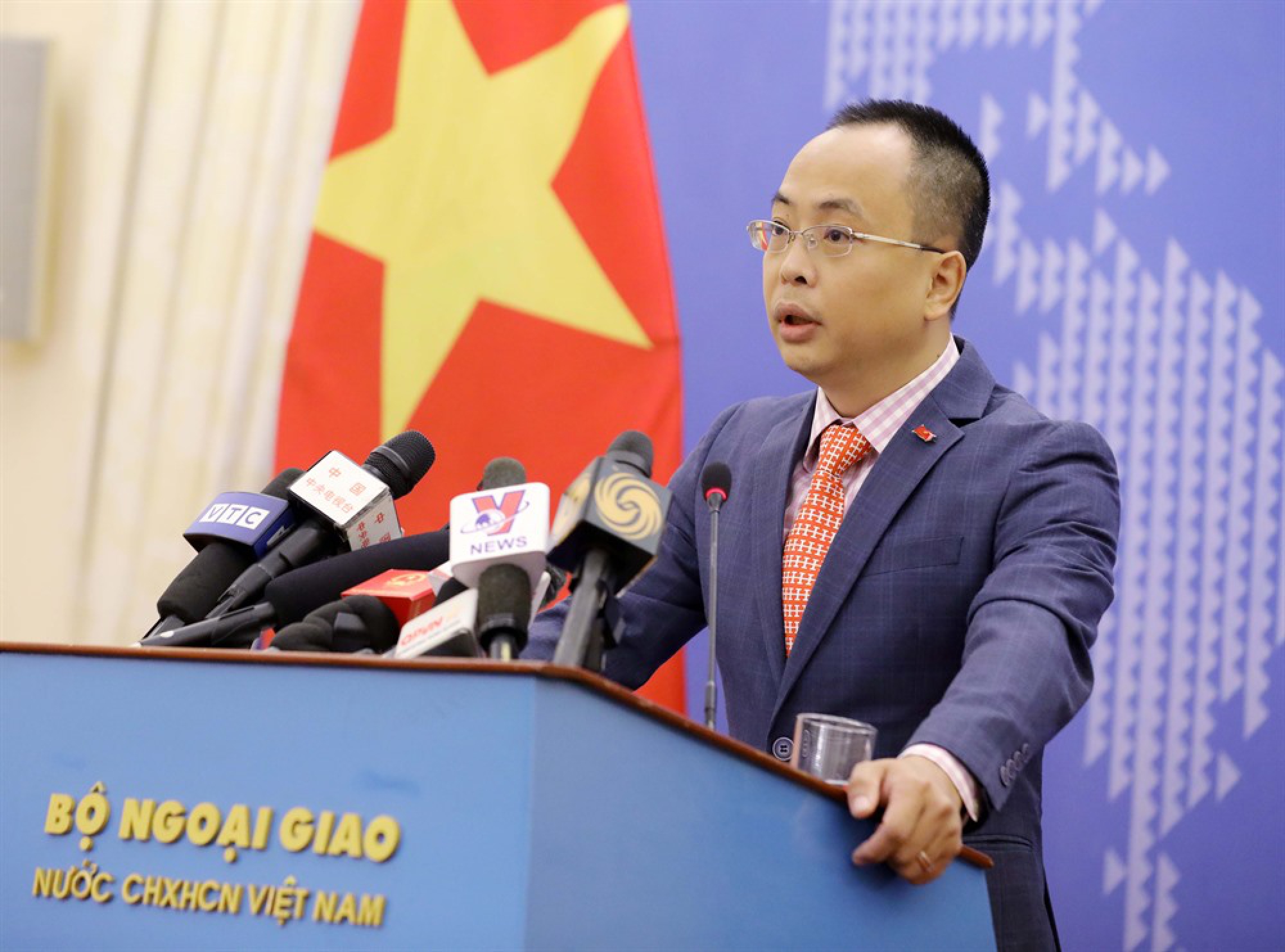
HÀ NỘI — Vice Spokesperson of the Ministry of Foreign Affairs Đoàn Khắc Việt underlined Việt Nam’s objection to China’s recent fishing ban while detailing Việt Nam’s viewpoints on several issues related to the East Sea (South China Sea) at the ministry’s regular press conference on Thursday.
Replying to a question about reports the Chinese coastguard declared it will guarantee the enforcement of the fishing ban that will take effect on May 1, 2021, on the sea area covering part of the Gulf of Tonkin and Việt Nam’s Hoàng Sa (Paracel) archipelago, the vice spokesperson reiterated that Việt Nam has sufficient legal grounds and historical evidence testifying to its sovereignty over Hoàng Sa and Trường Sa (Spratly) archipelagos, as well as its legal rights towards sea areas identified in line with the 1982 United Nations Convention on the Law of the Sea (UNCLOS).
Việt Nam holds that measures to preserve creature resources need to be implemented in conformity with regulations of the 1982 UNCLOS and must not harm the sovereign right and jurisdiction at sea of other related states, according to Việt.
He stressed that Việt Nam objects to and resolutely rejects this unilateral decision by the Chinese side, which has violated Việt Nam’s sovereignty over Hoàng Sa archipelago; infringed international law, including the 1982 UNCLOS; run counter to the spirit and wording of the Declaration on the Conduct of Parties in the East Sea (DOC); and gone against the agreement on basic principles guiding the settlement of sea-related issues between Việt Nam and China.
Regarding the information that the Vietnamese maritime militia force operating near Hainan archipelago and Việt Nam’s Hoàng Sa and Trường Sa archipelagos has threatened the maritime law enforcement and security-defence forces of China, the vice spokesperson noted: “We refute the incorrect information about the marine self-defence militia force of Việt Nam.”
He highlighted the country’s defence policy of peace, self-defence and based on the people, citing the 2019 law on militia and self-defence forces which stipulates that the marine self-defence militia force is part of Việt Nam’s self-defence militia force and has the tasks of safeguarding the country’s maritime sovereignty and maintaining security, order, and safety on seas and islands.
The marine self-defence militias and other authorised forces working at sea absolutely comply with Vietnamese laws and international law, especially the 1982 UNCLOS, the vice spokesperson emphasised.
He again declared that any act harming Việt Nam’s sovereignty over the two archipelagos in the East Sea, as well as the country’s sovereignty, sovereign right, and jurisdiction over its sea areas is valueless and not recognised, and Việt Nam resolutely objects to such acts. — VNS