[China] Suez Canal block may cause export delays #SootinClaimon.Com

#SootinClaimon.Com : ขอบคุณแหล่งข้อมูล : หนังสือพิมพ์ The Nation.

https://www.nationthailand.com/ann/30404180

[China] Suez Canal block may cause export delays

Mar 27. 2021An official from the Suez Canal Authority investigates the scene where the Ever Given, a cargo ship, got wedged across the Suez Canal, blocking traffic in the vital waterway. [Photo/Agencies] An official from the Suez Canal Authority investigates the scene where the Ever Given, a cargo ship, got wedged across the Suez Canal, blocking traffic in the vital waterway. [Photo/Agencies]

By WANG YING
China Daily/ANN

Concerted efforts needed from entire shipping industry to clear logjam

The cargo ship blocking the Suez Canal may cause a delay of three to five days in Chinese exports and temporarily affect international trade, as clearing the logjam requires concerted efforts from the entire shipping industry, said experts.

Despite the efforts made so far, the Suez Canal continues to remain blocked, holding up several vessels in one of the world’s most important waterways.

The 400-meter container ship Ever Given ran aground on Tuesday, 115 kilometers north of the south entrance of the Suez Canal, a waterway vital for East-West cargoes and responsible for the movement of about 10 percent of global seaborne trade. Nearly 200-plus ships were at a standstill, as of Thursday, according to shipping journal Lloyd’s List.

For vessels yet to reach the human-made waterway, there are other options, but that would significantly increase the transit time for ships between Asia and Europe, experts said.

The world’s number one line A. P. Moller Maersk said it was considering diverting vessels around Africa’s Cape of Good Hope, according to a Reuters report.

“An extra 840 nautical miles would be added for the deviation, which means vessels from China to Europe would need an extra three to five days for delivery of goods,” said Lin Guolong, director of the Logistics Research Center at Shanghai Maritime University.

According to Lin, about 60 percent of the Chinese vessels from China to Europe and Africa, as well as more than 95 percent of regular liners between China and Europe cross the canal during their voyages, in an attempt to avoid the much longer trip around the southern tip of Africa.

Almost 19,000 ships passed through the canal in 2020, or an average of 51.5 ships per day, according to the Suez Canal Authority.

Experts said the blockage would erode the recovery of global trade and supply chains if it extends for more than a couple of days.

Since the outbreak of COVID-19, global trade has been suffering due to the high rates of ship cancellations, shortages of containers, as well as slower handling speeds at ports.

“In recent days, the number of consultations on China-Europe freight trains rose threefold, an indication that companies are looking for alternatives,” said Zhou Shihao, founder and CEO of YQNLink, a Shanghai-based global intelligent logistics platform.

Chinese exporters, ports, and shipping companies are already grappling with higher freight charges for shipments to Europe and the United States since the second half of last year.

There are 1.2 billion metric tons of cargo moving through the waterway annually, and about 1.9 million barrels of oil are shipped through the Suez Canal each day, according to the Suez Canal Authority and Lloyd’s List Intelligence.

Experts hold varied views on the time needed to clear the blockage. If the traffic jam at Suez Canal extends to weeks or even a month, shipping between Asia and Europe will be hit with freight rates set to soar, according to Zhou.

Although Chinese vessels bound for the US may not feel the pain immediately, US consumers could feel the impact if the blockage carried on and disrupts the global supply chain.

Even if the Ever Given gets refloated and towed away in the next three to four days, Lin believes it may take between two weeks to one month for the Suez Canal to return to normalcy.

Lin urged the global shipping industry to take coordinated action in restoring traffic at one of the world’s busiest shipping channels for oil and refined fuels, grain and other commodities. “After all, we are living in the same planet with a shared future.”

S. Korean importers tense over Suez Canal blockage #SootinClaimon.Com

#SootinClaimon.Com : ขอบคุณแหล่งข้อมูล : หนังสือพิมพ์ The Nation.

https://www.nationthailand.com/ann/30404179

S. Korean importers tense over Suez Canal blockage

Mar 27. 2021(Yonhap)(Yonhap)

By Bae Hyunjung
The Korea Herald/ANN

In the wake of the Suez Canal blockage that is paralyzing regional and global logistics, South Korean companies are starting to feel an impact.

With importers tense over possible delays in their material and product supplies, shipping companies are expected to gain from increased fees and surplus demands.

HMM, Korea’s largest and the world’s eighth-largest shipper, saw its stock price climb 15.96 percent on-day to 34,150 won ($30.20) on Friday, prolonging the uptrend for nine consecutive trading days. Earlier in the day, the figure reached 35,700 won, hitting a 52-week high.

Brokerages also raised the target stock price for the company, citing the reflex effect from the canal situation and forecasting an increase in both order volume and logistics rate.

Importers, however, are keen on securing their raw materials and products from the other side of the canal. Egypt is currently home to the manufacturing facilities of IT giants such as Samsung Electronics and LG Electronics, as well as several global medical device companies.

“As the blockage is taking more days to resolve, some (Korean) companies are starting to take the consequent impact,” said an industry official.

“Alternative routes through other ports along the Red Sea could be considered, but will likely be ineffective in terms of costs.”

According to the Institute for International Trade, a think tank affiliated with the Korea International Trade Association, increased logistics costs were fingered as the second-largest obstacle for Korean exporters this year, following increased prices of raw materials.

The semiconductors sector is to receive an immediate blow should the traffic jam prolong, as the business has already been facing a global demand shortage due to exploding demand in batteries for electric cars and other vehicles.

“The current situation will have an increasing effect on air cargo and container ship fees in the European routes,” said Um Kyung-a, a researcher at Shinyoung Securities.

“As the energy supply in the European region faces setbacks, the global oil prices will also remain on an uptrend for a while.”

In the case of lightweight or urgent cargo, operators may even turn to the skies as an expensive alternative, the expert added.

The Ever Given, a 220,000-ton Taiwan-flagged cargo ship, ran aground after being blown by sudden winds while entering the canal from the Red Sea. Wedged across the Suez Canal earlier this week, the massive vessel has been impeding the waterway traffic, blocking over 260 vessels from passing through the canal as of Thursday, according to the Suez Canal Authority.

The canal, which opened in 1869, has served as a strategic logistic hub with some 12 percent of the global trade volume and 30 percent of container transportation quantities going through it.

The canal has experienced similar blockages in the past, all of which had taken several days to recover from.

Bangladesh Independence Day celebrated #SootinClaimon.Com

#SootinClaimon.Com : ขอบคุณแหล่งข้อมูล : หนังสือพิมพ์ The Nation.

https://www.nationthailand.com/ann/30404178

Bangladesh Independence Day celebrated

Mar 27. 2021

By The Daily Star/ANN

The nation yesterday celebrated the 51st Independence Day with a call for building “Sonar Bangla” as envisioned by Father of the Nation Bangabandhu Sheikh Mujibur Rahman.

This year’s festivities coincided with the 10-day grand celebrations of the birth centenary of Bangabandhu and the Golden Jubilee of Independence.

The celebrations marked the physical attendance of five heads of state and government and virtual attendance of other global leaders.

The programme began on March 17 at the capital’s National Parade Square in the presence of Maldivian President Ibrahim Mohamed Solih. It ended yesterday with the attendance of Indian Prime Minister Narendra Modi in person as the guest of honour.

UN Secretary-General Antonio Guterres, US President Joe Biden, Russian President Vladimir Putin, British Prime Minister Boris Johnson, Turkish President Recep Tayyip Erdogan, Prince of Wales Charles, and Pakistan Prime Minister Imran Khan sent letters and video messages on the closing day of the celebrations.

Earlier, Sri Lankan Prime Minister Mahinda Rajapaksa, Nepalese President Bidya Devi Bhandari and Bhutanese Prime Minister Lotay Tshering joined the celebrations in person.

Marking the Independence Day, the government took up programmes which were held maintaining health guidelines. Due to the pandemic, the day was celebrated on a limited scale.

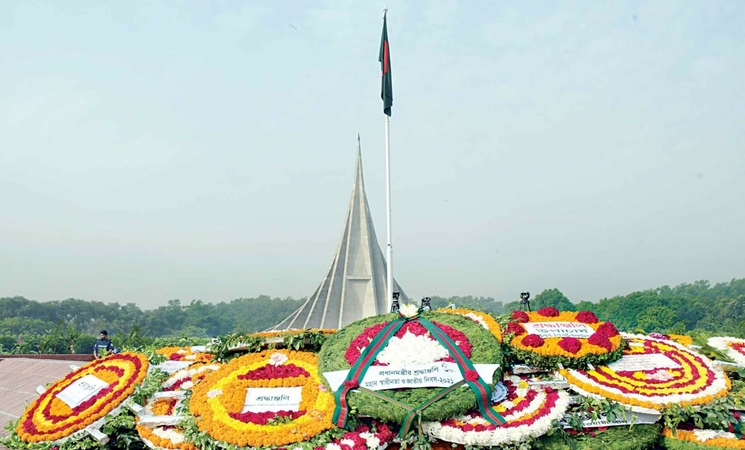
The day’s programmes began with a 50-gun salute early in the morning. The national flag was hoisted atop all government, semi-government, autonomous and private buildings while many streets and important city intersections were decorated with national and multi-coloured miniature flags and festoons.

In the morning, President Abdul Hamid and Prime Minister Sheikh Hasina paid rich tributes to the martyrs of the Liberation War by placing wreaths at the National Memorial in Savar. They stood in silence for some time as a mark of profound respect to the memories of the martyrs.

Later, the president and the PM signed the visitors’ book there.

Bangabandhu’s younger daughter Sheikh Rehana, Jatiya Sangsad Speaker Shirin Sharmin Chaudhury, Chief Justice Syed Mahmud Hossain, senior Awami League leaders and high civil and military officials, among others, were present.

The JS Speaker and the chief justice also paid tribute to the martyrs by placing wreaths at the National Memorial.

Awami League, led by party General Secretary Obaidul Quader, also paid tribute there by placing a wreath in presence of senior party leaders.

Just after the completion of the state formalities, the main entrance to the National Memorial was opened to all.

Jatiya Party, BNP, Workers Party, Jatiya Samajtantrik Dal, NAP, Gono Forum, Ganatantri Party, Jubo League, Chhatra League, Swechchhasebak League, Krishak League and different other political parties placed wreaths.

On her return from the National Memorial, PM Hasina paid rich tributes to the Father of the Nation by placing wreaths at his portrait in front of Bangabandhu Memorial Museum in the capital’s Dhanmondi.

The premier along with her sister entered the museum and placed a wreath at the stair where the bloodstained body of Bangabandhu was lying on the black night of August 15, 1975.

SPECIAL PROGRAMME ENDS

On the last day of the 10-day special programme yesterday, President Hamid joined the function as the chief guest at the National Parade Square. The theme of the day’s event was “Swadhinatar Panchash Bochhor o Agragatir Subarnarekha”.

PM Hasina chaired the function while her Indian counterpart Modi attended it as the guest of honor.

During the programme, “Sraddha Swarak” was handed to the guest of honour. The Golden Jubilee logo was unveiled on the occasion.

National dailies brought out special supplements while Bangladesh Betar, Bangladesh Television, private radio and television channels aired special programmes on Liberation War and highlighted the significance of the day.

The day was also celebrated across the country in a befitting manner while Bangladesh missions abroad also celebrated the day through similar programmes.

China rejects US allegations of militarizing South China Sea #SootinClaimon.Com

#SootinClaimon.Com : ขอบคุณแหล่งข้อมูล : หนังสือพิมพ์ The Nation.

https://www.nationthailand.com/ann/30404150

China rejects US allegations of militarizing South China Sea

Mar 26. 2021Photo taken on May 20, 2013 shows the scenery of Pattle Island which is part of the Xisha Island, in Sansha city, South China's Hainan province. (PHOTO / XINHUA)Photo taken on May 20, 2013 shows the scenery of Pattle Island which is part of the Xisha Island, in Sansha city, South China’s Hainan province. (PHOTO / XINHUA)

By China Daily/ANN

BEIJING – Chinese Foreign Ministry spokesperson Hua Chunying on Thursday refuted US allegations of militarizing the South China Sea and undermining the international system.

In response to US Secretary of State Antony Blinken’s address at NATO headquarters in Brussels on Wednesday, Hua told a press briefing that labels like “militarizing the South China Sea” should never be pinned on China.

China was not the first one to start construction or deploy necessary armaments in the South China Sea, nor is it the one to deploy the most weaponry. The United States cannot use the so-called militarization to deprive China of the right to defend its own territory, Hua said.

She said it is the United States which has actually militarized the area and threatened freedom of navigation, adding that the country, over 8,300 miles from the South China Sea, has built several military bases with offensive weapons around the area, and frequently sent aircraft carriers and strategic bombers throughout the year.

In his remarks, Blinken said China threatens NATO security, calling for a joint approach to counter China as the country “is working to undercut the international system” and the values the United States and its allies share.

“There is only one system in the world, which is the international system with the United Nations as its core. And there is only one set of rules, which are the basic norms of international relations based on the principles of the UN Charter,” Hua said.

Noting that the United States has withdrawn from a number of treaties over the years, Hua said it has now wielded the stick of sanctions, and imposed unilateral and illegal sanctions on other sovereign countries.

“The label of ‘undermining the international system’ belongs to the United States,” Hua said.

“We hope the United States will correctly understand itself and others, abandon zero-sum game and cold war mentality, truly learn to deal with other countries based on equality and mutual respect, and assume the important responsibilities of major powers for world peace and development,” Hua said. 

N. Korea says it test-fired new tactical guided missiles #SootinClaimon.Com

#SootinClaimon.Com : ขอบคุณแหล่งข้อมูล : หนังสือพิมพ์ The Nation.

https://www.nationthailand.com/ann/30404149

N. Korea says it test-fired new tactical guided missiles

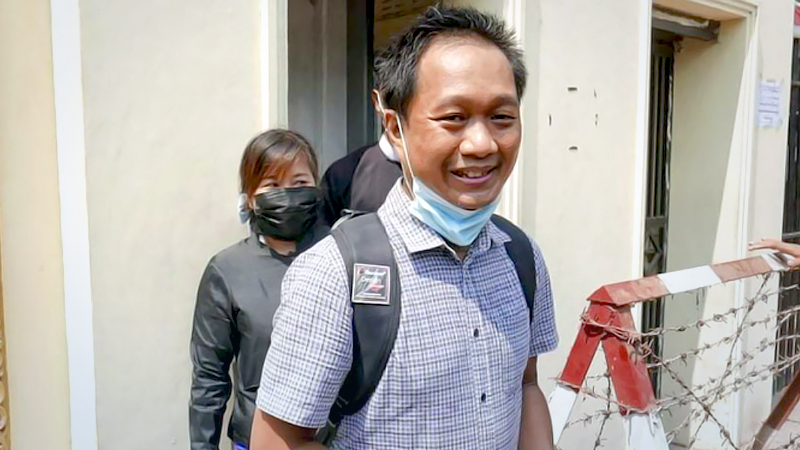
Mar 26. 2021This image captured from the homepage of the Rodong Sinmun, an organ of the North Korean Workers' Party, on Friday, shows the North test-firing a This image captured from the homepage of the Rodong Sinmun, an organ of the North Korean Workers’ Party, on Friday, shows the North test-firing a “new-type tactical guided projectile” conducted the previous day. (Rodong Sinmun)
By The Korea Herald/ANN

North Korea said Friday it test-fired new tactical guided missiles a day earlier, confirming the launch of ballistic missiles for the first time in about a year.

On Thursday, South Korea’s military said the North fired what appeared to be two short-range ballistic missiles into the East Sea, raising concerns that the missiles banned under the UN Security Council resolutions could sharply escalate tensions.

The latest launch came as the Joe Biden administration prepares to announce a new policy on the North.

“The newly developed new-type tactical guided projectile is a weapon system whose warhead weight has been improved to be 2.5 tons with the use of the core technology of tactical guided projectile that was already developed,” the official Korean Central News Agency (KCNA) said.

The Academy of Defence Science conducted the launch and was “very successful just as it had been confidently predicted,” according to the KCNA.

The two missiles “accurately hit the target” set in the water 600 kilometers off the East Coast, it said.

The KCNA added that the “reliability of the improved version of solid fuel engine was confirmed through several engine ground jet tests and their test-firing processes, and that the irregular orbit features of low altitude gliding leap type flight mode already applied to other guided projectile were also re-confirmed.”

Observers say the North could have tested an upgraded version of its KN-23 missile, which resembles Russia’s Iskander, showcased during a military parade in Pyongyang in January.

Photos released by state media show that the new tactical guided projectile has a conical warhead in black and white colors, similar to the one showcased during the military parade. The upgraded KN-23 missile in the parade had a conical warhead with a five-axle transporter erector launcher (TEL).

The North’s Iskander is known to have a flight range of 400 to 600 km and mainly targets South Korea. Rather than following a general parabolic trajectory, the missile shows a more complicated path by doing a so-called pull-up maneuver over the course of its flight.

The solid-fueled missiles can be prepared to be launched in around 10 to 15 minutes.

Earlier, the Joint Chiefs of Staff said the two missiles were fired into the East Sea from the North’s eastern town of Hamju at 7:06 a.m. and 7:25 a.m., and flew around 450 kilometers with an altitude of 60 km.

The launch was guided by Ri Pyong-chol, vice chairman of the Central Committee of the Workers’ Party, officials of the Department of Munitions Industry of the Party Central Committee and senior officials in the sector of national defense scientific research.

However, North Korean leader Kim Jong-un did not oversee the missile testing, in an apparent move to pile up pressure on Washington in a toned-down manner.

The North also did not send a direct message to the US or South Korea, although Ri stressed that the weapons development “is of great significance in bolstering up the military power of the country and deterring all sorts of military threats existing on the Korean Peninsula.”

Thursday’s launches came four days after the country fired two cruise missiles into the Yellow Sea on Sunday.

The latest launch also came as the Biden administration was completing its North Korea policy review.

The US president said Thursday that the United States will “respond accordingly” if North Korea continues to escalate tensions, noting the launch of ballistic missiles was in violation of UN Security Council resolutions.

This marks the North’s first launch of ballistic missile since Biden took office.

North Korea last fired a ballistic missile in March 2020.

The UN Security Council sanctions committee on North Korea is expected to meet Friday (Washington time) at the request of the US to discuss Pyongyang’s latest launches.

The meeting will be at a lower level than the Security Council meeting held when the North last fired ballistic missiles a year ago.

The US earlier said it has tried to reach out to North Korea since mid-February but that Pyongyang has remained unresponsive. North Korea’s first vice foreign minister, Choe Son-hui, has said her country will continue to ignore US overtures until Washington gives up its hostile policy toward Pyongyang.

Nuclear talks between Washington and Pyongyang have remained stalled since the 2019 summit in Hanoi between then US President Donald Trump and leader Kim ended without a deal. (Yonhap)

[Myanmar] AP photo journalist released #SootinClaimon.Com

#SootinClaimon.Com : ขอบคุณแหล่งข้อมูล : หนังสือพิมพ์ The Nation.

https://www.nationthailand.com/ann/30404148

[Myanmar] AP photo journalist released

Mar 26. 2021

By Kyi Naing
Eleven Media/ANN

AP’s photo journalist Thein Zaw was released on March 24 after his defamation charge was dropped, said his lawyer. 

Four arrested reporters including him were brought to trial at Kamayut Township Court on March 24. The court ruled that the charge on Thein Zaw was dropped and he was released. 

“Plaintiff police captain Myo Oo submitted a letter saying Thein Zaw’s case was withdrawn. The judge passed his verdict that he would be acquitted as per Section 494 (a) of the penal code of Myanmar. He was unconditionally released,” said his lawyer Tin Zar Oo. 

The AP photo journalist was released from Insein Prison in Yangon at about 2 pm on March 24. He is said to be in good health. 

Thein Zaw together Ye Myo Khant from MPA photo agency were arrested by police on February 27 while covering the protest at Hledan in Kamayut Township. 

The five journalists arrested and charged with Section 505 (a) of the penal code at Kamayut Township Court are Thein Zaw, Ye Myo Khant, Aung Ye Ko from 7 Day, freelance reporter Banyar and Hein Pyae Zaw from Zeekwat news agency.  

Reporter Kay Zun Nway from Myanmar Now and freelance reporter Soe Yaza Tun were also arrested in Yangon while covering news. 

S’pore, Indonesia back Asean leaders’ summit on Myanmar #SootinClaimon.Com

#SootinClaimon.Com : ขอบคุณแหล่งข้อมูล : หนังสือพิมพ์ The Nation.

https://www.nationthailand.com/ann/30404147

S’pore, Indonesia back Asean leaders’ summit on Myanmar

Mar 26. 2021Foreign Minister Vivian Balakrishnan (left) with Indonesian Minister of Foreign Affairs Retno Marsudi PHOTO: MINISTRY OF FOREIGN AFFAIRS, SINGAPOREForeign Minister Vivian Balakrishnan (left) with Indonesian Minister of Foreign Affairs Retno Marsudi PHOTO: MINISTRY OF FOREIGN AFFAIRS, SINGAPORE

By Arlina Arshad
The Straits Times/ANN

SINGAPORE – The foreign ministers of Singapore and Indonesia on Thursday (March 25) backed convening a summit of Asean leaders on Myanmar, saying the region should reach a common standing on the crisis following the country’s military coup.

At a joint press conference after their hour-long meeting  in Jakarta, Indonesian Foreign Minister Retno Marsudi said the leaders’ summit would be held “in the near future”.

“We share our concern on the current situation in Myanmar. We also share our position to call on the Myanmar military to stop the use of force and prevent further casualties. We also urge Myanmar to start a dialogue to put democracy, peace and stability back on track,” she said.

Her Singaporean counterpart, Dr Vivian Balakrishnan, expressed similar sentiments. “We are gravely concerned with the situation. We are distressed by the loss of human life by the use of lethal arms on unarmed civilians,” he said.

The position taken by their two countries, he noted,  were “virtually identical”.

Both countries, he said,  believed that national reconciliation needs to occur and “can only occur if both sides actually sit down in good faith, negotiate and find a solution that works for Myanmar for the long term”.

He noted that the two neighbours recognised that there should be no foreign interference, but Asean stands ready to help.

“Therefore, we also support our leaders getting together to generate a common position in which Asean can express its support for Myanmar,” he said.

Dr Balakrishnan’s meeting with Ms Retno kicked off a two-day working visit to reaffirm the strong relations between their two countries.

In Facebook earlier on Thursday, Dr Balakrishnan posted a photo of traditional Indonesian snacks Ms Retno had left for him and the Singapore delegation at the hotel they are staying in as a “welcome surprise”.

He also wrote that he will call on Indonesian President Joko Widodo “as well as other old friends” during the visit, adding: “Looking forward to seeing them in person.”

According to a statement from Singapore’s Ministry of Foreign Affairs (MFA) on Wednesday, the visit is aimed at strengthening the close bilateral ties between the two countries as they recover from the Covid-19 pandemic.

Dr Balakrishnan is also holding separate engagements with Coordinating Minister for Maritime Affairs and Investments Luhut Pandjaitan, Coordinating Minister for Economic Affairs Airlangga Hartarto, Minister of Finance Sri Mulyani Indrawati, Minister of State-Owned Enterprises Erick Thohir, and Minister of Tourism and Creative Economy Sandiaga Uno, MFA said.

The Singapore minister will also meet Jakarta Governor Anies Baswedan and other prominent Indonesian personalities, it added.

Dr Balakrishnan’s visit to Indonesia comes after the Indonesian President proposed a high-level meeting of Asean leaders to discuss the situation in Myanmar following the Feb 1 military coup.

Mr Widodo, or Jokowi as he is better known, on March 19 urged that violence be halted and democracy, peace and stability be restored in Myanmar.

On March 2, Asean foreign ministers had attended a virtual meeting initiated by Ms Retno to discuss the crisis.

Before visiting Indonesia, Dr Balakrishnan had travelled to Brunei, the current Asean chair, and Malaysia.

In Brunei, he had an audience with Sultan Hassanal Bolkiah and was hosted to lunch by his counterpart, Dato Erywan Pehin Yusof.

The ministers discussed Asean’s role in regional cooperation under Brunei’s chairmanship and agreed that the ongoing situation in Myanmar was of deep concern, and urged all sides in Myanmar to seek a peaceful solution through constructive dialogue.

They also discussed Asean’s support for Myanmar’s return to the path of national reconciliation, peace and stability, MFA had said.

In Malaysia, Dr Balakrishnan had an audience with the Malaysian King, Sultan Abdullah Ahmad Shah, and called on Prime Minister Muhyiddin Yassin and met other ministers.

Supplies to Asia may be disrupted due to Suez Canal incident, says Ong Ye Kung #SootinClaimon.Com

#SootinClaimon.Com : ขอบคุณแหล่งข้อมูล : หนังสือพิมพ์ The Nation.

https://www.nationthailand.com/ann/30404146

Supplies to Asia may be disrupted due to Suez Canal incident, says Ong Ye Kung

Mar 26. 2021The Ever Given container ship in the Suez Canal in Egypt, on March 25, 2021. PHOTO: SUEZ CANAL AUTHORITYThe Ever Given container ship in the Suez Canal in Egypt, on March 25, 2021. PHOTO: SUEZ CANAL AUTHORITY

By Kok Yufeng
The Straits Times/ANN

SINGAPORE – Supplies to Singapore and the region may be temporarily disrupted, said Transport Minister Ong Ye Kung on Thursday (March 25), after one of the world’s largest container ships got stuck in the Suez Canal, blocking traffic along the critical waterway.

Should the disruption in supplies happen, some drawdown on existing inventories will become necessary, Mr Ong wrote in a Facebook post.

The alternative is for ships coming from Europe and the Middle East to sail around the Cape of Good Hope, located at the southern tip of the African continent, to get to Asia, he added. But this is a longer journey that will take one to two more weeks.

“If the disruption is prolonged, PSA may see schedule disruptions when shipping lines re-route their journeys. It will have to plan ahead and ensure that operations remain smooth,” Mr Ong said. PSA is a Singapore-based global port operator.

Tugs and diggers have so far failed to dislodge the 400m-long, 224,000-tonne Ever Given after it ran aground on Tuesday. The ship had lost the ability to steer amid high winds and a dust storm, said the Suez Canal Authority, and the effort to reopen the canal could take several days.

Comparing the Suez Canal, which provides passage for around 10 per cent of all global seaborne trade, with the Straits of Malacca and Singapore, which cater to a third of that trade, Mr Ong said the two waterways are closely connected and link up Europe, Middle East and Asia.

“To have the Suez blocked is akin to a big tree falling across the CTE (Central Expressway). Every other expressway linked to the CTE will be affected,” he said.

“This is another unfortunate incident that illustrates how the world is now so closely interwoven together,” he added.

Observers say the blockage will have knock-on effects on global supply chains already strained by the Covid-19 pandemic.

The average Singaporean could continue to face inconveniences such as products being unavailable or longer shipping times, but consumer prices are not likely to rise much, they say.

Freight charges only make up a fraction of the price of goods, so even if rates go up and it is passed on, consumers may not notice, said Dr Yap Wei Yim, head of Singapore University of Social Sciences’ (SUSS) international trade management minor programme.

There is also no reason for another panic run to the supermarkets for items like toilet paper, he said, noting that they are sourced from Asia and do not come through the Suez Canal.

Singapore Shipping Association executive director Michael Phoon said businesses and consumers in Asia and the Mediterranean can expect delays on all cargo shipments coming through the Suez Canal.

He said shipping firms will need to decide whether to wait for the salvage and refloating operations at the canal to be complete, or re-route and sail around Africa. “Whatever the decision, it will incur additional time and costs.”

S&P Global Platts’ head of global demand and Asia analytics, Mr Kang Wu, does not expect the blockage to last more than a few days. He said it is unlikely that freight for crude and refined oil products will be incentivised to make the long trip around Africa.

SUSS’ Dr Yap said disruptions caused by the Suez Canal jam will cascade through container trading networks around the world.

While container ships and oil tankers are key users of the canal, its shipping traffic also includes car carriers and bulk carriers. Hence, the blockage is expected to have an impact on other sectors as well.

It will also likely prolong an ongoing global shortage of shipping containers, which has been driving up shipping charges. “Hours into the incident, we saw freight rates strengthening again,” Dr Yap said.

With shipping firms increasing capacity and China racing to produce more containers, there was optimism the shortage could be resolved in the middle of the year.

But the Suez Canal blockage is now likely to aggravate existing bottlenecks and cause even more disruptions, not only for the container trade but for other commodities dependent on the busy waterway.

“Satellite pictures already show how quickly ship traffic is piling up,” said Dr Yap. “Unless supply issues are sufficiently addressed, we will see the container shortage situation extending well into the second half of 2021 and even 2022.”

The backlog caused by the Suez Canal blockage could also create some challenges in the short term for some of the hub ports, Dr Yap added. “Ships that are late and on time might come at about the same window and the ports may not have enough berths.”

To mitigate the current situation, National University of Singapore Business School’s Associate Professor Goh Puay Guan said shipping lines have to increase capacity where possible, and ports need to clear their throughputs and prevent bottlenecks.

Firms could also explore alternative freight options, including other sea routes, and overland transport such as rail or trucks, or purchase from other sources of supply.

Said Prof Goh: “It is probably a temporary imbalance, because when demand came back, parts of the supply chain were not ready to cope with this. This has been exacerbated by the Suez Canal accident.

“In the short to medium term, it will be very painful as companies try to adjust. Eventually an equilibrium will be found as the bottlenecks start to clear.”

US companies in Asean expect drop in revenue contribution, but eager to continue investing #SootinClaimon.Com

#SootinClaimon.Com : ขอบคุณแหล่งข้อมูล : หนังสือพิมพ์ The Nation.

https://www.nationthailand.com/ann/30404105

US companies in Asean expect drop in revenue contribution, but eager to continue investing

Mar 25. 2021There is greater optimism from companies in Singapore with regard to Asean's contribution to revenues. ST PHOTO: KUA CHEE SIONGThere is greater optimism from companies in Singapore with regard to Asean’s contribution to revenues. ST PHOTO: KUA CHEE SIONG

By Jolene Ang
The Straits Times/ANN

SINGAPORE – American companies based in Asean are expecting a drop in revenue contributions to businesses in the near term, a poll by the American Chamber of Commerce in Singapore (AmCham) has found.

But despite the economic uncertainty, many – more than three-quarters of those surveyed – are eager to continue investing in the Asean market over the next five years.

The poll also found that there is greater optimism from companies in Singapore with regard to Asean’s contribution to revenues.

Some 50 per cent of respondents in Singapore said they expect their profits in Asean to increase, compared to 26 per cent of respondents in Malaysia.

The 2021 ASEAN Business Outlook Survey, an annual publication, surveys senior business executives from US companies across Asean on American business activity in Southeast Asia.

The findings were released late Wednesday night (March 24) after a virtual discussion held by Amcham.

The report noted that despite the Covid-19 pandemic and the diversity of the region, Asean continues to be a vital market for American businesses with its robust and growing middle class; the continuing focus on improving infrastructure; growing regional integration and availability of trade and investment opportunities in the region.

Within Asean, Singapore is the US’ largest trading partner, accounting for almost 25 per cent of total US trade with the region, at a value of USD$57.6 billion (S$77.5 billion). More than 4,500 American firms have operations in the country.

AmCham chief executive Lei Hsien-Hsien said Asean is a vital trading partner to the US.

“Despite the economic impact of Covid-19, the region continues to attract high levels of investment from US companies,” said Dr Lei.

“This partnership is crucial to the region’s recovery from Covid-19 as we undergo a transformation of our society and businesses.

“Overall, there is growing optimism in Asean as leaders and businesses demonstrate resilience along with a spirit of innovation and creativity that will support regional stability, sustainability and growth.”

The poll also found that over 70 per cent of the Asean-based corporate respondents have plans to expand operations in Asia-Pacific in the next five years.

Over three-quarters of respondents also expressed a positive sentiment towards the US, as compared to over half in the previous year.

The poll findings “reaffirms that US businesses will continue to invest in the region and to build strong partnerships to realise growth opportunities”, noted AmCham.

“This partnership with Asean will continue to provide US businesses with a sustainable platform for technology, innovation, enterprise, and sustainability.”

N. Korea fires 2 unidentified projectiles into East Sea: JCS #SootinClaimon.Com

#SootinClaimon.Com : ขอบคุณแหล่งข้อมูล : หนังสือพิมพ์ The Nation.

https://www.nationthailand.com/ann/30404104

N. Korea fires 2 unidentified projectiles into East Sea: JCS

Mar 25. 2021A projectile is launched during a long-range artillery drill by the North Korean army's long-range artillery sub-units on March 2, 2020, in this photo released by the North's official Korean Central News Agency the next day. (North's official Korean Central News Agency)A projectile is launched during a long-range artillery drill by the North Korean army’s long-range artillery sub-units on March 2, 2020, in this photo released by the North’s official Korean Central News Agency the next day. (North’s official Korean Central News Agency)

By The Korea Herald/ANN

North Korea fired two unidentified projectiles into the East Sea on Thursday, the Joint Chiefs of Staff (JCS) said, amid reports they could be ballistic missiles banned under UN Security Council resolutions.

The projectiles were fired from the North’s eastern South Hamgyong Province earlier in the morning, according to the military. Other details, including what type of projectile was launched, were not immediately available.

“Further information is under analysis by South Korea-US intelligence authorities,” the JCS said in a statement. “Our military is keeping a staunch readiness posture under a close South Korea-US coordination with heightened monitoring and security.”

Japanese and US media reported that the latest projectiles appear to be ballistic missiles.

North Korea last fired a ballistic missile in March 2020.

Thursday’s launches mark a gradual ratcheting up of tensions by the North as they came four days after the country fired two cruise missiles into the Yellow Sea.

The United States brushed off the cruise missile launches as part of “normal testing” not banned under UN sanctions resolutions, with President Joe Biden saying, “Nothing much has changed.”

The US reaction to the latest launches was not immediately available.

While cruise missiles are not banned under UN Security Council resolutions on North Korea, ballistic missiles are subject to the international sanctions. Pyongyang has maintained a self-imposed moratorium on nuclear and long-range missile testing since late 2017.

Ballistic missiles have a much longer range than cruise missiles of the same size and move quickly along their flight path. Ballistic missiles are also deemed more threatening, as they are designed to deliver nuclear weapons.

The latest launch also came as the Biden administration was completing its North Korea policy review.

North Korea’s First Vice Foreign Minister Choe Son-hui said last week any contact and dialogue with the US can be possible only when Washington rolls back its “hostile policy” toward it.

North Korean leader Kim Jong-un held three meetings with former US President Donald Trump, but denuclearization talks remain stalled since the collapse of their Hanoi summit in February 2019.

The US is scheduled to hold a security meeting with South Korea and Japan next week to discuss how to deal with issues involving North Korea. (Yonhap)