Chinese, Saudi FMs discuss boosting bilateral ties, regional cooperation #SootinClaimon.Com

#SootinClaimon.Com : ขอบคุณแหล่งข้อมูล : หนังสือพิมพ์ The Nation.

https://www.nationthailand.com/ann/30404103

Chinese, Saudi FMs discuss boosting bilateral ties, regional cooperation

Mar 25. 2021Visiting Chinese State Councilor and Foreign Minister Wang Yi holds talks on Wednesday with his Saudi counterpart Faisal bin Farhan Al Saud in Riyadh, Saudi Arabia. [Photo/Xinhua] Visiting Chinese State Councilor and Foreign Minister Wang Yi holds talks on Wednesday with his Saudi counterpart Faisal bin Farhan Al Saud in Riyadh, Saudi Arabia. [Photo/Xinhua]

By China Daily/ANN

RIYADH – Visiting Chinese State Councilor and Foreign Minister Wang Yi held talks on Wednesday with his Saudi counterpart Faisal bin Farhan Al Saud on boosting bilateral ties and regional cooperation.

Noting that China and Saudi Arabia share a comprehensive strategic partnership, Wang said the development of the bilateral relations has maintained a sound momentum under the guidance of their heads of state.

As major changes are unfolding in the world and in the Middle East, the strategic importance of the China-Saudi Arabia relations has become more prominent, and the two sides need to conduct timely strategic communication, protect the common interests, and contribute to global peace, stability and development, Wang said.

He said China supports Saudi Arabia in safeguarding its sovereignty, security and stability, choosing a development path that fits its national situation, and playing a bigger role in regional and global affairs, while opposing interference in Saudi Arabia’s internal affairs under the pretext of ideology and values.

Wang said that China appreciates Saudi Arabia’s understanding and consistent support for China on the issues related to China’s core interests, including Xinjiang, Hong Kong and Taiwan, and other issues of China’s major concerns.

The sanctions imposed by a few Western countries on China over the Xinjiang-related issues based on elaborately fabricated lies are a blatant interference in China’s internal affairs which aims to suppress and contain China. Such acts should be jointly rejected by all other countries, the Chinese diplomat noted.

Through safeguarding own sovereignty, national dignity and development rights, China and Saudi Arabia will further boost their strategic trust and pave the way for broader cooperation in all fields, he added.

Wang said China stands ready to deepen the synergy between China’s Belt and Road Initiative and Saudi Arabia’s Vision 2030, and make good use of the mechanism of the China-Saudi Arabia High-Level Joint Committee to promote cooperation in traditional areas such as trade, investment, and infrastructure, as well as in the emerging fields including artificial intelligence, 5G and big data.

China is willing to help Saudi Arabia in its efforts to diversify its economy and achieve sustainable development, Wang said.

The Chinese foreign minister also urged the two countries to work together to make good preparations for the upcoming China-Arab Summit and formulate a roadmap and specific plans for building a China-Arab community with a shared future.

Wang stressed that China is happy to see Saudi Arabia, as a major regional power, playing an important role in promoting regional peace and stability, and supports Saudi Arabia’s initiative on resolving the Yemen crisis.

In light of the new changes in the Middle East, China has proposed a five-point initiative for achieving peace and stability in the region, which is an active response to the requests of the countries in the region and based on the respect for their wills, Wang said.

China is ready to work with Saudi Arabia and other Arab countries to carry forward a data security initiative to make the digital economy more secure, standardized, open, and mutually beneficial, said Wang.

Noting that China and the Gulf Cooperation Council have been negotiating on a free trade deal for years, Wang said he hopes that the two sides can reach an agreement at an early date.

For his part, Faisal said that the Saudi Arabia-China relations have a long history and grown stronger as time goes by.

Saudi Arabia is proud of its friendly relations with China and will make every effort to push forward the relationship for the benefit of the two peoples, he said.

The Saudi side believes that all countries have the right to choose their own development path and should devote themselves to serving their own people instead of following the instructions of others, Faisal said, stressing that the principle of non-interference in other countries’ internal affairs is a clear principle in international law.

Saudi Arabia opposes any form of interference in China’s internal affairs and is willing to strengthen cooperation with China to jointly safeguard international order and stability, said the Saudi diplomat.

He also expressed the willingness to increase high-level exchanges, enhance strategic communication, and convene the meeting of the China-Saudi Arabia High-Level Joint Committee sooner to expand bilateral cooperation in all fields.

He agreed that the two countries will work together to make good preparations for the China-Arab Summit to ensure it will achieve important results.

Saudi Arabia welcomes China to play an active role in safeguarding the security in the Middle East, while appreciating China’s five-point peace initiative, Faisal said.

Saudi Arabia is willing to make joint efforts with China to push forward negotiations on a free trade deal between China and Gulf countries, he added.

The two sides also exchanged in-depth views on the Iranian nuclear issue, Yemen, and other international and regional issues of common concern.

Japan reluctant to impose sanctions over China’s human rights abuses #SootinClaimon.Com

#SootinClaimon.Com : ขอบคุณแหล่งข้อมูล : หนังสือพิมพ์ The Nation.

https://www.nationthailand.com/ann/30404102

Japan reluctant to impose sanctions over China’s human rights abuses

Mar 25. 2021Foreign Minister Toshimitsu MotegiForeign Minister Toshimitsu Motegi

By The Japan News/ANN

The Japanese government is taking a cautious stance on sanctions against China over its human rights violations against ethnic minority communities in the Xinjiang Uyghur Autonomous Region.

The United States, European Union and other countries are set to impose sanctions, and some in the ruling Liberal Democratic Party are calling for Japan to respond.

“There are different measures that each country can take. It is important for each country to think about what would be effective while making efforts to reach out [to China],” Foreign Minister Toshimitsu Motegi said at a meeting of the upper house Foreign Affairs and Defense Committee on Tuesday.

While Washington has clearly stated that human rights violations by China constitute “genocide,” the Japanese government has reserved judgment.

“We have not been able to confirm cases of human rights suppression,” said a senior Foreign Ministry official.

Japan is the only G7 country that does not have a legal framework for imposing sanctions on government officials of other countries for human rights violations.

While there are moves by the ruling and opposition parties to create such laws, the government is hesitant to do so because it may lead to interference in the internal affairs of other countries.

Japan is also not a signatory to the Genocide Convention, which mandates punishment for mass killings. The convention, which came into effect in 1951, has 152 signatory countries and regions, including China and North Korea.

The Japanese government has been working with the United States on its policy toward China, regarding human rights violations. According to government officials, Washington has not asked Tokyo to impose sanctions so far.

However, the U.S. administration of President Joe Biden has attached importance to human rights diplomacy, triggering concerns in the LDP. “If things continue as they are, even Japan may come under scrutiny from the U.S. and Europe,” a former cabinet member said.

[Myanmar] Nine security personnel, 35 spies and 164 people were killed: SAC #SootinClaimon.Com

#SootinClaimon.Com : ขอบคุณแหล่งข้อมูล : หนังสือพิมพ์ The Nation.

https://www.nationthailand.com/ann/30404101

[Myanmar] Nine security personnel, 35 spies and 164 people were killed: SAC

Mar 25. 2021

By Eleven Media/ANN

A total of five policemen and four soldiers and 35 people accused as spies and 164 people were killed by security forces in relation to the demonstrations, said Brig-Gen Zaw Min Tun, leader of the press team of State Administration Council (SAC) and Deputy Minister for Information in a press conference held at Nay Pyi Taw on March 23.

The security forces members were killed by protesters, he said.

“A total of five policemen and four soldiers are being killed and 163 security forces members are injured. One military family member is killed. 33 men and two women, who are accused as spies for the military, are killed by the protesters,” he said.

Some spies are being marked with tattoos to have public shame for their whole life, he added.

“They shaved hair of people, who are being accused as spies and tattooed their forehead while the spies tied their hands. Are they demanding democracy like that? It is like if one is not like me, you will be my enemy. It will only be anarchy. We have to quell the anarchy. Which country accepts the anarchy? We will send anarchic people to those countries. The countries and organizations, which are blaming us, accept the anarchic people using democratic ways,” he said.

He continued that the protesters attacked security forces and police stations and disposed of evidence intentionally.

“We saw people say there are people dead and injured in the crackdowns made by the security forces. A total of 164 people are being killed in the crackdowns. We are sorry that the people being killed in the crackdowns are our citizens,” he said.

China unveils steps to boost manufacturing #SootinClaimon.Com

#SootinClaimon.Com : ขอบคุณแหล่งข้อมูล : หนังสือพิมพ์ The Nation.

https://www.nationthailand.com/ann/30404064

China unveils steps to boost manufacturing

Mar 24. 2021

By China Daily / ANN

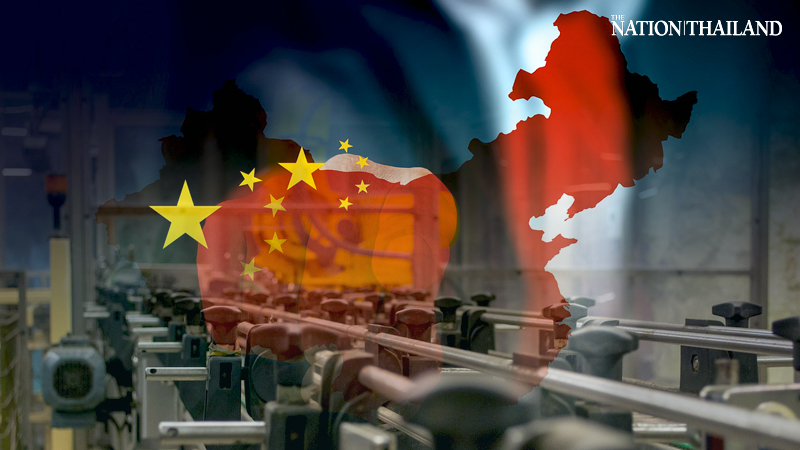
China on Tuesday announced key measures to promote the use of manufacturing services for the transformation and upgrade of the manufacturing sector and to foster high-quality development over the next five years.

By 2025, the country’s manufacturing services sector will not only help boost the high-quality development of the manufacturing sector, but also improve innovation capabilities and resource allocation efficiency, said a document jointly released by the National Development and Reform Commission and 12 other central departments.

There will also be substantial improvement in the specialization, branding, digitalization and internationalization of the manufacturing services sector, along with the creation of a group of leading manufacturing services clusters and enterprises.

To further boost the high-quality development of manufacturing services, the country will make a concerted push to effectively use 5G, big data, cloud computing, artificial intelligence, blockchain and other emerging information technologies to further develop smart manufacturing and cultivate shared manufacturing, design and data platforms.

More efforts will also be made to develop science and technology services such as technology transfer, entrepreneurial incubation and intellectual property rights, formulate a road map for digital transformation in key industries, promote the development of 5G and industrial internet, establish a global supply chain risk warning system for key sources and products, increase financing support for manufacturing service companies and encourage qualified enterprises to go public both at home and abroad.

Citing the new document, Wang Yong, a visiting professor at the KTH Royal Institute of Technology in Stockholm, Sweden, said the government’s new measures will improve manufacturing productivity, by developing the modern logistics service system and promoting the sharing of information resources.

Wang said the modern logistics system is an important means to connect consumption and production, which is key to building a unified domestic market.

“Under the new ‘dual-circulation’ development pattern, we need to build a high-quality modern logistics system to boost innovation-driven development for industries and consumption,” Wang said.

The country must strive to build an efficient system for technological innovation and transfer and spur the development of the digital economy, said Zhang Yuxian, director of the Department of Economic Forecasting at the State Information Center.

During the past five years, China has made huge strides in increasing the high-quality development of the manufacturing sector.

Data from the Ministry of Industry and Information Technology showed that the average growth rate of added value of the high-tech manufacturing industry was 10.4 percent from 2016 to last year, which was 4.9 percentage points higher than the average growth rate of added value of industrial companies with an annual revenue of more than 20 million yuan ($3 million) each for the same period.

The country has pledged to further develop the real economy, strengthen industrial and supply chains, boost industrial upgrading and foster high-quality manufacturing, according to the outline of the 14th Five-Year Plan for National Economic and Social Development and Long-Range Objectives Through the Year 2035.

Gone with the blaze #SootinClaimon.Com

#SootinClaimon.Com : ขอบคุณแหล่งข้อมูล : หนังสือพิมพ์ The Nation.

https://www.nationthailand.com/ann/30404063

Gone with the blaze

Mar 24. 2021

By The Daily Star / ANN

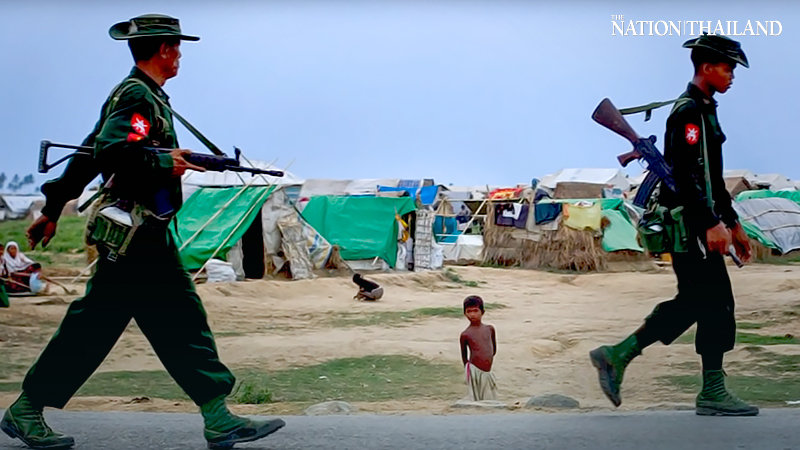
Fleeing a crackdown by the Myanmar military, 35-year-old Chubera Begum, along with her four children, arrived in Ukhiya from Rakhine State in August, 2017. She then found shelter in a tent at Balukhali camp, the largest refugee camp in the world.

In a span of three years, the Rohingya woman was able to build a house with bamboo and corrugated iron sheets with her income from a tea stall.

But all her hard work came to naught as she helplessly watched her home and all belongings turn to ashes in the devasting blaze that erupted at Balukhali Camp-18 in Cox’s Bazar on Monday.

“I was just making preparations for lunch. Suddenly, I heard people screaming. I stepped out of my home and saw a huge fire spreading quickly towards our home,” Chubera told this newspaper yesterday.

She then rushed back, immediately took her daughter and sons out of the house, and ran to safety.

“My home, all my savings and belongings went up in flames,” she said.

Visiting the sprawling Rohingya camp in West Balukhali, charred objects were found scattered across the vast swathes of the camp which resembled a war zone. Smokes were still billowing out of the ravaged houses in some places even hours after the blaze was doused.

Some people were seen sifting through debris to find anything that could be of use. Several women were wailing, reeling from the loss of their homes and belongings.

Talking to The Daily Star, Sukkur Maji (supervisor) of FWC block of Balukhali Camp, said panic gripped the refugees in the block as the fire spread quickly.

Referring to statements of a number of refugees in the camp, he said the fire originated from camp-18, about half a kilometre from the FWC block. Fed by gas cylinders, it started spreading fast, he added.

“The fire turned devastating due to a lack of water,” he mentioned.

Shah Rejwan Hayat, commissioner of the Relief, Rehabilitation and Repatriation Commission, said they recovered 11 bodies, including three of minors.

The UNHCR, however, in a statement said primary reports show that as of yesterday morning, 15 refugees lost their lives in the blaze.

At least 560 people were injured and an estimated 400 people are still missing, said the statement published on the UNHCR’s official website.

It also said around 10,000 shelters are estimated to have been destroyed or damaged.  Besides, about 45,000 Rohingya refugees lost their shelters and belongings in the devastating blaze.

Meanwhile, Disaster Management and Relief Secretary Md Mohsin said, “We have not yet received information about any refugee going missing. It is being checked whether anyone has gone missing.”

He was speaking at a briefing at the Refugee Relief and Repatriation Commissioner’s office in Cox’s Bazar yesterday.

GAS CYLINDERS

Md Younus, a refugee living in C-block of Balukhali Camp, told this newspaper that authorities had distributed gas cylinders among the refugees for household use on Monday afternoon, several hours before the fire broke out.

Asked, Shah Rejwan Hayat said, “We saw some gas cylinders go off after the fire broke out. It certainly made the blaze go out of control.”

It would require a thorough investigation to ascertain how and from where the fire originated, he noted.

The blaze damaged around 10,000 structures, including homes, hospitals and learning facilities. Besides, around 45,000 people were affected by the fire, he said.

“Those who suffered minor injuries were given primary treatment at various facilities.”

He said they have formed a high-powered probe committee to find out the cause of the fire.

N. Korea fired two cruise missiles off west coast Sunday: sources #SootinClaimon.Com

#SootinClaimon.Com : ขอบคุณแหล่งข้อมูล : หนังสือพิมพ์ The Nation.

https://www.nationthailand.com/ann/30404062

N. Korea fired two cruise missiles off west coast Sunday: sources

Mar 24. 2021These photos published by the North's daily Rodong Sinmun on June 9, 2017, show the launch of the country's new surface-to-ship cruise missile. The report said the country's top leader Kim Jong-un observed the missile launch, which South Korea detected a day earlier. The North's media said the test-firing was aimed at verifying the These photos published by the North’s daily Rodong Sinmun on June 9, 2017, show the launch of the country’s new surface-to-ship cruise missile. The report said the country’s top leader Kim Jong-un observed the missile launch, which South Korea detected a day earlier. The North’s media said the test-firing was aimed at verifying the “combat application efficiency of the overall weapon system.” (Rodong Sinmun)

By The Korea Herald / ANN

North Korea fired two cruise missiles off the west coast Sunday, sources said Wednesday, Pyongyang’s first missile test in about a year seen as aimed at testing the administration of US President Joe Biden without being too provocative.

“What they fired were cruise missiles, not ballistic missiles, and they were detected by our assets,” a source said on condition of anonymity, without providing further details, including their exact type and where they were fired from.

The launches mark the North’s first known missile test since it launched multiple short-range cruise missiles into the East Sea in April last year.

Unlike ballistic missiles, cruise missiles are not sanctioned by UN Security Council resolutions. The North has maintained a self-imposed moratorium on nuclear and long-range missile testing since late 2017.

The United States made no big deal out of the firings, with Biden saying “nothing much has changed” and senior administration officials saying the launches were not in violation of UN Security Council resolutions.

The test took place after South Korea and the US also staged their springtime joint military exercise for nine days until Thursday.

Though Seoul and Washington said that the exercise is defensive in nature and was staged in a smaller scale amid the COVID-19 situation and for peace efforts with the North, Pyongyang lodged a strong protest and threatened to scrap an inter-Korean military agreement.

The move also came days after US Secretary of Defense Lloyd Austin and the Secretary of State Antony Blinken visited South Korea and agreed with their counterparts here — Defense Minister Suh Wook and Foreign Minister Chung Eui-yong — to work together closely to resolve the North’s nuclear and missile issues as their top priority.

Amid little progress in negotiations with the US, North Korea has advanced its conventional weapons and showed off several new types of missiles, including a new inter-continental ballistic missile (ICBM) and submarine-launched ballistic missiles (SLBMs).

Rather than test-firing ballistic missiles, however, the North seems to have opted for taking low-intensity steps, in an apparent move to send warnings to South Korea and the US while remaining open to chances for dialogue, according to experts.

South Korea and the US also appear to be downplaying the North’s recent missile activity.

The latest test was made public belatedly Wednesday after reports by foreign press outlets. Following the reports, US President Joe Biden told reporters that “nothing much has changed.”

The Joint Chiefs of Staff (JCS) in South Korea said that it does not announce missile activities of the North in cases where they do not involve ballistic ones.

North Korea has also remained mum on the latest test.

Pyongyang has ignored the Biden government’s offer to resume talks.

On Thursday, Choe Son-hui, the North’s first vice foreign minister, issued a statement and said any contact and dialogue with the US can be possible only when Washington rolls back its “hostile policy” toward it.

“In order for a dialogue to be made, an atmosphere for both parties to exchange words on an equal basis must be created,” the statement read.

The US is scheduled to hold a security meeting with South Korea and Japan to discuss how to deal with issues of North Korea.

Currently, North Korea is carrying out its wintertime drills, which are believed to have begun in December and usually continue through the end of March, according to officials.

“We are closely monitoring the North Korean military activities, while maintaining a firm readiness posture,” a JCS officer said.

Ballistic missiles have a much longer range than cruise missiles of the same size and move quickly along their flight path. Ballistic missiles are also deemed more threatening, as they are designed to deliver nuclear weapons. (Yonhap)

Nepali embassy in US says following incidents of attacks against people of Asian origin #SootinClaimon.Com

#SootinClaimon.Com : ขอบคุณแหล่งข้อมูล : หนังสือพิมพ์ The Nation.

https://www.nationthailand.com/ann/30404061

Nepali embassy in US says following incidents of attacks against people of Asian origin

Mar 24. 2021

By The Kathmandu Post / ANN

The Embassy of Nepal in Washington has said it is following recent incidents across the United States involving violent attacks against people of Asian origin, including the horrific shooting in Atlanta in which eight people lost their lives and an assault on a Nepali Uber driver in San Francisco.

Issuing a statement on Monday, the embassy said it expresses deepest sympathies to those who have been impacted by these incidents.

“Violence and discrimination of any kind against any racial group are condemnable,” said the embassy. “We trust that the relevant US authorities will conduct thorough investigations into these incidents and perpetrators will be brought to justice in due course of time.”

The Nepali embassy’s statement comes just as the United States expressed its concern about the rise of violence against Asians and people of Asian descent.

United Nations Secretary-General Antonio Guterres is concerned about the rise of violence against Asians and people of Asian descent globally during the Covid-19 pandemic, a US spokesman said on Monday, according to Reuters.

The UN statement does not single out any countries, but it came after a shooting in Atlanta earlier this month in which of the eight people dead, six were Asian-American women.

Myanmar junta vows to stop ‘anarchy’ #SootinClaimon.Com

#SootinClaimon.Com : ขอบคุณแหล่งข้อมูล : หนังสือพิมพ์ The Nation.

https://www.nationthailand.com/ann/30404060

Myanmar junta vows to stop ‘anarchy’

Mar 24. 2021

By The Jakarta Post / ANN

Myanmar’s junta on Tuesday defended its seven-week crackdown that has left more than 260 democracy protesters dead, insisting it would not tolerate “anarchy”.

The junta has unleashed deadly violence as it struggles to quell nationwide protests against the February 1 ousting of civilian leader Aung San Suu Kyi.

In a news conference in the capital Naypyidaw, junta spokesman Brigadier General Zaw Min Tun put the death toll lower at 164.

“I am sad because these violent terrorist people who died are our nationals,” he said.

The streets of towns and cities across the country have seen chaotic scenes for weeks as security forces clash with protesters demanding the restoration of democracy and the release of Suu Kyi.

The authorities have used tear gas, rubber bullets and live rounds to disperse protests, prompting a senior UN rights expert to warn they may be committing “crimes against humanity”.

But despite widespread international condemnation, Zaw Min Tun defended the response, saying that the security forces were dealing with “insurgents holding weapons” and five police and four soldiers had been killed.

“We have to crack down on the anarchy. Which countries in the world accept anarchy?” he said.

Despite the bloodshed, protesters took to the streets again on Tuesday, staging dawn demonstrations in parts of the commercial capital Yangon.

As well as breaking up protests, the military has sought to stem the flow of news about the crackdown, banning several local media outlets and arresting dozens of journalists.

Mobile data networks are suspended and Zaw Min Tun said there were presently no plans to restore them.

Suu Kyi, not seen in public since being detained on February 1, is facing several criminal charges as well as allegations of accepting illegal payments of gold and cash. 

Sean Turnell, an Australian adviser to the 75-year-old Nobel laureate, is being investigated under immigration and state secrets laws, the junta spokesman announced Tuesday.

Turnell, an economist and university professor, was the first foreign national arrested following the coup.  

Myanmar’s SAC airs confession video of former Yangon Chief Minister of bribing Aung San Suu Kyi #SootinClaimon.Com

#SootinClaimon.Com : ขอบคุณแหล่งข้อมูล : หนังสือพิมพ์ The Nation.

https://www.nationthailand.com/ann/30404059

Myanmar’s SAC airs confession video of former Yangon Chief Minister of bribing Aung San Suu Kyi

Mar 24. 2021Phyo Min TheinPhyo Min Thein

By Eleven Media / ANNIn a press conference held on March 23, the State Administration Council (SAC) presented a video of former Chief Minister of the Yangon Region Phyo Min Thein, a protege of Aung San Suu Kyi, confessing to giving 7 peittha (~ 11 kilograms) of gold and 600,000 US dollars to State Counselor Aung San Suu Kyi.

“I am Phyo Min Thein and I served as the Chief Minister of Yangon Region. What I want to say regarding the Daw Khin Kyi Foundation is that it was a good place for people that want to curry favour with Aung San Suu Kyi. So that is why people donate to the foundation. I helped with hiring real estate within Yangon Region, belonging to the construction ministry. The Ministry of Construction had already agreed to build the foundation there so we had to comply. If we look at the rental fees for hiring land from the construction ministry, it is a huge difference from the current rates. To outsiders, it would cost around 35 to 40 Lakhs but we could get it for around 15 Lakhs for Daw Khin Kyi Foundation. Those actions were dependent on (the approval of) a single individual because the construction ministry would not carry this out for any person,” said Phyo Min Thein in the video.

He also added that he met Aung San Suu Kyi several times during his term as the Yangon Region’s Chief Minister. Whenever he attends the meeting of regional chief ministers, where the government usually transfers over vehicles and drivers for use by the chief ministers, he would also personally pay a visit to Aung San Suu Kyi’s home around 3 or 4 times.

“Whenever I met her, I gave silk, foodstuff, dollars and gold into appropriate bags in order to get support and protection for my ongoing works in Yangon. The first time I visited her was in December 2017 together with a government-given vehicle, the driver, and personal secretary Maung Maung Kyi. When I get into her estate, I would ask the driver and secretary to remain in the vehicle while I took out the silk, 20 bundles of 100 US dollar bills which was 200 thousand USD as well as 25 pieces of Academy (brand) gold, which was a total of 2.5 peittha (~4 kilos), and gave them all to Aung San Suu Kyi personally for wherever she wanted to spend it on be it personal, for the party or for Daw Khin Kyi Foundation,” continued Phyo Min Thein.

He also says that the second time was in 2018 where he provided an additional 200,000 US dollars and another 2.5 peittha of gold. “I personally met with Aung San Suu Kyi, asking her to support and protect my businesses in Yangon, and then gave her the bag containing 200,000 US dollars and 2.5 peittha of gold. When Maing Pong Sayadaw came to the Shan monastery near Hmaw Bi-Htauk Kyant, I also paid a visit. The Sayadaw wanted to give a Buddha bust around 9 inches in height to Aung San Suu Kyi through me. So I went again in June 2018 to meet Aung San Suu Kyi. Similar to the first and the second time, I asked the driver and the secretary to remain on in the car while I gave the Buddha statue as well as 200,000 USD made out of 20 bundles of 100-dollar bills as well as 20 pieces of gold with a total weight of 2 peittha to her so that she may use as she sees fit. All three times, the total combined to 600,000 USD and Academy gold 7 peittha (~ 11 kilograms) ,” said the ex-chief minister of Yangon.

He also said that he discussed the gifts with his wife first before deciding to use his wealth from family-owned Academy diamond and gold trade business to purchase dollars and obtain the gold, which were subsequently given to Aung San Suu Kyi.

The full video:

https://if-cdn.com/5gkwpGH

China’s ties with Mekong nations gain momentum #SootinClaimon.Com

#SootinClaimon.Com : ขอบคุณแหล่งข้อมูล : หนังสือพิมพ์ The Nation.

https://www.nationthailand.com/ann/30404058

China’s ties with Mekong nations gain momentum

Mar 24. 2021Mekong RiverMekong River

By China Daily / ANN

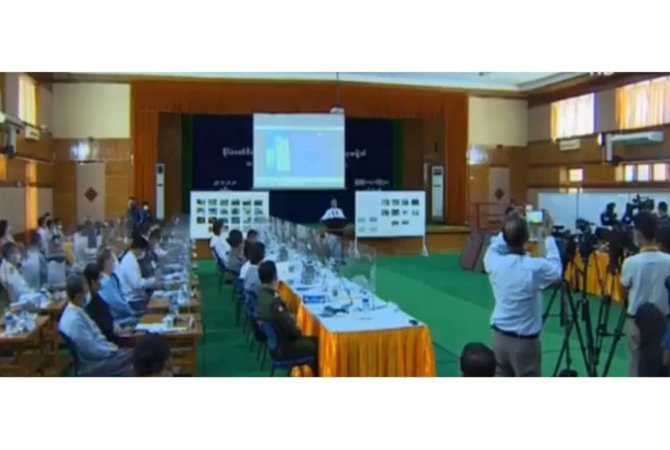
KUNMING – Cooperation among the six countries that are part of the Lancang-Mekong Cooperation (LMC) has blossomed and gained momentum since 2019, according to a new report on Tuesday.

The Blue Book of the Lancang-Mekong Cooperation 2020 report was released in southwest China, marking the fifth anniversary of the establishment of the LMC mechanism by China, Cambodia, Laos, Myanmar, Thailand, and Vietnam. 

The mechanism derives its name from a river that is called Lancang in China and Mekong in the five other countries.

The report, compiled by Yunnan University, reviews the progress, problems and development trends of the LMC since 2019. It analyzes collaborations in specific areas including public health and the fight against drugs.

ALSO READ: China, Myanmar reach consensuses on ties, virus fight

According to the report, cooperation between the six countries has blossomed in areas including connectivity, industrial capacity, cross-border economy, water resources, agriculture and poverty reduction.

Cooperation has now extended to new fields such as the digital economy, environmental protection, health and customs, while small and medium-sized projects in Mekong countries have increased in number and focused more on technology, hygiene and other livelihood-related areas, said the report.

The report’s launch was part of a symposium on the LMC, which kicked off in Kunming, capital of Yunnan Province, with attending officials and scholars from China and the Mekong countries speaking glowingly of the regional cooperation mechanism.

ALSO READ: China, Laos to strengthen anti-COVID-19 cooperation, ties

“As the COVID-19 pandemic is still hitting the world, the LMC countries are expected to strengthen public health cooperation and focus on work resumption, water management and the improvement of people’s livelihoods,” Liu Zhi, director of the Center for LMC Studies under Yunnan University, said in her opening remarks at the symposium.

Liu said while the pandemic plunged the region into an economic downturn, it has also injected new momentum into regional integration by bringing geo-economic partners closer together. 

Wide-Ranging Cooperation

Htun Aung Kyaw, consul general of Myanmar in Kunming, said under the LMC, China and Myanmar have implemented wide-ranging cooperation from joint river patrol to agriculture to poverty reduction.

“I believe the mechanism is a beneficial cooperation framework for the development of all the member countries,” he said.

Traffic infrastructure has been a major beneficiary of the LMC mechanism.

In September 2017, the whole China section of the 1,800-km-plus Kunming-Bangkok highway became an expressway, shortening the transportation time of goods between the two cities to about 40 hours.

The expressway has transformed the life and business of Su Congming, a wholesaler who has been selling imported fruits at the Jinma-zhengchang fruit market since 2003.

READ MORE: China unveils plans to boost Lancang-Mekong cooperation

At the start of his business, it took about five days for Thai fruits to arrive at the market, he recalled, adding that nowadays fruits are fresher while transportation fees are lower.

The market is one of China’s major centers for the distribution of fresh tropical fruits from South and Southeast Asian countries. Every day, thousands of tonnes of fruits are distributed from here to across China.

“Now, we sell five to six times more fruits than we did a decade ago. Before this year’s Spring Festival, we sold more than 40 tonnes of longan imported from Thailand every day,” said Su.

The Kunming-Vientiane railway linking China with Laos is scheduled to be opened in December this year, said Lu Dongfu, board chairman of China State Railway Group Co., Ltd. Upon completion, it will slash travel time between the two cities to within one day.

“We are developing an electric multiple units (EMU) train running at 160 km per hour, based on China’s (technological) standards, adapting to the conditions of China-Laos railway lines and reflecting the cultural elements of the two countries,” said Lu.

Other initiatives pushed ahead under the mechanism included streamlining and integration of customs, logistics and foreign exchange management to facilitate cross-border trade.

Water resources cooperation has also been prioritized under the LMC framework, with officials pointing to the launch of a website for sharing water resources information among the six countries in November 2020. The website is expected to help Lancang-Mekong countries better tackle climate change and natural disasters such as floods and droughts.

China has officially provided the Mekong countries with the river’s hydrological information during the dry season starting from Nov. 1, 2020, according to E Jinping, former minister of water resources.

“The Lancang-Mekong countries share the same river water, as a community with a shared future and enhancing the foundation of development and prosperity together,” said Wang Yiwei, a professor with Renmin University of China.