Military detains election sub-commission officials from 44 townships in Yangon
Feb 14. 2021
By Eleven Media
The military is detaining the chairmen and secretaries of the election sub-commissions in 44 townships of Yangon Region at Bayintnaung Transit Center, said some sub-commission officials.
They were summoned by the region general administration department at the region parliament building on February 11 and sent to the transit center at about 8pm.
“They are from our sub-commissions at regional, district and township levels. They are at Bayintnaung Transit Center,” said Than Hlaing, chair of South District Election Sub-commission.
There was no questioning till 11 am in February and they were free to live there but what would happen next is unknown, he said.
“Our detention is simple because it is the voter list issue. I don’t know what they will do”, Than Hlaing added.
He said he would say everything correctly when asked about the voter list.
“We couldn’t say the voter lists were completely accurate after announcements two times. When the election came on November 8, we could say the voter lists were quite correct. We can say they are correct to a certain extent,” Than Hlaing said.
After the military coup on February 1, chairman Hla Thein and some members of the Union Election Commission were detained. The arrest and detention of chairmen and secretaries of region/state election sub-commissions started on the night of February 11.
“I don’t want to say anything. But they have written their own history. The regional administrator asked us to come to a meeting and we came at our own expense. All township sub-commission chairman in east, west, south and north districts are included. Problems would emerge if they (the military) came to their homes to arrest. Now, they didn’t cost a penny. No fuel expense. It is like we have been trapped automatically,” said the chairman of a township election sub-commission on the night of February 11.
The officials from all township election sub-commissions have been detained except Coco Island Township.
Military Chief Senior General Min Aung Hlaing said the military took over State duties after declaring a statement of emergency because the voter lists were found largely fraudulent.
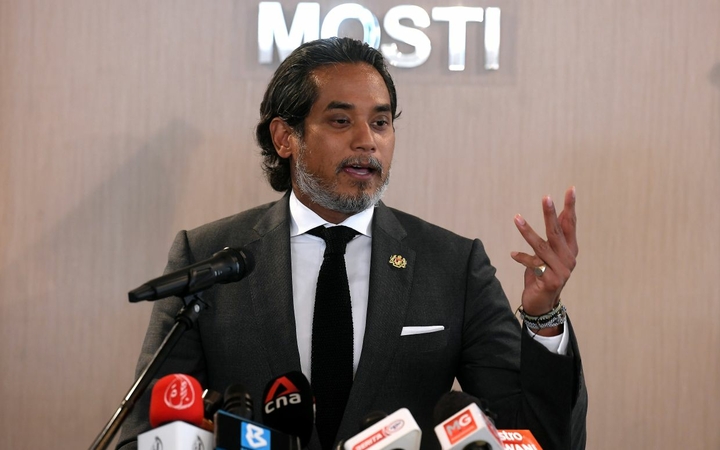
[Malaysia] Registration for Covid-19 vaccination to start in March, says Khairy
Feb 13. 2021
By The Star/ANN
KUALA LUMPUR (Bernama): Registration for Covid-19 vaccination to members of the public is expected to kick off in March and this will be on a volunteer basis, says Khairy Jamaluddin (pic).
The Science, Technology and Innovation Minister said there were five ways for the public to sign up for the vaccine, including via the MySejahtera application.
“If they have no access to MySejahtera, they may go to the JKJAV (Covid-19 Vaccine Supply Access Guarantee Special Committee) website, which will be launched by the Prime Minister next week.
“In addition, there is the hotline (number to be fixed later), manual registration at public and private clinics and hospitals, and lastly, for people living in the rural areas, we will be working with the state government to get them to register the recipients including senior citizens,” he said during the Ruang Bicara programme aired on Bernama TV, on Thursday (Feb 11).
Khairy, who is also the coordinating minister for the National Covid-19 Immunisation Programme reiterated that the vaccination programme will begin with frontline workers.
“We will evaluate every application as many have requested that they (applicants) be categorised as frontliners.
“I can verify that Prime Minister (Tan Sri Muhyiddin Yassin) will be the first person to receive the Pfizer vaccine, followed by the Health director-general (Tan Sri Dr Noor Hisham Abdullah), doctors, nurses and others. Ministers will have their turn a bit later,” he said.
On Feb 4, Muhyiddin was reported to have said the three-phase National Covid-19 Immunisation Programme would start at the end of this month, with the government targeting 80 per cent of the country’s population or 26.5 million individuals to receive the vaccine free of charge.
The first phase, from February to April, is for the 500,000 frontliners who are directly involved in the fight against Covid-19, while the second phase, from April to August, is for the high-risk group, comprising senior citizens aged 60 and above and the vulnerable group with morbidity problems, such as heart disease, obesity, diabetes and high blood pressure, as well as persons with disabilities (PwD).
The third phase is from May to February next year and it is for those aged 18 and above.
On Jan 8, Khairy announced that the Pfizer-BioNTech vaccine had been registered by the National Pharmaceutical Regulatory Agency (NPRA), thus giving conditional approval for the use of the vaccine in the country.
Apart from Malaysia, 49 other countries have approved the vaccine and some of these countries have started using the vaccine.
The Pfizer vaccine is also the first Covid-19 vaccine to be validated by the World Health Organisation (WHO) for emergency use.- Bernama
Over 390,000 volunteers dedicated to COVID-19 fight in China
Feb 13. 2021Volunteers ask a driver to scan a code to register at the entrance of a residential community on Jan 9, 2021. JIA MINJIE/FOR CHINA DAILY
By China Daily/ANN
BEIJING — More than 390,000 volunteers devoted themselves to the country’s fight against COVID-19 in 2020, the Red Cross Society of China said.
The volunteers carried out health monitoring and screening at communities and offered help to people in need, rendering more than 71 million hours of service to over 7.5 million people in 2020.
It was the largest volunteer service campaign ever organized and mobilized by the red cross society in China, the organization said.
Singapore’s economy able to bounce back this year, but some sectors will take longer to recover: PM Lee
Feb 13. 2021PM Lee giving red packets to SIA cabin crew and pilots, as well as support staff on shift at the SIA Cabin Crew Control Centre. ST PHOTO: TIMOTHY DAVID
By Hariz Baharudin The Straits Times/ANN
SINGAPORE – The bulk of Singapore’s economy should be able to bounce back this year following the heavy hits it took last year with the Covid-19 pandemic, said Prime Minister Lee Hsien Loong.
Such a rebound will however be uneven, and Mr Lee cautioned on Friday (Feb 12) that sectors like tourism, transport, aviation and construction will take longer to recover.
“We are expecting some rebound this year. Last year was minus 5 to 6 per cent. That was particularly also because we had a circuit breaker period, which had a big impact on activity,” he told reporters at Changi General Hospital after visiting workers in essential services on the first day of Chinese New Year.
“This year, we expect to bounce back,” he added. “The Year of the Ox should be better than the Year of the Rat in terms of the economy.”
But the prime minister added that while Singapore is likely to perform better, it is not guaranteed that it can get to an economic level beyond where it was in 2019, before the pandemic hit.
The most recent official forecasts project the economy to expand by between 4 and 6 per cent this year, after shrinking by an unprecedented 5.8 per cent in 2020.
The country’s recovery will depend on its progress in getting its people vaccinated, as well as the vaccination progress of other countries, particularly the United States and Europe, said Mr Lee.
Once these countries make progress on their vaccinations, their economies will be able to open up again, allowing Singapore to get much closer to normal, he noted.
Singapore’s economy depends heavily on international trade.
But various sectors will recover differently, and Mr Lee pointed out that transport, tourism and aviation, all of which were ravaged by coronavirus-related disruptions and the drop in international travel, will take longer to get better.
He said the construction sector has specific difficulties as well, due to the need for migrant workers and safe management measures, and the Government will be addressing these concerns separately.
His Chinese New Year visits, organised by the labour movement, have been an annual tradition to thank workers for putting their duties ahead of festive celebrations.
On Friday (Feb 12) morning, Mr Lee, together with Mrs Lee, Transport Minister Ong Ye Kung, as well as National Trades Union Congress president Mary Liew, secretary-general Ng Chee Meng and union leaders, met Singapore Airlines (SIA) cabin crew and pilots who were flying to London and Manila, as well as support staff on shift at the SIA Cabin Crew Control Centre.
He then went to Changi General Hospital, to offer festive wishes to healthcare workers including doctors, nurses, allied health professionals and ancillary staff, and present Chinese New Year gifts, including red packets and mandarin oranges.
PM Lee and wife Ho Ching with Changi General Hospital staff on the first day of the Chinese New Year. PHOTO: MINISTRY OF COMMUNICATIONS AND INFORMATION
Responding to a reporter’s question on whether various sectors will be able to cope with stricter measures, Mr Lee said that he hopes to not have another lockdown, and the Government will try very hard not to impose one, given the big impact it will have on the economy.
During the two-month circuit breaker period which started last April, all non-essential activities were halted and people were urged to stay home to choke the spread of Covid-19.
“If we have to lock down again… it will have a big impact,” said Mr Lee.
“You can be resilient, you can have capabilities, but if we cannot do business for two, three months, it is going to hurt. I do not think that there is any way around that.”
He added that Singapore is making sure that it builds up its people with skills training and that companies here strengthen their capabilities so its workers can have skills that are useful and its companies can do business in a new post-Covid-19 world.
But keeping people safe is the priority and Mr Lee noted how this Chinese New Year, safety measures were tightened to only allow people to receive at most eight visitors a day, and how individuals should also limit themselves to visiting at most two other households.
“Our focus should be to keep people safe, ensure that safe management measures are complied with and we work, and we avoid having another lockdown,” he said.
“It has to be a more subdued mode. There will be time to celebrate in a more carefree way later on.”
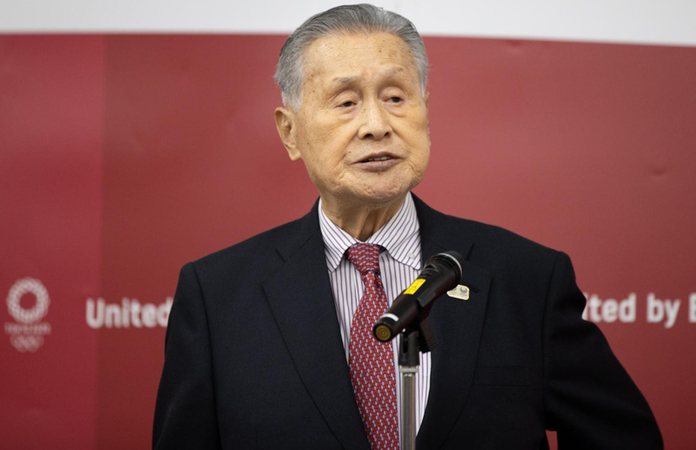
Tokyo Games committee head Mori formally announces his resignation over ‘sexist’ remark
Feb 13. 2021Yoshiro Mori, president of the Tokyo Organizing Committee of the Olympic and Paralympic Games, bows after officially announcing his resignation at a meeting of the committee in Tokyo on Friday. (Pool photo / The Yomiuri Shimbun)
By The Japan News/ANN
The president of the Tokyo Games organizing committee, Yoshiro Mori, 83, announced Friday that he would resign from the post to take responsibility for an inappropriate remark that could be interpreted as sexist.
The announcement was made at an emergency meeting of the Tokyo Organizing Committee for the Olympic and Paralympic Games convened Friday afternoon by its executive board members and councillors. The committee plans to form a panel to elect a new president. Processes for picking a successor and measures to prevent a recurrence of such an issue were to be discussed at the meeting.
Saburo Kawabuchi, 84, supreme advisor of the Japan Football Association, on Thursday expressed his intention to accept Mori’s request to take over the post, but reversed his position Friday to decide not to accept the post. The committee’s articles of incorporation stipulate the president shall be selected by a resolution of executive board members. The selection panel will pick Mori’s successor, and the board will make an official decision. A senior member said the committee would like to “settle the issue in about a week, and women should comprise half of the selection panel.”
According to committee sources, Mori told International Olympic Committee President Thomas Bach on Thursday night over the phone that he would resign from his post.
■ Growing criticism
It was criticism both at home and abroad that ousted Mori.
At first, Mori and the committee thought they would be able to overcome the situation even if he stayed on, resulting in a reactive approach. As the committee has depended on Mori’s personal skills, it may find it challenging to manage without him.
During the eight days following his controversial remark Feb. 3, Mori’s feelings had been ambivalent.
According to sources, prior to a press conference held on Feb. 4 when Mori withdrew his remark, he told the committee’s executives about his intention to resign. It is said that Mori was urged by one of his grandchildren to quit, but was persuaded by those around him to stay on. He listened to his aides.
The committee’s executive members later called Mori and found him “nonchalant,” according to an aide. Such an attitude made them believe that Mori’s mention of quitting was “a stock-standard line, and he would surely stay on,” seeing the situation optimistically.
Mori told his aides on Monday: “I got what I deserved. People around me are encouraging me, so I have no choice but to keep going.”
Tokyo Gov. Yuriko Koike said on Feb. 5: “I was appalled. It was an intolerable remark.” But according to a senior metropolitan government official, she was going to decide what to do after the committee’s emergency meeting Friday.
Criticism, however, erupted in various fields. Athletes such as Satomi Suzuki, who won silver in breaststroke at the London 2012 Olympics, said on Feb. 4: “It’s disappointing. I’m angry too.” Mori’s remark also caused some Games volunteers to suddenly withdraw.
The criticism spread overseas. NBC, which has a monopoly in broadcasting rights for the Games in the United States, posted an article on its website Wednesday saying that Mori should leave.
What was decisive was the reaction of Games sponsors. Toyota Motor Corp. shared a comment from President Akio Toyoda, who was absent, at an earnings press conference Wednesday saying that “we are disappointed.”
NHK reported Tuesday night that 36 out of the 54 Games sponsor companies that responded to NHK’s inquiries said they could not tolerate Mori’s remark.
“Seeing the level of criticism in figures was a blow,” a senior Liberal Democratic Party official said. “He’s cornered and realizes he can’t stay on anymore.”
‘Foreigners in Seoul want more benefits, less discrimination’
Feb 13. 2021Boqiev Ahrorjon, chair of the council of foreign residents, poses at the Embassy of the Republic of Tajikistan. (Park Hyun-koo/The Korea Herald)
By Shin Ji-hye The Korea Herald/ANN
‘Seoul an inclusive city where foreigners want to live, but discrimination in tax and benefits still exist’
Seoul is an attractive city for expats, but administrative discrimination must be addressed, says the new chair of the foreign resident council that represents around 500,000 foreigners in Seoul, vowing to improve the quality of their life in cooperation with council members and the government.
“Seoul is a globalized and inclusive city that foreigners want to live. However, there is still discrimination against foreigners in the workplace and in terms of social benefits,” said Boqiev Ahrorjon in an interview with The Korea Herald.
The foreign resident council was launched by the Seoul city government to improve the quality of life for foreigners in the city in December 2015. Boqiev was elected as the chair of the third batch of the council on Jan. 26. He will serve for two years.
Taking the example of the national disaster relief fund provided last year, he said, “Even foreigners who work legally and pay taxes were excluded from the benefits.”
Last year, relief funds — aiming to help the self-employed and small businesses hit hard by extended social distancing rules — were, in principle, not provided for foreigners except for permanent residents and married immigrants.
Boqiev hoped foreigners would be included in the next round of the fund. The government is currently discussing the extent of the fourth round of disaster relief funds, including whether to include foreign residents.
He also took the example of child care-related benefits provided by companies and the government.
“For Koreans, there are various benefits, such as incentives for childbirth or subsidies for using day care centers and kindergarten. But those benefits are still limited for foreign workers,” he said, hoping more foreigners would not be excluded from the benefits.
As the new chair, his top priority this year is to deliver proper vaccination information to foreign residents when vaccines are available around fall.
The government recently said all residents, including foreigners, will get the shots for free to build herd immunity.
“Since information is mostly distributed in Korean, foreigners who are not good at Korean language may find it difficult in accessing the information. Together with council members, we will work hard to deliver the correct inoculation method and target to their communities,” he said.
The council comprises 30 foreign residents from 20 countries as its members, including nine Central Asians, five Chinese Koreans, five Middle Easterns, three Europeans and five Southeast Asians.
The 28-year-old Tajik came to Korea in 2015 through a government sponsorship program and majored in aerospace information engineering at a graduate school of Konkuk University. He is now working as an administrative officer at the Embassy of the Republic of Tajikistan.
Boqiev ran for the chair of the council believing he could contribute to foreign communities with his five years of living experience in Korea and the network he had gained through two years of volunteering activities in Seoul.
Over the last five years, he has noticed changes in the way Koreans looked at and behaved toward foreigners here based on race and the color of their skin.
“In the past, I would see people behaved differently toward foreigners from rich countries, such as the US, France and the UK, and those from developing countries, such as Bangladesh, Myanmar, Pakistan and Tajikistan,” he said.
“Now, I can see such racism has declined a lot and the city has become more inclusive.”
The efforts of the foreign resident council may have played a part.
Since its launch in December 2015, council members have proposed a total of 108 policies to the Seoul Metropolitan Government, and 67 of them have been reflected.
The changed policies include the payment of the mutual benefit fund for retirement in the event of the death of a foreign construction worker, supporting immigrant children’s native language education and providing diverse languages on maps and information boards.
Novel project seeks to promote Nepali tea in the world market
Feb 12. 2021Women pick tea at a tea garden in Kanyam, Ilam. AP/RSS
By Kathmandu Post
The scheme will use the traceability system to track the product along the entire supply chain, officials say.
The government has launched a novel project to promote Nepal’s tea in the international market and improve its quality by using a system that tracks the product along the entire supply chain.
The Sustainable Export Promotion Project of Nepali Tea follows the implementation of the trademark Nepal Tea Quality from the Himalayas last September. The effort is expected to further enhance the quality of Nepali tea and enlarge worldwide sales, according to officials promoting tea cultivation.
The project is a milestone for expanding the international market by improving the quality of Nepali tea, said Bishnu Kumar Bhattarai, executive director of the Nepal Tea and Coffee Development Board.
“Farmers and traders need to be honest to make the effort a success,” he said. “As the traceability system will be used, this project will do the work of branding by producing quality tea,” he said.
The traceability system retrieves information at any stage by keeping a systematic record of farmers, operators, processors, transporters, wholesalers, packagers and retailers. This system is being implemented for the first time in agriculture.
It is claimed that the 36-month project will benefit all people engaged in bringing the tea from the tea plant to the lips of consumers.
Stakeholders expect the project, estimated to cost around Rs175 million, to provide significant support by way of technical assistance including organic certification.
“Spreading awareness among cooperatives and entrepreneurs, and adopting a traceability system and providing organic certification, international recognition can be gained,” said Rabin Rai, general secretary of the Central Tea Cooperatives Association.
The project, run by the Ministry of Industry, Commerce and Supplies and the Nepal Tea and Coffee Development Board, is expected to help in resolving many problems in the tea sector.
Stakeholders have been pointing out the need for quality improvement and increased access to the international market to make the tea sector a source of sustainable agricultural income.
Locals have said that the project should not discriminate between farmer when resolving their issues. “Such projects should not discriminate on the basis of political affiliation,” said Raju Katuwal, a farmer and entrepreneur from Panitar in Deumai Municipality. “The target group should be included according to the objective.”
People have demanded that the project should improve the quality and help in marketing the product in the local market too.
Nepal’s tea industry has a history going back 157 years, and the fact that efforts are being made to promote Nepali tea in the international market only now shows that there is a need for sincere efforts to make significant improvements.
The tea cultivation project at Buddhist Dham in Suryoday Municipality of Ilam was started to promote the product in the international market by improving the quality.
According to the board, Nepal produces 25 million kg of tea annually—20 million kg of CTC tea and 5 million kg of orthodox tea. Almost all the CTC tea produced in Nepal comes from Jhapa while orthodox tea is produced in various eastern hilly districts and parts of western Nepal.
Province 1 accounts for almost 95 percent of the tea produced in the country. Commercial tea production is being expanded to 13 districts besides the five districts in the eastern region.
Commercial tea production is being expanded to Lalitpur, Lamjung, Nuwakot, Kaski, Bhojpur, Sankhuwasabha, Kabhre, Ramechhap, Dolakha and other districts, he said. Lamjung is known for producing high-quality tea, almost all of which is exported, mostly to Germany, he added.
Currently, 80 percent of Nepal’s tea exports go to India while the United States, Germany, Canada and Japan receive 10 percent of the shipments.
In recent years, Nepali orthodox tea has been gaining popularity in the international market mainly due to its quality, aroma and taste.
Telling the fortune of digital payments in 2021, Chinese New Year style
Feb 12. 2021People crowd payment counters of LinkAja during an event Bung Karno Sports Staidium in Jakarta on June 30 to launch the digital payment platform. (kontan.co.id/Carolus Agus Waluyo)
By Kelvin Phua Jakarta Post
launch the digital payment platform. (kontan.co.id/Carolus Agus Waluyo) Just over one year into the COVID-19 pandemic, it has been impossible to ignore the stratospheric growth of digital payment methods across the world. In Asia Pacific specifically, we’ve seen Facebook and PayPal join Google, Tencent, and other leading technology firms in backing Gojek, a popular Southeast Asian super app. Not missing a beat, Gojek’s competitor Grab has been keeping busy by purchasing stakes in popular e-wall
It’s safe to say that there’s never a dull moment when it comes to the region’s fintech scene! But once the dust has settled behind this latest wave of merger and acquisition activity, what will be the next frontier for digital payments?
When it comes to the battle of social media platforms, Facebook leads the pack with 2.8 billion monthly active users. However, it is closely followed by other popular social media and messaging apps such as WhatsApp and WeChat with 2 billion and 1.2 billion users, respectively. With such large user bases, these platforms are perfect for monetization through e-commerce and digital payments.
In 2019, Facebook launched Facebook Pay in the United States, which is being progressively rolled out across Facebook, Messenger, Instagram and WhatsApp. Currently, users are able to pay for purchases on Facebook’s Marketplace, make peer-to-peer (P2P) payments and even donate to fundraisers. In the same year, Instagram launched its checkout function, a feature that allows people to purchase products they discover on the platform without ever leaving it.
In a world first, the Singapore Tourism Board launched a WeChat Mini Program – a sub-application embedded within WeChat – targeting Chinese MICE (Meetings, Incentives, Conferences and Exhibition) travelers. Known as MeetSG, the initiative allows Chinese MICE travelers to purchase tickets to leisure venues such as Gardens by the Bay, Sports Hub and Sentosa with WeChat Pay.
Based on what we see from the examples above, social commerce isn’t just all about making your social feed or app the new Orchard Road or the next Pratunam Market. The real appeal lies in its ability to offer a quick solution for brands of all sizes to become embedded into the daily lives of their target audiences, with digital payments functioning as the intermediary for user engagement.
With Chinese New Year in full swing, albeit more physically-distanced than ever before, the humble red packet (hong bao) offers a timely case study that could hint at social commerce as the next hotspot for digital payments.
For generations, the handing out of red packets has been a tradition for family members to exchange well wishes during festive occasions. In 2014, Chinese social networking app WeChat pushed the proverbial and literal envelope by pioneering the use of digital red packets. Their popularity has surged ever since, with close to 823 million people in China using the platform to send electronic hong bao to relatives and friends in 2019.
However, the role of digital red packets extends far beyond the significance of festive cash gifting. Miaopai, a popular Chinese short video social media platform often introduces campaigns during Chinese New Year where users can win e-red packets by clicking on them while watching videos. Last year, Alibaba Group allocated 500 million yuan (US$77.71 million) in cash handouts on its super app Alipay, and a further 2 billion yuan on its sister e-commerce platform Taobao. Together, these initiatives are expected to encourage more to pay online on e-commerce platforms.
The significance of the digital red packet means more this year than ever before. It has enabled us to stay close to our loved ones and maintain traditions held so fondly while keeping a safe physical distance. And while we all hope for a return to a new normal in the months ahead, the socialization of commerce and subsequently, payments, is one change that is here to stay.
We have known for a while now that, as e-commerce becomes increasingly global, payments are becoming hyperlocal. It is no longer enough that e-commerce offers the usual option of Visa or Mastercard. Leading international companies are leveraging partnerships to offer a variety of payment methods that reflects the complex payment preferences of consumers. The same challenge applies to social commerce.
Facebook and WeChat are able to develop social commerce platforms in a proprietary manner – only accepting Facebook Pay or WeChat Pay – because they can exercise market power. Yet, consumer payment preferences remain highly fragmented around the world; Asia Pacific perhaps the most fragmented region of all.
Just a few years ago, the ability to successfully establish an e-commerce presence was only within the reach of the large, multinational brands. With social commerce, everyone can do it; from the likes of Marvel Studios which managed to leverage on social commerce to achieve a 68 percent ticket conversion rate in Singapore, Malaysia and the Philippines for the film ‘Ant-Man and the Wasp’ to your next-door neighbor selling home-brewed coffee concoctions on Instagram, social commerce is here to stay.
Digital payments are the last mile solution for social commerce, but it just might be the most important one; it can help individuals and businesses successfully execute their social commerce strategy. It all depends on whether they adopt a partnerships-first approach that leverages payments infrastructure and meets the demands of consumers or decide to go it alone.
***
The writer is global head of payment Networks at PPRO.
In Asean, Pinoys least satisfied with gov’t response to COVID-19 crisis
Feb 12. 2021
By Inquirer
A survey of Southeast Asians has found that the threat from COVID-19 is their most “pressing concern” and that of the 10 countries polled on how the pandemic has been managed, the Philippines has gotten the lowest approval from its citizens.
Of all governments in the member-states of the Association of Southeast Asian Nations (Asean), the Philippines also ranked last in satisfaction of its citizens with the official response to COVID-19, according to the poll taken by the Asean Studies Centre in Singapore.
Results of “The State of Southeast Asia: 2021” survey showed that 53.7 percent of Filipino respondents “disapproved” of and “strongly disapproved” the Duterte administration’s handling of the pandemic.
Most pressing concern
“Southeast Asia is preoccupied with the COVID-19 pandemic and recovery process,” said the Feb. 10 survey report. “The threat to health from COVID-19 (76.0 percent) is currently the region’s most pressing concern, followed by unemployment and economic recession (63.0 percent) and the socioeconomic gaps and income disparity (40.7 percent).”
“Terrorism is ranked last (5.2 percent), after deteriorating human rights conditions (12.6 percent),” it said.
The study polled 1,032 respondents from all Asean member-states through an online survey conducted from Nov. 18, 2020, to Jan. 10, 2021. The regional bloc groups the Philippines, Brunei, Cambodia, Indonesia, Laos, Malaysia, Myanmar, Singapore, Thailand and Vietnam.
Local surveys
Presidential spokesperson Harry Roque said he was unaware of the regional survey, but was quick to point out that local polls gave high ratings to President Duterte’s COVID-19 response.
“What I do know are surveys conducted by Pulse Asia and [Philippine Survey and Research Center] and … in one survey, nine out of 10 support the COVID initiatives of the President. In another study, it’s eight out of 10—and that’s a fact,” Roque said in a press briefing.
He said Malacañang could not publicly disclose details of those surveys because it did not have proprietary rights to them.
In the Asean survey, 17.9 percent of Filipinos “strongly disapproved” and 35.8 percent “disapproved” of the government’s pandemic response. Only 6 percent “strongly approved” and 19.4 percent “approved” of it.
Vietnam had the highest approval rating (“approve” plus “strongly approve”) with 96.6 percent, followed by Brunei with 93.9 percent, and Singapore, 92.4 percent.
Albay Rep. Joey Salceda, an ally of the President, on Thursday dismissed the poll, saying it was “not a scientific survey” and that its respondents were a preselected group of people.
“It does not reflect the sentiment of the man and woman on the street. So, the way it is portrayed as if it were similar to say, surveys for overall public approval ratings, mischaracterizes what the survey tries to do,” he said in a statement.
“In other words, when you politicize something that isn’t meant to be so, you’re going to get it wrong,” he added.
Public barometer
According to Salceda, “there is no point in fixating on approval ratings,” saying that “outcomes are better than perceptions.”
“COVID-19 is a health problem with economic consequences. It’s not a public relations problem,” he said.
The Asean Studies Centre said the survey, its third consecutive poll, was intended “to capture the views and perspectives of opinion-makers, policymakers and thought-leaders in the region,” referring to its respondents from academia, business and finance, government, civil society and media, and regional and international organizations.
“While it is not meant to present the definitive Southeast Asian view of current affairs, the survey acts as a barometer of the general attitudes and perceptions of interested stakeholders on important regional developments,” it said.
The Filipinos were also polled on “what should your government do to better address COVID-19.”
A majority, or 72.2 percent, said the Duterte administration must “encourage more scientists and medical doctors to contribute to public policy discussions and heed their advice.”
Also, 58.3 percent of Filipinos believed that the government should “invest in early warning systems for pandemic outbreak and on research and development for virus testing and vaccine development.”
The survey said 33.3 percent of the Filipino respondents thought that the government should “offer better financial relief and subsidies to citizens impacted economically by COVID-19.”
Lowest votes
The response that got the lowest votes from Filipinos (5.6 percent) was the implementation of public health measures, such as social distancing and mask wearing.
This was in contrast to an earlier study by the local OCTA Research Group, which found that Filipinos were highly compliant with the minimum public health and safety measures to avoid spreading the virus.
Reacting to the poll, the Department of Health (DOH) said in a statement that it recognized “the sentiments expressed in the findings of the survey and values the voice of the Filipinos.”
It, however, stressed that the response to the pandemic is not dependent on the government measures alone.
“The government’s response is only as good as the institutions [that] implement it, and the people who comply with it—every Filipino, every family, and every community has the ability and responsibility to contribute [to] national healing,” it said.
“The DOH, together with the rest of the government, continues to take steps [to improve] our health system and [ensure] its responsiveness to the health needs of every Filipino,” it said, adding that the department’s policies are guided by many experts and advisory panels.
Dr. Anthony Leachon, a former adviser to the National Task Force Against COVID-19, said the survey respondents had a “holistic view of the situation” and their opinions showed that the pandemic was “mismanaged.”
“We have [the] longest lockdown in the world, our vaccination program is delayed and we are stuck at 1,700 [infections] a day for the past months with an increasing case fatality rate on a daily basis,” he said. —WITH A REPORT FROM LEILA B. SALAVERRIA
Mori to resign as president of Tokyo Games organizing committee
Feb 12. 2021
By The Japan News
Former Prime Minister Yoshiro Mori, president of the Tokyo Organizing Committee of the Olympic and Paralympic Games, has told those around him that he has decided to resign and is expected to announce his resignation Friday, it was learned on Thursday.
Mori, 83, criticized in Japan and globally for his inappropriate comments about women, has made the decision because remaining in the post may hinder the smooth preparation for the Tokyo Games scheduled for this summer.
Mori on Thursday met Saburo Kawabuchi, 84, an executive adviser to the Japan Football Association and a councillor to the Tokyo organizing committee, in person and asked him to take over the president’s post, according to sources. Kawabuchi expressed his intention to accept the offer.
The committee will hold a meeting Friday that was originally intended for Mori to apologize again to bring calm to the situation. Mori, however, decided to step down as the criticism about his comments has continued to intensify.
At an extraordinary meeting of the Japanese Olympic Committee on Feb. 3, Mori made the following comments about the JOC’s goal of increasing the number of female board members: “A board meeting with many female members takes a long time” and “Women have a strong sense of competition. If one person raises her hand, others probably feel they have to speak as well.” These comments caused a stir as they were widely perceived as discriminatory against women.
On Feb. 4, Mori held a press conference to retract the remarks, saying: “It was an inappropriate expression that goes against the spirit of the Olympic and Paralympic Games [which upholds gender equality]. I deeply apologize.”
He then stated that he had no intention of resigning.
Soon after Mori’s apology, the International Olympic Committee said it considered the issue closed, but it altered its position and released a statement Tuesday that read in part, “The recent comments of Tokyo 2020 President Mori were absolutely inappropriate and in contradiction to the IOC’s commitments and the reforms of its Olympic Agenda 2020.”
As Olympic and Paralympic sponsors have also criticized Mori’s comments, worry had been spreading in the government and the ruling coalition about keeping Mori in the top post of the organizing committee.
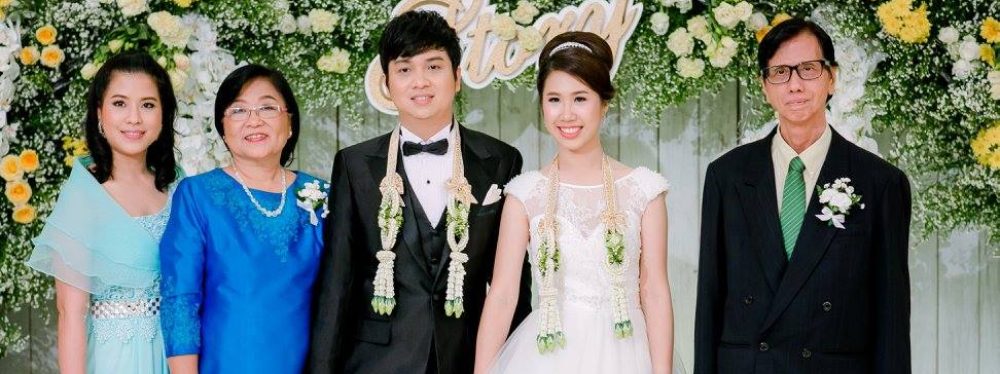

 Volunteers ask a driver to scan a code to register at the entrance of a residential community on Jan 9, 2021. JIA MINJIE/FOR CHINA DAILY
 PM Lee giving red packets to SIA cabin crew and pilots, as well as support staff on shift at the SIA Cabin Crew Control Centre. ST PHOTO: TIMOTHY DAVID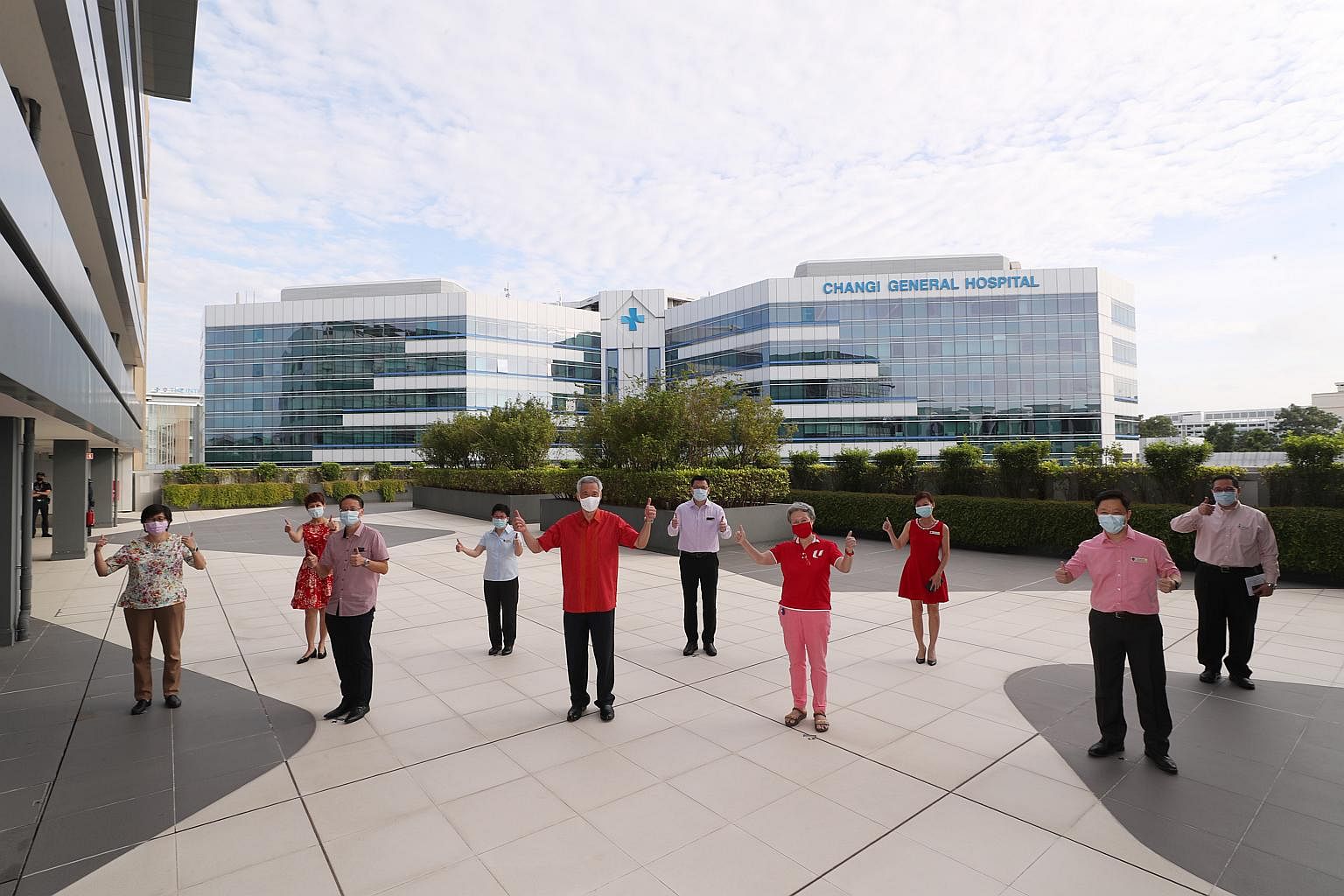
 Yoshiro Mori, president of the Tokyo Organizing Committee of the Olympic and Paralympic Games, bows after officially announcing his resignation at a meeting of the committee in Tokyo on Friday. (Pool photo / The Yomiuri Shimbun)
 Boqiev Ahrorjon, chair of the council of foreign residents, poses at the Embassy of the Republic of Tajikistan. (Park Hyun-koo/The Korea Herald)
 Women pick tea at a tea garden in Kanyam, Ilam. AP/RSS
 People crowd payment counters of LinkAja during an event Bung Karno Sports Staidium in Jakarta on June 30 to launch the digital payment platform. (kontan.co.id/Carolus Agus Waluyo)