Singapore economy to grow by 4-6% this year; 2020 contraction shaved to 5.4% #SootinClaimon.Com

#SootinClaimon.Com : ขอบคุณแหล่งข้อมูล : หนังสือพิมพ์ The Nation.

Singapore economy to grow by 4-6% this year; 2020 contraction shaved to 5.4%

Feb 15. 2021For the final quarter of 2020, the economy shrank by 2.4 per cent year on year. ST PHOTO: KUA CHEE SIONGFor the final quarter of 2020, the economy shrank by 2.4 per cent year on year. ST PHOTO: KUA CHEE SIONG

By Ovais Subhani
The Straits Times/ANN

SINGAPORE – Singapore maintained its forecast for the economy to grow gradually this year out of its wrost recession, and signalled continued support for the unemployed and vulnerable sections of the population.

The economy will grow by 4.0 to 6.0 per cent this year, said the Ministry of Trade and Industry (MTI) on Monday (Feb 15), sticking  to its forecast announced last November,  after weighing positive and negative developments in key external economies.

The ministry raised its final estimate for coronavirus-hit 2020, stating that the economy shrank by 5.4 per cent, making it Singapore’s worst-ever recession since independence.

Still, this figure tops the flash estimate of 5.8 per cent given last month and is higher than the 6.25 per cent average for the 6.5 to 6.0 per cent range it gave in November. The economy grew by 1.3 per cent in 2019.

This came about as the economy contracted less than initially estimated in the fourth quarter, shrinking by 2.4 per cent year on year, an improvement from the 5.8 per cent slump in the third quarter, and higher than the advance estimate of a 3.8 per cent contraction.

On a quarter-on-quarter seasonally-adjusted basis, the economy expanded by 3.8 per cent in Q4.

MTI said that since the last Economic Survey of Singapore in November 2020, there has been further progress in Covid-19 vaccine development and deployment, with several approved vaccines being rolled out in many economies around the world.

“Although the speed of vaccine deployment varies, advanced economies like the US and Eurozone are likely to reach population immunity by the second half of this year, which should in turn spur their economic recoveries,” it said in a press release issued on Monday (Feb 15).

Growth prospects for regional economies such as Malaysia and Indonesia have however weakened due to the recent resurgence in infections.

“On balance, as the positive developments in the key external economies broadly offset the negative ones, Singapore’s external demand outlook remains largely similar compared to three months ago.”

At the same time, uncertainties and risks in the global economy remain, with significant uncertainty surrounding the course of the Covid-19 pandemic and the trajectory of the global economic recovery, MTI said.

While Singapore’s Covid-19 situation remains under control and vaccination programme is also underway, the pace of border re-opening has slowed amidst the global surge in Covid-19 cases and the emergence of more contagious strains of the virus.

“Against this external and domestic backdrop, the Singapore economy is expected to see a gradual recovery over the course of the year, although the outlook remains uneven across sectors.”

MTI said the outward-oriented sectors – including trade-related services sectors (e.g., wholesale trade and water transport), are projected to benefit from the pickup in external demand.

The manufacturing sector is likely to expand at a faster pace than previously projected due to robust semiconductor demand from the 5G and automotive markets.

Meanwhile, the information & communications and finance & insurance sectors are expected to continue to post steady growth, supported by sustained enterprise demand for IT and digital solutions, and credit and payment processing services respectively.

At a virtual briefing on Monday, MTI permanent secretary Gabriel Lim said the pace of Singapore’s recovery is expected to remain uneven across sectors, with the outward-oriented segments – including trade-related services like wholesale trade and water transport – projected to benefit from the pickup in external demand.

Mr Lim said that the bulk of economic growth this year will come from trade and manufacturing as the pace of recovery in domestic oriented sectors will be more gradual amid relatively subdued domestic private consumption.

“In some instances, private consumption will recover together with the broader economic recovery, but at a macro economic level a large part of growth is still going to be linked to what happens in the rest of the world,” he said.

Labour market developments will remain a major drag for domestic consumption, he noted.

Mr Kenny Tan, a director at the Ministry of Manpower, said while resident employment has shown growth in recent months, bringing down the unemployment rate, the outlook remains uncertain.

“Some employers will still be hesitant about adding manpower to their cost until they are more certain about the future of their businesses,” he said.

Mr Tan said substantial government support will still be needed to maintain the hiring momentum from last year.

“In the Budget tomorrow you will see what measures we are prepared to introduce this year to give hiring a boost,” he said.

Mr Lim added that the government remains committed to help workers stay employed and aid those who may have lost their jobs or are vulnerable.

Mr Edward Robinson, deputy managing director of the economic policy group at the Monetary Authority of Singapore, said the central bank’s policy stance remains unchanged and appropriate despite signals of economic improvement and an uptick in inflation at home and abroad.

China’s online advertising market expands in 2020 #SootinClaimon.Com

#SootinClaimon.Com : ขอบคุณแหล่งข้อมูล : หนังสือพิมพ์ The Nation.

China’s online advertising market expands in 2020

Feb 15. 2021[Photo/IC][Photo/IC]

By China Daily/ANN

BEIJING — The scale of China’s internet advertising market expanded to nearly 500 billion yuan (about $77 billion) in 2020, up 14 percent year on year, according to the latest statistical report on internet development.

The figure marked the third year in a row that market growth had slowed.

Internet advertising via mobile devices commanded a market share of 85 percent last year, up from 70 percent in 2018, said the report released by the China Internet Network Information Center.

Key opinion consumers (KOCs), or those who can influence their friends and fans and generate consumption behavior, are reconstructing the internet marketing communication chain and boosting advertising, the report noted.

China’s social networking platforms are now home to a large number of KOCs who have attracted customers of different brands and seen their own advertising value gradually emerge.

137 injured in northern Japan quake; water supply cut off to over 6,000 households #SootinClaimon.Com

#SootinClaimon.Com : ขอบคุณแหล่งข้อมูล : หนังสือพิมพ์ The Nation.

137 injured in northern Japan quake; water supply cut off to over 6,000 households

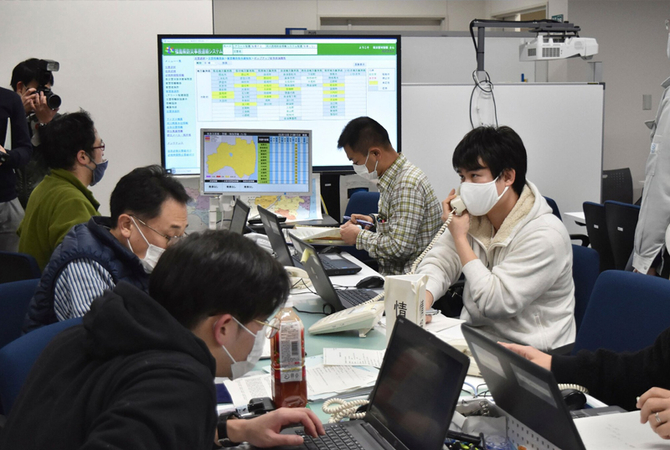
Feb 15. 2021A woman gets water put into plastic bottles that she brought to a water supply truck on Sunday morning in Yamamoto, Miyagi Prefecture. (The Yomiuri Shimbun)A woman gets water put into plastic bottles that she brought to a water supply truck on Sunday morning in Yamamoto, Miyagi Prefecture. (The Yomiuri Shimbun)

By The Japan News/ANN

A total of 137 people had been injured as of 1 p.m. Sunday due to the earthquake that struck off the coast of Fukushima Prefecture late Saturday night, according to a tally by The Yomiuri Shimbun.

The number included 77 people in Fukushima Prefecture, 44 in Miyagi Prefecture and five in Tochigi Prefecture. Three women in their 60s to 80s in Fukushima, Saitama, and Chiba prefectures were seriously injured, including a woman who suffered a broken thighbone after falling at home.

There were no reports of deaths or missing persons.

In Fukushima and Miyagi prefectures, damage was confirmed to a total of 56 buildings, including houses, and water was cut off to more than 6,000 houses. According to the Fire and Disaster Management Agency of the Internal Affairs and Communications Ministry, fires broke out in Sendai and Shiogama, both in Miyagi Prefecture, but they have been extinguished.

In Soma, Fukushima Prefecture, a roadside slope collapsed three kilometers north of the Soma Interchange on the Joban Expressway, blocking the road with earth and sand for about 70 meters. No casualties were believed to have occurred, and work was underway to remove the sand and soil.

According to electric power companies, a total of 850,000 households in the Tohoku and Kanto regions lost power immediately after the earthquake, but it was restored by 10 a.m. on Sunday.

According to the Japan Meteorological Agency, the earthquake is believed to be an aftershock of the Great East Japan Earthquake of March 2011. Two aftershocks measuring 3 on the Japanese intensity scale of maximum 7 were confirmed in Fukushima Prefecture, as well as six aftershocks measuring 2 on the scale, and 20 measuring 1, by noon Sunday.

There is a possibility of strong earthquakes with an intensity of upper 6 over the next week or so. The JMA has also called for caution against landslides, as the earthquake loosened the ground and rainfall is expected on Monday.

S. Korea to spend W4.3tr on defense R&D this year #SootinClaimon.Com

#SootinClaimon.Com : ขอบคุณแหล่งข้อมูล : หนังสือพิมพ์ The Nation.

S. Korea to spend W4.3tr on defense R&D this year

Feb 15. 2021Defense Acquisition Program Administration (Yonhap)Defense Acquisition Program Administration (Yonhap)


By The Korea Herald/ANN

South Korea will invest 4.3 trillion won ($3.9 billion) in research and development in the defense sector this year to secure cutting-edge technologies and boost the industry’s competitiveness, the arms procurement agency said Monday.

The amount is up 10 percent from 3.9 trillion won earmarked last year and includes 631.8 billion won for the research and development of core weapon technologies, according to the Defense Acquisition Program Administration.

Under its 2021 plan, the agency said it will push for the development of indigenous weapons parts and establish consortiums of companies, universities and research centers to carry out various development projects.

To better cope with disasters and build a safer society, the agency said it will also actively support the transfer of defense technologies to the civilian sector.

“We will share our policy direction with other organizations and strengthen cooperation for the development of our defense science technology and the growth of the industry,” an agency official said. (Yonhap)

Love by the Numbers #SootinClaimon.Com

#SootinClaimon.Com : ขอบคุณแหล่งข้อมูล : หนังสือพิมพ์ The Nation.

Love by the Numbers

Feb 14. 2021

By The Star

PETALING JAYA: With more lovebirds expected to go digital to celebrate their love for each other, this year’s Valentine’s Day is also a yardstick for businesses on how to monetise the annual celebration online and through e-commerce.

With inter-state and inter-district travel still not allowed during the movement control order (MCO), Sunway University economics professor Yeah Kim Leng said this would mean that many couples were unable to celebrate Valentine’s Day with their loved ones in person.

“It will be a muted celebration because of the Covid-19 pandemic and the MCO that limits people from gathering.

“There will certainly be a drop in sales for many related businesses.

“We will likely see online businesses flourish to become the preferred channel of spending for Valentine’s Day, especially for couples who are separated by distance.

“The festivity and pomp of the day will be less compared to before.

“Couples will have to go online but this will depend on how businesses design their products and services to attract customers online, ” he said in an interview.

Prof Yeah said the digital platform would be a good medium to bridge the gap left by the pandemic and MCO, adding that businesses would take the opportunity to increase the volume and target promotions as well as events for the celebration.

“It will be interesting this year as we will see how virtual celebration is done and how businesses are able to capitalise on the trend.

“We may see new events being carried out virtually. For the economist, it will be an eye-opener on how the digital means of monetising the event works.

“We are interested to see how businesses monetise the celebration through e-commerce and Internet, ” he said.

As Valentine’s Day celebration has been around in Malaysia for decades, Prof Yeah said it was typical to see more spending for chocolates, flowers and personal gifts reflecting the significance of the day.

However, over the years, Valentine’s Day had also evolved as a time for family and friends to express their love, he said.

Related stories:

Showing the worth of your love online (Marriages, divorces and lovebirds)

40% of Pinoys still want to celebrate Valentine’s Day – SWS #SootinClaimon.Com

#SootinClaimon.Com : ขอบคุณแหล่งข้อมูล : หนังสือพิมพ์ The Nation.

40% of Pinoys still want to celebrate Valentine’s Day – SWS

Feb 14. 2021

By Inquirer News

MANILA, Philippines — The past few months may have been tough due to the pandemic, but Filipinos are not forgetting Valentine’s Day, with two out of five saying they will still celebrate the special day, the latest Social Weather Stations (SWS) survey showed.

Although a bit different this year, Jen Mas, a 26-year-old site manager, said she and her partner plan to celebrate by attending a Sunday Mass online and preparing a meal together.

“Our original plan was actually to spend Valentine’s with his family and go to church, but due to the pandemic, work and personal life, we’re just gonna stay and spend time at home,” she said.

Mas is among the 40 percent of Filipinos who would still celebrate Valentine’s Day, according to the SWS survey. The remaining 31 percent were undecided while 27 percent would not celebrate.

Conducted from Nov. 21 to Nov. 25 among 1,500 adults, the survey had a margin of error of plus-or-minus 2.5 percent.

Among those who would celebrate Valentine’s Day, 45 percent would go to church or other religious activities, 27 percent would give gifts to their loved ones, 25 percent would prepare special food at home and 11 percent would send greetings online.

Fifty percent of Filipinos also said they had a “very happy” love life, the lowest since 2014 when it was 49 percent.

—Inquirer Research

Strong quake hits northeastern Japan; tsunami damage unlikely #SootinClaimon.Com

#SootinClaimon.Com : ขอบคุณแหล่งข้อมูล : หนังสือพิมพ์ The Nation.

Strong quake hits northeastern Japan; tsunami damage unlikely

Feb 14. 2021

By The Japan News

Tokyo, Feb. 13 (Jiji Press)—A powerful earthquake measuring up to upper 6, the second-highest level on the Japanese seismic intensity scale, jolted northeastern and other areas of Japan on Saturday night.

The quake is unlikely to cause tsunami damage although some changes in sea levels may be observed in coastal areas, the Japan Meteorological Agency said.

The temblor, with an estimated magnitude of 7.3, struck around 11:07 p.m. (2:07 p.m. GMT). The focus of the quake was estimated to be at a depth of about 55 kilometers off the coast of Fukushima Prefecture, part of the Tohoku northeastern region, the agency said.

Upper 6 was registered in the city of Soma and the towns of Kunimi and Shinchi in Fukushima, and the town of Zao in Miyagi Prefecture in Tohoku. Lower 6, the third-highest level on the Japanese scale, was measured in the city of Fukushima and the city of Koriyama in Fukushima Prefecture, and the city of Ishinomaki in Miyagi.

The secretariat for the Nuclear Regulation Authority said that no abnormality occurred after the quake at Tokyo Electric Power Company Holdings Inc.’s Fukushima No. 1 and No. 2 nuclear power plants. There was no report on problems from Tohoku Electric Power Co.’s Onagawa nuclear plant in Miyagi and Japan Atomic Power Co.’s Tokai No. 2 nuclear plant in Ibaraki Prefecture in eastern Japan, according to the NRA secretariat.

The temblor was believed to be an aftershock of the 9.0-magnitude March 11, 2011, earthquake, which mainly struck the Tohoku region, the meteorological agency said.

At a press conference, Noriko Kamaya, senior coordinator for seismological information at the agency, called on people in areas hit hard by the latest quake to be alert for the possibility of temblors of up to upper 6 on the Japanese scale striking in the next week or so.

The Fukushima prefectural government said that one person in the city of Shirakawa and three people in the town of Yabuki suffered minor injuries from Saturday’s earthquake. On the Joban expressway, a truck may have been trapped in a landslide caused by the quake.

In Miyagi, three cases of fire occurred possibly due to the temblor, the prefecture’s police department said. But no one was injured in the fires, the police said.

According to TEPCO, a total of some 830,000 households in Tokyo and five nearby prefectures had been hit by power outage as of 11:45 p.m.

Tohoku Electric said that power outage occurred at a total of some 90,000 households in Miyagi, Fukushima and Iwate Prefecture, also part of the Tohoku region.

Following the quake, East Japan Railway Co. , or JR East, temporarily halted operations of its Tohoku, Joetsu and Hokuriku Shinkansen bullet train lines. Power outage occurred on some sections.

The Japanese government set up an office in response to the earthquake at the crisis management center at the prime minister’s office in Tokyo.

Prime Minister Yoshihide Suga instructed government officials to grasp the extent of damage quickly and make all-out efforts to rescue and support affected people, in cooperation with local governments concerned. He also called for providing the public with accurate information in a timely way.

At a press conference early Sunday, Chief Cabinet Secretary Katsunobu Kato stressed that the government will work in unity to deal with the quake. On Saturday night, Defense Minister Nobuo Kishi instructed the Self-Defense Forces to make all-out efforts in response to the quake.

The government will hold a meeting of related ministers over the earthquake from 9 a.m. Sunday.

After the large quake, many smaller earthquakes with a magnitude of 3 to 5 occurred off Fukushima.

The 7.3-magnitude quake happened only about a month ahead of the 10th anniversary of the March 2011 earthquake and subsequent massive tsunami. The disaster 10 years ago led to an unprecedented triple meltdown at the Fukushima No. 1 nuclear plant.

PH distances self from UN resolution on Myanmar #SootinClaimon.Com

#SootinClaimon.Com : ขอบคุณแหล่งข้อมูล : หนังสือพิมพ์ The Nation.

PH distances self from UN resolution on Myanmar

Feb 14. 2021

By Inquirer

The United Nations Human Rights Council (UNHRC) in Geneva adopted on Friday a resolution that called for the unconditional release of Myanmar’s elected leaders and other arbitrarily detained persons, a motion that the Philippines, China, Russia and other countries distanced themselves from.

According to the UNHRC, the resolution on the human rights situation following the military coup in Myanmar was adopted without vote during its 29th special session.

The resolution deplored the military ouster of the democratically elected government of Myanmar and called for the restoration of its government.

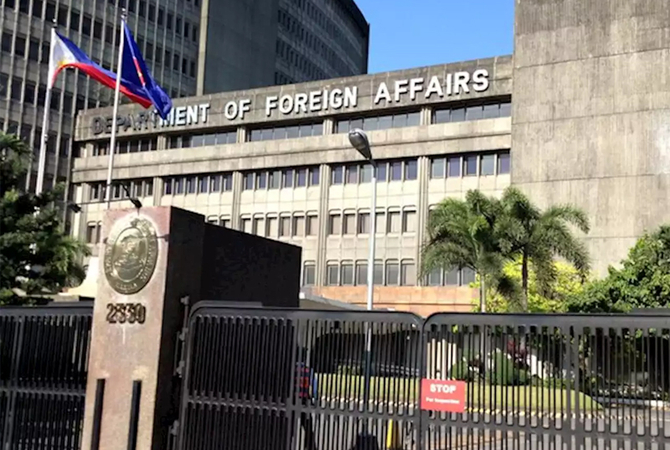
In a statement, the Department of Foreign Affairs, however, said “the Philippines cannot stress strongly enough the primacy of national internal efforts toward democratic reforms, and never by the imposition of foreign solutions whether in regional or multilateral contexts, including through this council.”

On Feb. 1, armed forces in Myanmar seized control of the government and arrested State Counsellor Aung San Suu Kyi and President Win Myint.

“The council strongly called upon the Myanmar military and other security forces and authorities to take steps immediately to protect the rights to freedom of opinion and expression, religion or belief, association and peaceful assembly in accordance with international human rights law, and to ensure that members of civil society organizations and the media are able to operate freely and without fear of violence, harassment or intimidation,” the UNHRC said in a statement

Human rights situation

The UN body focused on the protection of human rights, in its resolution, also urged the lifting of state of emergency in Myanmar while refraining from violence. It likewise sought the cancellation of internet and telecommunications restrictions in the country.

The resolution also asked that the UNHRC and the Special Rapporteur to assess the human rights situation in Myanmar and for state authorities to cooperate.

The United Kingdom and Austria drafted the resolution.

During the debates, civil society organizations said security forces in Myanmar moved violently against protesters.

—Nikka G. Valenzuela

Japanese Foreign Minister and U.S. Secretary of State discuss Myanmar policies #SootinClaimon.Com

#SootinClaimon.Com : ขอบคุณแหล่งข้อมูล : หนังสือพิมพ์ The Nation.

Japanese Foreign Minister and U.S. Secretary of State discuss Myanmar policies

Feb 14. 2021

By The Japan News

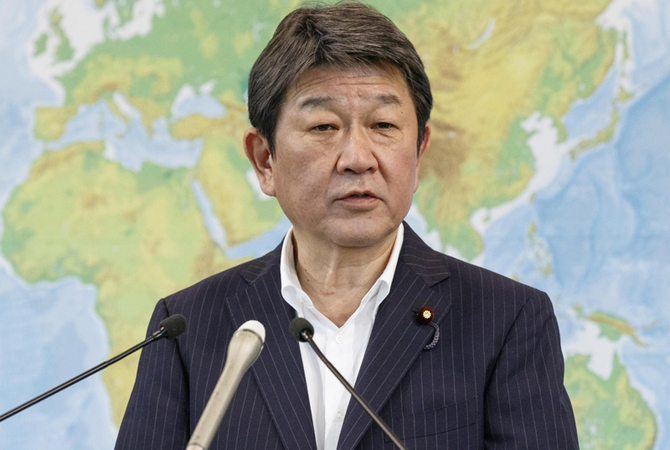
Foreign Minister Toshimitsu Motegi expressed understanding of U.S. President Joe Biden’s announcement of sanctions on Myanmar’s military following the coup in the Southeast Asian country.

“The limited restrictions are a way of reaching out to Myanmar,” Motegi said at a press conference Friday.

The Japanese government, which has expressed caution about sanctions, is lobbying for the release of State Counselor Aung San Suu Kyi through dialogue with the military.

“We would like to cooperate closely with the United States and allied nations while fulfilling Japan’s role, including lobbying the military,” Motegi said.

Motegi and U.S. Secretary of State Antony Blinken exchanged views on how to respond to the situation in Myanmar in telephone talks on Wednesday.

According to sources, Blinken informed Motegi of the plan to impose sanctions on Myanmar’s military and Motegi outlined Japan’s policy.

Myanmar’s military-commercial complex #SootinClaimon.Com

#SootinClaimon.Com : ขอบคุณแหล่งข้อมูล : หนังสือพิมพ์ The Nation.

Myanmar’s military-commercial complex

Feb 14. 2021

By The Daily Star

Myanmar’s mighty military overthrowing the country’s democratically elected government to take full control of power was a well-planned move. The Tatmadaw—as Myanmar’s armed forces are commonly referred to—wielded significant power, even when Suu Kyi was apparently ruling the country. They were not only in possession of 25 percent of seats in the legislature, enabling it to veto constitutional changes, it was also in charge of major ministries such as defence, home, and border affairs. Aside from the political, the Tatmadaw has another source of power: commerce.

Myanmar Economic Holdings Limited (MEHL) and Myanmar Economic Corporation (MEC), two of Myanmar’s largest business conglomerates are owned and controlled by the Tatmadaw and its senior leaders, including the Commander-in-Chief Senior General Min Aung Hlaing, the man currently also ruling the country.

The tentacles of the behemoth conglomerates spread over key economic drivers, including energy, infrastructure, mining, banking, tourism and agriculture among other sectors. These companies have control of most of the country’s vast resources and are used to boost the coffers of the Tatmadaw. As reported by a UN fact-finding mission, Myanmar generals control at least 140 companies, partially or fully. “The Myanmar military controls an extensive business empire that enables it to avoid accountability and conduct operations with impunity against ethnic groups, contributing to widespread human rights abuses,” a United Nations report in August 2019 suggested.

Chairman of the UN Independent International Fact-Finding Mission, Marzuki Darusman, in an interview said that, “The Myanmar armed forces are enabled in a very enhanced way to act outside of civilian control and therefore perpetuate their impunity in their involvement in gross human rights violations”.

And foreign governments and businesses are directly and heavily involved in trade ties with these Tatmadaw-controlled and supervised businesses. According to report by Barron’s—a weekly American magazine published by Dow Jones & Company of News Corp. Chinese, Singaporean, Japanese and South Korean companies have direct collaborations and partnerships with the Myanmar Economic Holdings Limited (MEHL).

According to the same Barron’s report, an MEHL subsidiary also “reportedly holds the largest number of jade mining licences”.

And over the years, the Tatmadaw and its generals and high-ups have systematically fed on this commercial model for both collective and individual gains. According to an Amnesty International report in September 2020, in 2011 alone, General Min Aung Hlaing received USD 250,000 from MEHL in dividends.

Foreign companies such as US’s Chevron, France’s Total, have collaborations with Myanmar Oil and Gas Enterprise. The Amnesty Intentional report added that South Korean steel giant POSCO; the same country’s property developer, INNO Group; manufacturer and exporter of clothing, Pan-Pacific; Singapore-based oil company, Puma; RMH Singapore, a Singaporean fund; Japanese multinational brewer, Kirin; Wanbao Mining, Chinese metal mining company; among other major foreign corporations have partnerships with the Tatmadaw owned Myanmar Economic Holdings Limited (MEHL) and Myanmar Economic Corporation (MEC).

The Conversation last month reported that two very prominent British banks “have reportedly lent USD 60 million to a Vietnamese company building a mobile network in Myanmar. The Tatmadaw-controlled Myanmar Economic Corporation owns 28 percent of the network, known as Mytel.” The report further mentioned that the Australian Government’s, “Future Fund has invested 3.2 million Australian dollars (about USD 2.5 million) in a subsidiary of Indian multinational Adani, which is doing business with the Myanmar Economic Corporation.”

In light of the Amnesty International report, Pan-Pacific said that it was terminating its operations in Myanmar. And while there had been growing calls on these foreign companies to sever business with MEHL and MEC, during the recent wave of the Rohingya genocide, it was only after the February, 2021 coup that Singapore based Puma and Japan based Kirin have announced to pull the plug on their operations in Myanmar.

Apart from the business collaborations with the MEHL and MCE of the companies, foreign countries are also directly investing in Myanmar. Singapore, China and Hong Kong are some of the major investors in Myanmar, with Singapore emerging at the top in the last few years. In 2019-2020 fiscal, the World Bank estimated FDI commitment to Myanmar would jump by one-third to USD 5.5 billion.

Major world powers have investments in the special economic zones in Myanmar, one of which is located in the Rakhine State itself: Kyauk Phyu. A Bangkok Post report in October 2019 suggested, “A total of 106 enterprises from 18 countries and four local businesses have ploughed in USD 1.84 billion” in SEZs.

The investors include, the United Kingdom, the United Arab Emirates, Malaysia, France, Switzerland, Australia, South Korea, Hong Kong, Singapore, Taiwan, Panama, China, Brunei, Vietnam, Austria, Japan, the Netherlands, and India, among other countries. A lot of this money is channelled to the control of the Tatmadaw, thanks to the more than hundred crony companies being run under MEHL and MCE.

Given the political and financial prowess of the Myanmar military and their growing trade ties with foreign countries and companies, one should not be surprised that they have toppled a democratically elected government with complete disregard to the wishes of its own people who elected Suu Kyi to power last year. Perhaps in view of the prevailing realities the response of the world community to the recent political development in Myanmar has been lukewarm, with the exceptions of a few countries.

The foreign actors working in partnership with Tatmadaw controlled holdings are as responsible for the Rohingya genocide and death of democracy in Myanmar, as the perpetrators themselves. The only difference is, while the military acted on the frontlines, the investors supported them with the resources to strengthen their position. 

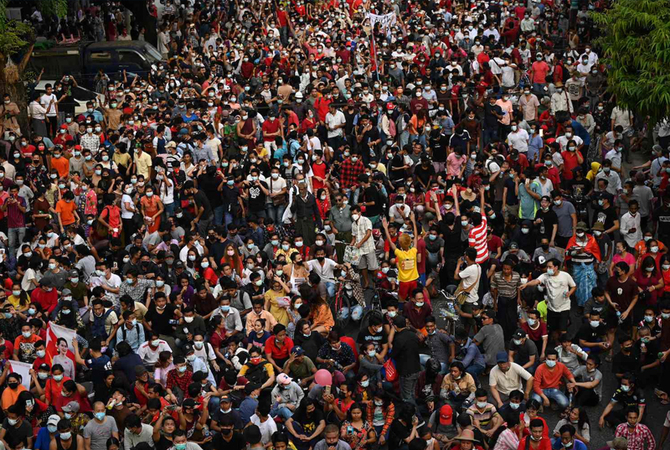
Despite these, however, protests are growing in Myanmar calling for the return to democracy. Saffron-robed monks have joined the hundreds and thousands of people who are defying police brutality to press home their demand. While the army is cocooned in the strategically located new capital Naypidaw, where according to reports, military facilities “form something of a ring around the civilian buildings, which are closer to the centre, effectively reducing the power and strength of popular uprisings in the capital” (The Interpreter), the protests have spread to various corners of the country.

How the ongoing protests will affect the business operations in Myanmar, especially where foreign investments are involved will play a determining role in limiting Tatmadaw’s financial resources. Manufacturers such as H&M have already said that they are monitoring the situation. If the protests continue businesses are likely to bear the brunt of it. For how long can the military resist internal pressure and how will the protests will impact the Tatmadaw’s trade deals with foreign investors? That remains to be seen.