Japan to compile weekly reports on vaccine side effects #SootinClaimon.Com

#SootinClaimon.Com : ขอบคุณแหล่งข้อมูล : หนังสือพิมพ์ The Nation.

Japan to compile weekly reports on vaccine side effects

Feb 17. 2021Participants are seen at a COVID-19 vaccination drill in Toyoake, Aichi Prefecture, on Friday. (The Yomiuri Shimbun)Participants are seen at a COVID-19 vaccination drill in Toyoake, Aichi Prefecture, on Friday. (The Yomiuri Shimbun)

By The Japan News/ANN

The Health, Labor and Welfare Ministry will publish weekly reports of adverse reactions to the COVID-19 vaccination from among recipients of the first phase of inoculations that will begin Wednesday for more than 10,000 health care workers.

Large-scale feedback studies of other recipients will also be conducted later. The ministry is aiming to provide information on vaccine safety promptly so that people can get vaccinated free of anxiety.

The first phase of inoculations will use the Pfizer-BioNTech vaccine, the first COVID-19 vaccine to be approved in Japan. In principle, the vaccine is administered twice, three weeks apart.

According to information on the package insert of the vaccine, 84% of recipients experienced arm pain, 63% fatigue, and 55% headaches, based on clinical trials conducted overseas and in Japan. Most of the symptoms were mild and subsided within a few days, but severe symptoms such as fever of 39 C or higher were also reported.

The health conditions of all participants will be tracked in first-phase vaccinations on health care workers.

After each vaccination dose, recipients will be asked to keep a record in a diary for one week of their body temperature, and whether they experienced fatigue or felt pain at the inoculation spot. Recipients will also be asked to report any changes in their physical conditions that occur after a week has elapsed. A specialized research team will analyze the data, and the ministry will publish a report once a week. The ministry will also study the coronavirus infection rate among recipients.

For the vaccination of senior citizens and non-priority residents starting from April, the ministry will conduct a health survey by questionnaire after each dose on a total of 3 million people — 1 million for each of the three types of vaccines contracted by the government.

It will solicit participants at vaccination sites and send questionnaires via social media once every two weeks to those who have given their consent.

In cases involving serious side effects including anaphylaxis are suspected, the physician who examined the recipients will report their age, gender and other information to the government in accordance with the Immunization Law. The collected information will be analyzed by an expert committee that is reviewing cases of adverse reactions before being published as needed.

“Cases of symptoms such as swelling, soreness and fatigue will occur to some extent,” said Health Minister Norihisa Tamura after a Cabinet meeting on Tuesday. “The most important thing is to provide information on adverse reactions, including anaphylaxis [which occurs very rarely] to gain the public’s understanding.”

After the first phase of vaccinations, people aged 65 or older, nursing care facility staff and people with pre-existing conditions, among others will be inoculated from April on a priority basis. Inoculations for non-priority members of the general public are expected to begin from summer or later.

Japan has signed contracts with U.S. firms Pfizer Inc. and Moderna Inc., and Britain’s AstraZeneca PLC to supply a total of 314 million vaccine doses for 157 million people.

S. Korea to quicken implementation of home supply scheme: finance minister #SootinClaimon.Com

#SootinClaimon.Com : ขอบคุณแหล่งข้อมูล : หนังสือพิมพ์ The Nation.

S. Korea to quicken implementation of home supply scheme: finance minister

Feb 17. 2021This photo, taken Tuesday, shows notices for housing transactions put up at a realtor office in Seoul. (Yonhap)This photo, taken Tuesday, shows notices for housing transactions put up at a realtor office in Seoul. (Yonhap)

By The Korea Herald/ANN

Finance Minister Hong Nam-ki said Wednesday the government will focus on accelerating the implementation of the latest housing supply plan in a bid to help stabilize rising home prices.

The government said early this month it will ease construction regulations and support redevelopment projects in urban areas to increase the number of new homes by up to 836,000 nationwide in the next four years.

Hong said in a ministerial meeting on the housing market that the country will first select the candidates for sections of land by the second quarter that will be used to build some 250,000 properties.

Hong said the government will be able to supply 2.05 million homes across the country by 2025, the largest amount in two decades.

“It is time for market players to view housing buying in a cool-headed manner, given that apartment prices in Seoul sharply fell in the midst of the 2008-09 global financial crisis,” he said.

The latest housing policy centers on expanding the home supply in the greater Seoul area and other major cities in what could be a shift from its focus on imposing tougher regulations, including lending curbs.

Soaring housing prices have shown no signs of a letup despite the government’s efforts to cool down the heated market. Prices for home rentals have also shot up in recent months due largely to a supply shortage. (Yonhap)

Singapore to impose GST on low-value goods bought online imported by air or post #SootinClaimon.Com

#SootinClaimon.Com : ขอบคุณแหล่งข้อมูล : หนังสือพิมพ์ The Nation.

Singapore to impose GST on low-value goods bought online imported by air or post

Feb 17. 2021Low-value goods that are worth $400 or less and imported via air or post are currently not subject to GST. PHOTO: ST FILELow-value goods that are worth $400 or less and imported via air or post are currently not subject to GST. PHOTO: ST FILE

By Sue-Ann Tan
The Straits Times/ANN

SINGAPORE – Low-value goods bought online and imported by air or post will be subject to the goods and services tax (GST) from Jan 1, 2023.

GST will also be extended to imported non-digital services for consumers, such as those involving live interactions with overseas providers of fitness training, counselling and tele-medicine.

This will help to level the playing field for local businesses to compete effectively, said Deputy Prime Minister Heng Swee Keat on Tuesday (Feb 16).

Low-value goods that are worth $400 or less and imported via air or post are currently not subject to GST to facilitate clearance at the border, but the tax is paid on such goods bought here.

All goods imported via land or sea are already taxed, regardless of value.

DPM Heng said: “One aspect of a fair and resilient tax system is ensuring a level playing field for our local businesses vis-a-vis their overseas counterparts. This is especially relevant, as e-commerce for sales of goods and services is growing.”

He noted that other jurisdictions such as Australia, New Zealand and the European Union have already implemented or announced plans to put in place the equivalent of GST on such goods.

“Overseas suppliers of goods and services will be subject to the same GST treatment as local suppliers,” he added.

This new taxation will be effected through the Overseas Vendor Registration regime, which requires overseas suppliers and electronic marketplace operators that make significant sales of digital services to local consumers to register for GST.

These registered suppliers and operators will then charge GST on their sales of low-value goods that are delivered over air or post to local consumers.

Shoppers will have to pay the GST when they buy from these overseas suppliers, just as they will be charged when they buy such items from local businesses.

Meanwhile, local GST-registered businesses here will have to self-account for GST when they import such goods as well and pay the tax.

GST was already extended to cover all imported digital services in Budget 2018 and kicked off from Jan 1 last year.

These include video and music streaming services, apps, software and online subscription fees.

China makes fight against climate change more affordable for world: Bill Gates #SootinClaimon.Com

#SootinClaimon.Com : ขอบคุณแหล่งข้อมูล : หนังสือพิมพ์ The Nation.

China makes fight against climate change more affordable for world: Bill Gates

Feb 17. 2021An aerial view of a wind farm in Liuzhou, South China's Guangxi Zhuang autonomous region. [Photo by Tan Kaixing/For China Daily]An aerial view of a wind farm in Liuzhou, South China’s Guangxi Zhuang autonomous region. [Photo by Tan Kaixing/For China Daily]

By China Daily/ANN

NEW YORK — Microsoft co-founder Bill Gates has applauded China’s determination to prioritize the climate and its contributions to carbon reduction, saying the world benefits from the country’s efforts to make green energy more affordable.

“It’s great that President Xi is making climate a priority and wants to work with other countries on this,” said Gates, also co-chair of the Bill & Melinda Gates Foundation, in an exclusive interview with Xinhua.

China aims to have CO2 emissions peak before 2030 and achieve carbon neutrality before 2060, said Chinese President Xi Jinping in September 2020 at the general debate of the 75th session of the United Nations General Assembly via video.

“Without the contributions of China, many of the key ingredients (in fighting climate change) like the batteries and solar power wouldn’t be so affordable,” Gates said.

China and some other countries have reduced the cost of solar power and electric cars, driving prices down to facilitate worldwide adoption, he said, adding that electric buses are becoming the norm in many Chinese cities.

China is also doing a lot to build up its electricity grid to use more renewable energy, said the US billionaire philanthropist. “I hope that innovators in China can bring down the cost of green energy enough, so that China can even increase its commitment to use renewable energy in the Belt and Road Initiative.”

Citing many sources of emissions like steel and cement factories and the way people grow rice, make fertilizer and raise livestock, Gates said that the world cannot skip over any of these to reach zero emissions.

“To solve these problems, innovation is a key,” Gates said, noting that Chinese companies are increasing their R&D budgets.

Describing basic R&D as a huge area for cooperation, Gates called upon China and the United States, the world’s two largest economies, to work together to promote R&D and help reduce the green premium for the entire world.

Climate change and innovation are areas that China and the United States could achieve big win-win results, he said.

“Both countries have amazing smart people in the younger generation that would be proud to be part of this,” Gates said.

Covovax shows high efficacy vs UK, South African variants #SootinClaimon.Com

#SootinClaimon.Com : ขอบคุณแหล่งข้อมูล : หนังสือพิมพ์ The Nation.

Covovax shows high efficacy vs UK, South African variants

Feb 16. 2021

By Maricar Cinco
Philippine Daily Inquirer/ANN

The Covovax COVID-19 vaccine has shown promising results from its clinical trials against two new coronavirus variants that emerged in several countries, one of them in the Philippines.

The combined efficacy of Covovax against the original SARS-CoV-2 and the B.1.1.7 variant was 89.3 percent, according to the local drug distributor, Faberco Life Sciences Inc.

Interim results of the vaccine’s Phase 3 trials conducted in the United Kingdom from Sept. 28 to Jan. 28 showed an 85.6 percent efficacy against the B.1.1.7 variant.

Meanwhile, the vaccine was found to be 60.1 percent effective against the B.1.351 variant that was first traced to South Africa.

‘Cross protection’

Faberco said the vaccine was tested on 7,016 participants in the United Kingdom, of which only six people developed a mild to moderate infection, and on 4,400 participants in South Africa.

“[Efficacy] may not be as high as against the UK variant, but still we’re happy that the vaccine works. We could see that there could be a cross protection… against both the UK and the South African variants,” said Dr. Luningning Villa, medical director of Faberco.

The vaccine’s efficacy against the dominant form of SARS-CoV-2, the virus that causes COVID-19, is at 95.6 percent high.

In the Philippines, the original SARS-CoV-2 remains prevalent, although health authorities have also been closely watching the B.1.1.7 since a local transmission of the UK variant was declared in January.

Health Undersecretary Maria Rosario Vergeire said the UK variant had been detected in 70 countries, and the South Africa variant in 30 countries.

Covovax was developed by biotechnology company Novavax of Maryland and manufactured by the Serum Institute of India.

In an online interview, Villa said Faberco expected to seal a supply deal with the Philippine government “in a few days” for 30 million doses that could be available in the third quarter.

Faberco was also talking to some local governments, while its local partner, Unilab Inc., had ongoing talks with private companies.

The vaccine costs less than P1,000 per dose, Villa said.

Covovax uses the recombinant technology that is also used for vaccines against Hepatitis B, and an adjuvant to basically introduce a “custom-made” spike protein.

This prompts an early recognition of the spike protein and triggers the immune system when the actual SARS-CoV-2 enters the body.

[Japan] Earthquake halts production lines due to power outages, equipment damage #SootinClaimon.Com

#SootinClaimon.Com : ขอบคุณแหล่งข้อมูล : หนังสือพิมพ์ The Nation.

[Japan] Earthquake halts production lines due to power outages, equipment damage

Feb 16. 2021

By The Japan News/ANN

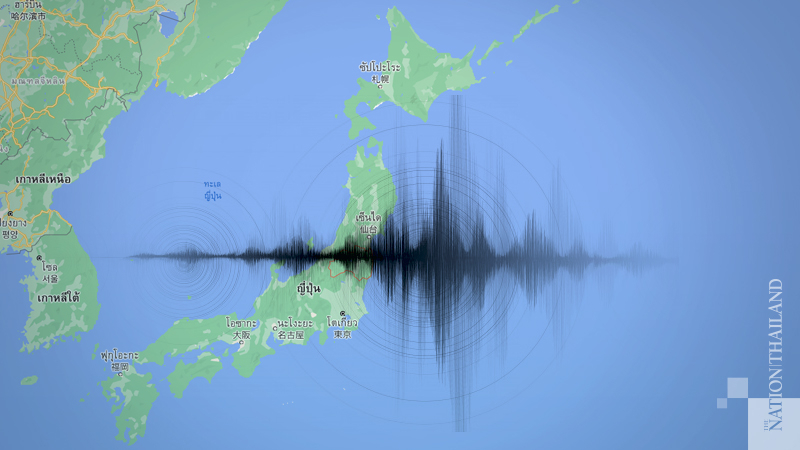
The magnitude 7.3 earthquake Saturday night off the coast of Fukushima Prefecture prompted many factories and manufacturers to stop production in its aftermath. Along with power outages, the earthquake caused a number of problems affecting industries in multiple prefectures.

Damage to the production line at the Asahi Breweries Fukushima Brewery in Motomiya, Fukushima Prefecture, halted its operations. The plan is to resume operations at the end of this month.

The Kirin Brewery in Sendai suspended operations on Sunday to conduct a safety assessment, after parts of the ceiling and walls were damaged, along with some products in storage. The plan is to resume operations on Wednesday.

Renesas Electronics Corp., a major manufacturer of semiconductors, had to stop production of components to be used in automobiles at its Naka plant in Hitachinaka, Ibaraki Prefecture, to perform a safety assessment. There are no concrete plans for resuming operations.

Mitsui Chemical’s Ichihara Works in Ichihara, Chiba Prefecture, experienced a power failure, halting production equipment. The company believes it will take a few days to complete a safety check before restarting the equipment.

JFE Steel Corp.’s Sendai Works in Miyagi Prefecture has also halted production.

Twelve prefectures in the Tohoku and Kanto regions, including Fukushima, Miyagi, Tochigi, Kanagawa, Shizuoka prefectures, experienced power outages following the earthquake. The outages affected about 950,000 households.

Most power outages occurred as electric companies deliberately cut power after 12 thermal power plants in the Tohoku and Kanto areas were shut off, making less power available. Most power had been restored as of Sunday morning, according to the Economy, Trade and Industry Ministry.

SIA flies first batches of Covid-19 vaccines to Australia and New Zealand #SootinClaimon.Com

#SootinClaimon.Com : ขอบคุณแหล่งข้อมูล : หนังสือพิมพ์ The Nation.

SIA flies first batches of Covid-19 vaccines to Australia and New Zealand

Feb 16. 2021

By Toh Ting Wei
The Straits Times/ANN

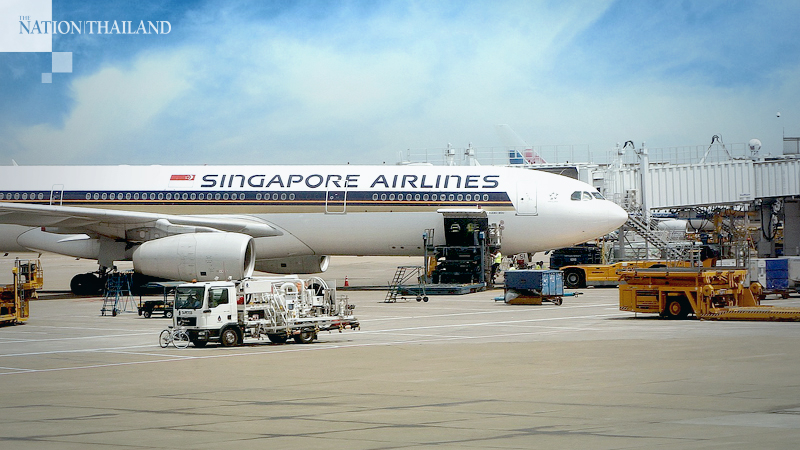
SINGAPORE – Singapore Airlines (SIA) flew the first batches of Covid-19 vaccines to Australia and New Zealand on Monday (Feb 15), in another small step forward in the global fight against the pandemic.

SQ231 touched down in Sydney in the afternoon, carrying 142,000 doses of the Pfizer-BioNTech vaccine. Another SIA plane touched down in Auckland with 60,000 doses of the same vaccine.

SIA flew the vaccine cargo from Brussels through Changi Airport. Local ground handler Sats handled the shipment while it was in transit in Singapore. It took SIA 40 hours to fly the vaccine shipment from Brussels to Australia, and 36 hours to New Zealand.

In both cases, the carrier worked with logistics firm DHL Global Forwarding to transport the vaccine.

SIA told the media in New Zealand and Australia that the successful delivery of the vaccines was a significant milestone in the fight against the coronavirus.

In a Facebook post on Monday evening, Transport Minister Ong Ye Kung said: “While we do our best to contain Covid-19 in Singapore, we will also do our part to fight the virus in the region and the world.”

Singapore has been looking to position itself as a hub for the distribution of Covid-19 vaccines in the South-east Asia region, as well as Australia and New Zealand.

Firms in the air cargo sector have been touting their abilities to maintain the temperature-controlled environment needed for every stage of transporting the vaccine.

Prime Minister Lee Hsien Loong said in December that the handling of large volumes of vaccines would support Singapore’s “recovery in more ways than one”.

But observers have noted that there are several challenges in moving large shipments of vaccine through Singapore. These include competition from other air hubs seeking to ship vaccines to South-east Asia, as well as countries opting for direct shipments.

S. Korea signs deals with Novavax, Pfizer to secure additional vaccines for 23m: PM #SootinClaimon.Com

#SootinClaimon.Com : ขอบคุณแหล่งข้อมูล : หนังสือพิมพ์ The Nation.

S. Korea signs deals with Novavax, Pfizer to secure additional vaccines for 23m: PM

Feb 16. 2021Prime Minister Chung Sye-kyun presides over a meeting of the Central Disaster and Safety Countermeasures Headquarters about measures to prevent the spread of the new coronavirus at the government complex in Sejong on Tuesday. (Yonhap)Prime Minister Chung Sye-kyun presides over a meeting of the Central Disaster and Safety Countermeasures Headquarters about measures to prevent the spread of the new coronavirus at the government complex in Sejong on Tuesday. (Yonhap)

By The Korea Herald/ANN

South Korea has secured additional new coronavirus vaccines for 23 million people by signing contracts with US drugmakers Novavax and Pfizer, Prime Minister Chung Sye-kyun said Tuesday.

Through the deals, Novavax will provide vaccines for 20 million people, which are expected to be ready for inoculation by the second quarter, and Pfizer will ship vaccines for 3 million also during the second quarter, Chung said during an interagency meeting on the nation’s coronavirus response at the government complex in Sejong, 120 kilometers south of Seoul.

Following the new deals, the government has secured COVID-19 vaccines to inoculate 79 million people under the World Health Organization’s global vaccine COVAX Facility project and separate contracts with foreign drug firms.

Pfizer also agreed to speed up the shipment of vaccines for around 500,000 that was initially scheduled to be delivered in the third quarter under a separate contract for 10 million inoculations by the end of March.

“We’ve been in discussions on speeding up the shipment of part of the Pfizer vaccine volume for 10 million people and acquiring additional vaccines during the first half due to growing uncertainties in vaccine supply in the first half of the year,” Chung said.

He also said the government’s contract with Novavax was especially significant, as the vaccines from the company will be manufactured in South Korea by local drugmaker SK Bioscience through a licensing deal with the US pharmaceutical firm.

“(The deal) will play a big role in speeding up the development of homegrown vaccines through the transfer of technology,” he said.

On the latest virus situation, Chung stressed the importance of reaching a state of clear stabilization in the next two weeks by elevating the everyday practice of social distancing to allow the government to introduce a revamped social distancing scheme starting in March.

“The biggest risk as of now is the loosening of the public’s attentiveness. Whether the situation stabilizes or worsens depends on this factor,” Chung said.

President Moon Jae-in said Monday his government will introduce new social distancing rules next month as South Korea is gearing up for full-fledged COVID-19 vaccine shots. Moon said the renewed scheme will focus on minimizing compulsory measures and encouraging voluntary ones. (Yonhap)

Zimbabwe receives its first batch of COVID-19 vaccines from China #SootinClaimon.Com

#SootinClaimon.Com : ขอบคุณแหล่งข้อมูล : หนังสือพิมพ์ The Nation.

Zimbabwe receives its first batch of COVID-19 vaccines from China

Feb 16. 2021A Zimbabwean airplane commissioned to transport the first batch of Chinese-donated COVID-19 vaccine doses is parked on tarmac at Beijing Capital International Airport in Beijing, Feb 14, 2021. [Photo/Xinhua]A Zimbabwean airplane commissioned to transport the first batch of Chinese-donated COVID-19 vaccine doses is parked on tarmac at Beijing Capital International Airport in Beijing, Feb 14, 2021. [Photo/Xinhua]

By China Daily/ANN

HARARE – A batch of COVID-19 vaccines donated by China arrived in Robert Mugabe International Airport in Zimbabwe’s capital here on early Monday morning.

The 200,000 doses of Sinopharm vaccines are the first batch that Zimbabwe has received as it steps up efforts to curb the spread of the COVID-19 pandemic.

The vaccines will cover all frontline health workers firstly, and the excess will be extended to vulnerable groups such as the elderly and those with underlying medical conditions, according to Zimbabwe’s vaccine deployment strategy.

Zimbabwean Vice President Constantino Chiwenga, together with Chinese Ambassador to Zimbabwe Guo Shaochun, attended the handover ceremony at the airport.

Chiwenga, who is also the health minister, expressed gratitude to China for donating COVID-19 vaccines to the southern African country, saying the batch of vaccines is a timely donation as Zimbabweans are suffering from the pandemic.

“We receive this vaccine as it gave the hope to the nation that finally we may be on the verge of returning to some semblance of normalcy. That’s what we are aiming to achieve,” said the senior official.

“The vaccine also offers the possibility that our people who have borne the brunt of the economic ravages of the pandemic might finally turn a new page, following the unfortunate interruption to the economic activities that have been necessitated by the need to contain the spread of the virus,” Chiwenga added.

Guo, for his part, said the donation represents the essence of the comprehensive strategic partnership of cooperation and the profound friendship between China and Zimbabwe.

“The vaccines arriving today are China’s first major assistance program in Zimbabwe in the Chinese New Year, which began three days ago,” Guo said.

“I am confident this donation will reinforce your position in the fight. Let’s continue to march hand in hand and make the new year more fruitful for our bilateral relations,” Guo added.

Zimbabwean President Emmerson Mnangagwa receives an interview with Xinhua on Friday.[Photo/Xinhua]

In an interview with Xinhua on Friday, Zimbabwean President Emmerson Mnangagwa also expressed his gratitude to China for its offer of COVID-19 vaccines, saying the donation is a testament to the long-standing friendship between the peoples of Zimbabwe and China.

“These vaccines are certainly providing a new light of positivity for the people of Zimbabwe in these tough times, (vaccines) which have been donated by the Chinese government and its people. A light at the end of a dark tunnel. We are most grateful for this lifesaving gesture,” Mnangagwa said.

China’s Foreign Ministry spokesman Wang Wenbin on Feb 8 announced that China is providing vaccine aid to 53 developing countries.

Zimbabwe is among the first three African countries to receive the COVID-19 vaccines from China, as Equatorial Guinea has received its vaccines on Wednesday, while Sierra Leone is expecting vaccines from the Asian country later in February.

Zimbabwe has already finalized a vaccine deployment strategy that would see at least 10 million people, or about 60 percent of the population, being inoculated.

Brunei takes third spot in digital inclusiveness global survey #SootinClaimon.Com

#SootinClaimon.Com : ขอบคุณแหล่งข้อมูล : หนังสือพิมพ์ The Nation.

Brunei takes third spot in digital inclusiveness global survey

Feb 15. 2021

By Azlan Othman
Borneo Bulletin/ANN

Brunei Darussalam is the third highest ranked country in Southeast Asia in the digital inclusiveness index, scoring high for affordability, accessibility, ability and attitude, according to global consultancy Roland Berger’s Digital Inclusion Index 2020.

Singapore took the top spot, while the second-highest ranked country on the index was Malaysia (21st), followed by Brunei and Thailand (38th).

Brunei’s digital inclusiveness strength lies in its affordability. While the country’s overall score is 65, its affordability score is significantly higher at 86. This is due to cheap mobile-broadband prices, which are priced to match benchmarks set by Singapore and Malaysia.

Singapore also maintains its top spot for digital inclusiveness among 82 countries in global consultancy Roland Berger’s Digital Inclusion Index 2020, followed by Sweden, Denmark, Netherlands and the United States.

Digital inclusion is defined as the empowerment of individuals and societies to effectively use information and communication technologies (ICT), enabling them to contribute to and benefit from today’s digitalised economies and societies.

In Southeast Asia (SEA), around 150 million adult – 31 per cent of the population – are digitally excluded. Disabilities, illiteracy, age, wealth, concentration of economic activity in urban areas and enterprise access to capital are common factors that create the divide.

It is estimated that at least USD15 billion per year can be unlocked in Southeast Asia (SEA) by bridging the digital divide. But it is unclear how this can be achieved, both in Southeast Asia and globally.

To tackle this problem, Roland Berger developed a Digital Inclusion Index and Digital Inclusion Framework.

The index measures and analyses levels of digital inclusiveness in countries across the globe. It ranks 82 countries, based on their scores across four digital inclusion levers: accessibility, affordability, ability and attitude.

SEA ranks fifth out of seven global regions, and below the global average. Singapore finished top of the 10 Southeast Asian countries. Myanmar was the most improved nation in the entire index. This study details the strengths, weaknesses and digital inclusion development results for each SEA country.

Roland Berger’s Digital Inclusion Framework is designed to foster digital inclusion. It comprises seven key drivers, which underpin the four levers: technology, media and telecommunications (TMT) infrastructure development to enable universal access; digital content creation to support greater engagement; regulation reform and wholesale open access to promote competitive pricing; public access to connect and assist the financially challenged; active learning support to build digital literacy and skills; awareness and usage campaigning to enhance enthusiasm for digital; and safe digital environment to ease security fears

The Digital Inclusion Framework also factors in the importance of the two main actors in digital inclusion – governments and the private sector. It offers recommendations for both, focussing on the content creation role of the private sector and leadership role of government.

Data was compiled for the index from sources such as government publications, global databases and international surveys. Southeast Asia’s rankings were hampered by low scores for affordability and ability, due to large low-income populations, and levels of education and digital literacy in emerging areas that lag behind the global average.

Groups most susceptible to digital exclusion, as identified by the report, include low-income households, rural communities, the elderly, the illiterate, and persons with disabilities. At the enterprise level, micro, small and medium enterprises (MSMEs) are at greater risk compared to larger businesses.