[Japan] Health ministry urges local governments to arrange role-sharing for hospitals
Feb 19. 2021A building that houses Health, Labor and Welfare Ministry offices in Tokyo. (Yomiuri Shimbun file photo)
By The Japan News/ANN
The health ministry asked local governments on Tuesday to arrange a division of roles among hospitals dealing with the novel coronavirus, saying institutions capable of providing advanced medical care, such as university hospitals, should be in charge of seriously ill patients. The ministry aims to establish a medical system to prevent shortages of hospital beds, even when infections spread.
The request came in a document issued by the Health, Labor and Welfare Ministry that also introduces a method of partitioning an intensive care unit (ICU) with a wall to keep infected people away from other patients, when receiving seriously ill patients.
According to the document, regional core hospitals operated by local governments or public organizations should be in charge of moderately ill patients. The ministry urges governments of prefectures and major cities to secure facilities dedicated to the novel coronavirus, with the cooperation of local medical associations and other organizations. The document says such facilities should be designated on a per hospital ward or a per institution basis.
The document also advises them to discuss and coordinate with local medical experts when deciding on the division of roles among hospitals.
In order for university hospitals to treat many critically ill patients effectively, the document points out that it is necessary to designate other hospitals to support them by accepting patients after recovery.
The ministry expects small and medium-sized hospitals, for which it would be difficult to receive COVID-19 patients who are still ill, to take up the recovery support role. The document suggests measures such as compiling a list of hospitals to play that role and utilize it when transferring patients.
The document describes the efforts of the Osaka and Kanagawa prefectural governments, which have set up teams to support changing hospitals. The teams have helped hospitals manage their beds and provide counseling.
It also calls on local governments to commission home care agencies to conduct online health checks for those who are receiving treatment at home.
To cope with the shortage of human resources, it urges local governments to send doctors, nurses and other staff to hospitals that accept COVID-19 patients.
Highly pathogenic bird flu cases in S. Korea nearing 100
Feb 19. 2021Eggs imported from the United States are displayed at a supermarket in Seoul on Feb. 7, 2021. (Yonhap)
By The Korea Herald/ANN
The number of highly pathogenic bird flu cases in South Korea is nearing 100, with the prolonged battle against the animal disease set to further push up the price of poultry products.
Two new cases of the H5N8 strain of avian influenza (AI) were reported from a duck farm in Goesan, about 160 kilometers south of Seoul, and an egg farm in Hwaseong, about 40 kilometers south of Seoul, according to the Ministry of Agriculture, Food and Rural Affairs on Friday.
On Friday, yet another suspected case was reported from Tongyeong, South Gyeongsang Province. The farm was raising various poultry, including geese, ducks and chickens.
The total number of bird flu cases from farms has reached 99 since the first case was reported in November, after a hiatus of around three years.
The previous wave of farm-linked infections ended in March 2018.
Cases from wild birds also continued to grow, reaching 197 as of Friday.
Authorities have culled 28.6 million poultry as a preventive measure.
Earlier this week, South Korea decided to ease its intense precautionary measures and cull only poultry within a 1-kilometer radius of infected farms for the next two weeks, compared with the previous guideline of 3 kilometers.
The country will also only destroy the same kind of poultry. The government will decide whether to extend the measure depending on the situation.
The price of eggs continued to sharply increase despite the government’s efforts to bring imported goods into the market. It jumped 49.4 percent on-year over the past week.
The consumer price of chicken meat, on the other hand, has been flattening after suffering double-digit growth over the past weeks. Over the period, the average price edged up by a smaller margin of 6.9 percent. (Yonhap)
Feb 19. 2021A staff member checks tags on prefilled syringes of inactivated COVID-19 vaccine at packing line of Sinovac Life Sciences Co., Ltd. in Beijing, March 23, 2020. [Photo/Xinhua]
By ZHANG YUNBI and WANG XIAODONG CHINA DAILY/ANN
Nation uses its strength in production chains to help boost capacity, FM says
China is contributing its fair share to help ease the global shortfall in COVID-19 vaccines as it expands assistance to countries in dire need, advances vaccine-related cooperation with eligible partners, boosts vaccine exports and gears up production.
Concerns are lingering globally about the widening gap between immunity and development around the world as high-income nations acquire more doses of vaccine than poorer countries, observers and international health agencies have warned.
China has offered COVID-19 vaccine assistance to 53 developing countries at their request, and it has exported or is exporting vaccines to 22 nations, State Councilor and Foreign Minister Wang Yi said.
The nation has also been using its strength in production chains to help other countries manufacture vaccines in China or locally in order to boost global production capacity, Wang said on Wednesday via video link at a United Nations Security Council open briefing on ensuring equitable access to vaccines.
During the Spring Festival holiday, China delivered vaccine shipments to seven countries.
Leaders of countries such as Hungary greeted the shipments’ arrival at airports and expressed heartfelt thanks to China, Foreign Ministry spokeswoman Hua Chunying said at a daily news conference in Beijing on Thursday.
China has never sought geopolitical advantage in carrying out international cooperation on COVID-19 vaccines, never calculated any economic gains and never attached any political conditions, Wang said.
But countries continue to face “deficits” in vaccine production capacity and global distribution, Wang warned.
He said all parties should join hands to oppose nationalistic vaccine-related moves, promote fair distribution of vaccines, and in particular, make them accessible and affordable for developing countries, including those in conflicts.
“We must ensure that no country in need of the vaccine is left behind and no individual waiting for vaccination is neglected,” Wang said.
As of Thursday, the coronavirus had infected more than 109 million people globally and killed over 2.4 million of them, according to the World Health Organization.
UN Secretary-General Antonio Guterres, who also attended the virtual meeting, said vaccine equity is the biggest moral test before the global community and 130 countries have yet to receive a single dose of vaccine.
Major producers of COVID-19 vaccines in China are working around the clock to increase supply to meet global needs.
The currently available vaccines made by China cost less than others and can be preserved safely at higher temperatures, which makes them more accessible to developing countries, experts and industry insiders said.
Honoring commitment
Yang Xiaoming, chairman of Sinopharm’s China National Biotech Group, a major COVID-19 vaccine producer in China, said Beijing’s decision to supply 10 million doses of COVID-19 vaccines to COVAX, the World Health Organization’s global vaccine initiative, delivers on the commitment to make the vaccines a global public good.
The company’s production capacity is expected to exceed 1 billion doses this year, Yang said.
“We will try our best to produce more high-quality vaccines as quickly as possible on the basis of safety and standards to contribute to fairer distribution of COVID-19 vaccines,” he said.
In addition, a second COVID-19 vaccine production line has been completed by Sinovac, another of China’s leading vaccine makers.
If the new line is put into use before the end of February, it will lead to the doubling of the company’s annual production capacity for the vaccine, which will exceed 1 billion doses, Sinovac said.
Facing great demand in China and overseas, Sinovac is producing its CoronaVac vaccine around the clock and at full capacity.
More than 1,200 of the company’s employees gave up their Spring Festival holiday and continued working.
“The pandemic is still spreading globally, and the virus fight is far from over,” said Yin Weidong, chairman of Sinovac.
The company will continue advancing clinical research of the vaccine and its registration and application in other countries and regions to boost the global fight against the pandemic and improve the accessibility and affordability of COVID-19 vaccines globally, he said.
Since January, CoronaVac has won approval for emergency use in countries such as Indonesia, Turkey, Brazil and Argentina.
More than 10 million doses of the vaccines have been administered overseas since the end of last year.
Liu Yinmeng in Los Angeles contributed to this story.
China denies helping Myanmar to build firewall, sending IT experts and soldiers
Feb 18. 2021
By Eleven Media Group, Asian News Network
Chen Hai, Chinese ambassador to Myanmar, denied the news about China helping Myanmar to build firewalls and sending IT experts and soldiers, according to a statement from Chinese embassy on February 16.
“We have noticed reports about the Chinese government sending IT experts using Chinese planes to Myanmar to build its own firewall security system and Chinese soldiers are seen on the streets in Myanmar. They are totally nonsense and the rumours about Chinese helping the Myanmar coup are laughable,” he said.
The planes they are trying to accuse are just cargo planes operating between Myanmar and China regularly. They were run 15 to 18 times daily before the COVID-19 and now it is reduced to about five times daily. Most of the cargos are seafood sent from Myanmar to China, he said.
The photos showing IT experts, weapons and spices from China, which spread around in social media are fake ones, he continued.
He added the rumours like these will not come out in the future.
He hoped that Myanmar would find a solution for disagreements in line with the Constitution and law to keep stability in politics and society. He does not expect instability and confusing situations and it will be on the political path by negotiations.
He said they noticed that the protestors staged demonstrations against the military coup in front of foreign embassies and international organizations based in Myanmar and they understand about their voices.
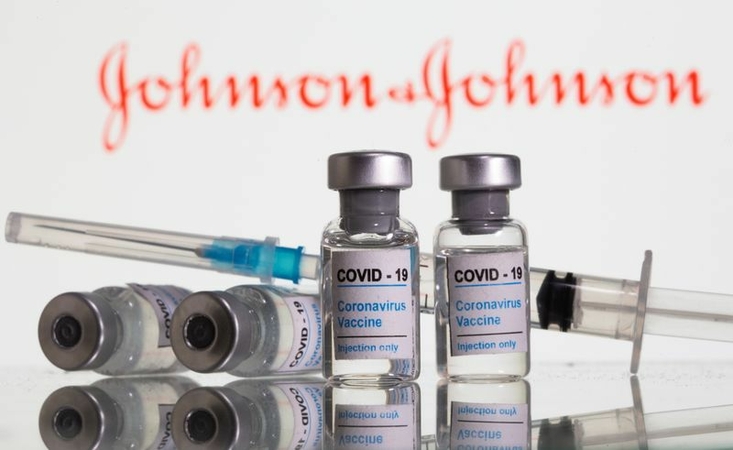
Malaysia may add Johnson & Johnson to its vaccine armoury
Feb 18. 2021
By The Star/ANN
PUTRAJAYA: Malaysia looks set to add Johnson & Johnson to its lineup of Covid-19 vaccine suppliers, in a boost to the country’s National Covid-19 Immunisation Programme.
Science, Technology and Innovation Minister Khairy Jamaluddin said the government is in discussions with the US multinational to finalise the procurement of its vaccine.
“The Cabinet has given its approval for the procurement of the Johnson & Johnson vaccine, following a recommendation by the Covid-19 Vaccine Supply Access Guarantee Special Committee.
“Among the reasons for this decision is that it is a single-dose vaccine and that the clinical information on it has appeared positive so far.
“This is still in the discussion stage. I am made to understand that Health Minister Datuk Seri Dr Adham Baba will be signing the contract with Johnson & Johnson soon.
“After that, the vaccine will be sent to the Health Ministry’s National Pharmaceutical Regulatory Agency (NPRA) to be evaluated, ” Khairy told a press conference yesterday.
So far, Malaysia has agreed to procure Covid-19 vaccines from five companies: Pfizer-BioNTech, AstraZeneca, Sinovac, CanSinoBIO, and Sputnik V.
Only Pfizer-BioNTech’s vaccine has received NPRA approval, while the rest are still under evaluation.
Khairy also said a deal has been made with Pfizer and BioNTech that Malaysia would not miss out on upgraded versions of their vaccine.
“When I negotiated with Pfizer and BioNTech, I ensured that if there was an upgrade based on new variants, our existing contract will cover vaccines that are upgraded or new vaccines from Pfizer.
“This is in light of the emergence of new variants or mutations of the coronavirus, ” he said.
Khairy also said that the government has secured the procurement of low-dead volume syringes to administer the Pfizer-BioNTech vaccine. These syringes, he added, can extract six doses from one vial, compared to the ordinary syringe that extracts only five doses.
The coordinating minister of the national immunisation plan said the country expects logistical issues to be one of its main challenges.
“We are managing a nationwide campaign that includes making sure that vaccines, especially Pfizer-BioNTech’s, are kept in ultra-cold storage. A lot of thought goes into the logistics, ” said Khairy.
To a question, he said the Health Ministry would be updating the list of people to be advised against taking the vaccine.
“We are still updating based on the data that we continue to get from other parts of the world.
“When we are certain about it, the minister will announce this, ” he said when asked if pregnant women would not be on the list of people who can be vaccinated.
Meanwhile, Khairy also said Malaysia could become a regional hub for halal vaccines, after interest shown by investors around the world.
“Many vaccine investors have approached us to position Malaysia as a hub for South-East Asia and other Muslim markets around the world because of our well-respected and stringent halal certifications.
AirAsia food to spread its wings and start deliveries in Singapore
Feb 18. 2021AirAsia food officially began operations in May 2020. PHOTO: AIRASIA/FACEBOOK
By Hariz Baharudin The Straits Times/ANN
SINGAPORE – AirAsia food, budget carrier AirAsia’s delivery service, is looking to spread its wings and start operations in Singapore.
AirAsia’s chief executive Tony Fernandes said in a LinkedIn post on Wednesday (Feb 17) that his company’s latest venture will be coming to “Singapore with a roar”, although he did not specify when.
The food delivery service started almost a year ago and was reportedly gearing up for operations in major Malaysian cities. Coming to Singapore would be its first overseas foray.
“As a disruptive leader, we’re ready to take on the new challenge in Singapore, providing value, simplicity and inclusivity for everyone,” he said.
Mr Fernandes also mentioned that parties interested in becoming a merchant with AirAsia food could already sign up with the company via email.
AirAsia food officially began operations in May 2020. According to the carrier, it had served 500 restaurants and delivered close to 15,000 orders within three months in operation.
Miss Sabrina Khaw, head of AirAsia food, said that the company pivoted towards food delivery after considering that food delivery platforms in Malaysia were charging “exorbitant commission rates”, averaging between 20 per cent and 35 per cent.
She added that there was very little control given to merchants over their own store when it came to food deliveries.
“AirAsia food runs on a zero-commission model. Merchants are able to choose from flat-rate plans powering payment and delivery,” she said.
The budget carrier has been heavily affected by the Covid-19 pandemic’s disruptions to air travel. Last July, its auditors filed a report with the stock exchange in Kuala Lumpur saying the airline may not survive.
Three months later, it was reported that its long-haul arm was out of money and needed to raise up to RM500 million ($164 million) to restart.
AirAsia is not the only airline forced to provide other services to survive after being battered by travel restrictions due to Covid-19.
Singapore Airlines has started restaurant services in its airplanes, and conducted behind-the-scenes tours at its training facility.
Other airlines around the world have launched sightseeing “flights to nowhere” and started selling themed merchandise.
AirAsia food now aims to cut itself a slice of the lucrative food delivery pie here. According to research firm Statista, online food delivery was a US$464 million (S$616 million) business in Singapore last year.
Foodpanda, Deliveroo and GrabFood – which entered the market in 2012, 2015 and 2018 respectively – remain the major players in food delivery here, with several new platforms such as WhyQ, Chope On and Pickupp having leapt onto the food-delivery bandwagon.
Mr Fernandes said that he was sure AirAsia food will do well in Singapore despite the crowded food delivery space.
“It took me seven years to get approval to fly to Singapore but better late than never. So I’d say, we’re way ahead of schedule on food. I’m sure we (are) going to get a great welcome,” he said.
Japan on high alert after 2nd day of China Coast Guard incursions
Feb 18. 2021A China Coast Guard vessel is seen in Japanese waters around the Senkaku Islands in October 2020. (Courtesy of the 11th Regional Coast Guard Headquarters)
By The Japan News/ANN
The government is on high alert after incursions by China Coast Guard vessels into Japanese territorial waters around the Senkaku Islands in Okinawa Prefecture on two consecutive days.
The government announced that two CCG vessels had entered Japanese territorial waters on Tuesday, a day after an incursion by two other CCG vessels.
By around 12:20 p.m. on Tuesday, all four Chinese vessels had left Japanese territorial waters.
Japan is wary of what it views as increasing attempts by China to overturn Japan’s effective control of the Senkakus after the recent enforcement of Chinese coast guard legislation that allows CCG vessels to use weapons.
According to the 11th Regional Coast Guard Headquarters based in Naha, two CCG ships entered Japanese territorial waters off the Senkakus and the Taishojima island at around 4:15 a.m. on Tuesday.
The Yomiuri Shimbun
One of the ships — CCG vessel 1305 — was equipped with what appeared to be a gun.
The two ships appeared to be pursuing a 9.97-ton Japanese fishing boat with four crew members aboard when they entered Japanese territorial waters, where they remained for about six hours.
The two vessels that entered Japanese territorial waters around Minamikojima island on Monday also appeared to be pursuing another Japanese fishing boat.
At one point, a total of four CCG vessels had split into two groups in pursuit of the Japanese fishing boat. A Japan Coast Guard patrol boat intervened to ensure the safety of the fishing boat.
At a press conference on Tuesday, Chief Cabinet Secretary Katsunobu Kato said that there had been two other cases in which a CCG vessel equipped with a gun-like device approached a Japanese fishing boat in Japan’s territorial waters — one occurred last year and the other two years ago.
According to the Japanese government, CCG vessels have become larger in recent years, and the fleet now includes 10,000-ton class ships.
The Japanese government has lodged protests through diplomatic channels with Beijing over the moves.
“It is truly regrettable and unacceptable that for the second day in a row they have intruded into our territorial waters and approached Japanese fishing vessels,” Japanese Foreign Minister Toshimitsu Motegi said at a press conference on Tuesday.
A series of Chinese provocations has triggered moves within the ruling Liberal Democratic Party to seek new legislation by using as a reference a bill on territorial patrol submitted to the Diet in 2015 by the then Democratic Party of Japan and then Ishin no To (the Japan Innovation Party).
Currently, if a situation arises that cannot be handled by the Japan Coast Guard, the government issues an order for maritime patrol operations and the Maritime Self-Defense Force takes action. The bill allows the Self-Defense Forces to crack down on illegal activities in territorial patrol zones that have been designated in advance by the prime minister.
At a joint conference of the LDP’s Foreign Affairs Division and other groups, some lawmakers expressed concerns that Chinese provocations cannot be stopped with efforts through diplomatic channels alone.
However, the Japanese government is cautious about introducing new legislation. A senior Defense Ministry official said that if the SDF takes action in peacetime, it would give China an excuse to intervene with its Navy.
According to a source with knowledge of Japan-China relations, China is ready to pursue Japanese fishing boats that enter waters around the Senkakus.
An executive of the Yaeyama fishing cooperative in Ishigaki, Okinawa Prefecture, expressed the sense of crisis among fishermen since the enforcement of China’s coast guard legislation, saying, “Many fishermen are afraid that if they fish around the Senkaku Islands, they will be shot at by Chinese ships.”
S. Korea’s mobile game market surges 24% to W5tr in 2020: data
Feb 18. 2021A logo of the Google Play Store is shown in this undated image provided by the company. (Google Play)
By The Korea Herald/ANN
The mobile game market in South Korea logged sharp growth of over 5 trillion won ($4.5 billion) last year amid the pandemic, data showed Thursday.
Total mobile game transactions in the country were estimated at 5.3 trillion won in 2020, up 24.3 percent from the previous year, according to data from mobile app tracker IGAWorks based on estimated sales of Google’s Play store, Apple’s App Store and homegrown rival ONE Store.
Last year’s growth far outpaced that of 2019 when it grew 5.3 percent from the previous year.
The data showed that Google’s Play store accounted for 77.6 percent of total mobile game transactions at 4.1 trillion won, followed by ONE Store with 13.8 percent and Apple’s App Store with 8.6 percent.
ONE Store, under the country’s largest mobile carrier SK Telecom Co., saw the steepest growth in mobile game transactions in 2020 at 41.1 percent on-year, compared with that of Google’s store at 22.6 percent and that of Apple’s store at 16.1 percent.
The data also showed that the number of average monthly gamers stood at 26.47 million from July to December last year, with women accounting for 52.8 percent of the total.
Racing game KartRider Rush+ was the most newly downloaded mobile game last year on Google’s Android operating system, supported by the Play store and ONE Store, with 9.2 million downloads.
The mobile game market’s growth comes as Google is set to expand its service commission of 30 percent to all in-app digital goods purchases on its Play store in October.
The new billing policy is expected to largely impact non-game applications that had previously been able to skirt the rules.
The move has drawn scrutiny from local developers, with rival Apple reducing its standard commission from 30 percent to 15 percent at the start of this year for app developers earning up to $1 million a year. (Yonhap)
Feb 18. 2021A shipment of the COVID-19 vaccine developed by Chinese pharmaceutical company Sinopharm arrives at Budapest Ferenc Liszt International Airport in Hungary on Tuesday, making the country the first member of the European Union to receive a Chinese vaccine. [Photo/Agencies]
By XU WEI CHINA DAILY/ANN
Development cooperation set to enter new stage
Tshepo Heqoa’s family was struggling to make ends meet amid a growing number of climate-related woes, such as drought, floods, pests and extreme temperatures occurring more frequently.
The 29-year-old lives in Koalabata, a small village in the Berea district of Lesotho in southern Africa, where farmers like him rely on cultivating soybeans, sugar beans, maize and wheat for a living.
“Life had been hard. My mother was a sole bread winner, and she had to pay for the tuition of my college education,” he recalled in an online interview.
Heqoa was introduced to growing mushrooms in 2014 by his peers. But he found the technology difficult to grasp and had only occasional success.
A trip he made to China in 2018, one of the knowledge-sharing tours organized by the Chinese Ministry of Commerce, took him to the China National Engineering Research Center at Juncao Technology in Fujian province. “I was blown away. I had a lot of ideas of what to do when I got home. I found the technology amazing and a way to improve livelihoods in many aspects of life,” he said.
Inspired by the Chinese technology and with help from Chinese experts, Heqoa is now expanding his business from growing mushrooms to producing mushroom spawn-the substance that, like a seed, causes mushroom growth, which gave him revenue of about $1,500 in the past four months, a considerable amount in a country with a per capita GDP of $1,118 in 2019.
Heqoa’s case is an example of China’s ongoing efforts in international development cooperation. He was one of some 200,000 beneficiaries of training sessions and seminars for foreign officials and technical personnel and in-service education programs that the country hosted between 2013 and 2018.
With China on course to attain its goal of building itself into a moderately prosperous society in all respects this year, its international development cooperation is also set to enter a new stage, according to experts. Stronger emphasis will be given to the building of a community with a shared future for mankind, a vision championed by President Xi Jinping in response to global challenges.
“The primary goal of China’s international development cooperation will be to promote building a community with a shared future for mankind,” said Xu Xiuli, dean of China Agricultural University’s College of International Development and Global Agriculture.
She explained that the process would primarily involve enabling a better response to various challenges worldwide, including working together against shortcomings in trust, peace and development and improving global governance.
The next stage of China’s international development cooperation is set to contribute more to solving global issues such as health challenges, food security and climate change, she said.
According to a white paper titled “China’s International Development Cooperation in the New Era”, issued by the State Council Information Office last month, China allocated 270.2 billion yuan ($41.8 billion) for foreign assistance in three categories-grants, interest-free loans and concessional loans-between 2013 and 2018.
A total of 127.8 billion yuan in grants were allocated to help other developing countries build small and medium-sized social welfare projects and to fund such projects as those for cooperation in human resources development and emergency humanitarian assistance.
China has been providing development cooperation to other developing countries over the past seven decades, the paper said.
“China’s approach to foreign assistance gradually coalesced around a set of principles emphasizing recipient countries’ sovereignty and mutual benefit,” said Cheng Cheng, chief economist at the Made in Africa Initiative, a nongovernmental organization dedicated to the industrialization of Africa.
With a set of reforms launched in recent years, “China seems to want to integrate into its foreign aid portfolio and the BRI a greater range of socially conscious development projects, in areas such as agriculture, public health and education”, Cheng added.
Xu, the dean, said even though China is now the world’s second-largest economy, it is still a developing country-a key factor that determines that its international development cooperation is conducted under the framework of South-South cooperation.
“Meanwhile, China has always given priority to providing the means for independent development while refraining from attaching political strings or pursuing political self-interest during the process,” she said.
Many officials and experts have hailed the issuance of the latest white paper as a new starting point for China’s development cooperation.
“This white paper comes at an opportune moment, as China is embarking on a new stage of its journey as an increasingly important provider of development cooperation,” Beate Trankmann, United Nations Development Programme resident representative in China, said at an online seminar last month.
Trankmann said the white paper highlighted a few entry points for more detailed regulations, providing stepping stone toward enhancing the effectiveness and transparency of China’s aid, a move she welcomed.
Barnaby Willitts-King, a senior research fellow at the Overseas Development Institute, an independent think tank, wrote that the white paper detailed not only China’s role in COVID-19 response but also disaster relief and recovery, support for refugees and food security, which “reflected China’s growing interest in engaging in humanitarian action”.
Pandemic response
With the COVID-19 pandemic still posing an immense threat to the lives, safety, health and well-being of people worldwide as well as challenges to global public health security, China has made its contribution to a global community of health for all a priority in its future international development cooperation, as set out in the white paper.
Key measures include continuing to offer medical supplies to various nations, engaging in cooperation on medical technologies and working with the World Health Organization to help developing countries, especially in Africa, to fortify their public health defenses and improve the speed of their response and capacity for disease control.
On Wednesday morning, the first shipment of vaccines from China to a nation in sub-Saharan Africa-a planeload of COVID-19 vaccines bound for Senegal-departed Beijing Capital International Airport.
Zhang Jun, ambassador and permanent representative of China to the United Nations, wrote in an article last week that Chinese vaccine aid has been provided to 14 developing countries and will soon reach 38 more, as part of broader efforts to deliver on its pledge to make its vaccines a global public good.
The country is also slated to deliver 10 million doses of Chinese vaccines to COVAX, a UN facility that aims to ensure all countries have access to a safe, effective vaccine.
With the pandemic also causing a global economic downturn, causing the loss of 114 million jobs and increasing the number of poor people by 131 million worldwide, the importance of China’s role in helping to attain the UN 2030 Sustainable Development Agenda was also highlighted by analysts.
Promoting the implementation of the agenda was also listed as one of the priorities for China’s international development cooperation.
“China will make eliminating poverty and improving people’s lives its ultimate objective and implement more projects for improving living standards in developing countries, especially the least developed countries,” the white paper said.
With his enterprise growing and more revenue coming in, Heqoa also expressed confidence in the future of his business.
“I have hired one employee and will be hiring more with time. My future plan is to be the director of the largest mushroom company in southern Africa and to help alleviate poverty by selling mushrooms in a very affordable way,” he said.
HCM City airport gives COVID tests to passengers returning from the north
Feb 17. 2021Passengers at the domestic terminal at Tân Sơn Nhất International Airport in HCM City ahead of the Lunar New Year holiday. VNS Photo Bồ Xuân Hiệp
By Viet Nam News/ANN
HCM CITY — HCM City authorities are testing arrivals from three major airports in the north (Nội Bài in Hà Nội, Vân Đồn in Quảng Ninh Province and Cát Bi in the northern port city of Hải Phòng) as tens of thousands of passengers are returning after the Lunar New Year holiday.
According to the HCM City Centre for Disease Control and Prevention (CDC), as of February 14, some 200 samples had been taken each day for testing on a random basis at Tân Sơn Nhất International Airport in HCM City.
The move is part of the city’s effort to monitor community transmission cases. Four hospitals, including Nguyễn Tri Phương, Ear Nose and Throat, Hùng Vương, and Traditional Medicine, have participated in the screening.
Since February 11, the city has also tested people considered at high-risk of contracting the virus at bus stations, wet markets and some rental housing units in order to monitor the risk in the community.
In addition, the HCM City CDC has been conducting testing at hospitals across districts since September 15.
To ensure safety for passengers at Tân Sơn Nhất, airport staff must be tested one day before their working shifts.
More than 1,600 families of employees of the Vietnam Airport Ground Sevices Company Limited (VIAGS) have also been asked to test, as of February 10.
The main cluster of cases at the airport was related to VIAGS.
Source of infection
According to the HCM City-based Hospital for Tropical Diseases, the virus strain (A.23.1) associated with the Tân Sơn Nhất airport outbreak was first found in the African country of Rwanda in late October.
This is the first time that the Rwanda variant has appeared in Việt Nam and Southeast Asia. It is not the highly contagious UK variant (B.1.1.7) or the variant detected in South Africa.
The Rwanda variant has been discovered in a few other countries such as the US, the United Arab Emirates (UAE), Australia, and several countries in Europe, including the UK and Denmark. However, no “abnormal developments” have been reported in those countries.
Based on an analysis, experts believe the Rwanda variant is likely to have infected the staff at Tân Sơn Nhất airport through cargo flights.
Dr. Phan Trọng Lân, director of the HCM City Pasteur Institute, said: “The most likely hypothesis is that the strain originated from cargo flights from the United Arab Emirates.”
Cargo crew members are not subject to quarantine and testing because they are not allowed to get off the plane, he added.
During this period, flights from the United Arab Emirates arriving at Tân Sơn Nhất airport were possibly the source of infection for the loading staff on the ground, who had contact with aircraft crew members.
Lân noted, however, that the risk of infection from outside the airport cannot be ruled out, but it is unlikely to be the source.
According to the HCM City CDC’s initial assessment, most of the patients related to the Tân Sơn Nhất outbreak had no symptoms or very mild symptoms. Many cases have tested negative quickly after a few days of treatment at hospitals.
The centre said it would work with experts to collect data on epidemiology, clinical signs, antigens, antibody test results, and sequencing genes to learn further about the cases.
Since the first case was detected at the airport, the city has recorded 36 COVID-19 cases as of February 16, including 10 patients who are loading staff at Tân Sơn Nhất airport and 26 cases who are family members of the loading staff.
City authorities have imposed a strict lockdown on areas that are related to the cases. All non-essential services and entertainment, and cultural and sports activities have been suspended until further notice.
“The infection chain at Tân Sơn Nhất hotspot has basically been contained,” according to the HCM City CDC.
The city is continuing to conduct extensive screening in the community to assess the risk of disease. — VNS

 A building that houses Health, Labor and Welfare Ministry offices in Tokyo. (Yomiuri Shimbun file photo)
 Eggs imported from the United States are displayed at a supermarket in Seoul on Feb. 7, 2021. (Yonhap)
![A staff member checks tags on prefilled syringes of inactivated COVID-19 vaccine at packing line of Sinovac Life Sciences Co., Ltd. in Beijing, March 23, 2020. [Photo/Xinhua]](https://media.nationthailand.com/images/news/2021/02/19/30402808/800_25c06a0f80a421a.jpeg?v=1613701304) A staff member checks tags on prefilled syringes of inactivated COVID-19 vaccine at packing line of Sinovac Life Sciences Co., Ltd. in Beijing, March 23, 2020. [Photo/Xinhua]
A staff member checks tags on prefilled syringes of inactivated COVID-19 vaccine at packing line of Sinovac Life Sciences Co., Ltd. in Beijing, March 23, 2020. [Photo/Xinhua]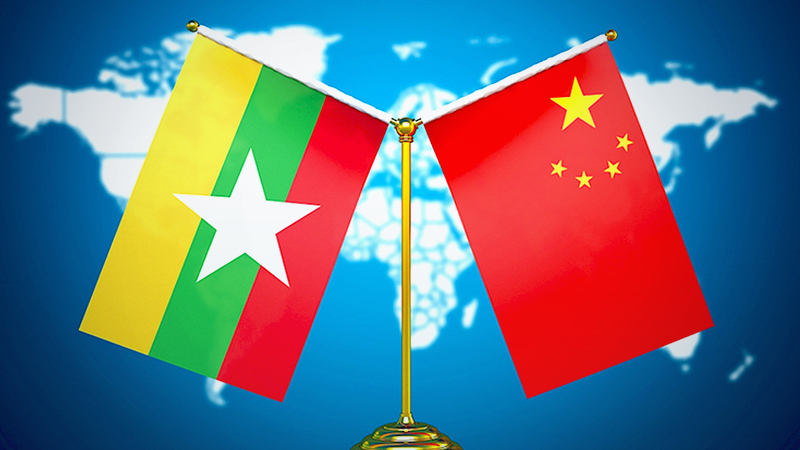
 AirAsia food officially began operations in May 2020. PHOTO: AIRASIA/FACEBOOK
 A China Coast Guard vessel is seen in Japanese waters around the Senkaku Islands in October 2020. (Courtesy of the 11th Regional Coast Guard Headquarters)
 A logo of the Google Play Store is shown in this undated image provided by the company. (Google Play)
![A shipment of the COVID-19 vaccine developed by Chinese pharmaceutical company Sinopharm arrives at Budapest Ferenc Liszt International Airport in Hungary on Tuesday, making the country the first member of the European Union to receive a Chinese vaccine. [Photo/Agencies]](https://media.nationthailand.com/images/news/2021/02/18/30402769/800_752221bd84f8ff3.jpeg?v=1613615673) A shipment of the COVID-19 vaccine developed by Chinese pharmaceutical company Sinopharm arrives at Budapest Ferenc Liszt International Airport in Hungary on Tuesday, making the country the first member of the European Union to receive a Chinese vaccine. [Photo/Agencies]
A shipment of the COVID-19 vaccine developed by Chinese pharmaceutical company Sinopharm arrives at Budapest Ferenc Liszt International Airport in Hungary on Tuesday, making the country the first member of the European Union to receive a Chinese vaccine. [Photo/Agencies] Passengers at the domestic terminal at Tân Sơn Nhất International Airport in HCM City ahead of the Lunar New Year holiday. VNS Photo Bồ Xuân Hiệp

