WHO: Virus may have taken ‘convoluted path’ to Wuhan
Feb 10. 2021Members of a WHO-China joint study team attend a press conference in the city of Wuhan, in China’s Hubei province on Feb 9, 2021. (PHOTO / XINHUA)
By China Daily/ANN
WUHAN – A member of the WHO-China joint team studying the origins of COVID-19 said bats remain a likely source and that transmission of the virus via frozen food is a possibility that warrants further investigation.
At a press conference in China’s city Wuhan on Tuesday, Peter Ben Embarek said the team’s work had uncovered new information but had not dramatically changed their picture of the outbreak.
“The possible path from whatever original animal species all the way through to the Huanan market could have taken a very long and convoluted path involving also movements across borders,” Embarek told a nearly three-hour media briefing.
He said work to identify the coronavirus’s origins points to a natural reservoir in bats, but it is unlikely that they were in Wuhan.
Huanan market ‘may not be site of earliest outbreak’
Wuhan’s Huanan seafood market may not have been the site of the earliest COVID-19 outbreak, the team said.
Liang Wannian, a member of the team, said that in retrospect, the first COVID-19 case in Wuhan had no relation to the Huanan seafood market.
“We can’t say it was the starting point of the epidemic,” he said.
The market drew considerable attention after an early cluster of cases was traced to people working in the market.
Embarek also said the exact role of the Huanan seafood market was unclear.
Embarek noted that while the market was probably a setting where the virus could have easily spread, this is “not the whole story.”
“There was also spread among individuals that were not linked to the market,” he said, adding that some cases were linked to other markets while some had no links to any markets whatsoever.
Lab incident ‘extremely unlikely’
Embarek also said laboratory incident is “extremely unlikely” the cause of COVID-19.
Experts from the team identified four hypotheses for the source of the transmission of the novel coronavirus to the human population, including direct zoonotic spillover, an intermediary host species, the food chain, and a laboratory-related incident, said Embarek.
Initial findings suggest that introduction through an intermediary host species is “the most likely” passway and one that will require further study and more specific targeted research, he said.
“For us it was important to develop a system to evaluate all these hypotheses where we could take a rational approach and look at facts and evidence in a rational way,” he added.
Scientists have concluded that it was impossible the virus was man-made, said Liang Wannian, another member of the WHO-China joint study team.
“There was no novel coronavirus in the Wuhan lab at all, so how could the virus leak from the lab?” Liang said.
Tracing COVID-19 origin not bound to any location
The joint study by WHO and Chinese experts in Wuhanwill lay the foundation for COVID-19 origin-tracing work globally, Liang said.
The global origin-tracing of COVID-19 will not be bound to any location, Liang added.
Liang also said there is no indication of the transmission of the novel coronavirus before December 2019 in Wuhan.
Malaysia remains attractive investment destination in Asia
Feb 09. 2021Mida stated that it has identified 240 high-profile foreign investment projects including Fortune 500 companies in the manufacturing and services sectors, with a combined potential investment value of RM81.9bil.
By The Star/ANN
KUALA LUMPUR: Malaysia continues to be the investment destination for high-value manufacturing and global services in Asia, the Malaysian Investment Development Authority (Mida) said.
The country remains an attractive investment destination with a favourable environment including the availability of excellent infrastructure, telecommunication services, financial and banking services, supporting industries, skills and trainable workforce, as well market opportunities offered through the 16 Free Trade Agreements that it has signed.
Mida has refuted a recent report by a Singapore daily regarding foreign investors fleeing Malaysia, saying it is incorrect.
“The piece falsely indicates that the United Nations Commission on Trade and Development (UNCTAD) report confirmed what has been spoken of anecdotally, ” it said in a statement yesterday.
Mida stated that it has identified 240 high-profile foreign investment projects including Fortune 500 companies in the manufacturing and services sectors, with a combined potential investment value of RM81.9bil.
“Presently, Mida has also received RM47.7bil worth of potential investments into the country. These projects, once approved, are expected to be implemented within 2021 to 2022, ” it said.
Citing the Department of Statistics Malaysia, it said the total gross Foreign Direct Investment (FDI) inflow to the country for the period of January to September 2020 was valued at RM108.2bil compared with RM102.3bil in the same period in 2019, an increase of 5.8%.
“This is a considerable achievement given the movement control order (MCO) and recovery MCO in the second and third quarter of last year, respectively.”
Mida said the total FDI approved from 2018 to September 2020 was valued at RM206.02bil. — Bernama
HCM City airport tightens COVID-19 preventive measures following staff infection
Feb 09. 2021Passengers wait for check-in at the domestic terminal at Tân Sơn Nhất international airport in HCM City on Saturday. VNS Photo Bồ Xuân Hiệp
By Viet Nam News/ANN
HCM CITY — Tân Sơn Nhất international airport in HCM City continues to operate normally after one of the airport staff tested positive for the coronavirus yesterday (Feb 6), according to airport authorities.
Phạm Vũ Cường, deputy director of the airport, said: “The infected employee did not come into contact with passengers because he works for the luggage loading service. His infection has not affected the airport’s operation.”
“The airport has activated the highest level of pandemic prevention measures since the northern outbreak in Hải Dương and Quảng Ninh provinces,” he added.
At an urgent meeting on Saturday afternoon, Deputy Minister of Health Đỗ Xuân Tuyên said: “There is no need to shut down the country’s largest airport.”
“It’s hugely urgent to trace and test those who had close contact (F1 and F2) with the employee and one of his two younger brothers who later tested positive for the virus, in both the city and Bình Dương Province,” Tuyên said. “The entire airport was disinfected immediately.”
About 60 people came into contact with the two patients, city authorities said on Sunday morning.
The airport employee tested positive after travelling from HCM City to his hometown in Bình Dương Province. A block of apartments where the patient and his two brothers live was locked down immediately.
The HCM City Centre for Disease and Control (CDC) said it confirmed the employee’s positive test after testing 5,900 out of nearly 7,000 employees at Tân Sơn Nhất International Airport, beginning on January 30, as ordered by the city government following the third wave of local infections from the north.
The HCM City CDC rushed to test the remaining 1,000 employees of the airport through the night and completed all the samples by Sunday morning. The results will be annouced as soon as possible, they said.
According to the Airports Corporation of Vietnam (ACV), all employees of Việt Nam’s 21 airports out of 22 airports have been told to be tested for Covid-19.
Of the 22 airports, the Vân Đồn airport in Quảng Ninh Province, which has been receiving repatriation flights with a number of passengers testing postive for COVID-19, has been locked down since January 28 after a number of airport employees tested positive. It is set to reopen on February 13.
Airport’s strict measures
Tân Sơn Nhất airport has ramped up measures to prevent the spread of the virus during the Lunar New Year holiday.
Medical screenings will be strictly conducted at the airport in line with the Government and the Health Ministry.
Passengers who fail to comply with regulations on aviation security, conceal infections, or fail to fill in health declarations accurately will be punished under the Criminal Law.
The airport will allocate staff to be on duty around the clock during the holiday.
Airport staff are required to wear face masks while on duty, wash hands with alcohol-based sanitiser, have their body temperature checked, and disinfect surfaces regularly.
Đào Thị Hoa, 28, a passenger service staff at the airport, told Việt Nam News: “COVID-19 prevention measures have been tightened at the airport for Lunar New Year when there is a huge number of passengers. Each employee is provided with face masks, gloves, face shield, and alcohol-based sanitaiser while on duty.”
“The number of passengers has surged in the last few days, two or three times higher than normal days. I always wear gloves, face mask, face shield, wash hands regularly with alcohol-based sanitiser, and disinfect the check-in counter surface.”
“Passengers are asked to wear face masks at all time at the airport, and maintain social distancing when queueing up. We will provide face masks when passengers need them.”
Trần Thị Thuý, 45, a passenger from the central province of Nghệ An, said: “Today I wore double face masks. It’s important to always wear a face mask, keep distance, and wash hands frequently with alcohol-based sanitiser in public places.”
When asked if she was afraid to travel by air now, she said: “I’ve been super careful, but it’s not that scary as I can see everyone is wearing a face mask. Alcohol-based sanitiser is available almost everywhere at the airport, and passegers get their body temperature checked before getting onboard.”
“Based on my observation since the pandemic borke out since early 2020, I trust in the serious measures taken by the airport authorities and the Government.”
“When I arrive in my hometown, I will stay at home, restrict travel, and only have contact with family members,” she said.
Airlines’ stringent measures
Airlines operating at Tân Sơn Nhất airport have been ordered to strictly implement all measures in line with the Health Ministry’s guidance. Social distancing measures are applied on flights in which middle seats are kept vacant and no meals are served.
In a related move, national flag carrier Vietnam Airlines has announced it will intensify prevention measures during the holiday.
All passengers must have their temperature checked before boarding, fill out a health declaration, and wear a face mask throughout the flight. Passengers will be provided with alcohol-based towels on board.
Passengers must also abide by social distancing measures at check-in areas and will be given sanitised wipes.
At the end of day, all aircraft will be thoroughly sprayed with disinfectant.
All passengers are strongly recommended to follow the Health Ministry’s 5K (in Vietnamese) message: Khẩu trang (face mask) – Khử khuẩn (disinfection) – Khoảng cách (distance) – Không tụ tập (no gathering) – Khai báo y tế (health declaration).
According to Vietnam Airlines, the number of air passengers has gradually increased ahead of the Lunar New Year.
During the holiday period, Vietnam Airlines, Pacific Airlines and VASCO are expected to serve an average of 20,000 passengers per day from Tân Sơn Nhất.
Many flights are full (80 to 90 per cent) from HCM City to destinations like Thanh Hóa, Vinh, Đồng Hới, Chu Lai, Huế, Cam Ranh and Phu Quốc.
Thousands of passengers in recent days have been flocking to the domestic terminal of Tân Sơn Nhất airport to return home for the holiday celebration. The airport areas have been packed with long queues.
Almost all the passengers arriving at the airport wear a face mask, and some of them even wear protective clothing.
Since January 28, Việt Nam has recorded more than 400 locally transmitted cases as of Sunday afternoon. New infections have been detected in 12 cities and provinces so far.
The outbreak in the north is the largest in Việt Nam since a cluster emerged in the central city of Đà Nẵng last July and quickly spread to most regions of the country, leading to the country’s first fatalities from the pandemic.
This week, Vietnamese people will be celebrating the Lunar New Year, an occasion for family reunions that will see millions travel to their hometowns.
Containment efforts could become more complicated during the holiday period when big indoor gatherings are more common. — VNS
Pilot scheme for quarantine-free business travel to S’pore delayed until at least Feb 21: Sources
Feb 09. 2021Finishing touches are being put to the first phase of the Connect@Changi facility at Singapore Expo and Max Atria. PHOTO: CONNECT AT CHANGI/FACEBOOK
By Kok Yufeng The Straits Times/ANN
SINGAPORE – A pilot programme allowing short-term business travellers to stay, work and meet at dedicated facilities here without the need for quarantine has been delayed until at least Feb 21, The Straits Times has learnt.
The first travellers under the Connect @ Singapore segregated travel lane were supposed to be allowed into Singapore from the second half of last month, but the first dedicated facility these travellers will be put up in under the pilot scheme is now expected to open for check-in only from Feb 21, sources told ST.
Finishing touches are being put to the first phase of the Connect @ Changi facility at Singapore Expo and Max Atria, which is the only place earmarked as a possible dedicated facility for the Connect @ Singapore scheme so far.
Under this scheme, business, official and high-economic value travellers on short-term stays of up to 14 days will be put up in a “bubble” away from the community and housed within dedicated facilities such as the one at Singapore Expo.
Those who opt to use this arrangement – likely the first of its kind in the world – will be transported from the airport to these dedicated facilities, and must undergo regular testing and observe prevailing safe management measures.
The Ministry of Trade and Industry (MTI), which is overseeing the Connect @ Singapore scheme, did not say why the scheme has been delayed.
An MTI spokesman would only say that the start date for applications for the scheme will be “broadly aligned with the estimated operational start date of the first Connect @ Singapore facility”.
The Singapore Tourism Board’s executive director for infrastructure planning and management, Mr Chew Tiong Heng, said assessments on the first facility are in the final stage and no reservations have been taken from the travellers yet.
“We are in the process of concluding the appointment process and will make an announcement when ready,” he added.
Temasek Holdings, which is leading a local consortium that is developing the Connect @ Changi facility, declined to give an exact date when asked when the facility would be up and running. But a post by Connect @ Changi’s official Facebook page on Saturday (Feb 6) said construction work is almost complete.
Photos show furnished guest rooms and partially-furnished meeting rooms, with some work still going on in the courtyard, common corridors and other areas.
The four-star facility will initially have 670 guest rooms and 170 meeting rooms.
It will increase the capacity to 1,300 guest rooms and 340 meeting rooms by mid-2021.
Temasek’s spokesman said: “We remain on track to launch the first phase of Connect @ Changi in Q1 2021, and we’ll be sharing launch details in due course.”
Finishing touches are being put to the first phase of the Connect @ Changi facility at Singapore Expo and Max Atria. PHOTO: CONNECT AT CHANGI/FACEBOOKThose who opt to use this arrangement will be transported from the airport to these dedicated facilities. PHOTO: CONNECT AT CHANGI/FACEBOOK
Announced on Dec 15 last year, the Connect @ Singapore initiative was meant to complement other travel lanes that have already been established, such as reciprocal green lane (RGL) arrangements.
It is distinct from the RGL arrangements, which apply only to selected countries but allow those on essential business here to move about around Singapore more freely.
Singapore suspended its RGL arrangements with Germany, Malaysia and South Korea for three months starting in February, following a resurgence of Covid-19 cases worldwide. Green lane arrangements still exist with some countries like China.
S. Korea implements tougher rules on animal abuse, pet owners
Feb 09. 2021(Yonhap)
By The Korea Herald/ANN
South Korea said Tuesday it plans to implement revised rules on animal abuse this week that center on tougher punishment and more regulations on pet owners.
Starting Friday, those who slaughter animals cruelly will face imprisonment of up to three years or a fine of 30 million won ($26,840), according to the Ministry of Agriculture, Food and Rural Affairs. It compares with the previous ceiling of two years.
Owners of fierce dogs are obligated to purchase insurance packages, and violators will be slapped with a fine of 3 million won. The move is aimed at helping victims of fierce dog-related incidents promptly receive compensation.
The country categorizes Tosas, American pit bull terriers, American Staffordshire terriers, Staffordshire bull terriers, rottweilers and other related mixed breeds as fierce dogs.
All owners need to use a leash that is no longer than 2 meters when taking their pets outside. This measure will come with a grace period of one year.
All pets also need to wear name tags that include information of owners and contact numbers.
Dogs that have worked for state organizations, including the police and the military, along with assistant dogs, cannot be used for animal experiments.
Animal experiments at schools, however, which were fully banned in principle in the past, will be allowed as long as they are reviewed by an ethics committee. (Yonhap)
Feb 09. 2021Global climate experts and journalists share their insights via online video at webinar themed “Climate Changes: Challenges for Asia Nations” on Friday. Photos provided to China Daily
By Xu Weiwei China Daily/ANN
Webinar panelists say nation aims to fully implement UN’s 2030 Agenda for Sustainable Development
The temperature difference of 0.5 degrees C appears very small, but is the difference between life and disaster for millions around the world, Joy Jacqueline Pereira, vice-chair of Working Group II of the United Nations’ Intergovernmental Panel on Climate Change, issued the warning on Friday at an online seminar titled “Climate Changes: Challenges for Asian Nations”.
Since the pre-industrial period, the temperature has risen by 1 degree C, putting it on course to reach 1.5 degrees C, she said.
If the goal is accomplished, global carbon emissions will peak before 2030. To achieve a pathway compatible to 1.5 degrees C, warming and carbon dioxide emissions should fall by 45 percent by 2030, reaching net zero emissions around 2050 with deep cuts in methane and other pollution, Pereira said.
But she added that despite the scientific road map, political and societal resolve is necessary to accelerate the reduction of carbon emissions.
The high-level conference was co-organized by China Daily, the University of International Business and Economics, Shanghai International Studies University, and the Asia News Network, an alliance of 23 of the leading media outlets across 21 Asian countries.
Zhou Shuchun, Standing Committee member of the Chinese People’s Political Consultative Conference National Committee, and editor-in-chief of China Daily, said that China will make every effort to fully implement the United Nations’ 2030 Agenda for Sustainable Development, achieve the peak of carbon dioxide emissions before 2030, and realize carbon neutrality before 2060.
Zhou cited President Xi Jinping’s remarks at the Climate Ambition Summit at the end of last year to further elaborate on China’s beliefs and visions on combating global warming.
“In meeting the climate challenge, no one can be aloof, and unilateralism will get us nowhere. Only by upholding multilateralism, unity and cooperation can we deliver shared benefits and win-win for all nations,” Xi said.
China, a firm believer in upholding multilateralism, solidarity and cooperation to fight climate change, has been an active participant in international conservation and climate change conferences, Zhou said.
Gao Xiang, a professor and division director of International Policy Research at National Center for Climate Change Strategy and International Cooperation, concurred on China’s commitments to cut carbon dioxide emissions.
He said that efforts have been made in the nation’s energy sector, the biggest source of carbon emissions, by switching to renewable energy and the use of technology and other measures to improve energy efficiency.
Research on climate science is another key focus for China in tackling the issue, Gao said.
China has been working closely with experts from the United Nations to enhance technology development and deployment to mitigate and adapt to climate change, he said.
Gao called for greater support, including financial resources and technology, for developing countries to help them achieve their planned targets for carbon emissions. Failure to accomplish such goals will be borne by the whole world, he said.
First case of likely Covid-19 reinfection in Singapore detected, located in dormitory
Feb 08. 2021The case was identified from rostered monitoring testing. PHOTO: ST FILE
By Sue-Ann Tan The Straits Times/ANN
SINGAPORE – The Ministry of Health (MOH), with an expert panel, has detected the first case of likely Covid-19 reinfection in Singapore.
On Saturday (Feb 6), the MOH said the 28-year-old male Bangladeshi national holds a work permit and resides in a dormitory at 43 Tech Park Crescent.
He had been confirmed to have Covid-19 infection on April 12 last year and subsequently recovered, consistently testing negative for the infection from June onwards.
But on Jan 25, his test result came back positive for Covid-19 infection, and he was isolated.
Numerous repeat tests conducted subsequently were also positive for the virus.
He was identified from rostered monitoring testing conducted as part of the MOH’s surveillance of recovered workers to monitor their post-infection immunity.
He reported that he felt unwell on Jan 22 and 23, but was otherwise asymptomatic.
The MOH said that while reinfection is rare, the expert panel, which comprises infectious diseases and microbiology experts from the National Centre for Infectious Diseases, Singapore General Hospital and the National Public Health Laboratory, assessed that the clinical and laboratory evidence suggests this is a likely case of reinfection.
The MOH added: “In addition to his positive polymerase chain reaction (PCR) test results, there was a corresponding marked increase in antibody titres compared to the period prior to the likely reinfection, suggesting that he was exposed to a new infection which boosted his antibody levels.”
It also noted that the virus detected in his samples taken in January this year is also genetically distinct from that associated with the dormitories outbreak last year, suggesting this is likely a different and new infection.
“MOH will continue to closely monitor recovered Covid-19 cases to determine their post-infection immunity. So far, there is no indication that recovered workers in the dormitories have significant loss of post-infection immunity,” the ministry said.
On Saturday, the MOH reported 26 new cases, all imported. There were no new cases of locally transmitted infection.
Overall, the number of new cases in the community has decreased from three cases in the week before to one case in the past week.
The number of unlinked cases in the community has also decreased from two cases in the week before to one case in the past week.
Feb 08. 2021Packaged kimchi products are displayed at a supermarket in central Seoul in this file photo taken on Oct. 9, 2020. (Yonhap)
By The Korea Herald/ANN
South Korea’s exports of kimchi reached a new all-time high in 2020 thanks to its popularity amid the coronavirus pandemic, data showed Monday.
Overseas shipments of kimchi came to $144.51 million last year, up 37.6 percent from a year earlier, according to the data from the Korea Customs Service and industry sources.
The amount breaks the previous yearly record of $106.61 million registered in 2012.
Kimchi is a traditional Korean side dish normally made of fermented cabbage, salt and hot peppers, and is eaten with almost all meals.
Last year, kimchi was exported to nearly 80 countries. Japan was the biggest buyer of South Korean kimchi products in 2020, with its imports standing at $71.1 million, or nearly 50 percent of the total.
The US came next with $23.06 million, followed by Hong Kong with $7.76 million, Taiwan with $5.87 million and Australia with $5.64 million.
Industry watchers attributed last year’s surge in kimchi exports to the popularity of the fermented food that is considered to boost the body’s immune system amid the COVID-19 outbreak.
Meanwhile, South Korea’s kimchi imports climbed 16.4 percent on-year to $152.43 million last year, sending the country’s deficit in the kimchi trade to an eight-year low of $7.91 million. (Yonhap)
The Financial Services Agency (FSA) plans to roll out an artificial intelligence system that can detect fraudulent money transfers at financial institutions nationwide as early as fiscal 2021 in an effort to strengthen measures against money laundering, The Yomiuri Shimbun has learned.
The move is aimed at preventing the opening of bank accounts by antisocial forces and thwarting the transaction of funds suspected of being tied to criminal organizations.
The FSA will particularly encourage that the envisaged system is adopted by those regional banks that have outdated money laundering defenses.
The agency has spent several hundred million yen in funding from the New Energy and Industrial Technology Development Organization (NEDO) to develop the system and has been conducting trial runs during fiscal 2020 with NEC Corp., the Japanese Bankers Association and KPMG Azsa LLC.
It will compile a report on the tests in March. Discussions will be held in fiscal 2021 onward on the specifics of the system’s usage fees and operational structure.
In the envisaged system, AI will check financial institutions’ transaction data, monitoring newly opened accounts and money transfers. It will detect unusual transactions, such as repeated transfers to a specific account in a short period of time or sudden withdrawals of large amounts of cash. The system could also flag persons suspected of illegal activity and notify relevant financial institutions.
According to the National Police Agency, a record 440,492 transactions were reported in 2019 on suspicion of being connected to money laundering and other similar crimes, about 1.5 times more than in 2010.
There has been no end to cases of bank accounts being opened with leaked personal information and used for fraud.
Megabanks and other large financial institutions have been stepping up protocols to verify user identification and rushing to create systems that will prevent fraudulent remittances. However, regional and shinkin banks — which tend not to have the same level of resources at their disposal — are thought to have fallen behind the times. Many financial institutions still perform user identification and fraud checks manually.
The FSA aims to reduce the burden on financial institutions by sharing access to its planned system.
Insufficient anti-money laundering measures pose a real liability to banks. In the past, a U.S. subsidiary of Mitsubishi UFJ Financial Group, Inc. was slapped with huge fines and civil penalties by U.S. authorities for inadequate compliance with anti-money laundering laws.
In 2008, the Financial Action Task Force (FATF), a group mainly comprising financial and police authorities from Japan, the United States and Europe, rated Japan’s anti-money laundering measures as the lowest among the seven industrialized nations.
As the FATF began reviewing Japan again in 2019, the introduction of the new AI system is also intended to improve Japan’s credibility on the global stage.

 Members of a WHO-China joint study team attend a press conference in the city of Wuhan, in China’s Hubei province on Feb 9, 2021. (PHOTO / XINHUA)
 Photo Credit: Eleven Media
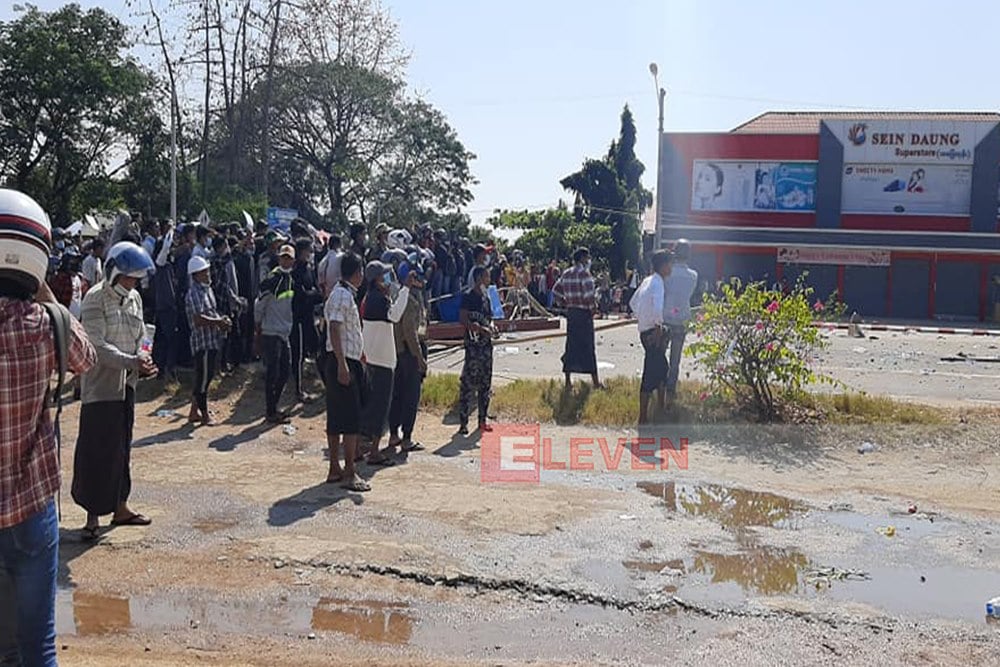 Photo Credit: Eleven Media
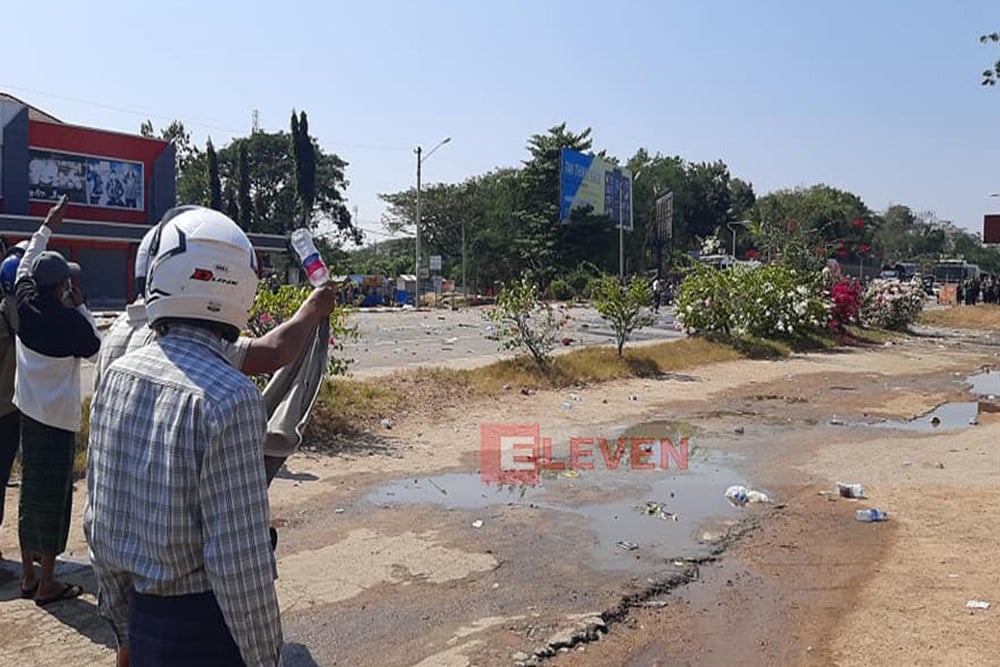 Photo Credit: Eleven Media
 Mida stated that it has identified 240 high-profile foreign investment projects including Fortune 500 companies in the manufacturing and services sectors, with a combined potential investment value of RM81.9bil.
 Passengers wait for check-in at the domestic terminal at Tân Sơn Nhất international airport in HCM City on Saturday. VNS Photo Bồ Xuân Hiệp
 Finishing touches are being put to the first phase of the Connect@Changi facility at Singapore Expo and Max Atria. PHOTO: CONNECT AT CHANGI/FACEBOOK

 (Yonhap)
 Global climate experts and journalists share their insights via online video at webinar themed “Climate Changes: Challenges for Asia Nations” on Friday. Photos provided to China Daily
 The case was identified from rostered monitoring testing. PHOTO: ST FILE
 Packaged kimchi products are displayed at a supermarket in central Seoul in this file photo taken on Oct. 9, 2020. (Yonhap)
 (The Yomiuri Shimbun)
