600K Covid vaccines from China arrive in Cambodia #SootinClaimon.Com

#SootinClaimon.Com : ขอบคุณแหล่งข้อมูล : หนังสือพิมพ์ The Nation.

600K Covid vaccines from China arrive in Cambodia

Feb 08. 2021Staff at Phnom Penh International Airport transport a shipment from China of Sinopharm Covid-19 vaccines. Photo: Heng ChivoanStaff at Phnom Penh International Airport transport a shipment from China of Sinopharm Covid-19 vaccines. Photo: Heng Chivoan

By Mom Kunthear
The Phnom Penh Post/ANN

The first shipment of 600,000 doses of Covid-19 vaccine donated by China arrived in Cambodia on February 7 and was received at Phnom Penh International Airport by Prime Minister Hun Sen together with Chinese ambassador Wang Wentian.

The vaccines were carried by a specially equipped aircraft which arrived from China at 4pm. Speaking at a ceremony to hand over the vaccines, Hun Sen thanked the Chinese government and people for making the donation.

He described the donation as an important new step in the cooperation between the two countries which reflects the ironclad strength of their relationship within a comprehensive framework of cooperative strategies for building a community with common destiny.

“We have received the vaccine today because of the solid cooperation between Cambodia and China. If not for this relationship, we would not have achieved this for our people.

“On behalf of the government, I would like to request further assistance from the Chinese government, and I am hopeful that we will continue to receive it incrementally,” Hun Sen said.

After the handover ceremony, the prime minister held a press conference explaining that he had cancelled his vaccination scheduled for February 10.

He said he had already undergone a two-day diet in preparation for being vaccinated before receiving a letter from the Chinese embassy informing him that the vaccine is intended for people between the ages of 18-59. The safety and efficacy of the vaccine for people over 60 years old was still being studied.

Hun Sen agreed, however, to let his three sons and the children of other high ranking officials get vaccinated. Ministers younger than 60 years old, such as Minister of Education, Youth and Sport Hang Chuon Naron, Minister of Environment Say Sam Al and Minister of Justice Koeut Rith, along with some army commanders, would also be permitted to take the shot.

“I approve of letting my three sons get vaccinated, as well as my two sons-in-law and commanders of the army,” he said, adding that the vaccination of officials would demonstrate the government’s responsibility.

Hun Sen also said Cambodia is seeking to buy vaccines from other countries, and Minister of Health Mam Bun Heng might enter negotiations with the Indian embassy for vaccine purchases as soon as February 8.

Chinese ambassador Wang noted that Cambodia is one of the first countries to receive Covid-19 vaccines from China. He said the donation of the vaccine indicated the special, deep relationship between the two nations.

“I hope that these vaccines will actively contribute to helping Cambodia fight against the pandemic. Covid-19 continues to spread rapidly around the world. Solidarity in preventing spread of the virus remains a major task for the international community,” Wang said.

Wang confirmed that China will provide 10 million doses of their vaccine for distribution by the World Health Organisation-approved COVAX facility to meet the urgent needs of developing countries. He described the allocation as an important measure to support the health of the global community and the vaccine as a product belonging to the world.

The first shipment of the vaccines will be divided equally between the ministries of Health and National Defence, with each set to receive 300,000 doses.

In response to Hun Sen’s request to his Indian counterpart Narendra Modi, the Indian government has approved the distribution of 100,000 doses of their vaccine for Cambodia, the Indian embassy announced on February 5.

“The decision is a testament to India’s appreciation for Cambodia as an important partner and its concern for the health and prosperity of the people of Cambodia,” the announcement read.

It noted that supplies of the vaccine would be provided through the Serum Institute of India, despite competing requests from other countries and commitments to their own population.
[Myanmar] Two rounds of protests in Myawady, police frees all arrested #SootinClaimon.Com

#SootinClaimon.Com : ขอบคุณแหล่งข้อมูล : หนังสือพิมพ์ The Nation.

[Myanmar] Two rounds of protests in Myawady, police frees all arrested

Feb 08. 2021

By Eleven Media

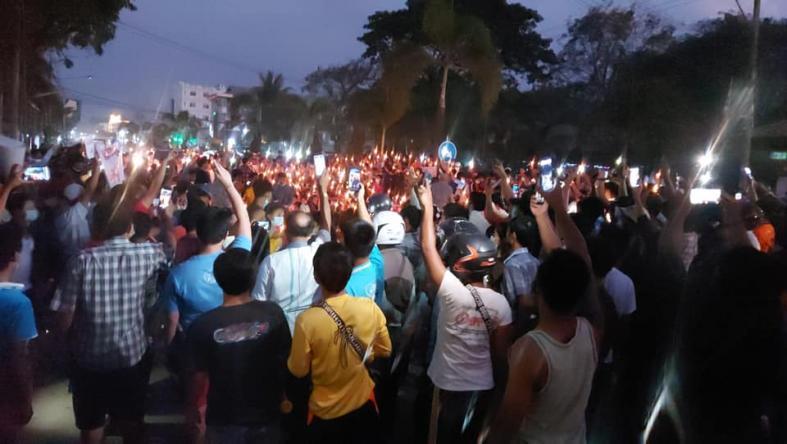
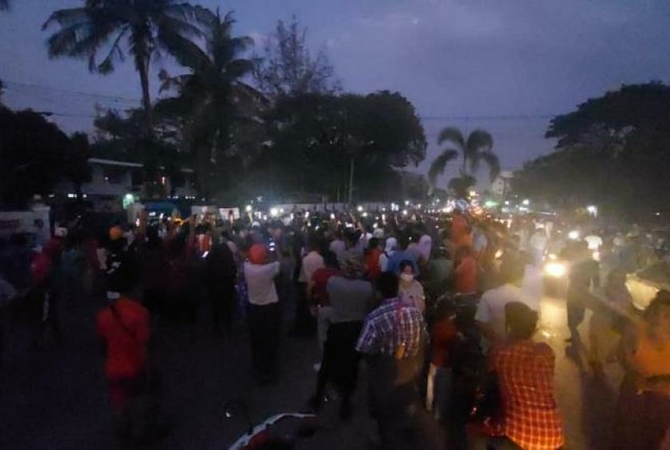
In Myawady, Kayin State, there were two protests on February 7 and the police let go 14 people arrested earlier in the evening.

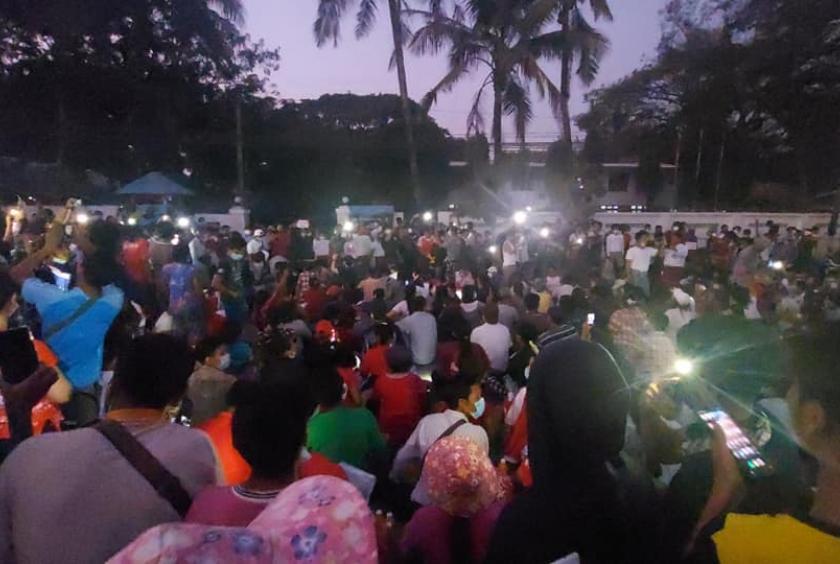
Civilian protest against seizing power by the military was scared off and dispered by firing warnings shots into the air around 1.30pm. Fourteen people total were arrested and around 2pm, the crowd gathered again for a protest in front of the Myawady Hotel, demanding those that were seized to be freed. 

The police tried blocking the protestors but the crowd grew too big. The police then backed off and the protestors reached infront of the district police command station. 

Protestors stayed in front of the station, later marching toward the Bayintnaung Market and around the city, before convening back in front of the station, demanding that they will no go back unless they have been freed. 

The police let the aforementioned 14 go at around 6.45pm, after which the protestors dispersed.

Magnitude 6.1 earthquake strikes Davao del Sur #SootinClaimon.Com

#SootinClaimon.Com : ขอบคุณแหล่งข้อมูล : หนังสือพิมพ์ The Nation.

Magnitude 6.1 earthquake strikes Davao del Sur

Feb 07. 2021

By Inquirer

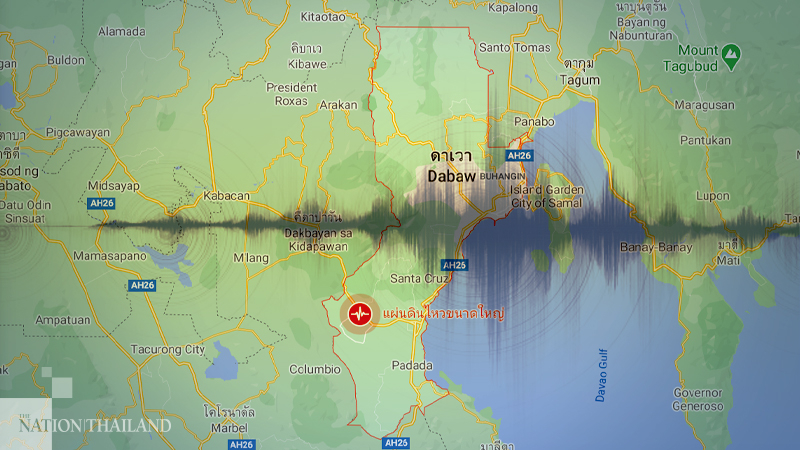
MANILA, Philippines — A magnitude 6.1 earthquake was recorded in Magsaysay, Davao del Sur on Sunday, the second quake to have struck almost the same area on the same day, according to the Philippine Institute of Volcanology and Seismology (Phivolcs).

Phivolcs said the quake struck 5 kilometers southeast of Magsaysay town at 12:22 p.m.

The earthquake had a depth of 15 kilometers.

Intensities were recorded in the following areas:

Intensity V – Kidapawan City, Arakan, Carmen, Kabacan, Makilala and M’Lang, North Cotabato; City of Koronadal and Banga, South Cotabato; Matalam,

Cotabato; Bansalan, Hagonoy, Magsaysay and Sta. Cruz, Davao del Sur

Intensity IV – Davao City; Banisilan and Midsayap, North Cotabato; Don Carlos, Bukidnon; Polomok, Sto. Nino and Norala, South Cotabato South Cotabato;

Alabel, Kiamba and Malapatan, Saranggani; Palimbang and Tacurong, Sultan Kudarat

Intensity III – Cotabato City; Cagayan De Oro City; Kadingilan and Kitaotao, Bukidnon; Tagum City, Davao del Norte; Maco and Nabunturan, Davao de Oro

Intensity II – Cagayan de Oro City; Kalilangan, Bukidnon

Intensity I – Bislig City, Surigao Del Sur

Instrumental intensities were also recorded in the following areas:

Intensity V – Koronadal City, South Cotobato; Kidapawan City, North Cotabato

Intensity IV – Alabel and Kiamba, Sarangani; General Santos City, South Cotabato

Intensity II – Cagayan de Oro and Gingoog, Misamis Oriental

Intensity I – Cagayan de Oro, Misamis Oriental

Phivolcs warned that damage and aftershocks are expected from the said earthquake.

This earthquake followed the 4.8 magnitude earthquake that struck at 7:28 a.m., with epicenter 9 kilometers west of Magsaysay town of Davao del Sur and a depth of focus of 16 kilometers. With reports from Germelina Lacorte, Inquirer Mindanao

Economists urge more food imports to temper price spikes in Philippines #SootinClaimon.Com

#SootinClaimon.Com : ขอบคุณแหล่งข้อมูล : หนังสือพิมพ์ The Nation.

Economists urge more food imports to temper price spikes in Philippines

Feb 07. 2021

By Inquirer

MANILA, Philippines — More economists are urging greater importation in view of expensive food that jacked up the inflation rate to a two-year high of 4.2 percent year-on-year in January.

“Our priority right now is to ensure that food supply is adequate so that households affected by COVID-19 and the quarantines will not be doubly affected by the increase in food prices,” Acting Socioeconomic Planning Secretary Karl Kendrick Chua, the government’s top economist, said in a statement late Friday.

Chua, who heads the state planning agency National Economic and Development Authority (Neda), said “[temporarily] allowing more importation of key agricultural products, while adhering to strict safety protocols to prevent entry of contaminated products, will help augment supply and manage inflation.”

“The committee on tariff and related matters (CTRM) has endorsed the proposed increase in the minimum access volume (MAV) of pork and the temporary decrease in the most favored nation (MFN) tariff rates of pork and rice, subject to the proper process and investigation by the Tariff Commission. All these can increase the food supply and stabilize food prices,” Chua said.

The government reported last Friday that headline inflation or the rate of increase in prices of basic commodities zoomed past the government’s target range of 2-4 percent—considered to be manageable levels—last month.

Faster prices hikes were reported in meat products, especially pork amid tight supply due to the African swine fever scare.

Vegetable prices also continued to soar following the devastation wrought on agricultural produce by a string of strong typhoons before 2020 ended.

Inflation’s impact on the poor was worse as they needed to shell out more for food due to faster price hikes also reaching a two-year high of 4.9 percent in January across the basket of goods and services they usually consumed.

Economists were also worried that elevated consumer prices may temper consumption at a time when the pandemic-battered economy needed a boost to recover from last year’s gross domestic product (GDP) drop of a record 9.5 percent, the worst post-war recession.

Despite January’s higher-than-expected rate, Chua said the economic team still expects inflation to be “manageable as we continue to reap the benefits of the Rice Tariffication Law.”

“We passed the Rice Tariffication Law to address the rice shortage and related price hikes last 2018. As a result, rice prices decreased by around 10 pesos per kilo from its peak. In January, rice inflation was close to zero at only 0.1 percent. Just like before, the government continues to be proactive in addressing spikes in inflation as this affects the poor the most,” Chua said.

In 2018, inflation averaged a 10-year high of 5.2 percent due to food supply bottlenecks, new or higher excise taxes slapped on consumption under the Tax Reform for Acceleration and Inclusion Act or TRAIN Law that took effect that year, as well as skyrocketing global oil prices back then.

Following rice trade liberalization that enjoined entry of more imports, the Filipino staple food posted deflation or lower year-on-year prices from May 2019 up to November 2020.

But since December last year, nationwide rice prices inched up mainly due to supply issues in Metro Manila.

In a webinar Friday, former socioeconomic planning secretary and Inquirer columnist Cielito Habito said the inflation rate would likely average 4-5 percent this year, hence a need to ramp up food importation.

“Right now, we are forced to open agriculture—in pork, because of the shortage due to the African swine fever. And this no longer the time to oppose imports because the reason prices are skyrocketing is the sheer lack of domestic supply,” Habito said.

Roehlano Briones, senior research fellow at the state-run Philippine Institute for Development Studies (PIDS), said in a position paper submitted to the Senate last week that “rather than rely only on price freezes, we recommend [to] further liberalize private-sector importation by reducing tariffs on meat, fish, and vegetables.”

But House minority leader and Bayan Muna Rep. Carlos Isagani Zarate on Saturday opposed a looming opening up of the domestic market to an influx of imported goods amid a pandemic-induced recession.

“The Duterte administration’s policy of further liberalization of our economy will only aggravate rather than address the runaway inflation,” Zarate claimed in a statement.

“More importation would just make us more dependent on other countries and control not just the prices but even our food security. For us to have a more secure and stable economy we must increase support to our local farmers and producers especially in agriculture. If the government will just keep doing this liberalization policy,  which has already  failed us for decades, then high inflation would certainly be a perennial problem—at the expense of millions of our poor people,” Zarate added.

For Zarate, “more protectionist measures and government aid to local producers, as well as consumers, are needed to stem inflation.”

“Different administrations have continuously pushed for liberalization of our economy for decades. And now, yet again, the present administration is pushing for Charter change to still open it even more. But this policy has already failed our economy miserably. We must look for other ways in reviving our economy,” Zarate said.

Two power plants planned for sale of electricity to Cambodia #SootinClaimon.Com

#SootinClaimon.Com : ขอบคุณแหล่งข้อมูล : หนังสือพิมพ์ The Nation.

Two power plants planned for sale of electricity to Cambodia

Feb 07. 2021

By Vientiane Times

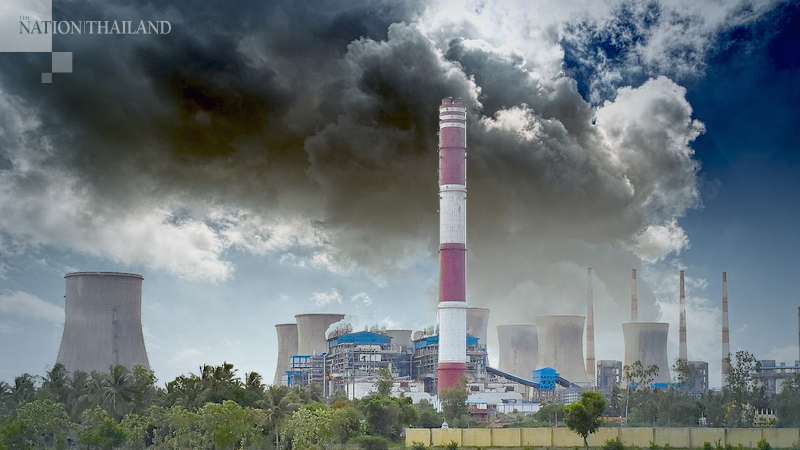
Construction of two coal-fired power plants will begin at the end of this year in Xekong province in the southeast of Laos, according to a senior government official on Tuesday.

Officials say these plants will become operational and begin transmitting electricity to Cambodia in 2025 based on an agreement signed between the developers and the Lao government.

Deputy Minister of Energy and Mines Dr Daovong Phonekeo told Vientiane Times on Tuesday the first power plant will be built by Phonesack Group Company Limited in Kaleum district, with installed capacity of 1,800MW.

“The company will invest about US$3-4 billion in the power plant, including the construction of power lines to transmit electricity to Cambodia,” he said, adding that the transmission line would be 200km in length.

The second power plant will be built in Lamam district by a Chinese company which plans to invest more than US$1 billion in the project, which will have installed capacity of 700MW.

Dr Daovong said that, based on the agreement, the Chinese company was to supply 600MW to Cambodia. However, the company wants to ensure a sustainable supply of energy to the buyer so has decided to increase the installed capacity to 700MW.

The Chinese company will not build transmission lines but will partner with Electricite du Laos (EDL) in the export of power to Cambodia.

“Cambodia will buy electricity from our power plants for 7.3 US cents per kWh,” the deputy minister said.

When asked about the amount of coal present in the two districts to supply the power plants, Dr Daovong said it was sufficient to supply the two plants over the concession period of 25 years. 

More surveys will be carried out to locate coal seams in other areas as alternative sources of supply.

The Governor of Xekong province, Mr Leklay Sivilay, told reporters last week that Xekong has huge potential to produce energy for export, which will generate income for local people and drive economic growth in the province. 

He said the government will take into account the need to balance power plant development and environmental protection, and ensure that power plants benefit local communities and help to improve livelihoods in the area.

The government will learn from experiences gained during the operation of the Hongsa coal-fired power plant, the largest energy-generating plant in Laos, when building the new coal-fired power plants in southern Laos. Laos is looking to increase electricity exports to neighbouring countries including Vietnam and Cambodia.

The 260 MW Don Sahong hydropower project in Khong district, Champassak province, is already transmitting electricity to Cambodia’s Stung Treng province.

Laos intends to increase the amount of electricity sold to Cambodia as the existing transmission line has the capacity to carry more energy.

60% of Japan companies post losses or profit falls for April-December #SootinClaimon.Com

#SootinClaimon.Com : ขอบคุณแหล่งข้อมูล : หนังสือพิมพ์ The Nation.

60% of Japan companies post losses or profit falls for April-December

Feb 07. 2021

By The Japan News

Sixty percent of companies listed on the First Section of the Tokyo Stock Exchange which released earnings reports through Thursday posted losses or reduced profits for the April-December period, according to a tally by SMBC Nikko Securities Inc.

SMBC Nikko tabulated the financial results of 636 companies, which excludes financial institutions and accounts for 47.6% of the total firms listed on TSE’s First Section. While a harsh business climate continues particularly in the non-manufacturing sector, some companies have stood out as efforts launched before the novel coronavirus crisis have fit perfectly with new lifestyles brought about by the pandemic, resulting in record profits.

■ Mixed results by sector

According to SMBC Nikko, 280 of the 636 companies, or 44%, saw a decline in net profits, while 104, or 16.3%, suffered losses for the period.

Total of sales by the 636 companies fell by nearly 10% from the same period in 2019, and total net profits decreased by 29.5%. While that margin of profit decline marked an improvement from that for the first-half period through September 2020, when it stood at 40.7%, the extent of recovery has varied by industry.

Non-manufacturing industries such as travel and food services saw net profits drop 48.6%, a worsening from the first-half results of 30%. The land and air transportation sectors both suffered significant losses.

■ Capitalizing on stay-at-home trend

On the other hand, some companies have reported upbeat earnings thanks to launching subscription services, strengthening online shopping businesses or starting other ventures before the pandemic.

“Demand from people staying at home has continued. It is very strong,” Hiroki Totoki, Sony Corp.’s executive deputy president and chief financial officer, said at a press conference on Wednesday.

Sony’s online subscription services that allow unlimited home access to music or games are doing well. For the April-December period, the company posted a 87% increase in consolidated net profit to a record high of ¥1.0647 trillion, based on U.S. accounting standards.

Since the 2000s, Sony has shifted to profitable subscription and insurance services after its TV and other home electronics businesses became sluggish amid competition from South Korean rivals. As a result, Sony was well placed to capture growing demand when the pandemic led more people to refrain from going out and to work from home.

Its game, music and financial units all reported increased profits. The company also revised upward to ¥1.085 trillion its annual net profit forecast for the year through March 31.

■ Seeds of new businesses bear fruit

Fast Retailing Co., the operator of the casual clothing giant Uniqlo, reported a slight decline in sales and profits for the September-November period, based on international financial reporting standards, as the number of customers shopping at actual stores declined. However, online sales grew by about 50%, and the company expects sales and profits to be in the black for the full year ending August 2021. In 2018, it constructed a huge logistics warehouse in Tokyo for its online shopping business, which is proving to be the right move.

Alpen Co., a major sporting goods retailer whose name was once synonymous with skiing goods, posted record sales for the first-half period that ended in December. The company projects annual net profit to hit a record high, about 500 times better than the previous fiscal year. While the number of skiers has been on a decline in Japan, Alpen has opened outdoor specialty stores and strengthened its selection of golf and outdoor products. Golf and camping have grown in popularity as leisure activities that allow people to avoid crowds, and the company has cashed in on brisk sales of related products.

“It’s difficult to respond quickly to changes caused by the coronavirus pandemic,” said Takashi Ito, a senior strategist at Nomura Securities Co. “Businesses for which the companies planted seeds have contributed to strong earnings.”

India ready to share resources in Indian Ocean Region: President #SootinClaimon.Com

#SootinClaimon.Com : ขอบคุณแหล่งข้อมูล : หนังสือพิมพ์ The Nation.

India ready to share resources in Indian Ocean Region: President

Feb 07. 2021President Ram Nath Kovind. (Photo: IANS)President Ram Nath Kovind. (Photo: IANS)

By The Statesman

Referring to the theme of ‘Enhanced peace, security and cooperation in the Indian Ocean’ at the IOR defence ministers’ conclave held on Thursday, the President said that India is for ‘security and growth for all in the region’ (Sagar).

Calling upon nations in the Indian Ocean Region (IOR) to focus on fostering political, economic, cultural and defence cooperation, President Ram Nath Kovind said on Friday that India is ready to share its expertise and resources with other countries in the IOR.

“As an advocate of universal peace and development, we are ready to share our expertise and resources with all the 28 IOR nations in humanitarian assistance and disaster relief,” Kovind said at the valedictory ceremony of the 13th biennial AeroIndia 2021 expo at the Yelahanka air base here.

Referring to the theme of ‘Enhanced peace, security and cooperation in the Indian Ocean’ at the IOR defence ministers’ conclave held on Thursday, the President said that India is for ‘security and growth for all in the region’ (Sagar).

“Under Operation Sagar-1, we reached our neighbours after the Covid pandemic outbreak and assisted them with medical teams, medicines, diagnostic kits, ventilators, masks, gloves and other supplies,” he said.

In line with the country’s commitment to use its vaccine production and delivery capacity to help the humanity fight the pandemic, the President said supplies under grant assistance to friendly countries have begun.

China approves Sinovac virus vaccine for general public use #SootinClaimon.Com

#SootinClaimon.Com : ขอบคุณแหล่งข้อมูล : หนังสือพิมพ์ The Nation.

China approves Sinovac virus vaccine for general public use

Feb 07. 2021

By China Daily & Agencies

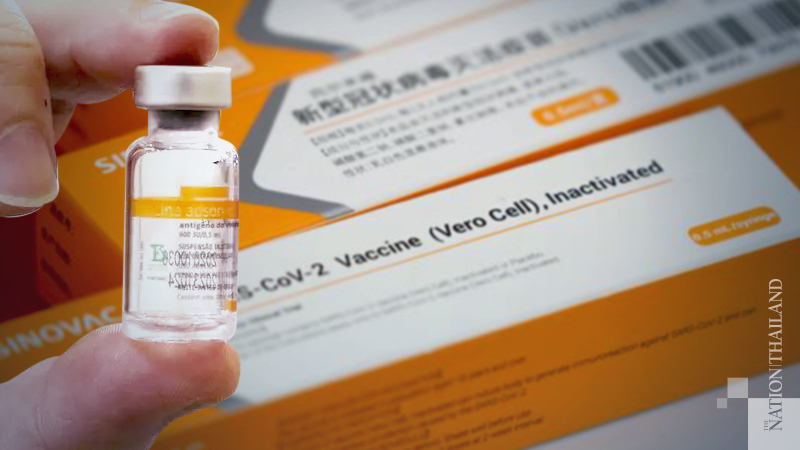
BEIJING – Sinovac Biotech said on Saturday that its unit’s COVID-19 vaccine has been formally approved for use by the general public by China’s medical products regulator.

It marks the second COVID-19 vaccine green-lighted for public use in China, after a shot developed by a Beijing institute affiliated to state-owned China National Pharmaceutical Group (Sinopharm) was approved in December

Sinovac said it received conditional commercial approval from the National Medical Products Administration for its COVID-19 vaccine in China Friday. 

It marks the second COVID-19 vaccine green-lighted for public use in China, after a shot developed by a Beijing institute affiliated to state-owned China National Pharmaceutical Group (Sinopharm) was approved in December.

READ MORE: China approves self-developed COVID-19 vaccine

Prior to the approvals, both vaccines have already been used in China’s vaccination program mainly targeting key groups deemed to be at higher risk of exposure to the virus.

Indonesia, Turkey, Brazil, Chile, Colombia, Uruguay, and Laos have granted emergency authorizations for the CoronaVac vaccine developed by Sinovac Life Sciences, Sinovac said in a news release.

The approval is based on the two-month results from late-stage clinical trials overseas, from which the final analysis data has not yet been obtained, Sinovac said.

ALSO READ: WHO: 2 Chinese vaccines in advanced stage of assessment

India developing 7 more Covid-19 vaccines, according to its health ministry #SootinClaimon.Com

#SootinClaimon.Com : ขอบคุณแหล่งข้อมูล : หนังสือพิมพ์ The Nation.

India developing 7 more Covid-19 vaccines, according to its health ministry

Feb 07. 2021\

Health Minister Harsh Vardhan

Health Minister Harsh Vardhan

By The Daily Star

India is developing seven more Covid-19 vaccines and also working on further vaccine development to inoculate every citizen of the country, Health Minister Harsh Vardhan said yesterday.

He said the government does not have any immediate plan to make the vaccines available in the open market and a decision on this would be taken as the situation demands.

“We are not dependent only on the two vaccines as the country is working on seven more indigenous vaccines. Simultaneously, we are also working on the development of more vaccines because India is a huge country and we need more players and research to reach out to everyone,” Vardhan told reporters in Kolkata.

Three of the vaccines are in the trial phase, two are in the pre-clinical stage, one is in phase 1 and another in phase 2, the Health Minister said, reports our New Delhi correspondent.

“At present, Covid-19 vaccines are being administered on an emergency basis, under full observation and in a controlled manner. If the vaccines are released in the open market, there won’t be any control over them. The decision will be taken as the situation demands,” he added.

Two vaccines — Covishield, developed by Oxford-AstraZeneca and manufactured by Serum Institute of India, and Covaxin by Bharat Biotech — are being administered to healthcare and the frontline workers during the ongoing inoculation process which began on January 16.

Logistics, regulatory bottlenecks loom as South-east Asia embarks on Covid-19 vaccine roll-out #SootinClaimon.Com

#SootinClaimon.Com : ขอบคุณแหล่งข้อมูล : หนังสือพิมพ์ The Nation.

Logistics, regulatory bottlenecks loom as South-east Asia embarks on Covid-19 vaccine roll-out

Feb 07. 2021

By Straits Times

JAKARTA – Malaysia’s Health Ministry completed a 550km practice run in rural Sarawak to test its Covid-19 vaccine supply chain, while Indonesia’s president rolled up his sleeve on live television to get the jab.

South-east Asian countries are slowly rolling out vaccines, navigating regulatory hurdles, accelerating infections and supply bottlenecks across a vast and diverse population in the first mass immunisation of its kind in history.

Past immunisation programmes for diseases like polio and tuberculosis had captive audiences: school children, for example.

This time everyone needs a shot. The effort will be uneven. Experts say richer countries will be faster at rolling out vaccines, helped by well-staffed medical services and experience with past epidemics.

But political will, logistics and regulation will also weigh on the pace of immunisation.

“The volumes of people to vaccinate is a problem to be overcome,” Mr Wiku Adisasmito, spokesman for Indonesia’s national Covid-19 task force, told The Straits Times.

Indonesia aims to vaccinate two thirds of its roughly 270 million people – enough to effectively halt transmission of the virus – over the next 15 months, the government said last month.

That target, however, is “not set in stone”, Mr Wiku said.

Vaccination rates of nearly a million a day are “manageable” on the crowded and more urbanised western half of the archipelago, Mr Wiku said. But it will be an uphill climb in the far-flung islands with more limited power grids, roads and health workers.

Indonesia may use its military as well as logistics companies to help with the effort, he added.

“On distant islands, the transportation, the logistics, the cold chain will be problematic, of course, but it doesn’t mean it can’t be solved,” Mr Wiku said.

For its part, Malaysia hopes to immunise its 32 million citizens over the next 18 months after it gets its first vaccine shipment this month.

Health officials wrapped up a vaccine-delivery practice run last week that started in Belgium, where Pfizer-BioNTech makes its Covid-19 shot, and ended at a rural health clinic in Belaga, Sarawak, in the heart of Borneo.

The successful rehearsal was to test a delivery chain through which the vaccine must remain at minus 70 deg C.

The region’s richer and geographically smaller economies are expected to wrap up immunisation even faster.

Singapore started vaccinations in late December and expects to have enough doses to cover all citizens and residents by September.

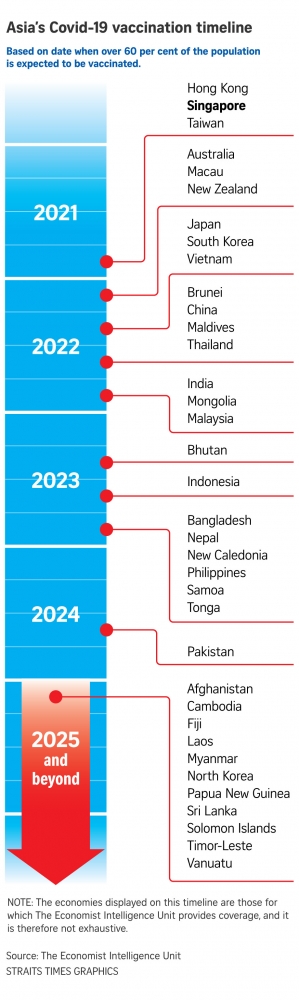
The Economist Intelligence Unit (EIU) said on Jan 27 that Singapore, Hong Kong and Taiwan will reach so-called herd immunity by the end of the year, with Australia and New Zealand soon to follow.

But limited resources and regulatory delays in the rest of the region will collide with the realities of reaching 650 million people scattered over a cross-section of cities, villages and jungle.

Vietnam and Thailand will not be sufficiently immune until the middle of 2022 at the earliest. Indonesia’s ambition to vaccinate 181.5 million people over the next 15 months will take twice as long.

Laos and Myanmar and other poor countries won’t reach herd immunity before 2025 – if at all.

The resulting patchwork of immunity versus vulnerability risks giving the virus a chance to mutate. Neighbours will need to pool resources to extend vaccination to the poorer neighbours to keep the pandemic at bay.

“It’s in the interest of the vaccinated countries to help,” said EIU analyst Imogen Page-Jarrett, who helped compile the report.

Regulatory bottlenecks are also wreaking havoc.

While Thailand will import about two million doses of Sinovac by April for health workers, it’s counting on a locally produced version of the AstraZeneca-Oxford vaccine for its immunisation drive but the first doses won’t be available until June.

The company that will make the AstraZeneca vaccine, Siam Bioscience, is owned by King Maha Vajiralongkorn, drawing fire from opposition figures of self-dealing at the expense of public health.

In the Philippines, disorganisation and past trauma may also be slowing its vaccine roll-out. The government has made few firm plans to buy any foreign vaccine except for a combined half million from Pfizer and AstraZeneca in February and two million doses a month from China’s Sinovac between now and early next year for its 108 million residents.

Critics say the delays underscore the lack of coordination among policymakers. But they also illustrate the uneasiness with foreign vaccines.

A 2016 jab for dengue from France’s Sanofi was thought to have sickened kids, prompting parents to yank children from immunisation drives. Vaccination coverage for tuberculosis among small children under two years old dropped from 90 per cent in 2009 to 69 per cent a decade later.

Asia’s roll-out starts amid signs that the number of new cases is accelerating.

Indonesia’s tally of infections blew past the one-million mark last month, with one swab test in four turning up positive.

While the tally is low by comparison with the United States and Brazil, it strains Indonesia’s health infrastructure. The country has half the hospital beds per thousand people than neighbouring Malaysia.

Dr Dicky Budiman, an epidemiologist with Griffith University in Queensland, said there may be too much emphasis on immunisation.

While vaccines may prevent sickness, it’s not clear whether they stop transmission. Distancing and masks are still key.

“Vaccination is not the super bullet,” Dr Dicky told the Straits Times. “It’s just one of the tools.”