Myanmar Banks Association orders to close private banks temporarily
Feb 01. 2021
By Eleven Media/ANN
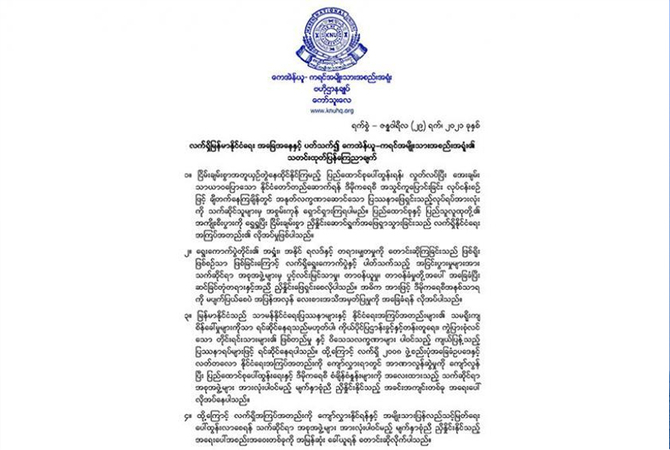
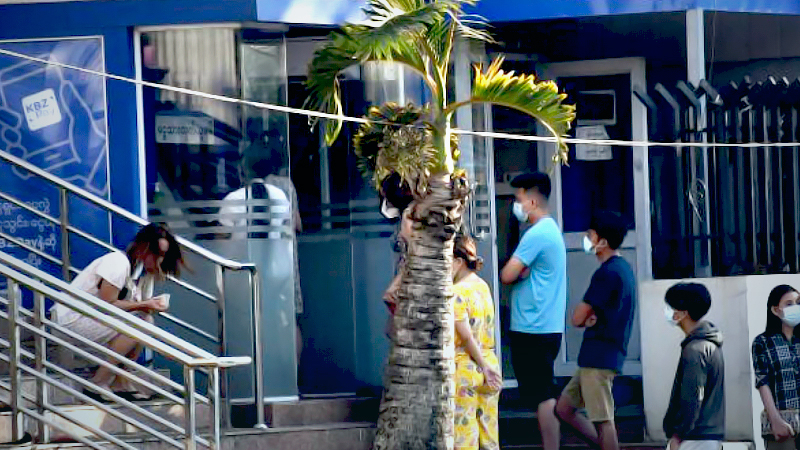
YANGON—–Myanmar Banks Association already instructed the private banks to close their banks temporarily due to poor Internet Connection.
As there have been System Unavailable and poor Internet Connection due to current situation, the members of Myanmar Banks Association are needed to close their private banks temporarily since the beginning of February 1st, according to the announcement.
Moreover, the Myanmar Banks Association will be announcing the date for opening of banks by following the guidance of Myanmar Central Bank.
Later, the Myanmar Banks Association will inform in an advance the private banks to open the banks if there will be good internet connection and system available.
Myanmar govt leaders detained, military declares state of emergency for 1 year
Feb 01. 2021Myanmar State Counselor Aung San Suu Kyi arrives for an early vote ahead of Nov 8 general election in Naypyitaw, Myanmar Oct 29, 2020. [Photo/Agencies]
By Xinhua/China Daily/ANN
YANGON — Myanmar’s State Counsellor Aung San Suu Kyi, President U Win Myint and other senior officials have been detained by the military early on Monday, Dr Myo Nyunt, spokesperson of the ruling National League for Democracy (NLD) told Xinhua.
“I received internal reports about our state counsellor and president being taken by the military. As far as I was informed, Shan State’s Planning and Finance Minister U Soe Nyunt Lwin, Kayah state’s NLD chairman Thaung Htay and some NLD representatives of the Ayeyarwady region’s parliament have been detained,” the spokesperson said.
“Two members of Central Executive Committee of the party were taken and I am also waiting to be detained as I was informed by our members that my turn will come shortly,” he said.
Aung San Suu Kyi, leader of Myanmar’s National League for Democracy,arrives at a school in Kawhmu, Yangon, Myanmar, in this file photo on July 18, 2019. [Photo/Agencies]
The Myanmar military TV declared on Monday a state of emergency in the country for one year after the government leaders were detained.
The state-run Radio and Television (MRTV) announced on its social media page that it was no longer working on Monday morning.
Telecommunications in capital city of Nay Pyi Taw and some other regions and states are also being cut off.
The first regular session of the new parliamentary session was scheduled to begin with convening the House of Representatives on Monday, the House of Nationalities on Tuesday and the Union Parliamentary session on Feb. 5.
The upcoming parliamentary sessions will elect speakers for both houses of the parliament and will form parliamentary committees while electing president and vice-presidents, as part of the forming of the Union Government.
Myanmar held multi-party general elections on Nov. 8 last year and the ruling NLD won the majority of seats in both houses of the Union Parliament.
[China] Primary, secondary school students banned from bringing mobile phones
Feb 01. 2021Primary school students take photos of sailboats during an outdoor course in Qingdao, Shandong province, in March, 2018. [Photo by Wang Haibin/For China Daily]
By Zou Shuo China Daily/ANN
Primary and secondary school students will be not allowed to bring cellphones to schools, the Ministry of Education said on Monday.
Parents need to submit a written application if their children do need to bring mobile phones to schools, in which case the students should hand in their cellphone to schools for custody during school time, the ministry said in a notice.
Schools should set out rules for the management of cellphones and designate people to take custody of mobile phones brought to schools, it said.
No cellphone is allowed in classrooms, the notice said, adding that the widespread use of mobile phones have hindered school management and students’ development.
The notice aims to protect students’ eyesight, make sure they focus on study and prevent them from becoming addictive to the internet and online games.
Schools should not assign or ask students to do homework via cellphones and they should set up public phones and teacher hotlines for communication between parents and students, it added.
[Philippines] 5.6M vaccine doses expected within first quarter
Feb 01. 2021
By Jeannette I. Andrade Philippine Daily Inquirer/ANN
MANILA, Philippines — National Task Force (NTF) Against Covid-19 chief Carlito Galvez Jr. on Sunday announced that the country will receive 5.6 million doses of vaccines within the first quarter of this year to jump-start the country’s vaccination program.
Galvez said he received a letter from Aurélia Nguyen, managing director of the global procurement pool COVAX, officially informing the Philippine government of a total of 9,407,400 doses of Covid-19 vaccine from Pfizer-BioNTech and AstraZeneca-Oxford, which the country will get within the first and second quarters of this year.
“With the country demonstrating its preparedness to receive the vaccines, the regional review committees from the World Health Organization, United Nations International Children’s Emergency Fund, and Gavi have granted us two vaccine brands that have been ‘authorized or very close to being authorized by the WHO through an Emergency Use Listing,’” Galvez said, citing the letter.
He said 117,000 doses of the Pfizer-BioNTech Covid-19 vaccine and 5.5 million doses of AstraZeneca jabs are expected to be delivered in the middle of or late February.
The vaccines from COVAX would be administered on front-line health-care workers, senior citizens and uniformed personnel.
“I would like to emphasize that according to COVAX the number of doses and the projected arrival of the vaccines are all indicative since it all depends on the global supply,” he said, adding that both vaccines have been issued emergency use authorization by the Food and Drug Administration and, thus, “can be safely administered once they become available.”
Galvez said the NTF Covid-19 has been inspecting the capability of the different local governments, particularly in Metro Manila, in preparing for the arrival of the vaccines and enforcing their respective vaccination plans.
“Based on our visits, we have seen that many [local governments] and the private sector are now ready for the vaccine rollout from their vaccination sites, to their cold storage equipment and facilities, to their [employees]. We hope that these kinds of preparations will be replicated nationwide,” he said.
Galvez gave assurance that the government would secure the targeted 148 million doses of safe, effective, and free vaccines to inoculate 70 million Filipinos and achieve herd immunity within this year.
“The arrival of these COVAX facility vaccines is a welcome development,” he said. INQ
Recent net outflows from Tokyo may signal pandemic trend
Feb 01. 2021
By The Japan News/ANN
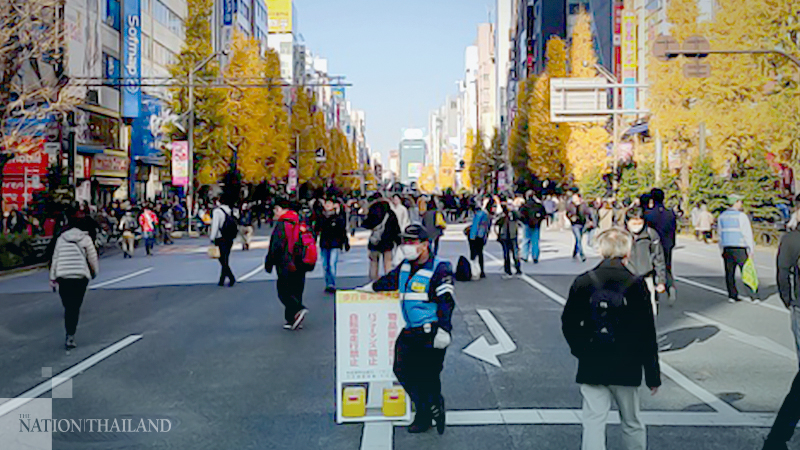
Tokyo saw more people moving out than moving in in May last year, the first time a net outflow had been recorded since comparable data was available in July 2013, according to an Internal Affairs and Communications Ministry report.
After the capital recorded a net inflow in June, the number of people leaving Tokyo was greater than the number moving in for every month from July through December.
The trend is apparently due to the rise in telecommuting allowing people to live farther from their workplace and other such factors amid the spread of the novel coronavirus.
Over the full year, the number of people moving to Tokyo was in positive territory, with a gain of 31,125 residents, according to the 2020 Report on Internal Migration in Japan compiled from Basic Resident Registration. This figure was 51,857 people fewer than in 2019, however, and the lowest since 2014, when full-year data included foreign residents, who were first covered by the Basic Resident Registration system in July 2013.
Besides Tokyo, the only prefectures with a net inflow in 2020 were Chiba, Fukuoka, Kanagawa, Okinawa, Osaka, Saitama and Shiga.
The outflow from Tokyo is believed to be related to changes in the way people work following the declaration of a state of emergency in April. A full-year comparison of Tokyo with Chiba, Kanagawa and Saitama — the three neighboring prefectures that along with the capital make up the Tokyo metropolitan area — showed more people moving from Tokyo to each of these prefectures than the reverse.
“The increase in the number of people leaving Tokyo is centered on areas with good access to the capital,” a senior ministry official said.
The net inflow to the Tokyo metropolitan area was 99,243 people, 49,540 fewer than in 2019.
In the Nagoya metropolitan area, which covers Aichi, Gifu and Mie prefectures, there was a net outflow of 17,387 people.
A net outflow was also recorded in the Osaka metropolitan area, covering Osaka, Hyogo, Kyoto and Nara prefectures, at 118 residents, 3,979 fewer than in 2019.
■ Unclear whether trend continues
Ending the excessive concentration of people moving to Tokyo is a task that Prime Minister Yoshihide Suga’s Cabinet has taken over from his predecessor, Shinzo Abe.
In 2014, the Abe Cabinet set a goal of striking a balance between the Tokyo metropolitan area and regional areas by 2020 in terms of population flows in order to achieve its key policy of regional revitalization. To that end, concrete measures were implemented.
In fiscal 2015, a tax incentive was introduced to encourage companies to relocate their headquarters to regional areas to increase the number of workplaces in such areas. In fiscal 2018, a law for promotion of regional universities, which prohibits universities in Tokyo’s 23 wards from increasing their student quotas for 10 years in principle, was enacted.
Such measures, however, have had limited effects.
With regard to the relocation of companies, the number of employees based in regional areas climbed by only about 15,000 as of 2018 despite the government’s target of increasing it by 40,000 during the 2014-20 period.
As for the enacted law’s effectiveness, there have been persistent doubts, with some people saying that the law merely maintains the status quo and does not rectify the concentration of students in Tokyo.
Indeed, the excessive concentration of people in the Tokyo metropolitan area has remained, forcing the Abe Cabinet in December 2019 to push back the target time to the end of fiscal 2024.
In the latest report on internal migration, the inflow to the capital was less excessive due to a drop in the number of young people moving to the Tokyo metropolitan area. It is unclear, however, whether this trend will continue.
If the spread of the novel coronavirus is brought under control, the number of companies allowing telecommuting could decrease and the employment situation in central Tokyo might improve, which may lead to a renewed concentration of young people in the metropolitan area.
“It is necessary to create a comfortable living environment in regional areas by improving aspects such as employment, education and medical care,” a senior government official said. “We want to continue to make steady efforts.”
42 firms in Singapore fined for breaching Covid-19 safety rules
Feb 01. 2021MOM said it will continue to step up inspections and highlight areas employers should pay attention to. ST PHOTO: JASON QUAH
By Kok Yufeng The Straits Times/ANN
SINGAPORE – More firms have been penalised for failing to adhere to workplace safe management measures despite repeated calls to make working from home the default and to ensure safe distancing at the office.
Between Sept 28 last year – when the measures were last eased – and Jan 15, there were 42 employers fined for such lapses, the Ministry of Manpower (MOM) told The Straits Times.
The most common violations were firms getting their employees to report to the office although they could work from home, and for failing to put clear safe distancing markers in common areas at the workplace.
MOM fined the 42 companies after inspecting 5,380 workplaces.
This comes after the ministry imposed 52 fines of $1,000 each on errant employers in June last year, and ordered seven workplaces to shut for lapses.
In December, it had also launched an operation targeting the transport and storage sector in anticipation of increased activities due to the festive period.
While the vast majority of firms have been compliant, MOM said it will continue to step up inspections and highlight areas employers should pay attention to.
Workplace safe management measures, which include caps on the number of workers allowed back in offices, were put in place at the end of the circuit breaker period in June last year.
They were last eased on Sept 28 when more employees were allowed to return to the workplace.
Last month, the Singapore National Employers Federation, the National Trades Union Congress and MOM said working from home should remain the default arrangement to minimise the risk of Covid-19 transmission in offices.
The tripartite partners had reviewed workplace restrictions after Singapore moved to phase three of its reopening in December, but decided to hold off on any further adjustments.
They cited the risk of new Covid-19 strains, which could be more transmissible, as well as the recent uptick in virus cases in the community.
Of the four active clusters now, three have links to the workplace.
Companies in various sectors said they have got used to working remotely, although some differed on the extent to which such arrangements should continue post-pandemic.
Most suggested a hybrid model where staff can enjoy some flexibility.
For Wizlearn Technologies chief executive Victor Yuk, 45, the experience of having his entire workforce quarantined last year pushed him to fully adopt remote working.
The e-learning solutions firm was at the centre of a cluster of 14 cases in February last year, and all 90 employees have been telecommuting for the past 11 months.
The switch was not without challenges, with Mr Yuk losing five employees who were unable to adapt.
But productivity is higher now than before the pandemic, so most of his staff will continue telecommuting in the future, he said.
“There is no reason for me to expose all of them to unnecessary risk if they can continue to work and be productive,” Mr Yuk added.
Mr Lim How Kiat, general manager of Ademco Security Group’s Singapore operations, said employers who breach safe management measures could endanger the safety of their employees and the community at large.
“More often than not, the employers lack trust in their employees. That’s why they call them back, which is totally unnecessary,” said Mr Lim, 43.
While it was not easy implementing the safe management measures for Ademco’s 190 employees, the firm has managed to adapt.
Still, Mr Lim said he would welcome having more employees back in the office, which has been missing its family-like culture.
Both UOB and DBS Bank have committed to giving their employees the flexibility to work remotely even after Covid-19 restrictions are lifted.
The two banks, as well as OCBC Bank, said those in the offices and bank branches were reminded to adhere to measures such as wearing a mask and keeping a safe distance from one another. The banks also conduct regular checks.
Ahead of Chinese New Year, UOB has warned its staff against hosting or encouraging workplace gatherings while OCBC’s group corporate security head Francisco John Celio said the bank will not organise activities that might draw large crowds.
He said: “We are mindful that we are not out of the woods yet.”
S. Korea investigating new suspected case of bird flu, caseload now at 82
Feb 01. 2021Officials cull chickens at a farm in Pohang, 374 kilometers south of Seoul, on Sunday. (Yonhap)
By The Korea Herald/ANN
South Korea’s agricultural ministry said Monday it is currently investigating another suspected case of highly pathogenic bird flu linked to poultry farms, with the country’s total caseload standing at 82 since November last year.
The latest suspected farm-related case came from an egg farm in Anseong, 77 kilometers south of Seoul, according to the Ministry of Agriculture, Food and Rural Affairs.
The number of cases from wild birds also piled up to reach 125.
Authorities have destroyed 24.8 million poultry to prevent the spread of the disease, which led to a sharp increase in the consumer price of related goods.
The average price of fresh eggs shot up 38.8 percent on-year over the past week, with those of chicken and duck meat also rising 15.7 percent and 35.4 percent, respectively.
South Korea revised its anti-animal disease law in 2018 to cull all poultry within a 3-kilometer radius of infected farms.
The revision came after the country reported a whopping 340 cases of the H5N8 strain of avian influenza traced to poultry farms between October 2016 and January 2017. (Yonhap)
Yay or nay? US fast-food giants now offer Chinese regional food
Jan 31. 2021KFC launched hot-and-dry noodles, also known as reganmian, at more than 100 restaurants in Wuhan, Hubei Province, January 18, 2021.[Photo/CFP]
By China Daily
From Chinese burgers to ice cream doused in chili oil, US fast-food giants are infusing their offerings with a Chinese flair. McDonald’s and KFC have long localized their menus to appeal to the Chinese palate, but their latest takes on traditional dishes and ingredients seem to be causing quite a buzz, and not always the good kind.
Earlier this year, McDonald’s China added roujiamo, a street-food staple from Shaanxi province, to its menu. Known as “Chinese burger,” it’s meat sandwiched between two flat buns. The limited-edition special, which the company said was in celebration of the upcoming Lunar New Year, was met with frowns and confused looks.
Many said that the roujiamo on offer looked nothing like the advertisement, while others said that the sandwich is a snack and has no place on any breakfast menu. There was also a bit of confusion about how much meat was hiding between the bread – some complained the filling was less-than-generous, others had no issue with it. But the general consensus seemed that MacDonald’s is more gifted at making classic burgers than their Chinese counterpart.
“It does not taste good,” one customer who introduced herself by her last name Zhang told CGTN. The amount of meat didn’t bother her, but she said she prefers her roujiamo from a food stall than a fast food chain.
Undeterred by the negative roujiamo reviews, the Golden Arches on Monday served another dose of controversy. It debuted a “spicy chili oil sundae,” which combines a vanilla-flavored soft serve covered in chili oil.
The item is part of a new promotional activity whereby McDonald’s offers once a month a new creation, first redeemable by members for free using a coupon and then available to the public for a limited period.
The sweet-and-spicy dessert was due to be sold in select McDonald’s stores, including in Shanghai and Shenzhen, from January 26 to 31. However, the company said Tuesday it is suspending the offer “due to the COVID-19 pandemic” in a statement published on Weibo, a Chinese Twitter-like platform.
The menu addition was predictably divisive. Some were optimistic about the flavor and called it “innovative,” others however noted that the combination of spice, oil, and ice cream spells bad news for their digestive system.
KFC is also taking the same path as McDonald’s. The fast food chain, known for its fried chicken, introduced hot-and-dry noodles to the menus of 100 stores in the dish’s birthplace, Wuhan in central China’s Hubei Province. The noodles, called reganmian can be ordered alone or as a set, with soy milk, deep-fried dough (or youtiao ) and fried eggs.
Reganmian is a common go-to breakfast choice for locals in Wuhan, and KFC’s version is the result of a partnership between its parent company Yum China and the Hubei Provincial Government to support locally-produced ingredients. The team-up draws on previous efforts to support local farmers and food producers who have been hit by COVID-19, which in China was first recorded in Wuhan, and the subsequent 76-lockdown in early 2020.
“Overall, the taste is good,” one customer surnamed Bao told CGTN, adding “but a portion is still not enough for one person.”
Analysts say that these new concoctions are a way for fast food chains to draw foot traffic following a tough year on the catering industry in 2020 because of the coronavirus pandemic, according to Chinese business outlet Sina Finance. With competition heating up in first- and second-tier cities, out-of-the-box offerings can also help foreign brands stand out in an increasingly crowded fast food space.
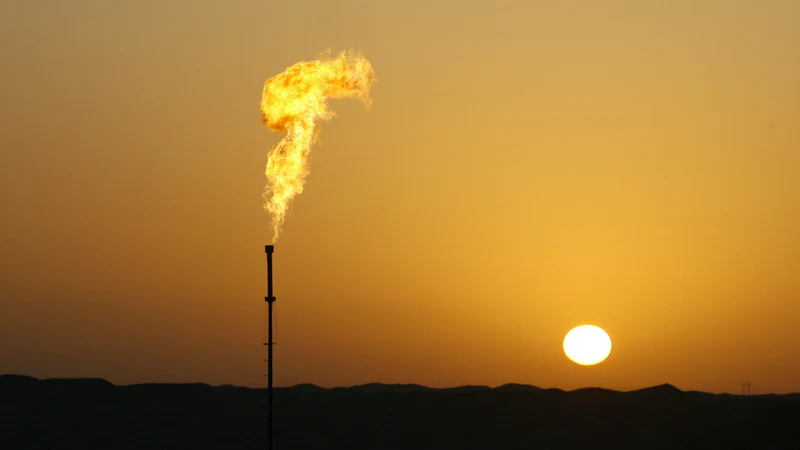
Over the last 20 years, Bangladesh consumed about 13 trillion cubic feet (TCF) of gas. During the same period, only less than two TCF of new gas reserve was discovered. The number of exploration wells drilled during this time was merely 22, implying an average of about one well drilled per year. This is a prime example, by any standard, of a very underexplored country which has seen major gas discoveries in the past and has been rated highly for further gas prospects.
With the world adopting the latest technological innovations in petroleum exploration, Bangladesh needs to open its door to invite and apply the marvels of the advanced technology to explore its true hydrocarbon potential. This view has been expressed by a pool of international geoscientists from Canada, USA, Australia, Bangladesh and other parts of the world with the common link among them being their Bangladeshi origin. The speakers met virtually on the “Mir Moinul Hoque Memorial Lecture Forum”, exchanging views on the state of gas exploration in Bangladesh as well as that of the advanced technology-driven exploration in the western world. Most of the discussants, who have years of experience in American and Canadian oil industries, opined that latest technology can change the way hydrocarbon exploration is being carried out in Bangladesh.
Speakers agreed that Bangladesh’s gas exploration has apparently been stalled because of a lack of dynamic vision. Exploration drillings are few and far between. Off-shore exploration has come to a standstill despite having bright prospects. Starting in the 1960s, the first phase of exploration, dealing with the easy targets known geologically as structural prospects, has been almost over. This has had several phenomenal successes in the past (Titas, Habiganj, Kailashtilla and Bibiyana gas fields, for example). But the drive into the second stage of exploration, with more subtle targets known geologically as stratigraphic prospects, has not taken place. A large area of Bangladesh plainland seemingly conceals numerous prospects of the latter type, according to the geological evaluation. Modern technologies like FPV study, as explained by the keynote speaker, for example, and horizontal drilling and fracking, as suggested by others, could bring major changes in the outcome of exploration.
The consensus of opinions has been clear: Bangladesh has to put an end to its extremely slow pace of exploration as well as the bureaucratic overlordship on the national exploration activities. Instead, the explorations have to be self-driven, more frequent and faster with increased linkages with international expertise.
While one cannot agree more on the above points, the realities on the ground appear grim. It is not difficult to understand why an aspirant geoscientist or engineer of Bapex (Bangladesh Petroleum Exploration and Production Company Limited) tends to lose confidence in the overall state of exploration and development management. “Is this the reward for our success?” he would ask, referring to the decision of the high-ups to remove Bapex workers from developing their own discoveries, Shahbazpur and Bhola North gas fields, in order to give those to Gazprom (reportedly not registered in Russia), a dubious foreign oil company, for development.
This certainly demoralises the Bapex workforce. Bapex not only discovered the above two gas fields in the northern part of Bhola island entirely on its own, but it has also made a substantial geological data interpretation to pointedly forecast that other parts of the island and surroundings are equally gas prospective. Bapex appeared set to move into the area to launch further exploration. But perhaps the bureaucratic mentors could not care less about Bapex’s call, and it is Gazprom rather than Bapex which has moved in. Gazprom drills a well at more than double the cost of a Bapex drill. That does not deter the decisionmakers from engaging Gazprom in many other well-drilling activities, including some taken away from Bapex. Surprisingly, Gazprom does not drill the wells itself but engages subcontractors to do the job!
In 2015, it was announced that Bapex would drill 55 exploratory wells in five years—meaning 11 wells per year—breaking the long-drawn stalemate in exploration. The media hype and political rhetoric on this issue were supposed to be justified, because this could usher in a new scenario in Bangladesh’s gas exploration. But in reality, the number of wells drilled was 2 in 2016, 2 in 2017, and so on. In the five years since 2015, only 6 exploratory wells were drilled instead of the 55 wells announced. The programme was scrapped and Bapex workers went back to their den to await what comes next.
In 2016, Bapex drilled an exploratory well at Pabna named Mubarakpur well. Exploration drillers around the world know that it is not unusual to face a stuck pipe problem at some point during deep drilling, and accordingly, mitigation measures are prearranged. But Bapex was given just enough fund to drill the well and nothing to handle a technical emergency should a pipe get stuck. Over the course of drilling, Bapex identified a gas zone at a deep section of the well, but at one stage the pipe was stuck. This usually needs a remedial measure called side-tracking. Bapex did not have the small amount of fund required to do the job. To get the fund, it had to wait seven months during which time the fund-seeking file crawled from table to table in the bureaucratic wonderland before the fund was sanctioned. By the time the fund reached the drilling point, the gas zone was damaged due to overexposure in the open hole and the gas could not flow. This is probably the worst kind of emergency handling in a gas well ever known in the exploration business.
Nobody seems to have an answer as to why offshore exploration in Bangladesh did not kickstart even years after the maritime boundary disputes with Myanmar and India were resolved in 2012 and 2014, respectively. Based on the discoveries made in Rakhain offshore in Myanmar just adjacent to Bangladesh’s maritime boundary, geoscientists are highly optimistic about the prospects of large gas reserves in Bangladesh offshore, too. But there is no answer about what’s holding Bangladesh back from exploring its sea.
The government had done its share in giving Bapex a hand by providing funds for procuring drilling rigs and other essentials. It seems interested in developing a national workforce so that the national entity grows to take its share of responsibilities of developing the gas sector. But some quarters within the bureaucratic system play it the other way, perhaps so that businesses of their own interest prevail over the national interest. This group seems to purposefully try to undermine Bapex as well as other gas exploration programmes in Bangladesh.
Dr Badrul Imam is Honorary Professor, Department of Geology, University of Dhaka.
KNU calls for urgent plenary meeting to break political stalemate
Jan 31. 2021
By Eleven Media
The Karen National Union (KNU) issued a statement on January 29 calling for an urgent plenary meeting inclusive of all groups of delegates so as to break the ongoing political deadlock and forge national reconciliation.
The statement stresses the need for all stakeholders to totally avoid any negative way of problem solving at a time when Myanmar is marching towards the emergence of a union with peaceful coexistence and a peaceful and prosperous State. The political crisis needs to be resolved through peaceful coordination and negotiation in view of public and national interests.
As it is natural and normal to demand the result of every election and justice, relevant organizations are hereby urged to resolve the controversies surrounding the November election based on transparency, accountability and wisdom. The main thing is to ensure mutual respect without harming the essence of democracy, the KNU statement says.
The KNU points out that Myanmar is facing not only conventional challenges such as minor political problems and political crisis but also other contentious issues such as autonomy and equality being demanded by diverse ethnic minorities.
The statement then ultimately stresses the need to call an urgent plenary session inclusive of all stakeholders who pay attention to democratic norms and the emergence of a democratic union by overcoming a tug of power.

![Myanmar State Counselor Aung San Suu Kyi arrives for an early vote ahead of Nov 8 general election in Naypyitaw, Myanmar Oct 29, 2020. [Photo/Agencies]](https://media.nationthailand.com/images/news/2021/02/01/30402093/800_9364c08836450bd.jpeg?v=1612152048) Myanmar State Counselor Aung San Suu Kyi arrives for an early vote ahead of Nov 8 general election in Naypyitaw, Myanmar Oct 29, 2020. [Photo/Agencies]
Myanmar State Counselor Aung San Suu Kyi arrives for an early vote ahead of Nov 8 general election in Naypyitaw, Myanmar Oct 29, 2020. [Photo/Agencies]![Aung San Suu Kyi, leader of Myanmar's National League for Democracy,arrives at a school in Kawhmu, Yangon, Myanmar, in this file photo on July 18, 2019. [Photo/Agencies]](https://media.nationthailand.com/uploads/images/2021/02/01/60176acda31024adbdb213d5.jpeg)
![Primary school students take photos of sailboats during an outdoor course in Qingdao, Shandong province, in March, 2018. [Photo by Wang Haibin/For China Daily]](https://media.nationthailand.com/images/news/2021/02/01/30402089/800_bb98406ad87a7b8.jpeg?v=1612147746) Primary school students take photos of sailboats during an outdoor course in Qingdao, Shandong province, in March, 2018. [Photo by Wang Haibin/For China Daily]
Primary school students take photos of sailboats during an outdoor course in Qingdao, Shandong province, in March, 2018. [Photo by Wang Haibin/For China Daily]
 MOM said it will continue to step up inspections and highlight areas employers should pay attention to. ST PHOTO: JASON QUAH
 Officials cull chickens at a farm in Pohang, 374 kilometers south of Seoul, on Sunday. (Yonhap)
![KFC launched hot-and-dry noodles, also known as reganmian, at more than 100 restaurants in Wuhan, Hubei Province, January 18, 2021.[Photo/CFP]](https://media.nationthailand.com/images/news/2021/01/31/30402056/800_5ce3f89a53fe0b1.jpg?v=1612069963) KFC launched hot-and-dry noodles, also known as reganmian, at more than 100 restaurants in Wuhan, Hubei Province, January 18, 2021.[Photo/CFP]
KFC launched hot-and-dry noodles, also known as reganmian, at more than 100 restaurants in Wuhan, Hubei Province, January 18, 2021.[Photo/CFP]