China: Countries outside region should keep off sea row #SootinClaimon.Com

#SootinClaimon.Com : ขอบคุณแหล่งข้อมูล : หนังสือพิมพ์ The Nation.

China: Countries outside region should keep off sea row

Jan 31. 2021Warships and fighter jets of the Chinese People’s Liberation Army (PLA) Navy take part in a military display in the South China Sea April 12, 2018. REUTERS/StringerWarships and fighter jets of the Chinese People’s Liberation Army (PLA) Navy take part in a military display in the South China Sea April 12, 2018. REUTERS/Stringer

By Inquirer

MANILA, Philippines — China on Saturday said countries not directly involved in the maritime dispute it had in the South China Sea should “respect” efforts by Beijing and its neighbors to peacefully settle the conflict by themselves but it also reiterated its expansive claims over the vast ocean.

China was reacting to recent remarks made by US Secretary of State Antony Blinken rejecting China’s claims in the South China Sea beyond what is allowed under international law.

“China hopes countries outside the region will duly respect the efforts of China and other regional countries to properly handle maritime disputes and safeguard peace and stability in the South China Sea,” the Chinese Embassy in Manila said in a statement on its Facebook page.

It maintained that China “unswervingly upholds its territorial sovereignty and maritime rights and interests” in the contested waters, which it said had been formed “in the course of a long history, and are in line with international law and practice.”

FEATURED STORIES

GLOBALNATION

China affirms territorial sovereignty, maritime rights over South China Sea

GLOBALNATION

Philippines sets new rules for arriving foreign nationals starting Feb 1

GLOBALNATION

Coast Guard seizes Chinese dredger for illegal entry

For ‘peaceful settlement’

Blinken made his remarks in a phone call to Foreign Secretary Teodoro Locsin Jr., who earlier filed a diplomatic protest against a new Chinese law that allows its coast guard to fire at foreign vessels in Chinese-claimed areas.

An international arbitral tribunal upheld in July 2016 the Philippines’ position to invalidate China’s baseless historical claims to most of the South China Sea. China did not take part in the arbitration and refused to recognize the ruling.

In its statement, the embassy said China was “also committed to the peaceful settlement of disputes through negotiation and consultation with other countries directly concerned, and to jointly safeguarding peace and stability in the South China Sea with Asean countries.”

Asean, or the Association of Southeast Asian Nations, is a regional bloc comprised of the Philippines, Brunei, Malaysia, Vietnam, Cambodia, Laos, Thailand, Myanmar, Indonesia and Singapore.

The Philippines, Brunei, Malaysia, Vietnam, Taiwan and China have conflicting claims over all or parts of the South China Sea.

The Philippines rejects China’s claims, which include the West Philippine Sea, waters within its 370-kilometer exclusive economic zone.

The South China Sea has become a flashpoint in Sino-US relations.

Washington regularly accuses Beijing of militarizing the waters and trying to intimidate Asian neighbors who might want to exploit the extensive oil and gas reserves believed to lie under the seabed.

China, in turn, regularly bristles at US military activity in the region, saying on Monday that such actions are not conducive to peace and stability in the region.

Destabilizing, but no threat

On Friday, the US military said Chinese military flights in the past week in the South China Sea fit a pattern of destabilizing and aggressive behavior by Beijing but posed no threat to a US Navy aircraft carrier strike group that passed through the region.

“The Theodore Roosevelt Carrier Strike Group closely monitored all People’s Liberation Army Navy (PLAN) and Air Force (PLAAF) activity, and at no time did they pose a threat to US Navy ships, aircraft, or sailors,” the US military’s Pacific Command said in a statement.

Taiwan reported that several Chinese aircraft, including fighter jets and nuclear-capable H-6 bombers, flew into the southwestern corner of its air defense identification zone last weekend, near the Taiwan-controlled Pratas Islands.

Regional security and diplomatic sources familiar with the situation said China’s Air Force was dispatched on missions beginning midmorning on Jan. 23, coinciding with the US carrier group passing south of the Pratas.

Toughened language

China, which has long geared its military toward defending itself against the United States, was conducting exercises that would simulate an operation against an aircraft carrier, the sources said.

“They purposely conducted the drills when the US carrier was passing through the Bashi Channel,” one source said, referring to the waterway between southern Taiwan and the northern Philippines.

“That was not just meant for Taiwan. Most importantly, China is trying to tackle the issue of the South China Sea: it wants to stop the US military from entering the South China Sea. China wants to diminish the United States’ weight in the western Pacific.”

China’s defense ministry on Thursday toughened its language toward Chinese-claimed Taiwan, warning after last weekend’s stepped-up military activity near the island that “independence means war” and that its armed forces were acting in response to provocation and foreign interference. 

The US Navy regularly conducts “freedom of navigation” operations by ships close to some of the islands China occupies, asserting freedom of access to international waterways.

The US Pacific Command renewed its pledge to continue operations in the region.

“The United States will continue to fly, sail and operate wherever international law allows, demonstrating resolve through our operational presence throughout the region,” the Pacific Command said. —WITH A REPORT FROM REUTERS

S. Korea in final stage of assembling first prototype of indigenous fighter jet #SootinClaimon.Com

#SootinClaimon.Com : ขอบคุณแหล่งข้อมูล : หนังสือพิมพ์ The Nation.

S. Korea in final stage of assembling first prototype of indigenous fighter jet

Jan 31. 2021This photo provided by the Defense Acquisition Program Administration on Sept. 3, 2020, shows a prototype of South Korea's envisioned fighter jet being assembled at the Korea Aerospace Industries Co. facility in Sacheon, South Gyeongsang Province, southeastern South Korea. Under the KF-X project worth 8.8 trillion won ($7.3 billion), South Korea has been working since late 2015 to develop a homegrown cutting-edge fighter aircraft to replace the Air Force's aging fleet of F-4 and F-5 jets. (Defense Acquisition Program Administration)This photo provided by the Defense Acquisition Program Administration on Sept. 3, 2020, shows a prototype of South Korea’s envisioned fighter jet being assembled at the Korea Aerospace Industries Co. facility in Sacheon, South Gyeongsang Province, southeastern South Korea. Under the KF-X project worth 8.8 trillion won ($7.3 billion), South Korea has been working since late 2015 to develop a homegrown cutting-edge fighter aircraft to replace the Air Force’s aging fleet of F-4 and F-5 jets. (Defense Acquisition Program Administration)

By Korea Herald

South Korea is in the final stage of assembling a prototype of what would be the country’s first indigenously developed fighter jet, which is expected to be unveiled in April, officials said Sunday.

South Korea has been working on the KF-X project since 2015 to develop a homegrown cutting-edge fighter aircraft to replace the Air Force’s aging fleet of F-4 and F-5 jets.

In September last year, Korea Aerospace Industries Co. (KAI) got down to the final assembly of a prototype jet and is now in the final stage, according to officials of the Defense Acquisition Program Administration (DAPA).

The prototype is expected to be made public in a rollout event in around end-April, weeks ahead of schedule, they added.

The procurement agency is eyeing 2026 for the completion of development after ground and flight tests. Forty units are planned to be delivered to the Air Force by 2028 and another 80 units by 2032, the officials said.

The aircraft is designed to be able to fly at a maximum speed of Mach 1.81, with its flying range reaching 2,900 kilometers. It bears outward similarities to the fifth-generation F-35A, according to the KAI.

With a maximum payload of 7,700 kilograms, the fighter is capable of installing 10 pods for missiles and fuel barrels. It will be able to carry several types of air-to-air missiles, such as Germany’s IRIS-T and European developer MBDA’s active radar guided Meteor missiles, it added.

“KF-X is categorized as a ‘4.5’ generation fighter jet. But the platform is designed to be converted into an advanced, fifth-generation one at any time,” a DAPA official said. (Yonhap)

China launches second warship for Pakistan Navy #SootinClaimon.Com

#SootinClaimon.Com : ขอบคุณแหล่งข้อมูล : หนังสือพิมพ์ The Nation.

China launches second warship for Pakistan Navy

Jan 31. 2021This file photo shows the Type-054 Class Frigate that China launched for Pakistan in Aug 2020. — Photo courtesy: Pakistan NavyThis file photo shows the Type-054 Class Frigate that China launched for Pakistan in Aug 2020. — Photo courtesy: Pakistan Navy

By Dawn

China launched a second advanced warship — a Type-054 Class Frigate — for Pakistan on Saturday, the Pakistan Navy said in a statement.

The warship, which has been constructed by China, is the country’s most advanced frigate, according to a report by China’s state-backed publication, Global Times.

The new version has a “better defence capability and is equipped with an improved radar system and a larger amount of missiles with a longer range”, the report quoted Zhang Junshe, a senior research fellow at the PLA Naval Military Studies Research Institute, as saying.

Chief Naval Overseer (China) Commodore Azfar Humayun attends the launching ceremony of the warship at the Hudong Zhonghua Shipyard in China's Shanghai on Saturday. — Photo courtesy: Pakistan Navy

Chief Naval Overseer (China) Commodore Azfar Humayun attends the launching ceremony of the warship at the Hudong Zhonghua Shipyard in China’s Shanghai on Saturday. — Photo courtesy: Pakistan Navy

“Type 054A frigate also has world-class stealth capability,” the expert said.

The launching ceremony was held at the Hudong Zhonghua Shipyard in China’s Shanghai and was attended by Chief Naval Overseer (China) Commodore Azfar Humayun and senior Chinese officials, according to a statement from the Pakistan Navy.

Addressing the ceremony, Commodore Humayun said the addition of the new warships to the Pakistan Navy’s fleet would “significantly enhance Pakistan’s maritime defence and deterrence capabilities”.

Launching ceremony of 2nd Type-054 Class Frigate for #PakNavy held at Hudong Zhonghua Shipyard, China. Chief Guest, Cdre Azfar Humayun (Chief Naval Overseer) while addressing, highlighted that induction of warship will enhance Pak maritime defence & detterence capibilities(1/2) pic.twitter.com/LEDR4sQdNT— DGPR (Navy) (@dgprPaknavy) January 30, 2021

The senior navy official “acknowledged the commitment, hard work and timely completion of this important milestone project by M/s CSTC and HZ Shipyard, Shanghai despite ongoing global pandemic”, the statement added.

According to the statement, the warships will be “one of the most technologically advanced surface platforms of Pakistan Navy’s fleet, fitted with the latest surface, subsurface and anti-air weapon systems”.

They will also be fitted with a “range of electronic warfare, air and surface surveillance and acoustic sensors integrated through state of the art Combat Management System”.

The launching ceremony for the first frigate was held in August of last year.

In June 2019, Pakistan Navy had announced that it was purchasing two multirole Type 054A frigates from China for bolstering its war-fighting capability. China started building the first ship in Jan 2020 under a defence agreement between both countries.

The navy had said Pakistan’s fleet of Type054A warships would grow to four by 2021.

The PLA Navy has about 30 of the Type 054A ships, each of which has a loaded displacement of 4,000 metric tonnes and is equipped with advanced radars and missiles.

Nursing homes resident in Singapore start to receive Covid-19 vaccine #SootinClaimon.Com

#SootinClaimon.Com : ขอบคุณแหล่งข้อมูล : หนังสือพิมพ์ The Nation.

Nursing homes resident in Singapore start to receive Covid-19 vaccine

Jan 30. 2021Ren Ci resident Abdul Majid Abdul Salam receiving the vaccine at the nursing home on Jan 20, 2021. PHOTO: REN CI HOSPITALRen Ci resident Abdul Majid Abdul Salam receiving the vaccine at the nursing home on Jan 20, 2021. PHOTO: REN CI HOSPITAL

By Cara Wong
The Straits Times/ANN

SINGAPORE – A 95-year-old woman is among the first residents to receive their Covid-19 shots as nursing homes here start their vaccination programme.

She received her first dose of the vaccine this week, as her nursing home, LC Nursing Home, is one of six homes which have started inoculating residents against the Covid-19 virus.

The home said the resident is in good condition and has not suffered any adverse effects.

Said LC Nursing Home’s director Tony Chia: “If our 95-year-old resident can be injected, it goes to show that the public doesn’t have to worry about receiving the vaccination.”

All six nursing homes received the Pfizer-BioNTech vaccine for their residents, and the Agency for Integrated Care (AIC) said they can choose to conduct their own vaccination exercises with trained nursing staff or opt for a mobile vaccination team to administer the vaccines to residents.

Nursing homes have emerged as a vulnerable sector during the pandemic, and clusters had formed at several homes last year, including the Lee Ah Mooi Old Age Home and the Orange Valley Nursing Home’s branch in Simei.

Other nursing homes that have started vaccinating residents include the NTUC Health nursing homes in Chai Chee and Geylang East, and the Ren Ci Nursing Home in Bukit Batok Street 52, which was the first home to vaccinate residents on Jan 20.

LC Nursing Home has vaccinated 22 residents so far, and had taken precautions by having a doctor vet eligible patients throughout the process, said Dr Chia.

The residents and their guardians were also informed of the vaccination in order for them to give consent or choose to opt out, he added.

Dr Darren Chen, senior manager of clinical services at NTUC Health, said half the pool of eligible residents at its three homes in Chai Chee, Geylang East and Jurong West have given their consent to be vaccinated.

The chain’s doctors and nurses have been reviewing the residents’ medical records to assess their suitability, he said, adding that they look at factors such as whether the residents have drug or food allergies, or are receiving cancer treatment.

“For residents who are suitable to be vaccinated but are apprehensive or do not give their consent, they will be further engaged so they have the opportunity to reconsider,” he said.

Vaccinated residents are monitored closely for 30 minutes after receiving the injection, and the home’s nurses will keep a close watch on them and look out for signs of allergic reactions, Dr Chen added.

Nursing staff at NTUC Health's nursing home in Chai Chee vaccinating a resident on Jan 25, 2021. PHOTO: NTUC HEALTH

Around 100 residents will have received their first dose of the vaccine by the end of this month, he said.

Mr Lum Weng Kee, 72, is one of those who decided to consent to being vaccinated. He received his shot on Thursday (Jan 28) at the NTUC Health nursing home in Geylang East.

“I decided on my own to take the vaccine because I want to protect my family… I want to stay around longer and hopefully not ‘go’ so quickly,” he said.

The AIC said it has been working with community care providers to progressively roll out the vaccinations, and will continue to do so in the coming weeks.

Another four homes are expected to start vaccinating residents in the next two weeks. There are 77 nursing homes in Singapore.

UK’s vaccine gamble carries serious risks #SootinClaimon.Com

#SootinClaimon.Com : ขอบคุณแหล่งข้อมูล : หนังสือพิมพ์ The Nation.

UK’s vaccine gamble carries serious risks

Jan 30. 2021A vial and sryinge are seen in front of a displayed AstraZeneca logo in this illustration taken on Jan 11, 2021. [Photo/Agencies]A vial and sryinge are seen in front of a displayed AstraZeneca logo in this illustration taken on Jan 11, 2021. [Photo/Agencies]

By Sanjeev Krishna/Yolanda Augustin
China Daily/ANN

The British have often taken pride in dubious achievements, from the “victorious” retreat from Dunkirk during World War II to the bare-minimum Brexit agreement recently reached with the European Union.

The development of a COVID-19 vaccine on British soil, however, was a genuine triumph. And yet, by delaying the delivery of second vaccine doses, the government is set to undercut this feat-and its overall pandemic-containment strategy.

The manufacturers of all three vaccines so far approved in the United Kingdom-the homegrown AstraZeneca/University of Oxford DNA vaccine, and the Pfizer/BioNTech and Moderna mRNA vaccines-recommend delivering the second dose three-four weeks after the first. And yet the UK government has decided to leave a 12-week gap between doses.

This decision’s defenders note that the first dose provides most of the initial protection from clinical disease, whereas the second dose is likely to be more important for duration of protection. Given the urgency of the public health crisis-and the possibility of supply delays or shortages in the future-spreading limited doses more widely now seems like a better bet than fully inoculating a smaller group.

But there are major potential risks. For starters, some doctors have been instructed to cancel existing appointments for second doses. Before receiving the first dose, those patients would have consented to receive two doses on a particular schedule. Changing that schedule would thus amount to an ethical violation, unless patients are given the opportunity to choose whether to consent to the new schedule or stick to the old one.

For this choice to be credible, all relevant information about the new vaccine schedule would need to be disclosed. Yet information about the 12-week schedule is sorely lacking. In fact, claims that the delay will not reduce efficacy, and may even increase the immunological response (antibody levels), are based on a post hoc analysis of results from trials of just one vaccine.

It started with a mistake: a small subset of volunteers in the AstraZeneca-Oxford vaccine trials was inadvertently given a smaller first dose. The second dose was then delayed, presumably because the mistake had to be investigated.

So, a new analysis was carried out. It revealed the dosing mistake was a breakthrough: a smaller initial dose actually made the vaccine more effective. Then a second analysis suggested the delayed second dose also played a role in boosting efficacy. There were no additional clinical trials designed to test the extended dosing schedule, as would normally be expected.

On the contrary, British medical officers decided that what is good for the goose is good for the Pfizer/BioNTech and Moderna ganders. But the AstraZeneca-Oxford vaccine works differently from the others; and the latter two are the result of testing processes that proved them to be safe and highly effective. How can the findings of a post hoc analysis of a flawed trial of a completely different-and less effective-vaccine be regarded as a convincing reason to stray from a proven formula? Pfizer, not surprisingly, advises against abandoning its recommended schedule.

One might make the untested but well-founded argument that we understand vaccine immunology well enough to be able to say that one immune response is much like another. Even mixing vaccines is sometimes acceptable.

But we do not understand the biology and immunology of SARS-CoV-2 (the virus that causes COVID-19) well at all. After thorough investigation, some empirically derived interventions have already proved to be inappropriate. For example, rigorous study has debunked the claim that former US president Donald Trump’s one-time darling, hydroxychloroquine, is useful in combating COVID-19. In fact, the malaria medication may harm patients.

What harm could the delayed second vaccine dose cause? If patients’ immune responses fade between doses, they will be left vulnerable to infection. This risk, however, could be counterbalanced by the increased number of individuals vaccinated, especially in high-transmission areas.

A more profound threat lies in the potential emergence of virus variants on which existing vaccines don’t work. Once a large percentage of the population is vaccinated, immune pressure could accelerate the emergence of such variants by selecting for “escape mutants” (which do not confer antibody resistance).

This could happen regardless of what vaccine schedule is used, but the 12-week timeline intensifies the risk. After all, as immunity decreases, the chances of selecting for escape mutants may rise, not least because the virus is likely to infect people with incomplete vaccine responses. Just as completing a round of antibiotics is essential to minimize the emergence of resistant bacteria, delivering maximal immunity rapidly (using the conventional dosing schedule) could help to preserve vaccine efficacy.

With the UK government having already implemented the scheduling change, there is little we can do now but test the assumptions on which it rests. How much immunity does one vaccine dose provide 84 days later? Do both vaccine types generate similar degrees of immunity? Is the risk of SARS-CoV-2 infection higher between the four-week and 12-week marks? Are new viral variants with escape mutations emerging in vaccine recipients?

During the pandemic, the UK led the way in studying pharmaceutical interventions, with well-designed randomized controlled studies enabling vast improvements in patient care globally. There is no excuse to abandon this evidence-oriented approach now.

If the UK will not delay implementation of its vaccine-dosing decision, it should at least launch rigorous studies to assess the risks. The country has already produced a more transmissible variant of the novel coronavirus. It should not compound the threat to public health with potentially lethal policy mistakes.

Sanjeev Krishna is a professor of Molecular Parasitology and Medicine at St George’s, University of London’s Centre for Infection, and Yolanda Augustin is a doctor at St George’s, University of London.

Project Syndicate

The views don’t necessarily reflect those of China Daily.

S. Korea’s vaccination plan: Key questions answered #SootinClaimon.Com

#SootinClaimon.Com : ขอบคุณแหล่งข้อมูล : หนังสือพิมพ์ The Nation.

S. Korea’s vaccination plan: Key questions answered

Jan 30. 2021Officials on Thursday present South Korean government`s nationwide vaccination program planned to kick off late next month. (Yonhap)Officials on Thursday present South Korean government`s nationwide vaccination program planned to kick off late next month. (Yonhap)
By Ko Jun-tae
The Korea Herald/ANN

In a few weeks from now, South Korean will kick off its long-awaited plan for nationwide vaccination, following the steps of other countries to overcome the pandemic by obtaining herd immunity within this year.

Under the government’s plan unveiled Thursday, the country will vaccinate 1.3 million people by March, 9 million by June and the rest of the 33.25 million in following months. Korea is also installing 250 vaccination centers to handle some vaccines that are harder to store and transport.

The country has so far purchased vaccines for up to 56 million people, and another deal for 20 million people-worth of doses is in discussion. It is safe to say that Korea has obtained enough to cover its 52 million people.

The news is exciting, as the vaccination program is a sign of hope for Korea to near the end of its deadly virus outbreak. The pandemic itself won’t end anytime soon, but the program could lead to the start of the final chapter.

Here are some questions you might have while waiting for these vaccines to reach your arms.

Q. When does this vaccination program start, and who are prioritized in the plan?

A. The program is starting sometime next month, and the exact start date is not set yet, but it will most likely start in the last week of February. But the country has come up with an outline on who will be the first to be inoculated.

The first doses will be offered to front-line medical workers in Seoul and nearby regions throughout February, and older adults, essential care workers at care facilities and first responders are up next in March.

The next ones in line are people aged 65 and above and other health care workers, with shots for them forecast to start in May. The government expects to start distributing vaccines to essential workers, the over-50s and adults with medical conditions in July.

The rest of all healthy people under 50 are slated to get the jabs mostly next year. Some of them might be able to squeeze in for their vaccines in the last few months of 2021.

This line of order applies regardless of nationality. As long as you are a legal resident in Korea, you will be given your share of vaccine in this order, but the government has not decided whether or how to cover people who do not have legal status or National Health Insurance.

Q. Do I get to choose which vaccine I get?

A. Unfortunately, no. There’s no liberty of shopping for which one to take in this program, the government says. It is likely that you will get whatever is on the shelf when your name is called out.

The first vaccines to arrive will be an unspecified amount of AstraZeneca’s and some through the COVAX scheme — most likely AstraZeneca’s, Pfizer’s or both, based on Thursday’s announcement — late next month.

Moderna’s and Janssen’s vaccines are estimated to come in the second quarter, followed by Pfizer’s in the third quarter. We don’t know yet how much vaccine will be delivered each time.

Q. So does that mean we could face supply problems?

A. That could be the case, and the authorities acknowledge that supplies could fall short from time to time. But the government said it is prioritizing stable supply and logistics for the vaccination program to continue.

Q. Speaking of logistics, how are vaccines going to be handled?

A. At the moment, the government is working to set up 250 facilities around the country to handle vaccines from Pfizer and Moderna, both of which are more complex to store and transport. Other vaccines that aren’t so complicated will be administered at around 10,000 designated clinics and hospitals.

A trial delivery run for vaccines will be held to make sure no vaccines are lost on the way, and health care workers who will administer the vaccines will undergo education in coming weeks as well.

Q. Are the vaccines effective against the new variants?

A. Officials said they are yet to discover reports that the vaccines are ineffective against new COVID-19 variants found in Britain, South Africa and Brazil. They say the doses obtained so far seem to be effective against the variants as well.

Q. Are the vaccines safe in the first place? What if I undergo adverse symptoms?

A. There have been reports of adverse effects from COVID-19 vaccines in other countries, and the government knows that could happen in Korea as well. Those receiving the jabs will be required to rest up to 30 minutes following the inoculation in case they develop any adverse reaction. Medical workers will be on standby at the vaccination center.

If you do end up developing side effects, the government will by law have to provide compensation for your damages.

Q. Are there any privileges from getting the vaccine?

A. Getting the vaccine doesn’t mean you are 100 percent immune to COVID-19, so you are still required to abide by social distancing rules and other virus control measures. So yes, you do have to wear face masks and sign in at restaurants and cafes

Once you are done with the vaccination, the government will give you a certificate. But it doesn’t give you any privilege. It’s just given to make sure that you know you received your vaccine allocation.

Q. Is the vaccine free? If not, how much is it?

A. The vaccines will be provided free of charge for all Koreans and foreign residents, with the costs to be financed via the National Health Insurance Service and government funding. Whether those without state health insurance subscriptions will be included in the free coverage has yet to be decided.

Q. How will I know it is my turn to get the vaccine?

A. It is not known yet how people will be contacted when their turn is up, but local governments will be heavily involved in the scheme to get their district and municipalities’ people vaccinated when their time comes.

Officials are preparing a nationwide reservation system to track and bring in people for vaccination. People have to receive the same vaccine for the first and second inoculations, so the system will be able to track that as well.

No spectators for Tokyo Games an option, organizers say #SootinClaimon.Com

#SootinClaimon.Com : ขอบคุณแหล่งข้อมูล : หนังสือพิมพ์ The Nation.

No spectators for Tokyo Games an option, organizers say

Jan 30. 2021

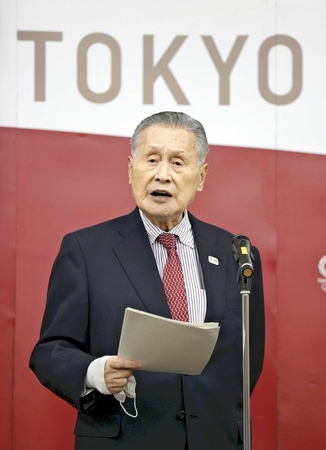
Yoshiro Mori, president of the Tokyo Organizing Committee of the Olympic and Paralympic Games, speaks in Tokyo on Thursday after a videoconference with International Olympic Committee President Thomas Bach. (Pool photo/The Yomiuri Shimbun)

By The Japan News/ANN

International Olympic Committee President Thomas Bach and Yoshiro Mori, president of the Tokyo Games organizing committee, have agreed to hold four-party talks with the central and Tokyo metropolitan governments to discuss the next steps toward pulling off the beleaguered Games this summer. The talks are slated to take place in February.

During a videoconference call on Thursday, Bach and Mori stopped short of discussing spectator restrictions in detail. However, Mori stated that holding the Games without spectators may also be an option.

“We don’t want the Games to be held without spectators, but that’s one scenario we’ve been simulating,” Mori said.

During the videoconference, Bach is said to have expressed hope that a large segment of the population in Japan would be vaccinated against the novel coronavirus ahead of the Games.

After Delhi blast, security tightened in Mumbai, Maharashtra #SootinClaimon.Com

#SootinClaimon.Com : ขอบคุณแหล่งข้อมูล : หนังสือพิมพ์ The Nation.

After Delhi blast, security tightened in Mumbai, Maharashtra

Jan 30. 2021

By The Statesman/ANN

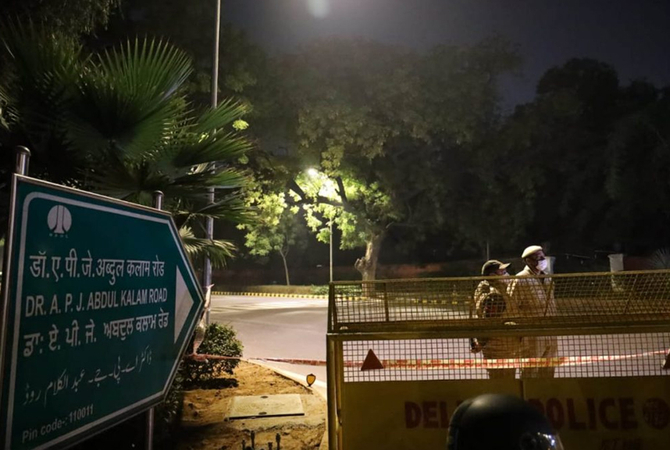
In a precautionary measure after the mystery blast in New Delhi near the Israeli Embassy, the Maharashtra Police has tightened security across the state, top officials said here late on Friday.

Deputy Chief Minister Ajit Pawar, Home Minister Anil Deshmukh, along with top officials of the Home Department, reviewed the security situation after the incident in the national capital and ordered beefing up security measures in the state.

The security cover has been heightened near the Nariman House in Mumbai, where the Jewish prayer facility, Chabad House is located along with a memorial-cum-museum to the victims of the 26/11 Mumbai terror strikes, important consulates in Mumbai and offices of certain international organisations.

Besides, increased cover has been given to all airports, major railway stations, bus depots, government offices, vital installations, certain religious or pilgrimage sites and other important buildings to ward off any untoward incidents.

Police and other armed units have also increased patrolling in sensitive or crowded areas in Mumbai, Pune, Aurangabad, Nagpur and other places.

Pawar and Deshmukh have urged people to exercise similar precautions, refrain from touching any unknown objects and cooperate with the security agencies.

Over 113,000 people in S’pore received first Covid-19 vaccine dose: MOH #SootinClaimon.Com

#SootinClaimon.Com : ขอบคุณแหล่งข้อมูล : หนังสือพิมพ์ The Nation.

Over 113,000 people in S’pore received first Covid-19 vaccine dose: MOH

Jan 29. 2021Volunteers wait to get the Covid-19 vaccine as they participate in a trial run at the vaccination centre in Tanjong Pagar Community Club, on Jan 26, 2021. ST PHOTO: GAVIN FOOVolunteers wait to get the Covid-19 vaccine as they participate in a trial run at the vaccination centre in Tanjong Pagar Community Club, on Jan 26, 2021. ST PHOTO: GAVIN FOO

By Lim Min Zhang
The Straits Times/ANN

SINGAPORE – More than 113,000 people have received their first dose of the Pfizer-BioNTech Covid-19 vaccine, the Ministry of Health (MOH) said on Thursday (Jan 28).

Among them, there were 432 “adverse event reports” linked to symptoms generally associated with all vaccinations. These include injection site pain and swelling, fever, headache, fatigue, body aches, giddiness, nausea and allergic reactions such as itch, rash, swelling of eyes or lip. Most of these symptoms resolved on their own within a few days, said the MOH.

There were three cases of anaphylaxis, or rapid onset of severe allergic reactions, but all of them recovered and were discharged from the hospital after a day’s observation or treatment, MOH added.

The three people, who are in their 20s and 30s, developed multiple symptoms such as rash, breathlessness, lip swelling, throat tightness and giddiness.

All three had a history of allergies, including allergic rhinitis and food allergy such as to shellfish, but none had a history of anaphylaxis, which would have precluded them from receiving the vaccine, said the ministry.

“As all vaccinated persons in Singapore are closely monitored, the symptoms in these three individuals were promptly detected and treated,” it added.

MOH said that the incidence rate of anaphylaxis in Singapore stands at about 2.7 per 100,000 doses administered. The incidence rates reported abroad is around one to two per 100,000 doses administered, after they have administered millions of vaccine doses.

“Variations in the incidence rate are to be expected initially as the numbers vaccinated in Singapore to date are relatively small,” said MOH.

In its update, the ministry said more than 113,000 people have received their first dose of the Covid-19 vaccine as of Wednesday. More than 50 people have also taken their second dose of the vaccine and completed the full vaccination regimen.

“These numbers are expected to rise substantially in the coming weeks as we continue to ramp up our vaccination operations safely,” said MOH.

To provide help to those who develop serious side effects, the ministry also released details of a vaccine injury financial assistance programme.

It will include a one-time payout of up to $10,000 to those who were hospitalised with serious side effects and required care in the high dependency or intensive care unit.

It will also provide a one-time payout of $225,000 to those who died or suffered permanent severe disability as a result of the vaccination.

Recipients must be Singapore citizens, permanent residents or long-term pass holders who took their Covid-19 vaccination in Singapore.

They must have experienced a serious side effect that is potentially life-threatening or fatal, and has required inpatient hospitalisation or has caused persistent incapacity or disability.

The side effects will be assessed by a doctor linked to the person’s vaccination, said MOH.

“As the severity of serious side effects can be broad, and assessment by the treating doctors may vary, MOH has appointed an independent clinical panel comprising experts in relevant fields such as neurology, immunology and infectious diseases, to assess and adjudicate (the programme’s) applications.”

In Thursday’s update, the MOH also said that more vaccination centres will be set up over the next few weeks. They will be located in high-population catchment areas or places easily accessible by public transport.

In total, there will be around 40 vaccination centres. Each centre can administer about 2,000 vaccinations per day.

A pilot scheme to vaccinate seniors aged 70 and above was rolled out in Tanjong Pagar and Ang Mo Kio on Wednesday. To facilitate the process, a new vaccination centre at Tanjong Pagar Community Centre was set up this week, and another one at Teck Ghee Community Centre will be operational from Feb 1.

Polyclinics and selected Public Health Preparedness Clinics (PHPCs) will also serve as vaccination sites, said MOH.

Currently, seniors can already be vaccinated at nine polyclinics and 21 PHPCs. By Feb 1, all 20 polyclinics across Singapore will begin offering Covid-19 vaccinations. These areas will be wheelchair-accessible.

Mobile vaccination teams will be set up to deliver the vaccines to seniors with mobility issues who find it challenging to visit a vaccination site, said MOH.

As of Wednesday, the ministry has sent letters to more than 10,000 seniors in Ang Mo Kio and Tanjong Pagar, and more than one-third of them have booked their appointments within two days of receiving the invitation. The remaining seniors in these areas will be notified in the coming week.

All seniors across Singapore will start receiving their letters from mid-February.

S. Korea to extend R&D support for bio convergence tech, medical devices #SootinClaimon.Com

#SootinClaimon.Com : ขอบคุณแหล่งข้อมูล : หนังสือพิมพ์ The Nation.

S. Korea to extend R&D support for bio convergence tech, medical devices

Jan 29. 2021This undated file photo provided by the Ministry of Science and ICT shows its office in Sejong, 120 kilometers south of Seoul. (Ministry of Science and ICT)This undated file photo provided by the Ministry of Science and ICT shows its office in Sejong, 120 kilometers south of Seoul. (Ministry of Science and ICT)

By The Korea Herlad/ANN

South Korea’s science ministry said Friday it will extend research and development (R&D) support for the bio-health sector, bolstering efforts to develop regenerative medicine and homegrown medical devices.

Under the Ministry of Science and ICT’s bio-health strategy, the country will also expand R&D investment to converge cutting-edge technology, such as artificial intelligence, with new medicine development to boost efficiency.

The ministry will also expand support for the development of homegrown medical devices.

It will also aim to acquire core technology in next-generation regenerative medicine, such as stem cell research, and strengthen long-term support for new treatment methods, such as gene editing technology.

The move comes after the country outlined a bio-health investment strategy in 2019, which only clarified support for four sectors — fundamental research, medicine, health care services and regulatory science.

The updated strategy includes support for bio-convergence technology, medical devices, regenerative medicine, clinical health science, bio-resources and information infrastructure, as well as fostering more experts.

The science ministry has set aside 520 billion won ($466 million) to support biotechnology development this year. (Yonhap)