Workplace clusters are key source of Covid-19 infections in Malaysia #SootinClaimon.Com

#SootinClaimon.Com : ขอบคุณแหล่งข้อมูล : หนังสือพิมพ์ The Nation.

Workplace clusters are key source of Covid-19 infections in Malaysia

Jan 23. 2021Sanitisation takes place every night after closing time at Sunway Pyramid shopping mall, Malaysia. PHOTO: SUNWAY MALLS AND THEME PARKSSanitisation takes place every night after closing time at Sunway Pyramid shopping mall, Malaysia. PHOTO: SUNWAY MALLS AND THEME PARKS

By Hazlin Hassan
The Straits Times/ANN

KUALA LUMPUR – Accounts clerk Madam Kayal Muthu, 43, is troubled by the thought of going back to office once Malaysia’s movement control order (MCO) is lifted early next month.

“Someone from my office just tested positive this week. And since I need to use public transport, I also worry about commuting. The number of cases is very high. I have a phobia of going out now,” she told The Straits Times.

An officer at a government ministry in Putrajaya is also concerned about having to go to work daily because the number of cases are rising in the administrative capital, which had 33 new cases on Thursday (Jan 21).

“I have been exposed frequently to people who were positive, and I have been tested 10 times for Covid-19 since July last year,” said the officer, who wanted to be known only as Madam JC.

Workplace clusters have emerged as a key source of Covid-19 infection in Malaysia, with hundreds of cases traced to private companies as well as government agencies.

Though most people are working from home during the MCO, which began on Jan 13, essential businesses and many retailers are operating as usual.

On Friday (Jan 22), the Health Ministry reported that seven out of 12 new clusters were workplace-related, with 262 cases, out of the daily total of 3,631 infections.  

One of the new clusters was detected through a workplace screening on security guards at a shopping mall in Johor Baru. 

A total of 46 people have been screened, with 43 found positive. They were all staying in the same hostel in Taman Century.

On Thursday (Jan 21), 11 out of 16 new clusters reported were related to workplaces, involving a total of 205 infections out of the 3,170 recorded on the day.

Among the workplaces affected are factories, palm oil plantations, learning institutions, and Malaysia’s biggest wholesale market in Kuala Lumpur, which has been closed from Jan 21. A total of 163 infections have been detected at the Kuala Lumpur Wholesale Market.

Glovemaker Top Glove is in the grip of a fresh outbreak, with infections reported at four factories in Negeri Sembilan, Kedah, and Selangor. As at Jan 16, 165 workers tested positive.

This week, staff at public transport provider Prasarana who were in close contact with its chairman, Datuk Seri Tajuddin Abdul Rahman, had to be tested after he was confirmed to be infected on Wednesday.

The rest of the staff were told to self-quarantine at home and the entire office building was deep-cleaned and sanitised.

Mr Tajuddin, who is also an Umno lawmaker, earlier this month attended a news conference with fellow Umno MP Nazri Aziz, who also tested positive this week, joining a growing list of MPs who have contracted the disease. Four Cabinet ministers tested positive in recent days.

Some believe the spike in numbers is due to the government lifting an interstate travel ban on Dec 7 last year, resulting in many people travelling to go home or vacationing during Christmas and the New Year period.

“The rise in workplace-related clusters is not because companies have taken Covid-19 lightly. At the end of 2020, we saw a lot of movements among the community and workers, which caused more infections. When Covid-19 is detected through testing at the workplace, then it is categorised as a workplace cluster,” said Malaysian Employers Federation executive director Shamsuddin Bardan.

Meanwhile, with malls being allowed to remain open during the MCO, safety measures are a priority.

“As the malls continue to operate during the MCO for shoppers and our 12,000 working population to purchase essential items and daily necessities, a high standard of safety measures have been put in place,” Mr H.C Chan, CEO of Sunway Malls and Theme Parks, which operates seven retail malls across Malaysia, told The Straits Times.

The measures include installing thermal scanners and digital thermometers at all entrances for shoppers, tenant staff and mall employees, regular disinfection at common touch points and public areas, deep cleaning and fogging every night, and ultraviolet germicidal irradiation in the air-conditioning system to kill or inactivate micro-organisms.

All mall employees have also been given masks and personal sanitiser sprays.
Japan welcomes Biden’s emphasis on alliance, cooperation #SootinClaimon.Com

#SootinClaimon.Com : ขอบคุณแหล่งข้อมูล : หนังสือพิมพ์ The Nation.

Japan welcomes Biden’s emphasis on alliance, cooperation

Jan 23. 2021

By The Japan News/ANN

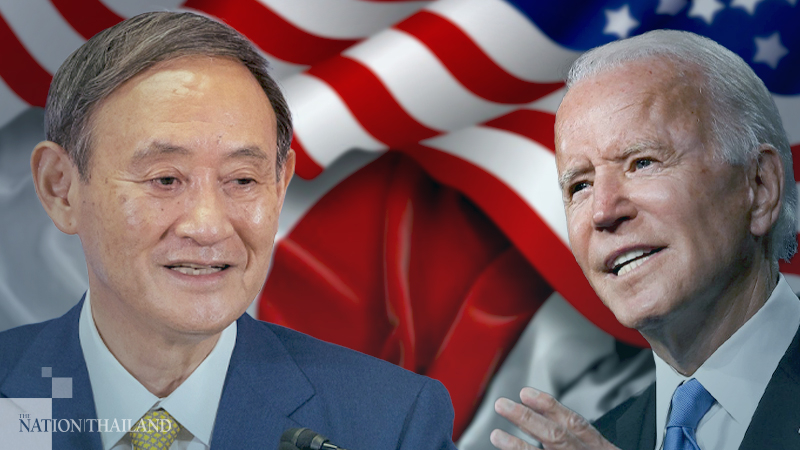
The Japanese government welcomes U.S. President Joe Biden’s call for emphasis on allies and international cooperation in the address.

Prime Minister Yoshihide Suga expressed Thursday his intention to collaborate with Biden not only on strengthening the Japan-U.S. alliance, but also on measures against the novel coronavirus and climate change.

“I would like to work closely with the new president on international issues,” Suga said to reporters at the Prime Minister’s Office.

Compared to former U.S. President Donald Trump, whose words and actions were difficult to predict, a senior Foreign Ministry official said, “Biden will return to an orthodox diplomacy and security policy that places importance on the views of government entities such as the State Department and Defense Department.”

For the time being, Biden is expected to give priority to domestic affairs, including measures to combat the novel coronavirus. A visit by Suga to the U.S. seems difficult anytime soon.

Suga is planning to soon have a discussion with Biden over the phone to confirm that both countries will strengthen the alliance and continue to promote the “Free and Open Indo-Pacific” vision common to Tokyo and Washington.

Shigeru Kitamura, secretary general of the National Security Secretariat, held his first teleconference with Jake Sullivan, Biden’s national security adviser, on Thursday evening and confirmed the policy of close cooperation between the two countries to deal with the security environment in the Asia-Pacific region among other issues.

Sullivan confirmed his understanding that the Senkaku Islands in Okinawa Prefecture are covered by Article 5 of the Japan-U.S. Security Treaty, which stipulates the obligation to defend Japan.

Kitamura stressed the need to strengthen the Japan-U.S. alliance and to cooperate in areas such as economic security.

HK imposes city’ first COVID-19 lockdown in Kowloon area #SootinClaimon.Com

#SootinClaimon.Com : ขอบคุณแหล่งข้อมูล : หนังสือพิมพ์ The Nation.

HK imposes city’ first COVID-19 lockdown in Kowloon area

Jan 23. 2021A woman stops in front of a police cordon line surrounding a lockdown area in Kowloon, Hong Kong, Jan 23, 2021. (CALVIN NG/CHINA DAILY)A woman stops in front of a police cordon line surrounding a lockdown area in Kowloon, Hong Kong, Jan 23, 2021. (CALVIN NG/CHINA DAILY)

By Wang Zhan
China Daily/ANN

HONG KONG – Hong Kong is locking down thousands of residents for the first time over the weekend in a bid to contain a worsening outbreak of the coronavirus in the Kowloon area.

The unprecedented step for the Yau Ma Tei and Jordan areas – known for their night markets – was announced in a government statement at 4 am Saturday local time, citing chapter 599J of the Regulations on Disease Prevention and Control. Authorities aim to complete the exercise within 48 hours, a government spokesman said in the statement.

This map shows the area of targeted lockdown in Kowloon, Hong Kong. (SOURCE: HKSAR GOVERNMENT)

According to the statement, the lockdown area is bounded by Woosung Street to its east, Nanking Street to its south, Battery Street to its west and Kansu Street to its north.

The districts are home to many aging buildings and subdivided flats in which the virus could spread more easily.

The government said that temporary sampling stations will be set up in the restricted areas and people will be required to get tested before midnight on Saturday, according to the statement.

They “will be arranged to undergo nucleic acid test in batches at specimen collection stations where dedicated staff will collect samples through combined nasal and throat swabs,” according to the statement.

Residents will be required to stay at their homes until everyone in the specified area has undergone COIVD-19 testing and “test results are mostly ascertained”, the government said, adding it wants to allow residents to start returning to work at around 6 am on Monday.

The government will arrange door-to-door specimen collection for people with impaired mobility and the elderly, including those in elderly homes in the district, to undergo testing at home or arrange for them to collect and submit deep throat saliva samples by themselves.

If an employee is unable to go to work because of the announcement, the government hopes that the employer can exercise discretion and would not deduct the employee’s salary or benefits.

Mobile testing stations for COVID-19 are set up in the Yau Ma Tei area, Hong Kong in the early hours of Jan 23, 2021. (CALVIN NG/CHINA DAILY)

The Food and Health Bureau will also issue a compulsory testing notice covering all premises in the restricted area. Anyone who had been to the area for more than two hours in the past 14 days must also undergo a compulsory testing before midnight Saturday.

“The government understands the residents in the district are worried and anxious because of the increase in confirmed cases in recent days,” according to the statement. “Under the epidemic, their livelihood is seriously affected as businesses in the area have been hit hard and brought to a standstill.”

Hong Kong reported 61 new COVID-19 infections on Friday, bringing the city’s overall tally to 9,928. The targeted lockdown also came as neighboring city Macao reported the first imported case since June.

The government has prepared simple food and basic cleaning tools for affected residents. The Home Affairs Department has set up hotlines 2399 6949 and 2835 1473, and a dedicated hotline (3755 6816) for the ethnic minorities. 

In a separate statement issued Saturday morning, a spokesman for the Transport Department said temporary traffic and transport arrangements have been implemented in the restricted area.

A total of seven bus routes and three minibus routes will be temporarily diverted, while some of the stops will also be suspended or relocated, according to the statement.

With Bloomberg inputs

China to ‘gift’ 0.5m doses of Covid-19 vaccine to Pakistan by Jan 31: Qureshi #SootinClaimon.Com

#SootinClaimon.Com : ขอบคุณแหล่งข้อมูล : หนังสือพิมพ์ The Nation.

China to ‘gift’ 0.5m doses of Covid-19 vaccine to Pakistan by Jan 31: Qureshi

Jan 22. 2021Foreign Minister Shah Mehmood Qureshi and his Chinese counterpart Wang Yi. — Dr Mohammad Faisal/TwitterForeign Minister Shah Mehmood Qureshi and his Chinese counterpart Wang Yi. — Dr Mohammad Faisal/Twitter

By DAWN/ANN

Foreign Minister Shah Mehmood Qureshi on Thursday announced that China has promised to provide 500,000 doses of a coronavirus vaccine to Pakistan by January 31.

In a video message after a phone call with his Chinese counterpart Wang Yi, Qureshi said China offered Islamabad to send an airplane and airlift the vaccines.

The minister said he held a detailed conversation with the Chinese foreign minister in which he “discussed Pakistan’s requirements”, after Prime Minister Imran Khan had directed him to increase interaction with Beijing “considering the sensitivity of the situation”.

“I want to give the nation the good news that China has promised to immediately provide 500,000 doses of vaccine to Pakistan by January 31,” he said.

“They (China) have said you can send your airplane and immediately airlift this drug,” he added, saying the development would “help save many lives” in Pakistan.

In a tweet, Qureshi suggested the doses to be provided to Pakistan will be of the Sinopharm vaccine, which the Drug Regulatory Authority of Pakistan (Drap) had approved for emergency use in the country earlier this week.

“With encouraging results of Chinese vaccine and our historic relationship, Pakistan has approved emergency use authorisation of SinoPharm [vaccine]. Indeed Pakistan greatly appreciates the 500,000 doses of the vaccine gifted by China,” he wrote.

The vaccine was developed by the Beijing Institute of Biological Products, a subsidiary of state-owned conglomerate Sinopharm. The company announced last month that preliminary data from last-stage trials had shown it to be 79.3 per cent effective.

But Qureshi said he informed his Chinese counterpart that Pakistan’s requirement for vaccines is “more than this”, and that it will need 1.1 million doses in the near future.

“At this, [the Chinese foreign minister] said ‘we plan to fulfil this requirement of yours as well by the end of February and the 1.1m doses will be made available to you,'” he revealed in the video message.

China had decided to work for the “global public good” in the context of Covid-19, Qureshi said, adding that Foreign Minister Wang told him the first country they thought of to assist was Pakistan keeping in view “the all-weather strategic relationship” between the two countries.

“We want to assure Pakistan that our cooperation with you will continue,” the minister quoted Wang as saying.

Qureshi also said he and Foreign Minister Wang had discussed that trials of Chinese firm CanSino’s vaccine in Pakistan were successfully moving forward and their results had been “quite encouraging”.

“Pakistan has a huge population […] in order to fulfil its needs, we also discussed whether we can move forward together for this (CanSino) vaccine’s production and manufacturing in Pakistan after the completion of the new trials,” he said, adding that his Chinese counterpart had agreed to the proposal.

The minister said the first batch arriving in Pakistan would be “grant assistance” for which the country would not have to pay anything. “This is a hand of goodwill and friendship that China has extended towards us and I am grateful to them,” he added.

Pakistan’s vaccine plans

Pakistan has so far approved two vaccines for emergency use, the other being the Oxford-AstraZeneca jab.

On Wednesday, Special Assistant to the Prime Minister (SAPM) on Health Dr Faisal Sultan had expressed confidence in the government’s ability to procure at least 1m doses of coronavirus vaccines by March, saying it ultimately aimed to inoculate 70pc of the country’s population against the virus.

In addition to bilateral arrangements, the SAPM said, the country will also receive vaccines through Covax, an international alliance that has pledged free vaccines for 20pc population of around 190 countries, including Pakistan.

An official of the Ministry of National Health Services, requesting not to be named, had earlier told Dawn there was almost no chance of getting the Oxford-AstraZeneca vaccine as India had already purchased its research and was also manufacturing it. Besides, New Delhi has announced that it will give priority to its own population.

“Our only chance to get the vaccine is through Covax,” the official had said.

Pakistan had already pre-booked 1.1m doses of Sinopharm’s Covid-19 vaccine.

Drap chief executive officer Dr Asim Rauf had told Dawn that the National Institute of Health (NIH) had gotten the Sinopharm vaccine registered in its name. “The approval has been given for emergency use and it will pave the way for bringing the vaccine to Pakistan,” he added.

N. Korea ranks worst in undernourishment in Asia-Pacific region #SootinClaimon.Com

#SootinClaimon.Com : ขอบคุณแหล่งข้อมูล : หนังสือพิมพ์ The Nation.

N. Korea ranks worst in undernourishment in Asia-Pacific region

Jan 22. 2021A North Korean paediatrician counsels mothers in Jongju City Hospital about care for their children. (UNICEF)A North Korean paediatrician counsels mothers in Jongju City Hospital about care for their children. (UNICEF)
By The Korea Herald/ANN

North Korea was ranked the worst in terms of prevalence of undernourishment among its population in the Asia-Pacific region, a report showed Friday.

According to the report jointly compiled by the Food and Agriculture Organization, the World Food Programme and other global agencies, more than 45 percent of the North’s population was suffering from undernourishment from 2017-2019.

The proportion was the highest among Asia-Pacific countries surveyed. It was much higher than the corresponding figure of around 30 percent for the second-worst countries, such as East Timor and Afghanistan, the report showed.

The report also showed that only 28.6 percent of North Korean children aged 6-23 months were able to have the minimum acceptable diet (MAD), indicating that over seven out of 10 babies could not have a minimum amount of meals every day.

North Korea is known for chronic food shortages, which appear to have been aggravated in recent years due to extreme weather conditions and global sanctions. The coronavirus pandemic might have added to the strain by hampering its imports of key farming materials.

According to a report by a local think tank, North Korea is estimated to have produced around 4.4 million tons of food last year, down 5.2 percent from 4.64 million tons estimated for the previous year.

The 2020 estimate is some 1.1 million tons short of the 5.5 million tons experts see as necessary to feed its population every year. (Yonhap)

Sinovac ups vaccine production to ensure global supply #SootinClaimon.Com

#SootinClaimon.Com : ขอบคุณแหล่งข้อมูล : หนังสือพิมพ์ The Nation.

Sinovac ups vaccine production to ensure global supply

Jan 22. 2021

By China Daily/ANN

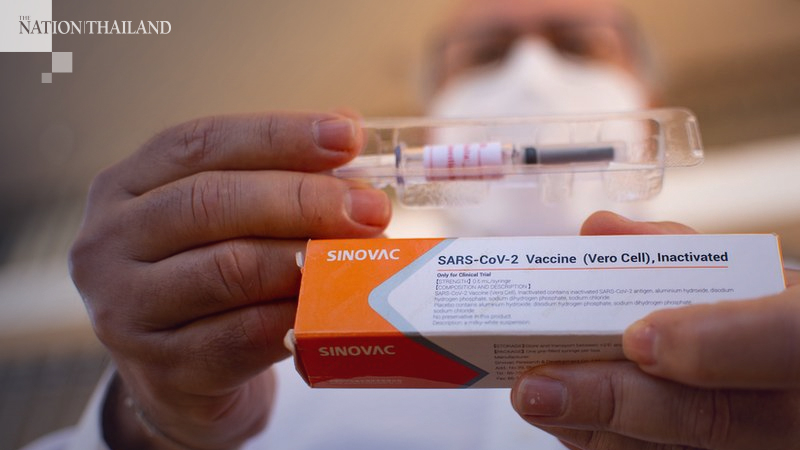
BEIJING – Chinese pharmaceutical company Sinovac Biotech Ltd is ramping up the production of CoronaVac, an inactivated COVID-19 vaccine, to ensure global supply, according to Yin Weidong, chairman and CEO of the company.

“Sinovac has received vaccine orders from Brazil, Indonesia, Turkey, Chile and other countries and regions, and we are making every effort to expand the production capacity,” said Yin in an interview with Xinhua News Agency. “We hope the vaccine will protect more people around the world.”

The Sinovac vaccine has been approved for emergency use in several countries, including China, Indonesia, Brazil and Chile, according to Yin.

Yin added that the company has constructed a second production line, which will start operation in February, increasing its annual production capacity to 1 billion doses.

Sinovac will export semi-finished jabs to some countries, and help build local filling and packaging lines in importing countries to improve the production capacity and efficiency, Yin said.

“On the basis of an annual output of 1 billion doses, we will continue to expand production capacity. We are facing uncertainties related to the coronavirus pandemic and demand for vaccines, which shall not be responded to with the usual demand-supply business model alone. Vaccines are public goods and we should shoulder social responsibilities,” Yin said.

The phase-3 clinical trials of the Sinovac vaccine are being mainly conducted in Brazil, Indonesia and Turkey.

According to Yin, clinical trial results in Turkey showed that the vaccine has an efficacy rate of 91.25 percent, and results in Indonesia showed an efficacy rate of 65.3 percent. Clinical studies in Brazil suggested that the vaccine was 100 percent effective in preventing severe cases, 78 percent effective in preventing mild cases requiring medical treatment, and has a general efficacy rate of 50.38 percent.

“It’s normal to get varying results in different countries, and the clinical trials are influenced by multiple factors,” Yin said, adding that all the participants in the phase-3 clinical trials in Brazil are medical workers in high-risk environments who might be attacked by the virus many times.

“The vaccine is expected to provide better protection for the general population,” Yin said.

“Combining the data from clinical trials in the three countries, we have stronger confidence in the safety and efficacy of the vaccine,” Yin said.

The inactivated vaccine also offers broad-spectrum protection against different coronavirus strains, according to Yin.

“In collaboration with the Institute of Laboratory Animal Sciences under the Chinese Academy of Medical Sciences, we found that the serum of volunteers who received the Sinovac vaccine can neutralize the variant strain found in Britain. We are also studying the protection offered by the vaccine against the variant strain found in South Africa and will share the results in a timely manner,” Yin said.

On Dec 15, 2020, China officially launched the COVID-19 vaccination program for key groups of people aged between 18 and 59 who have a high risk of infection. Over 15 million doses have been administered in China, according to the country’s health authorities.

With more well-rounded clinical trial data and increasing vaccine supply, China will gradually include those aged above 60 to the vaccination program, according to the National Health Commission.

“We have already conducted research on people aged over 60 in the phase-2 clinical trials, and several hundreds of participants aged over 60 have been involved in the phase-3 clinical trials in Brazil. The results showed that the vaccine also has a protective effect on this population,” Yin said.

Many foreign leaders have been inoculated with China’s COVID-19 vaccines, including Indonesian President Joko Widodo and Turkish President Recep Tayyip Erdogan, who both received the Sinovac vaccine.

This shows international confidence in Chinese-made vaccines, Yin said, adding that it is a sign of recognition for their cooperation with China in phase-3 clinical trials.

“I was also touched by a photo showing indigenous people in Brazil dressed in traditional costumes receiving a Sinovac vaccine shot. The indigenous population in Brazil is suffering from the coronavirus pandemic. China pledges that COVID-19 vaccines should be public goods, and we hope that they are used to protect all groups of people,” Yin said. 

India starts dispatching Covid-19 shots to neighbouring countries #SootinClaimon.Com

#SootinClaimon.Com : ขอบคุณแหล่งข้อมูล : หนังสือพิมพ์ The Nation.

India starts dispatching Covid-19 shots to neighbouring countries

Jan 22. 2021

By The Statesman/ANN

India today set in motion the process of delivering Coronavirus shots to neighbouring countries and key partners with shipments of the vaccine reaching the Himalayan kingdom of Bhutan and the Indian Ocean archipelago of the Maldives.

An AN-32 aircraft carrying Indian shots arrived in Thimphu in the afternoon to deliver 150,000 doses of Covishield vaccine. Bhutan Prime Minister Lotay Tshering and Indian Ambassador Ruchira Kamboj were present at the ceremony at which the consignment was handed over to Bhutanese officials. Another consignment arrived at Male where it was received by Maldivian officials and Indian High Commissioner Sunjay Sudhir.

The MEA said “supplies under grant assistance” would be shipped to Bhutan, the Maldives, Bangladesh, Nepal, Myanmar and Seychelles while Sri Lanka, Afghanistan and Mauritius await regulatory clearances to receive the vaccines.

Bangladesh said it expected to receive a gift of two million doses of Covishield tomorrow. Dhaka is yet to start its vaccination programme and has ordered a further 30 million doses of the shot.

“The Pharmacy of the World will deliver to overcome the Covid challenge,” External Affairs Minister S Jaishankar said on Twitter.

Prior to the delivery of vaccines to other countries, India also conducted a training programme, covering administrative and operational aspects, for immunization managers, cold chain officers, communication officers and data managers of the recipient nations, both at national and provincial levels.

Overseas travel to remain difficult even after all in Singapore get Covid-19 vaccine: Gan Kim Yong #SootinClaimon.Com

#SootinClaimon.Com : ขอบคุณแหล่งข้อมูล : หนังสือพิมพ์ The Nation.

Overseas travel to remain difficult even after all in Singapore get Covid-19 vaccine: Gan Kim Yong

Jan 22. 2021When international travel does resume, it is likely to take place progressively. ST PHOTO: KELVIN CHNGWhen international travel does resume, it is likely to take place progressively. ST PHOTO: KELVIN CHNG
By Linette Lai
The Straits Times/ANN

SINGAPORE – International travel will not revert to normal even after everyone in Singapore has been vaccinated as travel depends on the global Covid-19 situation, said Health Minister Gan Kim Yong.

When it does resume, it is likely to take place progressively, through bilateral arrangements, which could then expand into regional arrangements, he added.

“This is a bit like a circuit breaker,” said Mr Gan, who co-chairs the multi-ministerial task force handling the crisis. “It’s not going to be, flip a switch and (it’s) free for everybody to travel.”

He was responding to a question on whether Singaporeans can expect to travel in the next 12 months during a press conference to mark one year of Singapore’s battle with Covid-19.

Education Minister Lawrence Wong, the task force’s other co-chair, acknowledged that many people hope that vaccination will allow them to travel without quarantine restrictions.

But at present, Singapore is still studying the evidence and is not yet ready to change the rules, he said.

In any case, Singapore is likely to be in “pandemic mode” for the next 12 to 18 months even if certain safe distancing measures are eased in that time, Mr Wong added.

“Even if the majority of people in Singapore get vaccinated, it’s impossible for the world to be vaccinated by this year,” he said. “Which means that all around us, there will be countries where the virus may very well still be raging.”

He also pointed out that the International Air Transport Association has predicted that passenger volumes are not expected to return to pre-coronavirus levels until at least 2024.

“The whole recovery is not a one-year issue… it’s more like a four-year affair before you see some of these industries recovering back to where they were before,” Mr Wong said.

“So that’s the picture for aviation and travel, and we have to be realistic that this is what it is, and it will have some impact on our own industries, particularly those that are reliant on aviation and tourism.”

At some point – perhaps over the next four to five years – the pandemic will pass and the economy will slowly recover, Mr Wong added.

But Mr Gan cautioned that the next pandemic could take place in that time. He urged Singaporeans to keep up the good hygiene habits they developed over the past year, adding: “Before we celebrate… you have to always be vigilant that the next pandemic is just a short distance away.”

Jho Low’s alleged 1MDB accomplice pardoned by Trump #SootinClaimon.Com

#SootinClaimon.Com : ขอบคุณแหล่งข้อมูล : หนังสือพิมพ์ The Nation.

Jho Low’s alleged 1MDB accomplice pardoned by Trump

Jan 21. 2021

By HEMANANTHANI SIVANANDAM
The Star/ANN

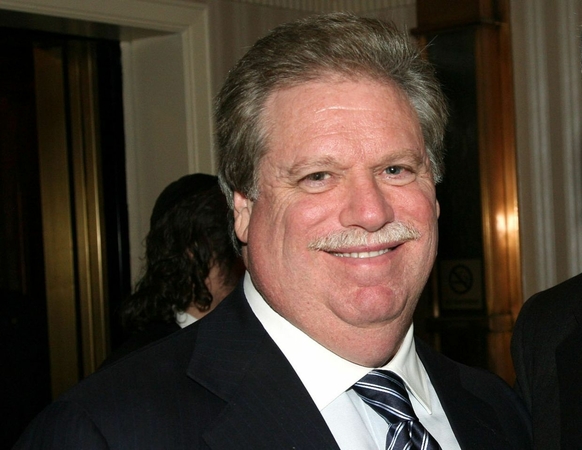
PETALING JAYA: Former United States president Donald Trump has granted a full pardon to a top Republican donor who was convicted of illicitly lobbying for Malaysian fugitive Low Taek Jho or better known as Jho Low.

Elliott Broidy (pic) was among some 73 individuals Trump had granted pardon as part of his last act before leaving the White House as the president.

Broidy was the former Deputy National Finance Chair of the Republican National Committee.

The Republican donor was convicted on one count of conspiracy to serve as “an unregistered agent of a foreign principal”.

“Mr Broidy is well known for his numerous philanthropic efforts, including on behalf of law enforcement, the military and veterans programs, and the Jewish community, ” read the White House statement regarding executive grants of clemency on Wednesday (Jan 20).

Last October, Broidy had pleaded guilty to a charge that he illegally lobbied Trump to drop an investigation into 1Malaysia Development Berhad (1MDB).

It was reported that Broidy had pleaded guilty to a felony charge that he conspired to violate the Foreign Agents Registration Act (FARA).

Reports also said that US prosecutors alleged that Broidy received millions of dollars in payment from an unnamed foreign national to try to arrange the end of a US investigation into billions of dollars embezzled from 1MDB.

Nursing homes in Singapore prepping for Covid-19 vaccination; seniors share fears of side effects #SootinClaimon.Com

#SootinClaimon.Com : ขอบคุณแหล่งข้อมูล : หนังสือพิมพ์ The Nation.

Nursing homes in Singapore prepping for Covid-19 vaccination; seniors share fears of side effects

Jan 21. 2021Many of the elderly, who are not in nursing homes, cite worries about the safety and potential side-effects of the vaccine. ST PHOTO: GIN TAYMany of the elderly, who are not in nursing homes, cite worries about the safety and potential side-effects of the vaccine. ST PHOTO: GIN TAY

By Malavika Menon and Theresa Tan
The Straits Times/ANN

SINGAPORE – Nursing homes have started identifying elderly residents suitable for Covid-19 vaccination.

St John’s Home for Elderly Persons and the Methodist Welfare Services (MWS) Nursing Home-Yew Tee, for example, have identified those suitable and are in the process of getting consent from the seniors or their next of kin for the shots.

At the MWS Nursing Home-Yew Tee, about three in four of its 185 residents have been medically cleared for vaccination, its spokesman said.

Last week , the Government said that seniors aged 70 and above would be vaccinated earlier – from the end of January, instead of next month.

Many of the elderly who are not in nursing homes and interviewed by The Straits Times expressed a wait-and-see attitude towards getting vaccinated, citing worries about the safety and potential side effects of the vaccine.

Senior dance instructor Sitaravamma Sandrasegaren, 68, was among those hesitant.

She said: “I also do not have to be out of my home for long hours and Singapore has a low rate of infection at present, so I feel safe.”

Like others interviewed, she said that her concerns about the vaccine intensified after news that over 30 seniors in Norway died after being vaccinated.

On Monday (Jan 18), the Norwegian health authorities said there was no evidence of a direct link between the deaths and the Pfizer-BioNTech vaccine and that all those who died were already seriously ill before being vaccinated.

Other Singaporeans, like businessman David Gabriel, 76, are inclined to be vaccinated as he needs to travel for business in the region.

He has a daughter living in Bali and his father, 103, is in Australia.

Mr Gabriel is closely monitoring news of the vaccine, saying that he does not “want to put something in my body that creates more problems than it solves”.

Social service agencies that work with the elderly say that the receptivity of elderly Singaporeans to the vaccine varies. Many, though, have questions about the safety, efficacy and necessity of the vaccine.

For example, some think it is not necessary as they feel they would not catch Covid-19, while others are thankful the vaccine is given free, said Lions Befrienders chairman Anthony Tay.

Dr Kelvin Phua, chief executive officer of Sata CommHealth, said it has put up common FAQs on its social media platforms to dispel some misconceptions or burning questions that seniors have.

SATA CommHealth has also conducted sessions to clarify information about the vaccine with its staff and encourage them to address the queries of the elderly.

Experts say visiting the elderly, especially those living alone , is one effective way to educate them about the vaccine.

Singapore Management University law don Eugene Tan said a series of FAQs in various languages, including dialects, and on various media platforms should be part of the outreach to seniors.

“Much as the policy temptation is to dwell on the benefits, the risks and uncertainties must be engaged and addressed. It is of utmost importance for people to know what they are getting themselves into and for them to decide what works best for them.”

Associate Professor Tan also suggested avenues for medical counselling, where one can ask questions before agreeing to be vaccinated.

He added: “Where there are ‘incidents’ such as adverse reactions to the vaccine, this should be reported and as much facts and information be made available.

“The reality is that there are anti-vaxxers out there as well as people with good intentions but misinformed about the vaccine.”

Member of Parliament Lim Wee Kiak said many of his residents were concerned about the vaccine as it did not have a long track record.

Dr Lim, an ophthalmologist, said: “I hope more reports on local data of the side effects of vaccination can be available and released to the public so more can be assured of their safety.”