
‘Lost decade’ possible for South Korea as employment prospect dims among young job seekers #SootinClaimon.Com

#SootinClaimon.Com : ขอบคุณแหล่งข้อมูล : หนังสือพิมพ์ The Nation.

‘Lost decade’ possible for South Korea as employment prospect dims among young job seekers

Jan 25. 2021Dozens of people line up to learn about unemployment benefits at an employment assistance center in Mapo-gu, western Seoul, earlier this month. Korea last year suffered its worst job loss in 22 years, as the number of those employed dropped 218,000 from a year earlier to 26.9 million. (Yonhap)Dozens of people line up to learn about unemployment benefits at an employment assistance center in Mapo-gu, western Seoul, earlier this month. Korea last year suffered its worst job loss in 22 years, as the number of those employed dropped 218,000 from a year earlier to 26.9 million. (Yonhap)

By Ko Jun-tae
The Korea Herald/ANN

College graduates continue to find doors to employment closed as economy suffers

Landing a full-time job, climbing up the corporate ladder, complaining about higher-ups and being constantly bothered by team dinners is what 28-year-old Jang Hyeon-seok has dreamed of since graduating college in 2017.

But the closest he has ever been to these dreams was just a three-month-long internship at a marketing startup last summer. Jang said he has submitted applications to hundreds of companies for a full-time job, but all he received were emails starting with “We are sorry to inform you.”

“It looked so easy to find a job and work like a slave for countless hours every day, and I usually spent time contemplating what job to choose as opposed to how to land one,” Jang said, calling himself as a “loser.”

“Last year’s job search didn’t turn out successful, so I have no option to continue living with my parents. They nag me all the time, so I don’t even go outside my room that often.”

Jang is one of many jobless Koreans in their 20s and 30s who are facing increasingly limited prospects for the future as Korea undergoes a prolonged period of slow expansion.

That trend accelerated with the start of coronavirus pandemic, as companies locked their doors to new hires and stayed conservative in face of diminishing business outlook. The job hunt accordingly became extremely competitive.

According to a Korea Economic Research Institute survey of 4,158 college students and graduates in October, 55.5 percent of respondents said they do not expect to land a job in the coming months.

Close to 76 percent of respondents said finding a job became more challenging than a year earlier, with many of them citing fewer number of openings for full-time jobs and internships.

As such misfortunes continue, Korea suffered the worst job loss in 22 years in 2020, as the number of those employed dropped 218,000 from a year earlier to 26.9 million.

The largest annual job loss on record was 1.27 million jobs in 1998 when the Asian financial crisis took a harsh toll on the economy.

And in the face of such hardships, more and more people are giving up on the idea of landing stable employment, resorting to part-time jobs and short, temporary gigs to earn income, however small it may be.

“This is going to be my third year of searching for a job after college, but I came across only a handful of job openings from my dream employers in the last recruiting season,” said a 27-year-old job seeker surnamed Nam who graduated college as a finance major in spring 2019.

“I’m really disappointed and frustrated with how the job situation is going for me. At this point, all I want is a job that can pay me just enough to survive.”

According to Statistics Korea data, the number of those in their 20s and 30s who did not actively search for jobs reached 731,000 people last month, up 31 percent from the same month a year earlier.

With such trend in force, experts worry that Korea may have entered the vicious cycle of economic setbacks and employment loss like Japan did since the 1990s. They believe young job seekers in Korea today could be a “lost generation” for years to come.

After the economic bubble popped and stagnation started then, young job seekers in Japan born in the 1970s and 1980s failed to find stable jobs for more than a decade, contributing to a large fall in household income and the employment rate.

The struggling job situation prevented Japan from recovering its GDP to the level of its prime days for years. It took 12 years for Japan’s GDP to recover to the same level as it was in 1995.

“The employment situation for the younger generation is expected to deteriorate across industries due to public health risks overseas and the subsequent global economic letdown,” said Joseph Han, a researcher at the Korea Development Institute, in a report.

“For young adults in the initial stage of entering the job market, the negative impact is not expected to be short-lived.”

Han said these young job seekers will continue to lose ground in terms of income gain and work experience, which will continue to prevent them from developing their careers as their options for first employment remain vastly limited.

Solving this problem is critical in overcoming Korea’s ongoing economic difficulties, he said, as their performance in the economy is key to solving socioeconomic issues stemming from aging population and low birthrate.

“There is an increased need for the government to step in to minimize the long-term effect of the financial burden increasing on the whole country due to aging population,” he added.

As a means to prepare young adults to be ready for the job hunt when the economy recovers, some experts are asking the government to create vocational training opportunities and internships and prevent job seekers from remaining idle in the face of frozen employment market.

“The number of those waiting to find employment will continue to grow, and digesting that volume will take years,” said Kim So-young, an economics professor at Seoul National University. “But in the meantime, the society has time to prepare them to gain employment when the time comes.”

Kim said the local job market will not recover until the country successfully overcomes the pandemic, and it will be too much to ask companies with diminished fortune to boost their hiring efforts when they are already struggling to keep the ones they have in house.

Korea saw its real gross domestic product contract 1.1 percent last year due to lingering impacts of the COVID-19 pandemic on domestic demand and exports. The Ministry of Economy and Finance expects the country’s real GDP to grow 3.2 percent throughout this year.

“Not much can be done during the pandemic to create more full-time jobs for young job seekers at this point, but we should be prepared,” Kim added.

“Economic recovery must be prioritized, and that itself will naturally open doors for companies to revamp their hiring efforts to make up for their losses during the pandemic.”
[China] 11 miners rescued 14 days after blast #SootinClaimon.Com

#SootinClaimon.Com : ขอบคุณแหล่งข้อมูล : หนังสือพิมพ์ The Nation.

[China] 11 miners rescued 14 days after blast

Jan 25. 2021

By ZHAO RUIXUE
CHINA DAILY/ANN

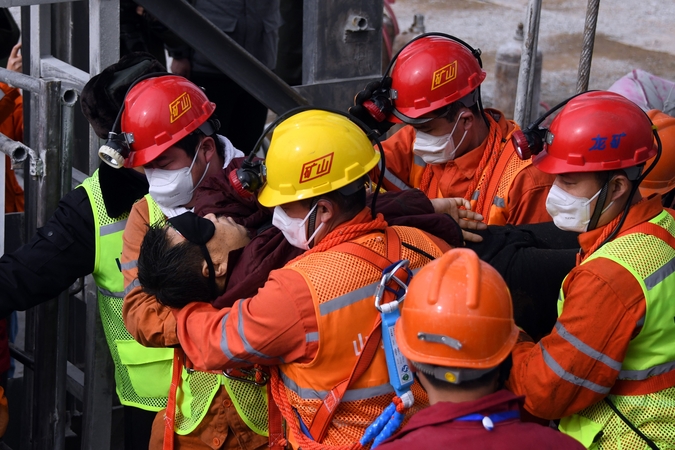
Eleven miners were lifted to safety on Sunday, 14 days after an explosion trapped 22 miners underground at a gold mine that was under construction in Qixia, Shandong province, according to the rescue headquarters.

The miners were lifted to the surface after rescuers cleared a way through the main shaft, which had been used by miners to enter and exit the mine.

Once on the surface, nine miners walked to ambulances with help. The other two were carried to ambulances because of their injuries.

“Let my family know that I am alive,” one miner said.

Another put his hands together in a gesture of thanks to the rescuers.

“All of the miners lifted to the surface were blindfolded to avoid a shock from the bright sunlight,” said Chen Yumin, a rescue team leader.

The first miner was brought to the surface around 11 am. He had been trapped at the No 4 section of the mine, which is 546 meters underground, and was found as rescuers were clearing the shaft. The miner, said to be extremely weak, was rushed to a hospital.

Rescuers found it very difficult during the past two weeks to clear the shaft, which was heavily damaged and blocked by debris including cables and steel wires from the explosion.

“We predicted that it could take at least another 15 days to clear the shaft due to the heavy obstacles thrown together in the shaft,” Xiao Wenru, chief engineer of the Ministry of Emergency Management’s mine rescue center, said on Sunday.

“But a big cavity appeared after rescuers cleared some obstacles this morning, then clearing work proceeded at high speed,” he said.

After bringing out the miner trapped at the No 4 section, rescuers proceeded to the No 5 section and brought out all 10 miners trapped there. The 10 miners were found to be alive a week ago after rescuers drilled a hole to search for them.

Rescuers also retrieved the body of a miner who had shown no sign of life on Wednesday. He was believed to have sustained serious head injuries in the explosion, according to the rescue headquarters.

The search continued for the remaining 10 missing miners. No contact had been established with them as of Sunday.

On Saturday, more than 600 rescue and related personnel from 17 teams, as well as a fire-rescue squad, were on site.

Himachal becomes 1st state to complete assessment of snow leopards & its prey #SootinClaimon.Com

#SootinClaimon.Com : ขอบคุณแหล่งข้อมูล : หนังสือพิมพ์ The Nation.

Himachal becomes 1st state to complete assessment of snow leopards & its prey

Jan 24. 2021(Photo: iStock)(Photo: iStock)

By The Statesman

The NCF and wildlife wing collaborated in the effort and it took three years to complete the assessment, which will also serve as a robust baseline for the Wildlife wing for long term monitoring of the snow leopard landscape.

Himachal Pradesh has become the country’s first state to complete the assessment of snow leopards and its prey.

The assessment of snow leopard population has been completed by the HP wildlife wing in collaboration with the Nature Conservation Foundation (NCF), Bangalore, following the protocol aligning with the SPAI (Snow Leopard Population Assessment in India) Protocols of the Ministry of Environment, Forests and Climate Change.

HP Forest Minister Rakesh Pathania said it is the first scientifically robust estimate of snow leopards and its prey for the state. Since snow leopard is the state animal, the study assumes great significance for Himachal Pradesh.

The state has an estimated population of up to 73 snow leopards. Pathania congratulated the wildlife wing for this achievement and said that such long-term studies could prove very useful in detecting the effects of conservation at the ground level and Himachal Pradesh could also be an example for other states. He said that the exercise revealed that snow leopard density ranged from 0.08 to 0.37 individuals per 100 per square kilometre, with the trans-Himalayan regions of Spiti, Pin valley and upper Kinnaur recording the highest densities, both the predator and its prey, mainly ibex and blue sheep.

This study covered the entire potential snow leopard habitat of Himachal Pradesh: an area of 26,112 square kilometre, utilising a stratified sampling design. Camera trapping surveys were conducted at 10 sites to representatively sample all the strata i.e. high, low and unknown.

The camera trap deployment over the mountainous terrains was led by a team of eight local youth of Kibber village and more than 70 frontline staff of HPFD were trained in this technique as part of the project. Snow leopards were detected at all the 10 sites (Bhaga, Chandra, Bharmour, Kullu, Miyar, Pin, Baspa, Tabo, Hangrang & Spiti) suggesting that snow leopards are found in the entire snow leopard habitat in Himachal Pradesh either as resident individuals of a population or as dispersing individuals navigating through these connecting habitats.

Another revelation from the study is that a bulk of snow leopard occurrence is outside protected areas, reiterating the fact that local communities are the strongest allies for conservation in snow leopard landscapes.

The NCF and wildlife wing collaborated in the effort and it took three years to complete the assessment, which will also serve as a robust baseline for the Wildlife wing for long term monitoring of the snow leopard landscape.

The Forest Minister said that the results provide a robust baseline for wildlife wing to set up a long term monitoring project to track the population of snow leopards and its wild prey species in the state.

Suffering Japanese restaurants turn to delivery services #SootinClaimon.Com

#SootinClaimon.Com : ขอบคุณแหล่งข้อมูล : หนังสือพิมพ์ The Nation.

Suffering Japanese restaurants turn to delivery services

Jan 24. 2021

By The Japan News

Stunted by lost sales since the government declared a new state of emergency two weeks ago for Tokyo and three neighboring prefectures over the novel coronavirus and shortened their business hours, many restaurants are turning to home delivery services.

On Friday, major restaurant chain Watami Co. launched a vegetable delivery service for households. The company added the service to its existing deliveries of boxed lunches and side dishes. The new service is expected to be used by people who want to cook at home but do not want to go out for shopping.

Of the approximately 100 izakaya restaurants operated by Watami in Tokyo and neighboring Saitama, Chiba and Kanagawa prefectures, about 80 are temporarily closed. The company hopes to make up for the decline in restaurant sales due to their hours being shortened to 8 p.m. with home deliveries.

The management of restaurants is becoming increasingly difficult. According to Toreta Inc., a reservation management service for restaurants, the number of customers at about 3,000 restaurants in Tokyo and the three prefectures dropped by 54% from Jan. 4 to 10, and by 71% from Jan. 11 to 17, compared with the same periods two years ago when the coronavirus had no impact.

At the Enomoto Hamburg Laboratory’s Kasuga Korakuen branch in Bunkyo Ward, Tokyo, a 26-seat Western-style restaurant, home delivery sales have increased 20% since Jan. 8 due to an increase in orders from the delivery service Demaecan. The manager of the store said: “We have recently started selling frozen food as well. We have to do it through trial and error.”

Demaecan plans to increase the number of its delivery centers and boost its workforce to about double what it had before the emergency declaration was issued.

Among the major chains, Denny’s family restaurants are offering free deliveries for a limited period to customers of Demaecan and Uber Eats.

China to build 30 ‘fully connected’ 5G factories by 2023 #SootinClaimon.Com

#SootinClaimon.Com : ขอบคุณแหล่งข้อมูล : หนังสือพิมพ์ The Nation.

China to build 30 ‘fully connected’ 5G factories by 2023

Jan 24. 2021A pedestrian passes a display promoting China Mobile's 5G services in Guangzhou, Guangdong province, in November. CHEN YIHANG/FOR CHINA DAILYA pedestrian passes a display promoting China Mobile’s 5G services in Guangzhou, Guangdong province, in November. CHEN YIHANG/FOR CHINA DAILY

By China Daily

BEIJING – China aims to build 30 “fully connected” 5G factories in 10 key industries by 2023, as the country has fast-tracked industrial Internet development through integration with 5G technologies.

Three to five industrial Internet platforms with international influence will come into being and a big data center for industrial Internet will be established by 2023, said an action plan on industrial Internet development for the next three years, which was unveiled by the Ministry of Industry and Information Technology (MIIT).

The action plan pointed out that the next three years (2021-2023) will be the period of the rapid growth of China’s industrial Internet. Emerging business formats will prevail such as intelligent manufacturing, network-based collaboration and personalized customization during the period, it said.

The industrial Internet, also known as the Internet of Things (IoT) for industry, refers to the broader adoption of advanced technologies such as next-generation wireless networks, big data and artificial intelligence and IoT.

MIIT data showed China has already nurtured over 70 industrial Internet platforms into regional influence, connecting about 60 million sets of industrial equipment and more than 400,000 industrial enterprises.

‘Underwater stealth bombers’ forced out of Raja Ampat #SootinClaimon.Com

#SootinClaimon.Com : ขอบคุณแหล่งข้อมูล : หนังสือพิมพ์ The Nation.

‘Underwater stealth bombers’ forced out of Raja Ampat

Jan 24. 2021Manta rays in Raja Ampat waters, West Papua. (Sea Sanctuaries/Steve Woods)
Manta rays in Raja Ampat waters, West Papua. (Sea Sanctuaries/Steve Woods)

By Ricardo F. Tapilatu
Jakarta Post

Two manta ray species, the oceanic manta ray and the reef manta ray, inhabit the waters of Raja Ampat Islands in West Papua. Each species has distinct morphological characteristics and behaviors, but the most glaring difference between the two is that oceanic mantas grow much larger.

With their graceful and silent speed, clocking in at 3 meters per second (m/s) and even 5 m/s for short distances, manta rays were the inspiration for the world’s deadliest stealth bombers. But as temperatures continue to rise in Raja Ampat, these underwater fliers might soon face eviction.

In the beautiful coral paradise off Papua, some oceanic manta rays can grow up to 7 meters in disc width (wing tip to wing tip), equivalent to three people with their arms outstretched. And like stealth bombers, they are difficult to spot, as they often live and feed in waters to depths of 150 meters, where their main food source, zooplanktons, is found.

As the waters of Raja Ampat grow warmer due to climate change, the manta rays’ food source migrates to cooler regions. Zooplanktons are known to favor cool waters, and tend to move to the polar regions in both the northern and southern hemispheres when the temperature of equatorial seas rise.

The scarcity of food will thus soon prompt oceanic manta rays to leave the equatorial region of Raja Ampat to head north and south, following their staple food.

With global warming increasing sea surface temperatures, coupled with ocean acidification and dead zones (low-oxygen marine areas), the normally frequent visits of oceanic mantas could change. The oceanic manta will follow their food source north and south, potentially far from Raja Ampat.

Oceanic mantas are very likely to spend more time south of Raja Ampat, where upwelling in the Ceram Trough drives cold and nutrient-rich deep water to the ocean’s surface to host a greater density of zooplankton prey.

Sightings of these majestic and stealthy creatures are much less frequent when surface temperatures are warmer in the seas of Raja Ampat. Oceanic manta rays are often sighted in the Dampier Strait from December to March. They will potentially stop using the manta ray cleaning stations in central Raja Ampat completely, and instead spend more time in the Ceram Sea or further south.

A study of the sea surface temperature (SST) between October 2019 and August 2020 gives clues to their potential movement out of Raja Ampat, or to deeper waters in the area.

Records of sightings have been lower than normal or zero since mid-March 2020, due to the limited access to Raja Ampat during the COVID-19 pandemic. Therefore, SST monitoring should be compared regularly with sighting records to verify the relationship between SST and the presence of oceanic mantas, through citizen science efforts in the Dampier Strait in Raja Ampat.

 ***

The writer is a professor of Marine Biology, Research Center for Pacific Marine Resources, University of Papua (UNIPA), Manokwari.

Mamata Banerjee demands four national capitals on Netaji’s birth anniversary #SootinClaimon.Com

#SootinClaimon.Com : ขอบคุณแหล่งข้อมูล : หนังสือพิมพ์ The Nation.

Mamata Banerjee demands four national capitals on Netaji’s birth anniversary

Jan 24. 2021Mamata Banerjee speaking on the occasion of Netaji's birth anniversary. (Photo: Facebook/@MamataBanerjee)Mamata Banerjee speaking on the occasion of Netaji’s birth anniversary. (Photo: Facebook/@MamataBanerjee)

Commemorating Netaji on his birth anniversary, Mamata Banerjee also indirectly attacked the Prime Minister Narendra Modi, who is set to visit Kolkata today.

West Bengal Chief Minister Mamata Banerjee has demanded four rotating national capitals for India while addressing a crowd on the birth anniversary of Netaji Subhash Chandra Bose in Kolkata.

After a rally from Shyambazar crossing to Netaji’s statue at Red Road, Banerjee said, “Kolkata was once the capital of India. Why should we have only one national capital now?”

“We should have four capitals. One in North India, one in South India, one in East India’s Kolkata and another one somewhere in the Northeast,” the Trinamool Congress supremo added.

Commemorating Netaji on his 124th birth anniversary, Banerjee also indirectly attacked the Prime Minister Narendra Modi, who is set to visit Kolkata to pay tribute to the revolutionary.

“The Centre has dissolved Netaji’s planning commission. It must be recovered. Now the central government doesn’t listen to anyone. They are destroying the federal structure,” she said.

“One leader and one nation, one political party and one nation, this is what is going on at the moment. What is the valuation?”

Banerjee paid her tributes at Netaji Bhawan and took out a massive rally in Kolkata to observe mark the occasion of Netaji Jayanti, which she celebrated as ‘Deshnayak Diwas’.

At the beginning of her possession, the Trinamool Congress supremo also blew a conch shell and a siren was sounded at 12.15 pm, the time when Bose was born on this day in 1897.

“We do not celebrate Netaji”s birthday only in the years when elections are scheduled. We are celebrating his 125th birth anniversary in a grand fashion. Rabindranath Tagore described Netaji as Deshnayak. That is why we have decided to celebrate this day as Deshnayak Diwas,” she said.

“Netaji was one of the greatest freedom fighters of the country. He was a great philosopher,” she said.

She also said a monument, named after Azad Hind Fauj, will be built in Rajarhat area and a state-funded university, which is also being set up, will be dedicated to Netaji.

“A monument, named after Azad Hind Fauj, will be built at Rajarhat. A university named after Netaji is also being set up which shall be funded entirely by the state, and will have tie-ups with foreign universities,” Banerjee said on Twitter.

WHO focuses on ‘mine of death’ for origin of COVID-19 #SootinClaimon.Com

#SootinClaimon.Com : ขอบคุณแหล่งข้อมูล : หนังสือพิมพ์ The Nation.

WHO focuses on ‘mine of death’ for origin of COVID-19

Jan 24. 2021Koki Kataoka / The Yomiuri Shimbun
An area near the Tongguan mine is seen on Jan. 9. Houses are scattered among the mountains.Koki Kataoka / The Yomiuri Shimbun An area near the Tongguan mine is seen on Jan. 9. Houses are scattered among the mountains.
By Sayaka Nambu
Yomiuri Shimbun Correspondent

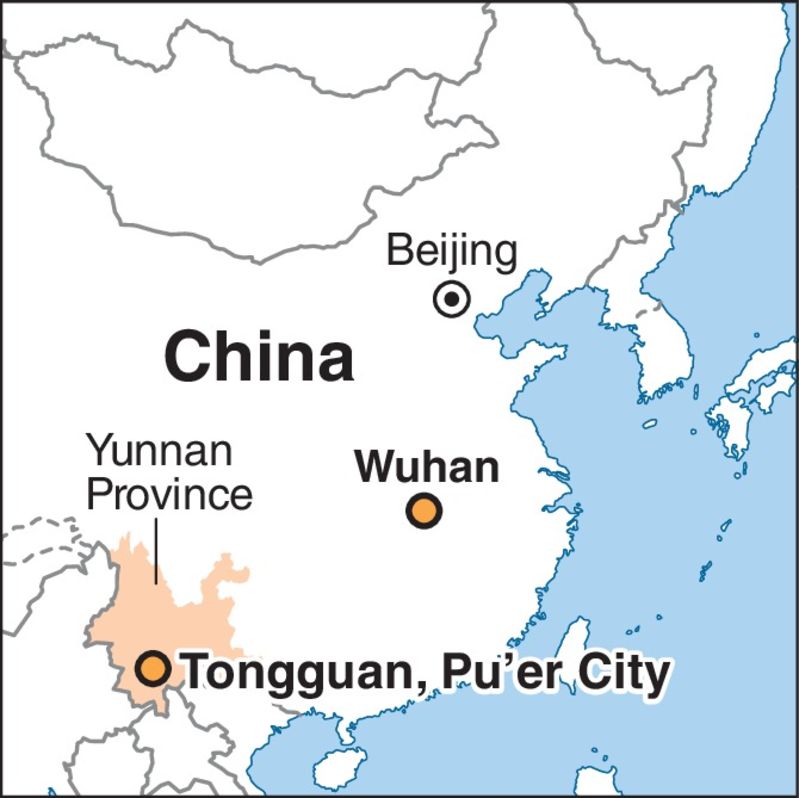
TONGGUAN, China — Located a little more than 100 kilometers north of Pu’er in China’s Yunnan Province, known for the production of high-grade tea leaves, the mountain town of Tongguan has drawn attention from World Health Organization experts among others, as they suspect it might hold clues to the origin of the novel coronavirus.

In 2013, the Chinese government-affiliated Wuhan Institute of Virology isolated RaTG13, which has a 96% genetic match with the novel coronavirus, from bats living in a mine in the town.

Heading for the mine, we drove deep into the mountains. After an hourlong drive along a winding road, we encountered nine men blocking the road with a 5-meter-long wooden stick who said they are residents of the area.

The Yomiuri Shimbun

The Yomiuri Shimbun

“From here on, you won’t be allowed to continue without a city ID,” one of the men said.

I initially thought this restriction was an instruction from the Chinese authorities reluctant to allow foreign media to cover the mine. However, the man said: “This is a quarantine measure against the novel coronavirus. We’ve tried to restrict the entry of outsiders into the village.”

According to a report by the Wuhan institute, which was published in the online edition of the British science journal Nature in November last year, workers cleaning up bat feces in the mine shaft had developed severe pneumonia one after another in 2012, resulting in some deaths.

The mine is already closed, but for the residents of the surrounding area, this is not a matter of the past.

“Everyone knows it’s a mine of death,” said an elderly member of the Hani ethnic minority. “No one goes near it.”

A 60-year-old woman became frightened at the mere mention of the word “bat” and murmured, “Who would go to such a place?”

It is one year Saturday since a lockdown was imposed in Wuhan, Hubei Province, where infections with the novel coronavirus first spread. In late January, an international WHO team plans to launch a full-scale field investigation in the city.

A guide to Thailand’s largest ever vaccination programme #SootinClaimon.Com

#SootinClaimon.Com : ขอบคุณแหล่งข้อมูล : หนังสือพิมพ์ The Nation.

A guide to Thailand’s largest ever vaccination programme

Jan 23. 2021Dr Sopon Mekthon, vice-minister for Public Health and chair of the COVID-19 vaccination subcommitteeDr Sopon Mekthon, vice-minister for Public Health and chair of the COVID-19 vaccination subcommittee

By Thai PBS World Syndicate/ ANN

Prioritising both safety and speed as it faces a new wave of COVID-19 infections, Thailand is poised to launch its largest ever inoculation programme when the first batch of AstraZeneca vaccine arrives next month.

Contrary to recent reports, China’s CoronaVac is unlikely to be the first COVID-19 vaccine rolled out in Thailand.

“The Public Health Ministry has adjusted the plan because CoronaVac, made by Sinovac, has yet to be registered in China,” Public Health Minister Anutin Charnvirakul said this week.

His announcement dampened expectations raised by recent news the government had ordered 2 million doses from Sinovac and was hoping to register the vaccine by mid-February.

Anutin said AstraZeneca, which developed its vaccine in collaboration with Oxford University, has promised to send 150,000 doses to Thailand over the next three months.

“This is good because this vaccine will also be produced by Siam Bioscience in Thailand [using AstraZeneca’s technology under a deal signed last year],” the minister said.

Thai health officials, meanwhile, say AstraZeneca’s vaccine has been authorised for emergency use in Thailand.

According to Anutin, the first lot of 50,000 AstraZeneca vaccines will arrive early next month, followed by more batches in March and April.

How many Thais will be inoculated?

An online survey conducted by expert virologist Prof Dr Yong Poovorawan, who has been advising the government on the COVID-19 crisis, revealed that more than half of 33,000-plus respondents were determined to get the shots, while most others said they will likely get vaccinated. Only 5 per cent said they would avoid vaccination.

“This means that up to 85 per cent of the population wants to be vaccinated,” Yong said.

This percentage is higher than in Britain or India, which have been hit much harder by COVID-19.

Thailand’s vaccination plan

The government plans to inoculate at least half of the population or 33 million Thais before the end of the year. It has procured 26 million doses from AstraZeneca in a deal that also includes knowledge transfer for Siam Bioscience to produce the vaccine locally.

The government recently announced plans to purchase another 35 million doses from AstraZeneca via the World Health Organisation’s COVAX facility.

However, there is no sign that a significant number of people will be vaccinated before the middle of this year. If the government wants to fulfil its plan to inoculate 33 million people, it will have to deliver 313,000 jabs daily between June and December. Also, inoculating half of the population will require about 66 million doses as each person needs two jabs.

This is a huge challenge when you consider that urgent vaccination drives already running in 55 countries are only delivering 2.35 million jabs daily.

Who gets the first shots?

Dr Sopon Mekthon, vice-minister for Public Health and chair of the COVID-19 vaccination subcommittee, said the first 50,000 doses would go to healthcare workers and village health volunteers who are on the frontline.

The location of healthcare workers will also count because provinces with the highest number of patients when the vaccine is delivered will be prioritised for vaccination.

“By the time the doses arrive, the area prioritised for vaccinations might not be the same as the five ‘red’ provinces currently under maximum controls,” Sopon added.

The Centre for COVID-19 Situation Administration has colour-coded provinces in red, orange, yellow and green based on the level of risk.

Next in line for vaccination will be medical workers in both the public and private sector, as well as people over the age of 60 and those with chronic illnesses like diabetes, heart disease and cancer.

Verdict on CoronaVac

CoronaVac, whose efficacy is being questioned by many, might not be the first choice for Thailand, but Sopon insisted it will still be used.

“About 200,000 doses of CoronaVac will arrive next month,” he confirmed. This indicates the government may have purchased 2 million CoronaVac doses. If so, then the 2 million doses should arrive in Thailand by April.

Sopon hinted older healthcare workers may be inoculated with CoronaVac because it is produced with a tried and tested technique.

Meanwhile statistics gathered by the World Health Organisation and other agencies show the AstraZeneca vaccine is 62 to 90 per cent effective, while CoronaVac comes in at just around 50 per cent.

[Myanmar] First batch of COVID vaccines from India arrives, 750 thousand to be vaccinated first #SootinClaimon.Com

#SootinClaimon.Com : ขอบคุณแหล่งข้อมูล : หนังสือพิมพ์ The Nation.

[Myanmar] First batch of COVID vaccines from India arrives, 750 thousand to be vaccinated first

Jan 23. 2021

By ZAW MIN NAING
Eleven Media/ANN

The State Counsellor Daw Aung San Suu Kyi said that a million and a half doses of COVID-19 vaccines ordered from India will be dispensed to 750,000 persons initially after arriving on 22nd  January.

In her speech on 23rd  Jan. evening regarding the latest developments of COVID-19, Daw Aung San Suu Kyi said, ” Since there are one million and five hundred thousand doses it will be sufficient for seven hundred and fifty thousand of our people. Each person will have to be jabbed twice. It will be 28 days after the first jab “.    

The State Counsellor said that those given priority  to be dispensed with the vaccine are health workers,  important members of the government, and members of parliament. She surmises that vaccines will be dispensed to them next week.     

The State Counsellor said, ” Health workers, our people that are at the vanguard giving their service, and secondly, those in the governing body will be given the vaccine. In so saying I feel a little bad as I am included in that group “.     

The State Counsellor further said that depending on when we get further vaccines they will be dispensed, and that it was not possible to say when the vaccines will arrive.    

The  State Counsellor also said, ” We will lay plans to give priority to important sectors for the state to function normally. We will keep the people informed after we have laid out our plans. We will let the people know to whom we and why we  are giving priority”.    

She further said it is necessary for us not to be lax because we have the vaccine. It is necessary for us to follow all the disciplinary procedures for the prevention of COVID-19.The vaccine is to be dispensed twice to each person. Twenty eight days after the first jab the second will have to be dispensed. The vaccine could be in the trial process in the entire world.    

She said, ” We don’t know exactly the effectiveness of the vaccine. It is on a trial process globally. We are testing it. We are testing how effective it is  and for how long. These cannot be answered for certain.  That is why even after having taken the vaccine one has to take care of one’s health. Be wary. Do not be slack “.    

The State Counsellor also said that the  State had allotted a billion kyats for the vaccine. With the co-operation of well wishers and donors the entire amount has reached to 18.781 billion kyats. She said that she guarantees that there will not be any misappropriation of the donations.     

The State Counsellor  said that the amount of money will be fitfully used to safeguard the health of the general public and to provide vaccines to prevent COVID-19.  There will not be any misappropriation.    

The COVID-19 drug COVID Shield purchased from India, and the drugs Pfizer/BioNtech to be got by allotments from COVAX Facility group will arrive within a hundred  days from the start of 2021.