Beijing, Washington advised to restart talks #SootinClaimon.Com

#SootinClaimon.Com : ขอบคุณแหล่งข้อมูล : หนังสือพิมพ์ The Nation.

Beijing, Washington advised to restart talks

Jan 27. 2021[Photo/VCG][Photo/VCG]

By XU WEI
China Daily/ANN

China and the United States should restart their multilevel dialogue mechanisms and reshape their economic and trade relations in a bid to return bilateral ties to a normal track under the new administration in Washington, former senior officials from both sides said on Tuesday.

“Beijing and Washington should expedite steps to resume high-level strategic dialogue to guide the way for the growth of bilateral relations,” said Zeng Peiyan, former vice-premier and chairman of the China Center for International Economic Exchanges.

The two sides need to conduct a new round of trade negotiations-on the basis of a comprehensive and objective evaluation of their phase-one trade deal-to roll back extra tariffs imposed by both sides and cancel unreasonable investment restrictions, he said at the opening of a three-day webinar titled “US-China Relations: The Way Forward” at the 2021 Hong Kong Forum on US-China Relations.

The webinar was co-hosted by the CCIEE and the China-US Exchange Foundation.

In her welcoming remarks, Carrie Lam Cheng Yuet-ngor, chief executive of the Hong Kong Special Administrative Region, said that healthy China-US relations are important to the world in many ways, and that can only be achieved through constructive dialogue at all levels.

Lam said she hopes the new US administration will view the National Security Law for Hong Kong in a fair manner, saying the former administration’s sanctions on the HKSAR government, businesses and individuals were “totally unjustified”.

“Meanwhile, I and my 11 senior colleagues who have been sanctioned will not be intimidated. We will continue to steadfastly, dutifully and lawfully carry out our duties to safeguard our country’s national sovereignty, unity and territorial integrity,” she said.

Carlos Gutierrez, the US secretary of commerce from 2005 to 2009, highlighted the need to cool down the punitive tariffs from both sides, saying that a new agreement must be reached before rescinding previous deals.

It is impossible to decouple the world’s top two economies, which have seen their interests intertwined and closely relying on each other, he said.

The two nations must do all they can to avoid a technological Cold War, and decoupling in technological terms will benefit neither side, he added.

Carla Hills, who served as US Trade Representative in president George H.W. Bush’s administration, said China and the US must increase their areas of cooperation and reduce areas of tension as their over 40 years of bilateral cooperation have proved beneficial for both nations.

She said the two countries must sit down for talks during times of crisis in the bilateral relationship and refrain from imposing restrictions on investments from either side.

The initial focus of the Biden administration’s cooperation with China could be areas in which the two nations share the same goals, such as climate change and global health, she said.

Tung Chee Hwa, vice-chairman of the National Committee of the Chinese People’s Political Consultative Conference and founding chairman of the China-United States Exchange Foundation, said the two sides can join in accelerating the development, production and distribution of safe vaccines worldwide, establishing a normal trading relationship and resuming exchanges between experts, institutions and students.

The webinar was held before Yang Jiechi, a member of the Political Bureau of the Communist Party of China Central Committee and director of the Office of the Foreign Affairs Commission of the CPC Central Committee, is slated to deliver a video speech on the state of China-US relations and prospects for the future on Feb 1, according to the official website of the National Committee on United States-China Relations.

It will be Yang’s first speech to a US audience since Biden’s inauguration.

Foreign Ministry spokesman Zhao Lijian said at a news briefing on Tuesday that China hopes the new US administration will draw lessons from the previous administration’s mistakes and adopt a proactive and constructive China policy.

Responding to comments made by White House spokeswoman Jen Psaki that the US is in a serious competition with China, Zhao called upon both sides to meet each other halfway, focus on cooperation and manage differences to bring bilateral relations back on the right track.

[Japan] Govt talks on extending the state of emergency grow #SootinClaimon.Come Nation.

#SootinClaimon.Com : ขอบคุณแหล่งข้อมูล : หนังสือพิมพ์ The Nation.

[Japan] Govt talks on extending the state of emergency grow

Jan 27. 2021Prime Minister Yoshihide SugaPrime Minister Yoshihide Suga

By The Japan News/ANN

Government discussions are growing stronger in favor of extending the state of emergency, declared to deal with the novel coronavirus, past its Feb. 7 deadline.

Reasons include a decrease in the number of new virus infections in the targeted areas is limited and measures, such as refraining from leaving home, will need to continue in the weeks to come.

An extension of about one month has been proposed.

The government has said the decision to lift the declaration will be made when six indicators of the status of the infection — including the number of new cases and the hospital bed occupancy rate — drop from the most serious level of Stage 4 down to Stage 3.

In Tokyo, for instance, the threshold is 500 new infections per day — the number of cases on Monday was 618. However, at meeting of the Budget Committee of the House of Representatives the same day, Yasutoshi Nishimura (the minister in charge of economic revitalization), said that figure would be used as a guidline.

“It does not mean that we will immediately lift [the declaration] just because the number of infections falls below 500 per day.”

He stressed his intention to carefully and comprehensively evaluate the indicators.

It is said it will take time to impact the turnover rate for hospital beds and recovery time it takes for the treatment of patients, both requiring comparatively longer than the time it takes for new infections to decrease. That has created a strong sense of caution within the government.

“It would be meaningless to lift the declaration if the situation with infections worsens again,” a Cabinet Secretariat official said.

Some experts are of the opinion the government should not lift the ban unless there is a prospect of lowering the level of the contagion to Stage 2.

Prime Minister Yoshihide Suga stressed at the Budget Committee of the House of Representatives that “this is an important phase that must be handled with a sense of urgency.”

When the state of emergency was declared in April and May of last year, its duration was extended for 25 days for all prefectures. The government plans to have experts complete an assessment of the situation by the end of the week.

In line with the continued declaration, the government plans to maintain the nationwide temporary suspension of the Go To Travel program.

To avoid the spread of the contagion, the government will continue to call for thorough infection prevention measures and ask the public to refrain from unnecessary movements outside the home.

With COVID-19 vaccines just weeks away, S. Korea aims high #SootinClaimon.Com

#SootinClaimon.Com : ขอบคุณแหล่งข้อมูล : หนังสือพิมพ์ The Nation.

With COVID-19 vaccines just weeks away, S. Korea aims high

Jan 26. 2021Health Minister Kwon Deok-cheol speaks during a meeting with representatives of medical professions on Tuesday morning. (Yonhap)Health Minister Kwon Deok-cheol speaks during a meeting with representatives of medical professions on Tuesday morning. (Yonhap)

By Kim Arin
Korea Herald

Government says 70 percent of population will be vaccinated by September

With the first COVID-19 vaccines to arrive here in just a few weeks, South Korea is drawing up a national plan to achieve the coveted goal of herd immunity with hopes of exiting the pandemic before the year is over.

The government announced in a virtual news conference after a presidential briefing on Monday that it plans to vaccinate 70 percent of the Korean population by the end of September. Herd immunity will be reached by November. This is an expedited time frame compared with the one proposed earlier by the Korea Disease Control and Prevention Agency.

But some experts worry that given the tight schedule, the level of planning and coordination necessary to meet the targets is still far from adequate.

Preventive medicine specialist Dr. Choi Jae-wook, who leads the Korean Medical Association’s scientific review committee, said vaccinating 70 percent of Korea’s 52 million people by fall will be a “very demanding task that requires intricate planning,” he said.

“If you do the math it’s quite an ambitious timeline. Tens of thousands of people will have to be vaccinated a day,” he said.

“People have to give written consent for vaccination, and stay rested for about 20 minutes before leaving the clinic to see they are not experiencing any adverse reactions. All of that process will probably take close to an hour at least to have one person safely vaccinated,” he said.

“There are also of course the logistics challenges of the mRNA vaccine that needs to be kept in ultra-cold temperatures. Our health care facilities are not equipped with the technology.”

Choi added that while the vaccine rollout is just around the corner, even the basic details were still shrouded in secrecy. He called for more transparency from the government regarding decisions on which vaccines will go to whom, in what order and when, as well as a vaccine delivery schedule.

“With the mammoth operation ahead, these things should be communicated with health care providers and experts outside the government, as they will be the ones to dole out the vaccines to the public for the next several months,” he said.

A Korean Medical Association official, internal medicine physician Dr. Kim Dae-ha, pointed out that the first meeting between the government and the medical groups on COVID-19 immunization planning was held Tuesday, just two days before a final plan is set to be announced Thursday.

The government and representatives of health care professionals met for an hour at the KDCA headquarters in Chungju, North Chungcheong Province, Tuesday morning. The heads of three associations — of doctors, nurses and hospitals — were each given three minutes to make their pitches.

“So far not much is known about the vaccine distribution in the country in order to actually get to preparations, and this is just the first meeting and a rather brief one at that,” he said.

He said the medical association had asked the government to inform it in advance which medical institutions would be providing the vaccines, so it could offer training and education to the staff involved, among other matters.

Top officials including KDCA Commissioner Jung Eun-kyeong, Health Minister Kwon Deok-cheol and Food and Drug Safety Vice Minister Yang Jin-young attended the Tuesday meeting.

“Korea runs a successful national immunization program covering roughly 60 to 70 percent of the population annually. I’m confident that our health care infrastructure and medical workers are up to the challenge,” the health minister was quoted as saying. The details of what was discussed at the meeting were not revealed at the time of writing.

While the full plan is still in the works, the national health protection agency said health care personnel on the front lines and older adults in long-term care facilities or other group settings will be offered the first doses of the vaccine.

Also on the priority list are adults aged 65 or above, adults with high-risk medical conditions and essential workers such as police officers and firefighters, the agency said.

According to the latest government announcement, Korea has secured enough vaccines for 56 million people and is pursuing additional deals to cover 20 million more.

The local regulatory agency hinted Monday that the AstraZeneca and Pfizer vaccines, which are currently being reviewed, will be approved for use here by the first half of next month.

“If all goes well, the vaccines will be granted approval no later than the second week of February,” Food and Drug Safety Minister Kim Gang-lip said.

Professor of preventive medicine Dr. Jung Jae-hun at Gachon University said the goal of herd immunity before winter seemed “doable” due in large part to the country’s vaccine-friendly public.

“Once vaccines become available, many here will be willing to accept it. Korea’s medical system also has years of experience with mass vaccination campaigns,” he said.

Virologist Dr. Paik Soon-young said Korea also had to brace for the possibility of vaccine deliveries being delayed, which could prevent the vaccination programs from proceeding as scheduled.

“Other countries are already experiencing lag time between shipments of the vaccine,” he said. “Some strategic choices might be needed based on how many of which vaccines actually make it here. For instance, as most vaccines require a two-dose treatment, it could be a better move to give more people a single shot each rather than giving fewer people two full doses.”

By Kim Arin (arin@heraldcorp.com)

Vietnam makes proposals for building 2021-2022 CLMV Action Plan

#Vietnam makes proposals for building 2021-2022 CLMV Action Plan

Vietnam makes proposals for building 2021-2022 CLMV Action Plan

Jan 26. 2021Vietnamese Ministry of Industry and Trade officials attend the 20th Cambodia-Laos-Myanmar-Vietnam Senior Economic Officials’ Meeting (CLMV SEOM) on Monday. — VNA/VNS PhotoVietnamese Ministry of Industry and Trade officials attend the 20th Cambodia-Laos-Myanmar-Vietnam Senior Economic Officials’ Meeting (CLMV SEOM) on Monday. — VNA/VNS Photo

By Viet Nam News/ANN

HÀ NỘI — The 20th Cambodia-Laos-Myanmar-Vietnam Senior Economic Officials’ Meeting (CLMV SEOM) was held on Monday via video conference, during which Việt Nam suggested countries select projects suitable to the “new normal” in each country when compiling the CLMV Action Plan for 2021-2022.

Deputy head of the Asian-African Markets Department at the Ministry of Industry and Trade, Nguyễn Phúc Nam, head of the Vietnamese delegation, stressed the need to intensify the application of digital technology as well as the organisation of activities in the online format while creating favourable conditions for experts, technicians, and project officials from development partners.

It is also important for CLMV to propose more co-operative projects to benefit all four countries and support post-pandemic recovery efforts, especially projects facilitating trade and investment, improving regional connectivity, supporting micro-, small- and medium-sized enterprises in accessing finance and technology, and increasing their capacity.

Regarding a detailed action plan to implement the CLMV Development Framework approved at the 10th CLMV Summit last December, Nam suggested the countries step up co-ordination to identify feasible activities and projects for the action plan.

The CLMV SEOM 20 reviewed the implementation of activities in the 2019-20 CLMV Action Plan, discussed the plan for 2021-21, reviewed the implementation of the Promotion of Competitiveness within the Framework of the Initiative for ASEAN Integration (COMPETE) project, and discussed the next steps in carrying out the CLMV Development Framework.

Many activities and projects in the 2019-2020 action plan were postponed or cancelled last year due to the pandemic, but thanks to its activeness, Việt Nam carried out several planned trade and investment co-operation activities.

The country proposed online meetings, trade fairs, and training courses, facilitating trade and investment activities and services, particularly those through CLMV borders, restricting and removing unnecessary trade barriers, and ensuring the operation of supply chains. VNS

Covid-19 pandemic could last four or five years: Lawrence Wong #SootinClaimon.Com

#SootinClaimon.Com : ขอบคุณแหล่งข้อมูล : หนังสือพิมพ์ The Nation.

Covid-19 pandemic could last four or five years: Lawrence Wong

Jan 26. 2021Singaporeans have to be prepared to live in an acutely changed world. ST PHOTO: DESMOND WEESingaporeans have to be prepared to live in an acutely changed world. ST PHOTO: DESMOND WEE

By Linette Lai
The Straits Times/ANN

SINGAPORE – It could be four or five years before the world sees the end of the Covid-19 pandemic and the start of a post-pandemic normal, said Education Minister Lawrence Wong.

In setting out this time frame, he noted that the world is likely to encounter many more bumps along the way in handling the crisis.

While the availability of Covid-19 vaccines will progressively restart global travel, getting the world vaccinated will not be quick or easy.

That means that for the rest of this year – and perhaps a good part of next year – Singaporeans have to be prepared to live in an acutely changed world, Mr Wong said in a speech at the Institute of Policy Studies’ Singapore Perspectives Conference on Monday (Jan 25).

“The rules around wearing of masks, upholding of safe distancing measures, and avoiding crowded places – these will continue to be part of everyday life,” he added.

On possible bumps ahead, the minister cited how initial research suggests that current vaccines may not be so effective against the South African mutant strain of the virus.

In a positive scenario, the world ends up developing a vaccine that works against all strains of the coronavirus. Alternatively, vaccination ends up looking like a flu jab, where a new formulation is created on a regular basis.

In the worst case, the world remains always a step behind an evolving virus, he said. “And the bottom line is that we live in a shared world, and no one is safe until everyone is safe.”

No one can tell what the post-coronavirus world will look like, although some positive changes may arise, Mr Wong said.

He gave the example of how spittoons and public spitting were seen as unsanitary after the 1918 influenza pandemic.

Similarly, in Singapore, the pandemic has prompted greater awareness of hygiene habits and social responsibility. Even so, some old habits – such as handshaking – may die hard, he said.

“Each time there is a pandemic, there is a call to say: ‘Let’s have different forms of greeting, in order to reduce the risk of transmission,'” he added, noting that this happened when Singapore faced the severe acute respiratory syndrome (Sars) crisis in 2003.

“But somehow, humans being what we are, we have always gravitated back towards some form of human contact.”

In a crisis like this, the natural tendency is to extrapolate the worst from one’s immediate circumstances, Mr Wong said. For instance, some have predicted that digitalisation will precipitate a move towards decentralised living arrangements, rendering cities obsolete.

But history contains multiple examples of cities that bounced back after pandemics, he noted.

For example, 14th-century Florence flourished after the bubonic plague and launched the Renaissance movement. American cities such as Chicago and New York also saw a boom in the 1920s, after the 1918 pandemic ravaged the country.

“And the reason this happens is that cities are not just buildings and monuments,” Mr Wong said. “They are fundamentally about the people who dwell in them, and humans are, by nature, social animals.”

Humans are also adaptable, and therefore have the ability to shape their future, he added. “Let’s think of the crisis as setting the stage for a software update – a reboot of sorts after the tremendous damage inflicted by the virus.”

Cinema closures in S. Korea hit 12-year high in 2020 on coronavirus #SootinClaimon.Com

#SootinClaimon.Com : ขอบคุณแหล่งข้อมูล : หนังสือพิมพ์ The Nation.

Cinema closures in S. Korea hit 12-year high in 2020 on coronavirus

Jan 26. 2021This undated file photo shows a quiet cinema in Seoul amid the coronavirus outbreak. (Yonhap)This undated file photo shows a quiet cinema in Seoul amid the coronavirus outbreak. (Yonhap)

By The Korea Herald/ANN

The number of cinema closures soared to a 12-year high in 2020 in the wake of the coronavirus outbreak, data showed Tuesday.

A total of 81 movie theaters closed shop across the nation last year, nearly double from the 43 shutdowns a year earlier, according to the data from the Ministry of the Interior and Safety.

The number was the largest annual tally since 2008, when 88 cinemas in Asia’s fourth-largest economy went out of business amid the US-originated global financial crisis.

In the Seoul metropolitan area, 27 theaters were shuttered, with the remainder reported in other parts of the country. The western port of Incheon alone posted 21 failures.

South Korean cinemas were battered by a series of strict social distancing measures in the country to prevent the spread of the new coronavirus, whose first case was reported in January last year.

The data also showed 218 new movie theaters were newly opened nationwide last year, up from 173 a year earlier.

COVID-19 has infected 75,875 South Koreans, with the country’s death toll from the disease reaching 1,371. (Yonhap)

Xi calls for multilateralism to fight pandemic, recession #SootinClaimon.Com

#SootinClaimon.Com : ขอบคุณแหล่งข้อมูล : หนังสือพิมพ์ The Nation.

Xi calls for multilateralism to fight pandemic, recession

Jan 26. 2021President Xi Jinping delivers a special speech at the virtual Davos Agenda event of the World Economic Forum in Beijing on Monday, Jan 25, 2021. (PHOTO / XINHUA)President Xi Jinping delivers a special speech at the virtual Davos Agenda event of the World Economic Forum in Beijing on Monday, Jan 25, 2021. (PHOTO / XINHUA)

By China Daily/ANN

BEIJING – Chinese President Xi Jinping on Monday expounded on China’s stance over how to improve multilateralism against the backdrop of the COVID-19 pandemic and world economic recession, when attending his first international virtual gathering in 2021.

“Every choice and move we make today will shape the world of the future,” said Xi in his special address at the World Economic Forum (WEF) Virtual Event of the Davos Agenda.

Rejecting Selective Multilateralism

Noting that the problems facing the world are intricate and complex, Xi said that the way out of them is “through upholding multilateralism and building a community with a shared future for mankind.”

“Multilateralism is about having international affairs addressed through consultation and the future of the world decided by everyone working together,” Xi said.

The Chinese president called on the international community to say no to narrow-minded, selfish beggar-thy-neighbor policies, and stop unilateral practice of keeping advantages in development all to oneself.

“Multilateralism should not be used as pretext for acts of unilateralism. Principles should be preserved and rules, once made, should be followed by all,” Xi said.

“Decision should not be made by simply showing off strong muscles or waving a big fist,” he said, adding that “selective multilateralism should not be our option.”

Each country is unique with its own history, culture and social system, and none is superior to the other, he said, reiterating that “no two leaves in the world are identical, and no histories, cultures or social systems are the same.”

“State-to-state relations should be coordinated and regulated through proper institutions and rules. The strong should not bully the weak,” he said.

Moreover, he said scientific and technological advances should benefit all humanity rather than be used to curb and contain other countries’ development.

Xi urged abandoning arrogance and isolation mindsets, saying that “we have been shown time and again that to beggar thy neighbor, to go it alone, and to slip into arrogant isolation will always fail.”

Looking To Future To Uphold Multilateralism

Xi noted that multilateral institutions provide the platforms for putting multilateralism into action and are the basic architecture underpinning multilateralism, saying that their authority and effectiveness should be safeguarded.

He called on the international community to stay committed to openness and inclusiveness, to international law and international rules, to consultation and cooperation, and to keeping up with the times instead of rejecting change.

“History and reality have made it clear, time and again, that the misguided approach of antagonism and confrontation, be it in the form of cold war, hot war, trade war or tech war, would eventually hurt all countries’ interests and undermine everyone’s well-being,” he said.

“To uphold multilateralism in the 21st century, we should promote its fine tradition, take on new perspectives and look to the future. We need to stand by the core values and basic principles of multilateralism. We also need to adapt to the changing international landscape and respond to global challenges as they arise. We need to reform and improve the global governance system on the basis of extensive consultation and consensus-building,” he said.

Xi urged to give full play to the role of the World Health Organization in building a global community of health for all, and to advance reform of the World Trade Organization and the international financial and monetary system in a way that boosts global economic growth and protects the development rights, interests and opportunities of developing countries.

Adriano Lucatelli, co-founder and managing director of Descartes Finance, which is a leading Swiss digital wealth management company, told Xinhua that he expected China to continue to push for multilateralism to find global solutions for an after-pandemic world and wished China to take a leading role in fostering global cooperation.

China Concrete Acts In Promoting Multilateralism

More than 2,000 business, government and civil society leaders and over 20 heads of state or government are set to meet virtually for the WEF Davos Agenda to tackle the fallout from the COVID-19 pandemic and address the urgent need for global cooperation.

The Davos Agenda 2021 was scheduled to convene from Jan. 25 to 29 under the theme “A Crucial Year to Rebuild Trust.”

In his speech, Xi elaborated China’s pledge in five aspects to promote multilateralism and common prosperity, including taking an active part in international cooperation on the fight against COVID-19, implementing a win-win strategy of opening-up, promoting sustainable development, advancing science, technology and innovation, and promoting a new type of international relations.

Statistics showed that China’s GDP exceeded the 100-trillion-yuan (US$15.42 trillion) threshold in 2020 and is expected to be the only major economy to post growth in the pandemic-ravaged year.

“As China enters a new development stage, we will follow a new development philosophy and foster a new development paradigm with domestic circulation as the mainstay and domestic and international circulations reinforcing each other,” Xi said.

“Zero-sum game or winner-takes-all is not the guiding philosophy of the Chinese people. As a staunch follower of an independent foreign policy of peace, China is working hard to pursue friendly and cooperative relations with other countries,” he said.

Xi said China will get more actively engaged in global economic governance and push for an economic globalization that is more open, inclusive, balanced and beneficial to all.

As people in the world now cope with the current crisis and endeavor to make a better day for everyone, Xi said the international community needs to “stand united and work together,” stressing that people should “let multilateralism light our way toward a community with a shared future for mankind.” 

48 new imported Covid-19 cases in Singapore, the highest since last March #SootinClaimon.Com

#SootinClaimon.Com : ขอบคุณแหล่งข้อมูล : หนังสือพิมพ์ The Nation.

48 new imported Covid-19 cases in Singapore, the highest since last March

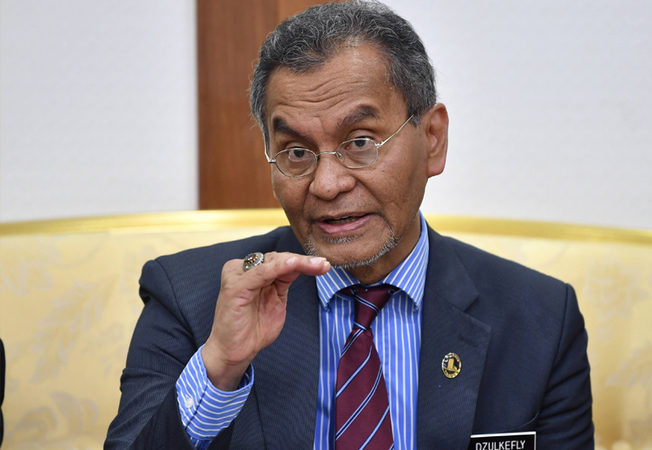
Jan 25. 2021Singapore reported 48 new cases of Covid-19, all imported, on Jan 24, 2021. ST PHOTO: LIM YAOHUISingapore reported 48 new cases of Covid-19, all imported, on Jan 24, 2021. ST PHOTO: LIM YAOHUI
By Jean Iau
The Straits Times/ANN

SINGAPORE – Singapore reported 48 imported Covid-19 cases on Sunday (Jan 24) – a high not seen since March 23 last year.

The same number of imported cases – then the highest – was reported on that day in March last year, during a wave of infections among Singaporeans and permanent residents who were returning from abroad.

All of the new imported cases were on stay-home notice or in isolation when they were diagnosed, said the Ministry of Health (MOH) in its daily update on Sunday.

Among the new cases, 41 had no symptoms, and were detected through proactive screening and surveillance, while seven were symptomatic, added MOH. They take Singapore’s total to 59,308.

There were no new cases in the community or in workers’ dormitories.

Among the new cases, four are Singapore permanent residents. Two returned from India, while the remaining two returned from Indonesia and Malaysia.

Four cases are dependant’s pass holders who arrived from France, India and the United Arab Emirates (UAE).

One is a long-term visit pass holder who arrived from India. Two patients are student pass holders who arrived from Egypt and India.

Eleven are work pass holders who arrived from Bangladesh, Colombia, France, India, Nigeria and the UAE.

There are 22 work permit holders among the new cases who arrived from Bangladesh, India, Indonesia, Malaysia, Myanmar and the Philippines. Ten of them are foreign domestic workers.

Three new cases are short-term visit pass holders, with two coming from India to visit their children here, while the third arrived from the United States for a work project.

The final new case is a ship crew member on a special pass, who arrived on board a vessel from Malaysia and did not disembark. He was taken to hospital when he developed symptoms, and later tested positive for Covid-19.

Last Friday (Jan 22), Education Minister Lawrence Wong, who is also co-chair of the multi-ministry task force tackling Covid-19, noted that in recent weeks, the number of imported cases on some days has been “quite high”. 

“That’s a reflection not so much of the fact that there are more travellers coming into Singapore because the number of travellers coming in day to day doesn’t really change very much, but it’s a reflection of the increase in the infection rate around us. 

“Because of the higher prevalence, we are seeing a higher incidence of cases among the number of the travellers who come through our borders,” he said.

One new place – Li Li Cheng Supermarket at 273C Punggol Place – was added to the list of public places visited by community cases when they were infectious. The supermarket was visited by the confirmed case on Jan 17.

The number of new cases in the community increased to 15 in the past seven days, from eight cases in the previous seven.

The number of unlinked cases in the community decreased to three cases from four cases over the same time period.

Among the 195 confirmed cases reported from last Monday to Sunday, 101 cases had positive serology tests, 36 tested negative, and 58 serology test results are pending. A positive serology test may indicate a past infection of Covid-19.

With 26 cases discharged yesterday, 59,026 patients have fully recovered from the disease.

A total of 50 patients remain in hospital, with none in the intensive care unit, while 188 are recuperating in community facilities.

Singapore has had 29 deaths from Covid-19 complications, while 15 who tested positive have died of other causes.

Covid-19: A year on, Malaysia still grapples with coronavirus #SootinClaimon.Com

#SootinClaimon.Com : ขอบคุณแหล่งข้อมูล : หนังสือพิมพ์ The Nation.

Covid-19: A year on, Malaysia still grapples with coronavirus

Jan 25. 2021

By RASHVINJEET S. BEDI
The Star/ANN

PETALING JAYA: It has been one year since the first Covid-19 case was confirmed in Malaysia, with its effects since taking a huge toll on the country.

Back then, it was still called the coronavirus, and the then health minister Datuk Seri Dzulkefly Ahmad had confirmed that three members of a family from China had tested positive.

The woman and her two grandchildren, who were from Wuhan, had made the short trip to Malaysia from Singapore.

They were related to a 66-year-old man and his son who had tested positive for the virus in Singapore.

One year on, Malaysia has already recorded 183,031 cases of the virus, long overtaking China, which first reported incidences of the virus in December 2019.

Total recoveries stand at 141,446 or 77% of all cases.

The death toll meanwhile is 678 people, or 0.4% of all cases.

The number of cases in the early months of the pandemic were relatively low but this changed after the Sri Petaling tabligh gathering at a mosque there from Feb 27 to March 3, which was attended by 16,000 participants, comprising 14,500 Malaysians and 1,500 foreigners.

As the number of cases in the country spiked, the country was then placed under a movement control order (MCO) on March 18 in a bid to break the chain of infections.

As most of the economy and social gatherings were shut down, the first MCO was successful at flattening the curve of infections.

The MCO was followed by a conditional MCO and then later on the recovery MCO, where more rules were relaxed.

By July, the number of daily cases was in the single digits, but things started to take a turn for the worse in September, when the Sabah state election was held.

The number infections in Sabah rose quickly, with the infections then spreading to Peninsular Malaysia in the following months.

The country hit the four digit mark for daily cases for the first time in October, with the country reaching the 100,000 cases mark in December.

It was also in December that Malaysia overtook China in the number of reported cases.

The numbers have continued to grow since then, with Malaysia hitting the 3,000 and then 4,000 daily cases mark in January.

And the country has turned a full circle, with the country placed under the MCO again in another bid to flatten the curve of infections.

Vietnam’s $15.7 billion remittances 9th highest globally #SootinClaimon.Com

#SootinClaimon.Com : ขอบคุณแหล่งข้อมูล : หนังสือพิมพ์ The Nation.

Vietnam’s $15.7 billion remittances 9th highest globally

Jan 25. 2021Việt Nam had the ninth highest remittances in the world last year of US$15.7 billion.  — Photo tapchitaichinh.vnViệt Nam had the ninth highest remittances in the world last year of US$15.7 billion. — Photo tapchitaichinh.vn

By Viet Nam News/ANN

HCM CITY — Inward remittances to Việt Nam topped US$15.7 billion last year, the ninth highest in the world.

While globally remittances decreased by 7 per cent last year due to COVID-19 according to the World Bank, Việt Nam was not affected much.

In 2019, the country’s remittances topped US$16.7 billion, of which $5.3 billion came to HCM City

Trần Quốc Anh, head of HDBank’s personal customers division, said remittances via his bank were up by more than 40 per cent

Around 580,000 Vietnamese work abroad, including 230,000 in Taiwan, nearly the same number in Japan, 50,000 in Korea, 30,000 in Southeast Asia, and 15,000 each in the Middle East, Africa and Europe.

Most work in fields such as construction, manufacturing, agriculture and fishing, and domestic work, according to Nguyễn Gia Liêm, deputy head of the Ministry of Labour, Invalids and Social Affairs’ overseas labour management department.

The income abroad helped improve the quality of life of workers and their families, and many escaped poverty and were able to afford education for their children, he said.

Lương Thanh Nghị, vice chairman of the State Committee for Overseas Vietnamese, said last year overseas Vietnamese from 27 countries invested US$1.6 billion in the country.

Liêm said the country had signed deals with countries such as Japan, Malaysia, Qatar, Russia, and South Korea to send workers.

Việt Nam aims to send 90,000 guest workers abroad this year, and 500,000 from now through 2025. —VNS