Covid-19 vaccine purchased from India expected to come February
Jan 10. 2021
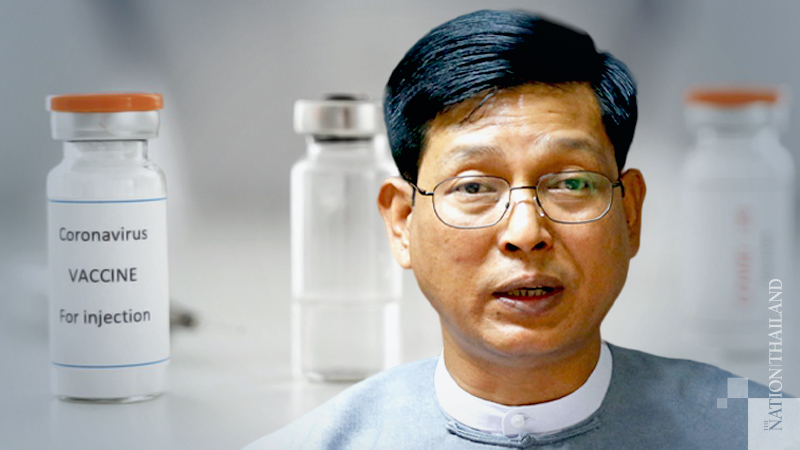
President Office spokesperson Zaw Htay
By Eleven Media
Myanmar has expected to acquire the Covid-19 vaccine purchased from India in February with plans to vaccinate health staff first, said President Office spokesperson Zaw Htay.
He was replying to the question of a reporter about the government’s plan to procure Covid-19 vaccines during a press conference held at the Presidential Palace in Nay Pyi Taw on January 8.
A delegation from the Ministry of Health and Sports visited India on December 20 and 21 and signed an agreement on purchase of a Covid-19 vaccine for 30 million people.
Plans are now underway to remit half of the US$150 million for vaccine purchases. The remittance deadline is February 14. The remaining half must be remitted when the vaccine doses for 10 million people arrive in Myanmar.
“We have placed our order so we can get the vaccine as early as possible. We have to remit money for the second time when the vaccine for 10 million people arrives. When we remit the first half by February 14, the other side will transport the vaccine to us. We are coordinating with them to make it earliest. We have set a target if we can get it in February. But I am not saying we will surely get in February. We are coordinating so that we can get the vaccine as early as possible,” the spokesperson said.
The vaccination prioritizes the health workers. There are over 110,000 health staff members nationwide.
Apart from the effort to get vaccines from India for earlier vaccination, Myanmar is also coordinating with China and participating in the WHO vaccine procurement plan, he added.
For Covid-19 vaccine purchases from India, 117 people donated Ks1.4 billion from January 6 to 7 while two other persons contributed over US$2.5 million, Zaw Htay said.
China ready to work with WHO investigation team on COVID-19
Jan 10. 2021
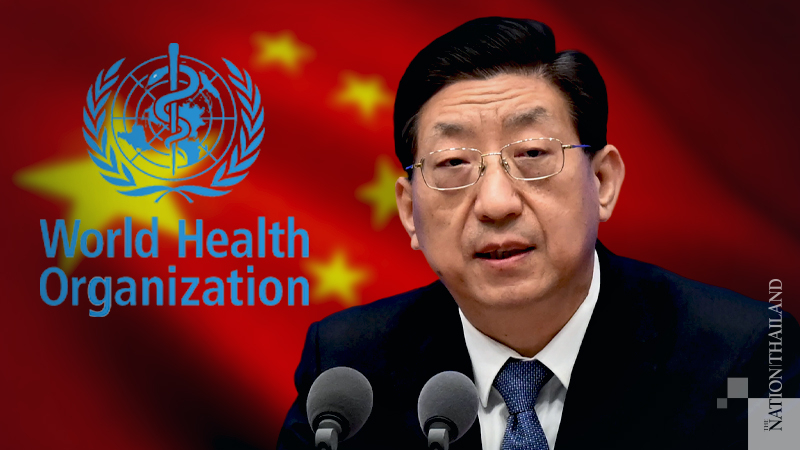
Zeng Yixin, deputy head of the National Health Commission
By China Daily
BEIJING – China is ready to receive a World Health Organization (WHO) expert team for investigations into the origin of COVID-19, a senior Chinese health official said Saturday.
China and WHO have reached a consensus on specific arrangements of the investigation with four video conferences, Zeng Yixin, deputy head of the National Health Commission, told a press conference, adding that Chinese experts are waiting for their WHO counterparts.
Once the WHO experts complete their procedures and finalize the schedule, Chinese experts will go to Wuhan with them to conduct the investigation, Zeng said.
Zeng stressed that China’s position on the WHO investigation is positive, open and supportive, and the country hopes such joint efforts would help deepen the understanding of the virus and better prevent infectious diseases in the future.
Jack Ma’s absence raises more questions than it answers amid Ant and Alibaba probe
Jan 10. 2021
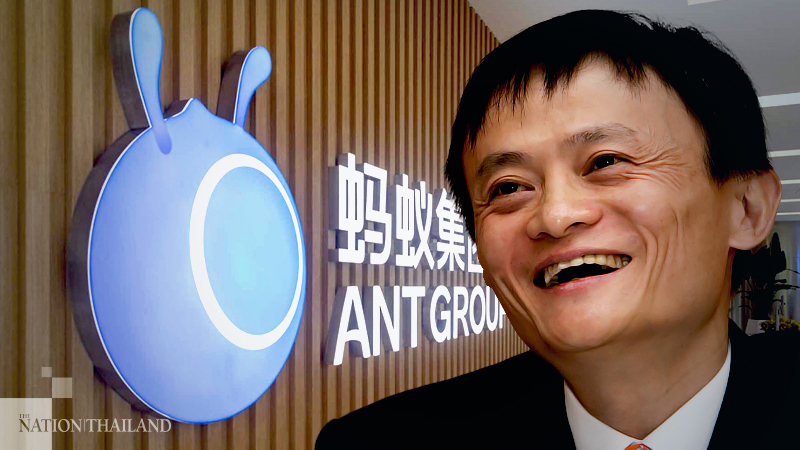
Jack Ma
By The Straits Times
BEIJING – When Alibaba founder Jack Ma criticised the Chinese financial system during a speech at a high profile forum in October, industry watchers braced themselves.
Ant Group, the fintech titan also founded by Mr Ma, was days away from a record US$37 billion listing.
During the Bund Summit in Shanghai on Oct 24, the outlandish billionaire – who usually speaks off the cuff – launched a blistering attack on China’s banks and financial institutions. Reading from prepared remarks, he said they operated with a “pawn shop mentality” of requiring collateral before agreeing to lend money.
It set in course a now familiar series of events, including the pulling of Ant’s initial public offering, the investigation of the company by financial regulators, and most recently, speculation of whether Mr Ma has been detained.
While industry insiders and watchers say the potential backlash makes it unlikely the tech billionaire has been arrested, the bigger question that remains is the ramifications on Ant.
Mr Ma has not been seen in public since he gave that fateful 20-minute-long speech at the Bund Summit in late October.
His fighting words also marked the start of a downward trend in Alibaba share prices, losing some US$218.5 billion in market value, or about US$10.9 billion for every minute of Mr Ma’s oration.
And in President Xi Jinping’s China, where open dissent – much less criticism – is frowned upon, rumours are rife that Mr Ma, a Communist Party member, has been detained in the fashion of fellow billionaire Ren Zhiqiang.
But an executive in charge of government relations in a financial services firm said it was unlikely that Mr Ma had been detained.
“He’s probably just lying low now, as you would do, trying to calculate his next move,” said the executive, who declined to be named so as to openly discuss the industry.
“We were all shocked when (the government) stopped the IPO. But to move personally against Jack Ma is really something else altogether because he is such a public figure.”
But his fame could always work against him, said Professor Jeffrey Wasserstrom of the University of California Irvine who specialises in Chinese history.
“(Fame) could provide a bit of protection but in an authoritarian system where the leader is the focus of a personality cult, fame and popularity can actually make someone more rather than less vulnerable to attack,” he told The Straits Times.
Given the tight flow of information out of Zhongnanhai, the central government offices, there is no clarity about how the Alibaba founder is viewed within Mr Xi’s inner circle, Professor Wasserstrom said.
Since its founding in a Hangzhou apartment over two decades ago to help Chinese businesses sell internationally, the company has grown into one of China’s largest tech behemoths.
Between Ant and Alibaba, its businesses cover nearly every facet of Chinese daily life: e-commerce, food delivery, e-payments and even transport services.
Even contact tracing apps used during the coronavirus outbreak are hosted on the Alipay app.
Throughout, Mr Ma has maintained that the conglomerate is a technology company and that Ant, the financial services spinoff, should be viewed as a tech company and thus not subjected to the same sort of regulatory scrutiny as the regular financial institutions.
The following day, the Shanghai Stock Exchange suddenly pulled Ant’s highly-anticipated debut, sending shockwaves throughout the financial world. It led to the firm later stopping its Hong Kong dual listing scheduled for Nov 5.
“Alibaba will actively cooperate with the regulators on the investigation. Company business operations remain normal,” the group said in a statement.
The group did not respond to multiple interview requests from ST.
Yet industry watchers say this has been long overdue: there are similar anti-monopoly laws already in place in Europe.
China’s Anti-Monopoly Law was first introduced in 2008 but it only started to be enforced in earnest last year when the Anti-Monopoly Commission investigated Ant Group’s payments arm Alipay and Tencent’s WeChat Pay.
Going forward, there is a high probability of more tech firms coming under scrutiny as regulators start enforcing the rules, said Associate Professor Angela Zhang, director of the Centre for Chinese Law at the University of Hong Kong.
As for Alibaba, the firm is likely to be asked to stop monopolistic practices like asking vendors to choose between them or rival WeChat Pay and penalising merchants who do not sell exclusively on their platform.
“The Chinese antitrust regulator is unlikely to impose structural remedies such as breaking up Alibaba – I don’t see a strong legal basis for the regulator to do that,” Associate Professor Zhang told ST.
“Moreover, structural remedies would cause too much pain to the firm and erode investors’ confidence in Chinese tech firms.”
They are also likely to be subjected to a large fine – up to 10 per cent of the past year’s revenue – which will dwarf the 500,000 yuan fine they were slapped with last year for failing to seek regulatory approval and for misleading pricing and promotions.
And while Alibaba is no longer tied to Mr Ma’s personal fortunes – he stepped down from the board in 2019 – he has majority control of financial firm, Ant.
“Unfortunately, all there is now is speculation, isn’t it? We live in an era where anything can happen so we can only wait and see (what happens to Jack Ma),” said the financial executive.
Major power breakdown plunges entire country into darkness
Jan 10. 2021
Energy Minister Omar Ayub
By Dawn
A massive power breakdown plunged the entire country into darkness minutes before midnight on Saturday, Energy Minister Omar Ayub confirmed in a statement.
The blackout was initially reported on social media by residents of major urban centres such as Karachi, Lahore, Islamabad and Multan, as well as other towns and cities across the country.
Hours later, the energy minister tweeted that power supply was being restored to cities in phases, starting with Islamabad, but most parts of the country were still affected by the breakdown.
According to Ayub, the power breakdown was caused after the frequency in the national power distribution system suddenly fell from 50 to zero.
He said the reason for the frequency dropping was being investigated, adding that attempts were being made to fire up the Tarbela power station which will lead to a sequential restoration of power supply.
“People are urged to remain patient,” the minister wrote.
Ayub said all technical teams had reached their respective stations, adding that he was personally supervising the restoration work as the federal power minister.
He said citizens would be kept updated on the restoration efforts periodically.
Some time later, the Ministry of Energy spokesperson, tweeting from the ministry’s official Twitter handle, said that according to initial reports, the Guddu power plant developed a fault at 11:41pm on Saturday night.
“The fault caused the country’s high transmission lines to trip, which in turn caused the system frequency to drop from 50 to 0 in less than a second.
The drop in frequency caused power plants to shut down.”
The spokesperson added that the units of Tarbela and Warsak power houses had been fired up, adding that power was being restored to the transmission system.Special assistant to the prime minister Shahbaz Gill also said that the energy minister and his entire team were working on the issue. He said citizens would be updated on the situation soon.
“Phase-wise restoration of power will be initiated soon,” they said. “Once the initial frequency is met, the restoration work speeds up.”
Earlier, Federal Information Minister Shibli Faraz had said that the breakdown had been caused by a “technical fault” in the National Transmission and Despatch Company (NTDC) system. “System is being restored,” he tweeted.
Special assistant to the prime minister Shahbaz Gill also said that the energy minister and his entire team were working on the issue. He said citizens would be updated on the situation soon.
FM calls for Japan not to respond excessively to court ruling on ‘comfort women’
Jan 10. 2021Busts of late victims of sexual slavery by the Japanese military are displayed at the House of Sharing, a facility dedicated to such women known as “comfort women,” in the city of Gwangju, located outside Seoul (Yonhap)
By The Korea Herald
South Korea’s foreign minister on Saturday requested that Japan refrain from responding excessively concerning a local court’s ruling that ordered Tokyo to provide compensation for its wartime sexual enslavement of Korean women.
Foreign Minister Kang Kyung-wha made the remark during a 20-minute phone call with her Japanese counterpart Toshimitsu Motegi, according to the Ministry of Foreign Affairs.
The phone call came after South Korean victims of wartime sexual enslavement won their first legal victory Friday against the Japanese government in a landmark ruling.
On the previous day, the foreign ministry said it respects the ruling and pointed out that the government will spare no efforts to recover the dignity and honor of “comfort women,” a euphemistic term for the former sex slaves.
The Seoul Central District Court ordered Tokyo to make financial reparations of 100 million won ($91,300) each to 12 comfort women who were dragged away from their homes and forced to work in front-line military brothels for Japanese soldiers during World War II.
Tokyo maintains the issues of comfort women were permanently resolved through a bilateral agreement in 2015 with the South Korean government. But the victims have called the agreement inadequate, saying it lacks a sincere apology from Tokyo and that their voices were left out during the negotiation process. (Yonhap)
The PLA soldier is being dealt with as per laid-down procedures and the circumstances under which he had crossed the LAC are being investigated. Further details are awaited.
A Chinese soldier has been apprehended on the Indian side of the Line of Actual Control (LAC) in the eastern Ladakh.
He was apprehended during early hours of Friday, sources said.
The soldier of the Peoples Liberation Army (PLA) had transgressed across the LAC, in the area south of Pangong lake and was taken into custody by Indian troops deployed in the area, according to sources.
Troops from either side are deployed along the LAC since skirmishes erupted early last year due to unprecedented mobilisation and forward concentration by Chinese troops.
The incident has come at a point when the Indian and Chinese governments have held series of talks regarding disengagement of troops across the LAC after weeks of heated encounters between the two sides.
The PLA soldier is being dealt with as per laid-down procedures and the circumstances under which he had crossed the LAC are being investigated. Further details are awaited.
This is the second instance of a PLA soldier intruding across the LAC during the stand-off.
The earlier PLA soldier in October last was repatriated within a few days as per protocol.
Indonesian plane crashes into the sea with more than 60 on board
Jan 10. 2021
By The Straits Times
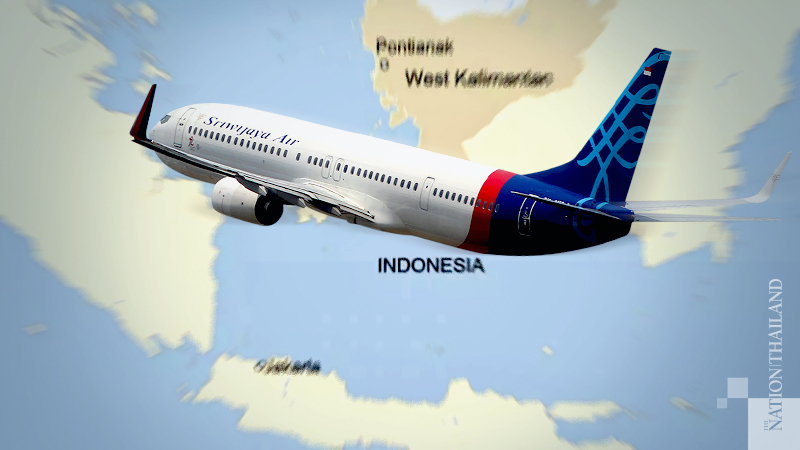
JAKARTA – Indonesia’s safety agency is set to search the waters today for the 62 people aboard a Sriwijaya Air Boeing 737 that went missing shortly after take-off from the capital Jakarta on Saturday (Jan 9).
Flight SJ182’s last contact was at around 2.40pm Jakarta time (3.40pm Singapore time), four minutes into its 90-minute journey to Pontianak, capital of West Kalimantan province.
Carrying 12 crew and 50 passengers, including seven children and three infants, the aircraft lost more than 3,000m in altitude in less than a minute, according to flight-tracking website Flightradar24.
All on board were Indonesian nationals.
Several witnesses living on an island near where the plane disappeared described hearing explosions, while others believed they had found objects that were from the plane.
“We heard a big boom around 2pm,” a resident of Lancang island, part of the Thousand Islands district north of Jakarta, told Jakarta-based Elshinta radio. “We all first thought it was thunder because rain was pouring.”
Indonesia’s search and rescue agency Basarnas said at a press briefing last night that the focus of Sunday (Jan 10) morning’s search is between Laki island and Lancang island, about 11 nautical miles from where the plane took off.
“Our personnel have reached the coordinates where the plane crashed,” National Transportation Safety Committee head Soerjanto Tjahjono said. “We will do a survey to determine (what) the condition at the location is. We will deploy… underwater recovery equipment.”
Basarnas deputy chief, Major-General Bambang Suyo Aji, said: “Search operations will continue 24 hours a day, focusing on the area where debris probably belonging to the plane was found.”
Basarnas has not received a distress signal transmitted from the plane’s emergency locator transmitter.
Transport Ministry spokesman Adita Irawati said the plane had deviated from its normal course and gone in a north-west direction.
Seconds after air traffic controllers asked the pilots about the reason for the deviation, the plane disappeared from the radar.
Sriwijaya Air chief executive Jefferson Irwin Jauwena told reporters that the flight was delayed due to heavy rain. The plane was supposed to take off about an hour earlier.
According to its registration details, the plane is a 26-year-old Boeing 737-500 that first flew in 1994.
Sriwijaya Air, a private budget airline which flies to Indonesian destinations and to China, Malaysia and Timor-Leste, was established in 2003. Eighteen out of 30 Sriwijaya Air planes were grounded by the Transport Ministry in September 2019 over airworthiness concerns.
Indonesia’s aviation sector has long suffered from a patchy air safety record, and its airlines were once banned from entering US and European airspace.
On Saturday, distraught relatives waited in Pontianak.
Mr Yaman Zai, a father of three children who were aboard the plane with their mother, told Reuters that he was at the airport in Pontianak waiting for them when he heard the news.
“I will never meet her again,” he said, holding a photo of his oldest daughter.
Japan likely to increase subsidies for hospitals accepting coronavirus patients
Jan 09. 2021
A nurse provides care to a patient infected with the novel coronavirus at a hospital in Fukuoka on Dec. 23, 2020. (The Yomiuri Shimbun)
By The Japan News/ANNPrime Minister Yoshihide Suga has expressed an intention to increase government subsidies for hospitals accepting patients infected with the novel coronavirus in Tokyo, Saitama, Chiba and Kanagawa prefectures by up to ¥4.5 million per bed.
With such additional aid, the amount of the subsidies will rise to about ¥20 million per bed for seriously ill patients and ¥9 million per bed for patients with moderate or mild symptoms.
Amid a growing shortage of hospital beds for patients infected with the virus, the increase of the subsidies is intended to secure such beds with cooperation from private hospitals, which appear to have accepted fewer COVID-19 patients than public medical facilities have taken in.
“Measures will be taken to make it possible to substantially increase the number of hospital beds for coronavirus patients in Tokyo and the three [neighboring] prefectures,” Suga said at a press conference on Thursday.
In other prefectures, up to ¥3 million will be additionally paid per hospital bed for COVID-19 patients. Under the current system, the government pays a subsidy of up to ¥15 million per bed for seriously ill patients and up to ¥4.5 million per bed for patients with moderate or mild conditions.
S’pore govt to pass law to ensure TraceTogether data can be used only for serious crimes
Jan 09. 2021The TraceTogether app and tokens exchange Bluetooth signals in an encrypted and randomised form with nearby users. ST PHOTO: ALPHONSUS CHERN
By Kenny Chee and Tham Yuen-C The Straits Times/ANN
SINGAPORE – A law will be passed to formalise assurances made earlier that data from the Covid-19 TraceTogether contact tracing programme, if needed for criminal investigations, can be used to look into only serious offences including murder, terrorism and rape.
The legislation will be introduced in the next sitting of Parliament next month on a Certificate of Urgency, said the Smart Nation and Digital Government Office (SNDGO) yesterday. This means that the proposed law is urgent enough to be put through all three readings in one parliamentary sitting, instead of separate sessions.
SNDGO said the legislation will specify that personal data collected through digital contact tracing solutions, which comprise the TraceTogether and SafeEntry programmes, can be used only for contact tracing.
However, there is an exception – when there is a “clear and pressing” need to use that data for criminal investigations into seven categories of serious offences.
“It is not in the public interest to completely deny the police access to such data, when the safety of the public or the proper conduct of justice is at stake,” the statement said.
“If a serious criminal offence has been committed, the police must be able to use this data to bring the perpetrators to justice, seek redress for the victims and protect society at large.”
SNDGO also said: “We acknowledge our error in not stating that data from TraceTogether is not exempt from the Criminal Procedure Code (CPC).”
Earlier last year, the Government had said that TraceTogether data would be used only for contact tracing in Singapore’s fight against the pandemic.
More than 4.2 million people, or about 78 per cent of residents here, have downloaded the TraceTogether app or collected the tokens.
The app and tokens exchange Bluetooth signals in an encrypted and randomised form with nearby users to quickly track people exposed to confirmed Covid-19 cases. The data, when unencrypted, is linked to a person’s phone number and other identification details.
The controversy flared up on Monday when Minister of State for Home Affairs Desmond Tan told Parliament that TraceTogether data could be accessed for criminal investigations under the CPC.
This prompted public criticism over whether this was an about-turn in the use of data collected.
On Tuesday, Foreign Minister Vivian Balakrishnan, who oversees the Smart Nation drive, and Home Affairs and Law Minister K. Shanmugam told Parliament that the data collected will be used with utmost restraint.
Even though the police have the powers to access the data for criminal investigations, they will do so only for very serious offences, such as murder, the two ministers said.
Meanwhile, there were calls by some online for others to stop using or return their TraceTogether app or tokens, citing concerns that the Government had backtracked on earlier assurances.
SNDGO’s statement on Friday said: “We value the trust that the public has placed in the TraceTogether programme, and feedback from members of the public.”
It added that Dr Balakrishnan and Mr Shanmugam held a public consultation yesterday with members of the media, the legal fraternity, technology experts and academics to hear their views.
“The views gathered will inform the debate on the upcoming legislation,” the office said.
Lawyer Stefanie Yuen Thio told The Straits Times that the Government was open about admitting that its original information was not completely accurate, and added: “I hope that we can, as a nation, now go back to focusing on the pressing issue of fighting the pandemic.”
Observers such as Associate Professor Eugene Tan from the Singapore Management University told The Straits Times that the move to define clearly in the law the circumstances with which police can use TraceTogether data should assuage concerns over how much access authorities have to them.
“I use assuage because I still believe there are people who will take the view that lets just keep it to pure contact tracing, because (if you can use it to fight crime) it means this technology has capability to do other things and there could be this lingering suspicion,” said the former Nominated MP.
More importantly, this should help refocus public attention and energy towards fighting Covid-19, he added.
“The furore has been an unnecessary distraction and hopefully this move will enable the Government to regain the trust and confidence of Singaporeans, which they have acknowledged has been essential in our keeping Covid-19 under control here.”
MacPherson MP Tin Pei Ling said that since Tuesday’s exchange in Parliament a small number of her residents had expressed their concerns about the use of TraceTogether data, and the need for safeguards to articulate what kind of crimes would warrant their use.
“With this legislation, it’s a very definitive move to try to dispel any doubt,” said Ms Tin, who chairs the Government Parliamentary Committee for Communications and Information.
“Once the details are out, it should be very clear what the process is going to be like, what are the specific categories of crimes that will allow solicitation of this data, so it will leave nothing to the imagination.”
Aljunied GRC MP Gerald Giam said the Workers’ Party will study the Bill when it is tabled in Parliament and formulate its response accordingly.
The proposed law to ensure the use of contact tracing data is limited to serious crimes will expressly cover the following:
1. Offences involving the use or possession of corrosive substances, as well as offensive or dangerous weapons. This includes possessing firearms and armed robberies involving firearms.
2. Terrorism-related offences under the Terrorism (Suppression of Bombings) Act, Terrorism (Suppression of Financing) Act, and Terrorism (Suppression of Misuse of Radioactive Material)
3. Crimes against people where the victim is seriously hurt or killed. This includes murder, culpable homicide not amounting to murder, and voluntarily causing grievous hurt in which the victim’s injury is life-threatening
4. Drug trafficking offences in which the penalty is death
5. Escape from legal custody when there is reason to believe that the person will cause imminent harm to others
6. Kidnapping
7. Serious sexual offences such as rape and sexual assault by penetration
Under the proposed law, personal data collected for contact tracing can be used for police investigations or court proceedings for such serious crimes.
The data cannot be used in the investigations, inquiries or court proceedings of any other offence besides these seven categories of serious crimes, said SNDGO.
Vietnam to be among top growth performers again in 2021: HSBC
Jan 09. 2021Tourists wear face masks in Hà Nội early last year. Tourism-related services like accommodation and transportation are still in a bleak situation due to cross-border travel restrictions. VNA/VNS Photo Minh Quyết
By Viet Nam News/ANN
HÀ NỘI — Việt Nam posted the fastest growth in Asia in 2020 and will again be among the most outstanding performers in the region this year, according to HSBC.
In its latest ‘Asia Economics Quarterly’ report, HSBC says despite unprecedented challenges, Việt Nam has overcome the pandemic crisis. With a population of more than 95 million, the country has managed to flatten the COVID-19 curve much sooner and keep the infection tally at about 1,400 thanks to swift and effective prevention efforts by State agencies.
Though the 2020 GDP growth of 2.91 per cent was the lowest in the last decade, it was still assessed as a big success and among the world’s highest considering the complicated developments of the COVID-19 pandemic.
Inflation decelerated from 3.9 per cent in the first three quarters to 1.5 per cent in November compared to the same period of 2019 thanks to normalised goods prices and declined oil prices.
HSBC researchers expressed their belief that Việt Nam would benefit from a tech-led recovery, sustained foreign direct investment inflow and many free trade agreements.
However, they still slightly revised the country’s 2021 growth forecast down to 7.6 per cent, from the previous estimate of 8.1 per cent, due to a prolonged recovery in the tourism industry.
HSBS says although the country is ready to outpace other nations in the region in 2021, there remain risks to its economic recovery.
Many obstacles still exist in the tourism sector, HSBC’s report says, noting though the worst may have passed after the second quarter, tourism-related services like accommodation and transportation are still in a bleak situation due to cross-border travel restrictions.
The second wave of COVID-19 infections in late July was swiftly brought under control, but it could make the Government more prudent in reopening borders and attracting international visitors. A meaningful tourism recovery is unlikely in the time ahead until effective vaccines are available and there is a global integrated approach to international tourism, according to HSBC.
The International Monetary Fund (IMF) has predicted that Việt Nam’s economy will strongly recover in 2021.
The IMF says transparency is a very important factor in Việt Nam’s success, and the multimedia approach has consolidated the people’s trust and ensured that the whole society abides by pandemic control measures.
In its World Economic League Table 2021, the Centre for Economics and Business Research (CEBR) says Viet Nam’s economy is expected to move to 19th position in 2035. — VNA/VNS

 Busts of late victims of sexual slavery by the Japanese military are displayed at the House of Sharing, a facility dedicated to such women known as “comfort women,” in the city of Gwangju, located outside Seoul (Yonhap)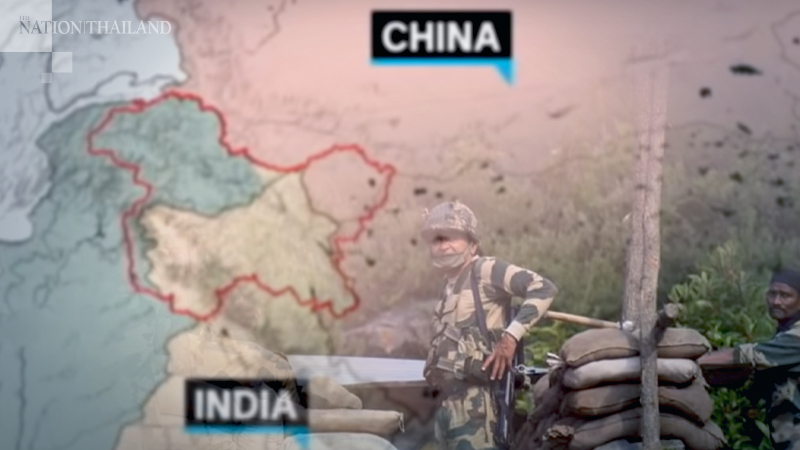
 The TraceTogether app and tokens exchange Bluetooth signals in an encrypted and randomised form with nearby users. ST PHOTO: ALPHONSUS CHERN
 Tourists wear face masks in Hà Nội early last year. Tourism-related services like accommodation and transportation are still in a bleak situation due to cross-border travel restrictions. VNA/VNS Photo Minh Quyết
