Malaysia expects compensation for HSR project’s no-go to be below RM821mil, says Tok Pa
Jan 05. 2021
By The Star
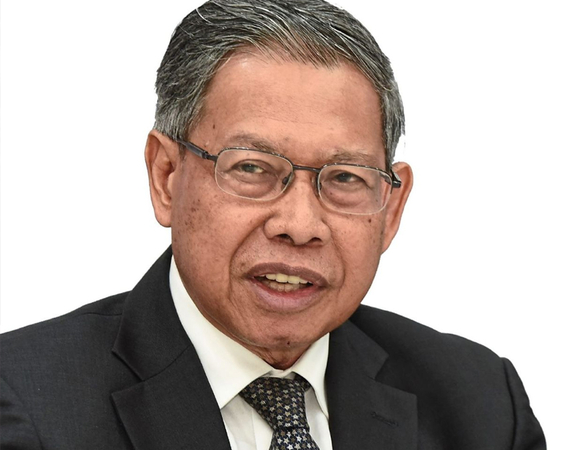
KUALA LUMPUR (Bernama): Malaysia holds the view that the amount of compensation needed to be paid to Singapore for the termination of the Kuala Lumpur-Singapore High Speed Rail (HSR) project is much lower than S$270mil (RM821mil), said Minister in the Prime Minister’s Department (Economy) Datuk Seri Mustapa Mohamed.
He was referring to Singapore’s Transport Minister Ong Ye Kung’s remark that Singapore spent more than S$270mil on the project, including the costs for consultancy services and manpower.
“The transport minister also said the compensation would not include land costs and we are made to understand that the Singapore government has acquired several pieces of land to implement the project.
“Therefore, we are confident that the compensation cost will be much lower than S$270mil. Anyway, the matter has not been finalised and will be discussed soon,” he said during the Agenda Awani programme on Monday (Jan 4) night.
On Jan 1, Malaysia and Singapore jointly announced the cancellation of the 350km rail line project after failing to reach an agreement on proposed changes by the Dec 31, 2020, deadline.
The bilateral agreement for the project’s development, signed with Singapore on Dec 13, 2016, was based on the aspiration for a closer economic integration between the two countries.
The construction of the HSR, proposed in 2010 as one of the Economic Transformation Programme’s initiatives, was deferred until May 2020 after Malaysia’s 14th General Election, following a review of several of the government’s investment commitments. The two governments later postponed the project for a second time to Dec 31, 2020.
Mustapa, via Facebook, said on Monday morning that the compensation figure for the cancellation of the HSR project could not be disclosed as both Malaysia and Singapore were bound by a confidentiality clause in the bilateral agreement.
Nonetheless, during the live broadcast tonight, he gave assurance that the government would announce the compensation amount as soon as it had been finalised.
In addition, Mustapa said, the government would be able to save 30% by not using the services of Asset Company (AssetCo).
It was announced previously that AssetCo was to be responsible for designing, building, financing and maintaining all rolling stock, as well as designing, building, financing, operating and maintaining all rail assets such as track work, power, signalling and telecommunications for the HSR project.
“The Malaysian government had given a 30-year guarantee to AssetCo amounting to RM60bil, or about RM2bil annually.
“The guarantee would mean that if the payments to AssetCo were less than RM60bil, the government must pay by using other revenue to cover the gap. This is also a form of savings,” he said.
Mustapa said taking into account the design, stations and other things with the approach without AssetCo, the overall estimated cost savings was 30%, a large number by any account.
Elaborating further, he said Malaysia was still interested to continue the HSR project which was seen as beneficial to the economy, but the current economic situation due to Covid-19 forced it to review the implementation model.
“According to a study, the benefits to the economy over 50 years would total about RM300bil. The benefits are great, which is why we are still keen to implement the project.
“It’s only the model, or method, that we felt may not be appropriate amid the Covid-19 situation. So we took another look,” he added. – Bernama
PwC: HK to regain top spot in global IPO fundraising in 2021
Jan 05. 2021In this March 9, 2020 file photo, electronic boards display various stock prices at Exchange Square in Hong Kong. (ISAAC LAWRENCE / AFP)
By China Daily
Despite global economic uncertainties stemming from the COVID-19 pandemic, the Hong Kong Stock Exchange ranked second among global IPO markets in total IPO fundraising in 2020, accounting and consulting firm PricewaterhouseCoopers said.
PwC also said the Hong Kong Special Administrative Region market is expected to have a record year in terms of total IPO fundraising and to regain the top position among the global IPO fundraising markets in 2021.
With total funds raised from 154 listings last year at HK$397.7 billion (US$51.3 billion), a 25 percent increase over 2019, Hong Kong has ranked in the top three global IPO markets for more than a decade
With total funds raised from 154 listings last year at HK$397.7 billion (US$51.3 billion), a 25 percent increase over 2019, the HKSAR has ranked in the top three global IPO markets for more than a decade. HKEX was boosted last year by new-economy enterprise listings and US-listed Chinese mainland enterprises’ second listings.
The Nasdaq Stock Market topped the list of total IPO funds raised in 2020, and the Shanghai Stock Exchange came in third, PwC said.
Funds raised on the Growth Enterprise Market board decreased by 40 percent from last year at HK$600 million. Biotech company listings increased in Hong Kong in 2020 compared to 2019, and the trend is expected to continue in 2021, PwC added.
PwC also said it expects that the new-economy and US-listed mainland enterprises will remain the major drivers for listing activities on HKEX in 2021. With strong funds and funding needs, total fundraising in 2021 is expected to be between HK$420 billion and HK$460 billion.
PwC said the biotech-company listing boom is expected to continue into 2021, continuing to position the HKSAR as the best listing platform for biotech companies in Asia.
With mainland markets, the A-share market set a record for total funds raised and number of listings with a total of 471.9 billion yuan (US$73.0 billion) raised from 395 IPOs on the mainland’s four main boards. The Science and Technology Innovation Board raised 222.6 billion yuan for 145 companies in 2020. PwC expects stabilized growth in the markets with 430 to 490 new listings and 450 billion to 480 billion yuan of total funds in 2021.
“The proposed expanded Stock Connect scheme will allow Hong Kong to offer more unique value and business opportunities for enterprises and investors, playing an active and important role in establishing China’s multi-level capital market,” said Benson Wong, PwC Hong Kong entrepreneur group leader.
HKEX announced in November the Stock Connect expansion program with SSE and SZSE.
Indonesia’s top terrorist convict Abu Bakar Bashir set to be released this week
Jan 05. 2021Abu Bakar Bashir (centre) has been in jail since his arrest in 2009.PHOTO: YUSRIL IHZA MAHENDRA
By Straits Times
JAKARTA – Indonesia’s top terrorist convict Abu Bakar Bashir, the spiritual leader of South-east Asia’s terror group Jemaah Islamiah, is set to be released from prison on Friday (Jan 8), Indonesian authorities said on Monday.
The 82-year-old radical cleric has been in jail since his arrest in 2009.
In 2011, he was sentenced 15 years in prison for funding a training camp for terrorists in Indonesia’s westernmost province of Aceh.
The head of West Java’s law and human rights regional office, Mr Imam Suyudi, said that Bashir would be released from Gunung Sindur prison in Bogor on Friday after fulfilling his 15-year jail sentence, reduced by 55 months on good behaviour.
“He has served his punishment well and followed all rules and procedures,” Mr Imam was quoted as saying by Antara.
He also noted that Bashir is “in good shape” ahead of his release.
Bashir’s lawyer team had last year requested that the government prioritise him for early release along with other prisoners on fears of a potential coronavirus outbreak in prisons, citing his old age as a factor.
Last April, Indonesia set free 30,000 prisoners who had served two-thirds of their sentences, in an effort to prevent the spread of the coronavirus in its overcrowded prisons.
Bashir was the alleged mastermind of Indonesia’s deadliest terrorist attack – the 2002 bombings in resort island of Bali which killed 202 people. He was never convicted for the attack.
In December 2018, the Indonesian cleric was offered early release on humanitarian grounds by the government due to his deteriorating health.
However, it was conditional that he must first pledge allegiance to the Republic of Indonesia and the state ideology Pancasila, as required of all reformed terrorists. Bashir refused the offer.
Separately, Indonesia’s National Police spokesman Ahmad Ramadhan told reporters that the police would ensure security and order on the day of Bashir’s release.
He added that it would also monitor Bashir’s movements after he walks free.
“That is not only carried out for Abu Bakar Bashir. We have a special intelligence team that monitors those who have committed any crime,” he said.
Bashir’s release comes amid the intensified efforts of Indonesia’s anti-terrorism squad, Densus 88.
In November and December 2020, it arrested 23 alleged terrorists in different places across Sumatra island. They included two men behind the Bali bombings – Taufik Bulaga, alias Upik Lawanga, and Aris Sumarsono, alias Zulkarnaen.
And last July, a Jakarta court sentenced Para Wijayanto, the key leader of Al-Qaeda-linked JI – whom terrorism experts believe is Bashir’s student – to seven years in jail for his role in recruiting and training militants and raising funds for those going to Syria.
Jan 05. 2021An ambulance is on standby Sunday to transport COVID-19 patients from an elderly care facility in Gwangju to nearby treatment centers. More than 50 confirmed cases have been reported from the elderly care facility by Sunday afternoon. (Yonhap)
By Korea Herald
South Korea’s nationwide vaccination program will start as early as next month as the country’s coronavirus situation remains in its third and deadliest wave thus far, Prime Minister Chung Sye-kyun said Monday.
Speaking at the central response team meeting, Chung said the government will do its best to ensure that the country has a detailed vaccination plan in place, covering all stages from shipment and storage to inoculation and aftercare, by the end of this month.
He asked related ministries to cooperate closely so that the country does not run into any roadblocks in running the vaccination program, as have occurred in the United States and a number of European countries.
“That is not something we can afford to undergo for our own vaccination program that starts as early as next month,” Chung said. “The plan needs to be finalized in detail by the end of this month, and preparations must be clearly shared with the people on the way.”
Korea has so far secured vaccine doses for 56 million people from five suppliers and is planning to start providing them to front-line medical workers and vulnerable people first.
The first vaccine to be provided to Koreans will be the one from AstraZeneca, which is expected to be shipped around February or March. Those from Janssen and Moderna should follow in the second quarter, and others made by Pfizer and BioNTech in the third quarter.
The Ministry of Food and Drug Safety on Monday started reviewing the approval application from AstraZeneca for its COVID-19 vaccine, which is expected to be met with approval within the next 40 days.
Korea Disease Control and Prevention Agency Commissioner Jeong Eun-kyeong said in a press briefing Monday that the agency has embarked on initial stage of preparations with a goal of announcing more detailed plans later this month.
“We are planning to start inoculation for workers at high-risk medical facilities and elderly people at elderly care hospitals and clinics probably around late February,” Jeong said.
“(The KDCA) is coming up with the list of these people and making the initial round of preparations.”
The announcement comes as Korea continues to struggle with soaring infection numbers despite toughened virus control measures.
Korea on Monday announced 1,020 new COVID-19 cases reported the previous day — 985 locally transmitted and 35 imported from overseas — raising the total number of cases recorded in Korea to 64,264.
The latest figure marks an extremely sharp rise from 657 new cases announced Sunday and 824 cases announced Saturday. Those numbers were lower because fewer COVID-19 tests were conducted over the New Year’s Day holiday weekend, officials explained.
By Sunday’s end, Korea also reported a total of 981 deaths from the coronavirus, up 19 from a day earlier. The number of COVID-19 patients in serious or critical condition reached 351, down from 355 people a day earlier.
Mass infection clusters continued to be traced to eldercare facilities and private gatherings, and a deadly outbreak affected a detention center in Seoul.
Nursing homes in Gwangju and Incheon reported dozens of new cases, while clusters were also identified in connection with a logistics center in Incheon and with a number of churches.
By the end of Sunday, 1,084 COVID-19 cases had been reported in connection with the Dongbu Detention Center in Songpa District, southern Seoul, with 125 of those added in the 24 hours ending Sunday at midnight.
The cluster there has prompted the government to impose Level 3 social distancing rules on all correctional facilities in the country, restricting the entry of visitors and making employees work shorter hours.
Despite such trends, officials said the country seemed to be on course toward bringing the virus under control, as the average number of new cases per day had dropped over the past three weeks.
“If we look at the number of locally transmitted cases for each week, we see a mild downward curve of the number of cases falling from 989 cases per day to 984 cases per day and 916 cases per day,” said senior Health Ministry official Yoon Tae-ho in a press briefing Monday.
Korea is also fighting to minimize the impact of a more contagious COVID-19 variant from Britain. There were 10 confirmed cases of the new strain on Korean soil as of Sunday at midnight.
Starting Friday for flight arrivals and a week later for ship arrivals, all foreigners arriving in Korea will be required to present the results of a negative COVID-19 test taken within 72 hours before departure. Flights from Britain are suspended until Thursday.
The government is preparing to supply more health care workers to eldercare facilities to prevent additional fatalities and carry out more coronavirus tests.
The Central Disaster and Safety Countermeasure Headquarters said the central government would provide funds for local governments to recruit care workers to be dispatched to eldercare facilities, while continuing to secure more hospital beds for COVID-19 patients in serious or critical condition.
The headquarters added that it was discussing ways to safely walk back social distancing restrictions for some multiuse facilities after facing criticism that the government lacked clear standards in the matter.
In the capital region, the government barred indoor athletic facilities from conducting private one-on-one lessons but allowed taekwondo and ballet schools to run classes with nine students or fewer.
“We believe that the indoor athletic facility sector is struggling greatly from being under the Level 2.5 social distancing rules since Dec. 8,” a COVID-19 response team official said.
“We are devising ways to allow those facilities to begin operating again two weeks from now.”
Officials said the goal for this year is to launch the vaccine program as soon as possible and find ways to safely maintain the medical ecosystem, as they expect COVID-19 to remain strong throughout this year.
“The COVID-19 pandemic is expected to continue in Korea and the rest of the world throughout 2021,” KDCA chief Jeong said.
“We are focused on preventing deaths among high-risk groups with COVID-19 vaccine, keep the medical system afloat and acquire group immunities to prevent community-level infections.”
VN secures 30 million doses of AstraZeneca’s COVID-19 vaccine, in talks to manufacture Russia’s Sputnik V
Jan 05. 2021
By Vietnam News
HÀ NỘI — Việt Nam will be supplied with 30 million doses of the Oxford-AstraZeneca COVID-19 vaccine within this year, a Vietnamese health official confirmed on Monday.
With a double-dose regime given about a month apart, the delivery from the UK-based university and pharmaceutical firm will be used to inoculate some 15 million people in the country.
Deputy Minister of Health Trương Quốc Cường said at a Government press briefing in Hà Nội that the delivery of the Oxford-AstraZeneca vaccine, which is reportedly more affordable and doesn’t require super-cold storage conditions, will be done in phases through all four quarters of 2021.
The health ministry is in negotiations for the procurement of the four most notable COVID-19 vaccines, the Oxford-AstraZeneca, the US’ Pfizer-BioNTech, Russia’s Sputnik V, and an unspecified Chinese vaccine, Cường said, adding that various details regarding the deals with the four vaccine makers cannot be made public due to non-disclosure agreements that they required.
The US-based Pfizer has also tentatively agreed to a fourth-quarter delivery, Cường stated.
Meanwhile, the Russian maker of the Sputnik V vaccine, developed by the Gamaleya Research Institute of Epidemiology and Microbiology, is asking to manufacture the vaccine in Việt Nam under a technology transfer agreement with a company under the management of the Vietnamese health ministry.
The price of the vaccines does not differ significantly, Cường stated, noting that the requirements of the vaccines’ storage and delivery and rollout, as well as payment issues, matter a great deal and need co-ordination from different ministries and agencies and even instructions from the Politburo given the unprecedented nature of this undertaking.
The other thing to consider is that these vaccines have varying levels of effectiveness in clinical trials, some reaching 65 per cent at the lowest while another could be as 94.5 per cent, Cường said.
“We are doing our best so that Vietnamese people could get access to COVID-19 vaccines,” he added.
In addition to the commercial route, Việt Nam is also eligible for support from the WHO-led COVID-19 vaccine Global Access Facility which aims to provide equitable access to vaccines.
Cường said the initiative promised inoculation for 16 per cent of Vietnamese population at the cheapest cost possible, but at the moment, the countries that are making COVID-19 vaccines are still struggling to fulfil the huge demand globally.
A clearer picture would emerge within the first three months of this year and by then, a detailed plan for procurement and rollout among the population could be developed, he said.
Mai Tiến Dũng, Chairman of the Government Office, emphasised that even with COVID-19 vaccine, efforts to prevent and control the disease would still need to be strictly observed
Việt Nam is also pursuing homegrown vaccines, with one called Nano Covax already in first-phase human trial since December, and another set for human trials in late January.
The full data for assessment will be available at the end 2021 as per their projected timeline.
As of Monday morning, Viet Nam had logged a total of 1,494 COVID-19 patients, 1,339 of which have already recovered.
The country has gone 33 days without community transmission. — VNS
Uproar after India’s Covid-19 vaccine is approved before clinical trials end
Jan 05. 2021People sit in front of a wall honouring frontline workers in the fight against coronavirus, in Mumbai, India.PHOTO: EPA-EFE
By Straits Times
BANGALORE – India’s indigenously produced Covid-19 vaccine is at the centre of a controversy after it was licensed with clinical trials for effectiveness still incomplete.
Covaxin was granted emergency approval on Sunday (Jan 3) by the Indian drug regulator. Also getting the nod was AstraZeneca-Oxford University’s Covishield, to be made in India by Serum Institute, the world’s largest vaccine producer by volume.
The decision to approve Covaxin, developed and manufactured by Hyderabad-based Bharat Biotech, triggered a row. The Indian health minister said it was granted permission for “restricted use in emergency situations” in the “larger public interest”.
The Indian drug regulator said Covaxin’s inactivated virus formulation would be effective protection against mutant strains.
Covaxin has completed only two of three required phases of clinical trials. The first two ensured that the drug is safe. The third one that tests for efficacy began only in late November.
Dr Gagandeep Kang, vice-chair of the board of Coalition for Epidemic Preparedness Innovations, a global partnership seeking to develop vaccines, said she had seen nothing like this approval before.
“This is hypothetical at best,” she told CNBC-TV18.
On Sunday, Serum Institute chief executive Adar Poonawalla told Indian channel NDTV: “There are only three vaccines with proven efficacy – Pfizer, Moderna and Oxford/AstraZeneca. Everything else has been proven to be safe, just like water.”
Serum Institute’s Covishield has completed all three trial phases.
The Indian government approved it based on AstraZeneca’s interim data from the British trial, which showed 70.42 per cent efficacy, although there were doubts about dosages given.
In a virtual press meeting on Monday, Bharat Biotech chairman Krishna Ella slammed critics. “We are a global company operating in 12 countries, including the US and UK, and have a proven track record of 16 vaccines,” including for the Zika virus, typhoid, chikungunya and rotavirus, he added.
“Why are Indian companies and scientists bashed? If other companies can get approvals based on just 100 people’s data, why not me?” He was referring to Covishield’s data submitted to the Indian regulator.
Asked if Covaxin’s approval was premature, he quoted the health ministry’s clinical trial rules that allow accelerated authorisation for vaccines based on “remarkable efficacy” shown in phase two trials.
He said Covaxin was licensed based on its efficacy in trials involving animals, proven “platform technology” (the manufacturing mechanism) and robust immune responses to multiple viral proteins in the 375 and 380 people who got two doses in the first two phases.
In the past month, many sites conducting the Covaxin trials admitted to delays due to shortages of volunteers. Bangalore’s Vydehi Institute of Medical Sciences and Research Centre aimed to administer the first dose to 1,000 people but only about 500 turned up.
In Bhopal, activist Rachna Dhingra alleged about 700 people were administered the first dose of Covaxin without informed consent.
They are from poor neighbourhoods adjacent to People’s Hospital, which is running the trial, and many said they were told they were getting the vaccine, not the trial vaccine.
The investigator at the Bhopal hospital refused to answer questions, and Bharat Biotech’s media adviser said the company was not aware of the developments.
Experts fear hasty approvals, incomplete trials and a lack of transparency could discourage people from getting vaccinated. A scientist in Bangalore admitted: “I for one will skip vaccination.”
At least 11 coal miners shot dead in Balochistan’s Mach area after being kidnapped
Jan 05. 2021At least 11 coalminers in the Mach area of Balochistan were killed on Sunday after armed militants kidnapped them and took them to a nearby area before shooting and critically injuring them. — Reuters/File
By Dawn
At least 11 coal miners were killed in the Mach area of Balochistan on Sunday after armed militants kidnapped them and took them to a nearby area before opening fire at close range.
Police authorities said the miners were on the way to work when armed militants kidnapped them and took them to the nearby mountains. Moazzam Ali Jatoi, an official with the Levies Force, said six of the miners were dead on the spot, and five who were critically wounded died on the way to a hospital.
Jatoi said an initial investigation revealed the attackers identified the miners as being from the Shia Hazara community and the gunmen took them away for execution, leaving others unharmed.
Reuters reported that the militant Islamic State (IS) group later claimed responsibility for the attack, through its Amaq news agency via its Telegram communications channel. Dawn hasn’t been able to independently verify the claim.
Hazaras have been frequently targeted by Taliban and IS militants and other militant groups in both Pakistan and Afghanistan. The attacks in Afghanistan have been claimed by an affiliate of the IS.
According to Quetta Deputy Commissioner Murad Kaas, no case has been registered so far.
A heavy contingent of police, Frontier Corps, and district administration officials reached the site after the incident.
Following the attack, members of the Hazara community in Quetta blocked the Western Bypass and set fire to tyres to protest against the killings.
Prime Minister Imran Khan condemned the miners’ killing, terming it “yet another cowardly inhumane act of terrorism”.
“Have asked the FC to use all resources to apprehend these killers & bring them to justice. The families of the victims will not be left abandoned by the govt,” he said in a tweet.
The condemnable killing of 11 innocent coal miners in Machh Balochistan is yet another cowardly inhumane act of terrorism. Have asked the FC to use all resources to apprehend these killers & bring them to justice. The families of the victims will not be left abandoned by the govt— Imran Khan (@ImranKhanPTI) January 3, 2021
Minister for Interior Sheikh Rashid Ahmed while condemning the killings asked the Balochistan inspector general of police to submit a report on the incident.
“Terrorists will not succeed in their nefarious objectives. Elements involved in the incident are not deserving of any laxity,” he said.
مچھ کے علاقے گشتری میں کارکنوں پر حملے کی شدید مذمت.
وزیر داخلہ نے آئی جی بلوچستان سے رپورٹ طلب کرلی۔
دہشتگر اپنے مذموم مقاصد میں کامیاب نہیں ہونگے ،افسوس ناک واقعہ کی جنتی بھی مذمت کی جائے کم ہے۔
واقعہ میں ملوث عناصر کسی بھی رعایت کے مستحق نہیں ۔1/2— Sheikh Rashid Ahmed (@ShkhRasheed) January 3, 2021
Information Minister Shibli Faraz said the shootings in Mach were “condemnable and saddening”. Foreign enemies are making constant efforts to destablise Pakistan, he added.
مچھ کادلخراش واقعہ انتہائی قابل مذمت اور افسوسناک ہے۔بیرونی دشمن پاکستان کوعدم استحکام سے دوچار کرنے کے درپے ہے اور مسلسل وار کر رہا ہے۔1/2— Senator Shibli Faraz (@shiblifaraz) January 3, 2021
Minister for Human Rights Shireen Mazari said: “Indian funded terrorists in Balochistan getting [are] more desperate as development comes to province”.
“Socio[economic] empowerment & Insaf for the Baloch are how we will defeat the terrorists,” she tweeted.
Terrorists now target poor coal miners in Machh Balochistan – murdering 11 & seriously wounding 4. Indian funded terrorists in Balochistan getting more desperate as development comes to province. Socio econ empowerment & Insaf for the Baloch are how we will defeat the terrorists.— Shireen Mazari (@ShireenMazari1) January 3, 2021
Balochistan Chief Minister Jam Kamal Khan Alyani too “strongly condemned the tragic incident”.
PPP chairperson Bilawal Bhutto-Zardari termed the incident as “the worst form of terrorism”.
Chairman PPP @BBhuttoZardari strongly condemns the brutal massacre of eleven coal-miners in Bolan and terms the killing of innocent labourers as worst form of terrorismhttps://t.co/yVfNIiG8eS— PPP (@MediaCellPPP) January 3, 2021
In a statement, Bilawal called on the government to take action and provide protection to miners working in the coalfields.
The PPP chairperson also asked the federal and provincial governments to provide “compensation to the families of the miners and ensure that such incidents do not occur again”.
‘Wave of terrorism’
Balochistan government spokesperson Liaquat Shahwani said that security forces had surrounded the area and started an investigation. “[We] will bring the terrorists to justice,” he vowed.
مچھ گشتری میں دہشت گردی کے واقعہ کی شدید الفاظ میں مذمت کرتا ہوں۔
دہشت گردوں نے 10 کانکنوں کو نشانہ بناکر بے دردی سے قتل کیا۔
سیکیورٹی فورسز نے علاقے کو گھیرے میں لیکر تحقیقات شروع کردی ہے۔
دہشت گردوں کو کیفر کردار تک پہنچائیں گے ۔— Liaquat Shahwani (@LiaquatShahwani) January 3, 2021
Speaking to media later in the day, Shahwani said the incumbent government had improved the law and order situation and restored peace in the province, with the result that terrorism incidents had declined by 75 per cent in 2020 as compared to 2018.
He said the government and people of Balochistan shared the pain of the relatives of the deceased miners.
Shahwani urged the workers’ relatives who are protesting in the area to have faith in the government, saying the investigation into the incident was underway and the perpetrators would be brought to book.
“We won’t allow the lights that we have restored to be turned into darkness at any cost,” the spokesperson said, attributing today’s incident to a “wave of terrorism” in which law enforcement personnel were also targeted in recent weeks. He promised that the government will ensure the welfare of the families of the deceased miners.
Restive province
There has been an uptick in violence in restive Balochistan, with several incidents of terrorism being reported last year.
On October 16, seven soldiers of Frontier Corps (FC) Balochistan and seven security guards were martyred in an ‘encounter’ with a “large number of terrorists” while escorting a convoy of state-run Oil & Gas Development Company Ltd (OGDCL) on the Makran Coastal Highway in Ormara.
The convoy was on its way to Karachi from Gwadar when it came under attack.
In April 2019, at least 14 people, including 11 personnel of Navy, Air Force and Coast Guards, were killed by gunmen after they were picked out with the help of their computerised national identity cards (CNICs) and offloaded from seven buses in the Buzi Pass area near Ormara.
The incident had taken place on the Makran Coastal Highway linking Karachi with the port city of Gwadar. The buses were going to Gwadar from Karachi.
An alliance of three banned militant organisations — the Balochistan Liberation Front, Balochistan Republican Army and Baloch Republican Guard — had claimed responsibility for the killings.
PH ‘within striking distance’: China seen gearing up for full naval base operations on Kagitingan Reef
Jan 05. 2021
By Inquirer
MANILA, Philippines—China’s biggest military transport plane landed recently on Kagitingan Reef (Fiery Cross) in the West Philippine Sea, giving a glimpse of what could happen if the Chinese base there becomes fully operational.
A Chinese People’s Liberation Army (PLA) Air Force Y-20 transporter was spotted on Kagitingan Reef last Dec. 25, Hong Kong-based news agency South China Morning Post reported last Friday (Jan. 1).
Satellite images of the Chinese plane’s presence on the reef were posted by Ken Joyce, director of product management of American space technology company Maxar Technologies. The plane was not observed loading or unloading cargo.
The report identified the Y-20 built by the Xian Aircraft Industry Corporation as the biggest aircraft in China’s military fleet.
Kagitingan Reef was said to be the base of one of the districts named by China in the West Philippine Sea. This had been protested by the Philippine government.
Maritime expert Prof. Jay Batongbacal said the deployment was probably “to test the plane/airfield equipment and/or to deliver supplies/personnel.”
While Kagitingan Reef is the farthest Chinese man-made reef from the Philippines, Batongbacal said an airbase built there by China would become a bigger threat once it becomes operational and hosts PLA Air Force squadrons.
“Naval base has been operational for quite some time, and currently support Chinese military/paramilitary maritime forces operating in South China Sea,” he told INQUIRER.net.
“Full operational base would place all major Philippine cities/ports/airports/military bases within striking distance of Chinese air power,” he said.
China in recent years had transformed reefs and islands into outposts fitted and equipped with harbors, airstrips, missile shelters and communications facilities which expanded its ability to monitor its and rivals’ activities in the South China Sea, which Beijing claims to almost entirely own.
The 2016 decision by the United Nations-backed arbitral tribunal in The Hague ruled that Beijing’s claims have no basis and its South China Sea construction frenzy was illegal.
Jan 04. 2021State Councilor and Foreign Minister Wang Yi answers questions in an interview on Jan 2, 2021. [Photo/Xinhua]
By China Daily
Beijing hopes that the new administration in the United States could return to a sensible approach, resume dialogue with China, restore normalcy to bilateral relations and resume cooperation, State Councilor and Foreign Minister Wang Yi has said.
Wang voiced this expectation when shedding light on agenda items of China’s foreign policy this year in an interview with media published on Saturday.
“China-US relations have come to a new crossroads, and a new window of hope is opening,” he said in response to a question about the record-low relations.
Bilateral trade registered 3.65 trillion yuan ($559.5 billion) in the first 11 months of last year, up 6.9 percent year-on-year.
The US is now China’s third largest trade partner, next to the Association of Southeast Asian Nations and the European Union, the first and second largest, according to the General Administration of Customs.
Noting that China is ready to work with the US in developing a relationship based on coordination, cooperation and stability, Wang said that some people in the US are uneasy about China’s rapid growth.
“The best way to keep one’s lead is through constant self-improvement, not by blocking others’ development,” Wang said.
“The future world should not and will not allow China to become another US; instead, the US should try to become a better self, while China will surely be a better self,” he added.
Once Washington “draws timely lessons from the past” and works together with Beijing, the two countries will be able to resolve their differences through dialogue, shore up common interests through cooperation and figure out a model of engaging one another that benefits them both and the world combined, Wang said.
Speaking about ties with Russia, Wang said the two neighbors have seen their relationship “reach an all-time high” by withstanding the tests of the COVID-19 pandemic and unprecedented changes in the global landscape.
In 2020, President Xi Jinping and his Russian counterpart Vladimir Putin held five phone conversations and exchanged correspondence a number of times.
This, in a strategic sense, navigates and guides the steady growth of bilateral relations, Wang said.
“In developing China-Russia strategic cooperation, we see no limit, no forbidden zone and no ceiling to how far this cooperation can go,” Wang said, adding that the two countries will continue to be the example of major countries sharing a great neighborly friendship, and they will inject vitality to global recovery and underpin global strategic stability.
Over the past year, China became the EU’s largest trading partner for the first time, and they completed negotiations on the landmark bilateral investment treaty as scheduled at the end of last month.
“This shows that the two sides can yield broader prospects for China-EU cooperation by mutually understanding, accommodating one another and consulting on an equal footing,” Wang said when asked about ties with the EU.
In this volatile and changing world, China will as always support European integration, greater strategic autonomy of the EU, and a bigger role for the EU in international affairs, Wang said, adding that China is prepared to enhance coordination with the EU to keep their relations on the right track.
The past year has seen rising allegations that China’s diplomats have been more assertive, as they publicly spoke out to hit back at attempts to smear and scapegoat China and interfere in its internal affairs.
In response, the state councilor said his colleagues are “fair and square” as they fulfill their duty of safeguarding national interests, defending national dignity, advancing international cooperation and preserving world peace.
“We have always listened to constructive criticism and have always responded to helpful advice. But we surely have to hit back at groundless discrediting and vicious attacks,” Wang said.
“And more importantly, we must speak up for justice when faced with power politics and bullying. This is a part of the responsibility of China’s diplomacy and of the national character of the Chinese people,” Wang added.
Jan 04. 2021The sunrise is seen at Incheon Airport on Thursday. Hopes for a return to normalcy are echoed around the world upon the New Year after a year of an unprecedented health disaster and devastating disruptions across societies and economies. (Yonhap)
By Korea Herald Much of 2021 will be a repeat of 2020. But as vaccines enter the scene, experts say some degree of normalcy might begin to return by the year’s end.
Infectious disease expert Dr. Kim Woo-joo of Korea University Medical Center said the second year of the pandemic will be characterized by the “vaccine divide” at a global level.
“You might need to be vaccinated if you want to travel this year, for instance,” he said. As of Thursday, around 25 countries have reported their first inoculations against COVID-19.
He said South Korea should aim to “keep pace with its neighbors so that cross-border exchanges can resume at around the same time.” The Summer Olympics in Tokyo, he said, may become a showcase for how successful each government has been in inoculating its people.
Once Korea receives its share of vaccines, the rollout could proceed faster than in other parts of the world because of its vaccine acceptance among the public, he said. According to a recent poll by Gallup Korea, 87 percent of Koreans said they were willing to get the jabs when they become available here.
How the next phase of the pandemic might play out “depends on the government’s ability to secure enough vaccines in time,” said Dr. Jun Byung-yool, who was the Korea Centers for Disease Control and Prevention’s director from 2011 to 2013.
“It is the government’s responsibility to do everything in its power to ensure vaccinations can begin as promptly as possible,” he said, adding that failing to do so would be “one of the gravest errors the government can make in a pandemic.”
Key details are missing from the vaccine announcements so far, making it difficult to predict how far away Korea might be from the goal of herd immunity, according to public health policy expert Dr. Jung Jae-hun of Gachon University.
The very first doses of COVID-19 vaccine will reach Korea in February, the presidential office said Tuesday. Still, it’s unclear exactly how many people will be covered in each stage of distribution.
“We have a tentative date for when the vaccinations will kick off. But what really matters is when we will have sufficient doses to meet the immunization targets,” he said.
“For all we know, we may only have a small, symbolic amount brought in in February, with subsequent supplies put off until later. It might take several months before we have access to quantities necessary to vaccinate a meaningful proportion of the Korean population.”
The vaccines will be delivered in phases, prioritizing essential workers and people at risk. The Korea Disease Control and Prevention Agency plans to complete vaccination of priority groups by November.
And until there is widespread immunity, social distancing and mask-wearing will likely remain in place, said respiratory disease specialist Dr. Chun Eun-mi of Ewha Womans University Medical Center. During this period, intermittent restrictions of varying intensity may be unavoidable.
“To draw sustained compliance with the public health measures for another year and possibly longer, we need more funding to pay people to stay home and businesses to stay closed — which were lacking in our response thus far,” she said.
Another possible strategy to offset the pandemic fatigue is clearer communication regarding the vaccination timeline.
“The government should give concrete dates on the vaccination scheme and let people know for how much longer they will have to endure social distancing,” she said.
Dr. Jung Ki-suck, who led the KCDC from 2016 to 2017, predicts an exit from the pandemic may not necessarily entail the disease going away.
“Eradication can be defined in several different ways. With COVID-19, the virus is not likely to become extinct, but rather its threat may become reduced to more manageable levels,” he said.
Preventive medicine professor Dr. Choi Jae-wook of Korea University said there was still potential for Korea to speed up the process after the vaccines are shipped here.
“Getting the hard-earned vaccines into people’s arms in the most efficient ways will require a lot of planning in advance,” he said. Among those considerations are how to distribute the supplies across the country, and where and how the vaccination services will take place.
The latest clearance for AstraZeneca’s vaccine by the UK regulatory authorities also offer hope of advancing the clock, according to virologist Dr. Paik Soon-young of the Catholic University of Korea.
“In the most auspicious scenario, we can start AstraZeneca inoculation in February and then Janssen in April or May,” he said.
Korea’s allotment of the AstraZeneca vaccine, which can be manufactured locally, will start rolling out in Korea in about two months. Janssen’s is to be doled out in the following months. Pfizer’s is slated for fall, with the deal with Moderna still being finalized.
Paik added there were concerns supply issues or other unforeseen hurdles may arise and interfere with the plans.
The emergence of new variants should be taken seriously, but there is no cause for panic, according to viral immunologist Dr. Shin Eui-cheol of the Korea Advanced Institute of Science and Technology.
“The mutant strain first identified in the UK is reported to be more transmissible. There is no evidence yet to suggest it is associated with worse outcomes,” he said.
“All viruses mutate. It’s what they do,” he said. But only a tiny fraction change in a way that can be considered “immunologically and medically significant.”
He said based on the data so far, that does not appear to be the case with the variant discovered by the UK scientists. “The vaccines should still work against it,” he said.
Dr. Rhee Chul-woo, a research scientist at the International Vaccine Institute, said in an email response that the mutations include “changes to the part of virus that plays an important role for the vaccine to be effective (i.e., receptor binding domain of spike protein).”
The “spike” protein is how the virus gains entry into human cells, he explained.
“The good news is emergency use authorized vaccine platforms such as mRNA vaccines can be recalibrated for new variant much quicker, if needed.”
Medical laboratory scientist Dr. Lee Hyuk-min of Severance Hospital said the emergence of new variants signaled a need for boosting surveillance.
“Korea has done around 1,640 genomic sequencing tests to date. To track and monitor new variants more effectively, we should be doing more,” he said. He added that the variant will still be picked up by the current tests.
On the persistent, most pressing question of when things will return to normal, most projections fell sometime in the latter half of the year. All of the experts stressed there were too many uncertainties at play, and that the pandemic could take different trajectories.
“If everything works out well, Korea could approach herd immunity by winter 2021,” said Jung of Gachon University.
“Given the vaccination schedule, we may be able to begin to wean off of social distancing before the year is over, I can give you that,” said KAIST’s Shin.
Once vaccination efforts are underway, the situation will gradually improve, even before herd immunity is achieved, according to Choi of Korea University.
“When we are at a point where about 20 to 30 percent of the population is vaccinated, infection rates will probably start to fall,” he said.
 In this March 9, 2020 file photo, electronic boards display various stock prices at Exchange Square in Hong Kong. (ISAAC LAWRENCE / AFP)
 Abu Bakar Bashir (centre) has been in jail since his arrest in 2009.PHOTO: YUSRIL IHZA MAHENDRA
 An ambulance is on standby Sunday to transport COVID-19 patients from an elderly care facility in Gwangju to nearby treatment centers. More than 50 confirmed cases have been reported from the elderly care facility by Sunday afternoon. (Yonhap)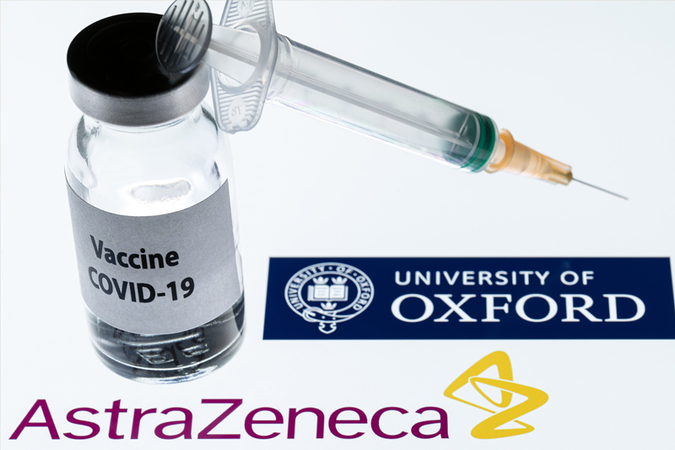
 People sit in front of a wall honouring frontline workers in the fight against coronavirus, in Mumbai, India.PHOTO: EPA-EFE
 At least 11 coalminers in the Mach area of Balochistan were killed on Sunday after armed militants kidnapped them and took them to a nearby area before shooting and critically injuring them. — Reuters/File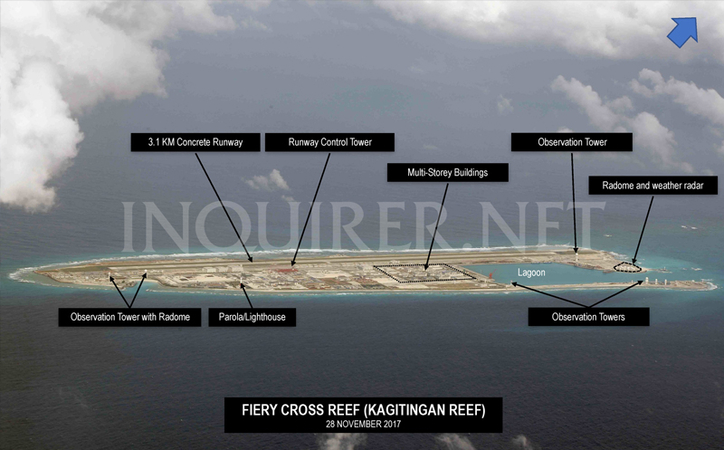
![State Councilor and Foreign Minister Wang Yi answers questions in an interview on Jan 2, 2021. [Photo/Xinhua]](https://media.nationthailand.com/images/news/2021/01/04/30400658/800_e2493ec69287a4b.jpg?v=1609760494) State Councilor and Foreign Minister Wang Yi answers questions in an interview on Jan 2, 2021. [Photo/Xinhua]
State Councilor and Foreign Minister Wang Yi answers questions in an interview on Jan 2, 2021. [Photo/Xinhua] The sunrise is seen at Incheon Airport on Thursday. Hopes for a return to normalcy are echoed around the world upon the New Year after a year of an unprecedented health disaster and devastating disruptions across societies and economies. (Yonhap)
