
[Malaysia] Local tourists spend long weekend in Penang #SootinClaimon.Com

#SootinClaimon.Com : ขอบคุณแหล่งข้อมูล : หนังสือพิมพ์ The Nation.

[Malaysia] Local tourists spend long weekend in Penang

Jan 02. 2021Take a number: Holidaymakers queueing up to pose for pictures at the popular ‘Little Children on a Bicycle’ mural at the heritage enclave in George Town. — LIM BENG TATT/The StarTake a number: Holidaymakers queueing up to pose for pictures at the popular ‘Little Children on a Bicycle’ mural at the heritage enclave in George Town. — LIM BENG TATT/The Star

By IMRAN HILMY
The Star/ANN

GEORGE TOWN: Thousands of tourists throng Penang island on New Year’s Day as the holiday season goes into full swing over the long weekend.

Although traffic was not congested, it was obvious holidaymakers were roaming the city, snapping pictures and looking for good food.

Vehicles bearing mostly outstation registration plates could be seen swarming Batu Ferringhi where tourists picnicked at the beach.

Architect Salman Lee, 35, said he chose to bring his family to Penang rather than elsewhere as the island was known for its many special places.

“Penang is an attractive place. My family likes it here and wants to spend the holidays at the beach, ” he said.

The attractive promotions of hotel rooms in Batu Ferringhi was another reason he brought his family over.

Many hotels in the beach area now offer cheap room prices to boost domestic tourism since the interstate travel ban was lifted by the government.

Another favourite place that was packed with tourists on New Year’s Day was Armenian Street in the heritage enclave.

Among them was factory worker Nursyafiqah Abdul Halim, 25, who came with her family from Teluk Intan.

“It is our first trip together after staying home for months. We decided to spend the long weekend here, ” she said.

Penang is her family’s favourite destination to spend their holidays every year.

However, not every tourism player seemed to be benefiting from the influx of domestic tourists.

Trishaw rider G. Annachi said although there were many tourists, it was hard for him to get customers.

“Most domestic tourists prefer to rent bicycles, ” he said.

Annachi said a fee of RM35 to RM40 for an hour’s ride on a trishaw could not beat a rental of RM10 to RM15 per day for a bicycle.

He added that the income of trishaw riders would only improve if foreign tourists were to come back.

Another tourist hotspot that got busy from 7am was the string of popular nasi kandar and roti canai stands at Transfer Road.

A check by The Star at the road found long queues of visitors waiting for a hearty Indian-Muslim breakfast.

The owner of one of the roti canai stalls, Shahjahan Abdul Hamid, 50, said customers were waiting at his stall from 7am and the crowd started to swell by 9am.

“Many of them came from out of the state and they made use of the long weekend by visiting Penang, ” he said.

He was glad that there was a team of Rela volunteers to help remind his customers of the physical distancing rule.

Accusing China of “vaccine diplomacy” simply groundless #SootinClaimon.Com

#SootinClaimon.Com : ขอบคุณแหล่งข้อมูล : หนังสือพิมพ์ The Nation.

Accusing China of “vaccine diplomacy” simply groundless

Jan 02. 2021A coronavirus disease (COVID-19) Human Immunoglobulin for Intravenous Injection from China National Biotec Group (CNBG). [Photo/Agencies]A coronavirus disease (COVID-19) Human Immunoglobulin for Intravenous Injection from China National Biotec Group (CNBG). [Photo/Agencies]

By China Daily/ANN

Despite the good news that the COVID-19 vaccine has been effective in trials, the life-saving product has, time and again, been politicized by certain Western politicians, who portray China’s vaccines as a bargaining chip to expand political influence.

“Vaccine diplomacy” is the term certain Western critics often like to use. They claim that the vaccine has become a tool to increase China’s global influence and iron out geopolitical issues.

The latest accusation of China’s “vaccine diplomacy” comes after allegations like “COVID-19 originated in a lab in Wuhan” and “mask diplomacy,” which have the same intention. Going by their nature, they are in line with their bias against China.

These voices, however, do not represent the mainstream view.

China has made the solemn and consistent commitment that once developed and deployed, its vaccines will be made global public goods and supplied to the world at fair, reasonable prices.

Xulio Rios, director of the Observatory of Chinese Politics in Spain, said China has been accused of using the COVID-19 vaccine as a strategic tool to silence criticism, but this is not the case. Certain western countries want to win the vaccine race at all costs, and that’s why they denigrate China for no reason.

The fact is that China, one of the first few countries that started to develop a COVID-19 vaccine, did not develop the jab with the purpose of spreading political influence in other countries.

What China has done is actually promote international cooperation in vaccines. As early as May, China had promised that COVID-19 vaccine development and rollout in the country will be made a global public good, which will be China’s contribution to ensuring vaccine accessibility and affordability in developing countries.

Since the COVID-19 outbreak, China has adopted five technological approaches to developing the vaccines. By Dec. 2, the country had five COVID-19 vaccines entering phase-3 clinical trials.

China has approved the domestic emergency use of vaccines, and there hasn’t been any severe adverse reaction so far. Recently, the United Arab Emirates and Bahrain approved the registration of a COVID-19 vaccine developed by Sinopharm and proposed to purchase Chinese vaccines. Studies showed that China-made vaccines can be more easily stored and delivered via the current cold-chain system, indicating greater accessibility without extra delivery cost.

All this proves the safety and effectiveness of Chinese vaccines as well as the regulatory authority’s observance of international customary practice and laws.

Making real progress in the cause of human rights lies in concrete actions, not political showmanship. That is why China has all along maintained close communication and cooperation with the World Health Organization (WHO) and Gavi, the Vaccine Alliance.

While most countries worldwide are pooling efforts to develop and distribute vaccines, the world must guard against the emergence of vaccine nationalism.

The world can stabilize health systems and rebuild the global economy only when those at highest risk from the virus everywhere and at the same time are protected, WHO Director-General Tedros Adhanom Ghebreyesus once said.

“Like an orchestra, we need all instruments to be played in harmony to create music that everyone enjoys,” he said.

Moderna to supply COVID-19 vaccine to S. Korea in May #SootinClaimon.Com

#SootinClaimon.Com : ขอบคุณแหล่งข้อมูล : หนังสือพิมพ์ The Nation.

Moderna to supply COVID-19 vaccine to S. Korea in May

Jan 02. 2021

By Choi Jae-hee
The Korea Herald/ANN

US biotech firm Moderna is slated to provide 40 million doses of the Moderna COVID-19 vaccine as early as March, according to news reports Friday.

The move came after the Korean government on Thursday inked a deal with the company to purchase vaccine doses for 20 million or more people.

“Under the terms of the proposed agreement, deliveries would begin in May 2021,” the company said in a statement. “COVID-19 vaccine is not currently approved for use in South Korea, and the company will work with regulators to pursue the necessary approvals prior to distribution.”

The Moderna COVID-19 vaccine, which is authorized for emergency use in the United States and Canada, has not been officially approved in South Korea.

Following the supply, the country will secure enough vaccines for 56 million people in total, which can cover the country’s population of nearly 52 million, according to Cheong Wa Dae.

Meanwhile, the country added 1,029 more COVID-19 cases Thursday as of midnight, including 1,004 local infections, raising the total caseload to 61,769, according to the Korea Disease Control and Prevention Agency.

Existing measures in Singapore can contain fast-spreading Covid-19 strain: Experts #SootinClaimon.Com

#SootinClaimon.Com : ขอบคุณแหล่งข้อมูล : หนังสือพิมพ์ The Nation.

Existing measures in Singapore can contain fast-spreading Covid-19 strain: Experts

Jan 02. 2021Professor Ooi Eng Eong said current control measures should suffice as the UK variant is still mainly spread through respiratory droplets. ST PHOTO: JOEL CHANProfessor Ooi Eng Eong said current control measures should suffice as the UK variant is still mainly spread through respiratory droplets. ST PHOTO: JOEL CHAN

By Shabana Begum
The Straits Times/ANN

SINGAPORE – Measures for containing the spread of Covid-19 would still hold for the fast-spreading strain circulating in the United Kingdom which may show up in more cases here, unless it gets loose in the community, said infectious disease experts.

So far there is one confirmed case with the more contagious B117 strain in Singapore, a 17-year-old Singaporean who arrived from Britain on Dec 6. There are at least 13 others with positive preliminary tests for the strain, including a Singapore Airlines pilot and a work pass holder returning from the UK.

“The community does not need to be particularly worried about (the new strain), especially if people continue to practise the individual safe management measures such as mask wearing and social distancing,” said Professor Teo Yik Ying, dean of the National University of Singapore’s (NUS) Saw Swee Hock School of Public Health.

Professor Ooi Eng Eong, an expert in emerging infectious diseases at Duke-NUS Medical School said current control measures should suffice as the UK variant is still mainly spread through respiratory droplets.

However, “things may change if we start to see transmission of the English variant that we can’t nip in the bud through contact tracing and testing,” said Associate Professor Alex Cook, vice-dean of research at the Saw Swee Hock School.

The B117 strain is reportedly 70 per cent more contagious, but has not shown signs of being more lethal or severe. A UK analysis found that the variant is linked to a higher viral load in respiratory samples, which may be why it is more transmissible.

Singapore has instituted travel restrictions against the UK, forbidding all long-term pass holders and short-term visitors who have been there within the last 14 days to enter or transit through Singapore.

From Monday, the same restrictions will apply to travellers from South Africa, where another potentially more contagious strain is circulating.

Asked if there was a need to revise the stay-home notice beyond 14 days in light of the more contagious strains, experts said this was not necessary as there are only a few people who turn up with the infection after the quarantine period.

Prof Ooi said balancing case prevention and costs is needed to keep public health measures sustainable.

“Catering to extremes of incubation period and unusual cases would make Covid-19 prevention in Singapore even more costly,” he added.

Prof Cook suggests increasing the number of tests for those on quarantine instead.

To protect the country against more contagious strains, 90 per cent or more of Singapore’s population may need to be vaccinated.

On Thursday, the UK reported 55,892 Covid-19 cases, its highest daily total for the year, mostly driven by the new variant.

Experts highlighted that the virus has been mutating since the pandemic, but most mutations have not affected transmissibility.

Infectious diseases specialist Leong Hoe Nam said: “The virus is only interested in world domination. It is in the virus’ interest to mutate to a milder strain or a strain that is more transmissible, instead of one that will kill the host.”

Places that have large outbreaks offer more fodder for the virus to mutate.

The best way to stop new variants emerging is to stop outbreaks of Covid-19, so the work on Sars-CoV-2, the virus that causes it, must continue, said Professor Gavin Smith, Interim Director of Duke-NUS Medical School’s Emerging Infectious Diseases Programme.

He said: Most mutations are what we call “neutral” – they don’t change the virus’s behaviour.

“But occasionally there will be mutations that change the virus’s behaviour in unpredictable ways. So it is important that public health agencies and scientists remain vigilant and keep track of any new variants that might emerge.”

Grab app offers sale of goods from traditional markets #SootinClaimon.Com

#SootinClaimon.Com : ขอบคุณแหล่งข้อมูล : หนังสือพิมพ์ The Nation.

Grab app offers sale of goods from traditional markets

Jan 01. 2021A woman in HCM City receive goods ordered on the Grab app. Food orders from traditional markets are now available on the Grab app. — VNS Photo Thu NgânA woman in HCM City receive goods ordered on the Grab app. Food orders from traditional markets are now available on the Grab app. — VNS Photo Thu Ngân
By Viet Nam News

HCM CITY — Grab Vietnam is offering customers a service that provides orders for goods from traditional markets on its Grab app in HCM City, Hà Nội and Đà Nẵng.

The company said that digitising sales of traditional markets was part of its programme to help small merchants in traditional markets across the country reach new customers in the “new normal” period.

The initiative is a part of Grab’s mission in the community to contribute to the development of the digital economy and offer more positive socio-economic changes for all Vietnamese.

The digitisation of traditional markets also creates additional income opportunities for drivers, adding options for purchase of food and essential goods for customers, especially during the year-end shopping season and the upcoming Lunar New Year. 

“The Covid-19 pandemic is creating many drastic changes, and at the same time, it is also placing pressure on all sectors of the economy to digitally transform, especially traditional businesses and small businesses which mainly operate on offline platforms,”  said Nguyễn Thái Hải Vân, Managing Director of Grab Vietnam.

Việt Nam is the third country in Southeast Asia where Grab has launched the initiative of traditional market digitalisation.

Currently, GrabMart is offering practical benefits to nearly 100 small merchants at traditional markets in Đà Nẵng, Hà Nội and HCM City. The company aims to increase the number of small merchants in these three cities tenfold by the end of 2021.

Although modern retail channels such as supermarkets and convenience stores are strongly on the rise, traditional retail channels such as markets and grocery stores are still at a stable level of development. 

According to Nielsen data, Việt Nam has about 1.4 million grocery stores and 9,000 traditional markets, accounting for 75 per cent of market share, with a turnover of around $10 billion annually. According to Kantar Worldpanel Vietnam, traditional retail channels still meet 85 per cent of consumer demand. — VNS

Malaysian PM outlines five priorities in Covid-19 fight during New Year address #SootinClaimon.Com

#SootinClaimon.Com : ขอบคุณแหล่งข้อมูล : หนังสือพิมพ์ The Nation.

Malaysian PM outlines five priorities in Covid-19 fight during New Year address

Jan 01. 2021

By TARRENCE TAN
The Star/ANN

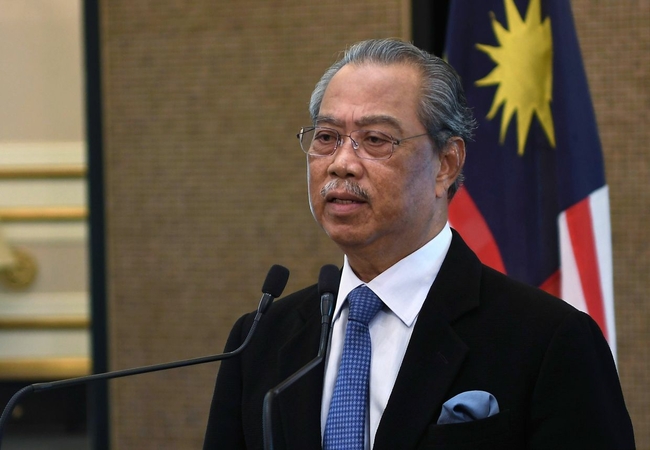
PETALING JAYA: The war against Covid-19 is far from over, said Prime Minister Tan Sri Muhyiddin Yassin (pic), as he laid out the five priorities in nation fight against the pandemic in his 2021 New Year address.

First, Muhyiddin said the government aims to uplift public health by the acquisition of Covid-19 vaccines and to implement a nationwide vaccination programme.

Muhyiddin said the Health Ministry, the Science, Technology and Innovation Ministry and Wisma Putra have created a vaccine supply portfolio and inked several deals with Covid-19 vaccine bodies and companies to acquire vaccines for Malaysians as soon as possible.

“The government will ensure efficient, safe and adequate vaccine supplies for at least 80% of the population and this vaccine will also be given free to citizens, ” he said.

Muhyiddin also said the National Covid-19 Immunisation Plan will be implemented by the Health Ministry through three phases beginning in February.

“Frontliners and I will be among the first to receive the vaccines in order to prove that the vaccine is safe and effective, god-willing.”

At the same time, Muhyiddin also said high-risk groups such as senior citizens and patients who have non-infectious diseases and chronic diseases will be given priority in getting vaccinated.

He stressed that the effectiveness and safety of the vaccine will be monitored by the National Pharmaceutical Regulatory Agency.

“I would also like to remind that the vaccination program is just a preventative step and SOPs must still be abided at all times, ” he added.

The second priority, said the Prime Minister, is to strengthen the economy and to accelerate post-Covid-19 economic growth through the implementation of Budget 2021 and the 12th Malaysian Plan.

He pointed out that Budget 2021, worth RM322.5bil, is the biggest federal expenditure in the nation’s history, saying that it is a critical measure to ensure economic recovery.

“The government will continue to develop social security networks such as direct cash aids in the form of Bantuan Prihatin Rakyat, the insurance protection scheme for the B40 and to strengthen the national welfare system so that the needy are taken care of.

“The Perikatan Nasional government will continue to strengthen the national agenda of eliminating poverty in Malaysia without taking into account race and religion, ” he said.

Muhyiddin said the government’s third priority is to promote stability in politics, government and administration, as it is a foundation for strong economic recovery.

He urged leaders from the other side of the political divide to display qualities of being responsible and refrain from any action that could threaten political stability.

“At this time, it is good if we can set aside politics and unite for the people. We need to be together in fighting this pandemic as patriotic Malaysians, ” Muhyiddin added.

Muhyiddin also said he was confident that political stability and good administration will foster a conducive investment ecosystem to ensure that Malaysia remains as among the main investment destinations in the Southeast Asian region.

Meanwhile, Muhyiddin said the fourth focus was to ensure that the nation’s sovereignty is upheld and Malaysia’s position in the international stage is strengthened.

Muhyiddin said Malaysia wants to take the opportunity from the Covid-19 disruption of the global order to play a more active role on the international stage and showcase its dynamic leadership.

“It’s time for Malaysia to emerge as a respected power, courageous in consistently fighting for mutual prosperity and peace,” he said.

On the fifth priority, which is to enhance the harmonious relations among Malaysians, Muhyiddin said he believes and is confident that unity was the key to the country’s success, especially in overcoming the pandemic.

“I would like to stress that the government will not hesitate to take action against anyone who disobeys and continues to inflame the hate between the different religious and ethnic groups, what more in disrespecting the constitutional monarchy,” he said, urging Malaysians to appreciate the peace they enjoy.

He said the five priorities listed were in line with the government’s long-term vision under the Shared Prosperity Vision 2030, adding that despite the hardships of 2020, he believed that Malaysians could still be thankful for many blessings.

Urging Malaysians to step forward into 2021 with more resilience, the government’s goal, he added, was to see a more united Malaysia, free from Covid-19, a prosperous rakyat with a booming economy and the country’s name on the international stage.

KL-Singapore High Speed Rail terminated after both countries fail to reach agreement on M’sia’s proposed changes #SootinClaimon.Com

#SootinClaimon.Com : ขอบคุณแหล่งข้อมูล : หนังสือพิมพ์ The Nation.

KL-Singapore High Speed Rail terminated after both countries fail to reach agreement on M’sia’s proposed changes

Jan 01. 2021An artist's impression of the High Speed Rail Terminal in Jurong East for the terminated project. PHOTO: FARRELLSAn artist’s impression of the High Speed Rail Terminal in Jurong East for the terminated project. PHOTO: FARRELLS

By Tham Yuen-C
The Straits Times/ANN

SINGAPORE – The Kuala Lumpur-Singapore High Speed Rail (HSR) project has been terminated, after both countries failed to reach an agreement on changes proposed by Malaysia by the deadline of Dec 31.

Prime Minister Lee Hsien Loong and his Malaysian counterpart Muhyiddin Yassin announced this in a joint statement on Friday (Jan 1) morning.

The statement said the Malaysian Government had proposed several changes to the HSR project in the light of the impact of the Covid-19 pandemic on the Malaysian economy.

“Both Governments had conducted several discussions with regard to these changes and had not been able to reach an agreement. Therefore, the HSR Agreement had lapsed on 31 December 2020.”

The statement said both countries will abide by their respective obligations, and will now proceed with the necessary actions, resulting from the termination of the HSR Agreement.

Singapore’s Ministry of Transport, in a separate statement, said Malaysia had allowed the HSR bilateral agreement to be terminated, and has to compensate Singapore for costs already incurred, in accordance with the agreement.

The joint statement added: “Both countries remain committed to maintain good bilateral relations, and cooperate closely in various fields, including strengthening the connectivity between the two countries.”

PM Lee and Mr Muhyiddin had held talks on the twice-delayed bilateral project via video conference on Dec 2, after Malaysia earlier proposed some changes.

Both sides then said they would announce further details on the HSR Project through a joint statement in due course.

But the writing had been on the wall, following several Malaysian news reports that quoted unnamed sources saying the Malaysian Cabinet was planning to continue the project without Singapore’s involvement and end the line in Johor.

The statements issued on Friday did not detail the compensation amount that Malaysia has to pay Singapore.

But in July 2018, then Transport Minister Khaw Boon Wan had said in Parliament that Singapore had already incurred costs including for consultancies to design civil infrastructure, manpower to oversee the project and also land acquisition.

Based on preliminary estimates then, this was estimated to have already exceeded $250 million by the end of May 2018, he said, adding that Singapore would continue to incur costs – more than $6 million in June, more than $6 million in July, and at least $40 million from August to the end of 2018.

When Singapore agreed to the suspension that Malaysia requested in August that year, more costs were incurred to compensate contractors for breaking contracts, and to fill back sites already excavated, for instance. Mr Khaw told Parliament in October 2018 that Malaysia had agreed to reimburse Singapore $15 million for these abortive costs, to be paid by end-January 2019. 

The 350km rail line, which both sides agreed to build in 2013, was to have run from a terminal station in Bandar Malaysia in downtown Kuala Lumpur to a terminal in Jurong East.

The HSR was slated to have seven stations, and would have cut travel time between Kuala Lumpur and Singapore to 90 minutes, compared with over four hours by car and about five hours end-to-end by air.

Both countries signed a legally-binding bilateral agreement on the project in Putrajaya in December 2016, witnessed by Prime Minister Lee Hsien Loong and then Malaysian Prime Minister Najib Razak.

Singapore commenced work on the project, including appointing a firm to design its HSR infrastructure and later calling an international joint tender with Malaysia for an assets company.

The project was later suspended at the request of Malaysia, after a change in the Malaysian government following the May 2018 general election.

The initial two-year extension in September 2018, which was to have ended in May 2020, was extended for a second and final time till Dec 31.

[Japan] Emperor delivers 2021 New Year message #SootinClaimon.Com

#SootinClaimon.Com : ขอบคุณแหล่งข้อมูล : หนังสือพิมพ์ The Nation.

[Japan] Emperor delivers 2021 New Year message

Jan 01. 2021The Emperor and Empress face the camera to record their New Year messages for the public. (Courtesy of the Imperial Household Agency)The Emperor and Empress face the camera to record their New Year messages for the public. (Courtesy of the Imperial Household Agency)

By The Japan News/ANN

The Emperor expressed his gratitude to medical workers battling against the novel coronavirus and also showed concern over social discrimination and prejudice triggered by the pandemic in his New Year message to the public.

The annual message is usually delivered directly to members of the public who gather at the Imperial Palace, but it was to be released in video form this time as a measure against the spread of infections.

The Emperor began by expressing his condolences for those affected by heavy rain in July and their families, and then for people who had lost their lives due to the coronavirus and their families.

He expressed his “deep respect and gratitude to doctors, nurses and others involved in medical care for their devotion to medical activities day and night to save the lives of many patients,” and also expressed his concern over the increasing burden on health care professionals.

Regarding the spread of infections, the Emperor touched on “drastic changes” in daily life, with many people thrown into difficult situations such as losing their jobs and homes, and the difficulty of simultaneously handling both infection-prevention and economic activities.

While he was encouraged by dedicated support among the public toward people facing concern, saying, “There are problems such as discrimination and prejudice against those who are infected, and those engaged in medical treatment and their families.

“In this difficult time, I believe that the day will surely come when people will be able to live in peace with a firm hope for the future, and I sincerely hope that everyone will continue to advance while helping and supporting each other with compassion,” he said.

The Empress also recorded a short message, in which she expressed similar sentiments.

S. Korea’s exports fall 5.4% in 2020 on COVID-19 fallout #SootinClaimon.Com

#SootinClaimon.Com : ขอบคุณแหล่งข้อมูล : หนังสือพิมพ์ The Nation.

S. Korea’s exports fall 5.4% in 2020 on COVID-19 fallout

Jan 01. 2021South Korea's exports (Yonhap)South Korea’s exports (Yonhap)

By Choi Jae-hee
The Korea Herald/ANN

South Korea’s exports decreased 5.4 percent in 2020 from the previous year amid the new coronavirus pandemic, data showed Friday, but the decline was partially cushioned by the latest recovery in the outbound shipments of chips. 

Outbound shipments came to $512.8 billion last year, and imports moved down 7.2 percent on-year to $467.2 billion, resulting in a trade surplus of $45.6 billion in 2020, according to the data compiled by the Ministry of Trade, Industry and Energy.

It marked the 12th consecutive year the country has posted a surplus. 

“While exports lost ground annually, the country has been showing a clear sign of recovery since the third quarter,” the ministry said in a statement. 

For all of 2020, outbound shipments of chips moved up 5.6 percent to reach $99.1 billion, which was the second highest after $126.7 billion in 2018. 

Outbound shipments of electronics rose 0.7 percent on-year in 2020, rebounding from the 3.6 percent decrease posted in 2019 as more people spent time at home.

Annual exports of displays, on the other hand, shed 12.2 percent due to the rising competition with Chinese rivals.  The social distancing schemes and lockdowns led to a 13.1 percent on-year decrease in overseas sales of cars in 2020.

The trade ministry, however, said it was significant that the bio-health products, including COVID-19 test kits, also emerged as one of the top 10 export segments in 2020.

“It is notable that areas, such as non-memory chips, OLED, COVID-19 test kits and eco-friendly automobiles have posted a record-high performance for 2020,” Industry Minister Sung Yun-mo said in a statement.

For December, the monthly exports advanced 12.6 percent on-year to reach $51.4 billion. It marked the first time since November 2018 for the export volume to surpass the $50 billion mark.  Imports gained 1.8 percent on-year last month to $44.4 billion, resulting in a monthly trade surplus of $6.9 billion.

The monthly figure hovered far above the median market forecast of an 8.59 percent on-year rise.  The increase mainly came on the back of the robust outbound sales of chips.

Exports of chips advanced 30 percent on-year in December to $9.4 billion, expanding at the fastest pace since August 2018. They took up 18.4 percent of the combined monthly exports.

The ministry attributed the growth to recovering business sentiment around the globe, which led to more investment in data centers.

Exports of display products moved up 28 percent to $2.1 billion, as the COVID-19 pandemic led to strong demand for laptops and mobile devices.  Overseas sales of ships grew twofold on-year in December to $2.78 billion, and shipments of bio-health products also doubled over the period. 

Outbound shipments of automobiles, on the other hand, moved down 4.4 percent to $3.61 billion, as the resurgence of COVID-19 cases in North America and Europe reduced demand.

Exports of petroleum goods dipped 36.5 percent to reach $2 billion due to the falling oil prices. Those of petrochemical products edged down 1.6 percent.

By destination, exports to China climbed 3.3 percent on-year in December to reach $12.7 billion, in line with a recovery in the world’s No. 2 economy. 

Exports to the United States increased 11.6 percent to $7.1 billion on the back of further demand for chips and auto parts.

Shipments to the European Union went up 26.4 percent to $5.5 billion on robust demand for COVID-19 test kits, the data showed.  Sales to Southeast Asian nations jumped 19.6 percent on the strong demand for chips and displays.

South Korean exports had extended their slump to a sixth month in August before rebounding 7.3 percent in September on increased shipments of chips and automobiles.

In October, exports moved down 3.8 percent due to fewer working days and a resurgence in the virus. In the following month, South Korea’s exports again grew 4 percent on-year on the back of the robust overseas sales of chips.

For 2021, South Korea said uncertainties will still linger for exporters due to the virus pandemic, the growing protectionism around the globe and the launch of the new US administration.

Nevertheless, the trade ministry said it will make efforts to revitalize its exports by utilizing global trade frameworks, including the Regional Comprehensive Economic Partnership.

Asia’s No. 4 economy currently awaits the official launch of the RCEP in the near future, which covers ASEAN and its dialogue partners — South Korea, China, Japan, Australia and New Zealand. (Yonhap) 

Muted fanfare closes year of woes #SootinClaimon.Com

#SootinClaimon.Com : ขอบคุณแหล่งข้อมูล : หนังสือพิมพ์ The Nation.

Muted fanfare closes year of woes

Jan 01. 2021Fireworks explode over the Sydney Opera House and Sydney Harbour Bridge during downsized New Year's Eve celebrations during the COVID-19 pandemic, in Australia, on Jan 1, 2021. [Photo/Agencies]Fireworks explode over the Sydney Opera House and Sydney Harbour Bridge during downsized New Year’s Eve celebrations during the COVID-19 pandemic, in Australia, on Jan 1, 2021. [Photo/Agencies]

By China Daily/ANN

The fireworks dazzle, but on screens for most as caution trumps partying

The New Year’s Eve ending 2020 was being celebrated like none before it, with pandemic restrictions limiting crowds and many people bidding farewell to a year they’d prefer to forget.

After a grinding year that has seen nearly 1.8 million people die from COVID-19, fresh waves of infection have sparked renewed lockdowns and forced would-be revelers to extend their 2020 tradition of watching events from the sofa.

From Sydney to Rome, firework displays, pyre burnings and live performances were being watched online or on television-if they had not been canceled altogether.

Australia was among the first nations to ring in 2021 because of its proximity to the international date line. In past years 1 million people crowded Sydney’s harbor to watch fireworks that center on the Sydney Harbor Bridge.

Pyrotechnics still lit up the glittering harbor with a dazzling display, but authorities had advised revelers to watch on television. People were only allowed in downtown Sydney if they had a restaurant reservation or were one of five guests of an inner-city apartment resident. People were not allowed in the city center without a permit.

Some harbor-side restaurants were charging up to $1,290 for a seat, Sydney’s The Daily Telegraph newspaper reported on Wednesday.

Sydney is Australia’s most populous city and has its most active community transmission of the novel coronavirus of recent weeks.

In much the same manner as cautious Australians, Romans were livestreaming the burning of an enormous pyre in Circus Maximus, the ancient city’s stadium, alongside a two-hour event featuring performances and illuminated views of iconic sites.

One place that residents were able to celebrate without the help of a screen was virus-free New Zealand, where several cities hosted firework displays with only limited restrictions.

From France to Latvia to Brazil, police officers and-in some cases-military personnel were deployed to enforce nighttime curfews or bans on gathering in large numbers.

German Chancellor Angela Merkel on Thursday used her New Year greeting to warn Germans the “historic” coronavirus crisis would extend into 2021 even if the vaccines bring some hope.

And in Dubai, thousands were expected to attend a fireworks and laser show at Burj Khalifa, the world’s tallest tower, despite a slew of new cases.

All those attending the event-whether at a public place, hotel or restaurant-were required to wear masks and register with QR codes.

In Japan, scores of flights were canceled as heavy snowfall hit several areas on Thursday, while New Year’s Eve celebrations were curtailed as the country tackles a third wave of the coronavirus pandemic.

Japanese Prime Minister Yoshihide Suga had urged people to celebrate New Year quietly and avoid nonessential outings.

In South Korea, Seoul’s city government canceled its annual New Year’s Eve bell-ringing ceremony in the Jongno neighborhood for the first time since it first held the event in 1953. The event used to draw an estimated 100,000 people.

Largely empty Times Square

In New York, for the first time in more than a century, Times Square was going without a massive crowd on New Year’s Eve.

Instead of hundreds of thousands of people standing at the “Crossroads of the World” as a ball drops from atop the 25-story One Times Square skyscraper to signal the start of a new year on Thursday night, there would be a virtual event on a webcast because of the pandemic. The show was expected to feature numerous performers throughout the evening.

Times Square wasn’t the only spot to be largely empty on New Year’s Eve-so were many stores and hotels in the area that had been put out of business because of the pandemic. Street vendors no longer offer food in the area, and also missing were the various costumed characters seeking tips for a photo with them.

“Look at this empty Times Square,” Peter, the manager of Lan Sheng, a Michelin-starred Szechuan restaurant in Times Square, said in the lead-up to New Year’s Eve.

“It is a disaster for us. No tourists and no office workers; 90 percent of our business has been gone.”

Agencies and Minlu Zhang in New York contributed to this story.