Dec 24. 2020Prime Minister Yoshihide Suga delivers his speech at a symposium of the Yomiuri International Economic Society in Tokyo on Tuesday. (The Yomiuri Shimbun)
By The Japan News/ANN
Speaking at a symposium of the Yomiuri International Economic Society (YIES) in Tokyo on Tuesday, Prime Minister Yoshihide Suga expressed a sense of crisis about the spread of the novel coronavirus, saying, “[Cases] leveled off for a time, but have recently started to increase and expand across a wider area.”
He went on to say, “Vaccines are the decisive measure for controlling infections,” showing his determination to do his best to prepare the way for vaccinations.
According to Suga, the government plans to give vaccines to medical workers and elderly people first, after confirming safety and effectiveness. To resolve issues stemming from freezer storage and transportation of vaccines, the government has set up a team of officials at the Prime Minister’s Office from the Health, Labor and Welfare Ministry and the Land, Infrastructure, Transport and Tourism Ministry. “All relevant ministries and agencies are taking measures,” Suga said.
To prevent the further spread of infections, Suga urged the public to “have a quiet year-end and New Year holiday,” pointing out that “medical institutions have no choice but to scale down their operations” in the holiday season.
Regarding measures against global warming, Suga said the government aims to achieve zero carbon dioxide emissions from automobiles. The remark reflects his policy of promoting electric vehicles, and fuel cell vehicles, which use hydrogen, as the prime means of achieving the goal of reaching net-zero greenhouse gas emissions in 2050.
The YIES was founded in 1972 by a Japanese consortium of major companies, think tanks, experts and resident diplomats. Multiple times a year, it invites key people from Japan and abroad to give lectures.
Singapore confirms first case of new Covid-19 strain from UK, a 17-year-old student who recently returned from Britain
Dec 24. 2020Attendants at Changi Airport’s Terminal 3 handling luggage belonging to passengers from a flight which arrived from London on Dec 22,, 2020. ST PHOTO: MARK CHEONG
By Ng Keng Gene The Straits Times/ANN
SINGAPORE – One case of a new coronavirus strain reported in the United Kingdom to be potentially more contagious has been detected here, said the Ministry of Health (MOH) on Wednesday (Dec 23).
The patient is a 17-year-old Singaporean girl who had studied in the UK.
The Health Ministry said that with the B117 strain circulating in the UK, the National Public Health Laboratory is performing viral genomic sequencing for confirmed Covid-19 cases who arrived from Europe recently.
A total of 31 imported cases from Europe, who arrived in Singapore between Nov 17 and Dec 17, were confirmed to have Covid-19 infection this month.
Among them, 12 were not infected with the B117 strain, and one patient, identified as Case 58,504, has been found to be carrying the strain.
Five samples cannot be sequenced due to their low viral load, said MOH, which added it is pending confirmation of the results for another 11 cases who are preliminarily positive for the B117 strain.
The last two cases have not been tested yet.
MOH said there is currently no evidence that the B117 strain is circulating in the community.
“All the cases had been placed on 14-day stay-home notices at dedicated facilities or isolated upon arrival in Singapore, and their close contacts had been quarantined earlier,” it added.
The 17 year-old Singaporean girl who was infected with the B117 strain had been studying in the UK since August this year.
She returned to Singapore on Dec 6 and served a stay-home notice at a dedicated facility upon arrival.
She developed a fever the next day, and was confirmed to have Covid-19 infection on Dec 8, said MOH.
Her case was included in the ministry’s case count on the same day.
All her close contacts had been quarantined and tested negative at the end of their quarantine period, the ministry added.
“As she had been isolated upon arrival in Singapore, we were able to ringfence this case so that there was no further transmission arising from her,” MOH said.
As a precautionary measure to reduce the risk of B117 strain’s spread to Singapore, the multi-ministry task force combating Covid-19 announced on Tuesday that from 11.59pm on Wednesday, all long-term pass holders and short-term visitors with recent travel history to the UK within the last 14 days will not be allowed to enter or transit through Singapore.
On Tuesday, Education Minister Lawrence Wong, who co-chairs the multi-ministry task force, said after the announcement of the new travel curbs: “The preliminary assessment is that (the new strain) is 70 per cent more infectious, which is significant, and therefore we think it is prudent to stop all incoming travellers from the UK during this period until we are able to learn more about this new strain of the virus.”
Singaporeans and permanent residents returning from Britain are required to undergo a Covid-19 test on arrival here at the start of their 14-day stay-home notices.
Meanwhile, 21 new coronavirus cases were announced in Singapore on Wednesday, of which all were imported, taking Singapore’s total to 58,482.
All were placed on stay-home notices when they arrived here.
Among them, three are Singaporeans and five are PRs who returned from Canada, India and the UK.
Another nine are foreign domestic workers who arrived from Indonesia, India and Myanmar.
Two are student’s pass holders who arrived from India, while the remaining two cases are short-term visit pass holders who arrived here from India and Sweden.
No new community cases and none from within worker’s dormitories were announced on Wednesday.
Overall, the number of new cases in the community has remained low, with a total of one such case in the past week, who is currently unlinked.
With 18 cases discharged on Wednesday, 58,307 patients have fully recovered from the disease.
A total of 34 patients remain in hospital, with none in intensive care, while 97 are recuperating in community facilities.
Singapore has had 29 deaths from Covid-19 complications, while 15 who tested positive have died of other causes.
It looks like money can put a country at the front of the line when it comes to getting the COVID-19 vaccine, and some wealthy individuals are taking the same approach.
With both Pfizer-BioNTech and Moderna COVID-19 vaccines approved by the United States and other countries for emergency use, the vaccines are being spoken for, with the wealthiest Western countries snatching up most of the initial doses.
The US has already secured the first 100 million doses of Pfizer-BioNTech vaccine and another 100 million doses from Moderna. Both vaccines require two doses per person treated.
The US, which has the option to buy an additional 300 million doses from Moderna and 100 million to 500 million doses from Pfizer, has a population of 331 million.
The US also has the most coronavirus cases, more than 18 million, and the most deaths, over 322,800, as of Wednesday, according to the Johns Hopkins University Coronavirus Resource Center.
Globally, there are more than 78 million reported cases and over 1.71 million COVID-19 deaths.
According to Oxfam, a confederation of 20 independent charitable organizations focusing on alleviating global poverty, wealthier nations have bought enough doses to vaccinate their entire populations nearly three times over by the end of 2021. Canada tops the list with enough doses to vaccinate each citizen five times.
In total, rich nations representing 14 percent of the world’s population have bought 53 percent of all the most promising vaccines so far. Oxfam estimated that only 10 percent of the populations in 70 poor countries will get vaccinated in 2021.
COVAX, or the COVID-19 Vaccines Global Access Facility, aims to accelerate the development and production of vaccines through global cooperation and ensure that all countries can obtain them. The initial goal of COVAX is to distribute 2 billion doses of the vaccines by the end of 2021. China joined COVAX in October as a self-financing country, which helps the facility aid poorer countries.
Trying to pay for priorities
While the wealthier countries have moved to the front of the line for the vaccines, well-off individuals in the US also are trying to do the same, with some reportedly offering to pay as much as five figures in US dollars to bypass government-mandated priorities.
With the vaccines initially in short supply, priorities are to first vaccinate healthcare workers and nursing home residents. A panel advising the US Centers for Disease Control and Prevention recommended on Sunday that the next in line should be people age 75 and over plus frontline essential workers such as emergency responders, teachers and grocery store employees. So far, more than a half million people in the US have gotten their first shot, which needs to be followed by a second shot a few weeks later.
Some people, however, don’t want to wait.
According to the Los Angeles Times, doctors offering concierge medical care to wealthy individuals are getting hundreds of inquiries a day to see if they can jump the line to get the COVID-19 vaccines.
Hollywood celebrities and Silicon Valley executives accustomed to getting preferred treatment with their money are instructing their assistants to find out how they can get better treatment, the newspaper reported.
“Their people are calling me literally every day,” the Times quoted one doctor, who requested anonymity. “They don’t want to wait. They want to know how they can get it more quickly.”
Dr Jeff Toll, at Cedars-Sinai Medical Center in Los Angeles, one of the first hospitals to receive the vaccine, said a patient asked him: “If I donate $25,000 to Cedars, would that help me get in line?” Toll said he replied no.
California Governor Gavin Newsom has warned that California will be “very aggressive in making sure that those with means, those with influence, are not crowding out those that are most deserving of the vaccines”.
“Those that think they can get ahead of the line and those that think because they have resources or they have relationships that will allow them to do it… we also will be monitoring that very, very closely,” Newsom said.
STAT News, which covers biotech and pharmaceutical news, reported that athletes, politicians and well-connected or wealthy people have managed to get special treatment during the pandemic, “including preferential access to testing and unapproved therapies. Early access to coronavirus vaccines is likely to be no different”.
STAT said it could happen in different ways: fudging the definition of “essential workers” or “high-risk” conditions, physicians caving to pressure to keep their patients happy, and even through outright bribery or theft.
“When we talk about the concept of individuals being able to get to the front of the line, that’s not difficult, because our system is designed to advantage those people with means like that,” Glenn Ellis, a visiting scholar at the National Center for Bioethics in Research and Health Care at Tuskegee University and a bioethics fellow at Harvard Medical School, told STAT.
“They don’t have to really do anything sinister. All they have to do is access the system that they are a part of.”
The Times reported that doctors are receiving offers of “tens of thousands of dollars in cash”, in addition to “making their personal assistants pester doctors every day and asking whether a five-figure donation to a hospital would help them jump the line”.
S. Korea to expand transfer of defense technology for commercial purposes
Dec 24. 2020Defesne Acquisition Program Administration (Yonhap)
By The Korea Herald/ANN
The government will significantly expand the transfer of defense technologies to the private sector to help companies take advantage of them to develop new non-military products, the arms procurement agency said Thursday.
The budget set aside for technology transfer purposes rose nearly ninefold to 8.7 billion won ($7.9 million) next year from 1 billion won allocated this year, according to the Defense Acquisition Program Administration.
The agency plans to spend the increased budget in supporting companies’ commercialization of the transferred technologies and development of actual products.
This year, two projects to develop a portable toxic gas release detector and a maritime oil leak monitoring drone were selected as demo businesses.
“We will maximize the effect of private-military technology cooperation, creating a virtuous cycle of tech development between the two sectors,” the agency said in a release. (Yonhap)
Moderna vaccine clinical trials set to start in January in Japan
Dec 23. 2020
By The Japan News/ANN
Clinical trials for Moderna Inc.’s novel coronavirus vaccine will begin in January in Japan, Takeda Pharmaceutical Co. said Monday.
The U.S. biotech firm’s vaccine will be tested on 200 people in planned trials to see if an immune reaction occurs, according to Takeda, which is in charge of the trials and distribution of the drug in Japan.
Arrangements are already being made for the trials with the Health, Labor and Welfare Ministry among others.
Takeda aims to apply for the necessary approval to manufacture and sell the vaccine in Japan. As for when the vaccine will be available in Japan, the company said, “It is still uncertain at this time.”
The government has so far agreed to receive supplies of vaccines covering a total of 145 million people from Moderna, U.S. pharmaceutical company Pfizer Inc. and AstraZeneca in Britain.
The Pharmaceuticals and Medical Devices Agency (PMDA), which is in charge of the screening process, believes that data from clinical trials conducted in Japan are necessary for the maker to receive approval.
Pfizer and Astrazeneca have already started clinical trials in Japan.
On Friday, Pfizer filed an application with the health ministry for approval to manufacture and sell its vaccine in Japan.
S. Korea to control abuse of chemicals in meat, fishery products
Dec 23. 2020Meat on display at a supermarket in Seoul. (Yonhap)
By The Korea Herald/ANN
South Korea said Wednesday it plans to adopt the positive list system (PLS) to regulate the maximum residue limit of chemicals in meat and fish products in 2024.
Under the measure, South Korea will set the ceiling of 0.01 milligrams per kilogram concerning the use of any types of drugs other than those from the positive list, according to the Ministry of Agriculture, Food and Rural Affairs.
“The new rule is designed to prevent the misuse or abuse of unauthorized animal drugs and to enhance the safety control of imported meat and fish,” the ministry said in a statement.
The PLS will be adopted for beef, pork, chicken, milk and eggs in January 2024.
Concerning products of other categories, South Korea plans to continue to work on details down the road.
The country earlier adopted the PLS for all fruits and vegetables in 2019. (Yonhap)
[Vietnam] PM urges measures to accelerate COVID-19 vaccine testing
Dec 23. 2020Prime Minister Nguyễn Xuân Phúc chairs the meeting on Monday. —VNA/VNS Photo
By Viet Nam News/ANN
HÀ NỘI — Prime Minister Nguyễn Xuân Phúc on Monday asked vaccine research units to take strong measures and use suitable and creative methods to speed up vaccine testing.
Chairing a Cabinet meeting, the PM asked agencies to create the best conditions for domestic units to conduct vaccine research. He assigned the Ministry of Health to work with the Ministry of Science and Technology and other agencies to determine the vaccine production capacity of domestic enterprises to offer appropriate support measures.
The Ministry of Health should learn from the experience of countries around the world in conducting COVID-19 vaccine trials to speed up the testing of NANOGEN’s Nanocovax vaccine to soon put it into use, while looking for foreign partners to co-operate in implementing the phase-three clinical trial of the domestically produced vaccine, the Government leader noted.
Under the direction and management of the Ministry of Health, the Vietnam Military Medical University will work with the Institute of Biotechnology under the Vietnam Academy of Science and Technology and other agencies to build a project to develop a vaccine research and development centre for prevention and control of human infectious diseases, including a grade 3 or 4 biosafety laboratory.
Regarding the purchase of COVID-19 vaccines from other countries, the PM said a certain volume of vaccines is needed to protect people’s health. He asked the Ministry of Health to complete a project to determine the purchase of an appropriate country’s vaccine, and search for more suppliers.
Amid the complex developments of the pandemic in the world and the region, PM Phúc said raising vigilance is still the most important measure to prevent and control the disease.
People nationwide should closely follow the message featuring the 5Ks (in Vietnamese) Khẩu trang (facemask)- Khử khuẩn (disinfection) – Khoảng cách (distance) – Không tụ tập (no gathering) – Khai báo y tế (health declaration) to live safely with the coronavirus in the new normal, he said.
Meanwhile, agencies at all levels must prevent violations of quarantine regulations and localities, especially big cities, need to enhance inspections of pandemic prevention and control. —VNS
Dec 23. 2020In the study, Malaysia is ranked ahead of other Asean countries such as the Philippines (ranked 10) and Indonesia (ranked 12). Thailand (ranked No. 1) is ahead of Malaysia in the study, while India (ranked 11) and China (ranked 17)
By The Star/ANN
KUALA LUMPUR: Malaysia is ranked fifth among 17 other developing countries according to a Bloomberg study that gauges their outlook for 2021 based on 11 indicators of economic and financial performance.
In the study, Malaysia is ranked ahead of other Asean countries such as the Philippines (ranked 10) and Indonesia (ranked 12).
Thailand (ranked No. 1) is ahead of Malaysia in the study, while India (ranked 11) and China (ranked 17).
The study cited various data points including that Malaysia has a forecast GDP growth rate of 6.8% in 2021 and a fiscal balance of -5.4% of GDP next year.
In its note on Malaysia, the study highlighted of the undervalued current real-effective-exchange rates (REER) compared with the five-year averages compared to peers with z-scores of negative 1.4 or below.
Other countries having undervalued REER included Brazil, Turkey and Hungary.
“Many emerging market economies are poised to recoup economic losses, judging by various metrics surveyed by Bloomberg, ” the report said.
It noted that among the main factors for this is healthy foreign reserves, more so in Asia which would provide a cushion from external shocks.
However, it said that elevated debt-to-GDP readings will be worth monitoring for stability risks.
The report said that as the global recovery takes hold, and the US Federal Reserve keeps interest rates low, risk appetite should continue to strengthen in 2021.
This would be supported by favourable valuations and attractive real yields that would in turn lure foreign buyers, it pointed out.
It also highlighted other structural weakness especially worsened current account deficits, namely in Colombia and Turkey.
“These countries are vulnerable to a negative shock, ” the report said.
“Fiscal deficits, especially in Brazil, South Africa and the Philippines, have added to high government debt burdens.
“The debt burdens in South Africa, Hungary, India, and Brazil are also cause for concern, ” it added.
It also highlighted Goldman Sachs’s effective lockdown indexes which indicate that most developing economies stand to gain a lot in terms of activity catch up once the pandemic is brought under control.
“In the latest readings, Malaysia, Chile, and the Philippines have the most room to subside in 2021. Those indexes should all eventually converge close to zero, ” it said.
It noted that the surveys show that analysts are penciling in high rates of growth next year for some of the countries that have been hardest-hit in 2020.
“Each of the top five growth rates for 2021 are from Asia, led by India, China, and the Philippines, ” it said.
India, Vietnam leaders discuss South China Sea, stronger defence ties
Dec 23. 2020
India Prime Minister Narendra Modi (left) and his Vietnamese counterpart Nguyen Xuan underscored the importance of “self-restraint” and “non-militarisation” of the South China Sea.(PHOTOS: AFP)
By Nirmala Ganapathy The Straits Times/ANN
NEW DELHI – Indian Prime Minister Narendra Modi and his Vietnamese counterpart, Mr Nguyen Xuan, discussed issues related to the South China Sea as well as defence links between the two countries during a virtual summit on Monday (Dec 21).
The two leaders underscored the importance of “self-restraint” and “non-militarisation” of the South China Sea while drawing up a roadmap for closer defence ties.
The South China Sea featured prominently in the talks at a time when both countries have seen a downturn in ties with China.
Mr Modi stressed that the code of conduct negotiations on the South China Sea should not prejudice the interest of other countries in the region, said Ministry of External Affairs Secretary (East) Riva Ganguly Das.
Asean and China have been seeking to resume talks on a maritime code of conduct.
Separately, the two countries released a document called India-Vietnam Joint Vision for Peace, Prosperity and People, where two paragraphs were dedicated to the South China Sea issue.
“Both leaders underscored the importance of non-militarisation and self-restraint in the conduct of all activities by claimants and all other states, and avoidance of actions that could further complicate the situation or escalate disputes affecting peace and stability,” said the document in the context of the territorial disputes.
India is currently embroiled in its worst border troubles with China in over four decades.
It has accused China of changing the status quo on the Ladakh border with negotiations so far failing to resolve all differences.
Vietnam has competing claims with China near the Paracel Islands in the South China Sea.
The country has objected to Chinese military drills in the disputed area, accused Beijing of intimidating its fishermen and of advancing territorial claims during the pandemic.
Analysts noted that there were many areas of convergence between India and Vietnam, which will also take their seats in the United Nations Security Council next month.
“Among Asean member states, convergence with Vietnam is greatest… Other Asean countries have been relatively more circumspect. Vietnam has been much more open and explicit in courting countries like India and trying to diversify the relationship bilaterally,” said Professor Harsh Pant, director of studies and head of the Strategic Studies Programme at the Observer Research Foundation in New Delhi.
“India also wants to diversify and make sure the Indo-Pacific strategy is in sync with what important key stakeholders like Vietnam want to do in the region.”
Though India is not directly involved in the territorial dispute, China has expressed irritation with its oil exploration activities in the area. One of the oil blocks where India has been involved in partly falls under territory claimed by China.
ONGC Videsh, the overseas arm of the Indian public sector oil and gas company, has sought a two-year extension for exploring the Vietnamese oil block.
Business ties between India and Vietnam have grown over the years with bilateral trade touching US$12.34 billion (S$16.5 billion) in 2019-2020.
Vietnam is India’s 18th largest trading partner globally and the 4th largest within Asean, after Singapore, Indonesia and Malaysia.
On Monday, Mr Modi also invited Vietnamese companies to invest in India and highlighted the urgent need for a long-overdue review of the Asean-India Trade in Goods Agreement (Aitiga) as a concrete step towards revitalising economic engagement between India and Vietnam as well as the larger Asean region.
He also highlighted the importance of ties in opening remarks at the summit.
“We see our relationship with Vietnam from a long-term and strategic view. Peace, stability and prosperity are our shared purpose in the Indo-Pacific region. Our partnership can make a significant contribution in maintaining stability and peace in the region,” said Mr Modi.
Defence, analysts said, is emerging as a key area of cooperation.
The two countries signed nine memoranda of understanding, including a framework for promoting cooperation between the defence industries of the two countries.
India also handed over the first of 10 high-speed guard boats (HSGB) which are being manufactured under a US$100 million (S$133 million) defence line of credit extended in 2014 by India to Vietnam.
Five boats are being built in the southern city of Chennai, while the rest at Hong Ha shipyard in the Vietnamese port city of Hai Phong.
“There is skill transfer and technology transfer. Manufacturing and capacity transfer. I guess that’s the harbinger for future projects,” said China expert Srikanth Kondapalli from the Jawaharlal Nehru University.
He noted that though tensions with China was a common ground, the two countries also had historical ties.
“There is the China connection, but the two countries also have a historical relationship and cultural connections too,” he added.
S. Korea to impose nationwide ban on gatherings of 5 or more people in virus fight: PM
Dec 22. 2020Skiers wait in line for a lift at a ski slope in Pyeongchang, Gangwon Province, on Monday. (Yonhap)
By The Korea Herald/ANN
South Korea will ban private gatherings of five or more people during the upcoming holiday season to prevent the spread of the coronavirus, Prime Minister Chung Sye-kyun said Tuesday.
The new restriction will be part of the government’s special antivirus measures in effect from Thursday until Jan. 3, Chung said during an interagency meeting on the COVID-19 pandemic response.
It is an extension of a ban that was previously limited to Seoul and the adjacent Incheon and Gyeonggi Province from Wednesday until Jan. 3.
“We intend to break the force of the third wave with measures that are stronger than those under Level 3 social distancing,” he said, indicating the government remains cautious about adopting the highest level due to its potential economic impact.
“The government will block transmissions in everyday life in practical ways rather than through the formality of adjusting levels,” Chung said.
The capital area is currently under Level 2.5, the second highest in a five-tier scheme, as authorities continue to weigh the pros and cons of adopting Level 3 rules.
The rest of the nation is under Level 2.
Chung said ski slopes and other winter sports facilities, as well as popular year-end tourist attractions, will be required to close during the designated period.
Senior care centers and mental hospitals, which have become hotbeds for cluster infections, will limit visits by outsiders and ban their staff from holding private gatherings. Restaurants will also face stricter social distancing rules, he added.
The capital area has recently accounted for about 70 percent of the new national daily caseload. In the past week, the country reported more than 1,000 daily confirmed cases for five consecutive days.
On Sunday and Monday, the number fell below 1,000 apparently due to fewer tests over the weekend.
“Yesterday saw a record 110,000 tests, but the number of confirmed cases stood in the 800s, leading us to hope for a turnaround,” Chung said. “Christmas and the New Year holiday period must not become a trigger for the coronavirus.” (Yonhap)
 Prime Minister Yoshihide Suga delivers his speech at a symposium of the Yomiuri International Economic Society in Tokyo on Tuesday. (The Yomiuri Shimbun)
  Attendants at Changi Airport’s Terminal 3 handling luggage belonging to passengers from a flight which arrived from London on Dec 22,, 2020. ST PHOTO: MARK CHEONG
 Defesne Acquisition Program Administration (Yonhap)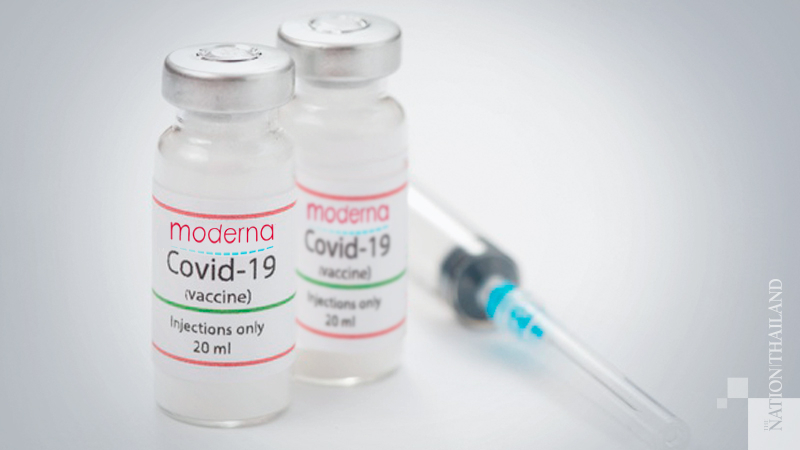
 Meat on display at a supermarket in Seoul. (Yonhap)
  Prime Minister Nguyễn Xuân Phúc chairs the meeting on Monday. —VNA/VNS Photo
  In the study, Malaysia is ranked ahead of other Asean countries such as the Philippines (ranked 10) and Indonesia (ranked 12). Thailand (ranked No. 1) is ahead of Malaysia in the study, while India (ranked 11) and China (ranked 17)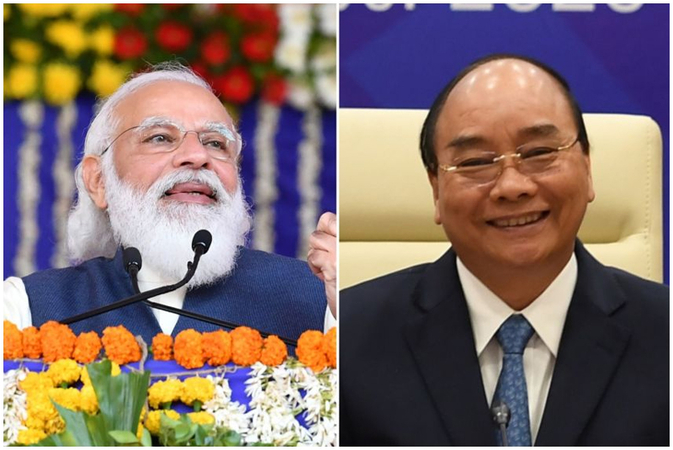
 Skiers wait in line for a lift at a ski slope in Pyeongchang, Gangwon Province, on Monday. (Yonhap)
