
Asia-Pacific region sees 81 million jobs lost #SootinClaimon.Com

#SootinClaimon.Com : ขอบคุณแหล่งข้อมูล : หนังสือพิมพ์ The Nation.

Asia-Pacific region sees 81 million jobs lost (nationthailand.com)

Asia-Pacific region sees 81 million jobs lost

Dec 16. 2020
By DIYANA PFORDTEN
The Star/ANN

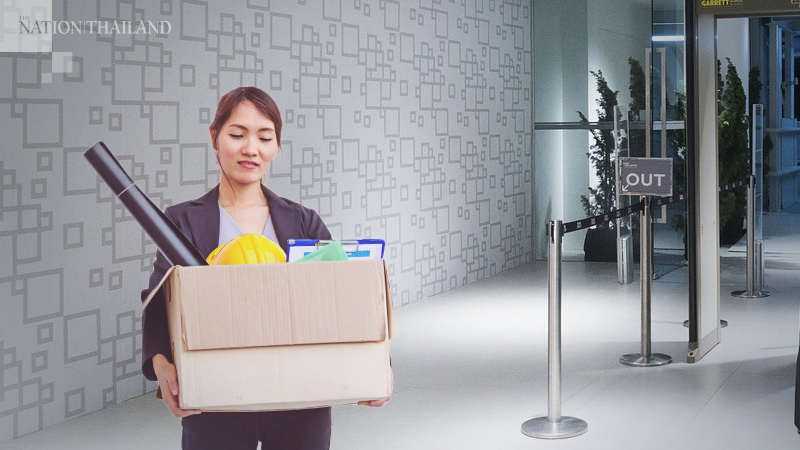
PETALING JAYA: A total of 81 million jobs are estimated to have been lost in Asia-Pacific countries in 2020 due to the Covid-19 pandemic, says the International Labour Organisation (ILO).

In its report Asia–Pacific Employment and Social Outlook 2020: Navigating the crisis towards a human-centred future of work released yesterday, the organisation said the pandemic hit workers in various way, with many forced into shorter working hours amid a shrinking job growth market.

In the report, it said it was “estimated that employment in the Asia and the Pacific region in 2020 will drop by 4.2% to 1.839 billion persons from the pre-crisis estimate of 1.920 billion employed”.

By extrapolating, this would imply “an expected jobs gap of 81 million across the region”.

“The impact of the crisis has been far-reaching, with underemployment surging as millions of workers are asked to work reduced hours or no hours at all, ” it said.

Working hours in the Asia and the Pacific were reduced by an estimated 15.2% in the second quarter of 2020, and by 10.7% in the third quarter of the year, compared to before the pandemic, said ILO.

“Working-hour losses are also influenced by the millions of persons moving outside the labour force or into unemployment as job creation in the region collapsed, ” it said, noting that the regional unemployment rate could increase by 5.2% to 5.7% in 2020, compared to 4.4% in 2019.

ILO assistant director-general and regional director for Asia and the Pacific, Chihoko Asada Miyakawa, said inadequate social security coverage and institutional capacity in many countries had become a challenge to companies and workers needing to bounce back.

“The situation has also exacerbated when a large number of workers remains in the informal economy.

“These pre-crisis weaknesses have left far too many exposed to the pain of economic insecurity when the pandemic hit and inflicted its toll on working hours and jobs, ” she said.

The report revealed that the crisis also saw a larger impact of the decline of working hours and employment on female workers.

“Young people have also been especially affected by working-hour and job losses. The youth share in the overall employment loss was 3 to 18 times higher than their share in total employment, ” it said.

Senior economist at the ILO Regional Office for Asia and the Pacific and lead author of the report, Sara Elder, said that young workers are likely to find it difficult to compete for new jobs as unemployment increases.

“When they do find work, it may well be a job that does not match their aspirations.

“Millions of women have also paid a high price and it could take years for those who have exited the labour force to return to full employment, ” she said.

With fewer paid hours of work, the report revealed that median incomes are shrinking and working poverty levels increasing.

“Labour income is estimated to have dipped by as much as 10% in the Asia–Pacific region in the first three quarters of 2020, equivalent to a three per cent loss in gross domestic product.

“In absolute numbers, preliminary estimates in the report find an additional 22 to 25 million persons could fall into working poverty, which would push up the total number of working poor (those living on less than US$1.90, RM7.70 a day) in the Asia–Pacific region to between 94 and 98 million in 2020, ” it said.

However, Elder added that government efforts had helped companies retain workers, albeit with reduced hours, which had prevented wider job losses.

“Given the mounting evidence that social protection and employment policies save jobs and incomes, the hope is that the crisis brings about a more permanent and increased investment in elements needed to boost resilience and promote a more people-centred future of work, ” she said.

India to enhance its weapons, ammunitions stockings for 15 days intense war amid tensions at LAC #SootinClaimon.Com

#SootinClaimon.Com : ขอบคุณแหล่งข้อมูล : หนังสือพิมพ์ The Nation.

India to enhance its weapons, ammunitions stockings for 15 days intense war amid tensions at LAC (nationthailand.com)

India to enhance its weapons, ammunitions stockings for 15 days intense war amid tensions at LAC

Dec 15. 2020

Chief of Defence Staff, Bipin Rawat

Chief of Defence Staff, Bipin Rawat

By The Statesman/ANN

Amid the intense tensions with China at LAC on eastern Ladakh, India asserts that it has enhanced its stocking of weapons and ammunition for a 15-day intense war now.

According reported by news agency ANI, making use of the extended stocking requirements and the emergency financial powers, the defence forces are expected to spend over Rs 50,000 crore for acquisition of equipment and ammunition from both local and foreign sources.

“A number of weapon systems and ammunition are being acquired now under the authorisation of having reserves to fight a 15-day intense war with the enemies. The stocking would now be at 15-I level from the 10 I levels,” government sources told ANI.

The authorisation for enhanced stocking for the defence forces was approved some time ago, they said.

As per the authorisation many years ago, the armed forces were supposed to stock for a 40-day intense war but it was then brought down to 10-I level due to issues with the storage of weapons and ammunition as well as the changing nature of warfare.

In a separate development, the Chief of Defence Staff, Bipin Rawat said, “We are in a standoff situation in Ladakh and based on that there is some development activity which has been ongoing in Tibet Autonomous Region of China. Every nation will continue to prepare for ensuring its security based on their stretagic interest.”

“China’s attempt to change the status quo on Line of Actual Control along the northern border amidst COVID-19 pandemic necessities high-level preparation on land, sea and air,” he said.

“I am fully confident that Indian Armed Forces will leave no stone unturned to safeguard our frontiers be it at land, air or ocean,” he added.

India and China have locked horns at the eastern front after an unprecedented violent clash took place in Galwan Valley at the Line of Actual Control in eastern Ladakh with Chinese People’s Liberation Army soldiers attacking a small group of Indian Army men on patrol, resulting in fatalities which included the commanding officer of the Indian Army.

The stand-off persisted even after series of Commanders level talks from both the sides.

Last week, while addressing a webinar organised by the Lowy Institute –an Australian think-tank, External Affairs Minister S Jaishankar acknowledged that India was probably at the “most difficult phase of our relationship with China in the last 30-40 years or even more” in the wake of the military standoff between the two countries in eastern Ladakh.

S. Korea’s bird flu battle at critical juncture #SootinClaimon.Com

#SootinClaimon.Com : ขอบคุณแหล่งข้อมูล : หนังสือพิมพ์ The Nation.

S. Korea’s bird flu battle at critical juncture (nationthailand.com)

S. Korea’s bird flu battle at critical juncture

Dec 15. 2020
A truck disinfects the surrounding area of a duck farm in Jangseong, 308 kilometers south of Seoul, on Friday. (Yonhap)A truck disinfects the surrounding area of a duck farm in Jangseong, 308 kilometers south of Seoul, on Friday. (Yonhap) 

By The Korea Herald/ANN

South Korea’s agricultural ministry said Tuesday the number of highly pathogenic bird flu cases from local poultry farms may continue to rise down the road due to seasonal migratory birds, urging farmers to beef up preventive measures against the contagious animal disease.

“As migratory birds will continue to flock into the country through January, local poultry farms are currently at a critical juncture,” the Ministry of Agriculture, Food and Rural Affairs said in a statement.

South Korea has reported 13 highly pathogenic bird flu cases from poultry farms so far this year, while three other suspected cases are currently under investigation.

After reporting the first farm-related case on Nov. 26, the virus has spread throughout the nation, with infections being reported from various provinces, with South Jeolla Province alone adding five cases.

In line with efforts to prevent the spread of the virus, the country has culled more than 5 million poultry from infected farms, as well as the surrounding areas, including 3.23 million chickens and 880,000 ducks.

Local authorities slaughtered poultry within a 3-kilometer radius of infected farms.

“As wild animals, including rats, can carry contaminants, farmers should thoroughly block them from entering their farms,” the ministry added.

South Korea said it will slap fines on farms that fail to follow preventive measures.

Highly pathogenic avian influenza is contagious and can cause severe illness and even death in poultry.

The country reported its first highly pathogenic case in 32 months in late October in Cheonan, 92 kilometers south of Seoul, from wild birds.

Since then, a total of 27 cases have been found from wild bird habitats across the country, according to the ministry. Nine other suspected cases are currently under investigation. (Yonhap)

Beijing firms up its ambitions in technology and innovation #SootinClaimon.Com

#SootinClaimon.Com : ขอบคุณแหล่งข้อมูล : หนังสือพิมพ์ The Nation.

Beijing firms up its ambitions in technology and innovation (nationthailand.com)

Beijing firms up its ambitions in technology and innovation

Dec 15. 2020A volunteer wears a hat mounted with a flexible display during the ZGC Forum in Beijing on Sept 17. [Photo by Zhu Xingxin/chinadaily.com.cn]A volunteer wears a hat mounted with a flexible display during the ZGC Forum in Beijing on Sept 17. [Photo by Zhu Xingxin/chinadaily.com.cn] 
By Zhang Zhihao
China Daily/ANN

Officials and experts predict more policy support and investment in various fields

Beijing aims to become a global science, technology and innovation hub by 2025 by providing more incentives for frontier sciences, attracting more global talent, enhancing intellectual property protection and increasing support for small tech ventures, officials and experts said.

Research fields including artificial intelligence, quantum science, medical science, block chain, information technology, the internet of things, materials science, space technology and renewable energy will see more policy support and investment in the nation’s capital, they added.

National planners hope to turn Beijing, Shanghai and the Guangdong-Hong Kong-Macao Greater Bay Area into global science and technology innovation centers, according to the proposals for formulating China’s 14th Five-Year Plan (2021-25) for National Economic and Social Development and the Long-Range Objectives Through the Year 2035.

Cai Qi, Beijing’s Party chief, told experts at a symposium on Beijing’s development in October that the capital will be more open, more innovative and more supportive of tech companies.

Building new infrastructure for artificial intelligence, 5G telecommunication, the industrial internet and internet of things and other major fields will be a priority, which will lay the foundation for upgrading the city’s future industries, he said.

Xu Qiang, director of the Beijing Municipal Science and Technology Commission, said this month that Beijing has several advantages that will help it become a global science, technology and innovation hub.

Sui Zhenjiang, vice-mayor of Beijing, said during the Second World Science and Technology Development Forum early last month that the 3,000-year-old city boasts the most scientific talent and resources in the country, as well as having a rich culture of international cooperation, encouraging innovations and tolerating failures.

In 2016, the State Council issued a plan for Beijing to become a national science and technology innovation center. By October last year, the municipality had implemented 30 new policies toward that goal, ranging from granting scientists more autonomy over research grants to streamlining visa applications for foreign scientists.

“Being the nation’s capital, Beijing has the responsibility, means, foundations and advantages to facilitate scientific and technological innovation and play its role in serving the nation’s modernization process,” Sui said.

Around half of the academicians of the Chinese Academy of Sciences and the Chinese Academy of Engineering are stationed in Beijing, he said. The city is also home to one-third of China’s major scientific instruments, and around 357,000 researchers.

There are 185 researchers for every 10,000 employees in the city, a ratio on par with that of developed countries, he said. The city invests around 6 percent of its GDP in research and development, significantly higher than the average 2.5 percent benchmark for innovative countries, he added.

The World Intellectual Property Organization ranked Beijing this year as the world’s fourth-most-active science and technology cluster in terms of publishing and patent performance, behind Tokyo-Yokohama in first place, Shenzhen-Hong Kong-Guangzhou second, and Seoul third.

The Nature Index 2020 Science Cities, published in September, ranked Beijing as the top global science city for the third year in a row after factoring in the concentration of talent, funding, research institutions, and the quality of published scientific papers and international cooperation.

The city’s “three science cities and one hi-tech area” — Zhongguancun Science City, Huairou Science City, the Beijing Future Science Park and the Beijing Economic-Technological Development Area — have become major hubs for frontier research, Sui said.

About 183 multinational corporations, along with nearly 4,000 foreign companies and research institutions, have either established headquarters in Beijing or are collaborating with partners from the city, he said.

In that ecosystem of international cooperation, Zhongguancun stands out as the forerunner of China’s scientific reform and innovations for being the base for nearly 1,000 foreign companies, Sui added.

In 2018, Chinese scientists from the area published 14,074 papers as first authors with foreign peers, accounting for nearly 25 percent of the national total.

In the next few years, Beijing will attract more foreign talent, optimize planning for the science cities, provide more investment for basic research and incubate more innovative tech companies, Sui said.

Since 2018, Beijing has helped over 3,500 foreign scientists settle in the capital by providing better housing, insurance and educational opportunities for their children. Over 4,000 talented foreigners have been granted permanent resident status, making Beijing the first-choice destination for foreign researchers, he said.

The capital has established a fund of 30 billion yuan ($4.58 billion) to support innovation, provided 160 billion yuan in tax breaks for small and medium-sized companies, and streamlined government administration for science project applications and the procurement of research equipment, he said.

In terms of city planning, Zhongguancun will focus on basic and frontier sciences in key technological sectors, Sui said. Huairou will build more major scientific research infrastructure, with an emphasis on materials science, logistics, energy and space technology.

The Beijing Future Science Park will prioritize public health and biosciences research, as well as the commercialization of new technologies.

The Beijing Economic-Technological Development Area will aim to become a hub for high-end manufacturing, such as producing integrated circuits.

At the same time, Beijing will bolster intellectual property rights protection and related services, including harsher punishments for copyright infringements and allowing small tech companies to pledge their intellectual property for loans, Sui said.

Justin Yifu Lin, a senior economist and honorary dean of the National School of Development at Peking University, said in a seminar in Shenzhen, Guangdong province, last week that innovation, collaboration, being green, openness and sharing are the five key characteristics of new development.

The combination of an effective market and a capable government to support businesses is instrumental in achieving quality economic growth, he added.

Yu Jian, deputy director of the Ministry of Science and Technology’s department of strategic planning, said at a seminar in Beijing in April hosted by the city’s science and technology commission that the capital should set its eyes on becoming a global science and technology center, and create an innovative ecosystem with international influence.

Liu Qiyan, deputy director of the Institute of Scientific and Technical Information of China, said at the seminar that Beijing should enhance its ability to quantify and keep track of tech companies and their resources, and expand the influence of innovation to more local levels.

Li Guoping, president of the Beijing Development Institute at Peking University, said at the same event that innovation cannot do without industrialization, and Beijing’s path toward an innovation center will require support from various industries, especially high-end manufacturing.

First shipments of Pfizer-BioNTech vaccine in Singapore by end-Dec; enough vaccines for all by Q3 2021 #SootinClaimon.Com

#SootinClaimon.Com : ขอบคุณแหล่งข้อมูล : หนังสือพิมพ์ The Nation.

First shipments of Pfizer-BioNTech vaccine in Singapore by end-Dec; enough vaccines for all by Q3 2021 (nationthailand.com)

First shipments of Pfizer-BioNTech vaccine in Singapore by end-Dec; enough vaccines for all by Q3 2021

Dec 15. 2020

By Audrey Tan
The Straits Times/ANN

SINGAPORE – The Health Sciences Authority (HSA) has approved the use of the Pfizer-BioNTech Covid-19 vaccine in Singapore, with the first shipment of the vaccine expected to arrive here by the end of this month.

Prime Minister Lee Hsien Loong revealed this in his address to the nation on Monday (Dec 14), saying: “I am very happy to tell you that after studying the scientific evidence and clinical trial data, the Health Sciences Authority has approved the Pfizer-BioNTech vaccine for pandemic use.”

This makes Singapore one of the first countries to obtain this vaccine, he added.

Mr Lee said other vaccines are expected to arrive in Singapore in the coming months.

“If all goes according to plan, we will have enough vaccines for everyone in Singapore by the third quarter of 2021,” he said.

Britain was the first country to approve the use of the Pfizer-BioNTech vaccine on Dec 2, with the United States following suit on Dec 11.

The approvals come after US pharmaceutical giant Pfizer and its German partner BioNTech released in November the final results from the late-stage trial of the Covid-19 vaccine.

The findings showed that their vaccine was 95 per cent effective at preventing a person from getting infected with the coronavirus.

The Straits Times had earlier reported that American biotechnology company Moderna, which is developing another Covid-19 vaccine that is a front runner, is also seeking HSA approval to roll out its vaccines here. HSA said it has started evaluating the available data.

Both the Pfizer-BioNTech and Moderna vaccines leverage a new technology called messenger RNA.

Traditional vaccines, such as inactivated virus vaccines and live attenuated vaccines, work by injecting whole but inactive viruses into patients to stimulate an immune reaction. This is what is done for polio (inactivated polio vaccine) and chickenpox (a live, but weakened, virus vaccine).

But RNA vaccines involve injecting snippets of the viral genetic code so a patient’s body mounts a protective response without being actually exposed to the whole virus.

The Pfizer-BioNTech vaccine is the first RNA vaccine on the market.

Japan to sell ‘smart city’ services to SE Asian cities #SootinClaimon.Com

#SootinClaimon.Com : ขอบคุณแหล่งข้อมูล : หนังสือพิมพ์ The Nation.

Japan to sell ‘smart city’ services to SE Asian cities (nationthailand.com)

Japan to sell ‘smart city’ services to SE Asian cities

Dec 15. 2020

By The Japan News/ANN

The government has decided to market Japan’s comprehensive technologies and services for “smart cities,” a next-generation city model that optimizes the use of cutting-edge telecommunications, to Southeast Asian countries.

By the end of this year, the government will conduct an aptitude survey on what kind of services will be needed for the endeavor in 26 cities in 10 countries that the government regards as the most important markets. It will use the survey results to encourage domestic companies in various industry sectors to venture into the market. Related expenses will be included in the third supplementary budget for fiscal 2020.

In the smart city model, basic infrastructure, such as homes, companies and cars, and social infrastructure, including electricity, gas and public transport and schools, are interconnected and provide data. By collecting and analyzing this data on consumption and flows of people, smart cities can realize better services and achieve greater energy efficiency.

In Southeast Asian countries, populations tend to cluster in and around big cities. Therefore, the government concluded that the use of information technology could be useful as measures for solving traffic jams, environmental issues and other problems.

The government also has an incentive to compete with China’s government-monitored smart city scheme by promoting the protection of personal information.

The government expects a wide range of items will be exported under the project. They include public transport systems using signal controls, measures against cyber attacks, security measures via surveillance cameras, cashless payments and smart grids — next-generation power grids that efficiently manage and supply power.

By the end of the year, the government will ask Ho Chi Min City, Phnom Penh and some other cities to propose what kind of systems they need to solve problems in their urban policies. Based on the proposals, the government will work with each city and together write up a basic plan for urban development.

In 2019, the government set up a public and private council to market services related to smart cities overseas, together with about 270 companies and organizations, including Hitachi, Ltd. and MUFG Bank, Ltd.

Based on the master plan, the government is considering looking for companies that can provide necessary services through the council and implementing demonstrations of the services and provide training and technical support in the Southeast Asian countries.

Smart city projects in Japan include Woven City, which Toyota Motor Corp. is planning to start building in Susono, Shizuoka Prefecture, in February 2021.

Toward the realization of smart cities, the Land, Infrastructure, Transport and Tourism Ministry started in fiscal 2019 supporting 43 projects, such as the operation of self-driving buses near Haneda Airport in Tokyo. The day when smart cities will be in practical use is coming close.

New businesses mushroom in Malaysia despite Covid-19 pandemic gloom #SootinClaimon.Com

#SootinClaimon.Com : ขอบคุณแหล่งข้อมูล : หนังสือพิมพ์ The Nation.

New businesses mushroom in Malaysia despite Covid-19 pandemic gloom (nationthailand.com)

New businesses mushroom in Malaysia despite Covid-19 pandemic gloom

Dec 14. 2020Photo credit: https://www.greenpatch.academy/Photo credit: https://www.greenpatch.academy/ 

By Ram Anand
The Straits Times/ANN

KUALA LUMPUR – Educator Sujietra Jayaseelan was meant to set up a physical after-school coaching centre for children in Petaling Jaya, Selangor, but her plan was scuppered in March when Malaysia imposed a partial shutdown to curb the spread of the coronavirus.

After observing her own children study at home when schools were shut, she instead launched Green Patch Academy, an online centre offering academic and skills coaching for children.

“The online method had never crossed my mind before. I also offered a very low price bearing in mind the impact of the pandemic on people’s finances. It would have been so cheap if this was my initial idea,” she told The Straits Times.

Green Patch is just one of the nearly 280,000 new businesses registered in Malaysia between March and September, defying the pandemic gloom with fresh enterprises in sectors such as food and beverage, online retail and fitness.

This figure far outpaced the number of businesses that had shuttered since March – at 32,469, according to the Companies Commission – when the country introduced drastic movement curbs to contain the outbreak.

Entrepreneur Development and Cooperatives Minister Wan Junaidi Wan Jaafar described this development as a silver lining, saying local entrepreneurs were adapting their business models to be resilient during challenging times.

“I applaud this as such a move is vital for their business survival. An entrepreneur must be innovative, creative and dynamic to adjust and adapt to whatever situation they are in,” Datuk Seri Wan Junaidi told The Straits Times.

Malaysia’s economy has not been spared the fall-out from the coronavirus and is expected to contract by up to 4.5 per cent this year. Meanwhile the latest Business Confidence Index released by local ratings agency RAM on Dec 7 stood at 35.9 per cent, still substantially below the 50 percent threshold needed for it to be read as optimistic.

Nevertheless, some entrepreneurs are forging ahead.

A majority of these new businesses, Mr Wan Junaidi said, operated in the food and beverage sector, followed closely by online retail shopping businesses.

“Another interesting area is also the fitness industry. Because there are some people who are scared to go to gyms, there is an increasing demand for virtual fitness classes and personal training,” he said.

New entrepreneurs have pressed ahead with their business plans, all while pivoting on short notice when circumstances change.

Ms Dhashene Letchumanan, a former marketing executive, had been planning to sell her Skin Start beauty products at physical stores before the pandemic hit. By the time she launched her skincare line, movement controls were in place, forcing her to switch to online retail.

“I could have sold my products through retail stores, booths or kiosks if there was no pandemic. But now the best option is to just stay online and use dropshippers, which is a way to generate income for others who have lost their jobs,” Ms Dhashene told ST, referring to the practice of selling a product without holding stock, leaving orders to be fulfilled by the wholesaler or another retailer.

Meanwhile, other new businesses have been set up with the help of civil society organisations and social enterprises.

A group of construction workers who lost their jobs after Covid-19 clusters were discovered at their worksite now run The Nanas Lab, a business making pineapple jam.

“They have been growing pineapples to eat when their food supplies run out,” said Ms Raudhah Nazran, CEO of social enterprise Accelerate Global. “We saw that as a business opportunity and taught them how to monetise their farm.”

[South Korea] More than 2m facilities to face restrictions under Level 3 social distancing: ministry #SootinClaimon.Com

#SootinClaimon.Com : ขอบคุณแหล่งข้อมูล : หนังสือพิมพ์ The Nation.

[South Korea] More than 2m facilities to face restrictions under Level 3 social distancing: ministry (nationthailand.com)

[South Korea] More than 2m facilities to face restrictions under Level 3 social distancing: ministry

Dec 14. 2020Health Minister Park Neung-hoo. (Yonhap)Health Minister Park Neung-hoo. (Yonhap) 

By The Korea Herald/ANN

More than 2 million multiuse facilities and businesses will face restrictions if the government raises the social distancing scheme to Level 3, the health ministry said Sunday.

Son Young-rae, a ministry spokesman, told a regular press briefing that the highest level calls for a no-assembly order on around 450,000 facilities and restricted services at around 1.57 million others.

South Korea operates a five-tier social distancing scheme, with the greater Seoul area currently under the second-highest Level 2.5 and the rest of the country under Level 2.

Calls have grown for an elevation to Level 3 amid record-setting coronavirus case tallies this weekend. On Sunday, the country added a record 1,030 daily cases, a day after adding 950, the biggest number since the country reported its first COVID-19 case in January.

“When we decide to adopt Level 3, we will also review stronger antivirus measures that can be added to what is already in the manual,” Son said. “We would look at tougher measures for high-risk facilities in light of cluster infection trends and characteristics of the spread.”

Level 3 bans all gatherings of 10 or more people and requires all nonessential multiuse facilities to close.

Department stores and other large stores will be subject to a no-assembly order, while other shops may be required to close after 9 p.m., Son said.

“Level 3 is the final measure we can use to curb the spread of COVID-19,” he said. “There is no Level 3.5, 4 or 5.”

The spokesman added that without the voluntary participation of the public, even Level 3 may not produce the desired effect. (Yonhap)

Nepal reopens to tourists coming by air, land borders still closed #SootinClaimon.Com

#SootinClaimon.Com : ขอบคุณแหล่งข้อมูล : หนังสือพิมพ์ The Nation.

Nepal reopens to tourists coming by air, land borders still closed (nationthailand.com)

Nepal reopens to tourists coming by air, land borders still closed

Dec 14. 2020

By Sangam Prasain
The Kathmandu Post/ANN

Trekkers and mountaineers have been entering the country since October after the government allowed limited activities.

Nepal has thrown open the doors to foreign tourists after keeping them out for nine months as the country battled the Covid-19 pandemic.

All tourist visas have been restored, and foreign visitors are now free to fly into the country, the Department of Immigration said, but the land borders are still closed.

“Issuance of tourists entry visa from Nepali diplomatic missions abroad has resumed,” the Department of Immigration said. Only travellers with a pre-approval and recommendation of the government will be allowed entry overland, the department said.

On-arrival visas will be provided at Tribhuvan International Airport in Kathmandu only to representatives and families of diplomatic missions, United Nations agencies, international organisations and non-resident Nepalis without any pre-approval letters and recommendations, the department said.

“All foreigners should obtain a tourist visa from Nepali diplomatic missions abroad or they should have a pre-approval or recommendation letter from the concerned ministries for ensuring their ‘on-arrival’ visa at Kathmandu airport,” Ramesh Kumar KC, director general of the Department of Immigration, told the Post.

“A cabinet meeting held on December 3 decided to bring back tourists. This will help to increase arrivals to Nepal to some extent.”

On March 12, the government decided to suspend issuing on-arrival tourist visas to nationals of all countries besides cancelling spring mountaineering expeditions including Everest missions. The decision came a day after the World Health Organisation declared the Covid-19 outbreak a pandemic, and urged countries to take precautionary measures.

The government stopped international flights from March 20, and put the country under a lockdown from March 24. The stay-home order was lifted on July 21, with some restrictions still in place.

Charter and regular passenger flights resumed on September 1, but the government allowed only Nepalis and representatives of diplomatic missions, the UN and development partners to fly into Nepal.

Bowing to pressure to revive the country’s tourism industry hit hard by the Covid-19 pandemic, the government allowed foreigners to participate in trekking and mountaineering activities from October 17.

The year 2020 was supposed to be a significant year for Nepal’s tourism industry as it had major plans for its ‘Visit Nepal 2020’ campaign. Nepal was expecting some 2 million tourists this year and $2 billion in tourism-related revenue. Unfortunately, the coronavirus outbreak disrupted tourism plans.

According to the Immigration Department, all travellers must have a Covid-19 negative report (RT-PCR/gene Xpert/True NAAT or equivalent) obtained within 72 hours prior to their departure from the first port or the entry point to Nepal. Children below five years are exempt from this rule.

All foreigners are required to follow the health and security-related protocols of the government.

“There is a seven-day mandatory hotel quarantine for tourists coming to Nepal, and it is applicable to all, including Indian nationals who are coming to Nepal under the air bubble arrangement between Nepal and India,” said Kamal Prasad Bhattarai, spokesperson for the Tourism Ministry.

Tourists will also need to get tested for Covid-19 after five days of the isolation period before they are allowed to travel.

“The government requires all tourists to have $5,000 Covid insurance, and we are reviewing the provision based on suggestions from the private sector,” said Bhattarai.

Nepal and India have agreed to re-start flights under an air bubble arrangement with restrictions and regulations. Flights are expected to begin from December 17. The national flag carriers of both countries are scheduled to operate one daily flight each.

Nepalis travelling to India are required to undergo a two-week quarantine, and they must hold an RT-PCR (reverse transcription-polymerase chain reaction) test report completed less than 72 hours before departure.

The impact of Covid-19 has dealt a huge blow to Nepal’s tourism industry which generates Rs240.7 billion in revenue, and contributes almost 8 percent to the GDP, according to the annual World Travel and Tourism Council report. It supports, directly or indirectly, more than 1.05 million jobs.

Since the end of July, tourism entrepreneurs have turned to domestic visitors to stay afloat, reopening mountains and trekking trails, jungle safari and various landmarks to local travellers.

Hotels and restaurants have been struggling to survive with their guest rooms remaining empty for the last nine months. Covid-19 has thrown millions in the tourism and hospitality sectors out of a job and multiple hotels have shuttered.

Nepal’s economy is projected to grow by only 0.6 percent in 2021, inching up from an estimated 0.2 percent in 2020 as virus lockdowns disrupted economic activity, especially tourism, says the World Bank’s latest South Asia Economic Focus Beaten or Broken?

Japan to incorporate carbon neutrality goal into law #SootinClaimon.Com

#SootinClaimon.Com : ขอบคุณแหล่งข้อมูล : หนังสือพิมพ์ The Nation.

Japan to incorporate carbon neutrality goal into law (nationthailand.com)

Japan to incorporate carbon neutrality goal into law

Dec 14. 2020Prime Minister Yoshihide Suga, left, speaks at a Dec. 1 meeting of the government’s growth strategy council, where ways to realize net-zero emissions of greenhouse gases by 2050 were discussed. (Yomiuri Shimbun file photo)Prime Minister Yoshihide Suga, left, speaks at a Dec. 1 meeting of the government’s growth strategy council, where ways to realize net-zero emissions of greenhouse gases by 2050 were discussed. (Yomiuri Shimbun file photo) 

By The Japan News/ANN

The government has decided to stipulate in law its goal of achieving virtually zero greenhouse gas emissions by 2050, The Yomiuri Shimbun has learned.

Through the unusual move of incorporating a long-term goal into legislation, the government hopes to demonstrate, both inside and outside Japan, its determination to promote net-zero carbon emissions by 2050.

The Environment Ministry plans to include “zero emissions by 2050” in the law concerning the promotion of measures to fight global warming. The government’s policy will be discussed at an expert panel meeting scheduled to be held as early as Dec. 21.

A bill to revise the law is planned to be submitted to next year’s ordinary Diet session.

The government’s medium- and long-term targets for global warming have so far been included in implementation plans based on the law. The current plan compiled in 2016 stipulates that greenhouse gas emissions will be reduced by 26% by fiscal 2030 compared to fiscal 2013, and by 80% by fiscal 2050.

The latest move will make the goal of eliminating greenhouse gas emissions by 2050 more binding, as a Diet decision is required to revise a law, whereas implementation plans are finalized at cabinet meetings. Even when a change of administration takes place, the policy will likely remain due to the revision of the law, according to sources close to the matter.

The government hopes to convey to the international community that Japan is an environmentally advanced country at the 26th Conference of the Parties of the United Nations Framework Convention on Climate Change, to be held in Britain in November next year.

The revised law will clearly state the 2050 deadline and stipulate that a decarbonized society will be realized, referring to net-zero emissions in which the emission of greenhouse gases and the absorption of such gases through forests or other means are equalized.

The revision also will include goals of the Paris Agreement, an international treaty on climate change that aims to limit global warming to well below 2 C, preferably to 1.5 C, compared to pre-industrial levels.