Moderna seeking HSA approval for use of its Covid-19 vaccine in Singapore #SootinClaimon.Com

#SootinClaimon.Com : ขอบคุณแหล่งข้อมูล : หนังสือพิมพ์ The Nation.

Moderna seeking HSA approval for use of its Covid-19 vaccine in Singapore (nationthailand.com)

Moderna seeking HSA approval for use of its Covid-19 vaccine in Singapore

Dec 02. 2020
By Audrey Tan
The Straits Times/ANN

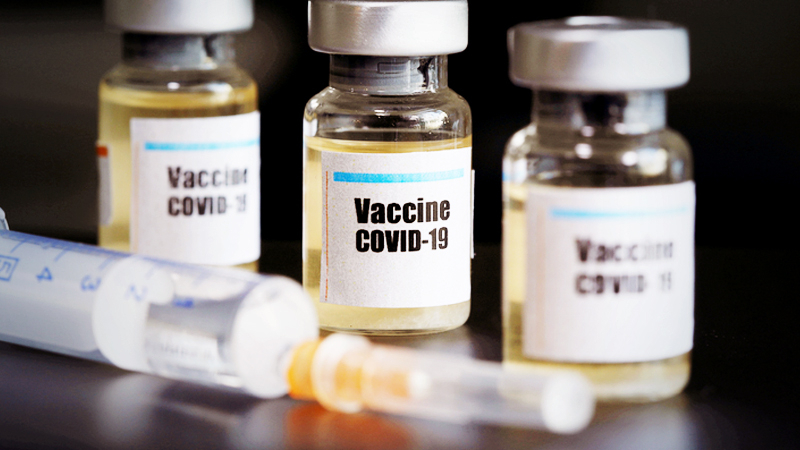
SINGAPORE – American biotechnology company Moderna has asked the authorities in Singapore to approve the use of its Covid-19 vaccine here.

If all goes well, the first batch of vaccines could arrive as early as this month.

Moderna chief executive Stephane Bancel told The Straits Times on Tuesday night (Dec 1) that the company is in talks with the Health Sciences Authority (HSA) in Singapore.

“We’ve started sending to Singapore, all the information that we have, and we’re having a very good dialogue with them,” he said.

“It is of course their decision how long they need to be comfortable with the data, because their (priority) is to ensure safety, but I anticipate that it could be maybe in December, maybe in January.”

Mr Bancel declined to give details on the number of doses that Singapore would receive, citing confidentiality clauses, but said Moderna will be ready to ship its vaccines here “right away” once approval is given.

ST has approached the HSA for comment.

Last month, Health Minister Gan Kim Yong said Singapore would work on securing a portfolio of Covid-19 vaccines to cater to different segments of the population instead of relying on just one vaccine.

Moderna on Monday applied for emergency use authorisation of its Covid-19 vaccine in the United States, following the release of the full results from its late-stage clinical trial.

The results of the trial, which involved 30,000 people, had shown that the vaccine was 94.1 per cent effective in preventing Covid-19, and 100 per cent effective at preventing severe disease from the coronavirus.

The filing in the US sets Moderna’s product up as the second vaccine likely to receive US emergency use authorisation this year.

Pfizer and BioNTech – the two firms behind another Covid-19 vaccine front runner – have also applied for emergency use authorisation of their vaccine in the US. Pfizer said final results from the late-stage trial of that Covid-19 vaccine showed it was 95 per cent effective.

Both vaccines protect most people against severe forms of the disease, but the data is not yet clear about whether the vaccines will stop them from spreading Sars-CoV-2 – the virus which causes Covid-19.

Mr Bancel indicated as much on Tuesday.

But he added: “We’re going to get that data, and I anticipate we should know about whether the vaccine prevents, or how well does it prevent infection from one human to another… in the new year.

“So we’re getting close but we don’t have all the data,” he said in an exclusive interview with ST.

He has said that the company was on track to produce 20 million doses by the end of December, and from 500 million to a billion in 2021. Each person has to have two doses of the vaccine, administered a month apart.

Both vaccines by Moderna and Pfizer-BioNTech, leverage a new technology called messenger RNA (mRNA). There are no mRNA vaccines currently available on the market.

But Mr Bancel gave the assurance that people can be confident about its safety.

He said mRNA vaccines have been tested on humans before, citing clinical trials in Germany that took place before the Covid-19 pandemic.

He also noted that no severe adverse events had occurred among volunteers during the late-stage clinical trial for the Covid-19 vaccine.

“If you look at all vaccines, across all technologies, known to regulators, any serious side effects usually happen within six weeks of the jab,” he said.

This is why the US Food and Drug Administration (FDA) had asked Moderna to submit its application for emergency approval only after eight weeks of safety data being collected.

“We crossed that threshold in the second half of November, which is why we were able to submit (the application),” he explained in a video interview.

The mRNA platform involves injecting snippets of the viral genetic code in the body to stimulate the human immune system to mount a defence against the invading coronavirus.

But mRNA molecule fully degrades in the body within 48 hours, Mr Bancel explained.

“Moreover, the molecule does not enter the nucleus of the human cell, does not touch the human DNA,” he explained.

Asked if Moderna would consider expanding to Singapore, Mr Bancel said that there are no plans to do so yet.

“We have been so busy working on the vaccine that we have had no time to think about expansion,” he said.

But he said that he has been to Singapore 20 times, and is aware that the Republic is a “great biotech hub”, with an educated workforce that has strong work ethics.

Mr Bancel added: “I’m sure we’ll find ways to collaborate more and more with Singapore.”

Grab strengthens Indonesia’s EV ecosystem #SootinClaimon.Com

#SootinClaimon.Com : ขอบคุณแหล่งข้อมูล : หนังสือพิมพ์ The Nation.

Grab strengthens Indonesia’s EV ecosystem (nationthailand.com)

Grab strengthens Indonesia’s EV ecosystem

Dec 01. 2020In collaboration with the state-owned electricity company’s local branch, PLN IUD Bali, the Bali Transportation Office, PT Pegadaian, Astra Honda Motor and Panasonic, Grab on Nov. 26 launched 30 electric motorcycles (EMs) and seven public electric vehicle battery swap stations (SPBKLU) in the island province. (Courtesy of/Grab)In collaboration with the state-owned electricity company’s local branch, PLN IUD Bali, the Bali Transportation Office, PT Pegadaian, Astra Honda Motor and Panasonic, Grab on Nov. 26 launched 30 electric motorcycles (EMs) and seven public electric vehicle battery swap stations (SPBKLU) in the island province. (Courtesy of/Grab) 

By MUSTHOFID
THE JAKARTA POST/ANN

Land transportation that relies on clean energy is the dream of many environmentally conscious leaders, and electric vehicles (EVs) are becoming an increasingly popular alternative for their potential contributions to a pollution-free environment.

To accelerate the development and adoption of EVs in Indonesia, President Joko “Jokowi” Widodo has issued Presidential Regulation (Perpres) No. 55, 2019 on electric vehicles.

Several governors, including Bali Governor I Wayan Koster, have also envisioned the development of clean energy and the adoption of battery-powered vehicles.

But realizing the country’s dream is not as simple as many might think, because it requires investment as well as competence, experience and resources from third parties.

This means that collaboration with different stakeholders is key to the success of the program.

This is where Grab, Southeast Asia’s leading super app, comes in to reaffirm its long-standing commitment to advance Indonesia, especially following the launch of EVs in Bali.

In collaboration with the state-owned electricity company’s local branch, PLN UID Bali, the Bali Transportation Office, PT Pegadaian, Astra Honda Motor and Panasonic, Grab on Nov. 26 launched 30 electric motorcycles (EMs) and seven public electric vehicle battery swap stations (SPBKLU) in the island province.

Grab Indonesia stated that the EM launch was intended to support Bali Gubernatorial Regulation Nos. 45 and 48 of 2019 on green energy and the use of Battery Electric Vehicles (BEVs) to develop a clean Bali through eco-friendly road vehicles.

The launch of EMs also aligns with the super app’s GrabForGood mission on developing pivotal sectors in Indonesia.

One of these sectors is transportation and the development of an EV-based public transit network for the next generation. In launching the electric motorcycles in Bali, Grab has become the first company to operate more than 5,000 EVs in Indonesia.

Main driver of EV development

Grab Indonesia managing director Neneng Goenadi elucidated the company’s commitment to become the main driver of EV development in the country.

“To support the government’s mission in cutting down carbon emissions by up to 29 percent in 2030, we launched an EV ecosystem road map in Indonesia in 2019. Today, we are proud that we were able to expand our outreach to Bali. Providing EVs and SPBKLUs on the ‘Island of the Gods’ supports the establishment of an eco-friendly and efficient traffic and land transportation system,” said Neneng.

“Through collaboration with a number of parties such as PLN and Pegadaian, we extend our gratitude to the local administration and relevant offices in Bali which share similar vision in advancing the development of electricity-powered transportation in Indonesia,” she continued.

Meanwhile, Bali Governor I Wayan Koster hailed Grab’s use of EVs in the province. “I am very pleased to see the launch of the EVs, which implements Bali’s development vision and supports the ‘Nangun Sat Kheti Loka Bali’ policy,” he said.

“Gubernatorial Regulation numbers 45 and 48 of 2019 on clean energy and the use of battery-powered vehicles was formulated with respect to Bali’s local wisdoms. Maintaining harmony between Bali’s [natural environment], people and culture is important for us. [Maintaining] a clean environment must be connected to the efforts to create a pollution-free environment. This relates to clean energy, starting from power plants to daily [activities] and facilities,” Koster stressed.

“Looking ahead, we will build eco-friendly, new and renewable power plants. I hope that the presence of the electric motorcycles will increasingly support a clean and pollution-free environment in Bali.”

PLN UID Bali General Manager Adi Priyanto expressed his enthusiasm for collaborating with Grab in encouraging the development of a BEV ecosystem toward national energy sustainability.

“Cooperation in the accelerated [development] of electric vehicles is highly appropriate and strategic. PLN and Grab have the competence, experience and resources to work together to support the electric vehicle penetration program in Indonesia, which is more economical [and] environmentally friendly. We share the same vision for modern civilization. Thank you, Grab, for supporting this program,” said Adi.

The head of Pegadaian Denpasar Regional Office VII, Nuril Islamiah, said that he was also proud to be part of the program.

“This collaboration is in line with […] our mission to build a more diverse business that can be enjoyed by more people. We hope that this cooperation can help advance various local sectors in Bali, especially in the EV field,” he said.

National EV Ecosystem

Grab’s engagement with EV ecosystem development started in August 2019, when the company took part in EV development studies with the Industry Ministry. One of these studies was in Bali and focused on technical performance and customer acceptance, as well as industrial and social impacts, and aimed to formulate a policy for the development of electric vehicles.

In December 2019, Grab and the Office of the Maritime Affairs and Investment Coordinating Minister released the “Electric Vehicle Ecosystem Roadmap” with an aim to accelerate the adoption of EVs in Indonesia and to create a more environmentally friendly transit network.

This was followed by the January 2020 launch of the GrabCar Elektrik service at Soekarno-Hatta International Airport, with the support of South Korean auto giant Hyundai.

To date, Grab has collaborated with Hyundai, Kymco, VIAR and SELIS to provide its fleet of more than 5,000 electric cars, motorcycles, bicycles and scooters across the archipelago.

An internal survey Grab conducted in September showed that 70 percent of Grab’s EV driver-partners said that the technology had increased their income because of reduced fuel costs.

“Southeast Research and the CSIS, at the beginning of last year, showed that Grab had contributed Rp 889 billion to the Bali provincial economy through our technology,” said Neneng. “These joint efforts are in line with GrabForGood’s commitment to accelerating digital infrastructure development in Indonesia, and will help us come up with solutions that offer efficiency in transportation costs and encourage more people to use EVs.”

“In the future, we want to be the main driving force in initiating joint collaboration and building partnerships with the government and a variety of sectors,” she said.

Myanmar to sell 50% of gas to Thailand, 20% to China this year #SootinClaimon.Com

#SootinClaimon.Com : ขอบคุณแหล่งข้อมูล : หนังสือพิมพ์ The Nation.

Myanmar to sell 50% of gas to Thailand, 20% to China this year (nationthailand.com)

Myanmar to sell 50% of gas to Thailand, 20% to China this year

Dec 01. 2020Yadana Natural Gas Project (Photo-MOEE)Yadana Natural Gas Project (Photo-MOEE) 

By Eleven Media/ANN

Myanmar has expected to sell 50 percent of natural gas produced from offshore projects to Thailand and 20 percent to China while the remaining 30 percent is set for domestic sale, according to the 2020-2021 State budget data. 

In the domestic gas consumption, 85.9 percent will be electricity generation, 5.3 percent for CNG production, four percent for fertilizer production and 4.8 percent for other sectors. 

Eighty percent of income from oil and gas comes from offshore projects and new projects are not yet in a position to operate on a commercial scale, according to the budget data. 

With falling global oil prices due to the Covid-19 pandemic, Myanmar is due to sell gas from Yadana, Yetagon and Zawtika offshore projects to Thailand at a price of US$6 per 1 MMBTU and gas from Shwe offshore project to China at a price of US$5.29 per 1 MMBTU in the current 2020-2021 fiscal year. 

In the 2019-2020 FY, 23,663.16 million kilowatts of electricity were generated—11,618.21 from natural gas and 9,366.35 from hydropower, the Central Statistics Organization quoted the Ministry of Electricity and Energy. 

S. Korea’s economy grows faster than estimated at 2.1% in Q3: BOK #SootinClaimon.Com

#SootinClaimon.Com : ขอบคุณแหล่งข้อมูล : หนังสือพิมพ์ The Nation.

S. Korea’s economy grows faster than estimated at 2.1% in Q3: BOK (nationthailand.com)

S. Korea’s economy grows faster than estimated at 2.1% in Q3: BOK

Dec 01. 2020This file photo, taken June 4, shows stacks of import-export cargo containers at South Korea's largest seaport in Busan, 450 kilometers southeast of Seoul. (Yonhap)This file photo, taken June 4, shows stacks of import-export cargo containers at South Korea’s largest seaport in Busan, 450 kilometers southeast of Seoul. (Yonhap) 

By The Korea Herald/ANN

South Korea’s economy expanded at a faster-than-estimated pace in the third quarter on the back of a modest recovery in exports amid the coronavirus pandemic, central bank data showed Tuesday.

The country’s real gross domestic product (GDP) grew 2.1 percent in the July-September period from the previous quarter, according to the data from the Bank of Korea (BOK).

The reading marks a slight increase from an earlier estimate of a 1.9 percent on-quarter expansion estimated in October and compares with a 3.2 percent contraction in the second quarter, the data showed.

It also marks the fastest expansion in 11 years and the first positive growth in three quarters.

Exports jumped 16 percent on-quarter in the third quarter, helped by rising global demand for semiconductors and automobiles, the BOK said.

Facility investment rose 8.1 percent on-quarter in the third quarter, led by the growth of investment in transportation equipment and machinery.

Government consumption edged up 0.2 percent, while construction investment fell 7.3 percent, the BOK said.

Weaker consumer spending, which stayed flat in the third quarter, was the biggest drag on the momentum of an economic recovery, according to the data.

From a year earlier, the nation’s economy shrank 1.1 percent in the third quarter, compared with a 2.7 percent on-year contraction in the previous quarter.

Last week, the BOK held its policy rate unchanged at a record low of 0.5 percent, while slightly revising up this year’s economic outlook.

Driven by signs of a gradual recovery in exports, the BOK revised up this year’s economic growth outlook to a 1.1 percent contraction, compared with a previous forecast of a 1.3 percent retreat.

Park Sung-bin, a BOK official, told reporters that the central bank raised the third-quarter growth rate because industrial output in September was better than expected.

South Korea could meet this year’s growth target if the economy expands at a pace of 0.4 percent to 0.8 percent in the fourth quarter, Park said.

However, a recent wave of coronavirus infections is expected to have a negative impact on private consumption, Park said. (Yonhap)

Japan, Kuwait to ink agreement on joint stockpiling of oil for S.E. Asia #SootinClaimon.Com

#SootinClaimon.Com : ขอบคุณแหล่งข้อมูล : หนังสือพิมพ์ The Nation.

Japan, Kuwait to ink agreement on joint stockpiling of oil for S.E. Asia (nationthailand.com)

Japan, Kuwait to ink agreement on joint stockpiling of oil for S.E. Asia

Dec 01. 2020

By The Yomiuri Shimbun/The Japan News/ANN

The government plans to conclude an agreement with Kuwait to jointly stockpile oil for Southeast Asia in Japan.

This new framework will enable the government to provide emergency supplies for both Japan and Southeast Asia, which has a weak stockpiling system, in case of a sharp drop in oil supplies. The move is aimed at supporting the Japanese manufacturing industry’s supply chains in Asia.

The Economy, Trade and Industry Ministry will soon reach an agreement with Kuwait’s state-run oil company on the joint stockpiling of oil. It will be Japan’s third such arrangement, following Saudi Arabia and Abu Dhabi of the United Arab Emirates, and the first emergency supply framework for Asia.

The Japanese government will supply about 500,000 kiloliters of storage tanks at Eneos’ Kiire base in Kagoshima Prefecture. This is equivalent to 1.5 days of domestic consumption in Japan, or more than 10 days’ consumption in Southeast Asian countries.

At normal times, Kuwait’s state-run oil company will use the facility as an export base for Asian countries. Japan will be given priority for oil supplies in case of an emergency, and will also be able to assist Asian countries.

Demand for crude oil has been declining due to the global trend toward decarbonization and the economic stagnation caused by the spread of the novel coronavirus. For the time being, however, oil is indispensable for the manufacturing industry.

The spread of the coronavirus has also exposed the risk of supply networks being disrupted. Many countries in Asia, where Japanese manufacturing bases are expanding, have insufficient stockpiles. The government plans to use the facility to help Japanese companies maintain their economic activities even if crude oil supplies are cut off due to unforeseen circumstances, such as war or terrorism.

Japan imports about 15 million kiloliters of crude oil a year from Kuwait, its fourth-largest source after Saudi Arabia, the UAE and Qatar.

HK civil servants to work from home as city sees 76 new cases #SootinClaimon.Com

#SootinClaimon.Com : ขอบคุณแหล่งข้อมูล : หนังสือพิมพ์ The Nation.

HK civil servants to work from home as city sees 76 new cases (nationthailand.com)

HK civil servants to work from home as city sees 76 new cases

Dec 01. 2020Chief Executive Carrie Lam Cheng Yuet-ngor announces during a press conference new measures that tightened Hong Kong's social distancing rules to stop the spread of COVID-19 on Nov 30, 2020. (PHOTO PROVIDED TO CHINA DAILY)Chief Executive Carrie Lam Cheng Yuet-ngor announces during a press conference new measures that tightened Hong Kong’s social distancing rules to stop the spread of COVID-19 on Nov 30, 2020. (PHOTO PROVIDED TO CHINA DAILY) 

By Wang Zhan
China Daily/ANN

HONG KONG – Most of Hong Kong’s nearly 180,000 civil servants will again work from home starting  Wednesday as the city saw 76 new COVID-19 cases on Monday.

In a press briefing on Monday afternoon, Chief Executive Carrie Lam Cheng Yuet-ngor also announced  measures that tightened Hong Kong’s social distancing rules to stop the spread of the virus.

She also said that the government will “more than double” the current fixed penalty of HK$2,000 (US$258) for violations of anti-virus regulations such as the gathering ban, mandatory mask-wearing order, and mandatory testing order. 

Lam said a hotline will be established to encourage residents to report relevant contraventions to the authorities. Details will be deliberated during the upcoming Executive Council meeting,she added.

Lam said that most of the city’s civil service will work from home for two weeks and only emergency and essential services will be maintained, noting that as many as nine civil servants were infected recently.

Over the past week, the city recorded a daily average of 87 new infections, 90 percent of which were local cases while more than 100 were untraceable, Lam said, quoting data from health authorities.

Of the 76 fresh infections on Monday, 68 were locally transmitted, including nine of unknown origin, Chuang Shuk Kwan, a Centre for Health Protection official, said in a separate press conference.

Chuang said 40 of the local cases were linked to the dance club cluster while 19 infections were detected at the community testing centers. Around 50 people tested preliminarily positive.

The city’s total of confirmed cases stood at 6,314, with 109 related fatalities.

Tightening anti-virus curbs, Lam said that only up to two people per group will be allowed to gather in public starting Wednesday while karaoke lounges, game centers, swimming pools, mahjong parlors and amusement parks will be shut. 

The government had earlier closed down bars, bathhouses, nightclubs and party rooms. But this time around, fitness clubs, sports venues, and beauty and massage salons will be allowed to continue their operations with stringent anti-virus measures. 

Lam said the government decided to do this for the mental and physical health of Hong Kong residents.

Also starting Wednesday, no more than two diners will be allowed per table at local restaurants, down from four previously. Dine-in services at restaurants will end at 10 pm.

The latest wave of COVID-19 outbreaks was centered around a cluster related to dance studios, which at least had 519 infections. 

Lam said it was very difficult for health officials to conduct contact tracing because many of the patients were found to have participated in many social activities.

She said two hotels will be enlisted to serve as quarantine centers to provide a total of about 800 rooms for returnees. Lam also said the government will set up five more community testing centers in addition to the current nine across the city.

The new measures were announced after consultations during the weekend with the government’s four public health expert advisers, who agreed that the city’s fourth wave of infections could continue to worsen, Lam said.

Ciitng the four experts, Lam reiterated that mandatory universal testing was not an option for the city as it is not an “effective” and scientifically based” choice.

Verdict on Prayut’s Army residence may be a ‘fire exit’ for govt to escape ongoing conflict #SootinClaimon.Com

#SootinClaimon.Com : ขอบคุณแหล่งข้อมูล : หนังสือพิมพ์ The Nation.

Verdict on Prayut’s Army residence may be a ‘fire exit’ for govt to escape ongoing conflict (nationthailand.com)

Verdict on Prayut’s Army residence may be a ‘fire exit’ for govt to escape ongoing conflict

Nov 30. 2020 Prime Minister General Prayut Chan-o-chaPrime Minister General Prayut Chan-o-cha 

By By Thai PBS World Syndicate / ANN

The country is counting down to December 2, when the Constitutional Court is scheduled to rule if Prime Minister General Prayut Chan-o-cha should lose his post for violating the charter.

  Just days before Wednesday’s verdict, observers remain divided as to whether the court will send Prayut packing – in the same way as it has done for three prime ministers in the past.

Thai PBS World’s Political Desk looks at facts and the different scenarios that may arise.

The accuser

Opposition leader Sompong Amornwiwat accuses General Prayut of breaching the Constitution by staying on at an official Army residence, inside the First Infantry Battalion of Royal Guards on Vibhavadi Rangsit Road in Bangkok, after his retirement from the military at the end of September 2014.

The case was sent to the Constitutional Court by House Speaker Chuan Leekpai at Sompong’s request.

Accusations

General Prayut, who staged the May 2014 coup while serving as Army chief, is accused of violating Sections 184 and 186 of the Constitution that forbid a government minister from “receiving any special money or benefit from a government agency, state agency or state enterprise apart from that given by the government agency, state agency or state enterprise to other persons in the ordinary course of business”.

In so doing, the opposition leader’s petition alleges, the PM also violated Section 160 of the Constitution which states: “A minister must not behave in ways that constitute a serious violation of or failure to comply with ethical standards.”

According to Section 170, a violation of Section 160 warrants termination of the culprit’s ministerial post.

The defendant’s arguments

In his written testimony submitted to the Constitutional Court, General Prayut argued that he had to stay at the official Army residence because the prime minister’s official residence, Baan Phitsanulok, was being renovated, according to a Parliament source familiar with the matter.

Also, the PM argued that his security team suggested he live at the Army residence for safety. Hence, he said, the court should dismiss the petition against him.

The Army has informed the court that the Army residence was provided to General Prayut because he is prime minister and deserves the honour and security it provides. Similar housing has been provided to other former Army chiefs who are members of the Cabinet, the Privy Council and Parliament, the Army says.

Scenarios

If the court acquits him, it will be business as usual for the prime minister. He is likely to claim that the ruling confirms his legitimacy.

However, if he is found guilty, General Prayut will immediately lose his premiership and be disqualified from holding government office for two years, as per the Constitution.

Members of his Cabinet will then become caretaker ministers, pending the appointment of a new prime minister and a new Cabinet.

The law does not prohibit a convicted prime minister from staying on in a caretaker role. But Deputy Prime Minister Wissanu Krea-ngam, who is in charge of the government’s legal affairs, said General Prayut would likely choose not to take it.

Prayut may opt to dissolve the House of Representatives before the court issues its verdict, to avoid political repercussions. He has repeatedly refused to resign as prime minister. And while the chance of him dissolving the House is slim – it is not an impossibility.

Predictions

Many observers expect Prayut will be spared by the court, but a minority confidently predict a “guilty” ruling.

Veteran political activist Jatuporn Prompan said he was among the “1 per cent” who are convinced that Prayut will be ousted by the case.

“The situation has changed. Politics has come to a dead end and removing General Prayut from office is the only way to get him off the playing board. This case provides a rare chance to do so,” Jatuporn said.

For some analysts, the court verdict on December 2presents a “ladder” for the prime minister to climb down, plus a “fire exit” for Thailand to escape the worsening political crisis.

However, Rangsit University political scientist Wanwichit Boonprong disagrees, saying Prayut “will certainly be spared by the court”.

He views the opposition’s case against the PM as a move to further amplify accusations of double standards against the Constitutional Court and to expand the alliance against General Prayut.

“Legally speaking, Prayut may not have violated the law. But his legitimacy will be questioned and undermined,” the academic said.

Selecting a new PM

If Prayut is disqualified by the court, Parliament will start its search for a new prime minister among candidates nominated by major political parties before last year’s general election.

As happened after the 2019 election, a joint meeting of the House of Representatives and the Senate will first try to select a new prime minister from the parties’ candidates.

Excluding Prayut and the candidate nominated by the now-defunct Future Forward Party, there would be five PM candidates. Two of them are from the coalition – Democrat Party’s Abhisit Vejjajiva and Bhumjaithai’s Anutin Charnvirakul – and the other three are from the opposition Pheu Thai Party – Sudarat Keyuraphan, Chadchart Sittipunt and Chaikasem Nitisiri.

To be elected PM, the candidate would need support from a majority of both Houses. If that majority is not achieved, they may vote to allow outsiders as PM candidates. Support from at least two-thirds of both Houses is required for this option to be adopted.

The 250 junta-appointed senators are key players in the nomination of PM candidates as well as the selection of a new prime minister. Almost all of them – with the Senate speaker excluded – voted for General Prayut to become prime minister.

Sent packing by court

Since the Constitutional Court’s establishment in 1997, three prime ministers have lost their seats as a result of its rulings.

In September 2008, Samak Sundaravej, prime minister for the People Power Party affiliated with former premier Thaksin Shinawatra, was found guilty of violating the constitutional rule banning the prime minister from being an employee of any business or individual. Samak was hired by a television production house to host a TV cooking programme.

Samak’s immediate successor, Somchai Wongsawat, also from People Power, lost his PM seat after the Constitutional Court ruled in December 2008 that a party executive, Yongyuth Tiyapairat, was guilty of vote-buying. That was grounds for the court to order People Power dissolved for violating the charter.

All its executive members – Somchai included – were banned from politics for five years, resulting in him losing his PM seat despite not being targeted individually by the court ruling.

In May 2014, Yingluck Shinawatra, Thailand’s first female prime minister and Thaksin’s sister, was disqualified by the Constitutional Court. The court ruled that Yingluck had violated the charter by transferring Thawil Pliensri from his post as National Security Council secretary-general in 2011.

Yingluck was found to have abused her power as prime minister by moving Thawil to make way for Priewpan Damapong, who is a brother of Thaksin’s then-wife Pojaman, to be appointed as national police chief. Then-police chief Wichean Potephosree was appointed to replace Thawil, and Priewpan succeeded Wichean.

Chinese Ministry says duties on Australia wine justified #SootinClaimon.Com

#SootinClaimon.Com : ขอบคุณแหล่งข้อมูล : หนังสือพิมพ์ The Nation.

Chinese Ministry says duties on Australia wine justified (nationthailand.com)

Chinese Ministry says duties on Australia wine justified

Nov 30. 2020Citizens taste the imported wine on a shopping festival in Qinhuangdao, Hebei province, on Jan 20, 2020 [Photo by Cao Jianxiong/For China Daily]Citizens taste the imported wine on a shopping festival in Qinhuangdao, Hebei province, on Jan 20, 2020 [Photo by Cao Jianxiong/For China Daily] 

By ZHOU JIN
China Daily/ANN

Beijing said on Friday that the country’s anti-dumping measures on Australian wine imports are in line with Chinese laws and regulations as well as international practice, and it urged Canberra to do more to enhance mutual trust.

Starting Saturday, importers of Australian wine are required to pay tariffs ranging from 107.1 percent to 212.1 percent, the Ministry of Commerce said on Friday.

After receiving a request from domestic industry representatives, the ministry launched anti-dumping investigations into the products, according to a statement from the ministry on Aug 18.

“The measures are taken out of a sense of responsibility for domestic industries and Chinese consumers,” Foreign Ministry spokesman Zhao Lijian said at a regular news conference.

Zhao said Australia should abide by the principle of mutual respect and equality when handling its relationship with China.

He also urged Canberra to do more to adhere to the spirit of the China-Australia Comprehensive Strategic Partnership, create conditions for bilateral pragmatic cooperation and help put ties back on the right track.

The anti-dumping measures come as tensions continue to ramp up between Beijing and Canberra.

China is Australia’s largest two-way trading partner in goods and services, Australia’s Department of Foreign Affairs and Trade said. Australia had the largest share of China’s imported wine market at 37 percent, according to data for the 12 months through May from Global Trade Atlas and cited by Wine Australia in an Aug 4 report.

Organizers estimate extra ¥200 billion needed to host Tokyo Games #SootinClaimon.Com

#SootinClaimon.Com : ขอบคุณแหล่งข้อมูล : หนังสือพิมพ์ The Nation.

Organizers estimate extra ¥200 billion needed to host Tokyo Games (nationthailand.com)

Organizers estimate extra ¥200 billion needed to host Tokyo Games

Nov 30. 2020International Olympic Committee President Thomas Bach, left, and Prime Minister Yoshihide Suga bump fists at the Prime Minister’s Office in Tokyo on Nov. 16. (The Yomiuri Shimbun)International Olympic Committee President Thomas Bach, left, and Prime Minister Yoshihide Suga bump fists at the Prime Minister’s Office in Tokyo on Nov. 16. (The Yomiuri Shimbun) 

By The Japan News/ANN

The organizing committee of the Tokyo Olympics and Paralympics estimates that an additional ¥200 billion will be necessary to host the postponed events, the costly aftermath of the one-year delay due to the coronavirus pandemic, The Yomiuri Shimbun learned on Saturday from several organizing committee sources.

The Tokyo Organizing Committee of the Olympic and Paralympic Games will present the total amount and breakdown to the Tokyo metropolitan government and the central government, and the three parties are expected to meet in December to decide how to share the burden, the sources said.

It was back in March as the coronavirus was raging that then Prime Minister Shinzo Abe and International Olympic Committee President Thomas Bach agreed by telephone that the 2020 Games would be postponed to the summer of next year.

Following the decision, the organizing committee began to delve into what additional costs would be generated by the postponement. Concern was deep at the time within the organizing committee over potential ballooning costs, with one official saying, “It would be good if we can keep it at ¥300 billion.”

However, the organizing committee reached an agreement with the IOC on a number of measures to reduce expenditures, such as cutting the number of athletes and staff of participating countries and regions, rethinking venue decorations, and delaying the hiring of organizing committee staff until just before the opening of the Games to cut personnel costs.

This “simplification” saved ¥30 billion, helping to hold down the estimated additional expenses to about ¥200 billion, according to the sources.

The additional costs cover a wide range of expenses, such as compensation and cancellation fees for those who had originally booked the venues for next summer, personnel expenses for staff whose employment was extended, and the outlay for introducing a new system for ticket refunds.

■ Not including virus measures

In regard to costs associated with coronavirus countermeasures, those have been the focus of the government and thus they are not included in the Games-related additional expenses.

“As long as there was a possibility that public money will be disbursed, we trimmed the estimate as much we could,” a senior organizing committee member said.

In December last year, the organizing committee announced that it would cost a total of ¥1.35 trillion to host the Games, a figure that includes the costs of constructing venues, transportation and security. At that point, it was agreed that the organizing committee would shoulder ¥603 billion of the costs, the Tokyo metropolitan government ¥597 billion and the central government ¥150 billion.

After conferring with the metropolitan government and the central government, the organizing committee will release an up-to-date estimate including the additional expenses in December.

The organizing committee has budgeted for ¥630 billion in revenue, but 80% of that was to come from sponsorships and ticket sales. Many of the sponsorship contracts expire at the end of this year, and while the committee continues to negotiate extensions, it is unclear whether it will be able to receive the same level of support due to the pandemic.

If the number of spectators is reduced as an infection countermeasure, there is no way that ticket revenues will reach the planned level. With its revenue base remaining shaky amid the pandemic, the committee will proceed with discussions with the metropolitan government and the central government over bearing the Games-related costs.

S. Korea decides against tightening rules despite third wave #SootinClaimon.Com

#SootinClaimon.Com : ขอบคุณแหล่งข้อมูล : หนังสือพิมพ์ The Nation.

S. Korea decides against tightening rules despite third wave (nationthailand.com)

S. Korea decides against tightening rules despite third wave

Nov 30. 2020Street in Myoung-dong, a popular tourist district in central Seoul, appears empty on Sunday amid a resurgence in novel coronavirus cases. (Yonhap)Street in Myoung-dong, a popular tourist district in central Seoul, appears empty on Sunday amid a resurgence in novel coronavirus cases. (Yonhap) 

By Kim Arin
The Korea Herald/ANN

The South Korean government once again defied its own COVID-19 blueprint and decided against moving up to a higher level of social distancing despite recent metrics that support more intensive intervention.

In announcing the decision to remain in third tier of the 5-tier social distancing system, Prime Minister Chung Sye-kyun said in Sunday’s emergency press conference that “excessive controls will lead to other sorts of losses that will ultimately be suffered by the people.” He went on, “This isn’t something that will stay fixed, but one that can be subject to changes as the situation evolves.”

Chung, who presides over the government’s COVID-19 response headquarters, admitted that Korea is now facing “what is the most serious crisis since the first peak in March.”

“Now it’s the people, rather than the government, who must lead the fight against COVID-19, by taking the everyday steps to thwart the risks,” he said. “Only then can we triumph against the virus.”

Korea’s count of new COVID-19 infections fell to 450 on Sunday after recording three consecutive 500-plus days as testing declined over the weekend. 

The nationwide test positivity rate rose to over 3 percent the same day, the highest since the summer resurgence. The positivity rate — the percentage of people who test positive out of all those who are tested — has remained above 2 percent for the last few days.

Experts point out that the government failed to abide by its social distancing guidelines, which outlines the criteria for easing and tightening restrictions based on considerations such as case rates and other epidemiological factors.

Based on the already softened guidelines that came into effect earlier this month, Korea qualifies for the second-most-restrictive tier. The seven-day average of new community-transmission-linked cases per day has recorded over 400 in the past week.

Infectious disease specialist Dr. Eom Joong-sik of Gachon University Gil Hospital in Incheon said Korea has made such compromises with the social distancing rules “one too many times.” The country has often rolled back restrictions in favor of economic stability, despite not meeting the necessary benchmarks.

“When the government moved on to the least restrictive social distancing tier in October, Korea’s COVID-19 metrics were not eligible for it,” he said.

Eom warned of an alarming trajectory of new infections. “Cases will probably continue to swell through the forthcoming week,” he said. “There is no way around it than to beef up mitigation measures not only until the Suneung but for the rest of winter.”

Government officials have said the upcoming Suneung — the yearly college entrance exam that tens of thousands of high school seniors are expected to take, slated for next Thursday — is the target period for maintaining the current midlevel restrictions.

Experts warn that the winter wave could be “unlike anything” the country has experienced so far in the pandemic.

“The initial wave in Daegu and North Gyeongsang Province was tied to a single community so we knew whom we had to test and isolate, and it took us a month to contain the epidemic. The second wave in summer took around two months to subside, as a higher proportion — nearly 70 percent — of cases being discovered were from community transmission,” said infectious disease specialist Dr. Lee Jacob during Saturday’s roundtable talk organized by the National Academy of Medicine of Korea.

“The latest wave of infections is anticipated to take even longer to die down because we’re not able to specify where the cases are coming from. This trend shows how prevalent COVID-19 is in communities,” he said.

As hospitalizations surge, beds are becoming scarce once again.

There were 5,759 patients with COVID-19 currently being treated in isolation either at hospitals or other health care centers as of Saturday. This is more than three times the number a month ago, when the number of isolated patients was around 1,600.

Saturday’s data showed that out of the 4,362 COVID-19 beds in the country, more than half, or 2,411, were occupied. The total number of available intensive care unit beds that can accommodate COVID-19 patients was just 69. Public doctors at the National Medical Center forecast at the Nov. 24 press conference that the remaining ICU beds would run out in the coming week.

“During the earlier spike in August and September, hospitals were overloaded when the number of isolated patients neared 5,000,” said infectious disease specialist Dr. Kim Woo-joo of the Korea University Medical Center in Guro, southern Seoul, warning that the health care systems were on the verge of breaking down.

“The only way to rein in the spread and avert an imminent health care collapse is to keep the curbs in place. How the government can protect the suffering small businesses and vulnerable workers while the social distancing lasts will be key in surviving the long COVID-19 winter.”