US harassing Chinese ship, air crews raises questions of ‘discriminatory enforcement’ #SootinClaimon.Com

#SootinClaimon.Com : ขอบคุณแหล่งข้อมูล : หนังสือพิมพ์ The Nation.

US harassing Chinese ship, air crews raises questions of ‘discriminatory enforcement’ (nationthailand.com)

US harassing Chinese ship, air crews raises questions of ‘discriminatory enforcement’

Nov 30. 2020

By ZHANG YUNBI
CHINA DAILY/ANN

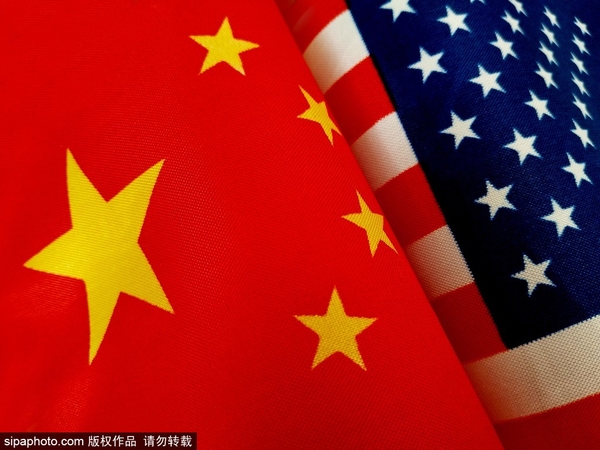
Washington’s new practice of harassing members of the Communist Party of China has raised suspicion of discriminatory enforcement by the United States government, sources told China Daily.

US law enforcement officials recently have asked questions to employees of China’s shipping and aviation companies about their Party membership.

The sources, who are close to the matter, told China Daily exclusively on the condition of anonymity that such checks on Party membership in raids launched by US officials took place on multiple occasions recently on board Chinese ships or airplanes, and that such checks are “extremely rare”. Chinese citizens do not need disclose information such as whether they are CPC members when they apply for a US visa.

The Chinese Foreign Ministry has lodged official protests to the US over this matter multiple times, and the US has not given any legitimate or reasonable explanation.

As of Nov 11, US law enforcement officers and some other unidentified plainclothes personnel boarded 21 ships owned by Chinese shipping giant COSCO Shipping and Shanghai Zhenhua Heavy Industries Co Ltd, the sources said.

Most of the ships were boarded and inspected immediately upon being berthed, which “shows that the US came prepared”, the sources said.

The US personnel scrutinized and photographed the ships and checked their documents. At the height of the raids, 16 ships were boarded one by one over 25 days in October, the sources added.

“The US side’s extensive questioning of Chinese personnel sometimes lasted for several hours, repeatedly fixating on their CPC membership and even asking about reasons for joining the Party,” the sources said.

“They also asked about things like the crew’s links with the Chinese government, the current situation of (COVID-19) epidemic prevention in China, and the crew’s views on the candidates in the US presidential election,” the sources added.

In addition to Chinese ships, US law enforcement agencies launched surprise raids on arriving Chinese airliners on 16 occasions and questioned in detail the cabin crews. On three of these occasions, the questioning involved Party membership, the sources said.

“Such practices of the US side raise suspicion of discriminatory enforcement of the (US) laws and of attempts to provoke ideological confrontation, disrupt regular exchanges of visits between China and the US, and deliberately create trouble and obstacles, giving people the impression that McCarthyism is resurging in the US,” the sources said.

McCarthyism refers to the questioning of public figures and officials led by US Senator Joseph McCarthy in the early 1950s.

“If the US side persists in harassing and goes so far as to resort to suppressing or persecuting CPC members, the Chinese side will consider taking reciprocal countermeasures,” the sources said.

HCM City to improve solutions to climate change response #SootinClaimon.Com

#SootinClaimon.Com : ขอบคุณแหล่งข้อมูล : หนังสือพิมพ์ The Nation.

HCM City to improve solutions to climate change response (nationthailand.com)

HCM City to improve solutions to climate change response

Nov 29. 2020The Tân Thuận drainage system being built in District 7 is one of HCM City’s major flood-control projects. (VNA/VNS Photo Mạnh Linh) The Tân Thuận drainage system being built in District 7 is one of HCM City’s major flood-control projects. (VNA/VNS Photo Mạnh Linh) 

By Vietnam News

HCM CITY — HCM City will assess the relationship between the factors that cause climate change and its socio-economic plans to develop long-term responses.

Nguyễn Thị Thanh Mỹ, deputy director of the city Department of Natural Resources and Environment, elaborated on the task at a recent meeting held to review implementation of climate change response plans over the last four years and set out orientations and tasks for the next decade.

All sectors and government agencies at all levels would need to join hands to find an effective approach to respond to the challenges of climate change and implement the city’s green-growth strategy, she said.

According to Mai Tuấn Anh, head of the department’s meteorology, hydrology and climate change division, the city’s responses to the challenges posed by climate change have enjoyed positive results in the last four years.

Research into and assessment of the impacts of climate change on natural, human and socio-economic factors have been implemented effectively thanks to a new methodology for building local climate change scenarios by the Ministry of Natural Resources and Environment, he said.

“That helps the city … develop solutions to mitigate the impacts of climate change.”

The Department of Industry and Trade has built models for energy monitoring and management that ensure no energy is wasted in the industrial sector that uses over six million kilowatt-hours a year.

The department subsidises the training of personnel at key industrial facilities in energy management.

It also organises seminars and propagates the adoption of energy consumption norms for the steel, plastic and chemical industries to help them clearly understand the laws on efficient use of energy and the benefits of energy saving.

To mitigate the impacts of flooding caused by heavy rains and high river tides, the city has invested in a number of tidal flood-control works like building sluices and dykes and dredging canals.

There are now only 22 flood-prone points in the city, down from 127 three years ago. The flooding also lasts shorter — for only 15-40 minutes after the rains stop — and is only 0.1-0.3 metres in depth.

The city has made plans to draw water from Dầu Tiếng and Trị An reservoirs to ensure there is enough for people facing water shortages caused by climate change.

The People’s Committee has been implementing a plan on household solid waste classification at source since 2017, and people are gradually getting into the habit of separating their wastes before dumping them, making recycling and treatment easier.

The city has invested in infrastructure, replacing rudimentary vehicles with modern garbage trucks and using advanced technologies to treat waste.

It has also invested in sanitary landfills and solid waste treatment plants that convert waste into electricity and generate by-products that can be recycled for compost and help reuse plastic waste.

The Department of Transport is working to diversify fuels, develop infrastructure for clean and renewable energy and promote the use of vehicles that use clean and environment-friendly fuels such as CNG, LPG and electricity.

This has helped gradually replace traditional fuels such as petrol, save energy and reduce pollution and greenhouse gas emissions.

The department also regularly checks vehicles for emissions, especially those emitting black smoke.

But Anh admitted there remained challenges in formulating a response to climate change.

For instance, data from studies and investigations on the effects of climate change was insufficient in terms of both quality and quantity for developing a comprehensive and effective response, he said.

“Propaganda and dissemination of information to improve public awareness have not been successful in mobilising the business community to participate in climate-change responses,” he added.

An official from the Department of Agriculture and Rural Development said the city should seek the collection of used bottles and packages that contained plant protection substances for proper disposal.

They should not be burnt or discarded indiscriminately since they could release toxic gases, he said.

It was necessary to encourage farmers not to burn straw after harvesting rice to reduce greenhouse gas emissions, and instead use it to grow mushrooms and as animal feed.

People living in places affected by climate change should select plants that adapt to salinity and have a short growth period, he added.

The Department of Construction said it would promote the use of unburnt and other environment-friendly building materials for construction.

It would regularly check standards, procedures and technical regulations for the treatment and consumption of ash, slag and gypsum discharged from thermal power plants, chemical and fertiliser plants and gypsum factories. — VNS

Climate Change: Dhaka seeks partnership with the UK #SootinClaimon.Com

#SootinClaimon.Com : ขอบคุณแหล่งข้อมูล : หนังสือพิมพ์ The Nation.

Climate Change: Dhaka seeks partnership with the UK (nationthailand.com)

Climate Change: Dhaka seeks partnership with the UK

Nov 29. 2020

By The Daily Star

Dhaka seeks a strong partnership with the UK to address the fallout of climate change that poses a threat to lives and livelihoods of millions of people.

At a virtual meeting with UK State Minister Lord Ahmed on Wednesday, State Minister for Foreign Affairs Shahriar Alam expressed his expectation for a strong engagement of the UK both for Climate Vulnerable Forum (CVF) and Global Centre on Adaptation (GCA) South Asia.

Shahriar hoped that Bangladesh and the UK would build momentum ahead of COP26 due in November next year for a resilient world.

He said Bangladesh being a non-emitter country has constantly been bearing the burden of incessant carbon emission of the developed countries. For climate change mitigation and adaptation, Bangladesh has prepared Delta Plan 2100 and was the first LDC to establish a Climate Change Trust Fund.

Bangladesh also developed a national “Mujib Climate Prosperity Plan” and launched the CVF “Midnight Survival Deadline for the Climate” initiative for all nations.

Shahriar also cited establishment of the South Asian regional office for Global Centre of Adaptation (GCA) in Dhaka this September.

He highlighted the UK and Bangladesh’s partnership in the track number 6 of Climate Action Summit of the UN secretary general, expecting that the UK-Bangladesh Climate Partnership Forum will bring these two countries together to share innovative ideas, experiences, knowledge, technology and initiatives to achieve greater progress on climate change.

British State Minister Ahmed highlighted that the UK as COP26 president and Bangladesh as chair of the CVF have a unique opportunity to play leading roles in the critical moments ahead for the whole planet.

He said the UK-Bangladesh partnership on climate action was built on strong bonds and hoped that it would last for long beyond COP26.

Ahmed expressed UK’s commitment to double its International Climate Finance expenditure and its intention to spend half of the funding on adaptation and resilience.

Indonesia, World Bank strike deal on emissions reduction #SootinClaimon.Com

#SootinClaimon.Com : ขอบคุณแหล่งข้อมูล : หนังสือพิมพ์ The Nation.

Indonesia, World Bank strike deal on emissions reduction (nationthailand.com)

Indonesia, World Bank strike deal on emissions reduction

Nov 29. 2020

By A. Muh. Ibnu Aqil
The Jakarta Post
The Environment and Forestry Ministry and the World Bank signed a deal on Friday on the Forest Carbon Partnership Facility (FCPF), which provides an additional opportunity for the government to receive payments in exchange for reducing carbon emissions.

Under the agreement, Indonesia will be eligible to receive up to US$ 110 million for reducing carbon emissions from deforestation and forest degradation until 2025.

The results-based payment scheme seeks to advance the government’s goal of reducing carbon emissions in East Kalimantan by 22 million tons.

“This agreement is proof of the Indonesian government’s hard work in reducing deforestation and protecting forests. Our efforts will not stop here,” said the ministry’s secretary general, Bambang Hendroyono, on Saturday.

The agreement, he said, would also spur collaboration between the state, civil society groups, local communities and business players.

“Although the emissions reduction efforts on the ground will be focused in one province, the results will help us all achieve our goals of reducing deforestation and degradation, mitigating climate change and putting Indonesia on the path of green development,” Bambang said in a statement.

The emissions reduction program aims to protect 12.7 million hectares of rainforest and other biodiverse biomes in East Kalimantan, which is home to about 3.5 million people.

Read also: Indonesia speeds up regulation on global carbon trading

The agreement is expected to improve land management and provide local jobs, in addition to protecting the habitats of vulnerable and endangered species. It also seeks to improve the issuance of forestry permits, encourage small-scale plantations and promote community planning for forest areas.

Satu Kahkonen, World Bank country director for Indonesia and Timor-Leste, said Indonesian tropical forests provided key resources on a global scale.

“Indonesia has committed to reducing 41 percent of its greenhouse emissions by 2030, in addition to speeding up sustainable development in its national development plan. The agreement that we signed today will support those ambitious national goals,” Satu said in a statement.

The FCPF is a global partnership of governments, businesses, civil society groups and indigenous peoples focusing on emissions reduction, forest carbon stock conservation and sustainable forest management, under the Reducing Emissions from Deforestation and Forest Degradation (REDD+) cooperation scheme.

In preparation of the FCPF deal, the World Bank has provided a grant to the East Kalimantan provincial administration for the 2015 to 2020 period, which will be managed by the Social and Economic Policy and Climate Change Research Center at the Environment and Forestry Ministry.

Indonesia has previously received two results-based payments for carbon emission reductions.

Read also: Reaping rewards: Indonesia to receive payment from Norway for forest conservation

In August, the government announced that it was eligible to receive a grant of $103.8 million from the Green Climate Fund (GCF) for reducing carbon emissions under the REDD+ scheme.

In late May, the government said that it would receive $56 million from Norway, also under the REDD+ scheme but based on a bilateral agreement.

Going green will mean $1.35 trillion in opportunities for Asean economies: Report #SootinClaimon.Com

#SootinClaimon.Com : ขอบคุณแหล่งข้อมูล : หนังสือพิมพ์ The Nation.

Going green will mean $1.35 trillion in opportunities for Asean economies: Report (nationthailand.com)

Going green will mean $1.35 trillion in opportunities for Asean economies: Report

Nov 29. 2020

By Straits Times

SINGAPORE – Going green could bring up to US$1 trillion (S$1.35 trillion) in annual economic benefits to South-east Asian economies by 2030, a report by global management consulting firm Bain and Company said on Thursday (Nov 26).

Greater investments in renewable energy, reduced consumption and better waste management, less damaging crop-growing practices and improved urban planning are among the areas that could bring new growth opportunities for economies and greater efficiencies and savings, the authors say.

But change needs to happen quickly as climate change risks grow along with rising threats to the environment and human health from deforestation, air pollution and growing mountains of rubbish, particularly plastic waste.

The report, Southeast Asia’s Green Economy: Pathway To Full Potential, said Asean is at risk of being left behind other regions but the good news is that it is waking up to the need to change and could make rapid advances with the right policies.

Along with the report, Bain also launched its Global Sustainability Innovation Centre (GSIC) in Singapore, which aims to advise firms on adapting to a less polluting and more efficient world.

“The green economy is here already,” said Mr Dale Hardcastle, co-author of the report and co-director of GSIC. “We strongly believe that South-east Asia really needs to be much bolder in its ambition,” he told a media roundtable.

Economies around the world have passed major stimulus programmes to address the Covid-19 pandemic and promote “build back better” initiatives. This is accelerating the push towards greener industries.

The authors said the European Union has dedicated roughly US$600 billion from its recovery fund and 2021 to 2027 budgets to sustainable investments and green industries.

US President-elect Joe Biden has also pledged to spend US$2 trillion in investments on clean energy, infrastructure and automobile innovation over the next four years.

While Asean countries have not been focused on green stimulus spending, that is starting to change, the authors say.

Governments are seeing what other regions are doing in terms of green stimulus plans, plus mid-century net-zero emissions targets from China, Japan and others that will drive investments away from polluting fossil fuels.

Customers and investors are also putting pressure on companies to show they are taking action to cut emissions and make their operations, services and products less wasteful.

The region, with about 10 per cent of the world’s population, faces growing environmental challenges, the authors note.

MORE ON THIS TOPIC

Sustainability should be put at the core of post-pandemic recovery plans: Grace Fu

Singapore may tap region’s low-carbon energy sources in future

Carbon dioxide (CO2) emissions are projected to increase by about 60 per cent by 2040, and at present, about 85 per cent of total primary energy supply comes from non-renewable sources. About 56 per cent of projected global mismanaged plastic waste in 2025 will come from Asean.

Biodiversity loss from deforestation, land degradation, climate change and poaching is another critical issue for a region that has about 20 per cent of the world’s known plants and animals.

The authors identified several areas where green investments and policies could yield significant financial opportunities.

These included US$270 billion by shifting away from polluting fossil fuels, excessive extraction, over-consumption and poor waste disposal. Ramping up green power generation, cleaner transport, more efficient use of resources and better waste management and recycling could create new businesses and jobs and create large savings.

Overhauling food production could yield US$205 billion in benefits, including access to better and more affordable nutrition, less food waste, more efficient and less damaging crop production and far more efficient food supply chains.

“Unless addressed, inaction presents a real threat to South-east Asia’s global competitiveness in the decade ahead,” the authors note. “Investors increasingly favour companies with better sustainability stewardship, while governments are considering taxes on imports from countries with high carbon footprints.”

MORE ON THIS TOPIC

Green finance seen as key in Singapore’s climate change fight

Use of hydrogen to power data centres in Singapore being studied by Keppel, Mitsubishi Heavy

Bain’s GSIC, which has been established with the help of the Economic Development Board, will tap the firm’s expertise as well as external partners to help companies figure out how to make the switch to more sustainable business practices.

“In a nutshell, we’re here to help companies solve their sustainability issues, find practical solutions to them and the right way to finance them,” said Mr Gerry Mattios, report co-author and GSIC co-director.

He said the centre is already focusing on agriculture and food and supply chains and is looking to build up the centre’s expertise in other areas by adding to its team.

Mr Hardcastle said many companies are struggling with what to do about sustainability. “But that’s not necessarily negative.”

He said sustainability leaders, such as Microsoft, have set ambitious targets that will stretch their organisations. But he added: “Those companies don’t have all the answers and need help.”

“If we look at many of the companies in the region, many of them want to catch up. They want to learn from global business leaders and how they can make their sustainability journey faster. So the centre can play a role there,” he said.

https://omny.fm/shows/green-pulse-1/nurture-nature-to-prevent-pandemics-green-pulse-ep/embed?style=cover

No end in sight as both sides refuse to shift their stance #SootinClaimon.Com

#SootinClaimon.Com : ขอบคุณแหล่งข้อมูล : หนังสือพิมพ์ The Nation.

No end in sight as both sides refuse to shift their stance (nationthailand.com)

No end in sight as both sides refuse to shift their stance

Nov 29. 2020Anti-government protesters throw rubber ducks, symbolising their fight against dictatorship during a drill against a possible coup on Friday night in Bangkok.Anti-government protesters throw rubber ducks, symbolising their fight against dictatorship during a drill against a possible coup on Friday night in Bangkok. 

By By Thai PBS World Syndicate/ ANN

Thai politics has arrived at a dead end as neither side shows any sign of stepping away from the tug-of-war they have been playing for nearly five months. Analysts say the dispute between the powers-that-be and the anti-establishment movement will be prolonged, with no reconciliation in sight. Some don’t rule out the possibility of a coup as the last resort, though others predict that Prime Minister Prayut Chan-o-cha will stay in power until his term ends in 2023.

The anti-establishment movement has been rallying since July, demanding that Prayut and his government step down, the junta-endorsed Constitution be rewritten and the monarchy reformed.

They are escalating their protests to a point of no return and “shattering the ceiling” by challenging the monarchy, observers say.

No sign of reconciliation

Analysts have proposed non-violent routes out of the conflict, such as peace talks, but each side has refused because the stakes are too high for both. Moves to set up a reconciliation committee are also likely to fail, as protesters have boycotted the panel.

Many observers now warn of possible clashes and violence if the student-led protesters refuse to lower their demands, especially their call for monarchy reforms. There is also concern that if things get out of control, the government will impose martial law or even be ousted by the Army.

Yuthaporn Issarachai, a political scientist from Sukhothai Thammathirat Open University, says the escalation of protests brings an increasing likelihood of violent clashes and bloodshed.

The potential for serious violence was seen soon after protesters began dispersing on Wednesday (November 25), when two men were shot and critically wounded, though the shooting’s connection to the rally remains unclear. The rally for monarchy reform was being held outside the headquarters of Siam Commercial Bank (SCB) in Bangkok’s Chatuchak district. His Majesty the King is the major shareholder in the bank.

A week earlier, more than 50 demonstrators sustained injuries, including six with gunshot wounds, during a rally outside Parliament on November 17, when police directed water cannon and tear gas at protesters and skirmishes broke out between royalists and pro-democracy protesters – the first major clash between the two rival sides.

Yuthaporn fears that clashes and the PM’s vow to enforce “all pertaining laws” may lead to a “severe” state of emergency, followed by martial law and finally a military coup. He said a coup would be a last resort if clashes between royalists and anti-establishment protesters cause massive injuries and even deaths.

The pundit believes a military takeover is a real possibility, given Thailand does not have an established democracy and the Army’s structure leaves the door open for a putsch. However, it would only make things worse, he added.

“Staging a coup may be the last resort [to solve the stalemate], but it won’t end the political crisis. Instead it will intensify the situation, as protesters have made it clear they won’t accept a coup or national unity government,” Yuthaporn said.

Fully aware that a military seizure becomes more likely as the conflict escalates, pro-democracy protesters occupied the busy Lat Phrao intersection on Friday to stage an anti-coup drill.

Core protest leader Panusaya “Rung” Sithijirawattanakul urged protesters to resist any military intervention, noting that rumours of a coup were now emerging daily.

“If a coup is staged, we want to see more people out on the streets to thwart it,” she said.

Last week, PM Prayut dismissed the coup rumours, adding he would not impose martial law in Bangkok as existing laws were adequate to cope with the situation.

‘Little will change’

Wanwichit Boonprong, a political scientist from Rangsit University, expects the crisis to turn into a “cold war”, with both sides quietly gathering support for their opposing ideologies.

This may enable Prayut to stay until the end of his term in early 2023, with a new Constitution delayed until then.

Two charter amendment drafts paving the way for a Constitution rewrite are currently being vetted by a parliamentary panel. Though no official timeline has been set, Thailand is expected to have a new Constitution by 2022 at the soonest if there are no legal hurdles.

“Prayut is still able to control all levers [of power]. He has the military’s support and, barring ‘political accidents’, there is no suitable candidate to replace him,” the political analyst said.

Polishing armour

Friday’s “coup-prevention drill” came two days after thousands of pro-democracy protesters gathered outside SCB headquarters in one of their most direct challenges to the monarch so far. This was the first rally to focus almost exclusively on transparency and accountability of royal assets – one of the 10 points in the manifesto for monarchy reform issued by the movement in August.

SCB is Thailand’s oldest bank and the largest lender by assets. According to the SCB website, HM King Maha Vajiralongkorn is its biggest shareholder, holding a 23.53 per cent stake in the bank after assets managed by the Crown Property Bureau were transferred to his personal control.

The 10-point manifesto calls for the annulment of the 2018 Royal Assets Structuring Act passed by the post-coup regime. The act combines the King’s personal assets and the crown’s wealth managed by the Crown Property Bureau, which previously came under the Finance Ministry.

At the rally, protest leader and rights lawyer Arnon Nampa said signatures would be collected to back a parliamentary draft bill that places Crown Property Bureau assets under the management of an elected government.

The pro-democracy movement’s shift of focus towards the King has led to protest leaders being charged with lese majeste, under the draconian Article 112 of the penal code.

The law had not been used for two years but was revived hours before protesters gathered outside SCB’s HQ calling for a “return of assets that should belong to citizens”.

At least 12 protest leaders were summoned to hear charges of royal defamation, according to the Thai Lawyers for Human Rights. This is the first time that Article 112, which carries a penalty of up to 15 years in jail, has been applied to the mass protest movement that launched in July.

In June, Prayut said the King had instructed the government not to use Article 112. That instruction is now apparently void.

“I am not scared,” protest leader Parit “Penguin” Chiwarak said on Tuesday night after being summoned by police. “I’m more worried that they are still using this [lese majeste law] in politics like this. The country will deteriorate further.”

Critics claim Article 112 has long been used to silence government critics.

Its restoration marks a point of no return for the protest movement, said Parit.

“Let [them] come to arrest us,” he said at Wednesday’s rally.

“The protests will continue even without us. Our movement has now moved to a different level. From now on, there will be no softness or retreat from us.”

Some employers in Singapore planning to scrap staff bonuses this year #SootinClaimon.Com

#SootinClaimon.Com : ขอบคุณแหล่งข้อมูล : หนังสือพิมพ์ The Nation.

Some employers in Singapore planning to scrap staff bonuses this year (nationthailand.com)

Some employers in Singapore planning to scrap staff bonuses this year

Nov 28. 2020Other employers are still going ahead with plans to pay their staff a bonus on top of the annual wage supplement. ST PHOTO: KUA CHEE SIONGOther employers are still going ahead with plans to pay their staff a bonus on top of the annual wage supplement. ST PHOTO: KUA CHEE SIONG 

By Yuen Sin
The Straits Times/ANN

SINGAPORE – Some employers in the private sector plan to not pay any bonuses to their staff this year. This is similar to the Government announcing there would be no bonus paid to civil servants at the year’s end, given the weakened economic outlook caused by the Covid-19 pandemic.

Others, however, are still going ahead with plans to pay their staff a bonus on top of the annual wage supplement, or 13th month bonus.

Mr Nick Lee, director of IT services firm AIT Technologies, said his firm has been making a loss this year as client projects were delayed amid the coronavirus outbreak. He will not be able to pay his staff an annual bonus or the 13th month bonus.

“We already had to let go two people earlier this year, but the majority of our staff have not had their salaries cut. Saving our company is the priority now,” he said.

Dr Kevin Cheong, executive director of local attraction Sentosa 4D AdventureLand, also said it would not be possible for him to pay a bonus to staff.

“With as good as half the year’s income wiped out overnight, all of us are struggling, even after we have reopened our doors to visitors.”

Dr Cheong, who is also chairman of the Association of Singapore Attractions, said he would not be surprised to see most tourism operators doing the same.

The two men were responding to yesterday’s announcement by the Public Service Division (PSD) that Singapore’s 85,000 civil servants will not receive any year-end bonus this year.

This means they will not be receiving any annual variable component for the entire year as mid-year bonuses were also not paid out earlier this year.

Civil servants will still receive the non-pensionable annual allowance, or 13th month bonus, of one month’s pay.

Mr Dainial Sani Lim, group director of immigration consultancy Cayman Group Holdings, will still be paying the 13th month bonus to his staff, and also plans to continue paying annual performance bonuses.

Though revenues have been slightly affected by Covid-19, his firm is not as hard-hit.

“Our bonus is tied to our company’s performance, but because of Covid-19, I reduced the group performance target by about 20 per cent… If we hit this target, we will still be able to give out bonuses,” said Mr Lim. “Even though times are difficult, everyone still has to pay the bills.”

Mr Ho Meng Kit, chief executive of the Singapore Business Federation, said the public sector’s non-payment of the year-end bonus is a signal for the private sector to be prudent in managing its wage costs. He noted that the outlook for businesses over the next year remains highly uncertain.

“In view of (this), we would expect businesses to prioritise the management of their wage costs,” he said.

Meanwhile, the PSD said it will continue to give special consideration to lower-wage civil servants, with around 2,400 staff in lower pay grades receiving a one-time lump sum payment of $1,200.

Mr Raman Kathavarayan, general secretary of the Amalgamated Union of Public Daily Rated Workers, cheered the move to provide this payment to lower-wage workers as it would give them much-needed encouragement.

Mr Sanjeev Kumar Tiwari, general secretary of the Amalgamated Union of Public Employees, said the union is appreciative that the 13th month bonus has been maintained for all public officers.

A civil servant in his 30s who declined to be named said he is not surprised at the news about the year-end bonus.

“(This is) because year-end bonuses have always been tied to the economy.” However, he hopes that his performance bonus, which is paid out in March, will not be affected.

India’s GDP contracts by 7.5 per cent in Q2FY21 #SootinClaimon.Com

#SootinClaimon.Com : ขอบคุณแหล่งข้อมูล : หนังสือพิมพ์ The Nation.

India’s GDP contracts by 7.5 per cent in Q2FY21 (nationthailand.com)

India’s GDP contracts by 7.5 per cent in Q2FY21

Nov 28. 2020

By The Statesman/ANN

The economy had shrunk by an unprecedented 23.9 per cent in the first quarter of this fiscal due to the coronavirus pandemic and resultant lockdowns.

India’s economy has officially entered in a technical recession for the first time in history as the government on Friday announced that country’s Gross Domestic Product (GDP) for the second quarter contracted by 7.5 per cent.

This is the second time in the current fiscal year when country’s GDP has fallen. In the first quarter i.e. April-June quarter it contracted 23.9 per cent, the steepest fall ever.

The GDP had expanded by 4.4 per cent in the corresponding July-September period of 2019-20, according to data released by the National Statistical Office (NSO).

The economy had shrunk by an unprecedented 23.9 per cent in the first quarter of this fiscal due to the coronavirus pandemic and resultant lockdowns.

This trend underscores the reduction in purchasing power along with lower tax collection for the government, likely defaults on debt and falling Capex spends.

According to the NSO, the GDP at ‘Constant (2011-12) Prices’ in Q2FY21 is estimated at Rs 33.14 lakh crore as against Rs 35.84 lakh crore in Q2FY20, showing a contraction of 7.5 per cent as compared to 4.4 per cent growth in Q2FY21.

“Quarterly ‘GVA at Basic Prices at Constant (2011-12) Prices’ for Q2 of 2020-21 is estimated at Rs 30.49 lakh crore, as against Rs 32.78 lakh crore in Q2 of 2019-20, showing a contraction of 7 per cent,” the NSO said in the estimates of Q2FY21 GDP.

“With a view to contain the spread of the Covid-19 pandemic, restrictions were imposed on the economic activities not deemed essential during Q1. Though the restrictions have been gradually lifted, there has been an impact on the economic activities,” it added.

While the Indian economy continue to remain under pressure, China’s economy grew by 4.9 per cent in July-September this year, faster than the 3.2 per cent growth in April-June 2020.

Beijing, ASEAN to enhance ties #SootinClaimon.Com

#SootinClaimon.Com : ขอบคุณแหล่งข้อมูล : หนังสือพิมพ์ The Nation.

Beijing, ASEAN to enhance ties (nationthailand.com)

Beijing, ASEAN to enhance ties

Nov 28. 2020Pedestrians take photographs of a decoration for the 17th China-ASEAN Expo in Nanning, capital of the Guangxi Zhuang autonomous region. [Photo by YU XIANGQUAN/FOR CHINA DAILY]Pedestrians take photographs of a decoration for the 17th China-ASEAN Expo in Nanning, capital of the Guangxi Zhuang autonomous region. [Photo by YU XIANGQUAN/FOR CHINA DAILY] 
By LIU YUKUN, SHI RUIPENG, ZHONG NAN and ZHONG NAN
CHINA DAILY/ANN

China’s Jan-Sept direct investment in region surged 76.6 percent to $10.72b

Companies from China and the Association of Southeast Asian Nations are ready to explore more investment opportunities in a range of areas following the recent signing of the Regional Comprehensive Economic Partnership, officials and business leaders said on Friday.

While both sides look forward to the deal’s early implementation, they said many opportunities also come from the tangible development of regional economic integration with the Belt and Road Initiative, China and ASEAN’s complementary industrial structure and their growing bilateral trade value in both goods and services.

The remarks were made during the ongoing 17th China-ASEAN Expo in Nanning, the Guangxi Zhuang autonomous region.

Ning Jizhe, vice-minister of the National Development and Reform Commission, said since China and ASEAN jointly released a statement on production capacity cooperation in 2016, their enhanced industrial and value chains have helped businesses on both sides better cope with uncertainties caused by the COVID-19 pandemic, protectionism and the global recession.

Apart from the fast development of big-ticket infrastructure and industrial park projects such as the China-Laos Railway, Indonesia’s Jakarta-Bandung high-speed railway and China-Singapore Suzhou Industrial Park, Ning said that the two parties should give full play to their comparative advantages and enrich regional industrial chains in key sectors such as infrastructure, manufacturing, agriculture and healthcare in the next stage of partnership.

Despite slowing global trade, economic recession and serious travel disruptions, China’s direct investment in ASEAN markets surged 76.6 percent on a yearly basis to $10.72 billion in the first three quarters. The top three investment destination countries were Singapore, Indonesia and Laos, said the Ministry of Commerce.

Khamchan Vongseneboun, Lao deputy minister of planning and investment, said business ties between China and ASEAN are expected to become more well-rounded and pragmatic after the signing of the RCEP, the world’s largest trade deal. Her country encourages companies from both China and other ASEAN members to invest in its transportation, services and agricultural sectors, and the government will in turn offer preferential tax policies.

Owing to the huge gaps in levels of economic development between ASEAN economies, Xu Zhiyu, president of global government affairs at Shenzhen, Guangdong province-based Huawei Technologies Co Ltd, said the Chinese company will deploy more resources to help certain ASEAN countries like Laos build more telecommunication infrastructure facilities to accelerate modernization, as well as provide related training and educational opportunities for local talent.

Raja Dato’ Nushirwan Zainal Abidin, Malaysian ambassador to China, said he hopes a production capacity cooperation plan will further enhance teamwork in the area of advanced technologies, especially 5G, artificial intelligence, robotics, aerospace and pharmaceuticals between Malaysia and China.

Gao Yan, chairwoman of the Beijing-based China Council for the Promotion of International Trade, said China will continue to promote economic development through industrial upgrading to complement the production and consumption needs of ASEAN economies and China to achieve sustainable development and shared prosperity.

Despite the global economic downturn, Lim Ming Yan, chairman of the Singapore Business Federation, said that Singapore businesses continue to show unwavering interest in the Chinese market. With Singapore being one of the world’s major infrastructure, financial, legal and logistics hubs, its companies are well positioned, Lim said.

Vaccines for 6.4mil Malaysians next year #SootinClaimon.Com

#SootinClaimon.Com : ขอบคุณแหล่งข้อมูล : หนังสือพิมพ์ The Nation.

Vaccines for 6.4mil Malaysians next year (nationthailand.com)

Vaccines for 6.4mil Malaysians next year

Nov 28. 2020

By ZAKIAH KOYA
The Star/ANN

PUTRAJAYA: Malaysians are likely to have access to free Covid-19 vaccines as early as next January, says the Prime Minister.

Tan Sri Muhyiddin Yassin revealed that an early purchase agreement was signed on Tuesday with pharmaceutical giant Pfizer to gain a supply of 12.8 million doses of Covid-19 vaccine for 20% of the population.

In making the announcement at a media conference here yesterday, he said the deal was the first stage of the government’s plan to provide free Covid-19 immunisation for all Malaysians.

He also said the vaccines would not be given to those under 12 years old as it has yet to be tested on children.

This is part of the government’s RM3bil plan to gain enough Covid-19 vaccines to immunise 6.4 million of the population as soon as the vaccine has been proven safe enough to be used.

“The government guarantees all Malaysians that the Covid-19 vaccines used in Malaysia will go through the stringent conditions set by the National Pharmaceutical Regulatory Agency (NPRA). There will be no compromise on its safety and quality, ” said Muhyiddin.

He said the agreement with Pfizer would ensure the government had access to data to be able to monitor the quality, safety and efficacy as well as guarantee access to the vaccine when the company was ready to distribute.

“Pfizer on Nov 9 stated that the first analysis of the interim data showed a vaccine efficacy of 95%.

“Pfizer also promised delivery of one million dose of vaccine in the first quarter of 2021, followed by 1.7 million doses in the second quarter, 5.8 million doses in the third quarter and 4.3 million doses in the final quarter of 2021, ” said Muhyiddin at the Prime Minister’s Office.

He was flanked by Health Minister Datuk Seri Dr Adham Baba and Science, Technology and Innovation Minister Khairy Jamaluddin during the virtual media conference.

Muhyiddin also said that although the deal was signed, Pfizer had yet to pass the US Food and Drug Administration and the regulatory bodies of the manufacturing countries.

“Pfizer also has to get the approval from the National Pharmaceutical Regulatory Agency under the Health Ministry before the vaccine can be used in Malaysia.

“On Nov 22, the Health Minister also signed an agreement with Covax facility to get the Covid-19 vaccines to enable the immunisation of 10% of the population, ” said Muhyiddin.

Covax is a global initiative co-led by the World Health Organisation (WHO), Gavi – the Vaccine Alliance and the Coalition for Epidemic Preparedness Innovations (CEPI) – to ensure fair and equitable access to Covid-19 vaccine worldwide.

The Prime Minister said that both these agreements were expected to acquire the access to the Covid-19 vaccine for 30% of the Malaysian population.

He said that the vaccine, when in hand, would be given in stages to the high-risk groups including frontliners, the elderly and patients who suffer from non-communicable diseases such as heart disease, diabetes and chronic illnesses.

He, however, assured that no one would be made a guinea pig when getting the immunisation for Covid-19.

“It will later be widened to other targeted groups, ” said Muhyiddin.

The Prime Minister also announced that the Health Ministry would begin a Phase Three clinical study next month on the Covid-19 vaccine with China.

The study will be conducted by local contract research organisations and registered under the National Medical Research Registry.

“This vaccine will be developed by the Institute Medical Biology Chinese Academy of Medical Sciences.

“This Phase 3 clinical study will involve 3,000 participants and will test the safety and efficacy of the vaccine which is being developed, ” said Muhyiddin.

He said the safety of the vaccine would come under the monitoring of the NPRA to get a Clinical Trial Import Licence and MREC to ensure it would all be approved by the Health Ministry.

The Prime Minister also stated that Malaysia would take a multi-prong approach to get enough vaccines for at least 60% of the population.

“We will get the tested vaccines from any country and we are currently negotiating with 10 of the 12 leading manufacturers of Covid-19 vaccines in various countries such as China, Russia and the United States.

“Whatever it is, the vaccine to be used on Malaysians must be first approved by NPRA.

“We will not make it compulsory for all, but we will make it mandatory for the vulnerable groups.

“A recent study has shown that 82% of Malaysians are for the Covid-19 immunisation. As for those against vaccination, we will engage them through information and media campaigns, ” said Muhyiddin.

On the private sector getting access to the Covid-19 vaccines, he said they would have to wait until the supply was enough on the government’s side.

“However, we do not prevent the private sector from negotiating to get their own supply, ” said Muhyiddin.

He also urged the countries which are developing the tested Covid-19 vaccines to set up their factories in Malaysia.

“We will give them special treatment and provide them with incentives, ” said Muhyiddin.

On Nov 19, Khairy said that Malaysia would make an upfront payment of RM94mil soon for access to a Covid-19 vaccine.

He said the Cabinet decided on Nov 13 that Malaysia, through the Health Ministry, would conclude its participation in the Covax facility by signing the Optional Purchase Arrangement.

Khairy said earlier that the government intended to target 70% of the Malaysian population to get the Covid-19 vaccine in the first quarter of 2021, focusing on adults to enable the country to reach the herd immunity threshold.

He said if the herd immunity threshold was achieved, those who have not been vaccinated would be protected from Covid-19 infection.

“There will be some who will not get the vaccination because most of the Covid-19 vaccines developed have not been tested on children under the age of 12, so definitely they will not be vaccinated next year, ” Khairy said.