86.7% of coronavirus cases in PH are mild–WHO #ศาสตร์เกษตรดินปุ๋ย

#ศาสตร์เกษตรดินปุ๋ย : ขอบคุณแหล่งข้อมูล : หนังสือพิมพ์ The Nation.

https://www.nationthailand.com/ann/30387601?utm_source=category&utm_medium=internal_referral

86.7% of coronavirus cases in PH are mild–WHO

May 10. 2020
Photo credit: rawpixel.com

Photo credit: rawpixel.com
By Ian Biong
Inquirer

MANILA, Philippines—About 9,070 or 86.7% of all recorded COVID-19 cases in the Philippines are mild, the World Health Organization (WHO) highlighted in a situation report.

Of the total 10,463 confirmed COVID-19 cases in the country, meanwhile, 54% are male, with 30 to 39 years old as the most affected age group at 21.3%, followed by the 20 to 29 age group at 16.9%, according to the report released on Friday.

Of the 696 deaths recorded, 65% are also males with the most affected age group over 70 years at 36.6%, followed by the 60 to 69 years group at 32.6%.

Most of the COVID-19-related deaths reported are from Luzon, with Metro Manila having the most number of fatalities at 71.8%, followed by Calabarzon at 12.3% and Central Luzon at 4.1%.

“The current transmission classification in the Philippines is identified as clusters of cases with evidence of community transmission in highly urbanized areas of NCR, Cebu and Davao,” the WHO noted.

The country also on Friday recorded the highest increase of COVID-19 recoveries with 116 new recoveries, raising the total to 1,734.

COVID-19 testing capacity

The 23 accredited COVID-19 laboratories across the Philippines have been conducting over 7,000 RT-PCR (real-time polymerase chain reaction) tests every day, the WHO said. While total daily testing capacity stands at around 13,000, the actual number of tests fluctuates “due to continued shortages of supplies.”

The Philippines heavily relies on RT-PCR tests as both the WHO and the Department of Health (DOH) have yet to validate rapid antibody testing, despite several laboratories in the country using the method.

Health Undersecretary Maria Rosario Vergeire on Tuesday explained that rapid antibody test kits are not “stand-alone” tests as these only detect antibodies, not the novel coronavirus itself.

Vergeire earlier announced that the country will be able to conduct 30,000 tests per day by the end of May amid efforts to increase testing capacity for COVID-19.

Chinese, U.S. chief trade negotiators hold phone talks #ศาสตร์เกษตรดินปุ๋ย

#ศาสตร์เกษตรดินปุ๋ย : ขอบคุณแหล่งข้อมูล : หนังสือพิมพ์ The Nation.

https://www.nationthailand.com/ann/30387503?utm_source=category&utm_medium=internal_referral

Chinese, U.S. chief trade negotiators hold phone talks

May 08. 2020
By Xinhua/ANN

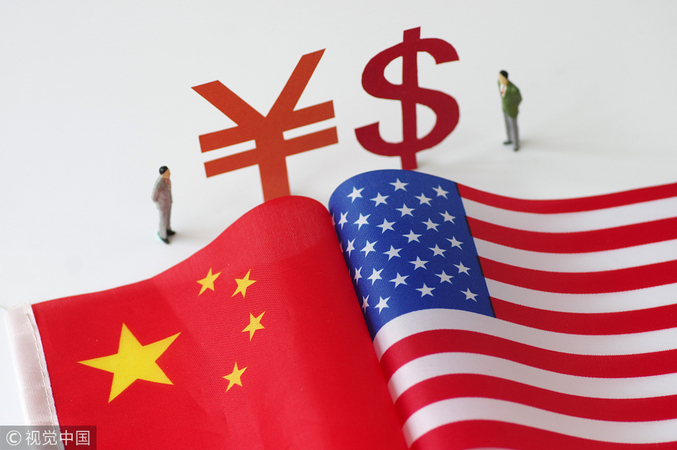
BEIJING-Chinese Vice Premier Liu He, a member of the Political Bureau of the Communist Party of China Central Committee and chief of the Chinese side of the China-U.S. comprehensive economic dialogue, held a phone conversation with U.S. Trade Representative Robert Lighthizer and Treasury Secretary Steven Mnuchin Friday morning.

The two sides agreed that they should enhance macroeconomic and public health cooperation, create a favorable atmosphere and conditions for the implementation of the China-U.S. phase-one trade deal, and strive for positive outcomes.

They also agreed to maintain communication and coordination.

SET rebounds on news of US-China trade talks, second phase of easing lockdown

China donates 600,000 masks to Singapore #ศาสตร์เกษตรดินปุ๋ย

#ศาสตร์เกษตรดินปุ๋ย : ขอบคุณแหล่งข้อมูล : หนังสือพิมพ์ The Nation.

https://www.nationthailand.com/ann/30387316?utm_source=category&utm_medium=internal_referral

China donates 600,000 masks to Singapore

May 05. 2020
Singapore's Senior Minister of State Lam Pin Min (left) receives a donation of masks from China's ambassador to Singapore Hong Xiaoyong at the Ministry of Health on May 5, 2020.PHOTO: MINISTRY OF HEALTH

Singapore’s Senior Minister of State Lam Pin Min (left) receives a donation of masks from China’s ambassador to Singapore Hong Xiaoyong at the Ministry of Health on May 5, 2020.PHOTO: MINISTRY OF HEALTH
By Clement Yong
ANN / The Straits Times

SINGAPORE – China has donated 500,000 surgical masks and 100,000 KN95 masks to Singapore’s national stockpile to help the latter manage the coronavirus outbreak.

Its ambassador to Singapore Hong Xiaoyong handed over the masks to Singapore’s Senior Minister of State for Health Lam Pin Min at the Ministry of Health (MOH) on Tuesday (May 5).

The ministry expressed its thanks in a statement on the same day, saying that the move highlighted the importance of continued mutual assistance and collaboration between the two countries in this period.

This comes after Singapore and China reaffirmed their commitment to ensure the free flow of goods and medical supplies during the coronavirus pandemic in April, in a year that marks the 30th anniversary of diplomatic relations between the two countries.

In a speech thanking China, Dr Lam said on Tuesday that both countries are working on gradually restoring normalcy to exchanges between them while managing public health risks.

“Our cooperation spans many sectors, including the health, economic, and people-to-people spheres. We have facilitated the repatriation of each other’s nationals, and provided humanitarian assistance to each other in times of need, with contributions from all walks of life,” he said.

“Our officials have also been sharing best practices, and discussing initiatives to facilitate trade, the continued flow of essential goods and personnel, and joint research and development, for the benefit of both our countries as well as the international community.”

On April 28, Singapore’s Minister for Foreign Affairs Vivian Balakrishnan told his Chinese counterpart Wang Yi in a phone call that Singapore will continue to look after the well-being of Chinese migrant workers here.

Earlier in the year, when China was the epicentre of the coronavirus outbreak, the Singapore Government, companies, and charities sent humanitarian aid to the country.

The Singapore Government, for instance, contributed $1 million to kick-start Singapore Red Cross’ fund-raising efforts in February. The Ministry of Defence also delivered more than 2,000kg of medical supplies to China for distribution at military hospitals there in the same month.

In recent months, China has also delivered supplies to several countries, including sending Italy millions of masks and dispatching teams of doctors there.

UN sanctions panel approves S. Korean NGO’s aid project for NK #ศาสตร์เกษตรดินปุ๋ย

#ศาสตร์เกษตรดินปุ๋ย : ขอบคุณแหล่งข้อมูล : หนังสือพิมพ์ The Nation.

https://www.nationthailand.com/ann/30387314?utm_source=category&utm_medium=internal_referral

UN sanctions panel approves S. Korean NGO’s aid project for NK

May 05. 2020
AP-Yonhap

AP-Yonhap
By Yonhap
ANN / The Korean Herald

The UN Security Council’s committee on sanctions against North Korea has approved an application from a South Korean nongovernmental agency to conduct its aid program in the communist state, its website showed Tuesday.

With the approval for the sanctions exemption, Green Tree International is to carry out its program for six months until Oct. 30. The program aims to support the rehabilitation process at the Korean Rehabilitation Center for Children with Disabilities in the North.

The agency applied for the sanctions exemption through South Korea’s permanent mission at the UN on April 6.

The Seoul-based aid agency has engaged in humanitarian activities related to supporting the disabled around the world and children in the North, its website said. (Yonhap)

America sets a bad example on coronavirus fight #ศาสตร์เกษตรดินปุ๋ย

#ศาสตร์เกษตรดินปุ๋ย : ขอบคุณแหล่งข้อมูล : หนังสือพิมพ์ The Nation.

https://www.nationthailand.com/ann/30387198?utm_source=category&utm_medium=internal_referral

America sets a bad example on coronavirus fight

May 03. 2020
By Nehginpao Kipgen
The Statesman

While it remains the world’s most powerful country in terms of economy and military, it apparently is losing or waning its long-standing socio-economic-political influence or presence across the world in recent years.

Since the end of World War II and more importantly following the collapse of the Soviet Union, the United States of America has led the world in many ways as a generous nation and/or as a policeman.

While it remains the world’s most powerful country in terms of economy and military, it apparently is losing or waning its long-standing socio-economic-political influence or presence across the world in recent years. While there are several other factors responsible for the decline of its global image, undoubtedly one of the most important reasons is its people. By people, I mean political or government leaders, party leaders and even people among the general public although this does not entirely come down to one individual or political party or even one single administration.

In recent times, America’s leadership and the inherent partisan divide over the Covid-19 pandemic is a bad example for America and the world at large. Over the past several weeks, both the federal government and state governments have taken several measures to tackle the spread of the coronavirus following the confirmation of the first positive case on January 21.

On January 31, the Trump administration announced that it would deny entry to any foreign national who had visited China in the last 14 days, after which the Chinese government accused Washington of spreading fear by enforcing travel restrictions. President Donald Trump nominated Vice President Mike Pence in charge of the government’s response to the pandemic on February 26. On March 11, the White House restricted travel from Europe for 30 days in an attempt to fight against the coronavirus. And on March 13, the government declared a national emergency to free up $50 billion to combat the virus.

Subsequently on March 18, President Trump signed a coronavirus relief package including free testing and paid emergency leave. And on March 27, Trump signed a stimulus package of $2 trillion, one of the most expensive relief measures passed in the history of the United States Congress. While the authorities have taken several measures, arguably one of the biggest worrying developments is over the lockdown and social distancing issues.

To combat the spread of the virus, many states have ordered different restrictions at varying levels of severity. What has surprised many around the world is that the largely-perceived-as-law-abiding citizens have taken to the streets and other places in small groups and or large numbers to protest the restrictive measures announced by different state administrations. Some protesters, who are mostly Trump’s supporters, argue that emergency declarations by Democratic governors violate their constitutional right to peacefully assemble.

The unfortunate development is the manner in which the entire situation becomes more of a partisan issue at a time when the United States has surpassed all other countries, including China (at least per official data) in terms of both positive cases and deaths. The Democratic governors have asked the White House to urge Americans to stay at home during the lockdown and maintain social distancing. On the other hand, Trump has directly or indirectly incited and or encouraged his supporters to protest the orders of state governments.

Instead of urging them to stay indoors, Trump at a press briefing on April 19 said, “some governors have gone too far” and the protesters were “great people…their life was taken away from them…these people love our country, they want to get back to work.” While the Constitution grants the states power over public order and safety, the president’s opinion and/or statements from the White House undoubtedly have a strong influential message on the American people. The partisan divide over the coronavirus pandemic was evident when some Republican governors had started easing lockdowns in their states in the past several days.

For example, on April 21, governors in three southern states – Georgia, Tennessee and South Carolina – announced their plans to ease coronavirus lockdowns. Subsequently, restaurants, hair salons, gyms, bowling alleys and some cinemas were allowed to reopen in Georgia since late last week. The Tennessee governor said most of the businesses will be allowed to reopen by May 1. And South Carolina allowed people to return to beaches and also permitted the reopening of non-essential retail businesses. Though it is entirely up to the states to decide when to relax or reopen their businesses, it is concerning that the issue has become so partisan among politicians and their supporters. While there is no doubt that the lockdowns are definitely hurting the US economy, it is disheartening to see protesters with Trump 2020 flags, hats and shirts in states ruled by Democratic governors.

As per a BBC news report on April 21, one militia leader in the state of Illinois said, “Reopen my state or we will reopen it ourselves.” Such a development is particularly disturbing in a socalled democratic country where there is easy-access to arms and ammunition. Some Trump supporters believe or hold the view that the pandemic, the wide criticism of his administration’s handling of the virus in its early stages, combined with the deteriorating economy could minimize the chances of his re-election bid in November. This can be construed as one important reason why Trump has put the blame on his predecessor Barack Obama, the Chinese, and the World Health Organization for the spread of the deadly virus and its socio-economic impacts on America and its people.

While the lockdown may be draconian or deadly as much as the virus itself, the protesters’ behavior and the entrenchment of partisan politics are an alarming sign for the future of American democracy and polity. While it is still months away before the November presidential election, it is clear that the politics of coronavirus and the economic impacts will affect the election outcome and whether Donald Trump or Joe Biden will sit at the White House.

(The writer is Assistant Dean and Executive Director at the Center for Southeast Asian Studies (CSEAS), Jindal School of International Affairs, O.P. Jindal Global University)

China sees 23 million domestic tourist trips on May 1 #ศาสตร์เกษตรดินปุ๋ย

#ศาสตร์เกษตรดินปุ๋ย : ขอบคุณแหล่งข้อมูล : หนังสือพิมพ์ The Nation.

https://www.nationthailand.com/ann/30387197?utm_source=category&utm_medium=internal_referral

China sees 23 million domestic tourist trips on May 1

May 03. 2020
Photo credit: PxHere

Photo credit: PxHere
By China Daily

BEIJING – China saw more than 23 million domestic tourist trips made Friday, the first day of the five-day May Day holiday, with the domestic tourism revenue reaching over 9.7 billion yuan (about US$1.38 billion), according to the Ministry of Culture and Tourism.

A total of 8,498 A-level tourist attractions opened to the public on Friday, covering about 70 percent of the total, said the ministry, adding that the tourist flow in open tourist attractions is limited to no more than 30 percent of the maximum tourist capacity.

It also said that no serious tourism-related accidents or complaints had been reported on Friday.

This year’s May Day holiday runs from May 1 to 5.

Liaison office blasts radical resurgence in Hong Kong #ศาสตร์เกษตรดินปุ๋ย

#ศาสตร์เกษตรดินปุ๋ย : ขอบคุณแหล่งข้อมูล : หนังสือพิมพ์ The Nation.

https://www.nationthailand.com/ann/30387195?utm_source=category&utm_medium=internal_referral

Liaison office blasts radical resurgence in Hong Kong

May 03. 2020
Photo credit : China Daily

Photo credit : China Daily
By China Daily

HONG KONG – The central government’s liaison office in Hong Kong on Saturday condemned the return of lawlessness and violence to city streets during the Labour Day holiday.

The office lambasted militant activists for flouting the law, ignoring the ban on social gatherings during the COVID-19 pandemic, intimidating business owners and hurling gasoline bombs at police vehicle.

A spokesperson for the Liaison Office of the Central People’s Government in the Hong Kong Special Administrative Region accused radical protesters of undermining the rule of law and exacerbating economic hardships inflicted by last year’s riots and the ongoing pandemic.

The government’s social distancing measures specifically prohibit public gatherings of more than four people.

Crowds of protesters gathered on Thursday and Friday at several locations in defiance of government measures to control the spread of the coronavirus. They caused disruptions to businesses, as the owners struggled to return to normal operations.

The gasoline bomb incident on Friday night took place in the shopping district of Mong Kok, Kowloon. A 15-year-old juvenile was arrested in connection with the attack.

The incident evoked images of 2019, when chaos and violence engulfed the city, disrupting commuter traffic, forcing businesses to close and threatening physical harm to any who opposed the protests.

The liaison office spokesperson accused the perpetrators of the renewed unrest as having no concern for the people of Hong Kong, already stricken by financial hardship, after a series of blows to the local economy.

In the midst of a global fight for survival against a deadly virus, radicals again started to inflict violence on the local community and advocated the setting of explosives at public gathering places.

Young people have been particularly susceptible to opposition, anti-government rhetoric, and have contributed to the social malaise in large numbers, the spokesperson said.

Protest violence and vandalism had been the main cause of rising unemployment and the collapse of many businesses, according to the spokesman.

The liaison office warned of an abysmal future for Hong Kong if criminal activities are allowed to run at large on city streets.

The spokesperson questioned, rhetorically asking where were the children of opposition politicians when their parents were inciting other young people to break the law. The radicalization of young people came at the sacrifice of their future hopes, the spokesperson added.

The office also berated opposition lawmakers for blocking urgent legislations, including relief measures to help individuals and businesses ride out the aftermath of the pandemic.

The spokesperson also traduced opposition politicians for spreading divisive sentiments and deepening social rifts, in an attempt to further their political agenda.

ALSO READ: End violence for the sake of SAR’s stability and prosperity

The office expressed support for the SAR government and the police force to take effective measures to safeguard the city’s stability and public safety.

It also urged residents to speak out in a united effort to save Hong Kong, and to say no to violence.

More than 340,000 people sign petition to maintain Malaysia’s movement curbs #ศาสตร์เกษตรดินปุ๋ย

#ศาสตร์เกษตรดินปุ๋ย : ขอบคุณแหล่งข้อมูล : หนังสือพิมพ์ The Nation.

https://www.nationthailand.com/ann/30387194?utm_source=category&utm_medium=internal_referral

More than 340,000 people sign petition to maintain Malaysia’s movement curbs

May 03. 2020
Photo credit: PxHere

Photo credit: PxHere
By Straits Times

KUALA LUMPUR – More than 340,000 people have signed a petition by Saturday evening (May 2) urging the Malaysian government to continue with its movement restrictions not long after Prime Minister Muhyiddin Yassin announced that most businesses will be allowed to reopen from Monday (May 4).

The petition at Change.org was put up by a group that calls itself Rakyat Malaysia Prihatin (Concerned Malaysian Citizens).

The movement control order (MCO) that was first imposed on March 18 and extended three times is still on until May 12.

But the premier’s announcement on Friday (May 1) for a “conditional MCO” by allowing restaurants and most shops to reopen, and for offices to restart raised worries among some healthcare experts and politicians that the country was reopening too much, too soon.

In the petition, the group said the government’s decision to ease the MCO curbs could result in what had happened in other countries with new spikes of the Covid-19 virus.

“We beg the Malaysian government to continue the MCO and cancel the conditional MCO immediately.

“We do not want the mistakes of other countries which eased/cancelled lockdowns to be repeated in Malaysia. We do not want our front-liners to be exhausted again,” it said.

Senior Minister Ismail Sabri Yaakob defended the government’s decision on Saturday in his daily news briefing on the Covid-19 situation.

“We are not opening up everything, not everyone can operate. For example, the Education Ministry still cannot operate, schools and universities still cannot operate,” he said, as quoted by Malaysiakini news site.

“Gatherings are still not allowed… Just because we’re opening up doesn’t mean we are doing it hastily as claimed by some,” he added.

In the petition, the group said: “We do not want the government to bow to the capitalists who put priority on profit above that of the health and welfare of workers.

“We can continue the MCO for the future of our country,” the petition stated.

Tan Sri Muhyiddin, when making the announcement to relax the partial lockdown on Friday said: “Beginning May 4, almost all economic sectors will be allowed to open with conditions. This is important as business and work are sources of income.

“If we are under MCO for too long, we will not get any income and this will have a bad impact on your finances.”

Events and places that would case people to gather in large groups – such as religious meetings, cinemas, theme parks and concerts are still banned.

The Prime Minister said South-east Asia’s third biggest economy suffered RM2.4 billion (S$800 million) in losses daily during the MCO, with total losses currently estimated at RM63 billion. And another RM35 billion will have to be added to this should the MCO be extended.

“I realise you are all worried. I am worried too, and in some nations too, when the lockdown ended, the number of Covid-19 positive cases increased exponentially,” Mr Muhyiddin said. “We must find ways to balance between healing the nation’s economy and addressing Covid-19.”

Journos provide antidote to the ‘pandemic of misinformation’ #ศาสตร์เกษตรดินปุ๋ย

#ศาสตร์เกษตรดินปุ๋ย : ขอบคุณแหล่งข้อมูล : หนังสือพิมพ์ The Nation.

https://www.nationthailand.com/ann/30387192?utm_source=category&utm_medium=internal_referral

Journos provide antidote to the ‘pandemic of misinformation’

May 03. 2020
File photo: United Nations Secretary-General Antonio Guterres.

File photo: United Nations Secretary-General Antonio Guterres.
By The Star

UN Secretary-General António Guterres has called for greater protection of journalists who are providing the “antidote” to what he has characterised as a pandemic of misinformation surrounding the Covid-19 crisis.

He made the appeal in a video message for World Press Freedom Day today. He underscored the crucial role media has in helping people make informed decisions.

Under the current circumstances, those decisions can make the difference between life and death, Guterres added.

“As the pandemic spreads, it has also given rise to a second pandemic of misinformation, from harmful health advice to wild conspiracy theories.

“The press provides the antidote: verified, scientific, fact-based news and analysis,” the UN secretary-general said.

Meanwhile, Transparency International Bangladesh has called upon the government to ensure an environment conducive to free and unrestricted discharge of professional functions of media as an indispensable precondition for constitutional rights of citizens and democratic accountability of the government.

In the context of the Covid-19 crisis, the TIB has demanded the government and other stakeholders protect professional freedom and health safety of media workers in the interest of people’s access to information and public awareness.

In a statement issued yesterday on the occasion of World Press Freedom Day 2020, the graft watchdog expressed concern over media workers reporting on corruption, theft, extortion and swindling of relief goods being subjected to self-censorship by various predicaments, harassment, intimidation, physical abuse, torture, disappearance and arbitrary arrests under motivated use of the Digital Security Act.

TIB Executive Director Iftekharuzzaman said, “The World Press Freedom Day this year is of much greater importance than ever. Free media is the most important catalyst to control illicit designs of those who are out to convert the Covid-19 pandemic into a festival of corruption.

“Media must be free to report not only on corruption and irregularities in relief operation on the ground, but also on different types of abuse of power and collusive corruption at higher levels where the need to fast-track procurement and distribution decisions in the crisis and recovery period may be treated as a licence for self-enrichment by a section of the politically and otherwise powerful.

“In this context it will be self-defeating to create any predicament against the media from discharging their professional role of information disclosure freely and safely,” the TIB executive director said.

US HIGHLIGHTS FREE EXPRESSION

The USA has joined countries around the world, including Bangladesh, to reaffirm the universal right of free expression and the essential role press freedom plays in protecting democracy and keeping citizens informed and safe, reports UNB.

“The work of journalists, photojournalists, and media outlets often comes with sacrifice, including here in Bangladesh,” said US Ambassador to Bangladesh Earl Miller in a statement yesterday marking the World Press Freedom Day.

“This year, we pay special tribute to those journalists who work tirelessly, often under stressful and dangerous conditions, to inform the public about the Covid-19 pandemic.”

The envoy said they honour the journalists who have fallen ill from Covid-19 and their selfless dedication to public service.

“We honor the life of Humayan Kabir Khokon, a senior journalist who worked until the day of his death and posthumously tested positive for the virus. We send our sincere condolences to Khokon’s family,” he said.

Ambassador Miller said they honour all journalists, everywhere, who have sacrificed their lives, freedom and personal wellbeing in pursuit of truth and justice.

‘END CRIMINALISATION OF JOURNALISM’

The UN Special Rapporteur on freedom of expression, David Kaye, has urged states to free all media workers detained because of their work and stop the intimidation and repression of the independent press.

“A free press gives people access to information of all kinds, especially critical during a public health crisis,” he said in a statement on Friday marking World Press Freedom Day today.

Kaye said the theme of this year’s World Press Freedom Day is “Journalism without fear or favour”.

He urged all states to ensure that media workers can do their jobs without fear, keeping in mind that journalism expands people’s right to know and their right to accountable government.

He said detaining journalists runs directly counter to the state’s obligation to ensure an enabling environment for the media.

“At a time when disease outbreaks spread through detention facilities, detention’s cruelty is exposed, imposing an additionally excessive punishment that carries with it the risk of illness and death,” said Kaye.

Reunification Day: Việt Nam’s strong aspiration for peace #ศาสตร์เกษตรดินปุ๋ย

#ศาสตร์เกษตรดินปุ๋ย : ขอบคุณแหล่งข้อมูล : หนังสือพิมพ์ The Nation.

https://www.nationthailand.com/ann/30387116?utm_source=category&utm_medium=internal_referral

Reunification Day: Việt Nam’s strong aspiration for peace

May 01. 2020
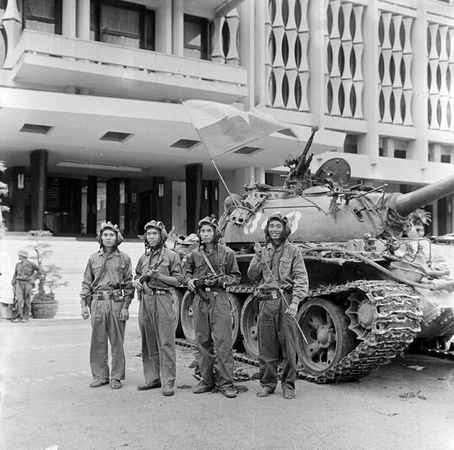
Division 304, Army Corps No 2 enters the Independence Palace, April 30, 1975.— VNA/VNS Photo Quang Thành

Division 304, Army Corps No 2 enters the Independence Palace, April 30, 1975.— VNA/VNS Photo Quang Thành
By Việt Nam News

HÀ NỘI — To mark the 45th anniversary of Việt Nam’s 1975 Great Spring Victory (April 30, 1975) and the fall of the  America-backed Sài Gòn administration, ending the American War and leading to the liberation of southern Việt Nam, the Vietnam News Agency presents an article by Nguyễn Đinh Lê, PhD, a lecturer from the History Faculty of the University of Social Sciences and Humanities, Vietnam National University, Hà Nội.

In 1954, the French colonialists were defeated in the battle of the Điện Biên Phủ and were forced to sign the Geneva Agreement (July 1954) to withdraw from Indochina. However, shortly after, the United States stepped up to fill the vacuum, increasing military aid to South Việt Nam and sending the first US military advisers to the country in 1959 to implement its global anti-revolution policy. They did everything to suppress the South’s revolution.

From 1954 to 1958, South Việt Nam lost a huge number of officials and Party members. Nearly 90,000 patriots were arrested and imprisoned and nearly 20,000 were tortured and killed. The country was divided into two regions with two opposing regimes: the North, which was completely liberated, and the South, which was still under colonialism.

The Centre Party Committee’s Congress in 1960 outlined the path for the resistance war against the US, which was strengthening the solidarity of the people, maintaining peace and implementing the socialist revolution in the North and the national democratic revolution in the South.

Since 1965, to save the Sài Gòn regime, the US sent troops, troops of some allied countries, weapons, equipment and modern war vehicles to fight in the South and also waged a war of destruction by air and navy against North Việt Nam.

The 12th plenum of the 3rd Party Central Committee again affirmed that the duty to fight the US and save the country was a sacred duty of the whole nation. From then, there was a determination to mobilise the nation’s forces to defeat US imperialism to protect the North, liberate the South and unify the country.

The resistance war strategy proposed by the Party met the earnest aspirations of the people of the whole country, and it had become a banner to lead the entire Party, the army and people to unite and utilise the country’s strengths to fulfil the revolutionary’s mission. Many patriotic emulation movements took place nationwide.

These movements typically involved donating food for the army, young people volunteering to do tasks assigned by the Party and the revolutionaries and women supporting their husbands on the frontlines while also taking care of their families back home.

Former US Defense Secretary Robert McNamara admitted that the US lost the battle because it underestimated the power of Vietnamese nationalism that motivated them to fight for noble values​.

After nearly 20 years of constant struggle, the Vietnamese army and people gradually defeated the enemy’s strategies: unilateral war, killing communists (1954 – 1960), special war (1961 – 1965), local war (1965 – 1968), and Vietnamisation of war (1969 – 1973), forcing the US to sign the Paris Agreement (1973) on ending the war, restoring peace in Việt Nam. The US also had to withdraw all expeditionary troops from Việt Nam. This was a basic victory and a turning point for Việt Nam.

Reunification

According to the peace agreement signed in Paris, the South Vietnamese administration was to remain in place until new elections were held, and North Vietnamese forces in the South were not to advance further nor be reinforced.

However, the US continued its assistance to the Sài Gòn regime, breaking the peace agreement and prolonging the war.
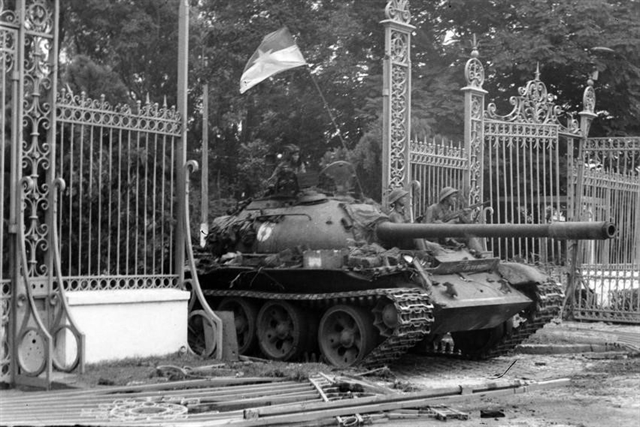
A North Vietnamese tank rolls through the gate of the Presidential Palace in Saigon, on April 30, 1975. — VNA/VNS Photo Trần Mai Hưởng

A North Vietnamese tank rolls through the gate of the Presidential Palace in Saigon, on April 30, 1975. — VNA/VNS Photo Trần Mai Hưởng

By the end of 1974 and early 1975, the war had turned in favour of Việt Nam’s revolution. The Politburo decided to step up the military and politicial fight in combination with the fight on international relations to quickly and comprehensively change the situation in the South. These were considered as necessary preparations for the general attack to put the government in the hands of the people and liberate the South.

In the first three months of 1975, almost 12,000 officials and soldiers were brought to the battlefront, as well as more than 230,000 tonnes of necessities for war like weapons, oil and gas, medicine and food.

The assistance from the North to the South in this period not only created an overwhelming strength compared to the enemy, but also met the requirements of post-revolutionary tasks on economy, defence, culture, education, health.

With the great support of the North, throughout the battlefield in the South, our people and army prepared well for the final decisive battle.

After preparation in all aspects, on March 4, 1975, the general offensive and rebellion of our people and army began, taking place with three major strategic attacks: Central Highlands Campaign (March 4 to April 3, 1975), the liberation of Huế – Đà Nẵng (March 21 to March 29, 1975) and the Hồ Chí Minh Campaign (from April 26 to April 30, 1975).

At noon on April 30, 1975, our troops entered the Independence Palace, capturing the enemy central government cabinet. The Hồ Chí Minh campaign was successful, ending the resistance war against the US. This is one of the most glorious feats in the development process of the Vietnamese nation.

On the occasion of the whole country celebrating the 45th anniversary of the Great Spring Victory of 1975, we are more deeply aware of the significance of this great historical event. Each of us can thus raise our national pride, cherish peace, sovereignty and every inch of the sacred land of the Fatherland; strive to work harder, study harder and contribute to the sustainable development of the country for the goal of a wealthy, democratic, fair and civilised nation. — VNS