
Coronavirus: New Wuhan infections show ‘silent carriers’ remain biggest problem #ศาสตร์เกษตรดินปุ๋ย

#ศาสตร์เกษตรดินปุ๋ย : ขอบคุณแหล่งข้อมูล : หนังสือพิมพ์ The Nation.

https://www.nationthailand.com/ann/30387754?utm_source=category&utm_medium=internal_referral

Coronavirus: New Wuhan infections show ‘silent carriers’ remain biggest problem
May 13. 2020

Photo credit: Verdict

Photo credit: Verdict
By Straits Times

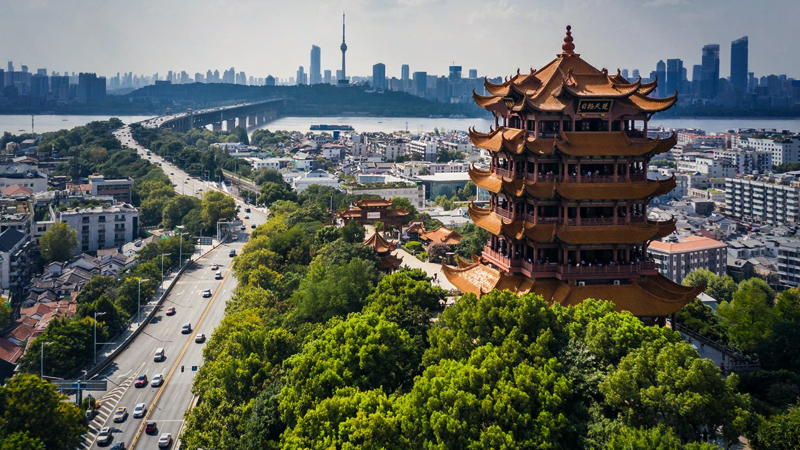
BEIJING – Six new Covid-19 cases, all of whom were local transmissions, have surfaced in Wuhan barely two weeks after the city in central China declared that the last of its patients had been discharged from hospital.

Local health authorities on Tuesday (May 12) ordered the entire city of 11 million to undergo nucleic acid testing over a 10-day period in a bid to arrest the spread of the coronavirus, which causes Covid-19, and, more importantly, prevent a second wave of infections just a month after it lifted a lockdown.

Wuhan was the epicentre of an outbreak of the coronavirus in China.

As details of city-wide testing are being ironed out, the fresh cases highlight the challenges of restarting the nation’s economy – which is facing its worst contraction since 1992 – while still grappling with a disease that is still prevalent in at least three provinces, as asymptomatic patients continue surfacing.

All six cases in Wuhan, including two elderly married couples, are from the same neighbourhood.

It remains unclear how the virus entered the community but it was first detected in an 89-year-old man who exhibited symptoms in late March and was self-medicating.

When he visited the hospital for other ailments earlier this month, doctors tested and found him positive for Covid-19. Contact tracing led to other residents in the neighbourhood being tested, turning up dozens of asymptomatic cases who were quarantined.

But, under China’s tabulation system, patients who do not show symptoms but who tested positive in the nucleic acid test are not added to the official tally.

The tally therefore can be misleading because around a dozen asymptomatic cases have been reported daily in Wuhan since such figures were released beginning April 1. As of Tuesday, there were still 589 such patients under “medical observation”.

“Cross-infection at community level in the city has not yet been eliminated, which highlights the challenge of preventing those who have the virus without displaying any symptoms from infecting others,” the official China Daily said in an editorial on Tuesday.

China sees possible new wave of Covid-19 cases | THE BIG STORY

But a top scientist from the Chinese Centre for Disease Control and Prevention, Dr Wu Zunyou, has said testing the entire population was “unnecessary” and that mass testing should be carried out only on critical groups that have a higher exposure to the virus.

Another expert, Dr Gregory C. Gray, a professor of medicine at the Global Health and Environmental Health unit at Duke University in the US , has described asymptomatic patients as the “major problem” for doctors fighting Covid-19.

“While mass testing (molecular or serologic) would help identify cryptic pockets of infection, it would need to be periodically repeated and thus expensive and very challenging to maintain,” he told The Straits Times.

“I do not see an easy, low-cost solution to stopping transmission short of a mass vaccine programme which too may also need to be repeated every several years to maintain immunity,” he added.

There is also the issue of capacity for Wuhan with official statistics showing that 1.03 million people had undergone nucleic acid tests as at the end of April.

But the 53 labs and 211 testing clinics in the city can process only 46,000 samples a day, far short of the nearly one million per day needed to meet the target of testing the city’s entire population.

Ultimately, the nub of the issue in China – and the rest of the world as cities reopen – remains how best to deal with asymptomatic carriers while trying to restart the economy.

PM Modi announces Rs 20 lakh crore stimulus package to kick-start economy #ศาสตร์เกษตรดินปุ๋ย

#ศาสตร์เกษตรดินปุ๋ย : ขอบคุณแหล่งข้อมูล : หนังสือพิมพ์ The Nation.

https://www.nationthailand.com/ann/30387753?utm_source=category&utm_medium=internal_referral

PM Modi announces Rs 20 lakh crore stimulus package to kick-start economy

May 13. 2020
By The Statesman

Prime Minister Narendra Modi on Tuesday announced the most anticipated stimulus package of Rs 20 lakh crore, nearly 10 per cent of country’s GDP, for all segments including industries, workers, farmers, honest taxpayers, MSMEs, cottage industry and others.

The prime minister said that the special economic package would be the primary component of “Atma-Nirbhar Bharat (self-reliant India)”.

He said the package will focus on land, labour, liquidity and laws. It also includes the monetary easing announced by the Reserve Bank of India (RBI).

Articulating the plans, PM Modi said, the sect-reliant strategy will depend on five-pillars Including, Economy, Infrastructure, Tech-driven System, Vibrant Demography and Demand.

This latest announcement comes in the backdrop of the growing demand for relief package from the Modi-led government to control the damage caused by the coronavirus caused COVID-19 pandemic.

The nationwide lockdown, that started from March-23 and has already been extended twice, has forced firms, big corporations to cut salaries or to send their employees on unpaid leaves.

Other than the announcement of the relief package, Modi also announced that a ‘lockdown 4.0’ will soon come into effect after May 17.

The prime minister had yesterday held an hours-long meeting with chief ministers to discuss the road map for the fourth phase of the lockdown.

In today’s speech, the leader said that the details of the ‘lockdown 4.0’ will be laid out before May 17, as it is going to be different from the previous versions.

In India, there are over 70,000 confirmed cases and more than 2,200 people have succumbed to the viral disease.

The PM expressed his condolences to the families who have lost their loved ones to the deadly virus.

Eased lockdown till May 31 in Metro Manila, Cebu City, Laguna #ศาสตร์เกษตรดินปุ๋ย

#ศาสตร์เกษตรดินปุ๋ย : ขอบคุณแหล่งข้อมูล : หนังสือพิมพ์ The Nation.

https://www.nationthailand.com/ann/30387752?utm_source=category&utm_medium=internal_referral

Eased lockdown till May 31 in Metro Manila, Cebu City, Laguna

May 13. 2020
FOR LIMITED SHOPPING Workers spruce up shop windows along Ayala Avenue in Makati City as shopping malls in Metro Manila prepare for partial reopening with the easing of lockdown restrictions beginning this weekend. Retailers expect the government to allow limited shopping as part of a phased exit from quarantine to resuscitate the economy. —MARIANNE BERMUDEZ

FOR LIMITED SHOPPING Workers spruce up shop windows along Ayala Avenue in Makati City as shopping malls in Metro Manila prepare for partial reopening with the easing of lockdown restrictions beginning this weekend. Retailers expect the government to allow limited shopping as part of a phased exit from quarantine to resuscitate the economy. —MARIANNE BERMUDEZ
By Inquirer

MANILA, Philippines — Lockdown measures will be eased in much of the country beginning Saturday, but Filipinos cannot return to their old ways because the new coronavirus remains a threat to public health, Malacañang said on Tuesday.

President Rodrigo Duterte earlier on Tuesday announced an extension of lockdown measures to May 31, making it among the world’s longest community quarantines to try to halt the coronavirus pandemic.

He said his decision was based on the recommendation of the Inter-Agency Task Force on Emerging Infectious Diseases, the temporary government body overseeing his administration’s response to the pandemic.

Metro Manila, Laguna province and Cebu City — ”high-risk” areas for the transmission of the coronavirus—will remain on “enhanced community quarantine,” or lockdown, which will be “modified” to allow the easing of movement and business curbs to begin a phased revival of the economy, he said.

Can’t afford second wave’

Forty-one provinces and 10 cities considered “moderate risk” for coronavirus infection would ease into “general community quarantine” from Saturday, while the community quarantine in 40 provinces and 11 cities held to be “low risk” for infections would be lifted. (See table.)

Duterte said the loosening of quarantine restrictions did not mean the health crisis was over, but that the measures were being eased slowly to prevent a resurgence of the coronavirus.


“We cannot afford a second and a third wave” of infections, he said as he appealed to the public to obey the quarantine rules.

Speaking at a televised press briefing after Duterte’s announcement, presidential spokesperson Harry Roque said local governments that would be freed from community quarantine should still implement minimum health standards to prevent a spike in infections.

“[A]s long as there is no vaccine, we must observe minimum health standards. These are social distancing, good hygiene, temperature [check and other measures] prescribed by the Department of Health (DOH),” Roque said.

Improvement of health systems

Health Undersecretary Maria Rosario Vergeire identified the other measures as staying healthy; frequent hand-washing, observing cough etiquette and avoiding going out when sick; preventing transmission by naming coronavirus cases so that they could be isolated.

Vergeire urged local officials to use the phased exit from lockdown to improve their health systems and ensure that the public complies with minimum health standards “so we could prepare and eventually be ready in the event that the risk level shifts to moderate or high risk.”

As of Tuesday, the Philippines had more than 11,000 confirmed coronavirus cases, with over 750 deaths.

Globally, the new coronavirus has sickened more than 4.19 million people and over 280,000 have died.

Roque said the modified lockdown would allow limited movement for buying necessities and getting essential services and reopening of selected manufacturing and processing plants up to a maximum of 50 percent of the workforce.

Work in government offices could also resume, but only up to 50 percent of the workforce would be allowed to return to their jobs.

Public transportation would also be allowed but only for buying necessities and ferrying people who would be allowed to return to work. Roque said the task force would release guidelines for limited reopenings on Wednesday.

‘Transition phase’

School will remain suspended throughout the country, he said.

“It is a transition phase. After a month, we may shift to general community quarantine,” Roque said.

He also explained the proposed zoning, or classifying barangays according to the number of coronavirus cases they have..

Under the proposal, critical zones are areas with more than 20 infections per 100,000 population. Containment zones are areas with one to 19 cases per 100,000 population.

Buffer zones are areas without infections but contiguous with localities with confirmed cases. Outside buffer zones are areas outside buffer zones and have no infections.

Roque said local governments would use zoning in classifying barangays. He said stricter lockdown would be imposed on critical zones and easier quarantine rules would be implemented in containment zones.

Buffer zones may be placed under general community quarantine, while outside buffer zones may be put on modified general community quarantine, he said.

Senate President Vicente Sotto III said he supported the President’s decision to extend the lockdown, as it was based on “solid data” provided by health experts and other authorities.

Sen. Bong Revilla said transportation officials and operators of public transport should ensure the protection of people taking rides as they returned to work.

Mass testing

Some business groups expressed support for the extension of the lockdown in Metro Manila but stressed the importance of mass testing to suppress the spread of the coronavirus.

“It’s a necessary evil,” Francis Lim, president of the Management Association of the Philippines, said, referring to the extension of the lockdown. “The areas that will continue to be under [lockdown] must speed up massive testing . . . otherwise they will leave the President no choice but to extend it again.”

“Maybe that’s OK, because at least there is a little change showing that we should move on, except that the implementers should think very well how it would happen,” said Sergio Ortiz-Luis Jr., president of the Employers Confederation of the Philippines.

“Even if we allow certain industries or certain work to go through in [Metro Manila], considering that some areas are under [lockdown], I don’t know how the workers can move out and go to their place of work,” he said.

Domestic airlines said they were waiting for final guidelines from the government to resume flights to provinces that were easing quarantine measures.

“We are still eyeing May 16 [to resume flights] depending on the government’s guidelines,” said David de Castro, communications chief at AirAsia Philippines.

Philippine Airlines spokesperson Cielo Villaluna and Cebu Pacific director for communications Charo Logarta Lagamon said the carriers were waiting the government’s go-signal.

WITH REPORTS FROM JOVIC YEE, KRISSY AGUILAR, MARLON RAMOS, ROY STEPHEN C. CANIVEL AND MIGUEL R. CAMUS

1 million Metro Manila residents seen to join ‘Balik Probinsya’ #ศาสตร์เกษตรดินปุ๋ย

#ศาสตร์เกษตรดินปุ๋ย : ขอบคุณแหล่งข้อมูล : หนังสือพิมพ์ The Nation.

https://www.nationthailand.com/ann/30387751?utm_source=category&utm_medium=internal_referral

1 million Metro Manila residents seen to join ‘Balik Probinsya’

May 13. 2020
Photo credit: Inquier News

Photo credit: Inquier News
By Inquirer

MANILA, Philippines — Some 1 million residents of Metro Manila are expected to move to other regions in the next six months under the government’s Balik Probinsya, Bagong Pag-asa program that aims to decongest the National Capital Region.

National Housing Authority general manager Marcelino Escalada made the projection as he noted a high interest in the newly launched program, which got 5,000 online enrollees in just four days.

The online application was only launched on Friday, noted Escadala, who heads the secretariat of the Balik Probinsya, Bagong Pag-asa Council.

“If this will be the figure, there will be exponential enrollees every now and then. Perhaps we can hit a figure in the next six months of 1 million residents of Metro Manila who would like to enroll,” he said at the televised Laging Handa briefing.

The program is voluntary, and those joining it must be willing and informed, he said.

Under the program, the government provides assistance, such as transportation and allowances, to those who would like to relocate to urban or rural areas in the region.

Interested parties may go to the nearest Balik Probinsya center or go to the website, where they would fill out an assessment form.

The program was launched amid the new coronavirus outbreak, which hit Metro Manila the hardest.

He also said that the national government would coordinate with the receiving local government units (LGUs) to help ensure their readiness for the possible influx of new residents.

The LGUs would be provided with institutional benefits and incentives as well, he added.

According to Escalada, Leyte, Camarines Sur, Zamboanga del Norte, Bukidnon, Lanao del Norte, Pangasinan, Quirino and Marinduque have signified interest in joining the pilot program.

He said the government would decentralize economic opportunities and government operations to bring more people to the provinces.

The assistance from the government would help beneficiaries of the program transition to their new life away from Metro Manila, said Escalada.

Japan’s state of emergency may be lifted for most prefectures #ศาสตร์เกษตรดินปุ๋ย

#ศาสตร์เกษตรดินปุ๋ย : ขอบคุณแหล่งข้อมูล : หนังสือพิมพ์ The Nation.

https://www.nationthailand.com/ann/30387680?utm_source=category&utm_medium=internal_referral

Japan’s state of emergency may be lifted for most prefectures

May 11. 2020
Photo credit: mainichi.jp

Photo credit: mainichi.jp
By Japan News-Yomiuri

TOKYO – The Japanese government is considering lifting the state of emergency for 34 prefectures, as they are seeing slower increases in the number of infections with the new coronavirus, according to several government sources.

A final decision will be made based on opinions from an expert panel scheduled to meet Thursday. The government is also considering a similar move for some of the 13 other prefectures, which are currently urged to be on special alert, depending on how many cases are reported there, the sources said.

Many of the 34 prefectures have had no new reported cases in recent days, leading the government to believe that local medical services are no longer on the verge of collapsing.

The government expanded the declaration to cover all the nation’s 47 prefectures, with the aim of discouraging people from traveling during the Golden Week holidays. Now that period is over, the government believes it is no longer meaningful to keep the 34 prefectures under a state of emergency.

The declaration also may be lifted for some of the 13 prefectures on special alert because they have had no new reported cases in recent days. The government will make a final decision based on the number of cases reported from Monday to Wednesday.

However, Tokyo and Osaka Prefecture still have a large daily number of cases, although their figures are getting smaller. Given this trend, the government believes it is still too early to lift the declaration of a state of emergency in these areas.

During a press conference on Sunday, Yasutoshi Nishimura, minister in charge of economic revitalization, indicated that lifting the declaration “is coming into sight for most of the 34 prefectures.”

Among the 13 on special alert, “some of them, such as Gifu and Ibaraki, are seeing drastic decreases in their reported cases,” Nishimura said. “The declaration can be lifted for such prefectures depending on their situation.”

The government plans to soon release criteria for lifting the declaration, which will likely include not only the number of patients in a prefecture, but also the percentage of cases with an unknown infection route; the state of a prefecture’s medical services, such as how many polymerase chain reaction (PCR) tests have been conducted; and the state of infections in neighboring areas.

At the press conference, Nishimura also said that when the government releases its basic response policy at the time the declaration is lifted, it will detail what the public needs to be cautious about in daily life. This is aimed at preventing the virus from spreading further as people lower their guard.

The government will call for the public to continue to refrain from moving across prefectural borders, including traveling to and from areas that still have a large number of cases, according to the sources.

The government will hold another meeting of the expert panel around May 21 to discuss whether the declaration can be lifted for additional prefectures, the sources said.

Shutting Chinese out of US universities could hurt America more than China #ศาสตร์เกษตรดินปุ๋ย

#ศาสตร์เกษตรดินปุ๋ย : ขอบคุณแหล่งข้อมูล : หนังสือพิมพ์ The Nation.

https://www.nationthailand.com/ann/30387621?utm_source=category&utm_medium=internal_referral

Shutting Chinese out of US universities could hurt America more than China

May 10. 2020
Students at the University of Washington campus for the last day of in-person classes, on March 6, 2020. PHOTO: AFP

Students at the University of Washington campus for the last day of in-person classes, on March 6, 2020. PHOTO: AFP
By Nirmal Ghosh
ANN / The Straits Times

WASHINGTON – Her friends found the bed unmade, an expensive Gucci handbag lying next to it. There was food in the fridge. Pictures of her boyfriend were clipped above her small worktable in the tiny studio, lined with fairy lights on a cute display.

It was as if the 20-year-old George Washington University student from Thailand had simply walked out of her apartment and disappeared.

And in a sense, she had.

The young Thai Chinese had travelled back home to Bangkok when her parents decided that with the pandemic, it was probably safer to stay home. The studio lease was cancelled and friends were roped in to send some things back to her – the Gucci bag and the pictures topped the list – before handing the flat back to the owner.

Across the United States, variations of this theme have become common. And colleges and universities, which depend on full-fee paying foreigners for a significant chunk of their revenue, are debating their options should those students stop coming.

With classes moving online, questions have arisen about the value of the experience for overseas students, complicating matters further for higher education institutions, which could charge well over US$70,000 (S$100,000) a year. There has been a flurry of lawsuits against colleges by undergraduates demanding partial tuition, room-and-board and fee refunds after they shut down.

This month, American University (in Washington DC) student Maaz Qureshi filed a class-action lawsuit on behalf of himself and his classmates, arguing that while closing campus during the pandemic was the right decision, it deprived them of the “benefits of in-person instruction, access to campus facilities, student activities, and other benefits and services in exchange for which they had already paid fees and tuition.”

According to the 2019 Open Doors report on International Educational Exchange, there were 1.09 million international students in the US in the 2018/19 academic year, contributing US$44.7 billion to the US economy in 2018. Chinese students accounted for roughly 34 per cent of the total, contributing more than any other foreign student group.

But the Covid-19 pandemic is only the latest blow to the dimming prospects of foreign students in America – especially those from China.

Already in the summer of 2019, student counsellors and parents in China were having second thoughts about Chinese students pursuing higher education opportunities in America as China-US relations bumped along in the middle of a high-pitched trade war and rising anti-Chinese sentiment in the US.

In October 2019, Mr Xiaofeng Wan, associate dean of admission and coordinator of international recruitment at Amherst College, wrote in the Inside Higher Ed journal about the results of a survey of 54 school-based college counselors in China. About 85 per cent indicated that the biggest concern of Chinese parents was US President Donald Trump’s unpredictable policies toward Chinese students.

“Seventy-eight per cent pointed to safety; 65 per cent to the uncertainty of remaining in the US for a work experience after graduation; and another 65 per cent indicated fear of visa denial or deportation after arrival,” he wrote.

Eighty-seven per cent of high school college counsellors in China reported that students and parents were reconsidering plans for study in the US, he wrote.

The US had by then started cancelling or denying visas to Chinese scholars. In April 2019, the US began extra screening of students and shortened the length of visas issued in aviation, robotics and advanced manufacturing from a maximum of five years to one year.

“Particularly sensitive are disciplines that coincide with China’s “Made in China 2025″ plan, a state initiative to become the global leader in fields like robotics, semiconductors and aviation,” National Public Radio (NPR) reported.

Last month’s order suspending the issuance of Lawful Permanent Resident permits (green cards) has left international students at US colleges and universities even more uncertain.

The apprehension deepened when on April 27, Acting Homeland Security Secretary Chad Wolf indicated in a radio interview that Optional Practical Training (OPT) visas were the administration’s next target.

The OPT allows a student to work for a while after graduating and is considered to be the pathway to US residency.

Meanwhile on Capitol Hill, China hawks are hollering for more restrictions. Arkansas Republican Senator Tom Cotton is lobbying for an outright ban on Chinese students studying in technical fields in America.

While this may inconvenience Chinese students, it is American colleges and universities and the US as a whole that will experience short and long-term negative consequences.

“I do think everybody wants to get on the “I’m tough on China, so give me something to be tough on China” bandwagon, but they’re not actually thinking very strategically,” Dr James Carafano, director of the Douglas and Sarah Allison Centre for Foreign Policy Studies at the conservative Heritage Foundation, told The Straits Times.

“Let’s say you want to ban Chinese students in the United States. Okay, great. It’s some… enormous amount of money. What are you going to do about that?”

Dr Glenn Altschuler, professor of American studies at Cornell University, told The Straits Times that “many institutions which depend entirely or almost entirely on tuition (fees) would perhaps even become insolvent if these students don’t come”.

“Another concern, is that in many fields, doctoral students from other countries dominate the field of graduate and post-doctorals, and… if they were not to come, this has academic consequences, because many of them are superb students.

“There is pretty much a consensus among colleges and universities that shutting out international students is not a good policy simply as a foreign policy, but also has profound implications for institutions of higher education.”

He added: “Certainly that concern has been represented in Washington; whether that carries the day is of course another question.”

China, US health experts vow to act together against COVID-19 #ศาสตร์เกษตรดินปุ๋ย

#ศาสตร์เกษตรดินปุ๋ย : ขอบคุณแหล่งข้อมูล : หนังสือพิมพ์ The Nation.

https://www.nationthailand.com/ann/30387605?utm_source=category&utm_medium=internal_referral

China, US health experts vow to act together against COVID-19

May 10. 2020
Photo credit: PxHere

Photo credit: PxHere
By China Daily

SAN FRANCISCO – Leading health experts from China and the United States have agreed during a webinar to act together and follow scientific guidance in the fight against COVID-19, the event’s organizer said Friday.

“They exchanged opinions and reached a very positive conclusion in the end, as Professor Barry Bloom from Harvard said that health care is local, but health research is global. The world must rely on scientific methods to deal with the pandemic. We must also use scientific methods to find the origin of the virus,” said Florence Fang, co-founder of the newly-established, non-profit Global Alliance to Combat COVID-19 (GACC).

“If we want to win this war against the coronavirus, we must work together globally and not be misled by the misinformation of all kinds. We must listen to scientific information and let science tell us what to do. This is the consensus that we have reached at this webinar,” Fang said.

Chinese keynote speakers at the webinar included Zhong Nanshan, a renowned respiratory specialist and an academician at the Chinese Academy of Engineering; Qiao Jie, president of the Peking University Third Hospital and also an academician at the Chinese Academy of Engineering; and Zhang Wenhong, head of Shanghai’s COVID-19 clinical experts team.

They were joined by Barry Bloom, former dean of Harvard T. H. Chan School of Public Health; Sten Vermund, dean of the Yale School of Public Health; and Brian Bosworth, chief of medicine at New York University Langone Health’s Tisch Hospital.

According to Fang, the webinar received a lot of feedback from some US officials. “I had a call with California Lieutenant Governor Eleni Kounalakis. She expressed her support and thanks for this activity,” Fang told Xinhua in an online interview.

ALSO READ: More Chinese regions to further lower COVID-19 response level

“One of the purposes to organize this webinar is to promote Sino-US relations and understanding. We should join our forces to act against common threats. We cannot fight separately, not to mention fighting each other,” Fang added.

Fang said she is already planning another online forum for Chinese and American experts to focus on vaccine development against the coronavirus.

The GACC, which aims at building a collaborative environment for top health care experts around the world to share experience and offer technical support, will organize a series of online forums and seminars in the near future. The target audience of the events will mainly be health care professionals and policymakers, with selected events open to the public, according to Fang.

“This pandemic will pass, but human health will remain a global issue,” said Fang, who is also co-founder and vice chairwoman of the George H.W. Bush Foundation for US-China Relations.

The foundation launched the US-China Coronavirus Action Network in January, with Fang as chair, to join the world in fighting the COVID-19 pandemic, and to bolster US-China friendship and cooperation.

India dispatching medicines to over 25 African countries to fight COVID-19 #ศาสตร์เกษตรดินปุ๋ย

#ศาสตร์เกษตรดินปุ๋ย : ขอบคุณแหล่งข้อมูล : หนังสือพิมพ์ The Nation.

https://www.nationthailand.com/ann/30387604?utm_source=category&utm_medium=internal_referral

India dispatching medicines to over 25 African countries to fight COVID-19

May 10. 2020
(File Image: Twitter/@MEAIndia)

(File Image: Twitter/@MEAIndia)
By The Statesman

India is dispatching packages of medicines to more than 25 countries in Africa in keeping with its traditionally strong bonds of friendship and solidarity with the continent, the External Affairs Ministry said today.

Each package of medicines includes hydroxychloroquine, paracetamol and other drugs which are immediately required to fight the pandemic. These medicines are expected to complement the national efforts of various countries in Africa to combat the pandemic.

Prime Minister Narendra Modi had a telephonic conversation last month with South African President Ramaphosa, who is also the current chairperson of the African Union. Modi conveyed to him India’s full support for the joint African effort against the virus.

The Indian leader also has held telephonic conversations with other African leaders, including President Yoweri Kaguta Museveni of Uganda and Prime Minister Abiy Ahmed of Ethiopia.

External Affairs Minister S Jaishankar had also spoken to his counterparts in several African countries to reiterate India’s solidarity with African people in the fight against COVID-19 and offered them all assistance.

India has also decided to extend to healthcare workers from Africa the e-ITEC course on “COVID-19 Pandemic: Prevention and Management Guidelines for healthcare professional”, organised by the External Affairs Ministry along with its partner AIIMS Raipur.

In the neighbourhood, meanwhile, an Indian Air Force IL-76 cargo aircraft that ferried a consignment of medicines to Sri Lanka also flew in India’s new High Commissioner-designate Gopal Baglay to Colombo.

“A special flight brought the medicines to Lanka along with High Commissioner-Designate Gopal Baglay. He will observe stipulated health protocol,” said a Twitter post from the official handle of the Indian High Commission.

The closure of borders and air space by countries across the world that resulted in the grounding of flights, including between India and Sri Lanka, had meant that Baglay could not take up his post as the new High Commissioner, despite him being named to the post in February.

Int’l hotel groups gradually resume full operations in China #ศาสตร์เกษตรดินปุ๋ย

#ศาสตร์เกษตรดินปุ๋ย : ขอบคุณแหล่งข้อมูล : หนังสือพิมพ์ The Nation.

https://www.nationthailand.com/ann/30387603?utm_source=category&utm_medium=internal_referral

Int’l hotel groups gradually resume full operations in China

May 10. 2020
Photo credit: PxHere

Photo credit: PxHere
By China Daily

SHANGHAI — International hospitality groups are gradually resuming full operations in China as the country has entered the phase of regular epidemic prevention and control.

As of Friday, all of Hilton’s 250 hotels in China’s mainland have resumed business, said Qian Jin, area president for Hilton Greater China and Mongolia, adding that there were 150 Hilton hotels temperately closed to new bookings during the COVID-19 outbreak.

“Reopening all our hotels in the Chinese mainland is the first step in a measured global recovery process,” said Chris Nassetta, president and CEO of Hilton. “We are confident that there are brighter days ahead.”

More than 98 percent of over 470 hotels of InterContinental Hotels Group PLC (IHG) in China had been in operations since May 5, even though nearly one-third of them were once temporarily closed due to the epidemic, according to Jolyon Bulley, chief executive officer of IHG Greater China, adding that hotels in the pipeline have also resumed construction work.

“China is IHG’s second-largest market and the fastest growing one. We’re confident of the long-term outlook of China’s hospitality industry,” he said.

According to Bulley, the development of urbanization, increasing disposable income of residents, and the improvement of tourism infrastructure and other factors will promote the continuous growth of China’s hotel market demand.

Seoul city orders clubs, bars to close following group infection in Itaewon #ศาสตร์เกษตรดินปุ๋ย

#ศาสตร์เกษตรดินปุ๋ย : ขอบคุณแหล่งข้อมูล : หนังสือพิมพ์ The Nation.

https://www.nationthailand.com/ann/30387602?utm_source=category&utm_medium=internal_referral

Seoul city orders clubs, bars to close following group infection in Itaewon

May 10. 2020
People pass by a night club in Itaewon, Seoul on May 7, 2020. The club was shut down as a man in his 20s, who tested positive for COVID-19 virus the previous day, is known to have visited the place on May 1. Some 500 people were reportedly there at that time. (Yonhap)

People pass by a night club in Itaewon, Seoul on May 7, 2020. The club was shut down as a man in his 20s, who tested positive for COVID-19 virus the previous day, is known to have visited the place on May 1. Some 500 people were reportedly there at that time. (Yonhap)
By The Korea Herald

The Seoul city government on Saturday effectively suspended business at clubs and bars in the city after recent infections in the city’s popular multicultural neighborhood of Itaewon put health authorities on alert over a possibly bigger outbreak.

Under an administrative order that has gone into effect immediately, all clubs, bars, “room salons” and other nightlife establishments across the capital will be banned from hosting crowds of people, virtually suspending businesses at such venues.

“Such facilities have to suspend business immediately and will face strict punishment if they breach (the order),” Mayor Park Won-soon said in a press briefing, adding the order will remain in effect under further notice.

“Carelessness can lead to an explosion in infections — we clearly realized this through the group infections seen in the Itaewon club case,” Park said, urging businesses and the public to closely abide by quarantine measures.

The precautionary measure comes after dozens of infections were reported in relation to a 29-year-old who tested positive after spending time at five clubs and bars in Itaewon last weekend.

South Korea reported 18 new cases Saturday, with 17 of those linked to the clubber.

But health authorities forecast the number to further rise considering that at least 1,500 people signed in entry logs at the affected facilities.

According to Yongsan Ward Office, which has jurisdiction over the multicultural district, a total of 7,200 people are estimated to have visited the five clubs and bars from April 30-May 5.

Officials have urged people who visited the Itaewon clubs and bars, including King Club, Trunk Club and Club Queen, between April 29 and Wednesday to receive screening tests and refrain from going outside to prevent additional transmissions.

Park, meanwhile, pointed out that the entry logs were mostly inaccurate. City officials have failed to get into touch with more than 1,300 people on the documents, he said.

The mayor asked visitors in the cited period to voluntarily go through screening, adding that the city will otherwise consult with police for additional measures.

The Korea Centers for Disease Control and Prevention said it has confirmed 27 cases traced to the Itaewon clubber, including the patient’s colleagues, as well as families and acquaintances of other patients.

The figure, tallied at 9 a.m., showed 13 were affected in Seoul, followed by 12 in the surrounding Gyeonggi Province and Incheon, one in North Chungcheong Province and another in the southern port city of Busan.

Park, however, said 40 cases have been confirmed nationally as of noon, including 27 in Seoul, 12 in Gyeonggi Province and Incheon, and one in Busan, 453 kilometers southeast of the capital.

The recent infections are believed to have mostly broken out when the country was still under a social distancing scheme.

South Korea started shifting to an everyday life quarantine Wednesday, relaxing the social distancing measures after the country’s new infections fell to single-digit figures.