Four dead after earthquake in south-west China #ศาสตร์เกษตรดินปุ๋ย

#ศาสตร์เกษตรดินปุ๋ย : ขอบคุณแหล่งข้อมูล : หนังสือพิมพ์ The Nation.

https://www.nationthailand.com/ann/30388124?utm_source=category&utm_medium=internal_referral

Four dead after earthquake in south-west China

May 19. 2020
The quake hit near the city of Zhaotong and registered 5.0-magnitude.PHOTOS: SCREENGRABS FROM WEIBO

The quake hit near the city of Zhaotong and registered 5.0-magnitude.PHOTOS: SCREENGRABS FROM WEIBO
By The Straits Times

Four people were killed and another 23 injured when an earthquake shook south-western China’s Yunnan province, local authorities said on Tuesday (May 19).

The shallow quake in Qiaojia county struck late Monday evening, the Yunnan government said in a statement on its social media account.

The quake hit near the city of Zhaotong, with a population of over six million, and registered 5.0-magnitude, according to China’s government seismology authority.

State news agency Xinhua said on Tuesday that rescue teams including firefighters had been sent to 16 townships.

China is regularly hit by earthquakes, especially in its mountainous western and south–western regions.

A strong 6.0-magnitude earthquake in Sichuan province last year killed 13 and injured nearly 200 people, damaging a large number of structures.

A powerful 7.9-magnitude quake in Sichuan in 2008 left 87,000 people dead or missing.

Korea at critical moment in fight against second wave of infections #ศาสตร์เกษตรดินปุ๋ย

#ศาสตร์เกษตรดินปุ๋ย : ขอบคุณแหล่งข้อมูล : หนังสือพิมพ์ The Nation.

https://www.nationthailand.com/ann/30387852?utm_source=category&utm_medium=internal_referral

Korea at critical moment in fight against second wave of infections

May 14. 2020
(Yonhap)

(Yonhap)
By Park Han-na
The Korea Herald

Korea is at a critical moment in its struggle to prevent a second wave of coronavirus infections, as a virus breakout at clubs and bars in a popular Seoul nightlife area threatens to turn into a wider spread into communities.

Korea reported 29 additional cases of the novel coronavirus on Thursday, bringing the total number of infections in the country to 10,991, according to the Korea Centers for Disease Control and Prevention.

Of the new cases, 20 were traced to establishments in Seoul’s popular nightlife spot Itaewon, taking the total tally to 133 as of noon Thursday.

Health authorities believe that primary infections stemming from Itaewon hit their peak Sunday, and the virus is now being passed onto family members, friends and neighbors from those infected.

“This weekend could be a very critical time as (the primary infections) can lead to mass community transmissions,” Kwon Joon-wook, deputy director of the KCDC, said at a daily virus briefing.

He warned that asymptomatic patients may act as unsuspecting virus carriers in the community, spreading the pathogen to vulnerable groups such as the elderly and those with underlying diseases.

More than one-third of the Itaewon-linked 133 infections so far did not show any symptoms at the time of diagnosis, government data shows.

The cluster first emerged on May 6 when a 29-year-old Korean man from Yongin, Gyeonggi Province, tested positive for COVID-19 after visiting five different clubs and bars in Itaewon on the night of May 1 and the wee hours of May 2.

“Primary infection cases are on a downward trend after hitting its peak on May 10, but we need close monitoring for a few more days as secondary and tertiary infections are suspected in some cases,” Yoon Tae-ho, a senior Health Ministry official, said in a press briefing.

Secondary infections are occurring nationwide, mainly in the metropolitan area, and tertiary infections are being confirmed after a series of transmissions from a 25-year-old teacher in Incheon.

“The prevention of the spread of secondary infections depends on how citizens comply with ‘everyday distancing’ rules,” Yoon said.

The new rules refer to preventative guidelines that the government set out to help people return to normal life following the relaxation of six weeks of social distancing.

Of the 133 people linked to the Itaewon cluster, 82 had visited Itaewon and the others were those who had close contact with those people.

Areas hit harder by the new outbreak were Seoul, Gyeonggi Province and Incheon with 73, 25 and 18 cases, respectively. South Chungcheong Province and Gangwon Province reported their first cases traced to Itaewon.

Aggressive testing, with 35,000 people linked to the Itaewon cluster tested nationwide, has shed light on the detection of cases related to night outings to bars in other areas.

Five people who visited two popular bars near Hongik University — Hanshin Pocha and 1943 — were confirmed to have contracted the virus.

A man in his 20s tested positive Tuesday, and four others who accompanied him received the same results the following day, according to Seoul city official Na Baek-ju.

They had no history of visits to Itaewon or of travel overseas.

An epidemiological investigation is underway to discover 10 more people who had come into close contact with the group.

Three foreign nationals and one Korean man have tested positive after visiting Damotori 5 bar in Seoul’s Sinchon. The foreign nationals had also been to Itaewon. The city directed 199 related to the spot to isolate at home.

The country’s 15 cities and provinces have tightened restrictions on the nightlife industry and services to comply with containment measures, prohibit assembly of people or suspend operations temporarily.

Municipal governments along with police formed inspection teams, consisting of over 1,600 personnel, for interim spot checks in the late night from May 9.

As a result, 23 sites were spotted to have breached shutdown orders directed by respective municipal governments, according to the Health Ministry.

Yoon said the government is considering adopting high-tech maneuvers such as QR codes and Bluetooth to replace the lists of names and contact details that people have been required to write down before entry to clubs and other entertainment locations.

The move comes as the country struggles to locate the whereabouts of around 2,500 people connected with the Itaewon outbreak for testing. Some of them presented a false name or phone number for such lists.

For example, telecom carriers could issue a digital card that contains a QR code or barcode so that people can scan it when entering clubs.

“We are searching for ways to temporarily collect certain information of individuals within the legal framework like privacy protection,” the official said.

South Korea reports 26 new coronavirus cases #ศาสตร์เกษตรดินปุ๋ย

#ศาสตร์เกษตรดินปุ๋ย : ขอบคุณแหล่งข้อมูล : หนังสือพิมพ์ The Nation.

https://www.nationthailand.com/ann/30387772?utm_source=category&utm_medium=internal_referral

South Korea reports 26 new coronavirus cases

May 13. 2020
Photo Credit: Yonhap

Photo Credit: Yonhap
By Park Han-na
ANN / The Korea Herald

South Korea reported 26 more cases of the novel coronavirus, bringing the national’s total infections to 10,962, the Korea Centers for Disease Control and Prevention said Wednesday.

The latest figure continued to show a reversal of the downward trend that reached zero cases in late April with an emergence of a new infection cluster in Seoul’s Itaewon, packed with nightlife entertainment facilities.

Of the 26 new patients, four were imported cases and the rest were domestic infections. The death toll from COVID-19 rose by one to 259.

Seoul saw the largest number of infections with 13 cases, followed by Busan and Daegu, which reported 3 each. Incheon and Gyeonggi Province detected two cases each.

The country logged double-digit increases in daily infections for sixth consecutive days in the aftermath of youngsters’ outings to clubs and bars in Itaewon during a series of public holidays in late April and early May.

Prime Minister Chung Sye-kyun urged Itaewon visitors to voluntarily take virus tests, alarmed by the increasing number of cases traced to the sites. As of Monday, 102 cases have been confirmed who were linked to the Itaewon mass infection, including clubbers and those who have come in close contact with them.

“The government has a goal of finding all visitors within this week for coronavirus tests,” he said.

Every day is different: dramatic changes in Myanmar’s bustling commercial capital #ศาสตร์เกษตรดินปุ๋ย

#ศาสตร์เกษตรดินปุ๋ย : ขอบคุณแหล่งข้อมูล : หนังสือพิมพ์ The Nation.

https://www.nationthailand.com/ann/30387761?utm_source=category&utm_medium=internal_referral

Every day is different: dramatic changes in Myanmar’s bustling commercial capital

May 13. 2020
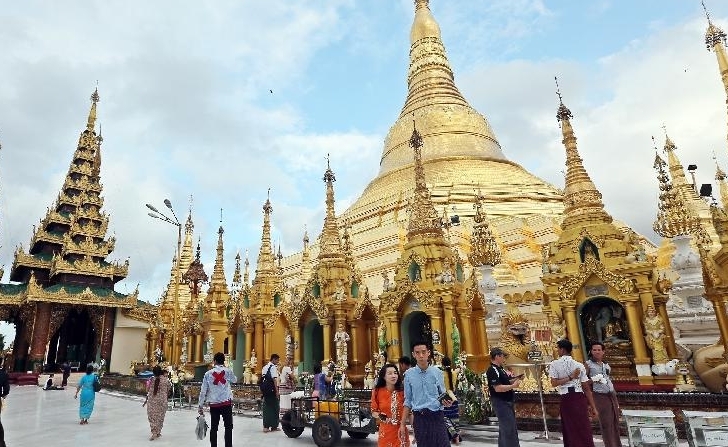
Shwedagon Pagoda is the most notable landmark in Yangon. SIN CHEW DAILY

Shwedagon Pagoda is the most notable landmark in Yangon. SIN CHEW DAILY
By Sin Chew Daily

When Aung San Suu Kyi was freed in 2010, many anticipated better days ahead for Myanmar, and a lot of foreigners, including young Malaysians, made a bee line for the country in search of better prospects.

As a matter of fact, a lot of Chinese Malaysians were already here to do business back in the 1990s. Many even married the locals and settled down here.

Unfortunately, the pace of development has shifted to the slow lane in more recent years. As a consequence, many opted to leave the country, leaving only those who have set up their families or still have a lot to hope for in this country.

Although Yangon’s Chinatown is only a dozen of kilometers from the international airport, the drive could take almost an hour due to the city’s horrendous traffic.

As the country's economy moves into the slow lane in more recent years, life remains simple and care-free for many. SIN CHEW DAILY

As the country’s economy moves into the slow lane in more recent years, life remains simple and care-free for many. SIN CHEW DAILY

Malaysians who have lived in the city for more than a decade would tell you Yangon was not like this ten years ago. There was very little traffic back then, but now the streets are jam packed.

Things have changed dramatically since the country opened up to the outside world. A SIM card which cost US$200 seven or eight years ago beyond the reach of most people, will sell for only about a dollar today.

Infrastructure aside, the people’s lifestyle has also changed tremendously. Almost every Malaysian we talked to told us the men here used to wear sarong-like traditional costume called longyi when they first arrived here, but now they are wearing jeans and slacks while young women are putting on mini skirts.

Opportunities everywhere

Cinema operator Yap Mun Yue told Sin Chew Daily she plied between Yangon and Kuala Lumpur almost on a monthly basis during the past seven years. She said each time she came back to Yangon, the city looked different because it changed so rapidly.

“I see new changes every time here!”

Most Chinese Malaysians in Myanmar live around Yangon and its vicinity. There are two major organizations for Malaysians: the Malaysian Association of Myanmar and the Malaysia-Myanmar Business Chamber.

Former Malaysian Association of Myanmar president Lay Goon said those arriving here earlier were very hard working generally, probably because they were not very highly educated. Of course, there were also some others who speak very good English and have done pretty well in Myanmar.

“There are two types of Malaysians here: the Hokkien gang and the Ang Mo (Westernized) gang. Those who came here earlier are mostly Hokkien gang and the newcomers are Ang Mo gang.”

After the country started to open up to the outside world following the release of Nobel laureate Aung San Suu Kyi in 2010, a new wave of businessmen from Malaysia began to come to Myanmar, including expatriates sent by their companies.

Malaysians are involved in many different industries. For instance, you can see people growing Musang King durian in Myanmar, setting up IT business or exporting seafood to Western countries. Besides, many chain boutiques, dessert shops and cinemas in Yangon are run by Malaysians.

Opportunities abound for Malaysians willing to put in a little more effort. That said, competition has stiffened up in more recent years as foreign investments flock into this country.

More have failed

“Many people want to go back to Malaysia because it is not that easy to do business here. You need to learn the culture here to survive,” said Lay Goon.

“While there are many who have succeeded here, there are more who have failed.”

Among those who have done well in Myanmar is Chia Wing Huat who came to this country in the 1990s to start his business.

“It was very tough to start a business here at that time, but it was also the easiest time. It was tough because this country was not yet opened up and capital flow was limited. It was easy because there was hardly any competition here.”

Chia later married a Myanmar woman and their children all grow up in Myanmar.

Malaysians have actually contributed a lot to the local society. For example when the country was hit by Cyclone Nargis in 2008, Malaysians donated large sums of money to build orphanages. In addition, they also helped set up free clinics and donated ambulances for rural areas.

Although they live far away from their homeland, many Malaysians are sentimentally very much attached to their home country. For instance, many went back to vote in the 2018 general elections while those who stayed back flocked to a local Malaysian restaurant to watch live election results on TV.

When former prime minister Datuk Seri Najib Tun Razak openly supported the Rohingyas three or four years ago, the Myanmar authorities felt offended and accused Malaysia of interfering in the country’s internal affairs. Some Malaysian businesses in Yangon were badly affected by public protests but fortunately the incident came to rest eventually.

In addition to the Rohingya refugee issue, Myanmar still has a host of other issues yet to be resolved. Things have not changed for the better as anticipated after Aung San Suu Kyi came to power in 2015.

Whatever happens to Myanmar, many Malaysians are still willing to stay here, in particular those who have settled down for two or three decades.

Second hand Japanese rail cars in operation on Yangon's circular line. SIN CHEW DAILY

Second hand Japanese rail cars in operation on Yangon’s circular line. SIN CHEW DAILY

Indonesian E-commerce and fast moving consumer goods most-optimist about recovery after pandemic: Survey #ศาสตร์เกษตรดินปุ๋ย

#ศาสตร์เกษตรดินปุ๋ย : ขอบคุณแหล่งข้อมูล : หนังสือพิมพ์ The Nation.

https://www.nationthailand.com/ann/30387760?utm_source=category&utm_medium=internal_referral

Indonesian E-commerce and fast moving consumer goods most-optimist about recovery after pandemic: Survey

May 13. 2020
Illustration of e-commerce. (Shutterstock.com/one photo)

Illustration of e-commerce. (Shutterstock.com/one photo)
By Jakarta Post

E-commerce and fast-moving consumer goods (FMCG) players in several Asian countries, including Indonesia, believe their business will resume quicker than other sectors after the pandemic, a recent survey shows.

They expect businesses to return to normal within five months, around a month earlier than 6.2 months expected by other sectors, according to a survey by Mobile Marketing Association (MMA) and SurveySensum. The survey was conducted in Indonesia, India, Singapore and Vietnam.

“FMCG and e-commerce are relatively more optimistic, of course, because the business is not much impacted compared to other categories,” SurveySensum CEO Rajiv Lamba said during a webinar on Monday.

A previous survey by Mobile Marketing Association (MMA) and SurveySensum showed that spending in the digital category was expected to surge during Ramadan, as the upper and middle-income group from the surveyed 500 respondents intended to move their holiday shopping toward e-commerce and other digital platforms.

Currently, the country is grappling with an economic downturn and disrupted business operations due to the ongoing fight against COVID-19 pandemic.

Rajiv warned that other sectors, such as transportation and tourism, might see a longer recovery time.

“For sectors such as travel, tourism and hospitality, I think it [recovery] might take more than a year and a half,” he said.

With large-scale social restrictions in place, transportation and tourism have been the hardest hit sectors as people cease traveling.

Indonesian airlines are struggling for survival amid the COVID-19 pandemic, having booked a total revenue loss of Rp 207 billion (US$13.9 million) as of April 15, according to Finance Ministry data.

However, MMA and SurveySensum data shows that transportation businesses in the four countries expected revenue and operational recovery in about eight months.

According to the survey, Indonesia is also the most optimistic country as businesses and customers believe the current economic slowdown induced by COVID-19 would be resolved in the next five and three months, respectively.

However, 76 percent of respondents previously stated that their businesses were severely affected by the pandemic, according to similar survey.

The positive sentiment, however, has turned into apprehension as businesspeople and economists expressed concern over a prolonged pandemic, as the government has begun to relax large-scale social distancing (PSBB) measures, including by allowing government and business officials to travel and people under 45 of age to work outside.

Korean startups consider COIVD-19 an opportunity: survey #ศาสตร์เกษตรดินปุ๋ย

#ศาสตร์เกษตรดินปุ๋ย : ขอบคุณแหล่งข้อมูล : หนังสือพิมพ์ The Nation.

https://www.nationthailand.com/ann/30387759?utm_source=category&utm_medium=internal_referral

Korean startups consider COIVD-19 an opportunity: survey

May 13. 2020
By Korea Herald

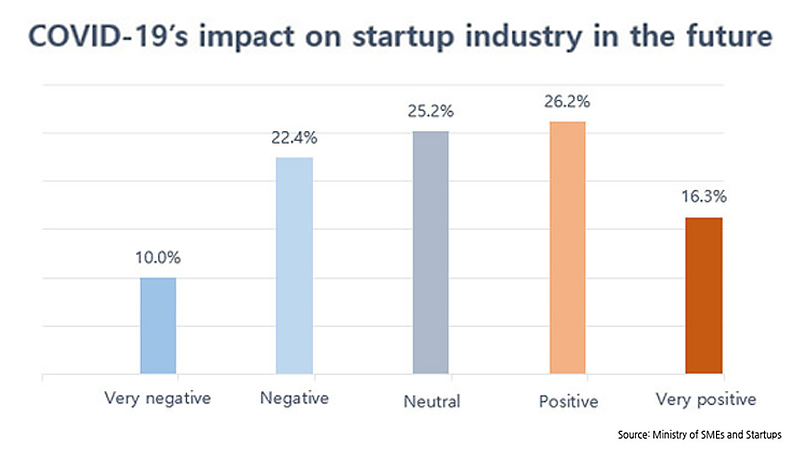
Korean startups find the COVID-19 pandemic positive for the country’s startup ecosystem in the future, a survey by the Ministry of SMEs and Startups showed on May 12.

Out of 492 respondents, 42.5 percent said the COVID-19 pandemic will bring about either a very positive or positive impact on the startup ecosystem. Almost 65 percent of them said that there will be more chances for new business ideas due to changes brought about by the pandemic, while 40 percent of the respondents also expect “untact” businesses to gain the momentum. Newly coined term untact refers to non-face-to-face contact and has been widely used in South Korea amid social distancing.

Among those who are concerned about the post-COVID-19, 73 percent of them said they worry about a revenue decline due to weakening consumer sentiment.

The survey showed that startups see medical and educational sectors as the most promising industries post-COVID-19.

“The non-face-to-face sector is expected to emerge as a promising industry globally as the transition to the digital economy accelerates after COVID-19,” said Lee Soon-bae, director of the startup policy division at the Ministry of SMEs and Startups. “The government will provide policy support to help Korean startups in untact sectors lead the global market.”

A total of 492 startups participated in the survey that was conducted from April 10 to 30.

Laos Govt to help workers who left jobs in Thailand #ศาสตร์เกษตรดินปุ๋ย

#ศาสตร์เกษตรดินปุ๋ย : ขอบคุณแหล่งข้อมูล : หนังสือพิมพ์ The Nation.

https://www.nationthailand.com/ann/30387758?utm_source=category&utm_medium=internal_referral

Laos Govt to help workers who left jobs in Thailand

May 13. 2020
Photo credit:Baania.com

Photo credit:Baania.com
By Vientiane Times

Workers who have returned to Laos after leaving jobs in Thailand as a result of the Covid-19 outbreak will receive help from the government in finding new employment.

The Ministry of Labour and Social Welfare has asked the Departments of Labour and Social Welfare in each province and Vientiane to compile information from village authorities about the number of people who have returned after the Covid-19 outbreak meant they had to leave Thailand.

Director of the Vientiane Department of Labour and Social Welfare, Mrs Lamphoy Si Akkhachanh, on Tuesday informed the media about this process and the course of action proposed by the ministry.

The ministry has instructed Labour and Social Welfare Departments around the country to work with local authorities in providing detailed information about the number of people who need assistance.

It is hoped that returning workers can find jobs with Lao businesses and receive appropriate training before taking up new employment.

Labour officials are compiling figures on the number of workers returning to Laos from Thailand between March 24 and May 30. Mrs Lamphoy said the current number was estimated at 79,208, of whom at least 2,000 are living in Vientiane. This figure was provided by the National Taskforce Committee for Covid-19 Prevention and Control.

The information collected will detail the number of people who are now unemployed. The figure is expected to be high because many businesses have closed temporarily while the threat posed by Covid-19 persists.

The figures will be submitted to the government so that solutions can be considered and people provided with new jobs where possible.

Mrs Lamphoy called on everyone involved to make sure that all workers were registered and received the help they needed.

Labour and Social Welfare Departments throughout the country are also gathering information on the jobs available in each province and in Vientiane.

Departments will provide supporting programmes for people wanting to work on a freelance basis or be self-employed, as well as those who hope to find more work in other countries when the situation improves.

Health chief: Malaysia concerned about possible emergence of Covid-19 second wave #ศาสตร์เกษตรดินปุ๋ย

#ศาสตร์เกษตรดินปุ๋ย : ขอบคุณแหล่งข้อมูล : หนังสือพิมพ์ The Nation.

https://www.nationthailand.com/ann/30387757?utm_source=category&utm_medium=internal_referral

Health chief: Malaysia concerned about possible emergence of Covid-19 second wave

May 13. 2020
By The Star

PUTRAJAYA: The emergence of new clusters in countries that have recovered from Covid-19 is a cause for concern for Malaysia, says the Health Ministry.

Health director-general Datuk Dr Noor Hisham Abdullah has called again for Malaysians to “come together” and observe social discipline strictly in order to break the chain of Covid-19 in the country.

“Indeed, many countries are worried about the possible emergence of a Covid-19 second wave. We are equally worried, ” said Dr Noor Hisham at the ministry’s daily Covid-19 press briefing here Tuesday (May 12).

He said Malaysia has done well to reduce the number of cases in the country during the first phases of the movement control order (MCO).

“The onus is not on the government but on each individual. Social compliance and discipline is important. If we can all comply with the SOPs (standard operating procedures) introduced by the Health Ministry, we can bring down the graph further.

“Whether we have a second wave or not is not up to the ministry alone. The onus is on the public as well, ” said Dr Noor Hisham.

He was asked about the emergence of new Covid-19 clusters in China and South Korea, which have sparked global concern about the possibility of a second wave of the coronavirus outbreak.

Dr Noor Hisham however expressed his faith in Malaysians keeping their discipline throughout the conditional MCO period.

“I was informed by the IGP (Inspector-General of Police) that our compliance level is almost 90%.

So maybe we only have to focus on the 10%.

“If our industries, our supermarkets comply with the SOPs given by the MOH (Health Ministry), I am sure we can bring down the cases further.

“We have to make history. If we want to be successful, if we want to break the chain of infection, we have to come together as one. If all of us put in our effort, I am sure we can do it. Malaysia Boleh, ” said Dr Noor Hisham.

The city of Wuhan – the epicentre of the Covid-19 pandemic in China – has reported its first cluster of infections since lifting its lockdown a month ago.

In South Korea, a new cluster traced to Seoul’s nightlife district has resulted in the country’s highest spike of cases in recent days.

Nepal I 83 new Covid-19 cases confirmed, the highest in a single day; national tally reaches 217 #ศาสตร์เกษตรดินปุ๋ย

#ศาสตร์เกษตรดินปุ๋ย : ขอบคุณแหล่งข้อมูล : หนังสือพิมพ์ The Nation.

https://www.nationthailand.com/ann/30387756?utm_source=category&utm_medium=internal_referral

Nepal I 83 new Covid-19 cases confirmed, the highest in a single day; national tally reaches 217

May 13. 2020
By Kathmandu Post

With more and more infections being reported from across the country, government officials and public health experts warn that the number of cases could further rise.

Nepal on Tuesday recorded the highest number of Covid-19 cases in a single day.

The Health Ministry confirmed 26 new cases on Tuesday night, which took the single-day number of Covid-19 cases to 83.

With the new cases, the country’s Covid-19 tally has now reached 217.

“Eighteen individuals in Parsa, two each in Mahottari, Dhanusa and Bhaktapur and one each in Kathmandu and Sarlahi tested positive for the virus,” said the ministry in a statement.

With more and more infections being reported from across the country every day, government officials and public health experts warn that unless Nepalis are allowed to enter the country legally, the number of cases could rise.

According to public health experts, the significant rise in cases can definitely be attributed to an increase in testing and the government’s faith in the results of the rapid diagnostic test kits.

Out of 18 in Parsa, six are women between 22 and 60 years of age. Twelve men are between the age of 16 and 61 years.

The two men tested positive in Mahottari are aged 16 and 35. Similarly, a 20-year-old woman and a 40-year-old man have tested positive in Dhanusha. Those tested positive in Bhaktapur are a 25-year-old woman and 27-year-old man.

Similarly, a 33-year-old woman in Kathmandu and a 45-year-old man in Sarlahi have also tested positive for the virus.

“The health condition of all the infected individuals is normal and they are under the supervision of medical personnel,” said the ministry.

Earlier in the day, the ministry had confirmed 57 new cases in four districts, two each in Province 2 and Province 5.

“Tests conducted on the samples of eight persons from Kapilvastu, nine from Rupandehi, 39 from Parsa and one from Bara at the National Public Health Laboratory in Kathmandu came out positive for Covid-19,” said the ministry.

With the latest update, Parsa now has the highest number of Covid-19 cases in the country at 82.

Province 2 now has the highest Covid-19 cases (95) in the country.

So far, 35 cases have been reported in Province 1, 10 in Bagmati, two in Gandaki, 70 in Province 5 and five in Sudurpaschim. Karnali is the only province which has not reported any case yet.

Likewise, 31 people have recovered and three have been readmitted after they tested positive for the virus in retests.

Bangladesh Stalked by hunger in foreign lands #ศาสตร์เกษตรดินปุ๋ย

#ศาสตร์เกษตรดินปุ๋ย : ขอบคุณแหล่งข้อมูล : หนังสือพิมพ์ The Nation.

https://www.nationthailand.com/ann/30387755?utm_source=category&utm_medium=internal_referral

Bangladesh Stalked by hunger in foreign lands

May 13. 2020
Photo credit: PxHere

Photo credit: PxHere
By The Daily Star

Over one lakh Bangladeshis in different Middle Eastern countries are suffering acute hunger while many other Bangladeshis have become unemployed amid the shutdown of economies across the world.

In different parts of the world, Bangladeshi migrants are struggling to pay their rent, buy essentials and bear the cost of mandatory coronavirus tests.

Bangladesh’s permanent representative to the Organisation of Islamic Cooperation, Golam Moshi said over five million Bangladeshi migrants work in the Middle East and at least one lakh of them are suffering hunger while most of them are gripped by uncertainty.

Officials at multiple embassies in the region agreed that the number of their fellow country people facing food shortage would be over one lakh. But they requested not to be named.

Bangladesh embassy officials in Saudi Arabia handed out food parcels to around 8,000 Bangladeshi workers in phases.

Thousands of others immediately need food aid because many have not been able to earn in over two-and-a-half months, Moshi, also Bangladesh ambassador in Saudi Arabia, told The Daily Star.

Besides, many of the two to three lakh Bangladeshis, who work in Saudi Arabia illegally, do not even leave their living quarters fearing that the authorities would launch a crackdown on illegal migrants amid an ailing economy, he said.

Officials in Bahrain, Malaysia, Italy and Greece also said food parcels and cash support might soon be needed for the migrant workers.

About one million Bangladeshis, including thousands of undocumented ones, live in Malaysia, Greece and Italy.

On April 5, the expatriates’ welfare ministry announced a Tk 4.5 crore fund after different missions requested for resources to provide migrants with support, according to a ministry release.

On April 23, Expatriates’ Welfare Minister Imran Ahmad announced another Tk 3 crore fund for “immediate food support”, said another release.

Bangladesh embassy in Manama received in its WhatsApp and email accounts plea for food from at least 4,200 migrants, said Sheikh Mohammed Tauhidul Islam, labour welfare counsellor at the embassy.

The mission last week handed out food parcels to 2,800 and the rest were likely to get the support soon, he said.

About one-fourth of nearly two lakh Bangladeshi migrant workers in Bahrain are facing financial hardship after completely or partially losing their earnings, he said, adding most of those employed as cleaners became unemployed.

In Malaysia, Bangladeshi migrant rights activist Harun-ur-Rashid told The Daily Star that undocumented migrant workers were being detained en masse recently.

Besides running short of food, many undocumented workers are in fear now, Harun said, adding that the detentions during the pandemic were “inhumane”.

Malaysian government made it mandatory for each foreign worker to get tested for coronavirus. Although the authorities said that the employers must pay for the tests, it is the workers who will end up paying for them, he said.

“It is an additional burden on the workers,” he said.

There is a Malaysian government directive to pay the basic wages to employees unable to work due to the coronavirus restrictions, but many workers received only 12 days’ basic salary for March, he said.

Bangladesh High Commission in Kuala Lumpur is trying to deliver food aid to those in need, said Zahirul Islam, labour welfare counsellor at the commission.

Syeda Farhana Nur Chowdhury, labour welfare counsellor at Bangladesh embassy in Athens, said during a recent food distribution event, many Bangladeshi migrant workers asked for cash support.

Some 30,000 Bangladeshi workers live in Greece and at least 1,085 received the food aid, she said.

The Greek government recently allowed reopening of some economic activities on a limited scale, bringing relief to thousands of migrant workers, she added.

Arfanul Hoque, labour welfare counsellor at Bangladesh embassy in Rome, said many workers were asking for financial support to pay the rents.

The mission has not been able to help them financially because the funds provided by the government were inadequate, he said, adding that a worker usually needs between 300 and 400 euros to pay the monthly rent in an Italian city.