Tokyo moves to 2nd stage of reopening #ศาสตร์เกษตรดินปุ๋ย

#ศาสตร์เกษตรดินปุ๋ย : ขอบคุณแหล่งข้อมูล : หนังสือพิมพ์ The Nation.

https://www.nationthailand.com/ann/30388821?utm_source=category&utm_medium=internal_referral

Tokyo moves to 2nd stage of reopening

May 31. 2020
By The Japan News

The Tokyo metropolitan government has announced it will move to the stage two of its road map for lifting business suspension requests at midnight Sunday.

In the second phase, a wide variety of commercial facilities, including movie theaters, gyms and department stores, will be able to operate again.

Other prefectures, such as Hokkaido, Aichi Prefecture and those in the Kansai region, intend to largely ease business suspension requests from Monday. Moves for economic activities to return to normal in the wake of the coronavirus spread are expected to accelerate nationwide the same day.

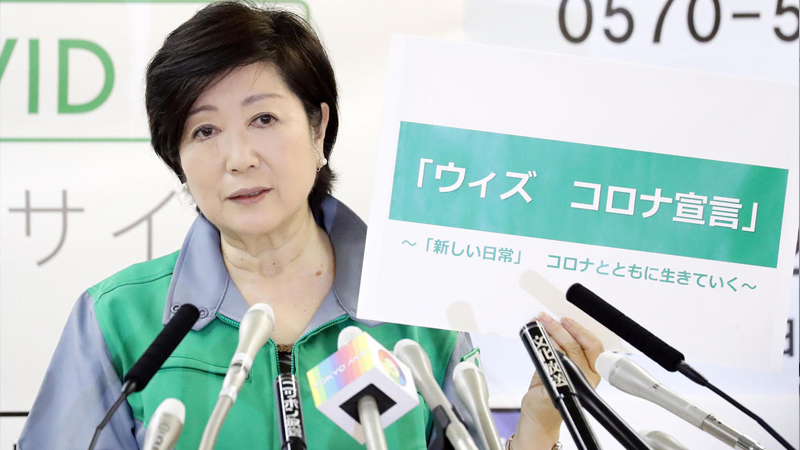
The number of people infected with the virus is on the rise again. However, Tokyo Gov. Yuriko Koike said at a regular press conference on Friday that “there were opinions from experts that it would be possible to move to the next stage by taking thorough preventive measures against the infection.”


Koike added, “While preparing for a second wave of infections, we’d like everyone to cooperate to create new daily lives.”

Based on the road map, the metropolitan government plans to ease its suspension requests in three stages when criteria such as “an average of fewer than 20 new cases per day for a week” are met.

On Tuesday, the day after the central government lifted the declaration of a state of emergency, the metropolitan government entered the first stage, allowing places like libraries and sports facilities to start operating again.

The Tokyo government initially considered moving to the second phase this weekend in consideration of the negative impact on the economy. But the daily number of cases increased to double digits from Tuesday, indicating an upward trend.

Considering that the central government in its guidelines set Monday as the date for reopening gyms and other facilities, the metropolitan government decided to postpone the start of its second stage to the same day, instead of the first weekend after the lifting of the emergency.

It has yet to decide when to move to the third phase — which will allow businesses including karaoke bars and pachinko parlors to reopen — and continues to call on people to refrain from going out for nonessential and nonurgent matters, such as traveling to other prefectures.

Other prefectures will also largely ease or totally lift their requests from Monday.

On Friday, the Aichi prefectural government said that on Monday it will lift its business suspension requests for eateries such as pubs, live music houses, karaoke shops and gyms. With this, all business categories in the prefecture will be free of suspension requests.

The three prefectures of Osaka, Hyogo and Kyoto decided to lift their requests for businesses including karaoke bars, nightclubs, live music houses and gyms from Monday.

Hokkaido also announced Friday it will totally lift suspension requests for all business categories from Monday. Chiba Prefecture will lift requests for pachinko parlors, karaoke bars, gyms and other facilities the same day.

On the other hand, while Fukuoka Prefecture intends to completely lift its requests on Monday, the exception will be Kitakyushu, as the virus continues to spread there.

Singapore in discussions with S. Korea, Australia, to establish ‘green lanes’ for travel – Straits Times #ศาสตร์เกษตรดินปุ๋ย

#ศาสตร์เกษตรดินปุ๋ย : ขอบคุณแหล่งข้อมูล : หนังสือพิมพ์ The Nation.

https://www.nationthailand.com/ann/30388820?utm_source=category&utm_medium=internal_referral

Singapore in discussions with S. Korea, Australia, to establish ‘green lanes’ for travel – Straits Times

May 31. 2020
Singapore is also having discussions with New Zealand and Malaysia to establish

Singapore is also having discussions with New Zealand and Malaysia to establish “green lanes” for travel.ST PHOTO: DESMOND WEE
By Straits Times

SINGAPORE – Talks are underway with South Korea and Australia to establish “green lanes” for travel during the Covid-19 environment, said Trade and Industry Minister Chan Chun Sing on Saturday (May 30).

Singapore is also having such discussions with New Zealand and Malaysia, while China on Friday (May 29) became the first country to establish a green lane with the Republic.

Such arrangements allow for the restoration of connectivity and facilitation of short-term essential business and official travel between countries, subject to safeguards against the coronavirus.

Speaking at a virtual press conference on Saturday, Mr Chan said that there were several considerations that go into deciding which countries to enter into such agreements with.

“Reciprocal green lane agreements means there must be mutual assurance of each other’s test protocol and standards,” he said.

He explained that a situation where there is no such trust and “everybody does their own thing”, with each country insisting on testing travellers for the virus as well as giving them a 14 day quarantine, would be essentially unworkable.

This is because aside from having to undergo two tests, travellers would have to be quarantined for almost an entire month in order to travel from one place to another.

So for a green lane arrangement to work, both countries would have to first have confidence in each other’s safeguards and be able to coordinate their quarantine orders so that travellers might only need to be tested or quarantined once.

Aside from discussing necessary protocols, there is also a need to look at the health situation in each country to see when these protocols can safely be deployed.

Mr Chan added that Singapore is in simultaneous discussions with as many countries as possible on forming green lanes, and that such discussions are taking place at a bilateral level, not a multilateral one.

“We are happy that we have been able to swiftly work on arrangements with China, and we hope to make progress with the rest of the countries,” he said.

Mr Chan was also asked how the United States’ decision to end its preferential treatment of Hong Kong would affect Singapore.

He said: “We don’t yet have all the details about what the US intends to do… so I won’t be able to comment on that. We’re closely monitoring the situation and when we have more details from the US side, then we’ll be able to make an assessment. We wish Hong Kong well and we hope that they can continue to do well as one of the business hubs in East Asia.”

China’s COVID-19 vaccine may begin mass output this year #ศาสตร์เกษตรดินปุ๋ย

#ศาสตร์เกษตรดินปุ๋ย : ขอบคุณแหล่งข้อมูล : หนังสือพิมพ์ The Nation.

https://www.nationthailand.com/ann/30388819?utm_source=category&utm_medium=internal_referral

China’s COVID-19 vaccine may begin mass output this year

May 31. 2020
By Chinadaily

A front-running COVID-19 vaccine candidate being developed in China is expected to be available as soon as the end of this year, according to a report published in the official Wechat account of the State-owned Assets Supervision and Administration Commission.

The vaccine, jointly developed by the Beijing Institute of Biological Products and China National Biotec Group Co., has completed phase II testing and may be ready for the market at the end of this year or early next year, said the report.

The production line for the vaccine will be fully disinfected and closed in preparation for output to start Saturday, and will have a full manufacturing capacity of 100 million-120 million vaccines each year.

Drugmakers are racing to develop a cure for the contagion that has so far killed at least 365,000 people. More than 100 vaccines for the virus are being developed globally, but only a handful have made it to the crucial and final human clinical trial stage, with Chinese scientists leading the way.

In total, five vaccines developed by Chinese companies are being tested on humans, the most in any country. Beijing has mobilized its health authorities, drug regulators and research institutes to work around the clock with local companies to come up with the world’s first successful one for COVID-19.

The vaccine candidate from Beijing Institute of Biological Products and China National Biotec Group employs a killed version of the novel coronavirus that can still trigger an immune response. Such inactivated vaccines have been developed for many years to protect populations from diseases including polio and hepatitis.

While inactivated vaccines may be slower to develop initially, their familiar path to mass production might allow them to overtake shots made by newer, cutting-edge approaches.

ALSO READ: Chinese trial vaccine may be tested abroad

S. Korea’s economy to contract this year amid COVID-19 impact: BOK #ศาสตร์เกษตรดินปุ๋ย

#ศาสตร์เกษตรดินปุ๋ย : ขอบคุณแหล่งข้อมูล : หนังสือพิมพ์ The Nation.

https://www.nationthailand.com/ann/30388676?utm_source=category&utm_medium=internal_referral

S. Korea’s economy to contract this year amid COVID-19 impact: BOK

May 28. 2020
Bank of Korea Gov. Lee Ju-yeol. (BOK)

Bank of Korea Gov. Lee Ju-yeol. (BOK)
By The Korea Herald/ ANN

South Korea’s central bank on Thursday slashed the country’s economic growth outlook for this year, forecasting a 0.2 percent on-year contraction amid the persisting COVID-19 pandemic.

It also cut the policy rate to an unprecedented 0.5 percent, further down from the previous record low of 0.75 percent, keeping pace with the government’s expansionary fiscal actions to shore up the virus-hit economy.

The Bank of Korea’s decision-making body — Monetary Policy Board — presented its economic outlook report, in which it curtailed the growth forecast to minus 0.2 percent for this year, drastically down 2.3 percentage points from its previous estimate.

Earlier in February, before the impact of the new coronavirus spilled over to the rest of the world, the BOK lowered its forecast for the nation’s gross domestic product to 2.1 percent for this year, down 0.2 percentage point from a year earlier.

“Under optimistic scenarios, the growth rate could end up higher than the 0.2 percent contraction, but may also dip further, should the situation worsen,” said Gov. Lee Ju-yeol in a related press conference.

The event was broadcast via BOK’s YouTube channel, amid continued quarantine precautions.

Asia’s fourth-largest economy has so far posted two annual contractions since the BOK began compiling such data in 1953 — once in 1980 and later in 1998 during the Asian financial crisis.

After dipping to negative growth this year, Seoul’s economy will rebound next year to a 3.1 percent on-year growth level, the BOK added. The figure is up 0.7 percentage point from the previously-suggested 2.4 percent.

This is the first time that Seoul’s central bank has projected an on-year economic contraction since July 2009, in the wake of the global financial crisis. Back then, the BOK had anticipated the economy to contract 1.6 percent on-year.

While an outlook in the zero percent range had largely been anticipated, the negative growth scenario by the central bank shocked markets.

Last week, the state-run think tank Korea Development Institute said that the economy will expand 0.2 percent on-year in 2020, with some possibility of falling as low as minus 1.6 percent, depending on how the pandemic unfurls. Other domestic and global institutes such as the Korea Institute of Finance and the International Monetary Fund have also estimated an on-year contraction of the Korean economy this year.

The BOK’s pessimistic stance came as the country is likely to face a prolonged economic slump throughout the year.

For the January-March period, the economy contracted 1.4 percent on-quarter, marking the lowest growth since the final quarter in 2008 following the global financial crisis.

Exports in April nosedived 24.3 percent on-year and continued to dwindle in May, marking a 20.3 percent dip as of May 20 from the same period last year, according to the Korea Customs Service.

Reflecting the aggravating economic environment, the central bank slashed the base rate further by a quarter percentage point to a record low of 0.5 percent.

The quantitative easing came only two months after the BOK carried out a “big cut” to an unprecedented 0.75 percent in March, slashing 50 basis points from the previous 1.25 percent.

In regards to the March decision, a considerable number of market observers had speculated that the BOK may maintain a wait-and-see approach and shelve the rate change decision until the next board meeting in July.

The latest meeting also marked the first since a reshuffle of board members in April. As the seven-member panel includes two ex officio members — BOK Gov. Lee Ju-yeol and Deputy Gov. Yoon Myun-shik — the change of three out of five remaining members was deemed a major realignment of the decision-making body.

The total number of virus infections here stood at 11,344 as of Thursday, more than four months after the country reported its first confirmed case on Jan. 20.

By Bae Hyun-jung (tellme@heraldcorp.com)

Strict social distancing restored in Seoul area #ศาสตร์เกษตรดินปุ๋ย

#ศาสตร์เกษตรดินปุ๋ย : ขอบคุณแหล่งข้อมูล : หนังสือพิมพ์ The Nation.

https://www.nationthailand.com/ann/30388675?utm_source=category&utm_medium=internal_referral

Strict social distancing restored in Seoul area

May 28. 2020
South Korean Health Minister Park Neung-hoo speaks during a Central Disaster Management Headquarters meeting on Thursday. (Health Ministry)

South Korean Health Minister Park Neung-hoo speaks during a Central Disaster Management Headquarters meeting on Thursday. (Health Ministry)
By The Korea Herald/ANN

Strict social distancing will be reinstated for the next two weeks in Seoul, Incheon and Gyeonggi Province until June 14, to preemptively stem further spread of recent coronavirus outbreaks that centered in the metropolitan region, Health Minister Park Neung-hoo said Thursday.

The restoration of the coronavirus countermeasures comes less than a month since the nationwide guidance expired on May 6.

Park said the decision was reached at an emergency cabinet meeting convened by the prime minister Thursday morning.

All communal facilities including nightlife businesses, religious establishments, museums, theaters and parks will remain closed for two weeks accordingly, he said. Companies are recommended to implement telecommuting and flexible work schedules.

To allow students to return to classrooms as scheduled, places frequented by children and young adults such as private cram schools and gaming cafes are also urged to suspend their operations.

Park said the amplified measures were intended to enable schools to follow through with the already disrupted academic calendars.

Bucheon, a satellite city of Seoul, was first to end the relaxation of disease control guidance Wednesday, delaying school openings and closing down high-risk businesses.

“We have to keep in mind that the coronavirus is still around us, and continue to abide by safety rules set forth by the disease control agency such as wearing face masks, maintaining hand hygiene and practicing social distancing,” the minister said.

By Kim Arin (arin@heraldcorp.com)

Pandemic may change fitness industry forever #ศาสตร์เกษตรดินปุ๋ย

#ศาสตร์เกษตรดินปุ๋ย : ขอบคุณแหล่งข้อมูล : หนังสือพิมพ์ The Nation.

https://www.nationthailand.com/ann/30388406?utm_source=category&utm_medium=internal_referral

Pandemic may change fitness industry forever

May 24. 2020
Photo credit: PxHere

Photo credit: PxHere
By China Daily
Online fitness classes boom with gyms shuttered during lockdown — a trend some say is here to stay in the post-pandemic world. Kathy Zhang reports from Hong Kong.

More than 1,000 gyms across Hong Kong were ordered to close for weeks because of the coronavirus, and as a result, online fitness classes have flourished.

Ng wun-po, a fitness instructor, has put all his efforts into producing videos to teach people how to keep fit at home using fitness equipment.

Ng works for different fitness centers. One of his employers, Bounce Limited, a studio that uses gymnastics trampoline for working out, announced it was closing permanently three days after the government ordered gyms and spas to close on March 28.

Ng records about three fitness-related videos every week and uploads them to Facebook and Instagram.

Ng believes that uploading videos is an opportunity to share useful home-workout knowledge amid the COVID-19 pandemic, and offers the industry a way out of its malaise.

In 2019, the city’s fitness industry was said to worth HK$2.8 billion (US$361 million), according to Fitness Guide, a Hong Kong-based community organization, which provides information about the city’s fitness industry.

The industry is one of the hardest-battered industries amid the pandemic. Some small fitness studios shut down; the city’s hundreds of thousands of full-time gym trainers have suffered a plunge in income for months.

Some laid-off gym trainers are working for delivery services, Terence Chau, CEO of Asian Academy for Sports and Fitness Professionals (AASFP), told China Daily.

To maintain the bonds with clients during weeks-long service suspension, many fitness centers and trainers like Ng have provided prerecorded video classes or taken online livestreaming sessions via Facebook, Zoom and Instagram for their workout-starved members.

Pure, one of the biggest fitness and yoga chains in Hong Kong, is one of them. On May 13, Pure launched Zoom livestream classes for its clients.

Livestream tutorial sessions give clients an opportunity to keep in touch with their trainers during the special time, even if clients stay in different countries because of the social distancing measures or border restrictions, Chau said.

Chau, also a physiotherapist and resistance and Pilates instructor, in recent months has been providing livestream tutorial classes to his students once or twice every week. Some of his students are in South Korea and Taiwan.

Great demand

Ng found people’s demand for a good sweat, stretch and de-stress at home or in small spaces is growing as more people have to stay home longer amid closures of gyms and entertainment venues.

In tutorial videos, Ng concentrates on focused strength and stretching exercises. He also works with his wife, a yoga instructor, to show how couples can do home workouts together.

The AASFP now also provides an eight-hour online fitness training course for home workouts.

Fitness equipment for home use is in great demand amid gym closures.

According to Decathlon Hong Kong, a sporting goods retailer, resistance bands and dumbbells are popular in its offline and online stores. When China Daily searched through some home-use equipment in the Decathlon Hong Kong online store on April 15, two kinds of resistance bands and five kinds of dumbbells were shown to be out of stock.

A 27-year-old freelancer journalist surnamed Liu bought a yoga mat in April after her yoga class at a gym was suspended.

Liu downloaded a fitness app and followed some fitness influencers on social media. The young woman has more options on the internet, but she said she will return to the gym to have classes after the pandemic. She prefers to work out with an instructor telling her whether she is doing the exercises correctly.

“Different people will make different choices. Online fitness classes just provide us with more options,” Liu said.

Making a bigger cake

The coronavirus pandemic temporarily imposed a negative impact on the city’s fitness industry. Business may not recover quickly even though they were reopened after May 8, Chau believes.

“Some people still prefer to work out at home for fear of COVID-19 infection in the following months,” Chau said.

The global health challenge will be a boon for the industry in the future, Chau believes.

“People are aware of the importance of boosting their own immune systems and enhancing overall fitness by doing exercises. Therefore, more customers will enter the market, either online or offline.” he explained.

Chau disagreed that the boom of the online fitness industry will be a threat for the businesses of the offline world. “On the contrary, the boom makes the cake of the fitness industry bigger,” he said.

The development of the online fitness industry also provides gym trainers with more options.

Chau said the off season is a good opportunity for gym instructors to strengthen their own competitiveness by learning more exercise techniques.

Tourism and catering industries also have been seriously hit by the city’s months-long social unrest and the pandemic. According to the Tourism Board, the number of visitors to Hong Kong in the first quarter decreased by 80.9 percent from the same period last year.

The city’s joblessness has been surging. According to the Census and Statistics Department, Hong Kong’s jobless rate soared to 5.2 percent, the highest in more than 15 years, for the period from February through April.

Given that, Chau suggested laid-off young people take personal training courses and sit certification exams to prepare for the changing field and make themselves more marketable.

Bike-share services in high demand in Japan as pandemic creates new normal #ศาสตร์เกษตรดินปุ๋ย

#ศาสตร์เกษตรดินปุ๋ย : ขอบคุณแหล่งข้อมูล : หนังสือพิมพ์ The Nation.

https://www.nationthailand.com/ann/30388405?utm_source=category&utm_medium=internal_referral

Bike-share services in high demand in Japan as pandemic creates new normal

May 24. 2020
Photo credit: PxHere

Photo credit: PxHere
By The Japan News
As we shift to the new normal, the use of bike-share services is rising in urban areas as an ideal means of transportation as many people remain worried about the spread of the coronavirus.

The trend reflects more people trying to reduce their use of trains and buses to avoid the “Three Cs” — closed spaces, crowded places and close-contact settings — as well as in-demand delivery services using bicycles. However, it has also created such issues as bike ports being completely full, leaving operators to deal with the problem.

In mid-May, a man wearing a jacket was seen unlocking a bicycle via his smartphone in an office district in Tokyo. More ports for bike-share services are being set up, mainly in urban areas, and users can rent or return a bike anywhere via smartphone apps. The fee is about ¥100 for 10 minutes.

As daily life was becoming more impacted by the spread of the virus, bike-share services gained more attention. Docomo Bike Share, Inc., a major bike-share service operator with about 13,600 bikes nationwide, saw an about 20% increase in the number of new registrants in both April and May, compared to March.

Charichari, the bike-share service in Fukuoka, also saw a surge in the average number of bikes used per day in May to more than 5,000, marking a record high.

Kentaro Iemoto, president of Neuet, Inc., which operates the service, said the figure represented “an amazing shift in lifestyle habits” and plans to expand the business to other urban areas.

Luup, Inc., a new company in the bike-share industry, plans to start its services in Tokyo soon. The start-up develops electric kick scooters that are currently not allowed to be used on public streets but hopes to bring them into the bike-share market after the relaxation of current regulations.

The need for bike-share services will likely increase as people try to be careful about virus infections in the new normal. Each company sanitizes the grips and seats of the bikes they operate.

However, because of its popularity, some ports have run out of available bicycles, while others are overflowing with bikes and blocking public roads. There are also concerns about users not returning the bikes to a designated port.

Bike-share service operators have their staff members respond to these problems by monitoring the situation of each port based on the bicycles’ GPS location, but they may have to increase the number of staff under the current circumstances.

“We need to use artificial intelligence to more accurately forecast demand,” said an official of Docomo Bike Share.

Philippines Gov’t eases quarantine restrictions to help more businesses resume operations #ศาสตร์เกษตรดินปุ๋ย

#ศาสตร์เกษตรดินปุ๋ย : ขอบคุณแหล่งข้อมูล : หนังสือพิมพ์ The Nation.

https://www.nationthailand.com/ann/30388403?utm_source=category&utm_medium=internal_referral

Philippines Gov’t eases quarantine restrictions to help more businesses resume operations

May 24. 2020
WALL OF FAME A Pasig City hospital worker walks past a mural honoring him and his fellow front-liners in the fight against the coronavirus. —MARIANNE BERMUDEZ

WALL OF FAME A Pasig City hospital worker walks past a mural honoring him and his fellow front-liners in the fight against the coronavirus. —MARIANNE BERMUDEZ
By Inquirer

MANILA, Philippines — The Inter-Agency Task Force on Emerging Infectious Diseases (IATF) on Saturday eased some quarantine restrictions to allow more businesses to resume full operations, according to presidential spokesperson Harry Roque.

Roque said in a statement on Saturday that the IATF issued Resolution No. 38, generally maintaining restrictions in areas under enhanced community quarantine (ECQ) and general community quarantine (GCQ) but easing some prohibitions in areas under modified enhanced community quarantine (MECQ).


Most of the country was placed under GCQ on May 1 except for Metro Manila, Laguna, Bataan, Bulacan, Nueva Ecija, Pampanga and Zambales, which were placed on MECQ. Cebu and Mandaue were asked to remain under ECQ because of their high number of coronavirus infections.

Most economic activities are allowed under GCQ, subject to public health precautions and local regulations intended to prevent more cases of the new coronavirus disease (COVID-19). ECQ and MECQ allow economic activities only to the most essential and limits the nonessential movement of people.


Full operation

But the new guidelines now allow the full operation of public or private hospitals; health and emergency front-line services; and manufacturers of medicines, medical supplies, devices and equipment in areas under all quarantine categories.

Resolution 38 also allows industries in agriculture, forestry and fishery as well as delivery and courier services for food, medicine and other essential goods to resume full operations in all quarantine categories.


For other industries, the previous ECQ rule on companies running at half capacity remains but those involved in the provision of essential goods and services, media entities, establishments offering utility relocation work and specified limited works are now allowed to resume full operations in MECQ areas.

The same will apply to medical, dental, rehabilitation and optometry clinics; pharmacies and drug stores; veterinary clinics; banks and money transfer services; capital markets, water supply, and sanitation services and facilities; energy and power firms; telecommunications companies; airline and aircraft maintenance in MECQ zones.

Gatherings

The IATF also allowed the full operation of manufacturing companies; state-run Philippine Postal Corp. and the Philippine Statistics Authority; business process outsourcing and export-oriented businesses; essential projects and funeral and embalming services.

The new guidelines also allowed gatherings for the provision of critical government services and authorized humanitarian activities, subject to prescribed health standards, in MECQ areas.

For areas under GCQ, the IATF also expanded the outdoor activities that people could undertake.


These include noncontact sports and other forms of exercise such as, but not limited to, walking, jogging, running, biking, golf, swimming, tennis, badminton, equestrian and skateboarding. Minimum health standards must be followed.

Operation of relevant clubhouses or similar establishments would be limited to basic operations.

The IATF issued the new rules as it prepared to meet on Monday and Wednesday to discuss the quarantines that were set to expire on May 31.

Roque said officials were still studying the matter but he described initial data as “encouraging.”

“I don’t want to say that that is a certainty because the data still has to be looked at. But it is encouraging because I read a [University of the Philippines] research showing that in many areas of the country, the doubling rate is now longer,” he said in an interview with dzBB radio.

“But we still have to look at the data of the [Department of Health],” he added.

Testing not required

As the government eased restrictions on business establishments, Interior Secretary Eduardo Año clarified that workers in the private sector should not be required by local authorities to get tested for coronavirus prior to being allowed to return to work.

He said the IATF, the Department of the Interior and Local Government, the Department of Trade and Industry and the Department of Labor and Employment, did not issue any directive imposing COVID-19 testing.

“To [local government units] that are issuing executive orders requiring companies or offices to subject their employees to tests, we have not issued anything that sanctions that,” he said.

Año, however, said companies may require their employees to undergo rapid antibody tests but they, not their workers, should shoulder the costs.

Tests would only be necessary, he said, if an individual had traveled to a coronavirus-hit country, had COVID-19 symptoms, or was exposed to a confirmed positive case.

Government agencies, local governments and even private companies can conduct “screening or diagnostic tests” in lieu of the mandatory COVID-19 testing, Año said.

He said, however, that “hasty testing” was not encouraged as that they were not practical due to the limited availability of test kits.

Labor Secretary Silvestre Bello III earlier said employers were not obliged to have their employees tested for COVID-19, more so, shoulder the expenses for the tests.

Only workers manifesting COVID-19 symptoms must be tested, Bello said.

Singapore’s search for a cure and vaccine for Covid-19 #ศาสตร์เกษตรดินปุ๋ย

#ศาสตร์เกษตรดินปุ๋ย : ขอบคุณแหล่งข้อมูล : หนังสือพิมพ์ The Nation.

https://www.nationthailand.com/ann/30388402?utm_source=category&utm_medium=internal_referral

Singapore’s search for a cure and vaccine for Covid-19

May 24. 2020
A National Centre for Infectious Diseases doctor listening to the lungs of a patient as part of the treatment for Covid-19.PHOTO: NCID

A National Centre for Infectious Diseases doctor listening to the lungs of a patient as part of the treatment for Covid-19.PHOTO: NCID
By Straits Times

Singapore working with groups worldwide to ensure timely access to successful drugs and vaccines

Covid-19 arrived in Singapore on Jan 23.

There are over 30,000 people here infected with the virus, while the global total has surpassed five million, with more than 330,000 deaths.

One reason for the quick spread and high fatality is that this is a novel virus and anyone who encounters it would not have developed prior immunity.

The elderly are particularly vulnerable, with high death rates observed in nursing homes in many parts of the world.

Public health and social distancing measures work to contain and limit the spread of the virus.

However, to deal decisively with Covid-19, there is an urgent need for two items in the doctor’s inventory.

First, a vaccine to immunise enough people in the population to prevent further propagation of the virus.

Second, an effective and safe cure to treat patients with serious illness and complications from the disease.

As the Sars-CoV-2 virus that causes the disease was not previously known to doctors and scientists, both vaccine and cure do not exist today. It also does not help that it typically takes many years, sometimes up to a decade, to develop a new drug or vaccine.

In Singapore, we have strengths across our hospitals, universities and research institutes to study how the virus behaves and causes disease as well as how infected patients mount immune responses against it, and to develop new technologies to detect, track and neutralise the virus.

When the outbreak of a new atypical pneumonia first emerged in Wuhan, China, the National Centre for Infectious Diseases (NCID) was quick to bring together experts from across Singapore to collectively tackle the challenges posed by this virus.

While Singapore has limited expertise to develop its own Covid-19 vaccine, it has actively engaged leading vaccine groups and companies internationally.

The goals are for Singapore to participate in vaccine clinical trials, as well as to expedite regulatory review and approval for any successful vaccine.

REPURPOSING EXISTING DRUGS

Developing a cure for a novel virus from scratch may take too long.

So, the first approach was to find out if any existing drugs work against it.

A repurposed drug must have data to show its effectiveness in the laboratory and in animals, and an acceptable safety profile.

There were lessons that could be learnt from drugs tested against other coronaviruses that cause the severe acute respiratory syndrome and Middle East respiratory syndrome, as well as other infectious diseases.

The NCID research group systematically combed the medical and scientific literature for potential drugs that could work against Covid-19.

Early candidates were chloroquine and hydroxychloroquine, which are used to treat malaria and inflammatory diseases such as lupus and rheumatoid arthritis.

While the early data was promising, this was subsequently shown to work poorly against the disease.

Another drug, Kaletra (lopinavir-ritonavir), was used against the human immunodeficiency virus that causes Aids. Our experience was that the drug had poor efficacy against Covid-19 and gave rise to many side effects.

This was subsequently shown to be ineffective from clinical trials conducted in other countries.

We also learnt of an experimental drug, remdesivir, which was developed against Ebola. The company that developed it, Gilead, was planning to start clinical trials in the United States and other countries.

Within four weeks of our first meeting with Gilead, NCID and other Singapore hospitals were able to start recruiting patients for clinical trials involving remdesivir.

This was facilitated by rapid approvals from medical, regulatory and ethics bodies here.

Singapore also participated in a multi-country trial led by the US National Institute of Allergy and Infectious Diseases (NIAID), which was important as it compared remdesivir with a placebo.

On April 29, Dr Anthony Fauci, director of NIAID, announced that remdesivir significantly improved recovery of Covid-19 patients.

What was amazing was the complete enrolment of 1,063 patients internationally in less than 60 days.

While there has been a proliferation of more than 300 clinical trials for Covid-19, it was important for NCID to be very selective in evaluating which ones to participate in.

The evaluation had to consider the scientific and clinical evidence, as well as the design of the clinical trial.

By working with Gilead and NIAID, Singapore was able to enrol close to 100 patients in the remdesivir trials.

HARVESTING AND ENGINEERING ANTIBODIES

Another approach was to harvest antibodies from Covid-19 patients to treat others with the disease.

This use of convalescent plasma has been shown to work in other serious virus infections.

However, the quantity of antibodies that can be recovered is limited, and it will be challenging to produce enough quantities to treat more than a few individuals.

To overcome this limitation, a number of biotech companies have established platforms to scale up the production of antibodies against Covid-19.

One such company, Regeneron, has produced an antibody cocktail that has been shown to be effective in the laboratory.

Through an agreement with NCID, blood samples from recovered Covid-19 patients from Singapore contributed towards pre-clinical research and development of this cocktail.

We have also initiated talks for Singapore to potentially participate in clinical trials planned for the coming months.

A number of Singapore groups have also joined the international race to develop monoclonal antibodies against Covid-19.

Monoclonal antibodies are immune system proteins that are created in the laboratory.

These include local biotech company Tychan, as well as a partnership between the Agency for Science, Technology and Research’s Singapore Immunology Network and pharmaceutical company Chugai.

Monoclonal antibodies can be specially designed and engineered to target the Sars-CoV-2 virus.

The advantage is that these can be developed over several months, they can be produced in large batches and a single injection may last for a few weeks.

There are plans for clinical trials to be conducted here and, if successful, the possibility to localise manufacturing as well.

DEVELOPING A VACCINE

Today, there are over 100 vaccine candidates being developed by biotech and pharmaceutical companies, some with the support of international coalitions.

These include traditional vaccine technologies using inactivated or live attenuated viruses (which have been weakened or altered so they do not cause illness), which are time-consuming and require considerable resources to make.

What is also exciting are nucleic acid vaccines (for example, RNA or DNA) synthesised using genetic materials from the virus.

With modern biotechnology, such vaccines can be manufactured in large quantities and, as they are generally required in only very small doses, provide an approach to producing the billions of doses required to vaccinate people around the world.

While Singapore has limited expertise to develop its own Covid-19 vaccine, it has actively engaged leading vaccine groups and companies internationally.

The goals are for Singapore to participate in vaccine clinical trials, as well as to expedite regulatory review and approval for any successful vaccine.

The Duke-NUS Medical School, for example, is working with Arcturus Therapeutics on its RNA vaccine, which has been shown to be highly effective in pre-clinical studies.

Singapore has also registered to be a trial site for the World Health Organisation’s adaptive multi-country Solidarity vaccine trials.

Covid-19 has caused societal and economic disruptions globally, and has taken a significant toll on human lives.

Only a cure or treatment can bring an end to this pandemic.

Singapore will continue to work closely with groups around the world in these efforts, and to ensure its timely access to successful drugs and vaccines.

Korean drug firms in early stage of coronavirus vaccine development #ศาสตร์เกษตรดินปุ๋ย

#ศาสตร์เกษตรดินปุ๋ย : ขอบคุณแหล่งข้อมูล : หนังสือพิมพ์ The Nation.

https://www.nationthailand.com/ann/30388401?utm_source=category&utm_medium=internal_referral

Korean drug firms in early stage of coronavirus vaccine development

May 24. 2020
(Korean Intellectual Property Office-Yonhap)

(Korean Intellectual Property Office-Yonhap)
By Korea Herald

South Korean pharmaceutical firms are in the beginning stages of coronavirus vaccine development, lagging behind US rivals, industry sources said Wednesday.

No domestic companies have received the green light for clinical trials for vaccine candidates from the drug safety authorities, though US biotech firm Moderna announced Monday all participants in its coronavirus vaccine test generated antibodies.

Spearheading the local effort is a six-firm consortium led by biopharmaceutical maker Genexine Inc. and SK Life Science Inc., a unit of South Korea’s No. 3 conglomerate SK Group.

The Genexine consortium has successfully carried out an experiment of its vaccine candidate on monkeys, with consortium member Binex completing the production of a sample.

The consortium is scheduled to submit a clinical test plan to the Ministry of Food and Drug Safety within this month in the hope of starting trials in June.

SK Life Science is currently conducting a safety test on its COVID-19 vaccine candidate and is aiming to start a clinical trial in September.

“Following an internal assessment, the safety test is being carried out on animals,” a company official said. “The start of clinical tests could be moved up.”

According to the sources, several other pharmaceutical firms are trying to develop coronavirus vaccine drugs, but details about their efforts have yet to be unveiled.

South Korea has been ramping up its support for the development of drugs and vaccines for the novel coronavirus that has infected more than 11,000 people and claimed 263 lives here.

Two weeks ago, the government said the country was conducting clinical tests for seven existing drugs to see if any of them can effectively treat the new coronavirus.

Clinical tests for three possible vaccines may be launched before the year’s end, it said, adding a vaccine may be developed before the end of next year following successful tests.