Korea rolls out face masks for summer heat #ศาสตร์เกษตรดินปุ๋ย

#ศาสตร์เกษตรดินปุ๋ย : ขอบคุณแหล่งข้อมูล : หนังสือพิมพ์ The Nation.

https://www.nationthailand.com/ann/30389193?utm_source=category&utm_medium=internal_referral

Korea rolls out face masks for summer heat

Jun 07. 2020
By Korea Herald

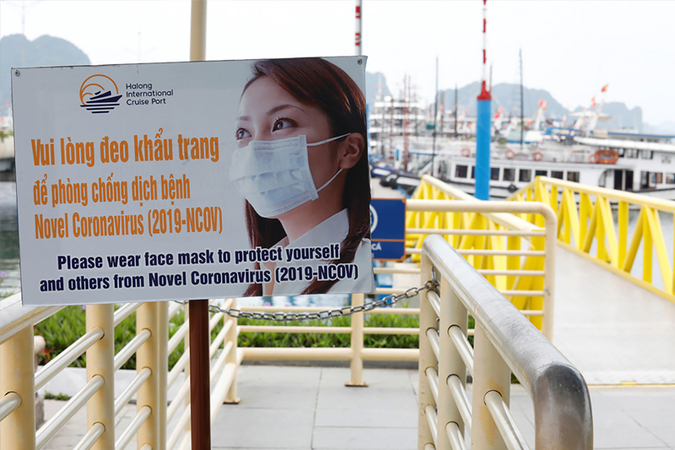
A new type of face mask designed to be more breathable than the N95 or KF94 respirators while shielding the wearer from respiratory droplets — through which the spread of the novel coronavirus can occur — has been launched in South Korea.

The Ministry of Food and Drug Safety fast-tracked approval for the masks, which function much like surgical masks, earlier this month for summertime usage by healthy individuals in nonrisky settings.

A Drug Safety Ministry official told The Korea Herald the new masks were intended for general purposes, and that those at increased risk of catching or transmitting the virus were still advised to wear the medical masks to protect against infections.

For instance, at-risk groups and people working with vulnerable populations such as nursing home staffers should wear the KF80 or KF94 masks, he said, stressing that the newly introduced masks do not filter out airborne particles.

“We hope the lighter and less-tight-fitting masks will be an option for people to adhere to coronavirus precautions in the warming weather,” he said.

The masks, dubbed KF-AD, became available for purchase online starting Friday.

ASEAN solidarity and response in the face of COVID-19 #ศาสตร์เกษตรดินปุ๋ย

#ศาสตร์เกษตรดินปุ๋ย : ขอบคุณแหล่งข้อมูล : หนังสือพิมพ์ The Nation.

https://www.nationthailand.com/ann/30388985?utm_source=category&utm_medium=internal_referral

ASEAN solidarity and response in the face of COVID-19

Jun 03. 2020
By Asain news network
Lim Jock Hoi

Two things are clear as we approach mid-year; that COVID-19 has irreversibly transformed the world and that, consequently, there is a long road ahead to recovery. With Eid observed quietly amid physical distancing, anxiety has crept up in the region over the uncertainty of when life can return to normal, but also with timid hope that, with the region so far managing to avoid the scale of catastrophe observed elsewhere, it can now gradually prepare for the new normal.

The year 2020 remains important for the region, although not in the way it has now turned out. The mid-term review of the implementation of the 2025 ASEAN Community Blueprints is being conducted this year, an important exercise to assess progress, identify challenges and address implementation gaps.

The region also expects to see the signing of the Regional Comprehensive Economic Partnership, which would be the world’s largest trade agreement involving almost every key economy in Asia, boosting the region’s global economic standing.

However, the region now also finds itself faced with the unprecedented task of addressing the health and socioeconomic costs of COVID-19. ASEAN member states must juggle between managing public health risks and their respective economies until an effective vaccine or treatment is found, while still having to keep in step with ASEAN’s community-building and regional integration agenda.

With more than 89,000 total confirmed cases and 2,700 deaths as of May 30, the region seems to be doing better relative to other hotspots around the world. The real number, however, is likely to be higher. The economic impact will likewise be significant, with the region expected to grow by just a meagre 1 percent compared to 4.6 percent in 2019. In addition, millions are expected to lose their jobs, and for a region with a large informal sector and where social protection is not evenly developed, the costs on livelihood will be high.

ASEAN member states have responded to COVID-19 globally, regionally and nationally. And while some states have taken action more swiftly than others, responses have been introduced at unprecedented speed and magnitude. The quick response and information sharing among ASEAN health officials, robust collaboration between ASEAN and the World Health Organization and engagement with external partners, such as the ASEAN Plus Three, the European Union and the United States, proved critical during all stages of the outbreak, including through exchange of timely data and information on prevention, detection, control and response measures.

On the economic front, the region was prompt to jointly commit to keep the market open, ensure the normal flow of trade and supply chain connectivity, particularly for essential products, and work together to mitigate the socioeconomic impact of COVID-19. Such demonstration of regional commitment is crucial in the absence of a coordinated global response and in light of the pressure to turn inward. The commitment to working together was echoed at the sectoral level, particularly with those hardest hit or at risk such as the tourism, labor and agriculture sectors.

For ASEAN, the task at hand is to translate these commitments into concrete actions including through the development of a post-pandemic recovery plan, as called for by leaders at the Special ASEAN Summit on COVID-19 on April 14. Such plans will need to address the steps needed to reopen the economy and society, recover from both the health and economic crises and work toward long-term resilience and competitiveness.

The early stages of reopening would be critical. Information sharing and coordination is imperative to ensure that efforts to resume economic and social activities are coordinated with health and safety protocols in place. This is also where regional coordination can add value given the level of integration in ASEAN and the possibility to better coordinate on border management, such as gradual easing to allow movement of people.

For the recovery stage, those hardest hit may need extra help, such as micro, small and medium enterprises, workers who have lost their jobs and those in the most affected sectors such as travel, tourism and hospitality.

On the demand side, it is important to restore business and consumer confidence as swiftly as possible.

The need for broad stimulus measures will continue, and this may be more difficult for economies with limited fiscal space. To this end, support from multilateral and regional development banks, as well as domestic financial institutions to ensure liquidity in the financial markets, will help shoulder the burden.

Over the longer term, much work will need to be done on strengthening the health systems, social protection and insurance, digital infrastructure — both hard and soft, and a rethinking of how we have valued our essential sectors and workers thus far.

As a consequence of physical and social distancing, the pandemic has, in turn, accelerated the adoption of technologies into all aspects of our lives, offsetting — at least partially — the productivity loss from travel and movement restrictions.

Digital technologies will continue to play an important role in the recovery process and beyond. Nevertheless, we have seen that digital technologies can augment but not replace human and social interactions. The continuing use of digital technologies further underscores the urgency to address the digital divide across and within ASEAN member states, in terms of infrastructure, skills, or rules and regulations. At the same time, this raises the imperative of addressing the concerns of data owners and technology users over privacy, security and ethics.

In sum, the pandemic has brought two things into realization. First, that effectiveness shall not be pursued at the expense of resilience and sustainability. Second, in an interconnected world, a global crisis requires global cooperation.

Tackling the pandemic and its socioeconomic impact demands solidarity and action at all levels. The global and regional community will need to work together; and not just governments, but also the private sector, research communities and civil societies.

This is the time to strengthen multilateral cooperation by proactively working on the necessary reform and leveraging global expertise and mechanisms as appropriate in the recovery efforts while placing our people and their well-being at the core. To this, ASEAN has much to offer.

Bali governor closes beaches a day after reopening for foreign surfers #ศาสตร์เกษตรดินปุ๋ย

#ศาสตร์เกษตรดินปุ๋ย : ขอบคุณแหล่งข้อมูล : หนังสือพิมพ์ The Nation.

https://www.nationthailand.com/ann/30388984?utm_source=category&utm_medium=internal_referral

Bali governor closes beaches a day after reopening for foreign surfers

Jun 03. 2020
By Jakarta Post
Bali Governor I Wayan Koster has said he would revoke Badung Tourism Agency’s decision to reopen two beaches in Badung regency for foreign surfers.

“I’ll inform the head of [Badung] tourism agency that we haven’t reopened our tourism yet. I disagree [with the reopening] and the decision should be annulled,” Koster said on Tuesday as reported by kompas.com.

Koster said he had issued a circular that regulates the closure of tourist destinations in Bali until further notice and he had not yet revoked it.

“We had instructed to close tourist attractions through a circular and we have not reopened them yet,” he said.

On Monday, Badung Tourism Agency opened access to two beaches in Badung regency, Canggu Beach and Labuan Sait beach, for foreign surfers.

Read also: Hotels in Bali brace for travel-restriction relaxation, ‘new normal’

The agency head, I Made Badra, said the beaches were still off limits to domestic tourists and non-surfers.

“The foreign surfers are stressed-out after staying indoors for three months, so we gave them a little leniency as long as they follow health protocols,” Badra said. “[Before entering the beaches], they had to be examined in Balawista posts and by the [COVID-19] task force of the two villages where the beaches are located.”

He also said that all foreign surfers were required to wear face masks.

“We’ll check the temperature of each visitor, those who have a high temperature will be taken to the nearest community health center [Puskesmas] immediately,” Badra said.

As of Monday, Bali recorded 482 cases of COVID-19 with five fatalities and 334 recoveries. (nal)

China denounces US visa restrictions on Chinese students #ศาสตร์เกษตรดินปุ๋ย

#ศาสตร์เกษตรดินปุ๋ย : ขอบคุณแหล่งข้อมูล : หนังสือพิมพ์ The Nation.

https://www.nationthailand.com/ann/30388983?utm_source=category&utm_medium=internal_referral

China denounces US visa restrictions on Chinese students

Jun 03. 2020
A student walks past a building of Pace University in New York, the United States, Dec. 19, 2019. [Photo/Xinhua]

A student walks past a building of Pace University in New York, the United States, Dec. 19, 2019. [Photo/Xinhua]
By China Daily
BEIJING – The US visa restriction on Chinese students and researchers severely undermined their legitimate rights and interests, Foreign Ministry spokesperson Zhao Lijian said on Tuesday.

The US side’s latest action under an abused concept of national security and flimsy excuses “runs counter to the common aspiration for friendly people-to-people, especially youth-to-youth exchange,” as Chinese students and researchers have been an important bond of friendship and bridge for scientific and educational exchange between Chinese and American people, Zhao said.

READ MORE: FM: US scheme to impede China’s development ‘to fail’

He made the remarks at a press briefing in response to US Secretary of State Mike Pompeo’s statement on Monday, in which he said the US side would not tolerate China’s attempts to illegally acquire technology and intellectual property from US academic institutions and research facilities for Chinese military ends.

“Mr. Pompeo is used to weaving lies as excuses for his wrongdoing, and his statement on this issue is no exception,” Zhao said.

ALSO READ: China urges US to stop political maneuvers over SAR’s legislation

“Taking a backward step like this will only bring harm to oneself and others,” he said.

US welcomes PH decision to suspend military pact termination #ศาสตร์เกษตรดินปุ๋ย

#ศาสตร์เกษตรดินปุ๋ย : ขอบคุณแหล่งข้อมูล : หนังสือพิมพ์ The Nation.

https://www.nationthailand.com/ann/30388982?utm_source=category&utm_medium=internal_referral

US welcomes PH decision to suspend military pact termination

Jun 03. 2020
By Inquirer

MANILA, Philippines — The United States on Tuesday welcomed the move of the Philippines to suspend the termination of the Visiting Forces Agreement (VFA), adding that it looks forward to the two nations’ continued security and defense cooperation.

“On June 1, the Government of the Philippines notified the U.S. Embassy in the Philippines of its decision to suspend termination of the Visiting Forces Agreement,” the embassy said in a statement.

“The United States welcomes the Philippine government’s decision. Our long-standing alliance has benefited both countries, and we look forward to continued close security and defense cooperation with the Philippines,” it added.

In a letter, the Department of Foreign Affairs (DFA) informed the embassy that the Philippine government is suspending, for at least six months, the abrogation of the VFA.

DFA Secretary Teodoro Locsin Jr. made the diplomatic note public over Twitter where he said that the suspension of the scrapping of the military accord was “upon the President’s instruction.”

“(I)n light of political and other developments in the region, the termination of the Agreement between the Government of the Republic of the Philippine and the Government of the United States of America Regarding the Treatment of United United States Forces Visiting the Philippines contained in Note No. 20-0463 dated 11 February 2020 is hereby suspended,” the letter attached to Locsin’s tweet read.

Locsin sent the formal notice of termination to the US Embassy on February 11, from which began the 180-day countdown to the official end of the VFA.

The VFA was ratified in 1999, eight years after the Philippines closed all US military bases in 1991, to once more allow large-scale US military presence in the country.

President Rodrigo Duterte ordered the termination of the VFA after the US visa of his political ally, Senator Ronald “Bato” dela Rosa, got canceled.

Maharashtra, Gujarat brace for cyclone Nisarga, Mumbai’s 1st in over 100 yrs; PM Modi reviews situation #ศาสตร์เกษตรดินปุ๋ย

#ศาสตร์เกษตรดินปุ๋ย : ขอบคุณแหล่งข้อมูล : หนังสือพิมพ์ The Nation.

https://www.nationthailand.com/ann/30388981?utm_source=category&utm_medium=internal_referral

Maharashtra, Gujarat brace for cyclone Nisarga, Mumbai’s 1st in over 100 yrs; PM Modi reviews situation

Jun 03. 2020

In the wake of the cyclonic storm, 15 teams of National Disaster Response Force (NDRF) have been deployed in Maharashtra. (Representational Photo: iStock)
By The Statesman

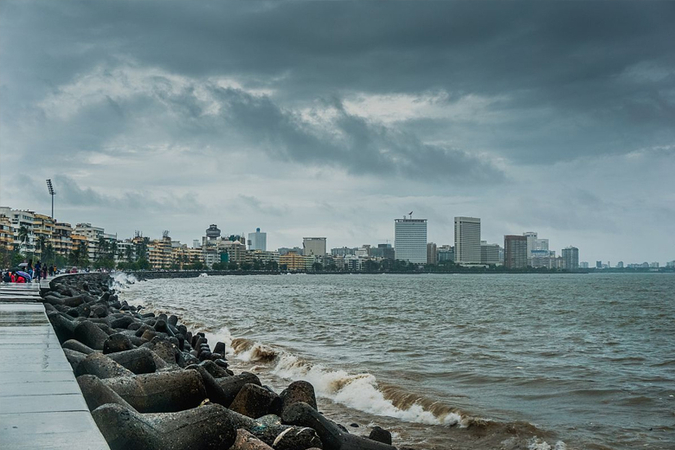
With the pandemic-hit Mumbai bracing to face cyclone ‘Nisarga’, set to cross Maharashtra and Gujarat coasts tomorrow afternoon, Prime Minister Narendra Modi on Tuesday urged the people of the states to take all possible precautions and safety measures.

In a tweet, PM Modi informed that he has taken stock of the situation in the wake of cyclonic conditions in parts of India’s western coast.

Cyclone Nisarga is likely to cross north Maharashtra and south Gujarat coasts between Harihareshwar town in Raigad district and Daman as a severe cyclonic storm on Wednesday.

The IMD has said that it will have an impact on Mumbai.

The nearly 260 km patch between Raigad and Daman has one of the highest population densities in the country. Apart from Mumbai, it also has satellites cities like Thane, Navi-Mumbai, Panvel, Kalyan-Dombivli, Mira-Bhayander, Vasai-Virar, Ulhasnagar, Badlapur and Ambernath.

This will be the first time that a cyclone will make landfall on the Maharashtra coast in June since record-keeping began in 1891.

In the wake of the cyclonic storm, 15 teams of National Disaster Response Force (NDRF) have been deployed in Maharashtra – 3 teams in Mumbai, 4 in Raigad, 2 each in Palghar, Thane and Ratnagiri and 1 each in Sindhudurg and Navi Mumbai.

Meanwhile, another 16 NDRF teams are being deployed in Gujarat.

The IMD has said that when the severe cyclone storm Nisarga crosses the coast on the evening of June 3, it will have a speed of 105-110 kmph. Heavy rains are also expected in south Gujarat and coastal Maharashtra.

On Monday evening, Union Home Minister Amit Shah held a video conference meeting with the chief ministers of Gujarat and Maharashtra and Administrator of Dadra and Nagar Haveli and Daman and Diu, and assured them all central help in view of Cyclone ‘Nisarga’.

Meanwhile, fishermen have called back from the sea as they have been cautioned by the authorities not to venture out at sea, in view of the impending adverse weather.

Fishermen were advised not to venture into the sea till Thursday near Kerala, Lakshadweep, coastal Karnataka, and Goa as well.

The IMD has advised DC-I signal at all ports in north Maharashtra and hoist signal No. LC-III at all ports in south Maharashtra and Goa.

The upcoming cyclone will put further stress on the security forces already burdened by the COVID-19 pandemic duties in the worst-hit Mumbai Metropolitan Region – most falling in the Coronavirus Red Zone – since the past nearly three months now.

The Central Water Commission has sounded flood alert for Sindhudurg, Ratnagiri, Thane, Mumbai, Palgarh and Nasik districts of Maharashtra, Daman district of Union Territory of Daman and Dui, Silvassa district of Dadar and Nagar Haveli and Valsad district of Gujarat.

There could be inundation in low lying areas, townships, and city areas. Wind speed could also cause damage to trees, telephone, and electric poles, IMD’s Director General Mrutyunjay Mohapatra has said.

Meanwhile, the Met department has issued district-level wind warning and storm surge warning for Maharashtra and Gujarat.

Japan faces another wave of coronavirus infections in Tokyo and Fukuoka #ศาสตร์เกษตรดินปุ๋ย

#ศาสตร์เกษตรดินปุ๋ย : ขอบคุณแหล่งข้อมูล : หนังสือพิมพ์ The Nation.

https://www.nationthailand.com/ann/30388980?utm_source=category&utm_medium=internal_referral

Japan faces another wave of coronavirus infections in Tokyo and Fukuoka

Jun 03. 2020
A screen shows customers' temperature as they enter Matsuya Ginza at Tokyo's Ginza shopping district, Japan, on June 1, 2020.PHOTO: EPA-EFE

A screen shows customers’ temperature as they enter Matsuya Ginza at Tokyo’s Ginza shopping district, Japan, on June 1, 2020.PHOTO: EPA-EFE
By Straits Times

FEARS OF A SECOND WAVE

After recording no new Covid-19 cases from April 30 to May 22, the city of Kitakyushu in Fukuoka saw 119 cases in the past 11 days, putting it on the front line of Japan’s second wave of infections.

Among them are 11 students from four elementary and junior high schools, prompting school closures again and the shutdown of public facilities such as art galleries that were allowed to reopen on May 18.

Over in Tokyo, 34 new cases were recorded yesterday – the first time since May 14 that the daily number of infections has risen above 30.

This marked a threefold increase from the 13 recorded on Monday, prompting Tokyo Governor Yuriko Koike to issue a “Tokyo alert” yesterday that could lead to renewed advisories for businesses to close and people to avoid non-essential outings.

This comes after the state of emergency was lifted in Fukuoka on May 14, and in Tokyo on May 25. “Small surges in cases had already been anticipated,” Dr Shigeru Omi, the deputy head of the government expert panel on Covid-19 response, told a news briefing. “The nature of this virus at this point in time is that it is impossible to reduce the level of transmission to zero.”

Unlike on April 7, when the emergency was first issued, Dr Omi said Japan’s medical infrastructure is now more robust to withstand the rise in case numbers. On this basis, there is no imminent state of emergency, he said, adding: “The bottom line is that we must quickly move to respond to the situation and to avoid the further spread of the disease by identifying the chains of transmission.”

But for all of Japan’s best efforts, about one in three cases in Kitakyushu’s second wave has no known transmission links. Clusters have also occurred at two hospitals and one elderly home.

In Tokyo, 12 of the 34 new cases yesterday remained untraced.

Since May 26, Tokyo has recorded 124 new cases, of which one in four was an employee or customer at an entertainment district.

The governor said the “Tokyo alert” was aimed at building awareness among residents of how widely infections are spreading in the capital. “It doesn’t mean we are (immediately) changing our plans to reopen social and economic activities, but we want to reiterate our request that people refrain from night-time activities.”

But it remains to be seen if her warning will fall on deaf ears, with many having embraced their newfound freedoms. Tokyo on Monday began phase two of its three-part plan to reopen businesses.

In the first phase, museums, libraries and schools were allowed to open, while the second phase lifted shutdown requests for cinemas, gyms and department stores. Crowds have returned to pre-emergency levels, with footfall in Ginza and Shibuya up 4 per cent and 6.7 per cent, respectively, compared with just before the decree was issued in April.

There were 17,000 cases in Japan as of last night, with 901 deaths, according to a tally by NHK.

IMF approves US$ 732 million for Bangladesh to address Covid-19 challenges #ศาสตร์เกษตรดินปุ๋ย

#ศาสตร์เกษตรดินปุ๋ย : ขอบคุณแหล่งข้อมูล : หนังสือพิมพ์ The Nation.

https://www.nationthailand.com/ann/30388824?utm_source=category&utm_medium=internal_referral

IMF approves US$ 732 million for Bangladesh to address Covid-19 challenges

May 31. 2020
Photo credit: The Daily Star

Photo credit: The Daily Star
By The Daily Star

The International Monetary Fund (IMF) has approved US$ 732 million (BDT 6,222 crore) emergency assistance for Bangladesh to help the country address the challenges posed by Covid-19.

IMF approved the loan yesterday. This is the largest amount of loan assistance for Bangladesh to deal with the Covid-19 fallout.

The pandemic is severely impacting Bangladesh’s economy. The country’s two major sources of external financing, namely exports of readymade garments (RMG) and remittance inflows, are projected to decline rapidly.

Necessary policy responses to prevent a domestic pandemic, including the shutdown of major cities, will inevitably affect economic activities and cause slow growth, IMF said in a press release yesterday.

To address the urgent balance-of-payments and fiscal needs, the IMF approved the emergency assistance under the Rapid Credit Facility and the Rapid Financing Instrument, it said.

The IMF’s emergency financial assistance will help cover the financing gap and support the authorities’ effort to contain the adverse impact of the outbreak and catalyse additional support from the international community, Antoinette Sayeh, deputy managing director and acting chair of IMF Executive Board, said in a statement.

Earlier, ADB provided 500 million assistance for budget support, which has already been deposited in the government treasury.

Usually, IMF does not provide loan to its member countries without any condition. But, this time, it has approved this load unconditionally.

Justice chief refutes claim that HKSAR has lost autonomy #ศาสตร์เกษตรดินปุ๋ย

#ศาสตร์เกษตรดินปุ๋ย : ขอบคุณแหล่งข้อมูล : หนังสือพิมพ์ The Nation.

https://www.nationthailand.com/ann/30388823?utm_source=category&utm_medium=internal_referral

Justice chief refutes claim that HKSAR has lost autonomy

May 31. 2020
By China Daily

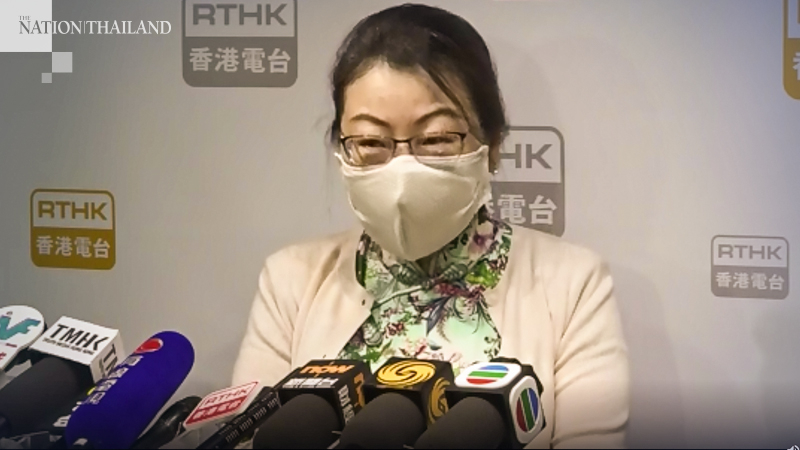
HONG KONG – The accusations US President Donald Trump leveled at the practice of “one country, two systems” in Hong Kong is a gross misrepresentation of the ground situation, said Hong Kong Secretary for Justice Teresa Cheng Yeuk-wah.

Speaking to the media after attending a radio program on Saturday, Cheng rejected US President Donald Trump’s suggestion that Hong Kong has lost its autonomy.

“It is said that we are becoming ‘one country, one system’ with loss of autonomy, that is completely false and wrong,” said Cheng.

She said national security is a matter under the purview of the central authorities.

READ MORE: HK justice chief: Draft legislation enshrined in law

“As a matter of fact, people often forget that the Hong Kong Special Administrative Region is part of China, we are one country. Without ‘one country’, there is not any basis to talk about ‘two systems’.

“Therefore, insofar as the national security is concerned, as in any other country in the world, this is a matter that belongs to the central authorities, whether it is a unitary or federal state,” Cheng said.

She said that international law empowers all nations to legislate on domestic affairs. The threat of sanctions by any third country constitutes interference in the internal affairs of other countries, which is utterly unacceptable, she emphasized.

“As to the suggestion of certain individuals or perhaps a particular region being sanctioned as a result of China passing the national security law, we step back and look at it in this way: national security is of prime importance to any sovereign state, and any sovereign state must, as a matter of its sovereign right, and indeed duty, to protect the sovereignty, unity and territorial integrity of any state. Therefore, passing national security law is something that any state has to do,” Cheng said.

ALSO READ: Attempts to derail legislation ‘violations of international law’

Trump says he plans to invite S. Korea to G7 summit in September #ศาสตร์เกษตรดินปุ๋ย

#ศาสตร์เกษตรดินปุ๋ย : ขอบคุณแหล่งข้อมูล : หนังสือพิมพ์ The Nation.

https://www.nationthailand.com/ann/30388822?utm_source=category&utm_medium=internal_referral

Trump says he plans to invite S. Korea to G7 summit in September

May 31. 2020
By Korea Herald

WASHINGTON — US President Donald Trump said Saturday that he plans to invite South Korea to a Group of Seven summit in September.

South Korea is not a member of the G7, which comprises Canada, France, Germany, Italy, Japan, Britain and the United States, but the country has drawn widespread praise from around the world for its handling of the coronavirus pandemic.

“I don’t feel that as a G7 it properly represents what’s going on in the world,” he told reporters on Air Force One, according to a pool report. “It’s a very outdated group of countries.”

Trump said he also plans to invite Russia, Australia and India.

Trump, who previously suggested hosting the summit at Camp David in June, said the meeting will be postponed until September.

White House spokeswoman Alyssa Farah added that the meeting will bring together traditional US allies to talk about how to deal with the future of China, the pool report said.

Trump has publicly blamed China for the coronavirus pandemic that has claimed more than 103,000 lives in the US, according to data from Johns Hopkins University.

Tensions between the two countries have escalated as China has moved to crack down on civil liberties in Hong Kong. On Friday, Trump announced that his administration would begin to roll back privileges Hong Kong has enjoyed with Washington.

The Associated Press reported that Trump said he had not set a date for the G7 meeting, but that it could take place around the time of the annual UN General Assembly in New York in September, or even after the US presidential election in November.

Trump has spoken favorably of President Moon Jae-in, calling him “a friend of mine.”

In recent weeks he has often claimed that Moon praised the US for doing well on testing people for COVID-19. Trump has also liked to boast that the US was conducting more tests than South Korea, where an aggressive testing regime was widely reported to have contained the disease.

Trump and Moon have worked together to engage North Korean leader Kim Jong-un in diplomatic talks over dismantling Pyongyang’s nuclear weapons program.

The negotiations have all but stopped since a second summit between Trump and Kim in Vietnam in February 2019 ended abruptly due to differences over the scope of North Korea’s denuclearization and sanctions relief from the US. (Yonhap)