Beijing unveils draft Hong Kong national security law, with new agency in city to oversee implementation #ศาสตร์เกษตรดินปุ๋ย

#ศาสตร์เกษตรดินปุ๋ย : ขอบคุณแหล่งข้อมูล : หนังสือพิมพ์ The Nation.

Beijing unveils draft Hong Kong national security law, with new agency in city to oversee implementation

Jun 21. 2020

Photo credit:PxHere

Photo credit:PxHere

By Straits Times

BEIJING – China on Saturday (June 20) confirmed the setting up of an agency in Hong Kong to oversee the implementation of a national security law as the country’s top lawmaking body released details about the draft legislation.

The move is yet another sign that the law could come into place in a matter of weeks.

It is the most detailed that Beijing has ever been on the law, which was first mooted at the annual parliamentary session last month.

“The duties of the National Security Agency in Hong Kong are: to analyse and judge the situation of safeguarding the national security of (Hong Kong) and to provide opinions and suggestions on major strategies and important policies for maintaining the national security; to supervise, guide, coordinate, and support the implementation of the maintenance of the national security of (Hong Kong); collect and analyse national security intelligence information; handle crimes against national security according to law,” the draft said.

“It should be noted that the National Security Agency in Hong Kong and the relevant national organs exercise jurisdiction over a very small number of crimes against national security under certain circumstances,” the Legislative Affairs Working Committee said during a three-day meeting in Beijing to brief members of the National People’s Congress (NPC) Standing Committee on the draft law.

These crimes include secession, subversion, terrorism and colluding with foreign forces to harm national security.

But the agency will be separate from a dedicated unit the police will establish to deal with national security offences.

The statement containing the details was released on Saturday through the official Xinhua news agency.

Each of the draft’s six chapters addresses general provisions of the law, details on institutions needed to maintain national security, what the law criminalises and its corresponding punishment, application of the law and legal procedures, and details about the new national security agency in Hong Kong that reports directly to Beijing.

The NPC also confirmed the setting up of a National Security Committee, which will be headed by the Chief Executive and comprise top government officials and the head of security agencies. A mainland-appointed adviser will also sit on the committee.

This is similar to what Macau introduced in 2018 after having passed a national security law nearly 10 years before.

There will also be a new department to prosecute such crimes, and the Chief Executive will have to appoint judges across all levels of the judiciary to deal with national security offences.

But the draft also emphasised that the law will not impinge upon the relative freedoms Hong Kongers now enjoy, including a free press, the freedom of speech and the freedom of assembly. 

“We must take into account the differences between the two places and focus on handling the connection, compatibility and complementarity between this law and the relevant laws of the country and the local laws of (Hong Kong),” it said. 

Hong Kong’s legislation is based on the Common Law system, which differs from Chinese law. 

But the draft noted that in any case of divergence between Hong Kong’s laws and the new legislation, its provisions will stand with the Standing Committee of the NPC having the final say. 

According to the Basic Law, Hong Kong’s mini Constitution, the former British territory was obliged to pass such legislation since its return to China in 1997. 

A previous attempt in 2003 was met with public anger and a succession of governments have been unwilling to deal with the issue. But since the territory was roiled by widespread, often violent protests last year that have politically split the city, Beijing has seen increasing urgency for such legislation.

A resolution on the legislation was passed on May 28, paving the way for the law to be implemented. The draft is being done by mainland officials in consultation with the Hong Kong government and legal experts from both sides.

Chief Executive Carrie Lam and top government officials from the city visited Beijing earlier this month for discussions. 

Further feedback sessions have been held in the Chinese capital and in Shenzhen, the mainland city bordering Hong Kong. 

Once the law’s drafting is complete, it will be promulgated into Hong Kong’s Basic Law, completely bypassing the local legislature.

The news of the draft was met with consternation in Hong Kong.

“(Chief executive Carrie Lam) should not be entitled to cherry pick judges in the name of protecting national security,” said solicitor and convenor of the Progressive Lawyers Group Angeline Chan, adding that the act imports political elements into a judicial system meant to be impartial.

Moon accepts unification minister’s resignation: Cheong Wa Dae #ศาสตร์เกษตรดินปุ๋ย

#ศาสตร์เกษตรดินปุ๋ย : ขอบคุณแหล่งข้อมูล : หนังสือพิมพ์ The Nation.

Moon accepts unification minister’s resignation: Cheong Wa Dae

Jun 19. 2020Unification Minister Kim Yeon-chul (Yonhap)Unification Minister Kim Yeon-chul (Yonhap)
By Korea Herald
Yonhap

President Moon Jae-in accepted Unification Minister Kim Yeon-chul’s resignation Friday, Cheong Wa Dae announced, two days after he offered to step down to take responsibility for strained relations between the two Koreas highlighted by the North’s demolition of a joint liaison office.

Keen attention is being paid to who will become Seoul’s new point man on Pyongyang. It remains unclear how soon Moon will make public his choice, with Vice Unification Minister Suh Ho expected to serve as acting minister for the time being.

Kim, a scholar known for his expertise on North Korea issues, is the second unification minister under the Moon administration.

Inter-Korean tensions are running high 14 months after his inauguration, as the North has virtually declared the 2018 bilateral comprehensive military agreement null and void ostensibly in protest at the South’s failure to stop activists here from launching propaganda leaflets across the border.

Kim’s predecessor was Cho Myoung-gyon, a longtime government official.

This time, Moon is widely expected to pick a politician.

Among possible candidates reported by media are Lee In-young, a four-term lawmaker who once served as the ruling Democratic Party’s floor leader, and his two party colleagues: Sul Hoon and Rep. Hong Ihk-pyo, elected five and three times, respectively. Avid advocates of an improvement in inter-Korean ties, they have engaged in various relevant activities.

Some observers say Moon may ask Im Jong-seok, his former Cheong Wa Dae chief of staff, to assume the post and salvage the Korea peace process.

Im quit his Cheong Wa Dae job last year and publicly said he would stay away from politics and government to focus on a civilian-led campaign for the reunification of the Koreas.

Speculation is also rampant that Moon may be considering a broader shake-up of his diplomatic and national security team, especially amid a call to replace Chung Eui-yong, director of national security at Cheong Wa Dae, and National Intelligence Service Director Suh Hoon.

If that is the case, Foreign Minister Kang Kyung-wha and Defense Minister Jeong Kyeong-doo could be affected.

An informed source, however, said Moon is likely to choose his new unification minister first and take some more time to decide whether to replace other top security officials.

The president would not want to create a “collective vacuum” in the veteran leadership of the team at a time when inter-Korean relations and Seoul-Washington policy coordination are at a critical juncture.

Chung has played a pivotal role in consultations with the US and Suh is known to have close personal connections with key North Korean officials.

The duo are symbolic figures in Moon’s dovish approach toward Pyongyang, which coupled with a push for close cooperation with Washington.

Expats in EP 1 category now allowed entry into Malaysia #ศาสตร์เกษตรดินปุ๋ย

#ศาสตร์เกษตรดินปุ๋ย : ขอบคุณแหล่งข้อมูล : หนังสือพิมพ์ The Nation.

Expats in EP 1 category now allowed entry into Malaysia

Jun 19. 2020

By The Star

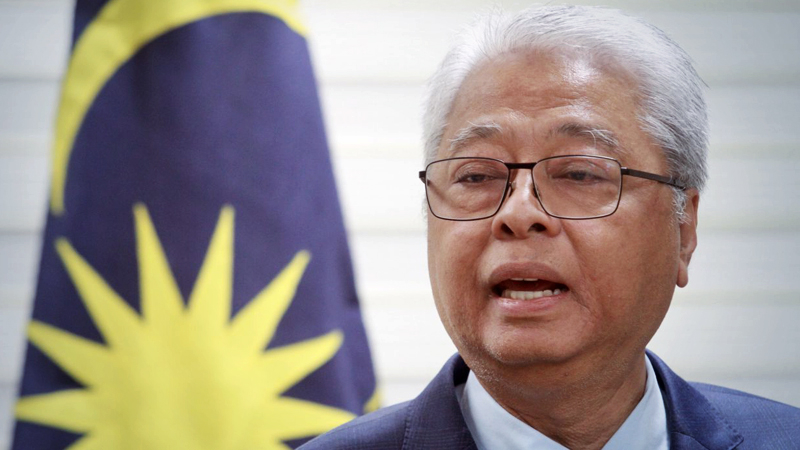
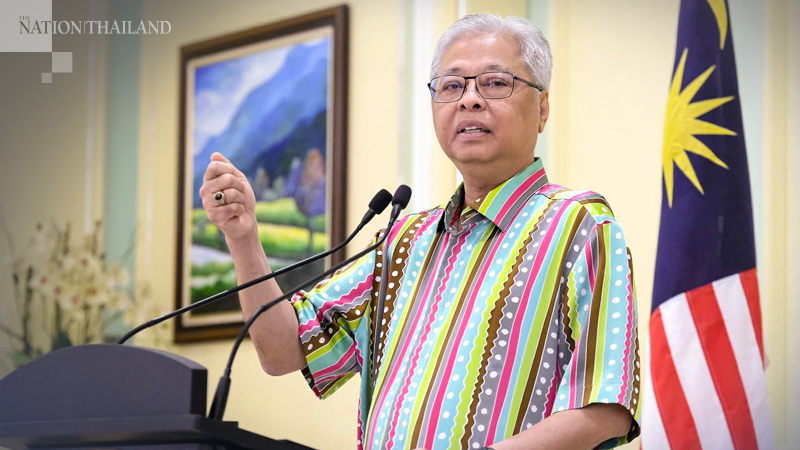
PETALING JAYA: Expatriates in the Employment Pass 1 (EP) category are now allowed to enter the country without applying for approval from the Immigration Department, says Datuk Seri Ismail Sabri Yaakob.

The Senior Minister said those who have the professional visit or resident pass talent passes and hold senior management posts in companies in Malaysia would be allowed to enter the country with immediate effect.

However, the expatriates would still need to undergo swab tests in their home countries before coming to Malaysia or undergo a Covid-19 test once they were here, he said.

“If the test is negative, they need not undergo the 14-days compulsory home quarantine.

“However, this is only for those who come from countries in the green zone.

“If they are from countries in the red zone, then they must undergo the 14-day quarantine process,” he said in a press conference on Friday (June 19).

Ismail said some of the green zone countries were Singapore, Brunei, New Zealand and Australia.

However, he said the government was waiting for the Health Ministry to announce the green zone countries.

He also said that those coming in must download the MySejahtera application, adding that technical specialists for specialised work, like repairing machines or ships, that cannot be done by locals were also allowed to come into the country.

Ismail said their entry to the country would be allowed as long as their working period is limited, they did not mingle with others and work in small groups or in closed areas.

He said these specialists would need to apply for a professional visit pass through the expatriate service division online.

They would also need to undergo a swab test in their home country or take one when they arrived here.

Similarly, they also need to download the MySejahtera application.

Our borders will remain closed except for exceptional cases: Ismail Sabri #ศาสตร์เกษตรดินปุ๋ย

#ศาสตร์เกษตรดินปุ๋ย : ขอบคุณแหล่งข้อมูล : หนังสือพิมพ์ The Nation.

Our borders will remain closed except for exceptional cases: Ismail Sabri

Jun 14. 2020

By JO TIMBUONG
ANN / The Star

PETALING JAYA – The country’s borders will remain closed to anyone during the recovery movement control order (MCO) unless travellers have pressing matters to address, says Datuk Seri Ismail Sabri Yaakob.

“There is an exception made for foreign diplomats and those under the Malaysia My Second Home (MM2H) programme.

“Malaysians will need a good reason to travel out of the country and apply to the Immigration Department for permission.

“For example, if a student needs to return to their university overseas to sit for an exam, that is allowed,” the Senior Minister said.

He said the no-travel policy also applies to athletes who need to travel abroad for championships or competitions to qualify for the Olympics.

“We remain firm on the policy. Even Japan postponed the Olympics so in that sense, if Japan could be firm about it, so must we,” he said.

Separately, Ismail Sabri said places of interests could be closed again if visitors flout social distancing rules.

“For example, if an outbreak happens at the zoo because visitors weren’t responsible enough to practise social distancing, then the venue will be closed again,” he said.

Responding to a question about Malaysians flouting social distancing measures at the zoo, Ismail Sabri said he has relayed the matter to Inspector-General of Police Tan Sri Abdul Hamid Bador who will send a task force to enforce the rules.

Ismail Sabri stressed that Malaysians must practise self-discipline and remind themselves to keep a physical distance from each other to prevent another wave of Covid-19.

“It is up to you to practise it when authorities are not present to enforce it, otherwise the freedom you enjoy now can be taken back,” he said.

Ismail Sabri also announced that he would no longer be holding daily press conferences on the Covid-19 situation.

“Starting next week, I will only hold press conferences on Mondays, Wednesdays and Fridays,” he said.

Thai big pharma coming to Kingdom #ศาสตร์เกษตรดินปุ๋ย

#ศาสตร์เกษตรดินปุ๋ย : ขอบคุณแหล่งข้อมูล : หนังสือพิมพ์ The Nation.

Thai big pharma coming to Kingdom

Jun 14. 2020AVS Innovation CEO Kampol Siriwattanakul (centre left) and Cambodian ambassador to Thailand Ouk Sorphorn (centre right) look forward to the company’s entry into the Kingdom’s market. ROYAL EMBASSY OF CAMBODIA IN BANGKOKAVS Innovation CEO Kampol Siriwattanakul (centre left) and Cambodian ambassador to Thailand Ouk Sorphorn (centre right) look forward to the company’s entry into the Kingdom’s market. ROYAL EMBASSY OF CAMBODIA IN BANGKOK

By Thou Vireak
ANN / The Phnom Penh Post

Thai pharmaceutical manufacturer AVS Innovation Co Ltd plans to expand its pharmaceutical and medical products market to Cambodia, Cambodian ambassador to Thailand Ouk Sorphorn said in a statement on Wednesday.

The statement came following a meeting between Sorphorn and AVS Innovation CEO Kampol Siriwattanakul.

Sorphorn said the company wants to team up with local firms to ship in medical products and develop innovative tools and equipment to supply local and global market needs.

“We welcome the aforementioned project and have acquainted the company with the potential of Cambodian business opportunities, including the economic diplomacy policy that the Cambodian embassy is undertaking to promote trade, tourism and culture,” he said.

Kampol said his company is currently producing medicine and equipment for Covid-19 to supply the domestic market.

“The company is looking for partnerships in Cambodia to further expand our potential,” he said, without revealing a timeframe.

Pharma Product Manufacturing Co Ltd (PPM) director Dr Hay Ly Eang told The Post on Thursday that he welcomed the company expanding into the market.

“We want to work together, but in dealing with foreign companies we must consider how our collaboration can best benefit the nation,” he said. “We are well able to compete with them, just as we are well able to cooperate with them.”

He added that PPM pharmaceuticals manufactures the painkiller Kinal – the first Cambodian produced medicine. It was developed by Cambodian pharmacist Dr Kok Sok Kim in September 1960.

The company currently exports its products to Africa, Southeast Asia and Europe.

“Our country’s pharmaceutical market is big,” he said. “We are not afraid of quality and technical competition and we also see strong support from our government,” said Dr Ly Eang.

PPM is a local producer of pharmaceutical products launched in 1996. The company has played a big role in the Kingdom’s pharmaceutical industry, both socially and economically.

As the sole survivor of his family during the Khmer Rouge’s reign, Dr Ly Eang went to France in 1976 at 21 years old. He became a pharmacist and opened a shop in 1990 in Nanterre commune in the western suburbs of Paris.

Nepal Parliament unimouslt passes a new map bill which validates country’s claim on territory under dispute with India #ศาสตร์เกษตรดินปุ๋ย

#ศาสตร์เกษตรดินปุ๋ย : ขอบคุณแหล่งข้อมูล : หนังสือพิมพ์ The Nation.

Nepal Parliament unimouslt passes a new map bill which validates country’s claim on territory under dispute with India

Jun 14. 2020

Nepalese people light candles as they celebrate after the Parliament approved a new map of the country, including areas disputed with India, in Kathmandu, Nepal [Navesh Chitrakar/Reuters]

Nepalese people light candles as they celebrate after the Parliament approved a new map of the country, including areas disputed with India, in Kathmandu, Nepal [Navesh Chitrakar/Reuters]

By Kathmandu Post

Diplomatic and political dialogue with India necessary to bring Limpiyadhura, Lipulekh and Kalapani back into Nepal’s possession, lawmakers say.

The House of Representatives on Saturday unanimously endorsed the second amendment to the constitution of Nepal to update the country’s new political map in the national emblem.

All lawmakers present in the House voted for the bill as all the parties had issued a whip.

“All258 lawmakers present in the meeting voted for the bill while there was no vote against it. I announce that the bill has been endorsed by more than a two-thirds majority,” Speaker Agni Sapkota announced.

The bill now needs to be endorsed by the National Assembly and authenticated by the President before it comes into effect.

Four lawmakers from the 275-strong House have been suspended, either on corruption charges or criminal offences, while 12 others were absent during the vote. The bill needed 184 votes, two thirds of the Lower House, as per Article 274 (8) of the constitution.

The territories that Nepal has depicted in its new map have been claimed by India as its own.

Prime Minister KP Sharma Oli, after the bill was endorsed, said there would be dialogue between the two countries. Speaking to the media, Oli said that all the parties had showcased unparalleled unity.

“We will now start dialogue and the negotiation process will move ahead,” he said.

New Delhi, however, was quick to react to the developments in Kathmandu.

“We have noted that the House of Representatives of Nepal has passed a constitution amendment bill for changing the map of Nepal to include parts of Indian territory,” said Anurag Srivastava, spokesperson for India’s Ministry of External Affairs. “We have already made our position clear on this matter.”

In line with what it said earlier after Nepal released its new map, Delhi on Saturday once again called it “an artificial enlargement”.

“This artificial enlargement of claims is not based on historical fact or evidence and is not tenable,” said Srivastava. “It is also violative of our current understanding to hold talks on outstanding boundary issues.”

The Cabinet, on May 20, had issued a new administrative map of the country putting Limpiyadhura, Lipulekh and Kalapani, all territories disputed with India, within Nepal’s borders. The government, two days later, registered a bill in Parliament, seeking to amend Schedule 3 of the constitution to update Nepal’s new political map in the national emblem.

Nepal decided to release its new political map after India earlier last month opened a link road via Lipulekh to Kailash Mansarovar in the Tibet Autonomous Region of China.

The development came on the heels of fast-changing internal dynamics in the ruling Nepal Communist Party (NCP), with Prime Minister and party chair KP Sharma Oli facing a tough challenge from his opponents in the party. Internal struggles had become so intense until April that Oli was under pressure to face the Standing Committee and step down as prime minister.

But Oli’s release of the map earned him support in such a way that even the opposition parties, and all the opposing factions in his party, were on the horns of a dilemma.

Ruling party insiders told the Post on Friday that they had stopped short of upping the ante against Oli, as they feared they would be perceived anti-nationalist when the new map was being endorsed by the Lower House.

With Saturday’s developments, according to political and diplomatic experts, Nepal might have strengthened its position, but it could further escalate tensions with India.

The Nepal government now has a real challenge ahead, as diplomatic dealing is the only way out to resolve the issue and India does not seem to be very interested in going that route.

“This amendment in the constitution could further complicate relations between the two countries,” Lok Raj Baral, professor at Tribhuvan University and former ambassador to India, told the Post. “The task ahead is much more difficult.”

According to Baral, there is a huge trust deficit between the two countries.

“The success of the KP Sharma Oli government depends on how well it can restore trust,” said Baral. “There has been a complete breakdown of communication between the two countries. There are multiple ways to reach out to India but the Oli administration has failed to exercise them.”

The Oli government has consistently been asking for talks but Delhi has ignored calls from Kathmandu.

New Delhi, for the first time, acknowledged the need for dialogue after Kathmandu lodged a strong protest against the opening of a road link via Lipulekh.

Last month, Delhi said that both Nepal and India were “in the process of scheduling Foreign Secretary level talks which will be held once the dates are finalised between the two sides after the two societies and governments have successfully dealt with the challenge of Covid-19 emergency.”

Analysts and experts, however, said that India does not need to wait for the Covid-19 emergency to end if it really wants dialogue with Nepal.

When India and China had a border standoff in eastern Ladakh earlier this month, both sides had swiftly arranged for a meeting and resolved the issue.

Diplomatic negotiations are the only way out to resolve the issue, say experts in Nepal. The Nepal government, however, needs to deal strategically and in a sensitive manner, they say.

Mrigendra Bahadur Karki, an associate professor at the Centre for Nepal and Asian Studies, said that pressure had been building to reclaim Nepal’s land.

“However, the Nepali leadership has not been able to handle the issue tactically without hurting India’s ego,” said Karki. “While India is very important to Nepal, India too needs Nepal equally. So, I believe both sides will come to the negotiating table.”

Karki, however, had a caveat.

“I won’t be surprised if negotiations start after Oli is out of power,” said Karki. “Some of Oli’s remarks, especially over their national emblem, have hurt the Indians.”

While speaking in Parliament in late May, Oli had taken a jibe at Indian national emblem.

Karki said the Nepali leadership needs to showcase maturity both in its language and diplomatic dealings to create a conducive environment for table talks.

Before the amendment bill was put to vote on Saturday, cross-party lawmakers had welcomed the bill but also asked the government to expedite political and diplomatic dialogue with India to bring the land back in Nepal’s possession.

The government has based the new map on the Sugauli Treaty signed between Nepal and British India in 1816, which states that all lands east of the Kali River belong to Nepal. While Nepal has argued that Limpiyadhura is the origin of the river, India has claimed Kalapani as the source.

The government on Tuesday had presented the bill in the Lower House for theoretical discussion, which unanimously endorsed a proposal to consider a second amendment to the constitution of Nepal the same day.

Except for Samajbadi Party lawmaker Sarita Giri, no other lawmakers registered an amendment to the bill. The Samajbadi party had asked Giri to withdraw the amendment upon threat of internal action, but Giri refused to do so.

Giri’s amendment to the bill had sought to retain the old map in the national emblem as there was no evidence to claim Lipmiyadhura, Lipulekh and Kalapani as part of Nepal, she had argued.

Speaker Sapkota, however, decided to scrap her proposal, as per Clause 112 of the House of Representatives’ regulations, which say that any amendment proposal to a bill cannot contradict the primary spirit of the bill. Giri boycotted the House after the Speaker announced that her amendment proposal had been scrapped.

Minister for Law, Justice and Parliamentary Affairs Shiva Maya Tumbahangphe had presented the bill for endorsement after a detailed discussion in the House. She said the new map was adopted as Nepal has all necessary evidence to claim the territory.

“We have all the necessary documents to claim our land when we sit for dialogue with our southern neighbor,” she said. 

Beijing tightens control measures as new COVID-19 cases reported #ศาสตร์เกษตรดินปุ๋ย

#ศาสตร์เกษตรดินปุ๋ย : ขอบคุณแหล่งข้อมูล : หนังสือพิมพ์ The Nation.

Beijing tightens control measures as new COVID-19 cases reported

Jun 14. 2020Beijing holds a news conference on the city's response to the emergence of new novel coronavirus cases in Beijing, June 13, 2020. [Photo by Wang Xiaoyu/chinadaily.com.cn]Beijing holds a news conference on the city’s response to the emergence of new novel coronavirus cases in Beijing, June 13, 2020. [Photo by Wang Xiaoyu/chinadaily.com.cn]

By China Daily

BEIJING — Beijing has tightened COVID-19 control measures as newly confirmed cases by local transmission have been reported in the past few days in the capital.

The city reported 36 new domestically transmitted COVID-19 cases on Saturday, after six cases had been previously reported since Thursday.

Given the new cases, the city has suspended a major wholesale food and vegetable market and strengthened control measures to resolutely contain the spread of the epidemic.

New cases

Xinfadi agricultural products wholesale market is closed on June 13. [Photo by Wu Xiaohui/chinadaily.com.cn]

Xinfadi agricultural products wholesale market is closed on June 13. [Photo by Wu Xiaohui/chinadaily.com.cn]

Thirty-six confirmed cases were reported on Saturday, according to official data released on early Sunday.

Previously, two cases, both employees of the China Meat Food Research Center in Fengtai District, were reported earlier Friday, and another four were reported between 4 pm and midnight Friday, according to a press conference held Saturday morning. The latest four new cases either purchased goods or worked at the Xinfadi market.

All the new cases have been transferred to designated hospitals in the capital city for treatment.

The newly reported cases came after Beijing lowered its emergency response to COVID-19 from the second level posture to the third level on June 6.

Professor Cheng Feng with the Research Center for Public Health at Tsinghua University said people should keep high alert against the occurrence of sporadic cases, but there is no need to panic.

Market suspneded

Xinfadi, the largest wholesale market with fruit, vegetable and meat supplies in Beijing, was suspended on Saturday. [Photo/Chinanews.com]

Xinfadi, the largest wholesale market with fruit, vegetable and meat supplies in Beijing, was suspended on Saturday. [Photo/Chinanews.com]

As the new COVID-19 cases were all connected to Xinfadi, the largest wholesale market with fruit, vegetable and meat supplies for Beijing, the market was suspended Saturday.

To ensure the market supply, special areas have been designated for sales of vegetables and fruits, according to a statement jointly issued early Saturday by the market regulation bureau and the health commission of Fengtai District.

Covering an area of 112 hectares, the Xinfadi market has some 1,500 management personnel and more than 4,000 tenants.

All personnel who have had close contact with the market since May 30 will undergo nucleic acid testing, said Gao Xiaojun, a spokesman for the Beijing Municipal Health Commission, Saturday.

According to Gao, the city now has 98 qualified institutions for nucleic acid testing, with the daily testing capacity exceeding 90,000.

Chen Yankai, deputy head of the Beijing Municipal Bureau of Market Regulation, said the city will strengthen inspection of food markets with fresh products, frozen pork, beef, mutton and poultry.

Massive screening

Xinfadi, the largest wholesale market with fruit, vegetable and meat supplies in Beijing, was suspended on Saturday. [Photo/Chinanews.com]

Xinfadi, the largest wholesale market with fruit, vegetable and meat supplies in Beijing, was suspended on Saturday. [Photo/Chinanews.com]

Following the reports of new COVID-19 cases, disease control and prevention staff conducted nucleic acid tests on 1,940 people in the city’s wholesale farm produce markets and supermarkets Friday. Forty-six of them tested positive for COVID-19.

Of the 517 samples collected from Xinfadi market, 45 were found positive in throat swab tests. Another positive case was from a farm produce market in Haidian District, who was a close contact of a confirmed case in Xinfadi, Pang said at the press conference Saturday.

All the 46 people have shown no symptoms, and they are under strict management and observation.

Meanwhile, Beijing’s centers for disease control and prevention at municipal and district levels have organized professionals to carry out investigations in wholesale markets of farm produce and large supermarkets throughout the city.

Positive nucleic acid tests were reported from the external environmental specimens related to the confirmed cases. Preliminary findings suggest these cases may have been in contact with a polluted site in the market or infected people, said Pang.

A total of 139 close contacts of the new cases in Fengtai District have been put under collective medical observation, according to the district government.

Tightened measures

The long-distance bus terminal near Xinfadi agricultural products wholesale market in Beijing's Fengtai district has suspended service from Saturday. [Photo/Chinanews.com]

The long-distance bus terminal near Xinfadi agricultural products wholesale market in Beijing’s Fengtai district has suspended service from Saturday. [Photo/Chinanews.com]

Authorities have launched closed-off management over 11 residential compounds in the vicinity of the Xinfadi market, with three primary schools and six kindergartens nearby suspending classes.

Beijing on Friday suspended the class resumption plan for primary schools’ lower graders scheduled for June 15.

The city will suspend sports competition events, said the Beijing sports competitions administration center.

Meanwhile, the National Center for the Performing Arts and the Beijing Tianqiao Performing Arts Center were closed to visitors Saturday.

Bus services between Beijing and some areas of neighboring Hebei Province, which were previously planned to resume on June 15, will continue to be suspended, according to the Beijing Public Transport Corporation.

Malaysia Minister: Address high crime rate in Kuala Lumpur #ศาสตร์เกษตรดินปุ๋ย

#ศาสตร์เกษตรดินปุ๋ย : ขอบคุณแหล่งข้อมูล : หนังสือพิมพ์ The Nation.

Malaysia Minister: Address high crime rate in Kuala Lumpur

Jun 14. 2020

By The Star

PETALING JAYA: The Federal Territories Minister hopes that steps will be taken to address the high crime rate in Kuala Lumpur.

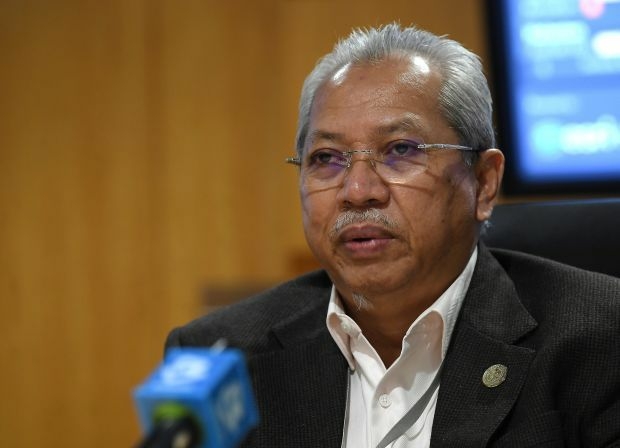
Minister Tan Sri Annuar Musa (pic) said the report on the city having the highest crime rate worried him.

“As the Federal Territories security working committee chairman, I hope to immediately discuss with the Kuala Lumpur police chief, Kuala Lumpur City Hall (DBKL) and others to take steps to ensure that KL is safer, ” he said on his Twitter account yesterday in response to The Star’s exclusive report that KL had the highest index crime per capita than any districts in the country.

Bukit Aman Crime Prevention and Community Safety Department director Comm Datuk Zainal Abidin Kasim said in the report that among the factors which contributed to KL’s crime rate was a crowded population, influx of immigrants, negligence and carelessness, as well as lack of security and crime prevention awareness among residents.

In response, Malaysian Crime Prevention Foundation (MCPF) senior vice-chairman Tan Sri Lee Lam Thye opined that most crimes were committed by Malaysians rather than immigrants, adding that crimes committed by immigrants were only a “very small percentage”.He also agreed that populated areas experienced higher crime rates as there were more potential victims.

He said criminals too were generally more interested in breaking into a house in the middle to upper income neighbourhoods or high income areas, rather than the lower income housing as they know there are more valuables in the houses of the former.

With the lack of security and crime prevention awareness in society, Lee said that for the past 26 years, MCPF had been mapping out strategies for crime prevention and creating awareness among the public not to take safety for granted.

Lee also believed that a rise in unemployment in the country due to the effects of the Covid-19 pandemic contributed to an increase in crime, saying that it was nearly universal that high unemployment rates go hand-in-hand with crime.

“This will certainly be one of the factors that should be considered in the fight against crime as people who are unemployed are fighting for survival.

“They would get involved in criminal activities (when they are unable to feed themselves).

“I think we have to grapple with this problem as we move on (return to normalcy), ” Lee said.

Meanwhile, Universiti Sains Malaysia criminologist Datuk Dr P. Sundramoorthy said the high crime rate was not surprising.

He said it was true that population density would result in a higher crime rate per capita, but noted crime rates could not just be taken based on the number of reported cases or crimes that were discovered by the police.

“There is much to be elaborated on why crime rates are higher in places with a high population density. It is also related to economic factors, unemployment rates and drug use problems in the community, ” he said.

Sundramoorthy also pointed out that Malaysians tend to take their personal safety for granted.

“We have an attitude problem here regarding crime prevention, and the community must play a more active role, ” he said.

He noted that Malaysians still get scammed even though crime awareness messages were widely promoted by non-governmental organisations as well as authorities.

Sister of N. Korean leader says Pyongyang will take ‘next step’ against S. Korea #ศาสตร์เกษตรดินปุ๋ย

#ศาสตร์เกษตรดินปุ๋ย : ขอบคุณแหล่งข้อมูล : หนังสือพิมพ์ The Nation.

Sister of N. Korean leader says Pyongyang will take ‘next step’ against S. Korea

Jun 14. 2020Photo credit: KCNA-YonhapPhoto credit: KCNA-Yonhap

By Yonhap
The Korea Herald

North Korea will take its next step against South Korea, for what it claims to be Seoul’s betrayal and crimes against the communist state, it said Saturday, adding that its army has been entrusted to plan and take any necessary action.

“I feel it is high time to surely break with the South Korean authorities. We will soon take a next action,” Kim Yo-jong, first vice department director of the Central Committee of the Workers’ Party of Korea (WPK), said in a statement carried by the North’s Korean Central News Agency.

Kim is also younger sister of North Korean leader Kim Jong-un.

“By exercising my power authorized by the Supreme Leader, our Party and the state, I gave an instruction to the arms of the department in charge of the affairs with enemy to decisively carry out the next action,” the statement said.

She added, “the right to taking the next action against the enemy will be entrusted to the General Staff of our army.”

The statement came about a week after Yo-jong threatened to cut off all communication with South Korea and scrap a military agreement aimed at reducing tension between the separated Koreas, citing South Korean activist groups and North Korean defectors sending anti-Pyongyang propaganda leaflets into the North.

“Clearly speaking, the South Korean authorities will be forced to pay a dear price if they let this situation go on while making sort of excuses,” she said in a statement released on Thursday.

Pyongyang stopped answering any attempt by South Korea to hold talks at least since Tuesday, despite Seoul’s announcement of plans to legislate a ban on the sending of leaflets.

Kim again took issue with the leaflet-sending activities.

“Getting stronger day by day are the unanimous voices of all our people demanding for surely settling accounts with the riff-raff who dared hurt the absolute prestige of our Supreme Leader representing our country and its great dignity and flied rubbish to the inviolable territory of our side and with those who connived at such hooliganism, whatever may happen,” she said in her statement.

Kim said the North Korean army will determine its next move that will cool down “our people’s resentment and surely carry it out.”

“It is better to take a series of retaliatory actions, instead of releasing this kind of statement, which those with bad ears may miscalculate as the “one for threatening” or from which they can make any rubbishy comments on our intention as they please,” she said.

Kim’s statement came one day after the head of the North’s United Front Department said the North has lost all confidence in the South Korean government and warned of “regretful” and “painful” times ahead for Seoul.

“I fully sympathize with the statement released by the director of the United Front Department of the Central Committee of the WPK yesterday,” Kim said in her statement.

“If the South Korean authorities have now capability and courage to carry out at once the thing they have failed to do for the past two years, why are the north-south relations still in stalemate like now,” she added. 

JD seeks US$4.1 billion in year’s biggest Hong Kong listing #ศาสตร์เกษตรดินปุ๋ย

#ศาสตร์เกษตรดินปุ๋ย : ขอบคุณแหล่งข้อมูล : หนังสือพิมพ์ The Nation.

https://www.nationthailand.com/ann/30389194?utm_source=category&utm_medium=internal_referral

JD seeks US$4.1 billion in year’s biggest Hong Kong listing

Jun 07. 2020
By China Daily

China’s No. 2 online retailer JD.com Inc is seeking to raise as much as HK$31.4 billion (US$4.05 billion) for a second listing in the Hong Kong Special Administrative Region, as the Nasdaq-listed firm seeks a foothold closer to home amid rising US-China tensions.

READ MORE: HKEX CEO calls for confidence in HK’s status as financial hub

JD.com is offering 133 million new shares at as much as HK$236 each, according to terms of the deal obtained by Bloomberg News. The maximum price represents a 7.8 percent premium to JD.com’s Thursday closing price in New York.

JD.com’s share sale is set to be the largest in Hong Kong this year, coming hot on the heels of NetEase Inc’s US$2.7 billion offering in the city.

Escalating tensions between Washington and Beijing are increasing risks for Chinese mainland companies like JD and NetEase that are seeking to broaden their investor base.

The debuts would follow Alibaba Group Holding Ltd’s US$13 billion stock sale last year, hailed as a homecoming for Chinese companies and a win for Hong Kong stock exchange. The city lost many of the largest tech corporations to US bourses because it didn’t allow dual-class share voting at the time — a requirement that’s since been relaxed.

ALSO READ: PBOC says it supports HKSAR’s role as a financial center

JD.com’s Hong Kong share sale represents about 4.3 percent of its total shares outstanding before an over-allotment option. The company is taking orders from institutional investors from Friday and will kick off retail investor subscription on June 8, according to the terms.

It aims to price the offering on June 11 and to begin trading on June 18. JD.com plans to use the proceeds for key supply chain-based technology initiatives.

Bank of America Corp, UBS Group AG and CLSA Ltd are joint sponsors of JD’s Hong Kong share sale.