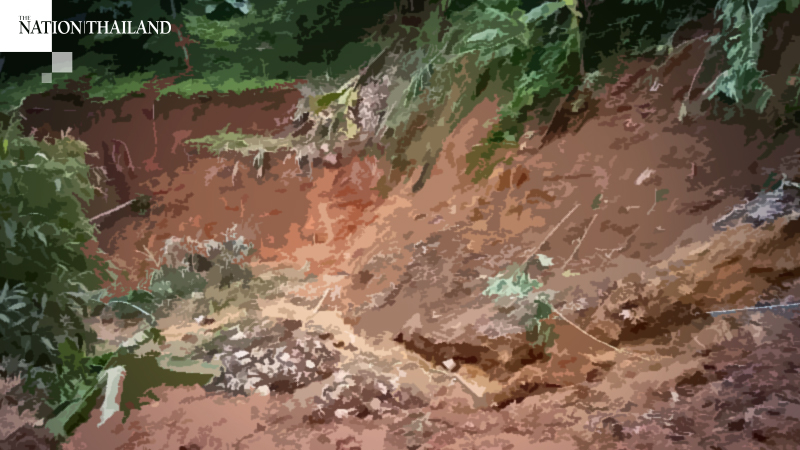
KACHIN – A devasting landslide at the old jade mining site near Whaykha Village, Hseikmu Village-tract, Hpakant Township, Kachin State, killed at least 62 people this morning.
Thirteen others still missing at mid morning, according to a local official.
Nearby residents said the landslide occurred after dumped soil fell into an old pit 1,000 feet below, downing those in the vicinity of the pit.
“Now, we have recovered 62 bodies. Thirteen are missing. The number may grow. Rescue work is going on. Aid and rescue groups are arriving,” said Village Administrator Kyaw Min.
According to media reports, around a hundred people were in the area at the time fled the 10-feet landslide wave.
Around 250,000 workers in Myanmar out of work due to COVID-19
Jun 28. 2020
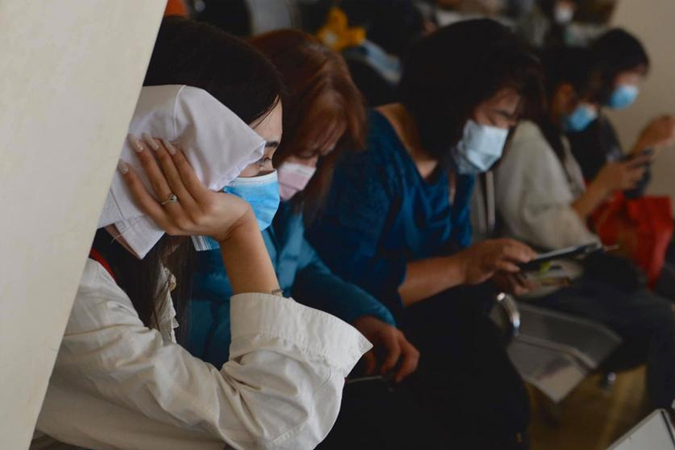
Passengers seen at Lashio Airport. Photo-Tun Nay Hlaing (Naungpein)
By Eleven Media
Yangon—The number of jobless people including migrant workers who returned from abroad, has reached around 250,000, said Deputy Minister for Labour, Immigration and Population U Myint Kyaing, at a press conference on the fourth-year performance of the ministry, on 26 June.
“During COVID-19 period, more than 100,000 migrant workers returned home from abroad. Due to the shutdown of 5,658 factories, more than 140,000 workers become jobless. The total number of jobless people has exceeded 240,000, including the returnees, he added.
“The skilled workers who returned from abroad have registered with the relevant labour registration offices. The ministry is helping them to get new jobs. These workers have higher proficeincy skills. At least 57 factories have reopened during the COVID-19 pandemic period. These factories contacted the ministry as they need thousands of workers. The ministry helped jobless workers to get new jobs,” he continued.
During the period from March to June, the number of migrant workers who returned from Thailand, South Korea, Japan and China, exceeded 110,000.
Coordinations are being made on the appointment of jobless workers at the projects being developed by the relevant ministries. The ministry has to supervise the sending of workers due to the suspension of airlines as some businesses in the neighbouring countries are recruiting workers, the deputy minister said.
Greater unity needed to confront pandemic: ASEAN summit opening
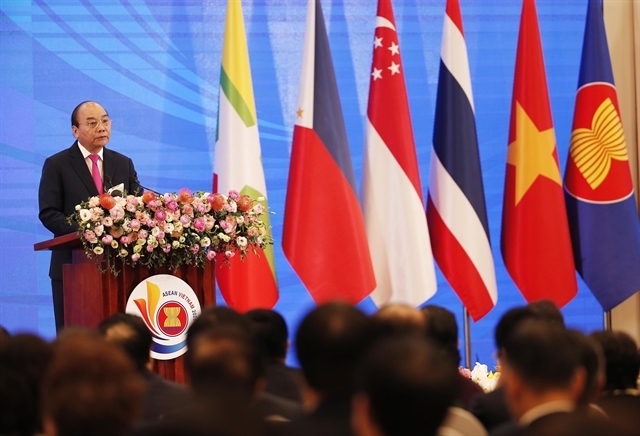
Jun 26. 2020Vietnamese Prime Minister Nguyễn Xuân Phúc addressed the opening ceremony of ASEAN 36th summit held in Hà Nội on Friday morning. — VNA/VNS Photo Thống Nhất
By Vietnam News
HÀ NỘI — Prime Minister of Việt Nam Nguyễn Xuân Phúc called for solidarity among ASEAN members to weather the tough challenges posed by the COVID-19 pandemic.
He was speaking during the opening ceremony of the regional bloc’s 36th summit held in Hà Nội Friday morning.
The summit and related meetings between Southeast Asian leaders and officials were originally set to take place in the coastal city of Đà Nẵng in April but due to the pandemic, it was delayed to late June as Việt Nam held out, hoping for a face-to-face event.
But in the end due to the severity of virus a decision was taken to hold the meeting virtually, a first in the history of ASEAN.
Drawing similarities to the 73rd session of the UN General Assembly and other high-profile meetings held virtually, the Vietnamese Government said “it reflects that norms and reality is changing not only due to technical advancements but also due to the ‘unprecedented challenge’ which is COVID-19”.
The pandemic, which started its unrelenting spread since earlier this year, had nearly wiped out humanity’s achievements in recent years, taken away many lives and threatened the livelihoods of millions of people, PM Phúc said.
The Vietnamese Government stressed that ASEAN had taken “timely actions,” with health responses activated very early once the threat was identified.
ASEAN members had actively engaged in information and experience sharing, and well-coordinated disease control measures, thanks to a high level of political commitment, PM Phúc said, adding that the challenges helped to showcase the “fortitude of united ASEAN, full of sharing and caring.”
PM Phúc thanked ASEAN leaders and partners for supporting Việt Nam, ASEAN chair this year, in the collective response against COVID-19, especially the strong commitment demonstrated in the special ASEAN and ASEAN+3 meeting held in April on the pandemic.
He said that compared to the global situation, ASEAN member states had brought the disease under control, in terms of caseload, recovery and fatality.
“In the latter half of 2020, the heavy burden rested upon the ASEAN governments to lead their countries and the region through this period of adversity, the successful completion of the tasks would stand as testaments to the lasting values and vitality of our resilient and dynamic community,” PM Phúc said.
He expects the summit will be the occasion for member states to show strong political will and commitment rising above the challenges, to keep the pandemic under control and revitalise the economy, done in tandem with ASEAN community building and integration goals in this year.
In this summit, countries will discuss a comprehensive plan on economic recovery for the region, hasten the implementation of initiatives such as the creation of the ASEAN COVID-19 response fund, ASEAN urgent medical supplies reserve, and standard operating procedures on public health emergencies.
The pandemic, aside from its economic devastation due to lockdown and restriction measures, had exacerbated the underlying challenges in socio-political environment of the world and each region, PM Phúc continued.
“Multilateral frameworks and international law are being challenged, the growing strategic competition between the world’s powers are becoming increasingly sharp and elevated,” he said.
In the opening speech, he called out “irresponsible actions that violated international laws and posed threats to security and stability,” especially in the hotly disputed South China Sea(called East Sea by Việt Nam), where China and ASEAN countries, including Việt Nam, are forging a Code of Conduct in a bid to reduce tensions and risks of confrontation.
The Vietnamese Government leader said that after every storm, the bound stalks of rice in the emblem image chosen to represent ASEAN member states would get “tightened” even more and continue to bring forth “seeds of solidarity” in the great ASEAN family.
He expects the ASEAN leaders would adopt the chairman’s statement on vision a cohesive and responsive ASEAN, rising above challenges and promoting growth.
The opening ceremony saw the participation of leaders of the 10 ASEAN member countries, Việt Nam’s National Assembly (NA) Chairwoman and Chair of 41st General Assembly of ASEAN Inter-Parliamentary Assembly (AIPA 41) Nguyễn Thị Kim Ngân, NA Permanent Vice Chairwoman and head of the delegation to AIPA Tòng Thị Phóng, and Deputy PM, Foreign Minister and Chairman of the National 2020 Committee ASEAN Phạm Bình Minh. — VNS
Asean Summit: Malaysian PM all for ‘green lane’ travel and tourism between member countries
Jun 26. 2020Malaysian Prime Minister Tan Sri Muhyiddin Yassin
By The Star
PUTRAJAYA (Bernama): Asean governments must materialise cohesive plans to quickly implement measures for ‘travel bubbles’ between ‘green’ Asean member states, said Malaysian Prime Minister Tan Sri Muhyiddin Yassin on Friday (June 26)
He said the plan is crucial to shore up investments and create job opportunities for the people in the region.
The ‘green bubble’ or ‘green lane’ concept involves easing travel restrictions between two or more countries where local Covid-19 infections and cases are low.
“Possibly in the near future, we can also open up our borders for intra-Asean tourism to flourish and deliver the much-needed financial boost to our national economies,” Muhyiddin said at the 36th Asean Summit, held virtually and hosted by Vietnam. Muhyiddin joined the virtual summit from Putrajaya.
Muhyiddin said Malaysia also supports and shares the view of the Sultan of Brunei Sultan Hassanal Bolkiah and Indonesia’s President Joko Widodo that Asean officials should begin work on the establishment of an Asean travel bubble.
“As a first step, we can explore the possibility of sectoral exemptions for travel restrictions such as medical tourism, or high-value economic visits”, he said.
Muhyiddin stressed that the public health crisis has had a profound impact on the economy. As such, he said rebooting the regional economy must be Asean’s utmost priority to mitigate disruptions to trade and strengthen the resilience of our regional supply chains.
The Prime Minister said as Malaysia proposed in April, Asean must formulate a Regional Economic Recovery Plan as countries in the region are fighting for economic survival.
He said if Asean doesn’t protect its regional economies, the wider disparity in growth among the Asean countries may harm the regional grouping’s objective of greater economic integration.
“We must act swiftly and decisively in coordinating a regional level response in revitalising our economies. A well-coordinated response will ensure we emerge (from) this crisis stronger together, much like how we have weathered previous crises,” he added.
Muhyiddin said together with Asean colleagues, Malaysia will also work towards the conclusion and signing of the Regional Comprehensive Economic Partnership (RCEP) this year.
He added that Malaysia stands ready to engage with India on the latter’s continued participation in the RCEP, which Malaysia believe would contribute to regional prosperity. – Bernama
Jun 21. 2020Cambodian passengers returned from Malaysia on Tuesday by Heng Chivoan
By Khorn Savi ANN / The Phnom Penh Post
One of the 204 Cambodian passengers who returned from Malaysia on Tuesday tested positive for Covid-19, the Ministry of Health said.
The 21-year-old from Koh Kong province is being treated at the Khmer-Soviet Friendship Hospital.
Ministry of Health spokesperson Or Vandine said the other 203 passengers who tested negative are being quarantined at Hun Sen Champuvorn High School in Phnom Penh and at quarantine centres in their respective home provinces. They are not allowed to self-quarantine at home.
“We are sending them to their respective quarantine centres according to their addresses,” she said.
The Cambodian embassy in Malaysia confirmed that 115 of the 204 passengers on board the flight had been stranded there since April 7.
The latest case brings the national total of confirmed Covid-19 cases to 129, most of which are imported. The health ministry said of the 129 patients, 126 had recovered. Two of the three who remain hospitalised recently had returned from Indonesia.
While no deaths from Covid-19 has been reported domestically, a Cambodian UN peacekeeper in Mali lost his life to the disease.
The Ministry of National Defence said 10 Cambodian peacekeepers in Mali and six military trainees in Russia have also contracted the virus, all of whom have recovered.
The government has tried to stop person-to-person transmissions in the country with a focus on tightening measures against passengers arriving from abroad, the ministry said.
All passengers are required to be sent to waiting facilities upon their arrival. They must have their samples taken for testing before self-quarantine at home or at quarantine centres managed by the ministry.
Cambodia has cancelled the requirements that Cambodian citizens who hold foreign passports and Visa K have $50,000 in health insurance and pay a $3,000 deposit for testing, treatment and quarantine.
But they need to have certificates confirming they are free of Covid-19 dated no later than 72 hours before departure.
Foreigners, Vandine said, are required to pay other fees for virus-related services.
Jun 21. 2020Vietnamese and foreign reporters cover the 20th anniversary of the Reunification Day (April 30, 1975 – April 30, 1995) in Hà Nội. — VNA/VNS File Photo
By ANN / Viet Nam News
HÀ NỘI — Ninety-five years ago on June 21, 1926, the first issue of Thanh niên (Youth) newspaper representing the voice of Vietnamese Revolutionary Youth League founded by Nguyễn Ái Quốc (aka Ho Chi Minh) was published, marking the birth of Việt Nam’s revolutionary press as the country remained under the yoke of French colonial rule.
After Thanh niên, the Vietnamese founding father set up Kông Nông (Workers & Farmers) newspaper in 1926 to spread patriotism to the farmers and workers under the light of scientific socialism, Lính Kách Mệnh (Revolution Soldiers) in 1927 to encourage Vietnamese soldiers in the French colonial armies to stand up against the oppressor of their own people and Búa Liềm (Hammer & Sickle) newspaper – the mouthpiece of the Indochinese Communist Party – in 1929, among others.
Despite the arrests of Vietnamese patriots, successive newspapers and magazines were put into circulation from within the cells of the colonial regime, including Hoả Lò Hà Nội (Hoả Lò Prison Hà Nội), Người Tù Đỏ (The Red Inmate), Đuốc đưa đường (Guiding Torch), Nhà tù Buôn Ma Thuột (Buôn Ma Thuột Prison) and Lao tù tạp chí (Jail magazine), in addition to many newspapers from student organisations and communist cells across the country.
According to the General Government of Indochina, by June 1936, there were some 230 newspaper, magazines and journals of all types circulating in Việt Nam.
Since the birth of Thanh niên, the Vietnamese revolutionary press has upheld the revolutionary banner, conveyed the will and aspirations of the nation and guided the Vietnamese in the fight for independence, freedom and pursuit of socialism.
In the following years, the revolutionary press incorporated political struggle with armed struggle, contributing to the building of armed forces towards the general uprising to seize back power for Vietnamese in August 1945.
During the resistance war against the French colonialists attempting to regain control over Indochina, after 1945, newspapers and magazines were born one after another to serve Party building, dissemination of Marxism-Leninism ideology and the Communist Party of Việt Nam’s civil rights revolution, inspiring resolution against imperialism and feudalism and preparing to take the opportunity to elevate the revolution to a new height.
Some exemplary newspapers and news agencies, radio in this period include Cứu quốc (National Salvation), Nhân dân (The People), Thông tấn xã Việt Nam (Vietnam News Agency), Thông tấn xã Giải phóng (Liberation News Agency, later merged into VNA), Quân đội Nhân dân (People’s Army), Tạp chí Cộng sản (Communist Review), Văn nghệ (Arts), Tiền Phong (Vanguard), Lao Động (Labour) and Đài tiếng nói Việt Nam (Voice of Vietnam), many of which are prominent press agencies in the country to this day.
During the war, revolutionary newspapers infiltrated every part of society and the country, from remote areas to places where the enemy held control and would be welcomed.
The Vietnamese press even reached the overseas audience of like-minded parties and friends around the world, helping the world understand the righteousness of Vietnamese people’s struggles and revolution.
On June 2, 1950, the Vietnam Journalists Association was established. In July 1950, the association joined the International Organisation of Journalists.
On May 20, 1957, President of the Democratic Republic of Việt Nam Hồ Chí Minh promulgated Law No.100SL/L002, the first press law in the country. Chapter I of the law reaffirmed the responsibility of revolutionary newspapers and journalists: “The press under our administration, whether it belongs to a Government agency, a political party, a mass organisation or a private agency, are all tools of the people’s struggles, must serve the interests of the Fatherland and of the people, and protect the people’s democracy, and support the Government of the Democratic Republic of Việt Nam.”
During the resistance war against American imperialism, the Vietnamese revolutionary press made great strides. The newspapers born during the anti-French resistance war evolved to serve the new mission.
In addition to the press agencies already available such as The People, People’s Army, the Voice of Vietnam radio, or Vietnam News Agency, a series of newspapers, magazines, radio channels emerged from the central level down to province and city and district level, unions and agencies and sectors. Several foreign-language newspapers were also published to introduce Vietnamese issues to international friends.
Over the decades, the revolutionary press has matured considerably in all aspects, becoming a “sharp instrument” of the Party and the State in propaganda, advocacy and education of the whole Party and State to help unite the people to overcome hardship and bring victories to the revolution.
In the wars against the French and the Americans, Vietnamese journalists weathered so many challenges and never shied from making sacrifices to be present on all fronts to report the developments of the nation’s struggles against foreign enemies.
Thousands of officials and journalists have stood side by side with the army and volunteers on all battlefields. Hundreds of journalist-martyrs have made brave sacrifices for the independence and freedom of the Fatherland.
Non-stop evolvement
Nearly a century since the first issue of the weekly Thanh niên newspaper was published, the Vietnamese revolutionary press has blossomed in number and quality.
According to data from the Ministry of Information and Communications, by the end of November 2019, the country had a total of 850 press units, including one news agency, 179 newspapers, 648 magazines, 23 independent online news sites; 72 certified radio and television broadcasters including two national broadcasters and 64 local broadcasters.
There are about 41,000 people working at press agencies, with 20,407 granted press cards.
At all times, the Vietnamese revolutionary press has been the fastest and most popular information instrument, the means to keep in touch with the people and help solve emerging problems, while at the same time, it combats vile conspiracies and tricks of hostile forces as well as erroneous slants in thoughts and actions, and makes contributions to the organisation of the people’s revolutionary action movement.
The Vietnamese press has effectively contributed to the protection of the national sovereignty over sea and islands, as well as the Party and State’s crusade against corruption and waste.
Press activities have helped maintain political stability, sustaining the cause of innovation, gradually building new people and new lifestyles.
The press has promoted new economic and business models, new factors, good people and good deeds; promoted the upholding of the Vietnamese people’s values and cultural traditions, encouraging people to selectively acquire influences from the advanced nations of the world.
Reporters and editors have gotten in touch with contemporary life and social concerns, not backing down from danger, to produce quality work.
The press has fulfilled its duties as a bridge between the Party and the State and the public, becoming an important information channel for the Party and State in the making of policies and mechanisms that can respond to the interests and demands of the people.
However, the Vietnamese press has also revealed some limitations and shortcomings. Many newspapers are similar in content, expression or appearance or vague in identity and mission. Unhealthy competition for views and clicks has also led to the spread of misinformation and unverified reports.
To materialise the Party’s viewpoints on building and developing a press system to protect the nation and promote country-building efforts, the Government has issued planning for press agencies until 2025, aiming to reorganise the press system in the country.
In the new context, with relentless advancements of information technology and the fierce competition from and between various types of media, the revolutionary press of Việt Nam needs to continue cultivating its special role – serving as the voice of the Party, the State, the country’s various socio-political organisations and professions, a reliable forum of the people, protecting the interests of the people while being a sharp weapon in the fight against hostile forces and struggles against immoralities – to help realise the ambition of a prosperous and robust Việt Nam.
N. Korea keeps sending small groups of troops to border sentry posts: source
Jun 21. 2020Yonhap
By Yonhap ANN / The Korea Herald
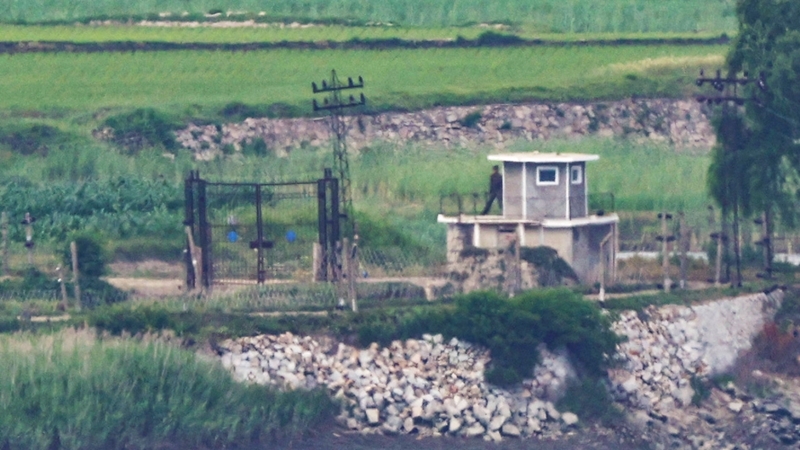
North Korea keeps sending small groups of troops to border sentry posts for bush clearance and road maintenance, a government source said Sunday, amid concerns it could deliver on its threat of military action against South Korea.
The North has sent groups of up to five soldiers with shovels and sickles to small stakeout boxes in the Demilitarized Zone separating the two Koreas. But Seoul does not see the move as a step to make good on Pyongyang’s threat of military action, the source said.
In anger over propaganda leaflets sent from the South, the North threatened to redeploy troops to the now-shuttered joint industrial complex in its border city of Kaesong and the Mount Kumgang tourist zone on its east coast, and restore border guard posts removed under a 2018 tension-reduction deal.
“Guard posts and stakeout boxes are obviously facilities for military utility,” the source said on condition of anonymity. “So it is natural that there are such military movements. But we are keeping close tabs on them.”
The military authorities here believe that an activity by at least a platoon-level number of forces could be seen as an unusual sign that requires their particular attention, the source said.
The source added that there have not been any activities spotted related to the restoration of the guard posts removed under the two Korea’s Comprehensive Military Agreement, which was signed in September 2018 to build mutual trust and reduce border tensions.
The South Korean military is also closely watching two coastal artillery pieces on the North’s border region of Gaemori, as their muzzles appeared open, spawning worries that they could be on standby for use.
“But those are things that the North often close and open. There seems to be a possibility that the muzzles were open to remove humidity or for ventilation work,” the source said.
Tensions between the two Koreas have run high as the North appears to be reverting to brinkmanship tactics with its bellicose rhetoric, demolition last week of an inter-Korean liaison office in Kaesong and warnings of military action.
In an unusually strong tone, the South Korean military has warned that it would respond strongly should the North launch any military provocations. (Yonhap)
MANILA, Philippines — None of the missing $2.1 billion of German payments processing firm Wirecard AG entered the Philippine financial system, but the perpetrators of the multinational scheme used the names of two of the country’s biggest banks in an attempt to cover their tracks, according to officials.
In response to this scandal, ranking officials of the Bangko Sentral ng Pilipinas (BSP) want BDO Unibank and Bank of the Philippine Islands (BPI) to initiate legal action against the local parties involved, in addition to terminating the employment of the bank officers involved.
“I don’t believe the money ever entered the Philippine banking system,” said one financial sector official who was working on the case, explaining that the amount was too big to move without being noticed by regulators.
“A prudent businessman would have to register the transfer of an amount like that,” the official said.
A second official said that at least two junior branch employees of BDO and BPI—the country’s largest and third-largest banks, respectively—“tried to make it appear that the money was [in the Philippines]” by issuing “bogus” certifications in an attempt to shake off Wirecard’s foreign auditors who were looking for the missing funds.
Wirecard’s problems were first reported by the Financial Times in March 2019.
According to the business publication, the financial technology company, which started out in the 2000s as a payments processor for online betting and pornography sites, had used the residential and office addresses of unsuspecting Filipinos for some of its bank correspondences.
The Financial Times also reported last year that one registered address of a Wirecard partner, EasyPay Solutions, was the same Pasay City office of P2P and rental bus operator Froehich Tours, owned by German national Christopher Bauer, himself a former Wirecard Asia-Pacific executive.
A ranking central bank source told the Inquirer that the local unit of Wirecard is a BSP-supervised electronic money issuer, which acquired the e-money business of Citibank a few years ago.
“What is good is they have yet to embark on the retail market,” the official said. “Corporate cards are issued to a handful of entities. Their biggest business at the moment is merchant acquiring. Should the local [Wirecard unit] be adversely affected, the impact will not be that worrisome.”
The official noted that, on paper, the local unit is owned by Wirecard’s Singaporean operations.
“They are still in the process of establishing the local electronic money issuer business,” the official said, adding that, so far, the local firm has only one corporate client with 20 prepaid cards issued.
‘No relationship’
In a statement to the Inquirer, BDO president Nestor Tan stressed that the bank has “no relationship with Wirecard, nor are we involved in their affairs.”
“No [bank] account was opened, and no funds flowed through BDO,” he said, adding that the bank investigated the matter and acted on it “right away before it became an issue.”
Tan said that the bank clarified the issue with Wirecard and its auditors and informed them that the documents that attested to the presence of the supposed funds were “spurious.”
In addition, he said that BDO “reported the issue to the central bank right away.”
“It was an attempt—which did not work—to cover up for missing funds by using the name of Philippine banks in falsified documents,” Tan said.
According to sources, the BDO employee involved was an official at one of its branches in Cavite who has since been fired. The employee may also face charges for preparing the unauthorized document.
Similarly, BPI also pointed out that it had no business relations with the beleaguered German financial technology firm.
“Wirecard is not a client,” the bank said in a statement.
S’pore’s phase 2 reopening: Malls, retailers heartened by return of shoppers, who also follow safety rules
Jun 21. 2020People queueing up to use the SafeEntry check-in and check-out system on June 19, 2020.ST PHOTO: CHONG JUN LIANG
By Straits Times
SINGAPORE – Malls and retailers breathed a sigh of relief on Friday (June 19) as shoppers streamed in for most of the day, heralding the start of phase two of Singapore’s reopening.
With safety measures in place, including limits on the number of customers and applying the SafeEntry check-in system, most malls and stores said the queues were manageable. Customers also took the precautionary steps in stride.
A spokesman for shopping mall Nex said: “It’s definitely been heartening to see the return of shoppers to Nex. Despite the perpetual incoming flow of shoppers from early in the morning, there was no massive bottleneck or long waiting time in queues to enter or exit the mall.”
Mall operator Frasers Property Retail said human traffic at its malls, including Causeway Point and Bedok Point, was double that of earlier this week, when phase one did not allow retailers to open their physical stores.
Its spokesman noted that “shoppers are following the safe management principles while shopping and dining at our malls today”.
Additional entry and exit points will be opened for a smoother flow of traffic if necessary, he added. “We are also working closely with our tenants to ensure they carry out the required health and safety precautions.”
Electronics and furniture retailer Courts saw a steady flow of shoppers at all its 14 stores on Friday.
At its megastore in Tampines, a handful of people waited in line even before it opened at 10am. By 11am, about 30 people were queuing to enter the store.
Mr Matthew Hoang, country chief executive officer of Courts Singapore, said sales were more than double that of the same day last year.
“We observed many customers coming in with a clear intention to buy and they were focused on what items to buy. This is encouraging as it indicates Singaporeans are heeding the call to behave responsibly by not spending a significant amount of time browsing,” he added.
At fashion chain H&M, floor markings for queue management and signs to remind people to keep at least 1m apart helped to ensure that shoppers follow safe distancing rules.
Its stores also made public announcements to reinforce the safe distancing message.
H&M had safety protocols for trying on clothes.
Each customer is allowed to try on four garments, down from seven. Alternate fitting rooms are open for their use and the room is sanitised after each use.
Clothes tried on but unsold are steamed and disinfected with disinfectant spray before they are returned to the shop floor.
Other safety measures taken by retailers include temperature checks of customers and staff, ensuring that shoppers wear masks and that hand sanitiser is readily available, plus cleaning common areas regularly.
The hunger for beauty services appears acute, with waxing salon chain Strip saying demand is “overwhelming”.
The chain, owned by Spa Esprit Group, is fully booked till mid-July.
Ms Samantha Ong, marketing director of its beauty division, said: “We’ve received over 2,000 messages in the past few days.All our phone lines are jammed as everyone is making appointment bookings since earlier this week, when the phase two reopening was announced.”
Safety for both staff and customers, however, remains a top priority, she added.
The company has a strict 10-step hygiene protocol that includes requiring employees to mask up, don gloves and sanitise all tools, equipment and workstations with hospital-grade disinfectant before and after every customer.
“Everyone is happy that we are finally resuming our businesses,” she said.
“Our employees are very relieved to be back to work after waiting in uncertainty for more than two months. It’s like seeing the light at the end of the tunnel.”
Tourist attractions come to life on 1st weekend after travel is allowed across Japan’s prefectural borders
Jun 21. 2020Photo credit: PxHere
By The Japan News
The start of the first weekend after the government lifted its request for people to refrain from travelling across prefectural borders and holding events saw increases in visitors at tourist attractions across the nation. The travel restrictions, lifted by the government on Friday, had been implemented to contain the spread of the novel coronavirus outbreak.
At Mother Farm in Futtsu, Chiba Prefecture, cars bearing license plates from other prefectures, such as Tokyo and Kanagawa Prefecture, were seen lined up at the entrance before the park opened at 9:00 a.m. on Saturday.
Visitors could enjoy watching goats walking over and eating hay on a bridge and viewing beautiful petunia fields from inside their cars on a 5-kilometer-long driving course that the farm has opened until July 17.
“I went out for the first time in 2½ months. As the weather is nice and the view is beautiful, I enjoyed sharing this with my child,” said a male company employee, 43, who came from Katsushika Ward, Tokyo, with his family.
“Although the number of visitors is still small, we look forward to seeing customers from other prefectures in the future,” an official of Mother Farm said.
The government request to avoid travel to and from Hokkaido as well as Tokyo and three prefectures in the greater metropolitan area was lifted on Friday. It had kept the request in place even after it lifted the state of emergency on May 25.
The resumption of public transportation services is accelerating and social and economic activities have begun to recover, with operators taking steps to reduce the risks of infections.
 Vietnamese Prime Minister Nguyễn Xuân Phúc addressed the opening ceremony of ASEAN 36th summit held in Hà Nội on Friday morning. — VNA/VNS Photo Thống Nhất
 Malaysian Prime Minister Tan Sri Muhyiddin Yassin
 Cambodian passengers returned from Malaysia on Tuesday by Heng Chivoan
 Vietnamese and foreign reporters cover the 20th anniversary of the Reunification Day (April 30, 1975 – April 30, 1995) in Hà Nội. — VNA/VNS File Photo
 Yonhap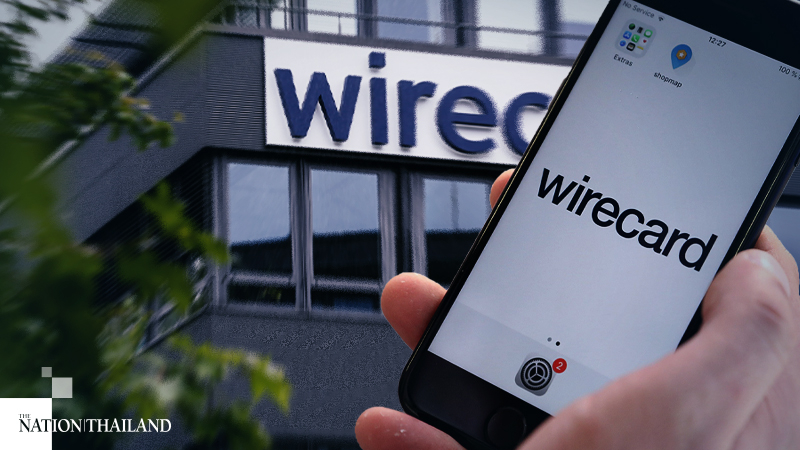
 People queueing up to use the SafeEntry check-in and check-out system on June 19, 2020.ST PHOTO: CHONG JUN LIANG
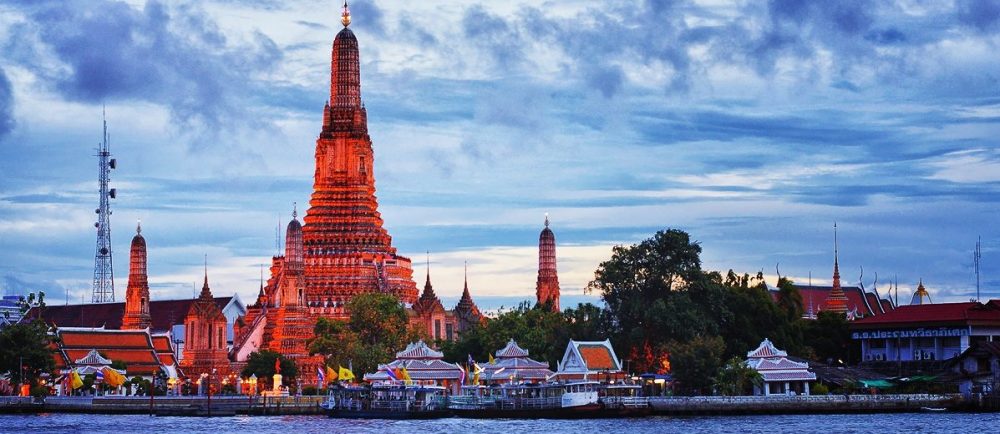
 Photo credit: PxHere
