Chinese long for travel as epidemic wanes: survey #ศาสตร์เกษตรดินปุ๋ย

#ศาสตร์เกษตรดินปุ๋ย : ขอบคุณแหล่งข้อมูล : หนังสือพิมพ์ The Nation

https://www.nationthailand.com/ann/30384620?utm_source=category&utm_medium=internal_referral

Chinese long for travel as epidemic wanes: survey

Mar 22. 2020
Visitors watch a white whale at the aquarium in Atlantis Sanya, a landmark resort in Sanya, Hainan province, on Feb 20. [Photo by Sha Xiaofeng/For China Daily]

Visitors watch a white whale at the aquarium in Atlantis Sanya, a landmark resort in Sanya, Hainan province, on Feb 20. [Photo by Sha Xiaofeng/For China Daily]
By China Daily

SHANGHAI – As the novel coronavirus epidemic has started to wane, Chinese are longing for tours across the country, with the plurality of the respondents choosing to travel in May, a survey has found.

The survey with nearly 15,000 responds from over 100 cities in China found 16 percent of the respondents want to travel in May, making it the most preferred month for travel of the year. June, July and August gained 15 percent of support respectively.

The survey report was jointly released on Friday by the China Travel Academy and Trip.com Group.

Over 90 percent of the respondents chose domestic destinations, with Yunnan, Hainan and Shanghai being the top three preferred destinations.

Even during the outbreak of the novel coronavirus, 40 percent of the participants frequently checked the latest travel and related discount information, said the report.

Over 60 percent of the respondents are planning to spend over 10,000 yuan ($1,400). Up to 44 percent would spend up to 10 percent of their family income on travel, and 30 percent would spend up to 20 percent, it said.

The National Health Commission had reported no new domestically transmitted COVID-19 cases on the Chinese mainland for three consecutive days by Friday.

CORONAPOCALYPSE! #ศาสตร์เกษตรดินปุ๋ย

#ศาสตร์เกษตรดินปุ๋ย : ขอบคุณแหล่งข้อมูล : หนังสือพิมพ์ The Nation

https://www.nationthailand.com/ann/30384621?utm_source=category&utm_medium=internal_referral

CORONAPOCALYPSE!

Mar 22. 2020
Women wearing masks pray outside Lahore's Sacred Heart Cathedral, one of the churches that has been closed down to discourage large congregations | M Arif, White Star

Women wearing masks pray outside Lahore’s Sacred Heart Cathedral, one of the churches that has been closed down to discourage large congregations | M Arif, White Star
By Usman T. Malik / Dawn / ANN

Without aggressive containment measures, over 20 million Pakistanis could be impacted by Covid-19 by June.

As Covid-19 spreads exponentially across the globe, so has panic and misinformation about the virus. But the worst is yet to come. By June this year, more than 20 million could be impacted by the virus in Pakistan alone. Pakistan is about to get overwhelmed, unless the federal government takes swift action and average citizens start playing their part.

On Friday, March 6, 2020, a family of four — parents and two teenage girls — walked into the clinic area of a large hospital in Lahore. The mother and daughter both had high fever, nausea and dry cough. The medical doctor on call slipped on a mask and, telling them to stay put, walked out of the room to ask the administrative staff about the hospital’s protocol regarding triaging of suspected Covid-19 patients.

The doctor was told there was none.

The doctor was also told there were no testing kits available even if there had been a protocol.

The family’s only option was to go to Services Hospital to get tested for Covid-19. The mother refused to do so because she was exhausted with fever and dehydration.

The medical doctor ended up handing the family facemasks and, except for the mother, sent them home with symptomatic treatment and instructions to rush to the emergency room if they got short of breath. The mother was admitted for observation and rehydration. No testing for Covid-19 would be done on this family.

The same week, eminent lawyer and writer Osama Siddique reported on social media that, upon his return from the Maldives, he found utter chaos at the Lahore airport. The ‘screening team’ consisted of two masked ladies and a guard yelling around, asking people if anyone had returned from Iran or China. In his own words: “I did not see anyone being pulled aside, as no one volunteered this information in my presence. And, if this info was being sought out, it was purely based on the honour code. The masked guy yelled. The two masked ladies simply collected the filled health forms — three at a time — and put them away without glancing at them. The next step was the immigration desks, and I didn’t see anyone pulled away for screening. I also didn’t see anyone with any screening or testing equipment.” Basically, there was no screening protocol in place, no trained triage team or personal protective equipment.

The above, in short, is emblematic of the preparedness of Punjab before March 10 in the face of the swiftest and deadliest pandemic to have emerged on the planet in the last 100 years.

According to some reports, Punjab started testing individuals returning from Iran only in mid-March. And even as the number of detected cases spiked to over 180 in Sindh, the number of confirmed cases in Punjab remained suspiciously low.

While the Sindh government more swiftly sprang into action, response at the federal level has continuously appeared to underplay the situation’s gravity. Addressing the nation on March 18, Prime Minister Imran Khan gave his signature advice to Pakistanis. “Ghabrana nahin hai [You do not have to fear],” he told his countrymen.

But the whole world is fearing the worst — and with good reason.

Since December 2019 the global health community has been watching the Covid-19 outbreak unfold with disbelief. In January, the World Health Organization (WHO) declared the novel coronavirus as a global public health emergency. On March 11, WHO did something it has not done in more than a decade: it declared Covid-19 a global pandemic.

Around the world, the medical community remains filled with uncertainty and quite a bit of dread.

Some of the dread is because there is no vaccine yet, and a lack of information, coupled with an abundance of fast spreading misinformation, has contributed to this feeling of panic. As scientists around the globe work towards a solution, they are urging people to practice social distancing in an effort to contain the virus.

You might have heard the term “flattening the curve” online or in media discussions. What that means is that pandemics are often difficult to contain and may end up infecting huge chunks of a country’s total population. So while the AUC (Area Under the Curve) of the graph above might stay the same — the total number of infections might remain constant — measures like social distancing and aggressive testing could potentially ‘flatten the curve’, preventing the local healthcare system from getting overwhelmed by, say, thousand of cases in one week.

The issues with that nightmare scenario are two-fold:

Because of the limited number of beds, healthcare professionals and ventilators, hospitals cannot handle too many sick Covid-19 cases at once. This leads to an increased number of deaths of both Covid-19 patients and other patients who seek care because of trauma or other problems.

Because the system gets overwhelmed and breaks down, the risk of infections spreading in healthcare workers and other patients goes up as well, creating a vicious cycle.

R0, CASE DOUBLING, AND THE ANATOMY OF AN EPIDEMIC

R0 (pronounced R-naught) is an epidemiologic term that refers to the average number of people that one sick person goes on to infect. It is used to predict how far an epidemic might spread in a population with no natural immunity to the virus.

The currently believed R0 for the SAR-CoV-2 virus is about three.

At the time of this writing (March 21, afternoon), the total number of official Covid-19 cases in Pakistan is 510. Which means people who will be or might already have been infected by these cases is around 1,530.

Every single person of these 1,530 could be a disease cluster.

Keep in mind that this is likely a vastly under-diagnosed number because of very limited testing capability.

Now, as Dr Liz Specht, an engineer and Director of Science & Technology at The Good Food Institute recently observed, cases usually double “every 6 days (… a typical doubling time across several epidemiological studies).”

This means that without aggressive containment measures, even these original 510 cases will lead to:

March 27 — 1,020 cases

April 2 — 2,040 cases

April 8 — 4,080 cases

and so on.

By April 14th, Pakistan may have 8,160 confirmed cases

By May 2nd, 65,280 cases

By June 1st, more than two million confirmed cases of Covid-19

This is the most conservative, best-case scenario because we haven’t factored in the fact that at any given time, the actual cases in a population are around 8-10 times more than the lab-confirmed cases.

Which could mean up to 81,160 actual infected cases by mid-April and over 20 million (2 crore) by June.

Do we honestly believe we have enough hospital beds, facemasks, mechanical ventilators, and healthcare workers prepared for such a massive healthcare burden?

Similar actual case numbers (80,000 infected) for mid-April were calculated by analysts Osama Rizvi and Ahsan Zahid who used a mathematical model proposed by engineer and data analyst Tomas Pueyo.

Rizvi and Zahid also predicted a massive shortage of beds in all the provinces of Pakistan as the number of infected patients rises, which can be seen in the graph above: As number of days pass, the red curve (number of true cases) hits 80,000 by mid-April, juxtaposed to the total number (132,227) of available hospital beds in Pakistan, (many of which, independent of Covid-19 cases, are already in use at any given time).

And as we all know, by May/June, dengue will be back in Pakistan with a vengeance.

Dr Specht has predicted that, by July 2020, between two to six billion people around the world will be afflicted with Covid-19. We are looking at massive healthcare failures all around the world and especially in Pakistan before the end of summer, if mass testing and severe containment measures, including social distancing, are not undertaken now.

Some of the dread is because we do not understand the enemy.

How did the likely zoonotic virus cross over from animal to human?

On December 30, 2019, three lung washing samples were collected from a patient in Wuhan Jinyintan Hospital who had pneumonia of unknown cause. The samples tested positive for a new Coronavirus strain, whose genetic analysis was most closely related to the bat SARS-like Coronavirus strain. The virus was named Severe Acute Respiratory Syndrome Coronavirus 2 (SARS-CoV-2) and the illness it causes was named Coronavirus Disease (Covid-19).

How is it transmitted?

The Centers for Disease Control and Prevention (CDC) in America believes respiratory droplets are the likeliest mode of transmission. When an infected person coughs or sneezes, droplets splatter on surfaces or another person’s body. This means you would need to be in close contact (within six feet) of a person or touch those droplets to get infected. However, a recent study reports small droplets could remain airborne and infective for up to three hours. That means the droplets could be inhaled in; which means the virus can be transmitted as an airborne infection.

Why is the incubation period a problem?

Unlike SARS or H1N1 Influenza (common flu), with Covid-19 you could have zero symptoms for up to five days and still be shedding the virus and infecting others. This means you might believe you’re healthy since you have no fever, dry cough or shortness of breath. In the absence of aggressive social distancing you might decide to visit the gym or your local mall and scatter a hundred thousand viral particles or droplets in the area, never knowing you were the vector of disease.

Why does Pakistan have such a low number of cases?

One finds this curious. We’re right next to China and Iran, after all, two of the most heavily infected countries on the planet. But it is important to remember that it is the number of detected cases that is comparatively low (and now quickly rising). From experience, this writer knows that very few places in Lahore, for example, are currently testing for the virus — which suggests the reported official numbers may be lower than actual cases of Covid-19, an ominous conclusion.

One might argue that India and most of Africa have relatively few cases, too. Could this suggest there is something to the ‘latitude theory’, after all? That hot climate discourages viral spread? We do not know yet, especially when we take into account the significant number of cases reported in Australia, Singapore and Brazil — all currently warm weather areas.

At the time of this writing, it has been confirmed that the virus has spread to 26 African countries. Many of those countries’ totals are still in single figures.

What, if anything, could prevent the progression of a mild case (sniffles, cough, muscle aches, a low-grade fever or walking pneumonia) to a severe case (life-threatening illness with difficulty breathing and need for oxygen or mechanical respiratory support with a ventilator)?

While there are risk factors (underlying pre-existent medical conditions, age and certain biochemical markers in the body) the fact remains that we do not know which patients will develop the worst disease. At the moment, the only known is that Covid-19 Case Fatality Rate is at least five times worse than regular flu at any age group, except children, who seem to get mild symptoms mostly. Even in that age group (between 10-19 years of age), some data from China suggests increased risk of morbidity and mortality compared to the flu.

Some of the fear is because we have a collective memory as well as written chronicles of a similar enemy.

The so-called “Spanish Flu” of 1918 was a devastating pandemic, which spread like wildfire around the world infecting around 500 million people (27 percent of the world’s population at the time) and killing about 17 million (as estimated in a study in 2018) — a mortality rate of around three percent.

At the time of this writing, the current mortality of Covid-19 according to Worldometers is around 4 percent with the total number of infected cases having exceeded 200,000. This is comparable to the 3.8 percent Crude Fatality Rate (CFR) in infected patients in China, as reported by the WHO.

The similarity of numbers between the plagues of 1918 and 2020 is chilling. By the time the Covid-19 pandemic peters out, should we expect comparable totals this time around too? This writer fears that would be optimistic. The world’s population has more than quadrupled since 1918 and, as a species, we are much better connected now than we were back then — which means easier transmission with higher numbers.

At the time of this writing, the total number of cases in Italy reported by Worldometer are 31,506 with 2,503 deaths, the mortality rate is around 7.9 percent — the worst in the world at the moment (Iran’s current reported mortality is around 6.1 percent). Washington State, the area worst-hit in the United States till last week, has reported a total of 1014 cases with 55 deaths; mortality around 5.2 percent. CDC is expecting at least 160 million infections in the US alone. That is roughly half of all Americans.

This writer fears, when all is said and done, if every single government around the world doesn’t do its part diligently, we might be looking at much larger morbidity and mortality numbers than the Great Influenza Pandemic of 1918.

We humans are trying to walk the line in a manifestly dystopian landscape.

From Mary Shelley to Edgar Allan Poe, from Begum Rokeya Hossain to Margaret Atwood, from Albert Camus to Stephen King, writers of fiction have carried out thought experiments in dystopian and alternate world writing. These extrapolate from historical and contemporary sources to describe the upheaval of the status quo and the end of the world, as we know it. Writers of science fiction have been especially good at it.

It is unfortunate, though, that writers’ warnings about the Climate Apocalypse, the Anthropocene, the scale of capitalistic disregard of the environment and subsequent human-inflicted damage on the planet have gone unheeded. Humanity continues to invade and gouge out spaces once inhabited by animals and plants. As Alanna Shaikh, a global health expert and TED Fellow, said in a talk on March 11, 2020, “This is not the last major outbreak we’re ever going to see. There’s going to be more outbreaks, and there’s going to be more epidemics. That’s not a maybe. That’s a given.” If we accept that — and this writer thinks we absolutely should — we need also accept that all those fictive dystopias once thought many years away have finally caught up with our present.

Reworking the words of the science fiction writer William Gibson: The end of the world is here. It’s just not evenly distributed.

Covid-19 may be here to stay.

It may roar across the globe and boomerang back to Asia; or it may go quiescent, as many seasonal strains of flu do, and return next winter as an endemic virus that learns to cohabitate with us.

Either way, Pakistan needs to be prepared for its return; to learn to coordinate its emergency response in the face of future threats of epidemics, to marshal its means and resources to provide the most cost-effective healthcare and environmental solutions. Our demographics are in our favour; why not start tapping into our youth’s limitless enthusiasm and obvious intelligence? Where are our especially designated science teams who could go out to rural areas and teach basic science concepts through narratives in regional languages? We have thousands of aspiring data scientists looking for experience, medical students in need of research projects and college graduates looking for decent jobs. Why not utilise them to create networks of telemedicine, where basic health questions could be answered using telephones or, at most, Skype or Facebook Messenger? Why not reward young entrepreneurs who create new apps, wherein users can log Covid-19 symptoms and be immediately directed to helplines with up-to-date triage information about the closest fever camps or clinics with testing-and-treatment capabilities?

Of course, before these measures can be introduced we need to work towards clinics with such capabilities. While in these uncertain times one is tempted to think about a brighter future, the need of the hour is swift action. As the federal government mulls over doing even the bare minimum like encouraging social distancing, the virus is spreading and the economy is tanking.

We must learn from the quick spread in countries like neighbouring Iran, and ready our defence before time runs out. Otherwise, the virus will torpedo our lives in more ways than are immediately obvious. As the world is fast learning, it’s not a question of if, but when.
Pakistan suspends incoming international flights for 2 weeks #ศาสตร์เกษตรดินปุ๋ย

#ศาสตร์เกษตรดินปุ๋ย : ขอบคุณแหล่งข้อมูล : หนังสือพิมพ์ The Nation

https://www.nationthailand.com/ann/30384619?utm_source=category&utm_medium=internal_referral

Pakistan suspends incoming international flights for 2 weeks

Mar 22. 2020
Photo credit: Dawn News TV

Photo credit: Dawn News TV
By Dawn News

The government on Saturday announced that all incoming international flights to Pakistan will remain suspended for the next two weeks in order to prevent further coronavirus infections from foreign arrivals.

The decision was taken at a meeting of the National Coordination Committee chaired by Prime Minister Imran Khan, Special Assistant to the Prime Minister on National Security Dr Moeed Yusuf announced at a press conference.

Yusuf said Pakistan had last week placed the condition on international passengers arriving in Pakistan to bring with them a negative coronavirus certification.

However, in view of the current situation, a “difficult” decision was taken to ban all incoming international flights to Pakistan, starting at 8pm on Saturday (today), for two weeks until 8pm on April 4, the SAPM added.

The restriction will apply to all passenger, charter and private flights. However, the Pakistan International Airlines (PIA) will be allowed to bring back its planes which are already abroad.

The suspension of flights will also not apply to diplomats and cargo flights.

Yusuf did not state whether outgoing international flights from Pakistan will be affected by the decision.

“We are aware that this [decision] will create difficulties,” he said, noting that nearly 200,000 passengers were slated to arrive in Pakistan in the next two weeks. In this regard, Yusuf said all Pakistani missions abroad have been directed to facilitate passengers affected by the decision.

The SAPM said the virus had arrived in the country from abroad and the government could not “risk further infections” from people arriving from Covid-19 hubs.

When international flights to the country resume, passengers will no longer be required to produce Covid-19 negative certification and their screening will be enhanced, he announced.

Yusuf denied reports of an impending lockdown of cities in the country, urging the public to only trust information released by the government.

‘Complete harmony’

Special Assistant to Prime Minister on Health Dr Zafar Mirza said yesterday’s meeting had emphasised the need for “central coordination and presentation” of data regarding Covid-19’s spread in the country.

“There was consensus that there should be complete harmony between the federation, provinces and areas … and all the chief ministers emphasised the need to work together,” he added.

Mirza revealed that 1.4 million people returning from abroad have so far been screened at Pakistan’s entry points.

He said there was a need to see the government’s efforts to quarantine pilgrims at the Taftan border in a “positive manner” which he said had helped determine the positive cases and the required treatment.

He said 14 labs across the four provinces and Gilgit-Baltistan have been carrying out tests for Covid-19.

Mirza reiterated that that spread of the disease in the country can be controlled through social distancing. He urged the public to use the next three days as “practising time” for self-isolation.

NDMA’s arrangements

National Disaster Management Authority (NDMA) Chairman Lt Gen Mohammad Afzal said they have advised the provinces to further reinforce their quarantine facilities so that one patient can be kept in one room.

He said hotels in various cities are being booked so that passengers arriving from abroad can be quarantined there.

The NDMA will set up an office at the Pakistan embassy in Beijing, which will speed up the process to procure required equipment from China, Afzal announced.

He said China had sent 10 scanners and 20,000 testing kits to Pakistan last night while nearly 100 ventilators will also arrive from China in the next five days.

Chinese billionaire and co-founder of Alibaba Jack Ma will also donate 500,000 masks, including 50,000 N95 masks, and 50,000 testing kits to Pakistan, the NDMA chairman announced.

He said the authority will procure nearly 80,000 testing kits in the next 10-12 days which can be used to carry out as many as four million tests.

Bali urges tourist destinations to suspend operations to curb COVID-19 spread #ศาสตร์เกษตรดินปุ๋ย

#ศาสตร์เกษตรดินปุ๋ย : ขอบคุณแหล่งข้อมูล : หนังสือพิมพ์ The Nation

https://www.nationthailand.com/ann/30384617?utm_source=category&utm_medium=internal_referral

Bali urges tourist destinations to suspend operations to curb COVID-19 spread

Mar 22. 2020
A worker sprays disinfectant at Sanur Beach, Denpasar, Bali, on March 15. The Bali administration carried out simultaneous sanitation efforts in cities and regencies across the province by spraying disinfectant in ports, terminals, hotels, markets, tourism objects and public spaces as part of its effort to contain the spread of COVID-19. (JP/Zul Trio Anggono)

A worker sprays disinfectant at Sanur Beach, Denpasar, Bali, on March 15. The Bali administration carried out simultaneous sanitation efforts in cities and regencies across the province by spraying disinfectant in ports, terminals, hotels, markets, tourism objects and public spaces as part of its effort to contain the spread of COVID-19. (JP/Zul Trio Anggono)
By The Jakarta Post

Bali’s provincial administration is urging tourist destinations on the resort island to suspend their operations over the COVID-19 outbreak in the country.

The administration’s regional secretary, Dewa Made Indra, who also serves as the head of the provincial task force for COVID-19, said Governor Wayan Koster told all mayors and regents to close all tourist destinations in their areas, including nightclubs and other entertainment spots.

However, he said the administration would not penalize tourism places that still operated.

“We do not impose punishments. However, we remind all parties that this coronavirus is highly contagious and continues to spread; therefore, we must stay vigilant,” Dewa said on Friday.

“We should prioritize the safety of ourselves and the people around us. We have to avoid contracting the virus and spreading it to others.”

Following the governor’s instruction, the Garuda Wisnu Kencana cultural park in Badung regency was sprayed with disinfectants on Saturday, as reported by tribunnews.com. The park houses the iconic 21-story-tall Garuda Wisnu Kencana monument depicting Hindu deity Vishnu riding the legendary bird Garuda.

Bali’s health authorities have reported three confirmed COVID-19 cases, two of which – both foreigners – died from the disease.

There have not yet been any confirmed cases of local transmission, despite Bali being a hot spot for international tourists.

Many Balinese have made a living from tending and managing tourist attractions and entertainment places across the island, a popular holiday destination for both domestic and foreign tourists.

Even so, Bali Tourism Agency head Putu Astawa was in favor of closing the island as an effort to prevent COVID-19 from spreading there, saying such a policy was necessary as the World Health Organization had declared it a pandemic.

“The policy was meant to stop the spread of the coronavirus. This is important to lighten the load on healthcare services,” he told The Jakarta Post on Saturday.

Bali is gearing up to shut down to observe Nyepi (the Hindu Day of Silence) on Wednesday. The administration has decided to limit congregational rituals and crowd gatherings ahead of the holy day that marks the beginning of the Hindu New Year according to the Saka calendar. (mfp)

Việt Nam suspends foreign entry, starting March 22 #ศาสตร์เกษตรดินปุ๋ย

#ศาสตร์เกษตรดินปุ๋ย : ขอบคุณแหล่งข้อมูล : หนังสือพิมพ์ The Nation

https://www.nationthailand.com/ann/30384616?utm_source=category&utm_medium=internal_referral

Việt Nam suspends foreign entry, starting March 22

Mar 22. 2020
By Vietnam News

HÀ NỘI — The Vietnamese Government late Saturday announced that it would temporarily halt entry to all foreigners, starting 00:00 March 22, citing concerns over the spread of COVID-19 pandemic.

This latest move was a drastic step up from a decision effective starting March 18 requiring that all foreign and Vietnamese entrants into Việt Nam would have to be quarantined for 14 days, given that the rising number of coronavirus positive cases in the country in recent days have mostly originated from returning Vietnamese and foreign tourists from European countries – especially the UK – which WHO has declared to be the new epicentre of the COVID-19 pandemic.

In its notice, the foreign ministry said that for those entering Việt Nam for diplomatic and official purposes, for participation in major diplomatic events, or experts, business managers or highly skilled workers, the Ministry of Public Security and Ministry of National Defence will coordinate with the Ministry of Foreign Affairs, Ministry of Health, and other relevant agencies to issue visas if necessary.

However, all entrants in these categories into Việt Nam will be subject to medical checks and mandatory 14-day quarantine.

The temporary suspension will also be applied to all overseas Vietnamese and their relatives granted with certificates of visa exemption.

The Vietnamese foreign ministry said it has notified this decision to diplomatic missions, consulates and representative offices of international organisations in Việt Nam and Vietnamese diplomatic missions abroad in order to ensure that the citizens would strictly abide by Việt Nam regulations on epidemic prevention and control.

Robust measures

In a document briefing released by the Government Office today following yesterday’s cabinet meeting, Prime Minister Nguyễn Xuân Phúc ordered more drastic and robust measures to deal with the pandemic that has now progressed into “a new phase,” with a bid to avoid community transmission of the virus.

The Government leader asked for a change in people’s habits, including increasing online transactions, always wearing face masks in public and on public transport, and refraining from holding or participating in gatherings larger than 50 people – including funerals, weddings and even religious rituals.

Entertainment venues like bars, karaoke bars and massage shops will also be closed temporarily.

PM Phúc ordered all law enforcement authorities to be on high alert and strictly control entrants into Việt Nam via sea, waterway, road and air routes.

He also asked that the competent authorities and local governments to try to reduce the number of flights transporting passengers from overseas into Việt Nam to prevent overloading of quarantine sites, given the compulsory quarantine mandated for all entrants into the country.

Non-compliance to quarantine measures, failure to declare health status or activities that aid escaping or avoiding quarantine would be severely punished.

Students, workers and overseas Vietnamese outside Việt Nam are urged to stay put and observe all COVID-19 prevention and control guidelines and protocols set by their host countries, PM Phúc said.

He added that in case of essential travel, they must register with their embassies or representative bodies of Việt Nam in their host countries to cooperate with the transport ministry so that commercial flights can be arranged, as more and countries are shuttering their borders and implement unprecedented lockdown measures.

The transport ministry is told to “create favourable conditions for flights carrying foreign passengers out of Việt Nam.”

The PM also agreed with the National Steering Committee on Prevention and Control of COVID-19 in assigning the Ministry of National Defence with purchasing 10 mobile coronavirus-testing vehicles.

The health ministry is also asked to devise a plan to have a reserve force of retired doctors, nurses and health workers and medical students ready to be deployed. — VNS

Coronavirus pandemic LIVE | Death toll rises from 4 to 6 as two men die in Maharashtra and Bihar #ศาสตร์เกษตรดินปุ๋ย

#ศาสตร์เกษตรดินปุ๋ย : ขอบคุณแหล่งข้อมูล : หนังสือพิมพ์ The Nation

https://www.nationthailand.com/ann/30384618?utm_source=category&utm_medium=internal_referral

Coronavirus pandemic LIVE | Death toll rises from 4 to 6 as two men die in Maharashtra and Bihar

Mar 22. 2020
Medical staff working at the Red Cross hospital in Wuhan in China's central Hubei province. (Photo: AFP)

Medical staff working at the Red Cross hospital in Wuhan in China’s central Hubei province. (Photo: AFP)
By SNS Web / New Delhi / The Statesman

This is the first fatality being reported from Bihar, while second death from Maharashtra. The 38-year-old man who passed away from Bihar was from Munger district, with travel history to Qatar.

Even as India is observing Janata Curfew on Sunday, the death toll from the Coronavirus pandemic in the country has gone up to six with two fatalities being reported from Maharashtra and Bihar. This is the first fatality being reported from Bihar, while second death from Maharashtra. The 38-year-old man who passed away from Bihar was from Munger district, with travel history to Qatar.

Meanwhile, as Maharashtra is already suffering from Coronavirus with the highest number of cases, today a 63-year-old man passed away in Mumbai. He was admitted to a private hospital. This is the second death in Mumbai linked to coronavirus.

The Brihamumbai Municipal Corporation, said in a statement, “The patient had a chronic history of diabetes, high blood pressure and ischemic heart disease. He developed acute respiratory distress syndrome leading to his death.”

The number of coronavirus infections in India soared to 324. Meanwhile, the Railways have suspended all the train services till March 25.

India launched a 14-hour long curfew on Sunday to limit the fast-spreading coronavirus epidemic in the country, where 315 people have been found to have contracted the disease so far.

The prime minister, Narendra Modi, in an address to the nation last week urged citizens to stay indoors from 7am to 9pm Delhi time – a move that he said would be a crucial test for a country to assess its abilities to fight the pandemic.

“Let us all be a part of this curfew, which will add tremendous strength to the fight against the Covid-19 menace,” Modi tweeted minutes before the curfew commenced. “The steps we take now will help in the times to come,’ he said in the tweet.

“There is no cure for this, so we need to remain healthy. We need to avoid crowds and stay home. Social distancing is critical. If you think you can roam around as usual and feel you will not be at risk, this is incorrect; you are endangering yourself and your family,” PM Modi said in his 29-minute address to the nation.

Meanwhile, China reported a new domestic case of the virus for the first time in four days. The case is one of 46 new confirmed diagnoses in mainland China, which is the fourth straight day of an increase.

The Guardian reports, A record 14 were in the financial hub of Shanghai, and 13 were reported in the capital Beijing, a decline from 21 the previous day. As in other Asian nations which had appeared to get their outbreaks under control, China is now fearful of a second wave brought in by people coming into the country.

Norway Olympic body asks IOC to postpone Tokyo Games #ศาสตร์เกษตรดินปุ๋ย

#ศาสตร์เกษตรดินปุ๋ย : ขอบคุณแหล่งข้อมูล : หนังสือพิมพ์ The Nation

https://www.nationthailand.com/ann/30384615?utm_source=category&utm_medium=internal_referral

Norway Olympic body asks IOC to postpone Tokyo Games

Mar 22. 2020
In this Feb 23, 2020, file photo, two people wear masks as they visit the newly opened Japan Olympic Museum located near the New National Stadium in Tokyo. (JAE C. HONG/AP)

In this Feb 23, 2020, file photo, two people wear masks as they visit the newly opened Japan Olympic Museum located near the New National Stadium in Tokyo. (JAE C. HONG/AP)
By China Daily

TOKYO – Norway’s Olympic committee said Friday it has asked the International Olympic Committee not to hold this summer’s Tokyo Olympics until the new coronavirus pandemic is under control, Kyodo news agency reported.

In response, a senior official of the Tokyo 2020 Olympics organizing committee said it is not at the stage of deciding whether or not to postpone or cancel the event, Kyodo reported.

“The International Olympic Committee (IOC) is the one making the final decision. We will firmly continue our efforts to host the event in July,” Toshiaki Endo, vice president of the committee, told Kyodo news.

Norway’s Olympic committee has become the latest nation to ask for the rescheduling of the Games, joining Colombia and Slovenia which made similar requests on Friday.

Sports leagues and Olympic trials around the world have been suspended, however the IOC has said it does not intend to cancel the Games, set to begin on July 24.

ALSO READ: Poll: 70% of Japanese don’t expect Olympics to go ahead as planned

Amid the concerns, an Olympic torch event drew hundreds of spectators as the flame arrived on Friday at a northern city in Japan.

The flame will travel round the Tohoku region hit by the earthquake and tsunami in 2011, in what organizers call a “recovery flame” tour before the official kick-off ceremony in Fukushima on March 26.

Soldiers on the streets in Ops Penawar, stay home! #ศาสตร์เกษตรดินปุ๋ย

#ศาสตร์เกษตรดินปุ๋ย : ขอบคุณแหล่งข้อมูล : หนังสือพิมพ์ The Nation

https://www.nationthailand.com/ann/30384614?utm_source=category&utm_medium=internal_referral

Soldiers on the streets in Ops Penawar, stay home!

Mar 22. 2020
By ZAKIAH KOYA / The Star

PETALING JAYA: The Malaysian Armed Forces have been deployed and are already out on the streets assisting the police in enforcing the movement control order (MCO), pictures in a defence portal showed.

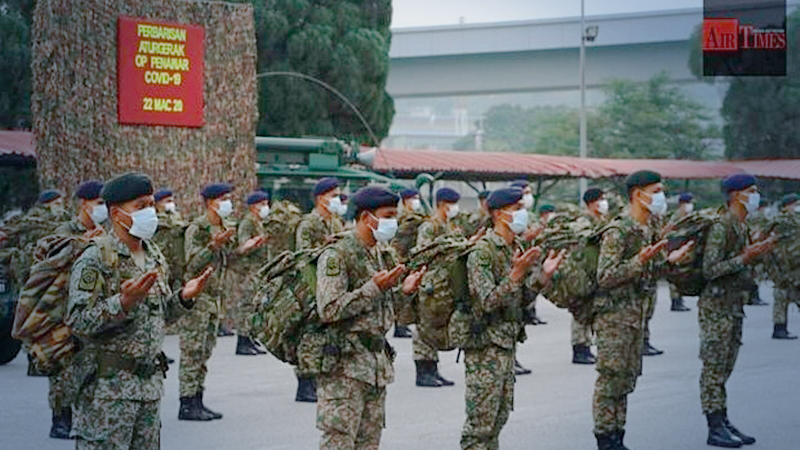
Defence news portal Air Times News Network put up photos of troops wearing face mask and in full gear, but minus firearms, saying their prayers before being deployed to their duty stations nationwide.

“The Malaysian Armed Forces from Markas 11 Briged have been deployed to enforce Op Penawar.

“Op Penawar is the assignation of the army to assist the police to enforce Covid-19 MCO from March 18 to March 31 2020.

“The operation has been launched today (March 22),” stated the Air Times News Network.

Defence Minister Datuk Seri Ismail Sabri had announced on Friday (March 20) that the army would be deployed as there were still many Malaysians who were out on the streets despite the MCO coming into force to curb the spread of Covid-19.

Defence Force Chief Gen Tan Sri Affendi Buang on March 21 denied a viral voice message that said its personnel were allowed to beat up members of the public while enforcing MCO.

Covid-19: Illegal migrants at tabligh event can test without fear #ศาสตร์เกษตรดินปุ๋ย

#ศาสตร์เกษตรดินปุ๋ย : ขอบคุณแหล่งข้อมูล : หนังสือพิมพ์ The Nation

https://www.nationthailand.com/ann/30384613?utm_source=category&utm_medium=internal_referral

Covid-19: Illegal migrants at tabligh event can test without fear

Mar 22. 2020
By The Star

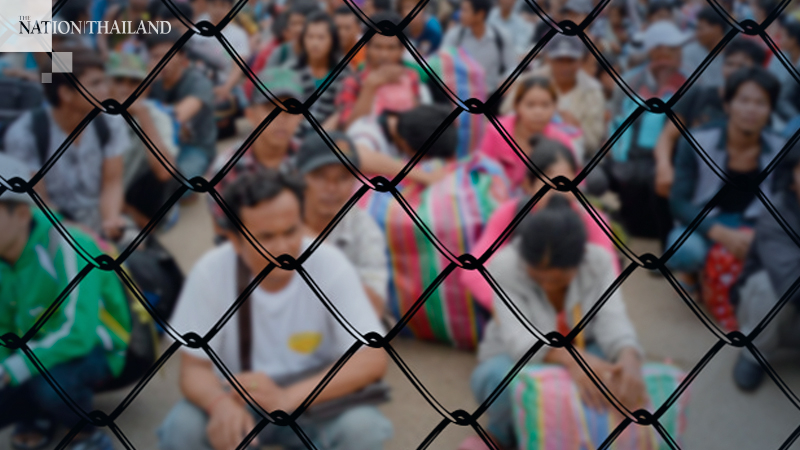
PETALING JAYA: The government has reiterated its call to everyone, including undocumented migrants, who attended the tabligh gathering at Sri Petaling Mosque last month to voluntarily come forward and screen for Covid-19.

Senior minister Datuk Seri Ismail Sabri Yaakob (pic) said the illegal migrants should not be worried about their status as the government has agreed not to make it an issue but would instead focus on curbing the pandemic.

“I have discussed (this) with the Inspector-General of Police (IGP) earlier. Even if there are migrants including Rohingya or others who do not have valid travel documents, what is important now is for them to come forward without any fear.

“We will not focus on their documents but rather on whether they are Covid-19 positive.

“We want to vet them. The most extreme case that could happen is only that we quarantine them; that is all, ” he said in a televised conference on Sunday (March 22).

Health director-general Datuk Seri Noor Hisham Abdullah had earlier confirmed another death, a doctor from Hospital Tuanku Fauziah (HTF), saying that the total number of deaths due to Covid-19 in the country now stood at nine.

Ismail said there were still those who refused to voluntarily come forward to get tested.

“We want to protect their health, as well as that of their family members.

“This is because there had been reports of death not just of the tabligh members but also their family members. Please do not be scared, ” he said.

Bhutan rejoices the birth of Royal Child #ศาสตร์เกษตรดินปุ๋ย

#ศาสตร์เกษตรดินปุ๋ย : ขอบคุณแหล่งข้อมูล : หนังสือพิมพ์ The Nation

https://www.nationthailand.com/ann/30384497?utm_source=category&utm_medium=internal_referral

Bhutan rejoices the birth of Royal Child

Mar 20. 2020
By Tshering Palden ,Kuensel/ ANN

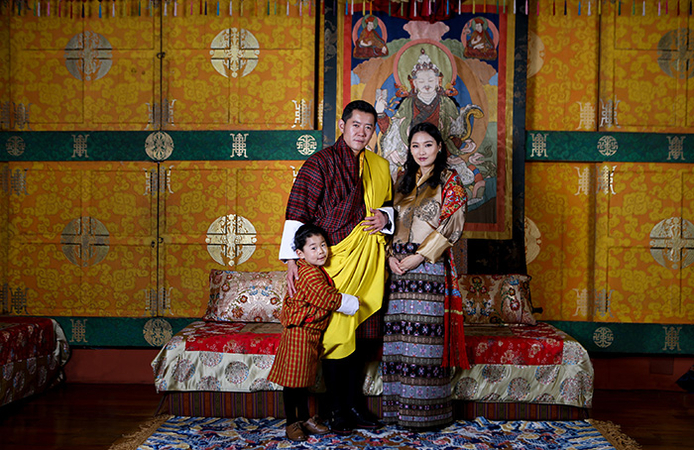
The second Royal Child of Their Majesties The King and Queen, a prince, was born yesterday, on March 19, coinciding with the 25th day of the first month of the Male Iron Rat year.

His Royal Highness was delivered safely at the Lingkana Palace in Thimphu.

A news release from the Royal Office for Media stated that Her Majesty and the royal baby were in good health, and His Royal Highness The Gyalsey was delighted to meet his younger brother.

“Their Majesties express their gratitude to the medical team, the Zhung Dratshang and to everyone for their well-wishes and prayers,” the news release stated.

“While this remains a very happy occasion for the Royal family and the nation and people of Bhutan, Their Majesties wish to remind all Bhutanese to be mindful, responsible and supportive to each other in the wake of the Covid-19 virus.”

The release also stated that Their Majesties have everyone whose lives have been affected by this global pandemic in their thoughts and prayers.

Leaders and citizens alike poured their good wishes for the good health of Her Majesty The Gyaltsuen and the Royal Prince and expressed their happiness.

Prime Minister Dr Lotay Tshering said that the successful birth of the second Royal Prince was the result of the collective prayers and aspirations of the Bhutanese people and reassuring indication of the continuity of the destined Wangchuck Dynasty.

“Like the arrival of a new member bringing joy to every family, the birth of the second Royal Child enlivens hopes and bliss of every Bhutanese, across the world,” he said. “On behalf of the people of Bhutan, I offer our humble prayers and gratitude.”

Opposition Leader Pema Gyamtsho (PhD) said, “I cannot think of a better time for this wonderful news on the arrival of our second Gyalsey not just for us Bhutanese, but also for the global community at large. The birth of the Royal Child gives us all reason to believe and look forward to a better and brighter future ahead.”

Parliament Speaker Wangchuk Namgyel said, “Even as we realise just how important the Yab-Sey archetypal relationship is to our collective folk memories, we are blessed with yet another precious jewel.”

“I join the nation to offer my humble Tashi Delek to our beloved His Majesty The King and Her Majesty The Gyaltsuen. We cannot buy happiness. Happiness is born to us!”

“The news of the birth of the Royal Child brings warmth, happiness and light into the lives of the Bhutanese.”

Most of the people Kuensel spoke to said that it was news of hope and lifted their spirits during this tense period following the Covid-19 pandemic.

A 77-year-old from Paro, Bidha upon hearing the news of the Royal Child’s birth said a prayer: “With the birth of the Prince, may the country be blessed with peace, harmony, and prosperity.” She said that she was extremely happy for His Royal Highness the Gyalsey Jigme Namgyel because the crown price’s wish of having a sibling to play had been fulfilled.

At an annual Lochay in Haa, people joyfully shared the news and happiness, showering blessings to the newborn Prince’s good health and long life.

“I pray that with the birth of the Prince, the pandemic subsides. We are grateful that the Prince was born healthy.”

Dorji Gyeltshen, who runs a restaurant in Phuentsholing, said, “In this troubled time, when the country could lockdown, when families are tense, business is down because of the coronavirus, the birth of the Royal Child is such comforting news. It brings peace and happiness.”

Indian External Affairs Minister Subrahmanyam Jaishankar, on behalf of his country and the people, tweeted congratulating Their Majesties and the people of Bhutan.

“Hearty congratulations to His Majesty Jigme Khesar Namgyel Wangchuck, Her Majesty The Gyaltsuen, His Royal Highness The Gyalsey and the Royal Family on being blessed with the birth of the Second Royal Child. India joins the people of Bhutan in rejoicing on this happy occasion.”

Meanwhile, 14 babies were born in Mongar, Gelephu and JDWNRH hospitals yesterday.

“I am wordless. The day is special and my daughter will cherish her birthday,” a new mother, Tshering Wangmo said.