Thais roll out the red carpet for Mazu visit

ศาสตร์เกษตรดินปุ๋ย : ขอบคุณแหล่งข้อมูล : หนังสือพิมพ์ The Nation

https://www.nationthailand.com/ann/30378643?utm_source=category&utm_medium=internal_referral

Thais roll out the red carpet for Mazu visit

Nov 22. 2019
Followers prepare to move the statue of Mazu out of the Meizhou Mazu Ancestral Temple.[Photo/Xinhua]

Followers prepare to move the statue of Mazu out of the Meizhou Mazu Ancestral Temple.[Photo/Xinhua]
By China Daily

464 Viewed

Statue of China’s famous sea goddess from Fujian is warmly welcomed in Bangkok by enthusiastic followers.

BANGKOK-On Sunday morning, Lin Guiying, a Thai Chinese, got up at 6 am, put on a red shirt, and jumped onto a vehicle headed for Bangkok more than 90 kilometers away.

“Since I was a child, my mom told me many stories about Mazu,” the enthusiastic traveler said.

Lin later joined thousands of people dressed in red on the streets of the Thai capital. They beat drums and gongs and performed lion dances to welcome and pay tribute to a special visitor-Mazu, China’s most influential sea goddess.

Amid camera flashes and the gaze of onlookers, a Boeing 787 Dreamliner departed from the coastal city of Xiamen, Fujian province, on Thursday morning. Aboard the flight was a unique passenger-a statue of the goddess Mazu, which was on its first trip to Thailand at the invitation of local worshippers.

The human-sized wooden statue, dressed in an embroidered robe and a crown decorated with jewels, is a revered icon from the ancestral temple of Mazu located on Meizhou Island, Putian.

The Meizhou Mazu version is the most worshipped statue among Mazu’s followers.

During her stay in Thailand from Thursday to Tuesday, the Mazu statue was paraded for a number of cultural exchange activities involving local communities.

Followers carry the statue of the goddess Mazu as it leaves the Meizhou Mazu Ancestral Temple on Meizhou Island, Fujian province, for its journey to Thailand on Nov 13. [Photo/Xinhua]

Followers carry the statue of the goddess Mazu as it leaves the Meizhou Mazu Ancestral Temple on Meizhou Island, Fujian province, for its journey to Thailand on Nov 13. [Photo/Xinhua]

“More and more people in Thailand are getting interested in the Mazu culture, and through Mazu they are gaining a deeper understanding about the Chinese culture,” said Wu Hongyan, vicechairman of Thailand Quanzhou Jinjiang Union, who escorted the Mazu statue to Bangkok.

Noting that Mazu enjoys widespread popularity in Thailand, Arrun Boonchai, assistant permanent secretary at Thailand’s Ministry of Tourism and Sports, said at the welcoming ceremony he appreciated that he and his compatriots could see Mazu in person.

Arrun added that he hoped such activities would increase cultural exchanges between Thailand and China.

Also a human

Ferried across the sea, carried by bus and flown economy class-the journey of the revered goddess’ statue to Thailand was a reminder to many people that Mazu was once an ordinary human.

Mazu was a young woman named Lin Mo who is believed to have lived during the 10th century on Meizhou Island, where she dedicated herself to helping people in need. She died at the age of 27 attempting to rescue shipwreck victims.

She was deified, and locals regarded her as the goddess of the sea who could bring peace, wealth and good luck. Before heading to the sea, sailors and fishermen would venerate her statue and pray for her protection, in the hope they would return home safely and with a big catch.

Stories about Mazu bringing safety, harmony and prosperity were told among her followers for more than 1,000 years.

“Mazu is a goddess, and is also a human,” said Zhou Jinyan, deputy secretary-general of the Chinese Mazu Cultural Exchange Association. “We accept Mazu as a member of our family.”

To her followers, Mazu is an inspiration to many to overcome hardships during sea voyages, and she represents the spirit of integrity, benevolence and love, Zhou said.

The statue of Mazu is paraded on Meizhou Island before leaving for Xiamen, Fujian.  [Photo/Xinhua]

The statue of Mazu is paraded on Meizhou Island before leaving for Xiamen, Fujian. [Photo/Xinhua]

Beyond ChinaAs trade flourished in ports along the ancient Maritime Silk Road, more and more Chinese people ventured out to the sea, taking silk, china, tea, and their belief in Mazu to lands beyond their own shores. Mazu is now estimated to have more than 300 million followers in 46 countries and regions around the world. In 2009, Mazu belief and customs were placed on the UNESCO Representative List of the Intangible Cultural Heritage of Humanity.

Visitors attend a ceremony held for the statue of Mazu in Bangkok, on Friday.

Visitors attend a ceremony held for the statue of Mazu in Bangkok, on Friday.

In 2013, China proposed building the 21st Century Maritime Silk Road. Zhou said Mazu plays “the role of a cultural bond” in connecting the peoples of China and Southeast Asian countries along the Maritime Silk Road.

To further spread Mazu’s spirit, since 2017 the Meizhou Mazu Ancestral Temple has initiated a cultural exchange campaign by arranging foreign visits for the Mazu statue to countries along the Maritime Silk Road.

“Mazu’s followers include people of different colors and with different religious backgrounds,” Zhou said, adding that the goddess “gained their faith for her inclusiveness and advocating peace”.

Mazu visited Singapore and Malaysia in 2017, and the Philippines last year.

No military exemption for BTS under new government proposal

ศาสตร์เกษตรดินปุ๋ย : ขอบคุณแหล่งข้อมูล : หนังสือพิมพ์ The Nation

https://www.nationthailand.com/ann/30378606?utm_source=category&utm_medium=internal_referral

No military exemption for BTS under new government proposal

Nov 21. 2019
Idol Group BTS (Big Hit Entertainment) Photo Credit: The Korean Herald

Idol Group BTS (Big Hit Entertainment) Photo Credit: The Korean Herald
By Jo He-rim
The Korea Herald/ANN

673 Viewed

SEOUL – Exemptions from mandatory military service to be reduced due to shortage of eligible population. K-pop group BTS will not be exempted from military duty, the government said Thursday, announcing a new amendment to the military service law.

All able-bodied young Korean men are required to serve in the military for about two years, with limited exemptions offered for those with outstanding achievements in sports and arts that “raise the national profile,” under the Military Service Act.

There have been criticisms that the exemption system is unfair in excluding pop musicians, such as the members of BTS, which has topped the Billboard 200 albums chart more than once.

Announcing a revision to the military service law, the government reiterated its position that BTS and other pop stars will still be subject to military service, as it seeks to reduce the exemption system due to a shortage of people eligible for national service.

“We came to review this system to reduce the number of exemptions in the first place, so we did not at all consider expanding exemptions,” Lee Nam-woo, chief of the Defense Ministry’s personnel welfare office, said in the joint briefing by a number of ministries on Thursday.

“We also believe that military duty will not hurt the talents of popular performers so critically that they cannot perform anymore.”

In the announcement, Lee said the government would reduce the quota for the exemption system and enforce stricter conditions for eligible sports and arts personnel.

Before the joint briefing, Prime Minister Lee Nak-yon explained that it was “inevitable” to scale down the exemption system.

“There have been many controversies over the exemption system,” Prime Minister Lee said after a Cabinet meeting where the revision plan was passed.

“We could not overlook this problem any longer and we found it inevitable to reduce the exemption system.”

The controversies he cited concern whether the government can maintain the policy in light of a low birthrate that reduces the population eligible for military duty, the fairness of the system and whether the expert personnel who are placed on alternative duty are serving at appropriate places to produce the expected results.

The Military Service Act allows for special duties to enable qualified people to continue their careers while carrying out military service, such as researchers and specialist technicians.

Military service exemptions are given to qualified athletes and artists: who win a gold medal at the Asian Games or medals of any type at the Olympics, artists who win second place or higher at certain international arts competitions and top placers at an arts competition in South Korea.

Under the amendment, the government will incrementally reduce the number of people eligible for exemption — not including athletes and artists — from 2022 to 2026, by which time those receiving exemptions will be reduced by 20 percent, from the current 7,500 to 6,200.

The quota for athletes and artists will not be reduced, as only an average of about 45 receive exemptions annually, the government said. Instead, it will come up with stricter conditions by reducing the number of competitions or games that qualify for exemptions.

For athletes, stricter, more transparent rules will be applied in selecting players for national teams.

While the exemption has so far been granted only to those actually involved in a competition, all members of a winning team will be entitled to exemption under the revised law.

It is not unusual for Korean national teams to field members to take part in a winning game for even a minute, as that would qualify the player for exemption from military service.

“In some cases, people would joke about ‘1-minute play for military exemption,’ and the whole exemption system and the national team players would be ridiculed. We sought to prevent that,” a Defense Ministry official said.

The government formed a task force of related ministries for the revision of the Military Service Act in December last year. This is the first time that an agreement has been reached since discussions began in 2002, according to Lee.

Source(s)

South Korea, US in defence cost-sharing standoff

ศาสตร์เกษตรดินปุ๋ย : ขอบคุณแหล่งข้อมูล : หนังสือพิมพ์ The Nation

https://www.nationthailand.com/ann/30378599?utm_source=category&utm_medium=internal_referral

South Korea, US in defence cost-sharing standoff

Nov 21. 2019
By The Korea Herald
Asia News

572 Viewed

Differences between South Korea and the United States over how much Seoul should pay for the upkeep of the 28,500 US troops stationed here have come to the fore, with the two sides cutting short their meeting on Tuesday.

“There was a considerable difference between proposals of the US and the South in principle,” Jeong Eun-bo, South Korea’s top negotiator, said at a regular briefing.

The US negotiation team, led by James DeHart of the State Department, left the negotiating table earlier than planned on the second day of talks with the South Korean delegation in Seoul for the 11th Special Measures Agreement (SMA), the two sides’ defence cost-sharing accord, according to the Foreign Ministry.

The meeting was scheduled to take place from 10am to 5pm, but it was cut short before noon.

Jeong said the US side has not brought up the issue of the possible withdrawal or reduction of United States Forces Korea troops since the talks began in September, brushing off concerns being raised after Trump’s previous remarks that he is willing to pull out troops from allies whose contributions fall short of his expectations.

“The US side holds the position that the share of the defence cost could increase drastically by establishing a new article (in the cost-sharing deal), while our side maintains the increase should be within the range that is mutually acceptable within the framework of the SMA that the South and the US have agreed on over the last 28 years,” the ministry said in a press release.

The US has pushed for South Korea to pay around $5 billion next year — five times the $924 million that Seoul agreed to shoulder this year — adding new categories, which reportedly include the costs of joint military exercises and rotational forces of the USFK.

South Korea has insisted that the negotiations stick to the SMA’s current framework, which includes the cost categories comprising personnel, military construction and logistical support.

“In any case, our side plans to do our best to ensure we will take a fair share at a reasonable level that contributes to strengthening the South Korea-US alliance and the combined defense posture,” the ministry said.

During a separate press conference after the meeting, DeHart said he had come to Seoul with an open mind to reach a mutually acceptable agreement but South Korea’s proposals fell short of expectations.

“Unfortunately, the proposals that were put forward by the Korean team were not responsive to our request for fair and equitable burden sharing,” he said.

“As a result, we cut short our participation in the talks today in order to give the Korean side some time to reconsider, and I hope to put forward new proposals that would enable both sides to work towards a mutually acceptable agreement in the spirit of our great alliance.”

With Tuesday’s setback, it is uncertain whether the two countries will be able to reach an agreement before the 10th SMA expires on December 31.

On Friday, US Defence Secretary Mark Esper said that South Korea should pay more to offset the cost of defence, as it is a wealthy country. He added that around 90 per cent of the funds stay in South Korea.

Cambodia concerned over Thai plans to boost rubber exports

ศาสตร์เกษตรดินปุ๋ย : ขอบคุณแหล่งข้อมูล : หนังสือพิมพ์ The Nation

https://www.nationthailand.com/ann/30378540?utm_source=category&utm_medium=internal_referral

Cambodia concerned over Thai plans to boost rubber exports

Nov 20. 2019

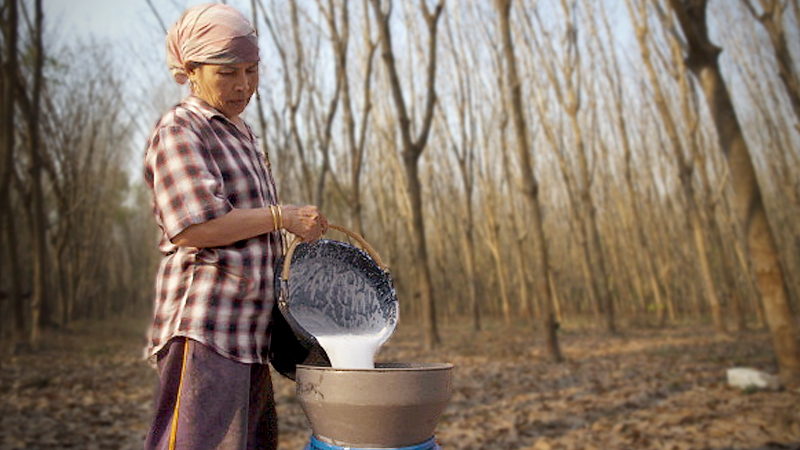
A Thai farmer pours rubber sap collected from trees on her and her husband's rubber plantation in Rayong, Thailand. Photo: Getty Images

A Thai farmer pours rubber sap collected from trees on her and her husband’s rubber plantation in Rayong, Thailand. Photo: Getty Images

By The Phnom Penh Post
Asia News Network
Phnom Penh

139 Viewed

Cambodian rubber growers and exporters have expressed concern that prices will continue to fall as Thailand seeks to boost its natural rubber exports, industry insider Men Sopheak said.


In March, the International Tripartite Rubber Council (ITRC), which comprises Thailand, Indonesia and Malaysia, agreed to reduce rubber exports by about 240,000 tonnes from late May to late September to buoy local prices, Reuters reported last week.

The three Southeast Asian neighbours, who produce 70 per cent of the world’s natural rubber, ended up slashing exports by 441,648 tonnes during the period.

Thai Commerce Minister Jurin Laksanawisit told a conference of reporters and rubber growers on Wednesday that Thailand would boost natural rubber exports to increase incomes for the latter following implementation of the four-month curb agreement, Reuters reported.

“Thailand negotiated the sale of 260,480 tonnes of rubber to two private companies in China and Hong Kong,” he said. “This agreement should be worth not less than Bt13 billion [US$429 million].”

Sopheak, who is the owner and director of Sopheak Nika Investment Agro-Industrial Plants Co Ltd, a leading rubber grower and exporter that employs nearly 5,000 workers, said Thailand and the ITRC’s moves will affect Cambodia’s rubber value and production as the Kingdom has limited ability to compete with its neighbours.

“We are concerned that when all the major countries increase their sales of rubber products, it will bring down the price of our rubber, as the cost of production in Cambodia is higher than in Thailand, Malaysia and Indonesia.

“If we look at recent global demand and supply of rubber, we see that the supply of natural rubber is increasing while demand has decreased from 1.5 million tonnes to less than one million tonnes on the global market,” he said.

The average price of rubber is currently about $1,400 per tonne at Saigon Port in Ho Chi Minh City, Vietnam, he said, adding that as of last month, his company exported more than 10,000 tonnes of rubber this year – up 15 per cent from the same period last year.

“I call on the government to encourage rubber growers and producers by easing export taxes,” he said.

Department of International Marketing and Cooperation deputy director Horn Saphan told The Phnom Post on Sunday that Thailand will boost its rubber exports to react to an oversupply of global market demand.

However, he said global rubber prices would remain unchanged over the next few years.

“Our rubber production for export is minimal compared to the big three countries [of the ITRC], and now we rely on exports due to a lack of a local market, as [the Kingdom] does not use rubber in the industrial sector [such as] car tyre production,” he said.

Khoun Phalla, the director of Cambodia’s General Directorate of Rubber’s Administration and Legal Department, said Cambodian rubber exports in the first nine months of this year reached 173,072 tonnes worth $231 million, up almost 22 per cent year on year from about $190 million.

The directorate’s rubber data shows that it was grown on more than 230,000 hectares during the first nine months of this year, with total rubber plantations in the Kingdom measuring 434,552 hectares.

A Cambodian Ministry of Agriculture, Forestry and Fisheries report showed that Cambodia exported 210,000 tonnes of rubber last year, worth about $300 million.

Myanmar puts onus on Bangladesh to resolve Rohingya crisis

ศาสตร์เกษตรดินปุ๋ย : ขอบคุณแหล่งข้อมูล : หนังสือพิมพ์ The Nation

https://www.nationthailand.com/ann/30378538?utm_source=category&utm_medium=internal_referral

Myanmar puts onus on Bangladesh to resolve Rohingya crisis

Nov 20. 2019

Rohingya children are seen at a camp near Cox's Bazar in Bangladesh in Camp 4 in Kutupalong, Ukhiya, the largest refugee camp in the world where over 700,000 Rohingya refugees live. Photo: Getty Images

Rohingya children are seen at a camp near Cox’s Bazar in Bangladesh in Camp 4 in Kutupalong, Ukhiya, the largest refugee camp in the world where over 700,000 Rohingya refugees live. Photo: Getty Images

By Eleven Media Group
Asia News Network
Yangon

210 Viewed

Just taking legal action against Myanmar and putting global pressure on Myanmar cannot settle the ongoing issue of Rohingya refugees in Bangladesh, Saw Htay, spokesperson at the Myanmar President’s Office, said.

Bangladesh should follow the repatriation process agreed to by both sides, Zaw Htay said.

“The international community is putting pressure on Myanmar regarding the repatriation process. The ICC [International Criminal Court] is suing Myanmar. The complex issue remains in Bangladesh,” Zaw said, adding, “Bangladesh should use a problem-solving approach. The problem can’t be settled by suing Myanmar. We will have to negotiate the problem with Bangladesh.”

Zaw Htay said Bangladesh should follow the repatriation process and cooperate with Myanmar according to the bilateral agreement. Our problem will continue as long as Bangladesh doesn’t cooperate. Bangladesh needs to understand this point,” said Zaw Htay.

There were those who fled to Bangladesh from Myanmar in 1993. “Collaborative efforts resulted in success in the repatriation process. Cooperative measures are of great importance. The repatriation process remained deadlock as Bangladesh failed to cooperate. Only through collaborative efforts can the problem be solved,” Zaw Htay said.

“Bangladesh and Myanmar have twice carried out the repatriation process in the past. According to this knowledge, mutual cooperation can solve the problem and these were examples. Both sides have physical arrangements to implement the agreed points. Working groups have already been formed. The root cause of the unsuccessful repatriation process is that Bangladesh has failed to cooperate,” said Zaw Htay.

Myanmar and Bangladesh have met for discussions at the ministerial level to step up the repatriation process. “We  held tripartite discussions with the foreign minister of China acting as witness, said Zaw Htay. “And lastly, we held discussions at the UN General Assembly where the Secretary-General of the United Nations, the Chinese representative, Union Minister Kyaw Tin Swe and the Bangladeshi minister attended and discussed the repatriation process. A promise on when to start the repatriation process was given in the presence of China. We thought it will be implemented. Our side well-prepared for this, but it did not come true,” said Zaw Htay.

Displaced persons returning to Myanmar from April 14, 2018 to November 14, 2019 totalled 415.

“Cooperation from Bangladesh is of great importance and Bangladesh needs have a sense of neighbourliness. If Bangladesh doesn’t have a sense of cooperation, the humanitarian crisis will become worse and worse. Who is responsible for the unsuccessful repatriation process depends on Bangladesh. Our side has already prepared for it,” said Zaw Htay.

First drop of oil from Apsara by mid-2020: Hun Sen

ศาสตร์เกษตรดินปุ๋ย : ขอบคุณแหล่งข้อมูล : หนังสือพิมพ์ The Nation

https://www.nationthailand.com/ann/30378508?utm_source=category&utm_medium=internal_referral

First drop of oil from Apsara by mid-2020: Hun Sen

Nov 19. 2019
By The Phnom Penh Post
Asia News Network
Phnom Penh

723 Viewed

Cambodian Prime Minister Hun Sen on Monday confirmed that Cambodia will extract the first drop of oil from the Apsara oilfield in Cambodia’s offshore Block A by mid-2020.

He said this during a graduation ceremony for the Human Resource University, which was held at the National Institute of Education in Phnom Penh.

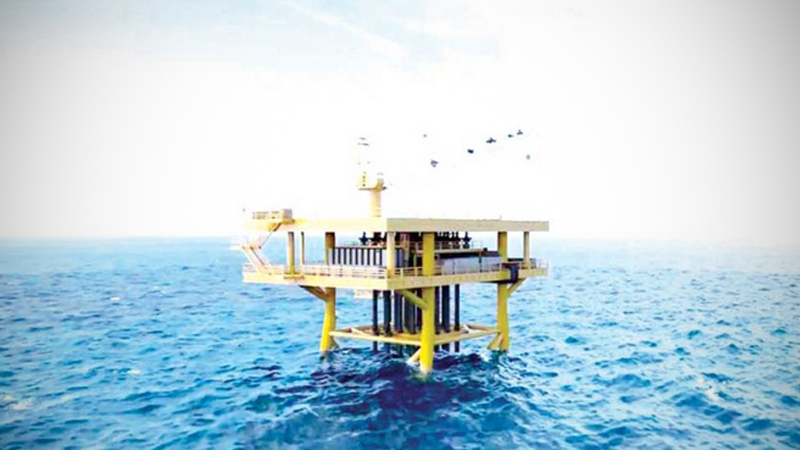
Last week, Singapore-based KrisEnergy Ltd – which operates Block A – announced that its wholly owned subsidiary KrisEnergy (Apsara) Co Ltd had signed a conditional letter of award with PT Profab Indonesia for the supply of a minimum facilities wellhead “mini-platform” for the Apsara oilfield – Cambodia’s maiden oil development.

“This development phase, Mini Phase 1A, comprises the mini-platform and five initial development wells connected to the Ingenium II production barge for oil, gas and water processing. Shuttle tankers will transport crude oil from the barge,” the firm said.

The Apsara oilfield in Cambodia’s offshore Block A lies over the Khmer Basin, an unproduced geological area in Cambodian waters in the Gulf of Thailand, it said.

“Apsara oil is scheduled to flow in the first half of 2020, and the field is expected to reach a peak rate of 7,500 barrels of oil per day.”

Hun Sen said: “Now our first drop of oil will be extracted by 2020, but on a specific date I will have to confirm. They [KrisEnergy] are working with the company [Profab], which is building equipment to extract our first oil.”

The Ministry of Mines and Energy’s General Department of Petroleum director-general Cheap Sour said: “We expect that if the price of the oil is in the $80 per barrel range, the government will receive approximately $900 million in revenue from the Block A development project over nine years.”

KrisEnergy investor relations and corporate communications vice-president Tanya Pang told The Phnom Post last week that Profab will fabricate and construct the jacket – the legs of the platform – and the topsides for the Apsara mini-platform.

“Once constructed, it will be sailed out to the Apsara oilfield location, where it will be installed and hooked up to the production barge, with the development wells drilled.

“This is the first phase of the development and is designed to produce the field and monitor the reservoir performance most efficiently and effectively before we progress to the further development of the Apsara area.

“As it states in the announcement, Apsara oil is scheduled to flow in the first half of 2020,” Pang said.

In July, KrisEnergy completed a 1,200sq km 3D seismic survey of Block A on time and without any health, safety or environmental incidents, it said. Shearwater Geoservices Singapore Pte Ltd had been awarded the turnkey broadband seismic contract through KrisEnergy (Apsara).

Shearwater Geoservices deployed its vessel, the SW Vespucci, to carry out the survey.

“The data will provide valuable information of the subsurface over two distinct areas – partially the Apsara development area and also a large portion of Block A where there has been very little data so far and has good potential for further hydrocarbon discoveries,” Pang told The Phnom Post.

KrisEnergy owns 95 per cent of the Apsara oil field in Block A, while the Cambodian government owns the remaining five per cent.

Cambodia Block A covers 4,709 square kilometres in the Gulf of Thailand over the Khmer Basin and is approximately 150km off the Kingdom’s shores, with water depths ranging from 50-80 metres.

Malaysia won’t go to WTO yet over EU palm oil trade barriers: Mahathir

ศาสตร์เกษตรดินปุ๋ย : ขอบคุณแหล่งข้อมูล : หนังสือพิมพ์ The Nation

https://www.nationthailand.com/ann/30378507?utm_source=category&utm_medium=internal_referral

Malaysia won’t go to WTO yet over EU palm oil trade barriers: Mahathir

Nov 19. 2019

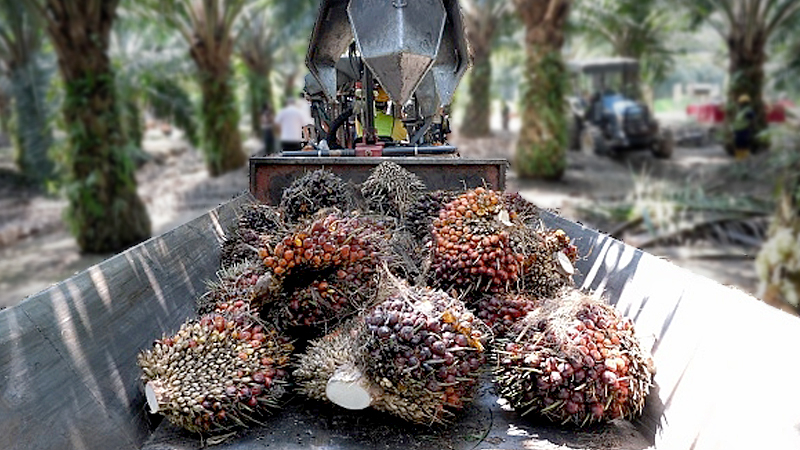
Palm oil fruit are seen inside the tractors at the Sime Darby Plantations on February 25 in Carey Island outside Kuala Lumpur. Photo: Getty Images

Palm oil fruit are seen inside the tractors at the Sime Darby Plantations on February 25 in Carey Island outside Kuala Lumpur. Photo: Getty Images

By The Star
Asia News Network
Kuala Lumpur

571 Viewed

Malaysia will not take the issue of discriminatory trade barriers by the European Union (EU) against palm oil to the World Trade Organisation (WTO) yet as some of the EU countries had responded positively to Malaysia’s defence, Prime Minister Mahathir Mohamad said.


The premier said some EU countries had accepted Malaysia’s palm oil and had expressed their desire to buy palm oil.

“Until we find very positive discrimination, we will not act,” he said at a press conference after launching the MPOB International Palm Oil Congress and Exhibition (Pipoc 2019) on Tuesday (November 19).

Asked whether the actions by the EU so far were discriminatory, he said: “We have made a lot of announcements, and they seem to be convinced by what we are saying.”

In his speech, Mahathir said that Malaysia and other palm oil countries were stepping up efforts among global stakeholders to disseminate accurate information about sustainable oil palm plantations and to counter false allegations concerning palm oil with facts.

“Despite our best efforts, if certain importing countries choose to impose discriminatory trade barriers against palm oil-producing countries, we must not keep silent nor hesitate to take countermeasures.

“If there is any evidence that such discriminatory trade practices are in violation of any international laws, Malaysia and other producing countries under the Council of Palm Oil Producing Countries must seek intervention from the WTO,” he said.

At the press conference, Primary Industries Minister Teresa Kok said that a Cabinet paper on whether to bring the case to the WTO was now in circulation among some ministries and would be presented to the Cabinet for a decision soon.

Mahathir’s press conference halted after PM bleeds from nose

ศาสตร์เกษตรดินปุ๋ย : ขอบคุณแหล่งข้อมูล : หนังสือพิมพ์ The Nation

https://www.nationthailand.com/ann/30378504?utm_source=category&utm_medium=internal_referral

Mahathir’s press conference halted after PM bleeds from nose

Nov 19. 2019

By The Star
Asia News Network
Kuala Lumpur

591 Viewed

A press conference by Malaysian Prime Minister Dr Mahathir Mohamad was stopped abruptly after the Malaysian premier started bleeding from his nose.


While taking questions from journalists at the MPOB International Palm Oil Congress and Exhibition 2019, Mahathir was seen wiping his nose with a handkerchief after answering a few questions.

Mahathir’s escorts then ushered the 94-year-old prime minister away.

One of his officers who declined to be named confirmed that his nose bled but only for a short while.

“Yes, his nose bled for a short while only. The bleeding has stopped.

“Now, he has resumed work at his office in Putrajaya. He is all right, ” said the aide.

Wide disparity in China’s regional GDP growth rate

ศาสตร์เกษตรดินปุ๋ย : ขอบคุณแหล่งข้อมูล : หนังสือพิมพ์ The Nation

https://www.nationthailand.com/ann/30378458?utm_source=category&utm_medium=internal_referral

Wide disparity in China’s regional GDP growth rate

Nov 18. 2019
The growth rates of China's province-level Gross Domestic Product in the first three quarters see marked disparity. [Photo/IC]

The growth rates of China’s province-level Gross Domestic Product in the first three quarters see marked disparity. [Photo/IC]
By China Daily/ANN

820 Viewed

The growth rate of province-level Gross Domestic Product (GDP) in the first three quarters saw marked disparity, as per the latest statistics released recently by the 31 provincial-level administrative bodies, the China Securities Journal reported.

The top five GDP growth regions led by Yunnan maintained an 8 percent growth while the GDP growth rate of Jilin, one of the three provinces in Northeast China, plummeted below 2 percent. Changchun, the capital city that contributed half of Jilin’s GDP, recorded zero growth rate in the first three quarters.

Yunnan recorded an 8.8 percent growth rate, followed by Guizhou, Tibet, Jiangxi and Fujian.

The last five were Jilin, Heilongjiang, Tianjin, Shandong and Hainan. Among them, Jilin registered the lowest GDP growth rate of 1.8 percent, and the third-largest province Shandong in terms of GDP amount slowed down with a growth rate of 5.4 percent, widening its gap with Guangdong and Jiangsu.

But Heilongjiang, ranked second from the bottom, drew a different picture, recording a 4.3 percent growth rate, flatting that over the same period of last year.

In spite of the regional GDP performance, China is set to launch unified regional GDP calculation from next year, according to the National Bureau of Statistics on Nov 13. The first three quarters GDP calculation in 2019 is the last calculation by provincial level administrative bodies, which has been carried out since 1985.

The Vice-Chairman of China’s National Development and Reforms Commission, also head of the National Bureau of Statistics Ning Jizhe said the unified regional GDP calculation is aimed at improving data quality and public trust on government statistics.

http://www.chinadaily.com.cn/a/201911/18/WS5dd20dbea310cf3e355780f8.html

Bon Appetit! Katy Perry enthralls fans with her Firework

ศาสตร์เกษตรดินปุ๋ย : ขอบคุณแหล่งข้อมูล : หนังสือพิมพ์ The Nation

https://www.nationthailand.com/ann/30378437?utm_source=category&utm_medium=internal_referral

Bon Appetit! Katy Perry enthralls fans with her Firework

Nov 17. 2019
(File Photo: IANS)

(File Photo: IANS)
By The Statesman/ANN

446 Viewed

With over 25,000 fans, pop icon Katy Perry’s mesmerising performance blew the audience away at the OnePlus music festival held at the DY Patil Stadium in Navi Mumbai.

On Saturday night, after seven years, Katy performed in India. She had previously performed at the opening ceremony of 2012 Indian Premier League in Chennai.

“I was overwhelmed with the energy and love I felt as I performed. I had goosebumps when they sang along with me to their favorite songs. I could not have asked for more, Katy Perry said at the OnePlus music festival

“I am told this is your winter. And, knowing about the money and traffic, you should give yourself a round of applause. We love you and that’s why we are here,” Katy added.

During her performance, Katy also told the gathering:”We never want to forget you. It has been seven years since I was last in India. I can’t believe myself. Look at how many people showed up. So, it is not going to be seven more years for me to come back.”

Before she hit the stage, Dua Lipa, Amit Trivedi, Ritviz, The Local Train and As we keep searching entertained the audience at OnePlus Music Festival.

The roar came when it was time for Katy to take the stage.

Taking the evening to a crescendo, Katy Perry wrapped up her performance with her hit single “Firework” accompanied by a stellar pyrotechnic show.

During the show, pop sensation Dua Lipa said: “The show tonight was absolutely amazing. This was my first gig in India and the vibe and energy of the fans blew me away! I can’t wait to come back soon.”

The crowd cheered as pop icon Dua Lipa took center stage. Keeping the momentum going, India’s Hindustani EDM music prodigy Ritviz got crowds singing along to his most acclaimed single “Udd Gaye”.

During the festival IANS took reactions from some of the fans at the festival:

Sahib Singh from Gurugram, Haryana travelled to Mumbai to see Katy Perry and Dua Lipa.

He told IANS: “It’s been a fun time here, I have been here since 4 p.m. I would like to say it’s worth it. Totally great.”

Sharing the experience at OnePlus music festival, Kulesh said that he travelled from Punjab to Mumbai to enjoy the musical sensations.

“I’m enjoying every moment here. Ritviz was awesome and Dua’s performance was incredible.

He added that Katy is performing right now and it’s electrifying atmosphere here.

“I love this, can’t believe Katy is performing right in front of me.”

The 14-year-old, Gayatri, who travelled from Delhi to Mumbai to with her family, told IANS: “I really enjoyed the festival. This is the first concert of my life.

“Me and my brother is big fans of Katy Perry. But honestly, we loved Dua’s performance more. She rocked it today.”

Karan (16) from Mumbai said that this festival was absolutely amazing.

“All the artists are exceptionally talented. I had a fantastic night here This is high-quality music. I and my friends had a great time here. Thanks, Katy and Dua for coming down here to entertain us. We love you,” Karan said.

Speaking on the occasion, Vikas Agarwal, General Manager, OnePlus India said that after months of planning, they were delighted with the response of the community to the first-ever OnePlus Music Festival.

“The community is at the core of everything we do. This festival was also conceptualised to give our users an immersive experience off the screen, beyond tech and there was no better way to celebrate than with the gift of music,” Vikas said.

“This is a strong start for us, and we hope to continue building on this,” he added.

https://www.thestatesman.com/entertainment/bon-appetit-katy-perry-enthralls-fans-firework-1502823004.html