HCM City eyes smart tourism development

ศาสตร์เกษตรดินปุ๋ย : ขอบคุณแหล่งข้อมูล : หนังสือพิมพ์ The Nation

https://www.nationthailand.com/ann/30375974

HCM City eyes smart tourism development

Sep 09. 2019
Nguyen Thien Nhan, secretary of the Party Committee for Ho Chi Minh City, speaks at an international conference on smart tourism development held in the city on September 7. VNA/VNS Photo My Phuong

Nguyen Thien Nhan, secretary of the Party Committee for Ho Chi Minh City, speaks at an international conference on smart tourism development held in the city on September 7. VNA/VNS Photo My Phuong
By VIET NAM NEWS
ASIA NEWS NETWORK
HCM CITY

362 Viewed

Smart tourism needs to be a component of HCM City’s “smart city” master plan, says its Party Committee secretary.

Nguyen Thien Nhan, speaking at an international conference on smart tourism development in the city on Saturday, said HCM City has a master plan which envisages its entire urban landscape becoming “smart”.

The city’s tourism sector needs to co-design a smart city “infostructure” with facilities creating better tourism experiences and increasing the competitiveness of the tourism sector, he said.

“In the next 10 years city authorities will focus on efforts to develop the tourism sector into a key driver of socio-economic development.”

The smart city master plan includes building e-government, a shared data warehouse, a socio-economic simulation and prediction centre, and a smart city management centre, he said.

By the end of this year the city would complete its tourism development master plan, which would have two major components, smart tourism and tourism linkages with the Cuu Long (Mekong) Delta region, he said.

Innovative thinking by businesses should be encouraged in developing smart tourism, which could result in the sharing of data in a way to enhance visitor experiences and offer mutual benefits, and this would require a public-private collaboration, he added.

According to Professor Perry Hobson of Sunway University in Malaysia, smart tourism development requires individual businesses, organisations and stakeholders to get out of their silos and share information.

While many tourism businesses have embraced digitisation with the creation of websites, connecting directly with the customer and creating new online business models, many of these services and the tourists themselves remain unconnected to either other electronic devices or to the physical world around them.

It is the arrival of the internet of things and inter-connectivity of devices that is expected to have the most significant impact on the services sector and tourism leading to smart tourism, he added.

Assoc Professor Tran Minh Triet, deputy principal of the University of Science in HCM City, said that tourism had experienced strong global growth in recent years with the application of artificial intelligence through tools such as automatic explanations, augmented reality, virtual reality, as well as 3D holograms, that are enhancing the visitors experience and the quality of service.

Experts say a smart tourism ecosystem is built on advanced technology to ensure links between the four stakeholders: destination management organisations, visitors, businesses and local people.

Smart tourism needs to have tourists as the focal point. At the same time it also has to turn each visitor into a sensor that provides inputs to the smart tourism ecosystem.

In recent years the city’s tourism industry has witnessed annual growth of 11-12 per cent.

Commercial alley promoting cultural heritage opens in Beijing

ศาสตร์เกษตรดินปุ๋ย : ขอบคุณแหล่งข้อมูล : หนังสือพิมพ์ The Nation

https://www.nationthailand.com/ann/30375961

Commercial alley promoting cultural heritage opens in Beijing

Sep 08. 2019
Gathering intangible cultural heritage and ethnic artworks, Hong Yun Fang, a commercial alley in Beijing, is designed to become a popular haunt for tourists as well as local residents. (PHOTO PROVIDED TO CHINA DAILY)

Gathering intangible cultural heritage and ethnic artworks, Hong Yun Fang, a commercial alley in Beijing, is designed to become a popular haunt for tourists as well as local residents. (PHOTO PROVIDED TO CHINA DAILY)
By Chen Nan
The China Daily/ Asia News Networks

217 Viewed

A commercial alley to promote intangible cultural heritage and ethnic artworks was inaugurated at the 22 International Art Plaza in downtown Beijing on Saturday.

The 1,000-meter-long alley, located near Beijing’s central business district, gathered around 40 booths featuring works of ethnic artists from across the country for its opening day.

Clad in traditional dress and headgear, ethnic Mongolian singer Morigen, who was born and raised in the Inner Mongolia autonomous region’s Alxa League, performed folk songs featuring Urtin Duu, or long song – an ancient form of folk-singing – as she opened the event.

Gathering intangible cultural heritage and ethnic artworks, Hong Yun Fang, a commercial alley in Beijing, is designed to become a popular haunt for tourists as well as local residents. (PHOTO PROVIDED TO CHINA DAILY)

Gathering intangible cultural heritage and ethnic artworks, Hong Yun Fang, a commercial alley in Beijing, is designed to become a popular haunt for tourists as well as local residents. (PHOTO PROVIDED TO CHINA DAILY)

Open on weekends, the alley, named Hong Yun Fang, is designed to become a popular haunt for tourists as well as people living in the capital, just like Panjiayuan Antique Market, a landmark for collectors and traders, and Nanluoguxiang, a busy south-north commercial street hidden among the hutong.

According to Wei Qing, co-initiator of the commercial alley, the goal is about trying to integrate intangible cultural heritage artworks into people’s daily lives.

“We will launch live performances, exhibitions and workshops that actually make that art and culture more accessible to people,” Wei says.

The 22 International Art Plaza, which is home to art pieces from the nearby Today Art Museum, one of the few private art museums in Beijing, as well as several coffee shops and restaurants, has become a popular location among young city dwellers.

The new commercial alley will reach people who “may not normally have access to intangible cultural heritage artworks or think about those cultural elements within our contemporary society,” says Yi Li, founder of Mammoth-Market, a partner company in the alley. The company has collaborated with over 30 artists listed as successors of national and provincial intangible cultural heritage since September, bringing their works to bigger cities in China.

“This kind of market will give those old skills and artworks a broader audience,” Yi says. “Since most people who come to our markets are of the younger generation, the products can hopefully get promoted on social media.”

One of the artists is Yang Hui, 32, who specializes in ta pian, or rubbings. She learned the technique from her father when she was a teenager. In 2010, she opened her own shop focusing on creative products related to ta pian.

With the products, such as traditional Chinese fans in various shapes and sizes, she displayed her techniques in her booth at the opening event.

“I loved going to museums when I was a child. The items from ancient times displayed in the museums made me wonder about their stories,” she recalls. “What I do now is simply translate something from the past to the present.”

https://www.chinadailyhk.com/articles/5/24/106/1567652598444.html?newsId=94218

Chandrayaan 2 lander’s location found on lunar surface: ISRO Chief

ศาสตร์เกษตรดินปุ๋ย : ขอบคุณแหล่งข้อมูล : หนังสือพิมพ์ The Nation

https://www.nationthailand.com/ann/30375960

Chandrayaan 2 lander’s location found on lunar surface: ISRO Chief

Sep 08. 2019
Chandrayaan-2 lift-off (File Photo: Twitter | ISRO)

Chandrayaan-2 lift-off (File Photo: Twitter | ISRO)
By The Statesman/Asia News Network

377 Viewed

India’s ambitious lunar mission faltered in the last leg on Saturday as Vikram lander lost its connection with the ISRO and left the nation anxious.

The lunar lander of Chandrayaan 2, Vikram has been located on the moon’s surface and the ground station is working to establish contact, ISRO chief K Sivan told news agency ANI today. ISRO had lost contact with Vikram on Saturday morning as the lander was attempting a historic soft landing near the south pole of the moon.

“We’ve found the location of lander Vikram on lunar surface and orbiter has clicked a thermal image of the lander. But there is no communication yet. We are trying to have contact. It will be communicated soon,” Mr Sivan said.

India’s ambitious lunar mission faltered in the last leg on Saturday as Vikram lander lost its connection with the ISRO and left the nation anxious. At the time connection with Vikram was lost, the lander was just 2km above the moon’s surface.

Chandrayaan 2 began its journey on July 22 from Sriharikota in Andhra Pradesh. After the United States, Russia and China, Chandrayaan 2 was expected to help India make space history by achieving the feat.

The mission had been scheduled to launch a week earlier but the launch was aborted less than an hour before lift-off after a technical glitch.

1 dead, 29 hurt as M-5.4 quake hits Sichuan

ศาสตร์เกษตรดินปุ๋ย : ขอบคุณแหล่งข้อมูล : หนังสือพิมพ์ The Nation

https://www.nationthailand.com/ann/30375959

1 dead, 29 hurt as M-5.4 quake hits Sichuan

Sep 08. 2019
Earthquakes hits Sichuan. [Photo/IC]

Earthquakes hits Sichuan. [Photo/IC]
By China Daily/ANN

254 Viewed

One person was killed and 29 others were injured as of 10:00 am after a 5.4-magnitude earthquake jolted Weiyuan county of Neijiang city in southwest China’s Sichuan province at 6:42 am Sunday, local government said.

The injured have been hospitalized, and two of them are in serious conditions, according to the emergency management bureau of Neijiang.

At least 17 houses collapsed and another 215 were damaged in the quake, bureau said.

The epicenter, with a depth of 10 km, was monitored at 29.55 degrees north latitude and 104.79 degrees east longitude, according to the China Earthquake Networks Center (CENC).

The rescue work is underway.

A video which went viral shows the top of an old house made of bricks and tiles in Quan’an town in downtown Neijiang collapsed and bricks were scattered on the ground. Liu Yan, deputy chief of the town government, confirmed the video.

The epicenter of the earthquake is 12 kilometers from the county town of Weiyuan, 26 kilometers from Neijiang and 141 kilometers from the Sichuan provincial capital of Chengdu.

“I was awake lying on bed when I felt the bed shaking for about one or two seconds,” said Zhang Yi, a 71-year-old resident of Chengdu.

Trains leaving Chengdu for Chongqing municipality, Guangdong, Shaanxi, Yunnan,Zhejiang and Liaoning provinces and some parts of Sichuan were either delayed or canceled, according to China Railway Chengdu Group Co., Ltd.

Two seconds after the earthquake, some residents of Neijiang received the early warning that seismic waves from Weiyuan were impending through smartphones, television sets, and special receiving terminals.

“Thirty-six second after the earthquake, residents of Chengdu received the early warning,” said Wu Liangyan, an information officer with the Institute of Care-Life in Chengdu.

A real-time system providing warnings seconds after a quake can save lives because the warnings are transmitted via radio waves traveling faster than seismic waves.

Radio waves travel at 300,000 km per second, while seismic waves travel at 3 to 6 km/s. Therefore, people in nearby areas may escape before seismic waves arrive, said Chen Huizhong, a senior research fellow with the Institute of Geophysics under China Earthquake Administration.

Eco-friendly makeover for older buildings

ศาสตร์เกษตรดินปุ๋ย : ขอบคุณแหล่งข้อมูล : หนังสือพิมพ์ The Nation

https://www.nationthailand.com/ann/30375956

Eco-friendly makeover for older buildings

Sep 08. 2019
Rooftop solar panels at the Old Hill Street Police Station. ST PHOTOS: SHINTARO TAY, NG SOR LUAN

Rooftop solar panels at the Old Hill Street Police Station. ST PHOTOS: SHINTARO TAY, NG SOR LUAN
By Ong Sor Fern, Senior Culture Correspondent
The Straits Times / Asia News Network

294 Viewed

The Old Hill Street Police Station, the National Library and the Esplanade are turning to green solutions to keep utility costs down

Tucked on the roof of the 85-year-old Old Hill Street Police Station are 21/2 rows of solar panels. Mr Jason Wee, 49, is pleased as punch about these devices, which were switched on at the home of the Ministry of Communications and Information (MCI) recently.

The deputy director, facilities management, corporate development division, has been coveting solar panels for a long time: “But the cost was too high. In the last five years, the cost has come down tremendously.”
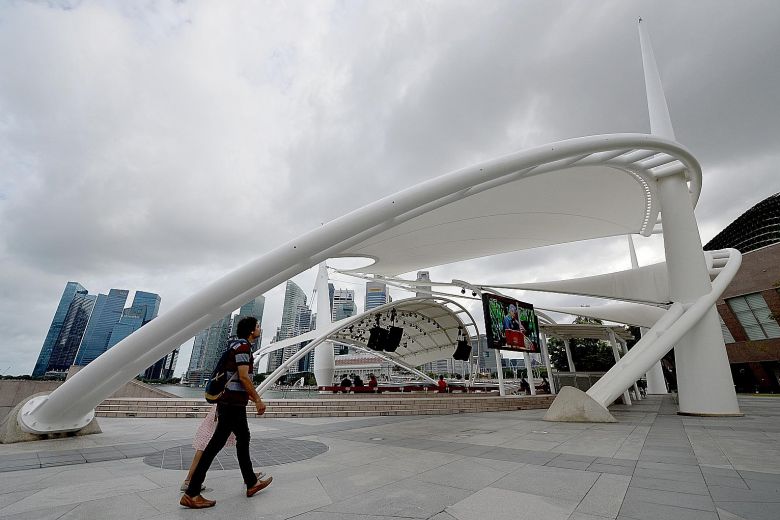
The roofing structure of the outdoor theatre at the Esplanade is painted with a 3M product which is dirt-resistant and more durable than regular paint.ST PHOTOS: SHINTARO TAY, NG SOR LUAN

The roofing structure of the outdoor theatre at the Esplanade is painted with a 3M product which is dirt-resistant and more durable than regular paint.ST PHOTOS: SHINTARO TAY, NG SOR LUAN

The panels will help cover about 2 per cent of the building’s power consumption, which may not sound like much, but every bit helps when it comes to energy consumption. As much as he would like to add more panels, he faces a physical constraint – the roof of the old building is too packed with equipment. So, he says the next step will be changing its energy supplier to help cut down on the power bill.At the National Library Board’s (NLB) 14-year-old home in Victoria Street, solar panels will be installed on its roof next year. While space is less of a constraint for this newer building, there are other factors to worry about.

Mr Simon Tan, 39, senior manager, building maintenance, properties and facilities management, says: “The panels are not heavy, but we have to take into consideration the wind and other loads.”

The building, given its proximity to the sea, has to deal with salt residue on its walls, he explains. But its height is an advantage because panels can be installed on the roof with no fear of obstruction from other buildings.

“The panels will also help shield equipment below,” Mr Tan adds.

Keeping older buildings green is an ongoing challenge, but evolving technologies help conserve energy and water usage, reducing not just the utility bills, but also the carbon footprint of these buildings.

Mr Ravi Sivalingam, 50, the Esplanade’s head, operational support services, says the 17-year-old performing arts centre’s biggest savings came from replacing their light fixtures in public areas with LED lights over the past two years. From last year to 2020, the LED lights will save the Esplanade 2.63 million kilowatt hours of energy. This is the equivalent of electricity consumed by 553 four-room HDB flats in a year.

Mr Sivalingam says: “Switching to LED led to a 60 per cent reduction in consumption, from 1.3 million kilowatt hours a year to 507,000 kilowatt hours.”

Just updating the carpark lighting led to massive savings, he adds, “conservatively, there was 70 to 90 per cent savings because of LED and sensor technologies”.

The other resource savings came with the recycling of rainwater which, combined with their replacement of the old air-conditioning chillers, helped the centre reduce its water usage. When the Esplanade opened, the rainwater run-off was collected in tanks, then purged out to Stamford Canal. Now, the water is treated for use in the air-conditioning system.

The recycled water also gets pumped out to 12 access points around the Esplanade, where it is used to water plants and wash outdoor areas. Mr Sivalingam says: “This has allowed us to watch how much potable water we use on a daily basis.”

MCI’s Mr Wee says besides changing to a water-cooled chiller system, using Newater has also helped cut the building’s water bills.

Despite the age of the Old Hill Street Police Station building, it was awarded a Green Mark Platinum rating, the highest green rating for a building, by the Building And Construction Authority (BCA).

The Esplanade and the National Library are also certified platinum under the Green Mark scheme, which was introduced in 2005 to encourage developers to build more environmentally friendly buildings.

While the scheme is voluntary, more developers have come on board to apply for Green Mark certification as people have become more aware of the advantages of going green.

Mr Toh Eng Shyan, 47, director of BCA’s Green Mark Department (Existing Buildings) Environmental Sustainability Group, says: “Green buildings make economic sense and are a responsible investment for our collective future. A report commissioned by the BCA has shown that home owners now are willing to pay a 3 to 4 per cent premium for green homes.
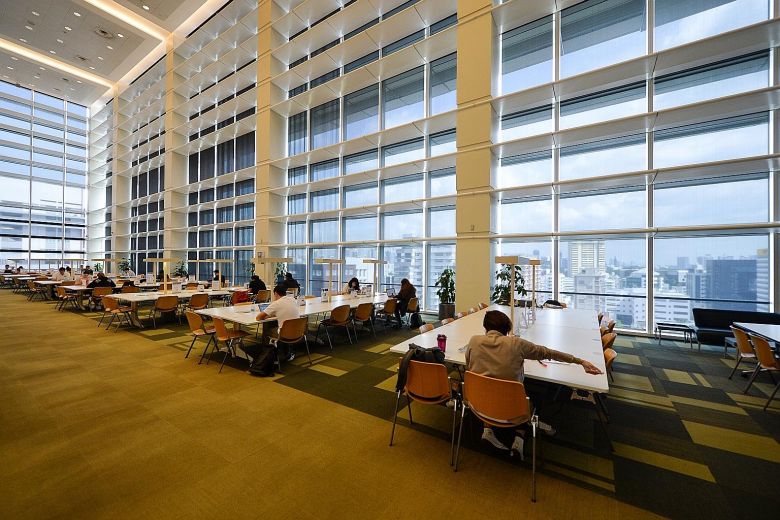
The Central Library building was designed with green features such as sunshades to keep the building cool. These cost more initially, but have since paid off by making the building more energy-efficient.ST PHOTOS: SHINTARO TAY, NG SOR LUAN

The Central Library building was designed with green features such as sunshades to keep the building cool. These cost more initially, but have since paid off by making the building more energy-efficient.ST PHOTOS: SHINTARO TAY, NG SOR LUAN

“For green commercial developments, it attracts like-minded, high-value tenants who are aware of the dangers of climate change and it projects a good corporate image for landlords as well as tenants.”

BCA has also been encouraging the greening of older buildings with financial incentives such as the Green Mark Incentive Scheme for Existing Buildings and the Building Retrofit Energy Efficiency Financing Scheme.

Mr Toh says: “We have a lot of old existing buildings that have been retrofitted to high sustainability standards. The industry is very mature now and can undertake retrofit works with minimal interruption to operations.”

The aim is to green 80 per cent of Singapore buildings’ floor area by 2030. To date, about 40 per cent have been greened.

It is easier to go green now too as architects are increasingly incorporating green design from the planning stages. This can make a big difference to a building, as the NLB’s Mr Tan points out.

The building’s architects, T.R. Hamzah & Yeang Sdn Bhd, were careful to study the site’s footprint. This resulted in details such as a north-east, south-west orientation that creates a wind tunnel in the spacious ground-floor atrium. The effect is so strong, wind speeds can go up to 50kmh and unsupported structures above 2.2m can be toppled by the wind.

The building’s 14 gardens, only four of which are open to the public, were designed to cool temperatures and green glass is used to reduce energy costs. All these were pricey initial investments that have since paid off as it costs less to keep temperatures optimal in the building, says Mr Tan.

MCI’s Mr Wee notes that while there is a short term cost when equipment has to be replaced in old buildings and renovations needed to keep up with evolving usage, old buildings have personality: “People like to work in an old building. People come in to admire the architecture. That creates a sense of belonging.”

TIPS FOR REDUCING ENERGY CONSUMPTION

1. Change your light fixtures to LED

Mr Toh Eng Shyan, director of the Building And Construction Authority’s Green Mark Department (Existing Buildings) Environmental Sustainability Group, recommends installing dimmable LED lights. LED lights not only consume less energy than regular fluorescent light fixtures, but they also last much longer.

2. Invest in energy-saving appliances

Mr Toh says air-conditioners are the biggest energy consumers, followed by refrigerators. Choose those rated with four or five ticks by the National Environment Agency as these will help you save on your electricity bills as well as conserve energy.

3. Locate electric sockets in easily accessible places

Mr Toh says this will make it easy to turn off switches. Keep in mind that if a switch is on, even if the attached appliance is not switched on, there will be some leakage of electricity, so it is better to turn off switches when you are not using appliances.

https://www.straitstimes.com/lifestyle/eco-friendly-makeover-for-older-buildings

Korean won likely to further ascend on eased trade tensions, hope of US rate cut

ศาสตร์เกษตรดินปุ๋ย : ขอบคุณแหล่งข้อมูล : หนังสือพิมพ์ The Nation

https://www.nationthailand.com/ann/30375948

Korean won likely to further ascend on eased trade tensions, hope of US rate cut

Sep 08. 2019
Yonhap

Yonhap
By Korea Herald/ANN

207 Viewed

The South Korean won is expected to further advance against the US dollar for some time on what analysts called long-awaited but unanticipated positive developments that helped remove some uncertainties facing Asia’s fourth-largest economy.

The local currency closed at 1,196.90 won to the greenback on Friday, up 3.30 won from Thursday’s close, extending its gains to a third consecutive session.

It marked the first time since Aug. 1 that the won-dollar exchange rate breached the 1,200-won mark.

Friday’s closing price also marks a 2 percent increase from Aug. 13, when the won closed at 1,222.20 won per dollar, the lowest since March 2, 2016.

“The won-dollar exchange rate rapidly breached the 1,200-won mark on positive factors that came unexpectedly,” Jeon Seung-ji, an FX analyst from Samsung Futures, said.

Such positive developments included the increased possibility of Britain’s exit from the European Union with a deal, as well as Hong Kong’s withdrawal of its extradition bill that has led to weeks of enthusiastic protest rallies that nearly paralyzed the entire city.

“The protesters have refused to accept the government’s withdrawal of the extradition bill, but the possibility of the city shutting down and violent demonstration has been reduced,” Jeon said.

“The US and China too have agreed to hold high-level trade talks in Washington early next month, prompting a renewed hope for an end to their trade dispute,” she added.

The analyst expected the local currency to advance to as high as 1,193.00 won per dollar before attempting to further recover ground to 1,183.00 won, or to the pre-August level when the won began to descend amid the escalating trade dispute between the world’s two largest economies, as well as South Korea’s own trade spat with Japan.

Tokyo removed Seoul from its list of trusted trade partners in early August, about one month after it began imposing tougher restrictions on South Korea-bound shipments of three key materials used to produce semiconductors and display panels, both key export items of South Korea.

Other analysts agreed the local currency will likely advance on increased hope for a breakthrough in the US-China trade dispute, as well as a widely anticipated US rate cut.

South Korea has faced a greater risk of capital outflow since its central bank lowered its policy rate to 1.50 percent in its first rate cut in three years in July, widening its rate gap to 75 basis points with that of the US, which currently sits at a range of 2.0 percent to 2.25 percent.

“For a country such as South Korea, the No. 1 issue it has to consider before a possible rate reduction is capital flight, which could cause very serious problems,” a Bank of Korea official said earlier, while speaking on condition of anonymity.

They, however, insisted the won’s sharp appreciation will likely be limited due to the country’s weakening fundamentals, such as slowing exports.

South Korea’s exports have dropped for nine consecutive months since December, plunging 13.6 percent on-year to $44.2 billion last month.

“The won-dollar exchange rate is expected to face large fluctuations on risk-taking behavior and increased demand from export companies. However, the rise of the won is expected to be limited due to poor local indicators, concerns of deflation and remaining uncertainties (about a US rate cut),” Kookmin Bank said in a research paper released Friday.  (Yonhap)

http://www.koreaherald.com/view.php?ud=20190907000040

Seoul shares to further advance on abated trade tensions

ศาสตร์เกษตรดินปุ๋ย : ขอบคุณแหล่งข้อมูล : หนังสือพิมพ์ The Nation

https://www.nationthailand.com/ann/30375947

Seoul shares to further advance on abated trade tensions

Sep 08. 2019
Yonhap

Yonhap
By Korea Herald/ANN

180 Viewed

South Korean stocks are expected to gain further ground next week as market sentiment remains upbeat over planned trade talks between Washington and Beijing, analysts said Saturday.

The benchmark Korea Composite Stock Price Index closed at 2,009.13 points on Friday, up 2.1 percent from a week ago, on growing hopes that the world’s two largest economies may find a compromise in their drawn-out trade talks.

This month, the US imposed 15 percent import duties on a wide range of Chinese consumer goods worth about $112 billion, while Beijing imposed new tariffs on US crude.

But the two nations said they plan to hold high-level dialogue next month, which will help ease uncertainties surrounding the growing trade tensions that have roiled the global financial markets for months.

Buoyed by increased hopes for a trade deal, the index even breached the psychologically significant 2,000-point mark on Thursday for the first time since Aug. 1.

Next week, the local stock market may extend its gains.

“Various uncertainties, such as the Hong Kong protests and the trade discord between the United States and China, are anticipated to avoid the worst scenarios,” Kim Byong-yeon, a researcher at NH Investment & Securities Co., said.

This week, foreigners sold a net more than 544 billion won ($454 million), while institutions scooped up a net 938 billion won. Individual investors sold a net 446 billion won.

Tech stocks, carmakers and pharmaceuticals were among the major winners this week, while insurance firms were among the losers. (Yonhap)

http://www.koreaherald.com/view.php?ud=20190907000028

S. Korea’s economy to expand 1.9% in 2019: KERI

ศาสตร์เกษตรดินปุ๋ย : ขอบคุณแหล่งข้อมูล : หนังสือพิมพ์ The Nation

https://www.nationthailand.com/ann/30375946

S. Korea’s economy to expand 1.9% in 2019: KERI

Sep 08. 2019
By Korea Herald/ANN

179 Viewed

South Korea’s economy is expected to expand 1.9 percent in 2019 from a year earlier, a local research institute said Sunday, posting sluggish growth due to the protracted trade dispute between the United States and China.

The figure marks a decrease of 0.3 percentage point from the previous outlook of 2.2 percent suggested in June, according to the Korea Economic Research Institute (KERI).

The organization attributed the lackluster growth to the prolonged feud between the world’s top two economies, which have been weighing down the business sentiment around the globe.

Tokyo’s export curbs against South Korea, which began in July, are also poised to have an adverse impact on the economic growth, KERI added.

The sluggish facility investment rolled out by South Korean firms coupled with the slowed domestic consumption are also cited as some of the factors behind the revised outlook, it said.

South Korea’s consumer prices are expected to edge up 0.5 percent on-year in 2019, following the weak performance from the service segment.

Asia’s No. 4 economy is also anticipated to suffer a sharp decrease in its trade surplus amid the growing protectionism around the globe, the institution also said. (Yonhap)

http://www.koreaherald.com/view.php?ud=20190908000081

3 dead amid hundreds of accidents due to Typhoon Lingling

ศาสตร์เกษตรดินปุ๋ย : ขอบคุณแหล่งข้อมูล : หนังสือพิมพ์ The Nation

https://www.nationthailand.com/ann/30375945

3 dead amid hundreds of accidents due to Typhoon Lingling

Sep 08. 2019

Yonhap

Yonhap
By Korea Herald/ANN
194 Viewed

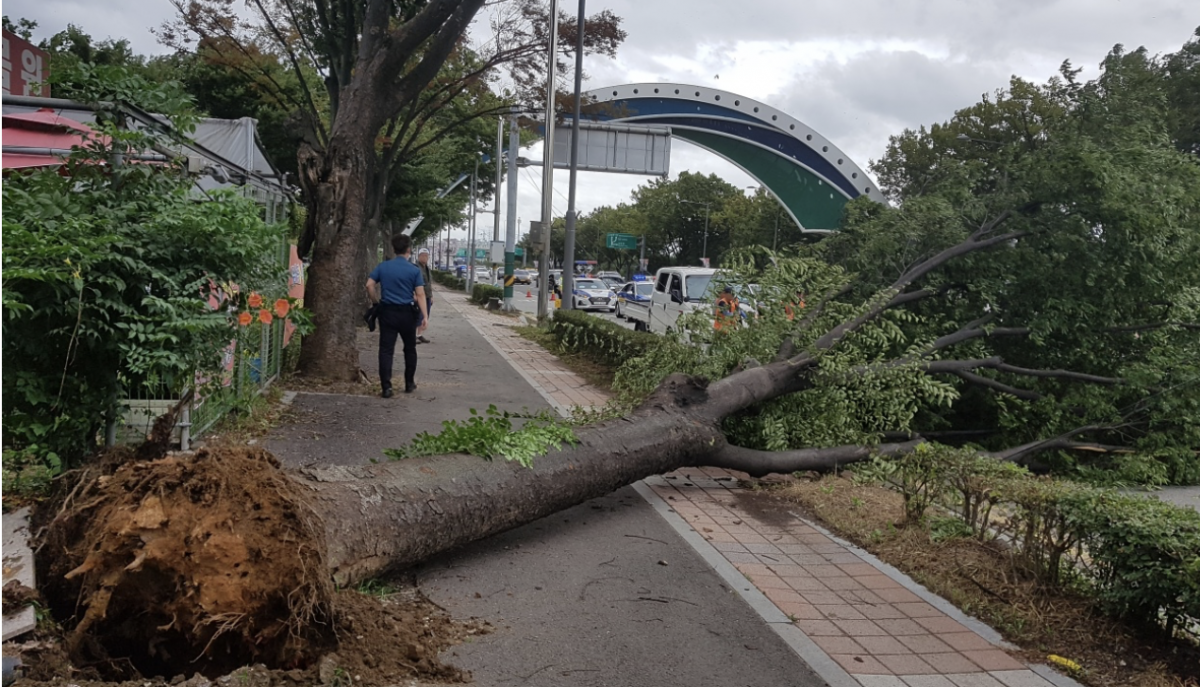
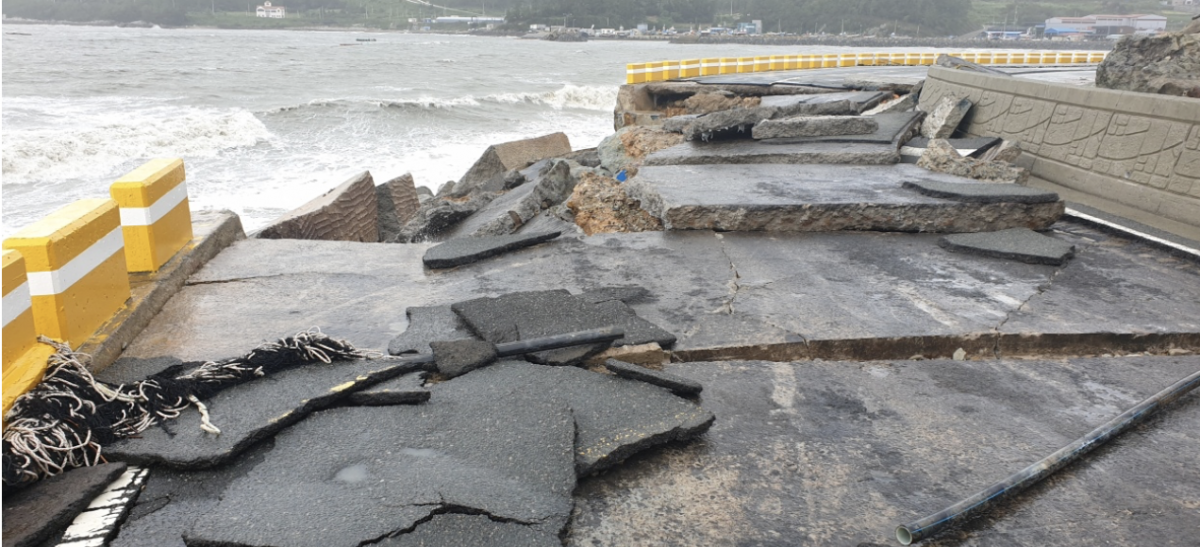
At least three South Korean were reported killed and dozens of others were injured Saturday as Typhoon Lingling made landfall here, bringing heavy rains and strong winds that also caused hundreds of minor accidents throughout the nation.

A woman in her 70s died after she was knocked over by strong winds gusting at 39 meters per second or 140 kph in Boryeong, some 150 kilometers southwest of Seoul, according to rescue officials there.


Yonhap

Yonhap

In Incheon, 40 kilometers est of the capital, a bus driver was crushed to death after a wall at a hospital parking lot collapsed.

Later in the day in Paju, north of Seoul, a 61-year-old man was killed after being struck in the head by a roof panel at a golf driving range. Rescue officials said the man had been working on the roof when a sudden gust of wind blew the piece of panel toward him.

Hundreds of other minor incidents, mostly uprooted trees, have also been reported throughout the nation, with nearly 300 flights being canceled or delayed.

According to airport authorities, 120 flights departing from or arriving at Incheon International Airport, the main gateway to South Korea located just west of Seoul, were canceled as of 4 p.m., while 140 flights to and from Incheon were delayed.

Officials said flights should gradually return to normal operations as the typhoon made its way toward North Korea.

Several sections of road, including bridges to the Incheon airport, were closed due to strong wind that could easily overturn small vehicles, according to rescue officials. The bridges reopened by the early evening as the winds died down.


Yonhap

Yonhap

Korea Electric Power Corp. said as of 9:30 p.m. Saturday, just over 161,000 homes had experienced power outages during the day and electricity had been restored at around 136,000 households.

According to the Korea Meteorological Association (KMA), the eye of the typhoon reached the North Korean province of Hwanghae around 2:30 p.m.

The KMA lifted all typhoon-related warnings and advisories as of 9 p.m. Saturday, though it still cautioned against strong winds expected to affect Seoul and surrounding regions through the early hours of Sunday.

The KMA said the fastest wind speed measured on Saturday was

54.4 m/s, or 195.8 km/h, at Heuksan Ilsand off Sinan, a town South Jeolla Province. It’s the fifth strongest gust of wind on record in South Korea. In 2003, Typhoon Maemi brought a wind clocked at 60 m/s.

The central and municipal governments were taking precautionary measures to help minimize damage from the storm. (Yonhap)

http://www.koreaherald.com/view.php?ud=20190907000022

Northern Taiwan property market sluggish on falling transactions

ศาสตร์เกษตรดินปุ๋ย : ขอบคุณแหล่งข้อมูล : หนังสือพิมพ์ The Nation

https://www.nationthailand.com/ann/30375944

Northern Taiwan property market sluggish on falling transactions

Sep 08. 2019
Citing a survey for the August property market, the magazine said the housing index for northern Taiwan fell 4.2 points from a month earlier to 33.1 in August, but the index remained between 32 and 42 to flash a

Citing a survey for the August property market, the magazine said the housing index for northern Taiwan fell 4.2 points from a month earlier to 33.1 in August, but the index remained between 32 and 42 to flash a “yellow blue” light, signaling sluggish growth. (Shutterstock)
By The China Post/ANN

168 Viewed

TAIPEI (CNA) — The property market in northern Taiwan remained sluggishness in August as an index gauging the market climate fell from a month earlier with transactions on the decline, according to a monthly index produced by real estate magazine My Housing.

Citing a survey for the August property market, the magazine said the housing index for northern Taiwan fell 4.2 points from a month earlier to 33.1 in August, but the index remained between 32 and 42 to flash a “yellow blue” light, signaling sluggish growth.

The August index reversed a 5.1 percent increase in July with the sub-index on transactions falling in the wake of Ghost Month on the Lunar calendar, the survey found.

This year, Ghost Month started on Aug. 1 and ended on Aug. 29.

In Taiwan, consumers tend not to purchase big ticket items such as cars and homes during Ghost Month to avoid bad luck, usually making such purchases before or after.

Under the magazine’s color-coded system, a red light indicates overheating, yellow-red shows fast growth, green represents stable growth, yellow-blue signals sluggish growth, and blue indicates contraction.

The index covers major counties and cities in northern Taiwan — Taipei, New Taipei, Keelung, Taoyuan, and Hsinchu cities and Hsinchu and Yilan counties — which account for roughly 50 percent of total residential and commercial property transactions in the country.

Due to Ghost Month effects, the sub-index on transactions fell to 5.16 points, down 1.88 points from a month earlier, the steepest decline among the six factors that make up the index.

While the magazine did not disclose any further details about housing transactions in northern Taiwan, local media reported that transactions of residential and commercial property in Taipei, New Taipei and Taoyuan dropped 26 percent, 22 percent and 20 percent, respectively.

Ho Shih-chang (何世昌), a research manager at the magazine, said Ghost Month is a traditionally slow season for the local property market but the fall in the August index was not as bad as the market had previously anticipated and it flashed a yellow-blue light rather than a blue light.

The Ghost Month taboo also prompted property developers to put listings of presale housing projects on hold, Ho said. As a result, the sub-index on presale residential property projects fell 1.09 from a month earlier to 7.63 in August, the second steepest monthly fall in the six factors.

According to the magazine, the value of presale housing projects that came on the market in August totaled NT$50 billion (US$1.60 billion), down from NT$70 billion in July.

The magazine said presale housing projects valued at NT$1.5 billion or higher were most commonly seen in some districts of Taipei, New Taipei and Taoyuan, while by taking into account low budgets, these newly launched projects largely focused on small-sized housing units.

In addition, the sub-index on the listing of newly built residential properties also registered a month-on-month fall of 0.55 to 4.72 in August, which presented more evidence of caution during the month, the survey showed.

In August, the sub-indexes on the volume of residential property advertising and price negotiations fell from 3.88 and 6.92, respectively, from a month earlier to 3.58 and 6.15, the survey indicated.

Bucking the downturn, the sub-index on visits by potential buyers to see homes rose from 5.46 in July to 5.81 in August, according to the survey.

Ho said a possible turning point for the local property market will be the traditional peak season in September, but with the presidential election scheduled for January 2020, the local market could still see uncertainty created by non-economic factors for the rest of the year.

By Pan Chih-yi and Frances Huang

https://chinapost.nownews.com/20190907-732720