Prem Tinsulanonda: The man behind Thailand’s revered king

ศาสตร์เกษตรดินปุ๋ย : ขอบคุณแหล่งข้อมูล : หนังสือพิมพ์ The Nation

https://www.nationthailand.com/ann/30375943

Prem Tinsulanonda: The man behind Thailand’s revered king

Sep 08. 2019

The statesman as a young man: prem in 1959. - Photos courtesy of Team Ceritalah

The statesman as a young man: prem in 1959. – Photos courtesy of Team Ceritalah
By The Star/ANN180 Viewed

IT is one of the most iconic images in Southeast Asian history: Thailand’s King Bhumibol (Rama IX) sitting regally before a group of prostrating, feuding politicians. The date: May 20th, 1992.

The King had just intervened, demanding an end to bloody riots that had paralysed Bangkok. We all know how it ended. The protestors dispersed. The junta leader resigned; and Thailand gradually returned to civilian rule.

Also kneeling at the King’s side was another remarkable man, his trusted advisor Prem Tinsulanonda – who passed away earlier this year at the age of 98, exceeding his monarch (who died in 2016 at the age of 88) in terms of longevity.

While King Bhumibol has clearly been the defining figure in post-war Thai history, the men behind him, such as Prem, have also been immensely important in themselves.

Indeed, Southeast Asia has witnessed several intriguing and all-powerful political pairings: from Singapore’s Lee Kuan Yew and Goh Keng Swee (the man behind the island republic’s economic success story) to Dr Mahathir Mohamad and Daim Zainuddin. Indonesia’s Suharto by comparison (having risen to power in a coup) never really trusted any of his lieutenants sufficiently to allow them the same degree of authority.

Prem was born in the southern province of Songkhla in 1920. Coming from a relatively humble background (his father was a prison warden) he joined the army, rising to prominence only in his fifties as the Cold War raged across Indochina.

As fate would have it, in the mid-70s, Prem was commanding the Second Army in the restive north-eastern region of Isaan where the Communist Party of Thailand (CPT) was particularly active.

Prem adopted a nuanced approach, granting amnesties and promoting grassroots development.

While he wasn’t the mastermind of these initiatives, his success in Isaan was to mark a turning-point in the struggle against the communists and a grateful monarch was to show his appreciation by bringing the steely general into his inner circle. Indeed, both men were soft-spoken, distrustful of politicians and intensely devoted to Thai tradition.

Prem eventually become the head of the Thai army in 1978, assuming the premiership in 1980. Although he was never tested electorally, Prem (with the backing of the palace) governed from 1980-1988.

Whilst he was neither a visionary nor a man of ideas, his steadfastness (he withstood two coup attempts) ensured a period of political calm that enabled the economy to boom – with the Thai GDP almost doubling in size from US$32.35bil in 1980 to US$61.67bil in 1988.

Prem believed in empowering technocrats (such as Snoh Unakul, his economic czar) and they in turn ensured the successful transition from a predominantly agrarian polity into a manufacturing and export-oriented powerhouse.

As the historian Chris Baker noted: “King Bhumibol found Prem to be an ideal right-hand man. Prem wasn’t so much a creative force in the construction of the “Bhumibol Era”; however, he was more an operational figure, and, in this respect, he was very important.”

Despite having to cede power to an elected politician in 1988, Prem remained influential. He was appointed to the Privy Council and eventually became its President in 1998, holding the position until his death in 2019.

His presence pervaded all the crucial events of Bhumibol’s latter reign, seemingly always (and sometimes literally) just off-centre, as with the 1992 royal intervention.

Indeed, he was perceived to be the prime mover of Thaksin Shinawatra’s ouster in 2006. Ironically, when the latter’s sister, Yingluck, won power in 2011, she would eventually call on the aging establishment figure to pay her respects – like scores of other ambitious politicians or military officers.

However, rather than “save” Thailand, the 2006 and 2014 coups that removed the Shinawatras plunged the kingdom into a period of intense polarisation that continues to this day.

As Dr Punchada Sirivunnabood, a political analyst with Mahidol University notes: “Prem’s legacy is mixed. How Thais see him varies by who you speak to. The older generations remember him as a stabilising force in an uncertain era, whereas younger Thais see him – fairly or unfairly – as embodying the elite repression of democracy.”

Prem, (much like Daim with Dr Mahathir) derived much of his legitimacy from Bhumibol. It’s what allowed him to fend off political challenges so to be able to focus on the challenges of nation-building and the consolidation as well as the promotion of the Chakri dynasty.

But while Bhumibol’s prestige only grew, its arguable that Prem – and the Thai establishment – failed to adjust to new social realities. Certainly, Prem’s insistence on a state rooted in the traditional principles of “nation, religion, king” no longer holds sway with younger Thais seeking new ways to define their country and their identity.

More damagingly, Prem’s preference for supposedly disinterested technocrats above elected politicians weakened Thai democracy.

He was both a fervent royalist and a builder: helping to steer the palace and Thai state through the political squalls of the Cold War.

With a new monarch on the Chakri throne – King Vajiralongkorn – it will be interesting to see who (if anyone) emerges to provide the wise counsel and steadying force for the untested head of state, especially with a major economic downturn expected within the next year or so.

The Thailand of today is undoubtedly King Bhumibol and Prem’s creation. But whether it will continue to be so remains to be seen.

Read more at https://www.thestar.com.my/opinion/columnists/ceritalah/2019/09/08/prem-tinsulanonda-the-man-behind-thailands-revered-king#7jHUwtmjhMVuFlG8.99

Death due to TB sets off alarm bells

ศาสตร์เกษตรดินปุ๋ย : ขอบคุณแหล่งข้อมูล : หนังสือพิมพ์ The Nation

https://www.nationthailand.com/ann/30375941

Death due to TB sets off alarm bells

Sep 08. 2019
Carmen Yee

Carmen Yee
By The Star/ANN

502 Viewed

GEORGE TOWN: At 19, Carmen Yee had every reason to look forward to a bright future.

But it was not meant to be for this sporty and musically talented teenager.

The Upper Six student of SMJK Heng Ee had her life cut short after a bout of cough which was traced to tuberculosis (TB).

“She was very hardworking in her studies, active in sports, played badminton and was a member of the school’s Chinese orchestra.  

“She was okay when she went off for the week-long break last month,” a school spokesperson told The Star.

But all was not well when school reopened. Carmen was found coughing badly at the school toilet before she was sent home.

She was admitted to the intensive care unit of a hospital and died on Aug 26.

Penang Health Department director Dr Asmayani Khalid, who confirmed the case, said more than 300 students and staff members of SMJK Heng Ee had undergone screening.

“This process is conducted to identify and follow up on any person who may have come into contact with her,” she said.

A full report on the case is pending.

MCA deputy president Datuk Dr Mah Hang Soon said the Health Ministry must be vigilant in handling the rising incidences of TB in the country, especially the increasingly mutated strains that were more complicated.

“TB is curable and (a person) has a good chance of full recovery if diagnosed early and treated properly,” he said.

Referring to media reports, he spoke of another three fatal TB cases recently involving a 21-year-old Universiti Malaysia Perlis student and two others who were said to have died after coughing out blood.

Dr Mah urged the Health Ministry to make public the incidences of TB nationwide and the pattern of the disease.

The ministry, he added, should direct government hospitals and clinics to be on the highest alert.  

Read more at https://www.thestar.com.my/news/nation/2019/09/08/death-due-to-tb-sets-off-alarm-bells#KbvUgqQwIx4lBhBx.99

Declining market hits Chinese automakers in first half

ศาสตร์เกษตรดินปุ๋ย : ขอบคุณแหล่งข้อมูล : หนังสือพิมพ์ The Nation

https://www.nationthailand.com/ann/30375939

Declining market hits Chinese automakers in first half

Sep 08. 2019
A Level 4 self-driving Changan automobile does a driving drill on July 26 in a pilot zone for 5G-based autonomous driving in Southwest China's Chongqing municipality. [Photo /Xinhua]

A Level 4 self-driving Changan automobile does a driving drill on July 26 in a pilot zone for 5G-based autonomous driving in Southwest China’s Chongqing municipality. [Photo /Xinhua]
By CHINA DAILY
ASIA NEWS NETWORK

517 Viewed

China’s auto market has not fired back up to the table in the first half of the year, according to an analysis on September 6.

A total of 12.37 million cars were sold in China’s domestic market in the first half of the year, dropping by 11.8 per cent from a year earlier, according to statistics from the China Association of Automobile Manufacturers.

The decline was reflected in financial reports of 17 domestic listed automakers. Only two of the 17 passenger carmakers posted increases in net profit in the first half. Five were still making losses while 13 saw net profits shrink — by more than 100 per cent for three of them.

Among the 17 carmakers, Changan Automobile suffered most with losses of 2.24 billion yuan (Bt9.5 billion), partly attributed to the falling sales of Changan Ford. SAIC Motor Corp topped the list of profit-makers, making 367.92 billion yuan, but its profits were still down by 27.49 per cent year on year — the first contraction in 10 years since SAIC was listed on the stock exchange.

Amid the gloomy trend, BYD and BJEV handed in decent results, posting 203.6 per cent and 9.7 per cent increases in net profits respectively.

But subsidies for new-energy carmakers accounted for 48.8 per cent of BYD’s net profit as well as even over 100 per cent of that of BJEV, if including all nonrecurring profits and losses such as subsidies.

Gold loses its glitter, stares at uncertain future

ศาสตร์เกษตรดินปุ๋ย : ขอบคุณแหล่งข้อมูล : หนังสือพิมพ์ The Nation

https://www.nationthailand.com/ann/30375938

Gold loses its glitter, stares at uncertain future

Sep 07. 2019
A Bao Tin Minh Chau Jewellery and Gemstone Company store. Though gold prices have declined in the first week of September, the forecast for the rest of the year remains uncertain. — Photo btmc.vn

A Bao Tin Minh Chau Jewellery and Gemstone Company store. Though gold prices have declined in the first week of September, the forecast for the rest of the year remains uncertain. — Photo btmc.vn
By VIET NAM NEWS
ASIA NEWS NETWORK
HANOI

303 Viewed

Amid gold prices showing signs of decline, experts in Vietnam are warning that the future of the precious metal is unpredictable.

Tran Thanh Hai, chairman of the Vietnam Gold Investment and Trading Corporation, said it was not easy for short-term traders to earn profit from gold trading right now.

Those who are seeing good results are traders who bought gold when the price was between 35 million dong (Bt46,290) to 37 million dong a tael (37.79 grams).

Selling prices on Friday ranged between 42.23 million dong and 42.47 million dong a tael at the two largest gold trading firms, Bao Tín Minh Chau and SJC. The price levels were down about 500,000 dong from those recorded on August 30 – the last trading day that month.

On international markets, gold dropped 0.83 per cent on Friday to trade at $1,512.80 (Bt45,800) an ounce (28.34 grams).

In the last three months, domestic gold prices had surged but trading had gone quiet, business insiders said.

The number of buyers was almost unchanged in the first week of September compared to the previous week, they said.

People sold more than they bought, forcing gold companies to lower their buying prices to prevent selling, they added.

Banking experts said that gold was no longer an attractive investment, especially when commercial banks were offering high saving interest rates – which is considered safer and more profitable at the moment than gold.

As a result, banks are not paying attention to buying gold, leading to the decline of gold traders and investors at the bank, according to the experts.

Sales of gold and gold products in the last two months were up only 1-2 per cent compared to the previous period, Nguyen Hoang Minh, deputy governor of the State Bank of Vietnam’s HCM City branch, told local media.

The modest increase indicated demand was growing slowly despite strong gains in both domestic and international markets, he said.

“Financial institutions have suspended gold lending and borrowing for years,” Minh said.

“The amount of gold available for lending is quite negligible. The central bank’s HCM City office has kept up with the movement of gold prices to deliver proper responses but actual demand and sales of gold and gold products are quite weak.”

In the remaining months of the year, international gold prices might not reach $2,000 an ounce while it might continue falling in a short period before going again in the medium and long terms, investment consultant Phan Dung Khanh at Maybank Kim Eng Securities Co said.

Gold might move between $1,500-$1,600 an ounce. It was unlikely that gold would soar in the remaining period of the year, he said.

But the future movement of gold prices was still uncertain, analysts have said. Investors should not jump in the gold market at the moment, especially if they had not kept a close watch on the gold prices.

Investors turn focus on Vietnam amid uncertainty caused by US-China trade war

ศาสตร์เกษตรดินปุ๋ย : ขอบคุณแหล่งข้อมูล : หนังสือพิมพ์ The Nation

https://www.nationthailand.com/ann/30375936

Investors turn focus on Vietnam amid uncertainty caused by US-China trade war

Sep 07. 2019
Speakers at a Vietnam-US Trade Forum held on Friday by Vietnam's Ministry of Industry and Trade in Ho Chi Minh City. — VNS Photo Bo Xuan Hiep

Speakers at a Vietnam-US Trade Forum held on Friday by Vietnam’s Ministry of Industry and Trade in Ho Chi Minh City. — VNS Photo Bo Xuan Hiep
By VIET NAM NEWS
ASIA NEWS NETWORK
HO CHI MINH CITY

475 Viewed

Vietnam is now in a position to attract even more investors and promote mutual prosperity with the US, despite the uncertainties caused by the US-China trade conflict, a US official said at a trade forum on Friday in the city.

Mary Tarnowka, executive director of AmCham Vietnam in HCM City, said: “The US-China trade conflict and resultant uncertainty have the potential to create opportunities for Vietnam and AmCham Vietnam since firms look to diversify their supply chains to destinations such as Vietnam.”

“It will also create additional challenges,” said Tarnowka, who is also the US consul general in HCM City. “The escalating trade conflict between China and the US affects AmCham Vietnam’s members, including big, medium and small ones, in several ways.”

Change is happening in the global economy, and US businesses and other AmCham Vietnam members are affected, she said. “The change comes from uncertainty in the global marketplace. No one knows the duration or full impact of the US-China trade war.”

“We do know the tariffs are affecting American businesses in China, as well as US businesses trading with China. It is clear these trade sanctions will continue for the short term with no known end in sight.”

US President Donald Trump and US policymakers have put other trading partners on notice, including Vietnam. They want reduced trade deficits, elimination of trade barriers, and improved market access for US goods, services, agricultural products and intellectual property.

“Many of our AmCham members have already changed short- and long-term business strategies as they have diversified their supply chains, and increased production and sourcing from Vietnam while decreasing reliance on China and taking advantage of Vietnam’s relatively low wages and network of Free Trade Agreements [FTAs],” she said.

“Ongoing trade tensions have highlighted concern on concentrating production in China, and we at AmCham have seen increased interest by US companies looking to accelerate supply chain diversification by shifting additional prodtion to, or investing, in Vietnam.”

However, there are significant capacity constraints on logistics, infrastructure, real estate and labour shortages, among other challenges, according to the director.

Commercially viable public-private partnerships will be key to enabling world-class private investment in infrastructure projects.

Sustainable growth in Vietnam will hinge on investments in port infrastructure, airport facilities, roads and public transportation to support increased movement of people and goods in Vietnam.

The energy sector is another key field where US firms are eager to partner with Vietnam to provide energy infrastructure and promote clean energy and sustainable economic growth.

Labour costs in Vietnam have recently outpaced productivity gains, impacting Vietnam’s competitiveness, according to Tarnowka.

Though Vietnam’s exports to the US are growing rapidly, the country mainly ships raw or subcontracted products with low value addition, other speakers said.

“The country has achieved high volume of exports but a very modest value of exports,” Do Thang Hai, Vietnam’s deputy minister of Industry and Trade, said at the forum.

Vietnamese firms should think about exporting value-added products, not just raw materials, especially at a time when trade protection is increasing globally, he said.

Hai said the big challenge for Vietnamese exporters is the US imposition of strict import regulations. In addition to federal laws, each state has different rules and regulations.

“Protectionism through new regulations and standards for quality, food safety and origin of products, especially for agro-forestry and fisheries products, is also increasing.”

Chu Thang Trung, deputy director of Vietnam’s Ministry of Industry and Trade’s Trade Remedies Authority, said the number of anti-dumping and anti-subsidy lawsuits by the US had already doubled under the new government there.

“Not only products with high export volume, but even minor items face these lawsuits,” he said.

Truong Dinh Hoe, general secretary of the Vietnam Association of Seafood Exporters and Producers, said the US annually imported around 600,000 tonnes of shrimps, or 80-90 per cent of its domestic demand, with imports from Vietnam just accounting for 10 per cent of imports.

“But trade protection has increased in recent years, causing challenges to seafood exporters to the US,” he said.

Hong Kong braces for airport protests

ศาสตร์เกษตรดินปุ๋ย : ขอบคุณแหล่งข้อมูล : หนังสือพิมพ์ The Nation

https://www.nationthailand.com/ann/30375935

Hong Kong braces for airport protests

Sep 07. 2019
Heavy police presence is seen at the International Finance Centre, Hong Kong, Sept 7, 2019. (PHOTO / CHINA DAILY)

Heavy police presence is seen at the International Finance Centre, Hong Kong, Sept 7, 2019. (PHOTO / CHINA DAILY)
By Chinadailyhk.com/Asia News Network

279 Viewed

Hong Kong authorities were limiting airport transport services and controlling access to terminals Saturday as they braced for a second weekend of disruption following overnight demonstrations that turned violent.

Violent erupted again late Friday in the crowded Mong Kok as protesters trashed facilities in MTR stations and set fires on the street. Police have used tear gas to disperse the crowds. 

3:52 pm (HK time) Tung Chung Line train service adjusted 

As crowds gathered in Tung Chung Station and the surrounding areas, train service on the Tung Chung Line has been adjusted to 15-minute intervals, according to a statement issued by the MTR Corporation. 

3 pm Heavy police presence at IFC 

Heavy police presence was seen at the International Finance Centre, where travelers could get the train to the airport.

As a precaution, express train service ran from the station directly to the airport, skipping all stations in-between. Only those with flight tickets can enter the terminals, airport officials said.

India stands with you, best yet to come: PM Modi to ISRO scientists after Chandrayaan-2 heartbreak

ศาสตร์เกษตรดินปุ๋ย : ขอบคุณแหล่งข้อมูล : หนังสือพิมพ์ The Nation

https://www.nationthailand.com/ann/30375934

India stands with you, best yet to come: PM Modi to ISRO scientists after Chandrayaan-2 heartbreak

Sep 07. 2019
Prime Minister Narendra Modi with ISRO Chief K Sivan. (Photo: Twitter | @PIB_India)

Prime Minister Narendra Modi with ISRO Chief K Sivan. (Photo: Twitter | @PIB_India)
By SNS Web/Asia News Network

283 Viewed

PM Modi, who met K Sivan at the ISRO Centre in Bengaluru, hugged and consoled the ISRO Chief after he broke down.

Hours after India suffered a setback as the Chandrayaan-2 lander, which was expected to make a “soft landing” on the Moon’s surface early on Saturday morning, lost communication with the ISRO, Prime Minister Narendra Modi addressed the scientists at the space agency in a bid to boost their morale. 

PM Modi, who met K Sivan at the ISRO Centre in Bengaluru, hugged and consoled the ISRO Chief after he broke down. 

Following the Rs 978-crore-rupees Chandrayaan-2 mission’s apparent temporary setback with the Vikram lander losing communication minutes before touching down on the lunar surface, PM Modi said, “Friends I could feel what you were going through a few hours back; your eyes were conveying a lot. You live for India’s honour, I salute you”. 

He said the nation stands in solidarity with the scientists. “We are proud of our space program. Today our resolve to touch the moon has grown even stronger.” 

“We will rise to the occasion and reach even newer heights of success,” the PM said and termed the ISRO scientists as “exceptional professionals who have made an incredible contribution to national progress”. 

“In our illustrious history, we have faced moments that may have slowed us but they have never crushed our spirit. We have bounced back again and gone on to do spectacular things. This is the reason why our civilization stands tall,” Modi said in his address. 

“Today I can proudly say that the effort was worth it and so was the journey. Our team worked hard, travelled far and these very teachings will remain with us. The learning from today will make us stronger and better,” he added. 

“There will be a new dawn and a brighter tomorrow very soon. There is no failure in science, only experiments and efforts,” he said. 

In a major setback for the Indian Space Research Organisation (ISRO), communications between the moon lander Vikram and the orbiter got snapped as the former was only 2.1 km away from its designated landing spot on the moon’s South Pole early on Saturday, throwing suspense over the fate of Rs 978 crore Chandrayaan-2 mission. 

The lander, Vikram was supposed to land on the moon’s surface at 1:55 am following what ISRO had described as “15 minutes of terror”. 

Patting Sivan’s back after the announcement, the Prime Minister said: “Whatever you all have done today is no mean feat. I am with you. Be courageous.” 

Meanwhile, the 2,379 kg Chandrayaan-2 orbiter continues to fly around the moon. Its mission life is one year. 

While an ISRO scientist said it was possible that the communications got snapped as the lander crash-landed, after losing control when its thrusters were switched off during its descent, another said that all is not lost as far as the mission is concerned. 

Chandrayaan-2, India’s second moon mission spacecraft, had lifted off successfully onboard the “Bahubali” rocket from Satish Dhawan Space Centre in Sriharikota in Nellore district of Andhra Pradesh on July 22.

Lam rejects Fitch’s rating downgrade of HK

ศาสตร์เกษตรดินปุ๋ย : ขอบคุณแหล่งข้อมูล : หนังสือพิมพ์ The Nation

https://www.nationthailand.com/ann/30375933

Lam rejects Fitch’s rating downgrade of HK

Sep 07. 2019
By Zhou Mo
Chinadailyhk.com/Asia News Network

323 Viewed

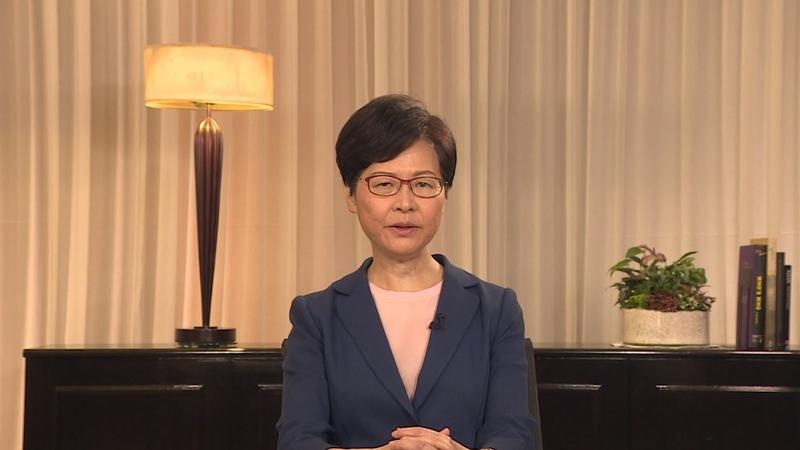
Hong Kong Chief Executive Carrie Lam Cheng Yuet-ngor rejected Fitch Ratings’ downgrading of the city’s sovereign rating on Friday, as the “one country, two systems” principle and the city’s rule of law remain strong despite recent unrest.

The US credit rating agency downgraded Hong Kong’s long-term foreign currency issuer default rating on Friday from “AA+” to “AA” with a negative outlook. It is the first time Fitch has downgraded Hong Kong’s rating since 1995, according to Bloomberg. 

The Fitch report stressed that months of persistent conflict and violence are testing the perimeters and pliability of the “one country, two systems” framework that governs Hong Kong’s relationship with the mainland. Moreover, ongoing events have also inflicted damage to international perceptions of the quality of the city’s governance system and rule of law, and called into question the stability and dynamism of its business environment, it said. 

Speaking on the sidelines of a regional cooperation meeting in Nanning, capital city of the Guangxi Zhuang autonomous region, Lam said she disagrees with the rating decision as the city’s social unrest over the past three months has neither undermined “one country, two systems” nor the rule of law. 

The government will strive to stop violence and quell unrest firmly under the “one country, two systems” principle and with the rule of law, she said. 

The persistent violence and chaos across the city has inevitably affected the perception of the international community of Hong Kong and the soundness of its business environment, Lam said. The chief executive urged all Hong Kong citizens to work together to end the violence. 

Financial Secretary Paul Chan Mo-po also refuted Fitch’s statement that Hong Kong is facing “greater institutional and regulatory challenges” as growing links with the mainland imply its continued integration into the national governance system. 

Such remarks are “purely speculative and groundless”, Chan said in a statement on Friday. 

“Hong Kong’s deeper economic and financial ties with the Chinese mainland should not be a rating constraint. On the contrary, this is a positive driver for Hong Kong’s long-term development,” Chan said. 

China continues to be the main engine of global economic growth, he said, with its economic restructuring and derisking of the financial system making progress, and its opening-up continuing to broaden. 

“There is a broad-based consensus among the business community that the growing economic and financial links with the mainland will bring significant economic development opportunities for Hong Kong.” 

Chan added that the government is able to weather the current challenges and ensure macroeconomic and financial stability, given that the city has sound economic fundamentals and ample financial buffers. 

“The government will remain vigilant in assessing the economic impacts of the internal and external environment, and introduce measures to support Hong Kong’s economic development when necessary,” he said. 

Fitch forecast the city will record zero growth this year, but grow by 1.2 percent in 2020. 

The downgrading announcement had little effect on Hong Kong’s stock market, with the Hang Seng benchmark index rising 175.23 points, or 0.66 percent, to close at 26690.76 on Friday. 

sally@chinadailyhk.com

Chinese retail market sees changing consumption patterns

ศาสตร์เกษตรดินปุ๋ย : ขอบคุณแหล่งข้อมูล : หนังสือพิมพ์ The Nation

https://www.nationthailand.com/ann/30375924

Chinese retail market sees changing consumption patterns

Sep 07. 2019
A customer hugs a giant stuffed toy at the newly opened Costco outlet in Shanghai. [Photo/CHINA NEWS SERVICE]

A customer hugs a giant stuffed toy at the newly opened Costco outlet in Shanghai. [Photo/CHINA NEWS SERVICE]
By CHINA DAILY
ASIA NEWS NETWORK

260 Viewed

Rising demand for high-end products is fuelling huge growth opportunities for companies in China.

Ryne Fang had to wait for seven days to visit the new Costco outlet in Shanghai, as overcrowding had forced the membership-only US warehouse retailer to suspend sales early for the first few days.

“It was a rainy day when I finally went to the store. There was a much shorter waiting time on that day,” said the 30-year-old Fang, who had become a registered member several months ahead of the official store opening on August 27.

“I bought my favourite roast chicken for 29.8 yuan (Bt125), a six-pack muffin with nuts, Kirkland Signature nuts and giant jars of jam. The products are of good quality and are really value for money. That is also why there are such huge crowds. For shoppers like me, the inaugural membership fee of 199 yuan was a promise of that trust,” said Fang.

Jason Yu, general manager of Kantar Worldpanel China, a market research firm, believes that the resounding demand for Costco products is a clear indicator of the changing consumption patterns in China.

“The crowds at the Costco outlet indicate that consumption demand from affluent Chinese consumers remains robust,” said Yu.

According to China’s National Bureau of Statistics, the share of consumption in the overall output value has been climbing steadily for the last eight years.

Total retail sales of consumer goods amounted to 38.1 trillion yuan in 2018, compared with 2.77 billion yuan in 1952, or an annual growth rate of 11.6 per cent, according to the NBS. Domestic consumption was one of the main triggers for higher economic growth in the country and made up 76.2 per cent of the gross domestic product.

Yu, who has been tracking the Chinese retail industry for more than two decades, said consumption has risen as consumers are now more than willing to spend money on quality products. That was not the case in 2000 when consumers were more cost-conscious. Since then the market has grown rapidly in terms of retail offerings and quantity, while brands are willing to spend more to attract consumers, he said.

Demand for fast-moving consumer goods has fallen sharply in the last five years in China, with the growth rates tapering off from the double-digit levels to 5 per cent currently, an indication of the change in growth, demand patterns, according to data from Kantar.

“Chinese consumers want diverse, quality products, and a nice consumption environment,” said Yu, adding that spending on health, convenience and personalised lifestyle products has risen.

Demand for high-end products has grown by 6 per cent between 2015 and 2018 in the country, fuelled largely by rising per capita disposable income, urbanisation and consumption upgrades. The desire to lead quality lives is not restricted to the younger generation as several of the frugal retired population are now not averse to spending money on high-quality products.

Li Guixia, a retired professor from Peking University, first came to Beijing in 1970. She remembered spending 4 yuan every month on groceries — basically a soap, towel and tomatoes. In the 1980s, she had to save money for several years to buy her first fridge for 800 yuan, which was equivalent to six months of her salary then.

In recent decades, Li, who is now 69, has travelled with her family to neighbouring countries and regions in Southeast Asia and last year went to Perth in Australia for a tour.

“We bought an apartment, upgraded our car and now I get to see the world,” said Li.

“Many of those between 50 and 70 years old are misunderstood as savers, not spenders. They actually want to have the lifestyle they could not when they were young. With property and savings, they are now more than willing to spend on products like fine wines, olive oil and pet food, as well as travel and education,” Yu said.

Young people in urban areas who have a fast-paced work life are seen as the backbone for imported and niche products, health-related and even night economies. Young consumers in small towns with more disposable income are found to have a preference for high-end domestic brands.

In terms of where to buy products, Yu said though online shopping is the most-preferred medium for high-end consumption, traditional channels such as brick-and-mortar supermarkets are still relevant for several daily consumers. The online-and-offline omni channels have stimulated the market growth, offering more convenience and more consumption power to shoppers. More than 63 per cent of shoppers have spent money on multiple consumption channels, according to a Kantar’s report on consumption trend in China.

Technology-savvy Chinese consumers have contributed to the growth of Chinese e-commerce platforms like Alibaba Group Holding Ltd and JD over the last two decades, on the back of fast deliveries, low costs and convenient user experiences.

E-commerce is now a major driver of China’s retail economy, accounting for almost one-fifth of the country’s total retail sales in 2018, according to the NBS.

Online retailers have created shopping festivals to unlock consumer desire and tap the consumption potential. Since 2009, Alibaba, founded in 1999 by Jack Ma and now the largest retail commerce company in the world in terms of gross merchandise volume, has transformed November 11, also known as Singles Day, into the world’s biggest online shopping carnival by offering attractive discounts and coupons to entice consumers.

During last year’s Singles Day shopping spree, sales on Alibaba’s online marketplace Tmall broke its own record by racking up 213.5 billion yuan in just 24 hours, up 27 per cent on a yearly basis.

It was a similar story during this year’s midyear retail carnival, spearheaded by JD. The company reported sales of 201.5 billion yuan for this year’s June 18 shopping gala, which ran from June 1 to 18, compared with 159.2 billion yuan during the same period in 2018.

Online operators have gradually expanded their territory offline and altered retail landscapes by coining the term “New Retail” to create a seamless shopping experience so that consumers can shop whenever and wherever they want.

Meanwhile, China’s cross-border e-commerce sector has been growing exponentially over the last few years, as demand from the country’s middle-income shoppers is becoming increasingly diversified and personalised.

Shanghai-based Fang said she was willing to visit Costco frequently if she got better prices for imported products along with lesser waiting time.”I hope they open more stores in the future and also sell some of their products online,” Fang said.

“With the ongoing consumption upgrade in China, consumers are showing a preference for high-quality and imported products,” said Cao Lei, director of the China E-Commerce Research Centre, adding the integration of both online and offline retail businesses will be a trend.

Vietnam touts progress as AEM 51 starts in Thailand

ศาสตร์เกษตรดินปุ๋ย : ขอบคุณแหล่งข้อมูล : หนังสือพิมพ์ The Nation

https://www.nationthailand.com/ann/30375923

Vietnam touts progress as AEM 51 starts in Thailand

Sep 07. 2019
Thailand's Prime Minister Prayut Chan-o-cha (centre) and ASEAN ministers at the 51st ASEAN Economic Ministers' Meeting (AEM 51) on September 6. — VNA/VNS Photo Ngoc Quang

Thailand’s Prime Minister Prayut Chan-o-cha (centre) and ASEAN ministers at the 51st ASEAN Economic Ministers’ Meeting (AEM 51) on September 6. — VNA/VNS Photo Ngoc Quang
By VIET NAM NEWS
ASIA NEWS NETWORK
BANGKOK

258 Viewed

The 51st Asean Economic Ministers’ Meeting (AEM 51) and related meetings officially started in Bangkok on September 6, bringing together economic leaders from the 10 member countries of the Association of Southeast Asian Nations (Asean) and partner countries.

Vietnam’s Minister of Industry and Trade Tran Tuan Anh led a  delegation to the event, scheduled to last until September 10.

In his opening remarks, Thai Prime Minister Prayut Chan-o-cha recalled the dream of Asean founding members 52 years ago of turning the grouping into an area of political stability and socio-economic development.

If no joint efforts were made in building the Asean Community, there would not have been such a strong bloc, Prayut stressed.

Thailand’s Deputy Prime Minister and Minister of Commerce Jurin Laksanawisit, who is also AEM 51 chair, said as Asean’s rotary chair in 2019, Thailand had carried out the grouping’s economic development plan in accordance with the set roadmap.

The AEM 51 will discuss the bloc’s priorities in economic and trade cooperation this year, proposed by Thailand and review the realisation of commitments under Asean agreements.

Delegates will focus on issues such as competitiveness policies, consumer protection, intellectual property, e-commerce and support for micro, small- and medium-sized enterprises (MSMEs), among others.

They will also review the implementation of free trade agreements (FTA) between nations in the 10-member group and its partners including India, China, the Republic of Korea, Japan, Australia and New Zealand, as well as orientations to upgrade these existing FTAs in the future.

The ministers will look into cooperation between Asean and other partners such as Canada, Russia and the US, and set forth orientations to step up the partnerships.

Within the framework of the AEM 51, there will be related meetings, including the 33rd Asean Free Trade Area Council Meeting, the 22nd Asean Economic Ministers – Asean Investment Area (AEM-AIA) Council Meeting, and consultations between Asean and its partner countries.

The seventh Regional Comprehensive Economic Partnership (RCEP) Ministerial Meeting will be held, aiming at concluding the RCEP agreement by the end of this year,  as set at the second RCEP Summit in Singapore last November.

Minister Anh told the Vietnam News Agency on the sidelines of the AEM 51 that Vietnam was to sign the Asean Trade in Services Agreement (ATISA) to promote trade and service liberalisation in the grouping.

The Asean has become one of Vietnam’s major economic and trade partners, with trade revenue increasing from US$5.9 billion in 1996 when Vietnam first joined the Asean Free Trade Area to nearly $56.3 billion last year. 

The integration into the Asean economy has brought about positive impacts for Vietnam’s exports, helped local businesses improve their competitiveness and created changes in building and perfecting policies, eased laws and procedures regarding investment towards an open and transparent business environment which has attracted rising foreign investments.

Anh said Vietnam was stepping up preparations for its Asean Chairmanship in 2020, adding that his ministry had coordinated with relevant ministries and agencies to devise approaches, topics and priorities of the economic pillar for the year.