ศาสตร์เกษตรดินปุ๋ย : ขอบคุณแหล่งข้อมูล : หนังสือพิมพ์ The Nation
https://www.nationthailand.com/ann/30375336
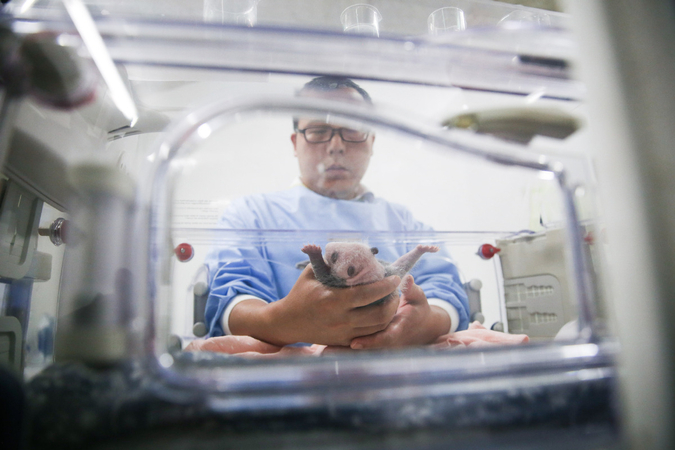
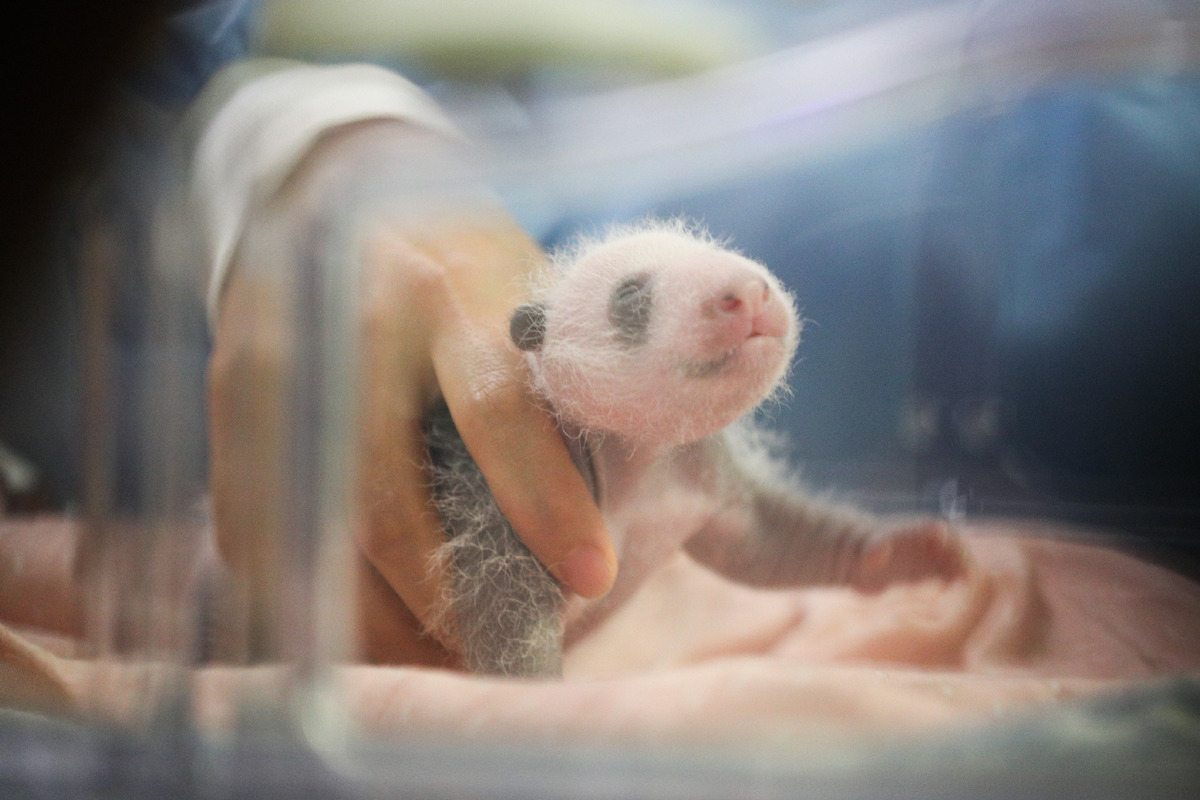
Twin panda cubs born in Belgium

ASIA NEWS NETWORK
202 Viewed

ศาสตร์เกษตรดินปุ๋ย : ขอบคุณแหล่งข้อมูล : หนังสือพิมพ์ The Nation
https://www.nationthailand.com/ann/30375336

202 Viewed

ศาสตร์เกษตรดินปุ๋ย : ขอบคุณแหล่งข้อมูล : หนังสือพิมพ์ The Nation
https://www.nationthailand.com/ann/30375331

336 Viewed
Mizanur Rahman, professor of law at Dhaka University, said that while bringing the perpetrators of the alleged genocide to justice was important, ensuring the repatriation of the refugees was more crucial for Bangladesh.
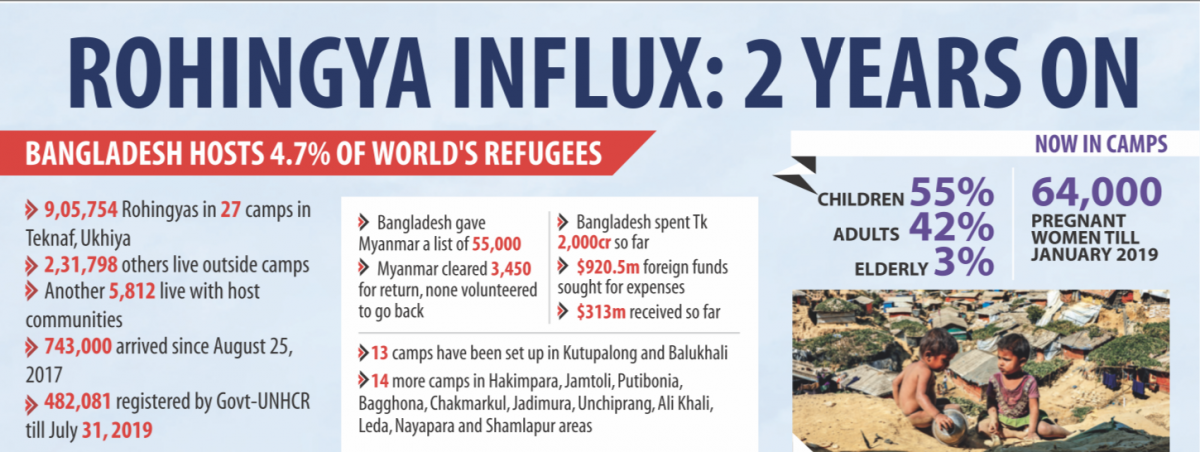
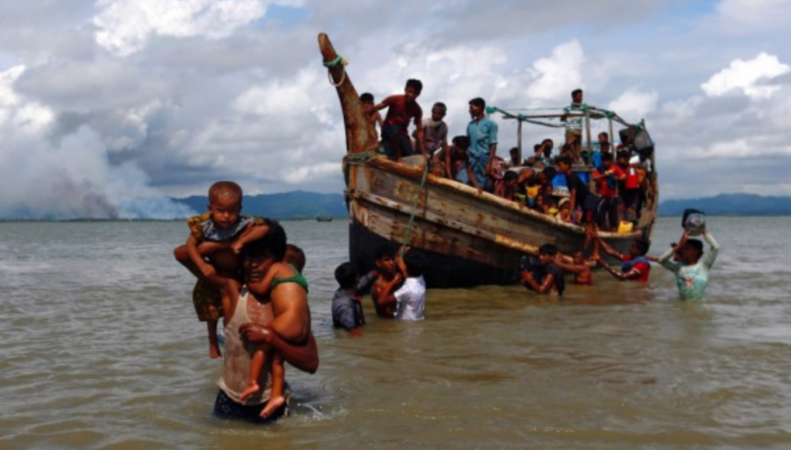
Bangladesh now hosts some 1.1 million Rohingyas, including 743,000, who fled the brutal military crackdown in Rakhine since August 25, 2017.
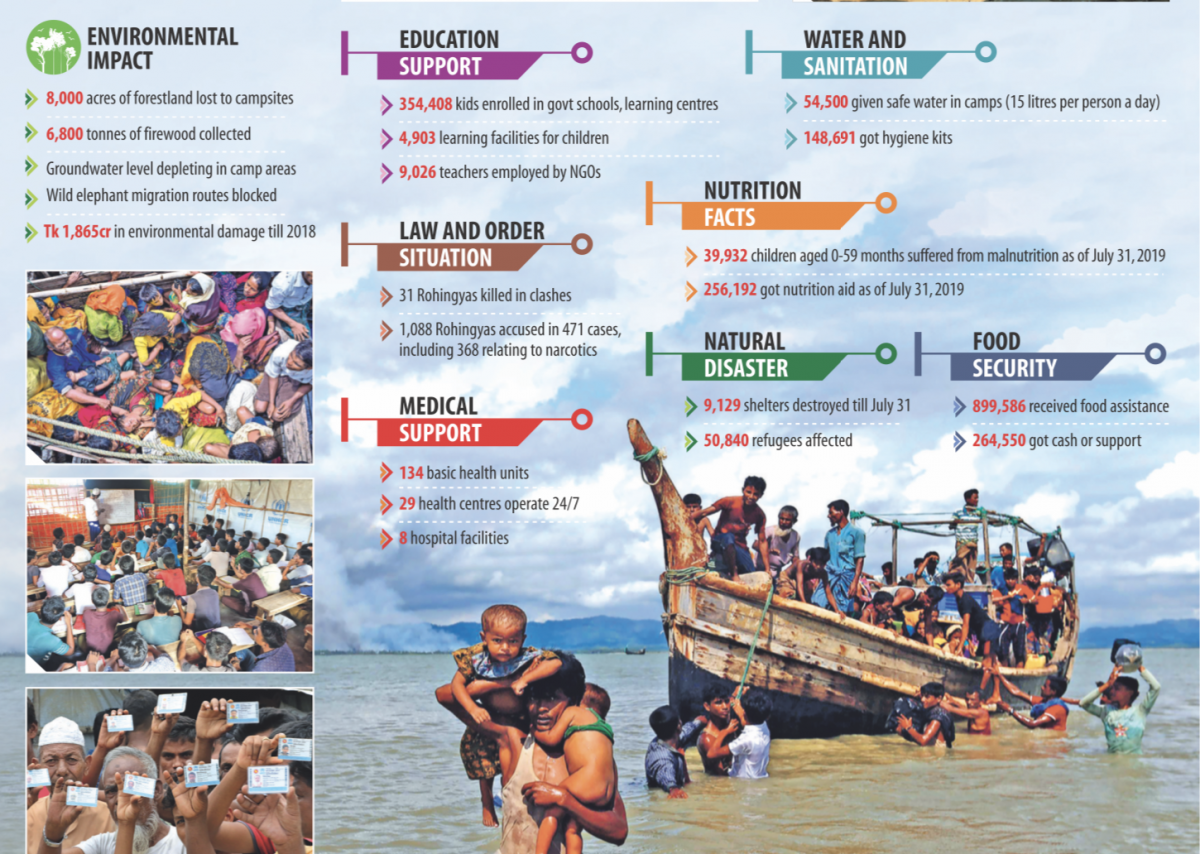
Before they go back, the Rohingyas want guarantee of citizenship, safety in Rakhine state, freedom of movement, recognition of their ethnicity and return to their original homes, not to camps.
But Myanmar has made no such commitments. As a result, both the repatriation attempts — one on November 15 last year and the latest on August 22 — fell flat.
Bangladesh has not been able to draw the expected support from China, India, Japan as well as the ASEAN, resulting in the delay in repatriation, legal and international relations experts say.
Rather, influenced by China and India, Bangladesh has been lenient in its approach, they add.
China had a mediation role in the second repatriation process, after the first attempt failed last year.
THE 1982 CITIZENSHIP LAW
Myanmar does not recognise Rohingyas as its citizens since1982. The Advisory Commission on Rakhine, headed by Kofi Annan and formed in 2016 to make concrete suggestions for development and peace in the conflict-prone state, recommended amending Myanmar’s citizenship law of 1982 to align it with international standards and thus make it equal for all regardless of religion and ethnicity.
“A single act of amending the law and granting citizenship to the Rohingyas could be the most fundamental change that would draw the Rohingyas back to Myanmar,” said Prof Imtiaz Ahmed of the International Relations Department at Dhaka University.
However, there has been no move to this end so far. This means Myanmar is not sincere at all about the repatriation. “It is rather playing diplomacy with Bangladesh,” he said.
Myanmar has set conditions that the ethnic minority group has to accept the National Verification Card (NVC), which it claims is a pathway to citizenship. Rohingyas, however, refuse to accept it.
The provision of NVC was also incorporated in the repatriation deal signed between Bangladesh and Myanmar in November 2017.
Before the latest repatriation move failed as no one agreed to return, leaflets issued by the Myanmar government were circulated among the refugees in Cox’s Bazar, saying they have to accept NVCs after repatriation.
“Why should we accept NVCs? It’s meant for foreigners. We were born in Myanmar and our forefathers lived there,” said Razia Sultana, a Rohingya lawyer working for the refugees’ rights.
Myanmar also does not recognise the Rohingya ethnicity, another core demand of the Rohingya. “It’s the question of our identity, but that’s denied by Myanmar,” she said.
SAFETY IN RAKHINE
Safety remains a major concern for the Rohingyas, who saw their relatives killed and raped and their houses burnt to ashes by the Myanmar military.
“Now the presence of army is even stronger in Rakhine State,” said Razia.
An international research last year found an estimated 25,000 Rohingyas were murdered and 19,000 Rohingya women and adolescents raped during the military crackdown in Rakhine since late August of 2017.
The research, conducted by a consortium of academics and organisations from Australia, Bangladesh, Canada, Norway and the Philippines, also found around 43,000 Rohingyas suffered bullet wounds, 36,000 were thrown into fire and 116,000 beaten up by the Myanmar authorities.
Independent UN investigators found the crimes by Myanmar military had genocidal intent and demanded investigations against them.
However, the UN Security Council could not take any concrete action against Myanmar because of opposition from China and Russia, two veto powers, over the last two years.
Myanmar denies the allegations, saying the military action was in response to attacks on police camps by Rohingyas.
Even two years after such brutality, the UN, independent journalists and many aid agencies do not have access to large parts of Rakhine. In many places, internet connections were snapped amid clashes between Arakan Army and Myanmar military, Razia said.
“Rohingyas don’t feel safe at all to return there under such circumstances. Should we go to the dark place?” she asked.
Joseph Tripura, spokesperson for UNHCR in Dhaka, said the UN refugee agency does not have access to many parts of Rakhine, which prevents the agency from fully assessing the conditions of return.
The agency does not believe the current situation is congenial to a large-scale repatriation, he added.
Razia said Rohingyas demand international peacekeeping force, especially the ASEAN force, to ensure their safety when they return. But until now, there has been no such move by Myanmar.
‘WANT TO RETURN TO OUR HOMES’
About 128,000 Rohingyas, displaced during the communal clashes between 2012 and 2016, were kept in the IDP (internally displaced people) camps in Myanmar. Some of those who moved out were put in newly built camps where they face restrictions of movement and other human rights violations.
A network of official checkpoints and threats of violence by local Buddhists prevent Muslims from moving freely in Rakhine. As a result, they are cut off from sources of livelihoods and most services, and reliant on humanitarian handouts, according to a Reuters report.
“We know that thousands of Rohingyas back in Myanmar are still in those camps facing difficulties,” said a Rohingya leader from Camp 25 in Shalban of Teknaf.
“The Myanmar government says they have built camps for us. We don’t want to return to camps. They are no better than confinement. We want to return to our homes,” he said.
Besides, if Myanmar was really sincere about the repatriation, it would take back the 6,000 plus Rohingyas, who have been living in no-man’s land near Ghundhum of Naikhyangchhari since late August 2017, said Syed Ullah, a Rohingya from a Kutupalong camp in Ukhia.
ROHINGYAS NOT ENGAGED IN TALKS
The Rohingyas also feel ignored as they were not included in the talks about the repatriation, their leaders say.
Bangladesh signed a repatriation deal with Myanmar in November 2017, while the UNDP and UNHCR signed a tripartite deal with Myanmar in June last year. Since then, these parties held numerous meetings and made decisions about their return.
“However, there was no representation of the Rohingyas in these meetings,” said Mohibullah, chairman of Arakan Rohingya Society for Peace and Human Rights (ARSPH), a Rohingya organisation based in Kutupalong camp.
In June last year, the ARSPH also wrote to Prime Minister Sheikh Hasina, requesting her to make them a party to the discussion.
“If we can talk directly, we can raise our issues the way we see with the Myanmar government,” Mohibullah told The Daily Star, adding that it can reduce the mistrust and misperceptions.
On Thursday, Bangladesh Foreign Minister AK Abdul Momen also underscored the need for addressing this distrust, a big factor why the Rohingyas are afraid of going back to Rakhine.
“I think Myanmar should take some Rohingya leaders to Rakhine to show how they have improved the situation over there,” he told reporters.
BANGLADESH’S ‘STRATEGIC MISTAKE’
Prof Mizanur said Bangladesh made a strategic mistake by signing the bilateral deal with Myanmar.
Since it was a decades-long crisis and Myanmar was mostly responsible for it, Bangladesh should not have signed the bilateral deal hastily. It should rather have given the responsibility to the international community, he said.
“The momentum of international pressure that was there in the beginning has died down because of the bilateral nature of the deal,” he told The Daily Star on August 23, a day after the second repatriation attempt failed.
Those who supported the bilateral deal, including China and India, are not being able to create pressure on Myanmar for fundamental changes required for the repatriation, Prof Mizanur said.
https://www.thedailystar.net/frontpage/news/repatriation-bids-designed-fail-all-along-1790116
ศาสตร์เกษตรดินปุ๋ย : ขอบคุณแหล่งข้อมูล : หนังสือพิมพ์ The Nation
https://www.nationthailand.com/ann/30375256

244 Viewed
Although Bangladesh has only a few tigers in the Sundarbans, the trend of poaching for tiger skin, teeth, bones, skulls, and other parts of tiger body is increasing, said the report published on Wednesday.
It said 51 tigers were killed over the last 20 years and the average for 2015-18 is 3.1 tigers, which is a lot higher than that of 2000-2014 when it was 2.0.
Officials concerned in Bangladesh, however, denied TRAFFIC’s claims and said poaching numbers and seizures of tiger body parts were reducing.
Mihir Kumar Doe, conservator of forests at the Wildlife & Nature Conservation circle of the Department of Forest, yesterday told The Daily Star, “The number of tiger skin and bone seizures have decreased recently. We have strengthened monitoring and various conservation activities to stop poaching.”
The TRAFFIC report titled “Skin and Bones Unresolved: An Analysis of Tiger seizures from 2000-2018” said a conservative estimate of 2,359 tigers were killed between 2000 and 2018 across 32 countries and territories.
There were 1,142 incidents of seizures reported, most of which were in Asia.
“Out of these, 95.1 percent [or 1,086 incidents] occurred in the 13 Asian tiger range countries, accounting for 2,241 tigers,” according to the report.
On an average, over 60 seizures and body parts of almost 124 tigers were recorded every year,” the report said.
“Vietnam and Bangladesh also reported more than doubling average yearly seizures, and an increase in the number of tigers seized,” the report claimed.
Over the last four years, Bangladeshi authorities mostly seized tiger skins. Bangladesh’s seizures account for 2.9 percent of the worldwide seizures.
India, China, and Indonesia made most of the seizures — India 463 or 40.5 percent, China 126 or 11.0 percent, and Indonesia 119 or 10.5 percent.
Wildlife experts in Bangladesh said the situation was dreadful as the number reflects only a tiny part of actually poaching incidents.
“When tiger population is poor, poaching in such a rate is really concerning. Usually, only 20 percent poaching incidents are reported,” said Monirul H Khan, renowned tiger researcher and a professor at the Jahangirnagar University’s Zoology department.
According to WildTeam (formerly Wildlife Trust of Bangladesh), 19 incidents of tiger body parts recovery were recorded in Bangladesh between 2011 and 2019. Three cubs, 19 skins, 294 bones, seven skulls, and 45 teeth were recovered.
Prof Md Anwarul Islam, chief executive of WildTeam and a teacher of Zoology department at Dhaka University, said, “We compiled the data when seizures were made by different agencies. There certainly are unreported incidents. That’s why we do not know the real picture.”
Md Moyeen Uddin Khan, conservator of forest, Khulna circle, said the number the report mentioned was unbelievable.
Our record says during the timeframe, 10 tigers died naturally and one during the Sidr cyclone, he said.
“There are 49 village tiger response teams, four co-management committees, and 22 community patrolling groups are there in the Sundarbans area for tiger conservation,” he said.
Bangladesh has taken several steps for tiger conservation, including Tiger Action Plan 2009-2017, National Tiger Recovery Programme, and an amendment to the Forest Act, 2012.
According to the latest tiger census of the government released in May, the number of Bengal tigers in the Bangladesh part of the Sundarbans increased slightly, to 114 in 2018 from 106 in 2015.
ศาสตร์เกษตรดินปุ๋ย : ขอบคุณแหล่งข้อมูล : หนังสือพิมพ์ The Nation
https://www.nationthailand.com/ann/30375255
248 Viewed
In three regions in Mindanao, for instance, 15 to 18 percent of teenagers had become mothers, according to a demographic health survey.
The economic cost alone for teenage women is staggering. Pernia placed at between P24 billion and P42 billion the lifetime earnings women in the country had lost to early childbearing.
The risk of not tackling the crisis head-on is clear—a large cross-section of families would be condemned to perpetual “intergenerational poverty,” he said.
“I commit to advocate for the President to issue an executive order acknowledging teen pregnancy as a national social emergency,” Pernia said.
Dropouts
His remarks—given on his behalf by Commission on Population Executive Director Juan Perez III—were delivered at a first of its kind summit in Pasay City that convened development, health and education officials to grapple with teenage pregnancy.
Pernia called on lawmakers to act swiftly on the matter, which has profound effects on the health of both adolescent mothers and their children and is one of the primary drivers behind school dropout rates, overtaking even financial issues.
“This issue affects the heart of the development of our country as the state of our young people today affects the state of our country’s future,” the secretary said.
According to the most recent National Demographic Health Survey in 2017, 9 percent of women between the ages of 15 and 19 have begun childbearing—a figure that increases even further when one zeroes in on the most vulnerable or impoverished populations.
Ten percent of teenagers in rural areas, for example, start childbearing. The figure rises even further in certain regions such as Davao (18 percent), Northern Mindanao (15) and Soccsksargen (15).
24 babies per hour
The likelihood that an adolescent has started childbearing also increases dramatically with age. While only 1 percent of 15-year-olds have gotten pregnant, 22 percent have gotten so by 19.
And although the 9 percent figure in 2017 is 1 percentage point lower than in 2013, there are still 196,409 women aged 10 to 19 who have given birth—24 babies born to adolescent mothers every hour.
“I join the voices of adults putting a spotlight on the issue of teen pregnancy by calling on the passage of a policy to address this critical issue,” Pernia said.
He called for the enactment of a teenage pregnancy prevention bill in Congress.
Sen. Risa Hontiveros filed Senate Bill No. 1888, or the Prevention of Adolescent Pregnancy Act, in December 2018. The measure reiterates that educational institutions are barred from expelling pregnant students and forms a Teenage Pregnancy Prevention Council.
Pernia told Congress that a wide-scale lobbying effort—similar to the fervent battle to pass the reproductive health (RH) law in 2011—should be mounted to pass the bill.
“I urge each one of us to take part in pushing for this bill to be passed into law like what we did in the long fight for the [RH law],” he said.
Family matters
Education Secretary Leonor Briones said President Duterte, alarmed by the far-reaching effects of early pregnancy, had instructed his Cabinet to organize the summit.
Fifty-seven percent of female students had been forced to drop out of school due to “family matters,” of which the biggest components were teenage pregnancy and early marriage, data from the 2017 Annual Poverty Indicator Survey showed.
Family matters trounced even the cost of education, or financial concerns, as the main reason for leaving school. Financial concerns only came in second—cited by a considerably lower 14.3 percent of female dropouts.
“When a child drops out of school, what career opportunities are available to them?” Briones said. “This has a real effect on employment.”
Health Secretary Francisco Duque III rattled off even more grim numbers.
Maternal complications
Childbearing in adolescence, he said, carries greater risks of maternal complications during both pregnancy and childbirth—such as preterm deliveries—and infant mortality, as children born to teenage mothers have far lower survival rates.
Efforts to combat teenage pregnancy, Duque said, can no longer be confined to the Department of Health (DOH).
“It should not depend on the efforts of the DOH alone [or] all government agencies, but it requires the participation of the private sectors, civil society organizations, communities and the entire citizenry,” Duque said.
ศาสตร์เกษตรดินปุ๋ย : ขอบคุณแหล่งข้อมูล : หนังสือพิมพ์ The Nation
https://www.nationthailand.com/ann/30375254
243 Viewed
Taiwan buying United States ‘fighter jets will not make its military strong enough to resist reunification by the People’s Liberation Army, and the exorbitant “protection fee” used to procure US weapons should have been spent on improving the island’s economy and people’s livelihoods, military experts said on Thursday.
On Tuesday, the US Defense Security Cooperation Agency said in a statement that the US State Department has approved a possible $8 billion arms package-featuring 66 Lockheed Martin F-16 fighter jets and other support equipment-to Taiwan as a means to help the island meet “the evolving military threat” from the Chinese mainland.
Ma Xiaoguang, spokesman for the State Council’s Taiwan Affairs Office, said on Thursday that China urges the US to “immediately stop arms sales to Taiwan and stop supporting the separatist forces of ‘Taiwan independence’,” he said.
If approved by the US Congress, the deal will be one of the largest of its kind in recent decades and the first time since 1992 that the US has sold F-16s to Taiwan.
Ma called the island’s ruling Democratic Progressive Party “shameless” for ignoring the wellbeing and safety of Taiwan compatriots and selling itself to the US.
“The DPP is driving the 23 million Taiwan residents to a dead end and it will definitely be punished by history,” he said.
Major General Chen Rongdi, president of the War Institute of the PLA Academy of Military Science, said in a seminar in Beijing on Thursday that the arms deal has seriously damaged China-US relations as well as peace and security of the Taiwan Straits.
“The US is acting in bad faith by selling arms to Taiwan, because it had promised to reduce such transactions,” Chen said.
The China-US joint communique of 1982 states the US will not seek to carry out a long-term policy of arms sales to Taiwan and that it intends gradually to reduce its sale of arms to Taiwan.
“As for the Taiwan secessionists, the arms deal is like whistling in the dark-a futile act to embolden their separatist efforts,” he said. “For an island like Taiwan, will buying a few planes improve its military capability? Impossible.”
Chinese Foreign Ministry spokesman Geng Shuang said on Wednesday that China will impose sanctions on US companies involved in the arms sales. China promised similar sanctions when the US sold $2.2 billion worth of weapons, including M1A2 Abrams tanks and Stinger anti-aircraft missiles, to Taiwan last month.
Apart from sanctions, Chen said China will not rule out the possibility of taking other actions as well. “The PLA has the means, capability and will to safeguard national sovereignty and territorial integrity. This determination and ability should not be questioned,” he said.
Senior Colonel Cao Yanzhong, a researcher from the war institute, said the motive behind the arms deal is the DPP trying to borrow the strength of foreign influence and resist unification at the expense of the Taiwan people.
Cao said the recent deal is aimed at making Taiwan more dependent on US equipment, thus allowing US military industries to create more jobs and continue to squeeze more money from the island.
“The DPP is foolishly paying more and more protection fees to the US as an act of compliance,” he said. “The money can be better spent elsewhere, like improving the economy and the livelihood of Taiwan compatriots.”
ศาสตร์เกษตรดินปุ๋ย : ขอบคุณแหล่งข้อมูล : หนังสือพิมพ์ The Nation
https://www.nationthailand.com/ann/30375253

234 Viewed
According to the website, a ‘Genocide Watch’ warning is declared by the NGO when there are signs of the early stages of a genocide in progress.
Founded by academic Dr Gregory Stanton in 1999, the organisation exists to predict, prevent, stop, and punish genocide — as defined in the Genocide Convention — and other forms of mass murder.
The most recent genocide alert issued by the organisation was for occupied Kashmir, in which it identified the genocidal process, based on Dr Stanton’s 10 Stages of Genocide, to be far advanced:
In view of these developments, Genocide Watch has called upon the United Nations and its members to warn India not to commit genocide in occupied Kashmir.
At least 4,000 people, mostly young men, have been detained in Indian-occupied Kashmir since a security lockdown and communications blackout was imposed to curb unrest after New Delhi stripped the disputed region of statehood.
The crackdown began just before Indian Prime Minister Narendra Modi’s Hindu nationalist-led government on August 5 stripped Jammu and Kashmir of its semi-autonomy and its statehood, creating two federal territories.
Thousands of additional Indian troops were sent to man checkpoints in the Kashmir Valley, already one of the world’s most militarised regions. Telephone communications, cellphone coverage, broadband internet and cable TV services were cut for the valley’s seven million people.
A report by a team of activists and scholars found that people living under the lockdown expressed “enormous anger and anguish” in response to the surprise move by Modi’s government to revoke autonomy.
Maimoona Mollah, an activist on the fact-finding team, likened the situation in the region to Israel’s security protocol in the Palestinian territories. “Kashmir is like an open jail,” said Vimal Bhai, another activist on the team.
Genocide Watch has also issued an alert for Assam state in India, where millions of Bengali Muslims face losing citizenship status.
Over seven million people in Assam State, mostly Muslims of Bengali descent, may lose their Indian citizenship and risk imprisonment in special “foreigner detention centers”. A process is now underway to “verify” the citizenship of all 32 million inhabitants of Assam state, which requires each person to affirmatively prove that they are Indian and not an “illegal migrant”.
“At the urging of Prime Minister Narendra Modi’s Hindu nationalist central government, Assam is updating its master list of ‘citizens’ […] Anyone not on the final ‘citizen’ list will be presumptively declared a ‘foreigner’, subject to statelessness and indefinite detention.
“Assam’s Muslims are especially likely to be excluded from the ‘citizen’ list as part of a decades-long pattern of discrimination. The word ‘foreigners’ is a common term of dehumanization used to exclude targeted groups from citizenship and the exercise of their fundamental civil and human rights,” said Genocide Watch.
“The Home Minister of India has repeatedly referred to the Bengali Muslims as ‘termites’. Anti-Muslim propaganda has polarised the Assam population.
“Assam Chief Minister Sarbananda Sonowal has requested additional Indian government troops and police to arrest ‘foreigners’. The Assam state is constructing ten new ‘foreigner’ detention centers to add to the six prisons already in existence,” added Genocide Watch, concluding:
“These are the classification, symbolisation, discrimination, dehumanisation, organisation, and polarisation stages of the genocidal process.”
Roundups of “foreigners” are likely to ignite genocidal massacres and a massive refugee crisis, the organisation highlighted.
“If India imprisons Bengali Muslims in Assam, it will be violating its obligations under the UN Refugee Conventions. If it expels them from India, it will be perpetrating ‘forced displacement’, a crime against humanity. If genocidal massacres occur, India will violate its obligations to prevent genocide under the Genocide Convention,” added the watchdog.
Genocide Watch called upon the UN Secretary General, the UN Special Advisor on the Prevention of Genocide, the UN High Commissioner for Human Rights, and key UN member states to warn India “not to strip citizenship from, imprison, and forcibly displace millions of Bengali Muslims, many of whom have lived their entire lives in Assam state”.
ศาสตร์เกษตรดินปุ๋ย : ขอบคุณแหล่งข้อมูล : หนังสือพิมพ์ The Nation
https://www.nationthailand.com/ann/30375252

225 Viewed
The failure of the second attempt to begin repatriating the Rohingyas has once again exposed Myanmar’s lack of sincerity, experts said.
Rohingyas say Myanmar has not taken into consideration any of their core demands — guarantee of citizenship, recognition as an ethnic community, ensuring safety in Rakhine and other basic rights that they have been denied since 1982. Until these conditions are met, the Rohingyas will not be willing to go back.
The issues were raised time and again by rights groups, but nothing has been done.
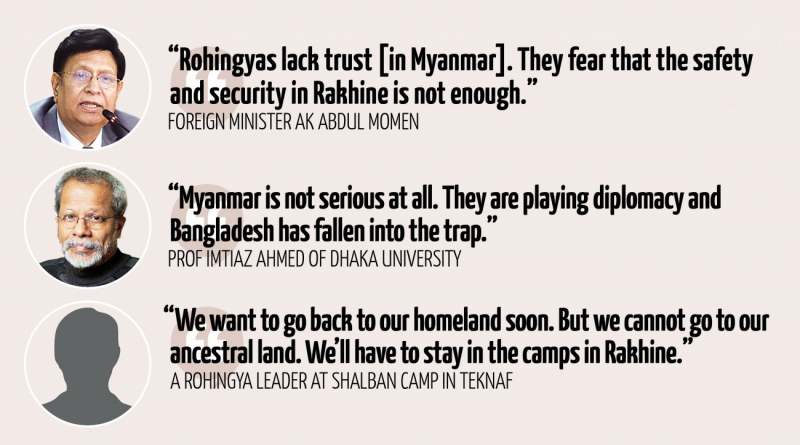
“Myanmar is not serious at all. They are playing diplomacy and Bangladesh has fallen into its trap,” Prof Imtiaz Ahmed of International Relations at Dhaka University told The Daily Star yesterday.
The most crucial thing Myanmar needs to do before repatriation is amend its 1982 law, which stripped the Rohingyas of citizenship.
“If Myanmar grants citizenship to the Rohingyas, they would automatically go back to Myanmar. They will realise that Myanmar truly wants them back,” said Imtiaz, also director of the Centre for Genocide Studies at the university.
Meanwhile, Rohingyas maintain that their needs have to be addressed for any repatriation to take place.
“We want to go back to our homeland soon. But the conditions there are not ready. We cannot go to our ancestral land. We’ll have to stay in the camps,” said a Rohingya leader from Shalban camp in Teknaf, requesting anonymity.
There is no guarantee that the Rohingyas would get citizenship if they return, he said, adding that they were still unsure of what kind of safety or security they would be given there.
The Rohingya leader is one of the 3,450 refugees cleared by Myanmar to return to the country. He had been interviewed by the UN refugee agency, the United Nations High Commissioner for Refugees (UNHCR), and the Refugee Relief and Repatriation Commissioner (RRRC).
The Rohingyas’ lack willingness to return was a recurring feature during the interviews, officially called intention surveys.
Refugee Relief and Repatriation Commissioner Mohammad Abul Kalam said that none of the Rohingyas of the 295 families interviewed by the UNHCR and RRRC over the last two days had volunteered to return.
“We have interviewed 295 families, but none has yet shown interest to return to Myanmar,” he told reporters at a camp in Teknaf around 12:30pm yesterday.
He added that the authorities were fully prepared to transport the Rohingyas to the two transit camps, where they would be temporarily sheltered before being handed over to Myanmar.
Myanmar had cleared the names of 3,450 Rohingyas from a list of 22,000 plus. In early August, Bangladesh provided the approved list to the UNHCR in Dhaka and sought its assistance in assessing their willingness to return to Myanmar.
Accordingly, officials of the UN High Commissioner for the Refugees (UNHCR) in Bangladesh and of the RRRC office conducted the assessment of 339 families out of 1,037 cleared by Myanmar.
“The process of assessing voluntariness will continue. We will see if anybody wants to return. The vehicles we have arranged [for their transportation to transit camps] will also remain ready,” Abul Kalam said.
On Myanmar’s efforts, Dhaka University’s Prof Imtiaz said a delegation from the country had visited Rohingya camps in July, while the Myanmar’s Independent Commission of Inquiry visited the camps this week.
“The purpose of all these initiatives, as well as the repatriation move, are attempts to prove in the UN General Assembly in September that it has been sincere. It has actually been not,” he said.
Myanmar is under pressure as two years have passed since the Rohingya influx and the International Criminal Court is moving to investigate the crimes, he said.
The first attempt at repatriation on November 15 last year also failed for similar reasons, as the Rohingyas had raised the same concerns and demands back then too.
‘A SERIOUS LACK OF TRUST’
Despite the mechanisms for the repatriation being ready, a lack of trust in Myanmar among the Rohingyas continues to exist.
“How can we believe we will be allowed to go to our houses?” a Rohingya man said, echoing many others living in some of the world’s largest refugee camps in Cox’s Bazar, home to some 1.1 lakh Rohingyas.
Over 742,000 of them fled military atrocities including killings, rapes, tortures, burning of houses in Rakhine State since August 25, 2017.
Foreign Minister AK Abdul Momen said it was regrettable that none of the Rohingyas interviewed as of yesterday was willing to return.
“Rohingyas lack trust [in Myanmar]. They fear that the safety and security in Rakhine is not enough. Therefore, the Rohingya leaders should be taken to Rakhine to prove that the situation there has improved,” Momen said.
“We were expecting repatriation to start. We are not losing hope. We’ll continue to work on repatriation.”
Asked about the Rohingyas’ demands, he said, “We cannot be held hostage to their demands. They have to achieve those after they return to their homeland.”
If the Rohingyas stay here longer, they won’t be comfortable, he said, adding that the Bangladesh government had already spent around Tk 2,500 crore for them and the donors may not be interested to release more funds in the future.
Meanwhile, in a statement yesterday, UNHCR said it appreciated the consistent commitment by the government of Bangladesh to ensure that the refugees’ decisions would be respected. UNHCR has agreed with Bangladesh and Myanmar that any repatriation of refugees must be voluntary, safe and dignified.
ARE ROHINGYAS BEING MISLED?
A parliamentary body yesterday asked the foreign ministry to find out whether any non-government organisation was misleading Rohingyas and convincing them to not return to Myanmar.
The parliamentary standing committee on the foreign ministry came up with the directive as several members of the House watchdog alleged that a number of NGOs were engaged in ensuring the refugees do not return.
“The committee has asked the foreign ministry to identify those NGOs and to oversee activities of all NGOs working in Cox’s Bazar on the Rohingya issue,” said a member of the committee wishing anonymity.
The parliamentary watchdog also asked the ministry concerned to enhance diplomatic efforts to rehabilitate the Rohingyas to their own country soon.
It asked the ministry to take a delegation of Rohingyas to Rakhine to give them a firsthand experience of the situation there in a bid to convince them to return.
The committee also asked the ministry to arrange visits to Vietnam, Thailand and Singapore for the members of the parliamentary body for holding talks with those countries on the Rohingya issue.
Awami League MP and chief of the parliamentary committee Faruk Khan presided over the meeting at the Jatiya Sangsad Bhaban.
Earlier yesterday, Foreign Minister AK Abdul Momen said the government would take actions against organisations working against repatriation. “We are identifying them,” he told reporters at his office.
ศาสตร์เกษตรดินปุ๋ย : ขอบคุณแหล่งข้อมูล : หนังสือพิมพ์ The Nation
https://www.nationthailand.com/ann/30375251
135 Viewed
After scrambling for years to deal with the piles of waste in the Everest region, which has gained notoriety as the ‘world’s highest garbage dump’, the local authority has endorsed a plan to declare the whole area a ‘no plastic’ zone from the next year.
The Khumbu Pasang Lhamu Rural Municipality in Solukhumbu district has decided that starting January 1, 2020, it will impose a ban on the use of plastic bags, bottles and other plastic items, citing their adverse effects on human health, especially in the whole Everest region.
The rural municipality, passing its policies and programmes for the current fiscal year, decided that the use of plastic bags less than 30 microns will be prohibited in the Everest region, according to Ganesh Ghimire, chief administrative officer at the local authority.
With the new rule, even bottled drinks will be barred from the area. Now onwards, all the bottled beverages will have to be taken in cans only.
“Over the years, plastic has created havoc in a region that is fragile and home to the world’s tallest peaks,” Ghimire told the Post. “As the number of tourists visiting the area went up, the Everest region was flooded with plastics. The initiative is taken to rid the region of plastics.”
Once the rule comes into force, no one—locals or tourists—will be allowed to use and carry plastic bags, and plastic bottles inside the rural municipality, according to Ghimire.
“We will only allow canned drinks because cans are not as hazardous for the environment like plastic. Locals can also recycle cans,” Ghimire said. “It was necessary to impose such a strict ban because the region was plastered with plastic and other items made of plastic.”
The Everest region has long been struggling to manage solid waste that visitors to the region bring along every year. Hundreds of mountaineers, Sherpas, guides and other high altitude porters en route to Everest leave behind tonnes of both biodegradable and non-biodegradable wastes that include empty oxygen canisters, bottles, ropes, kitchen waste, and faecal matter, polluting the area and the settlements downstream.
The government rule for every climber to bring back at least 8 kgs of garbage—the amount of trash estimated to be produced by one climber on average—has remained mostly ineffective.
Earlier this year, a 45-day ‘Everest Cleaning Campaign’, led by the rural municipality and supported by various governmental and non-governmental agencies, had brought down nearly 11,000 kgs of garbage from the world’s tallest peak. Plastic in various forms and sizes was the major item in the collected trash.
The campaign, which was one of the most ambitious clean-up projects on Everest, had cost over Rs25million.
“Besides disturbing the local environment, we have to spend a huge amount of money clearing this trash every year,” said Ghimire.
As a replacement for plastic bags, the local authority will distribute five alternative bags free of cost to each resident in the rural municipality with approximately 2,000 households.
The local authority fears that with the opening of a road that connects Kharikhola in ward-1 of the rural municipality with Chaurikharka in ward-3 would exacerbate plastic pollution.
According to the rural municipality’s estimate, nearly 150,000 tourists use the route. The number is predicted to go up to 500,000 next year.“More tourists on the route will mean more plastics in the region,” Ghimire said. “Before we face an unprecedented amount of plastic in future, this is the right time to prohibit plastics here.”
ศาสตร์เกษตรดินปุ๋ย : ขอบคุณแหล่งข้อมูล : หนังสือพิมพ์ The Nation
https://www.nationthailand.com/ann/30375249
139 Viewed
China’s Foreign Minister Wang Yi has called on his counterparts from Japan and South Korea to resolve their differences through dialogue, amid concerns that worsening relations between Tokyo and Seoul may threaten regional economic stability down the road.
In the first meeting between the three countries’ top diplomats since 2016, the East Asian neighbours pledged to work together to support free trade and maintain regional growth. China, Japan and South Korea yesterday agreed to continue work so that a trilateral summit between their top leaders can take place at the year end, while also accelerating negotiations to reach regional free trade agreements.
At their meeting in the resort of Gubei Water Town in Beijing yesterday, Mr Wang said the three countries reaffirmed their commitment to creating a free trade zone between them and to completing negotiations by the end of the year on the 16-nation Asian trade pact known as the Regional Comprehensive Economic Partnership.
“With downward pressure on the global economy, the three important economies of China, Japan and South Korea can enhance macroeconomic coordination and work together to uphold the free trading system,” said Mr Wang, flanked by Japanese Foreign Minister Taro Kono and South Korean Foreign Minister Kang Kyung-wha. “We will ensure an open economy in the interest of global growth and prosperity.”
The trilateral mechanism has taken on renewed importance in recent years, with US President Donald Trump upending the United States’ traditional role as a defender of the global trading order which supported the rapid growth of the three countries’ export-dependent economies.
China has also in recent years moved to deepen relations with its two neighbours by shelving longstanding disputes to focus on growing economic ties.
The summit, held on a rotating basis by Tokyo, Beijing and Seoul, has in the past been suspended occasionally when ties faltered or as leaders prioritised problems at home. This year marks the 20th anniversary since the first summit in 1999.
Japan’s top diplomat called on Beijing and Seoul to bolster trilateral cooperation even when bilateral relations sour, but his South Korean counterpart questioned Tokyo’s move to tighten export controls against her country.
Mr Kono said “two countries sometimes face various difficulties respectively, but even under such circumstances, Japan, China and South Korea should work together trilaterally”.
Dr Kang said it was necessary to eliminate “unilateral and arbitrary trade retaliatory steps and remove uncertainties” in East Asia.
Japan-South Korea ties have chilled in recent months over the Japanese imposition of export control measures in the wake of a string of South Korean court rulings last year ordering compensation for wartime labour.
At a press conference following the meeting, Japanese Foreign Ministry vice-spokesman Jun Saito said Japan did not see the need for any country, including the US, to mediate in this dispute, as “this is not a trade issue at all”.
At a three-way meeting in Bangkok earlier this month, US Secretary of State Mike Pompeo had urged his Japanese and South Korean counterparts to make efforts to ease their confrontation, but the two sides have shown little signs of reaching an agreement on the escalating economic and political row.
Mr Saito said Dr Kang had raised the issue with Mr Kono, who asked that the South Korean side take appropriate steps in response to anti-Japanese activities in South Korea, such as protests, boycotts of Japanese goods, and “irrational” new regulations aimed at Japanese firms.
Mr Kono also conveyed to Dr Kang Japan’s position that “the authorities in charge will have a meeting with the (South Korean) side once certain conditions are met”, Mr Saito added.
ศาสตร์เกษตรดินปุ๋ย : ขอบคุณแหล่งข้อมูล : หนังสือพิมพ์ The Nation
https://www.nationthailand.com/ann/30375248
140 Viewed
South Korea decided to withdraw from the bilateral military intelligence-sharing pact with Japan on Thursday, amid escalating friction over trade and historical issues.
In a televised announcement, Cheong Wa Dae said it has made the decision to abolish General Security of Military Information Agreement and will notify Japan via diplomatic channels by midnight on Saturday, the deadline for a decision on whether to renew the agreement.
“The government deemed that Japan caused grave change in the bilateral security cooperation environment by excluding the country from Export Trade Control Order (so-called ‘whitelist’) on Aug. 2 without citing clear evidence, saying that security-related issues have occurred from damaged trust between Korea and Japan,” Kim You-geun, deputy chief of Cheong Wa Dae’s national security office said.
“Under such circumstances, the government decided that it does not coincide with our national interest to maintain the agreement that was signed to exchange sensitive military information.”
Before the announcement, Cheong Wa Dae held a National Security Council meeting to discuss the matter.
The two neighboring countries first signed the military intel-sharing pact in November 2016, with encouragement from the United States, which seeks a strong bond with its Asian allies in the backdrop.
The agreement was set to automatically renew each year, and only be scrapped when one side chooses to end it 90 days before the expiration date.
But as bilateral ties have deteriorated since July when Tokyo placed controls on South Korea’s exports of three vital industrial materials, South Korea has been mulling options to fire back.
Japan also announced that it would remove South Korea from its list of countries for preferential trade treatment in early August. The removal will go into into effect on Aug. 28.
Following Cheong Wa Dae’s announcement, Foreign Minister Kang Kyung-wha said that abolishing GSOMIA was a separate matter to the alliance with the United States.
Arriving at Incheon International Airport after a trilateral summit with Japanese and Chinese foreign ministers, Kang also said that Korea and the US would continue to firm up cooperation and that Thursday’s decision on GSOMIA was made due to the issue of trust with Japan.
Just hours before Seoul’s announcement, top officials in Japan stressed the importance of the intel-sharing pact, highlighting that GSOMIA contributes to regional peace and stability.
Reiterating that GSOMIA has been automatically renewed every year, Japan’s Chief Cabinet Secretary Yoshihide Suga had said, despite the strained relations between Seoul and Tokyo, it is important to join forces in necessary areas.
Japanese Defense Minister Takeshi Iwaya had also expressed hope for the renewal of the agreement, saying the agreement would strengthen not only bilateral security cooperation but also firm up trilateral alliance with the United States.
Under GSOMIA, Seoul and Tokyo had exchanged confidential military information of similar levels on North Korea, at each other’s request. They were not mandated to provide the requested information if they choose not to. Since the deal was forged, the two allies had exchanged information through GSOMIA 29 times as of this month.