Jakkaphong unveils strategy to grow Miss Universe brand after ‘THB1.2bn debut’
MONDAY, JANUARY 16, 2023
Nongluck Ajanapanya
The new Thai owner of Miss Universe has hailed the success of the 71st pageant after R’Bonney Gabriel of the US was crowned in New Orleans on Saturday night.
JKN Global Group CEO Jakkaphong “Anne” Jakrajutatip said revenue this year was projected at a satisfactory 1.2 billion baht after the pageant was beamed live to viewers in 121 countries around the world.
About 70% of revenue came from contest-related fees for franchises, licensing, hosting, production, broadcast, ticket sales, and sponsorship, she said.
Jakkaphong made headlines as the first transgender owner of the Miss Universe brand when JKN purchased the organisation for US$20 million (657 million baht) last October.
The remaining 30% of revenue was from non-contest-related channels such as licensing & merchandising, sales of goods or services, and copyright to produce goods or services under Miss Universe brands or trademarks, she added.
Jakkaphong was speaking at a post-pageant event in New Orleans on Saturday night (Sunday, Thai time) held to unveil JKN’s growth strategy for the brand for its franchise holders across the globe.
She revealed nine business strategies aimed at making more money from licensing & merchandising, selling products or services, and MUO copyright on consumer goods and services ranging from natural mineral water to fashion products such as bags – both of which have already been launched.
“Many more consumer and fashion items are on the way. Our goal is to increase the proportion of non-contest-related income to 35-40% of this business group’s revenue. This excludes future expansion of the spa, restaurant, academy, and hotel businesses,” she said.
Jakkaphong also expressed optimism for the upcoming 72nd Miss Universe pageant in El Salvador in December.
China’s reopening lifts Thai export sector but recovery is fragile: experts
MONDAY, JANUARY 16, 2023
The reopening of China will benefit Thailand’s key export sector but the recovery remains fragile, experts say.
China, Thailand’s second-largest export market after the US, lifted border restrictions on January 8, spurring hopes of economic and trade recovery.
Trade Policy and Strategy Office (TPSO) director Poonpong Naiyanapakorn expects the country’s reopening to boost Thailand’s export sector, led by shipments of fruit, food and beverages, and fashion items.
Thai exports to China fell 6.5% in the first 11 months of last year, according to the Commerce Ministry.
However, Poonpong expressed concern over the possibility of another lockdown in China, where infections are surging after the zero-Covid policy was scrapped following mass protests last month.
Thai exports of durians, cassava, rubberwoods and chemicals would be affected if Beijing reimposes lockdown measures, he said on Monday.
On the positive side, Thailand’s medical exports could benefit if China’s borders remain open, he added.
Poonpong also cautioned that Chinese consumer demand could be dampened by rising inflation and strict monetary policies.
Nevertheless, he expects reduced tariffs under the Regional Comprehensive Economic Partnership to help boost Chinese imports from Thailand.
He advised Thai exporters to reduce risk by expanding their markets to other countries, diversify by creating a variety of new products, and make sure they had solid financial plans.
The Thai Chamber of Commerce (TCC) meanwhile cautions that slow growth in China would contribute to Thai exports shrinking in the first two quarters this year before rebounding as global demand recovers. The TCC said current strengthening of the baht could hit the competitiveness of Thais exports.
Gold rush to become trickle this Chinese New Year as Thais cut spending
MONDAY, JANUARY 16, 2023
The Gold Traders Association (GTA) expects gold sales to rise by only 5% to 10% during the Chinese New Year festival this coming weekend.
Chinese New Year usually brings a gold rush in Thailand with consumers queueing at gold-shop counters seeking gifts for their loved ones.
However, this year Chinese-Thai people will prefer to buy smaller trinkets weighing one or two salung, rather than one-baht pieces, GTA vice-president Pichaya Phisuthikul said.
One salung is 3.81 grams, or one-quarter of a baht.
He added that many gold consumers were still watching their spending as they had not yet paid off debts built up during the Covid-19 crisis.
Many gold shops meanwhile have reopened after their business was severely hit during the Covid-19 crisis, Pichaya said. However, some were still suffering staff shortages and many operators were unable to pay bonuses.
“It will take some time until businesses recover,” he said.
He advised investors to buy gold when the price drops to between 28,000 and 28,500 baht per baht-weight, and sell when the price approaches 30,000.
He also warned investors to be cautious when using gold-saving services as they risked becoming victims of criminals aiming to steal their cash.
Worachai Tangsitpakdee, director of the Chin Hua Heng chain of gold shops, also expects gold sales to rise over Chinese New Year, which falls on Sunday, January 22.
However, he expects Chinese-Thais to prefer gold pendants or rings to large necklaces as people would be reluctant to spend big on gold amid the economic recovery.
Carbon credit trading opens on FTIX platform tomorrow
SUNDAY, JANUARY 15, 2023
The Federation of Thai Industries will allow registration for trading carbon credits on its FTIX platform on Monday, a senior federation official said on Sunday.
Suwit Torraninphanit, chief of the federation’s climate change committee, said the FTIX had been developed through cooperation between the federation and the Climate Action Leading Organization (CALO). It will be operated by the federation’s Climate Change Institute.
The institute will on Monday start allowing companies to register for trading carbon credits from the Thailand Voluntary Emission Reduction Program (T-VER).
Suwit said the FTIX would help Thai exporters reduce pressure from importing countries to comply with carbon emission reduction standards by allowing them to buy carbon credits.
He said the FTIX platform would make it more convenient for Thai businesses to shop for T-VER carbon credits. Currently, they are restricted to over-the-counter trade.
The FTIX platform will be supervised by a committee and managed by a joint committee of members from the federation and CALO.
This will ensure transparent trading as well as creating an effective alternative for businesses to reduce carbon commissions to increase their competitiveness, Suwit explained.
The FTIX will be connected to the online system of CALO for trading T-VER carbon credits and will also trade 100% renewable energy (RE100 energy).
Suwit said the FTIX would register about 12,000 companies from 45 sectors.
CALO announced that 319 projects had been registered under the T-VER programme from the beginning of fiscal 2014 to the first quarter of fiscal 2023.
However, only 141 of the registered projects have been certified to trade 13.97 million tonnes of carbon dioxide equivalent (CO2e) and only 2.019 million tonnes of CO2e credits have been traded for a total of 152.95 million baht, according to CALO. In the first quarter of fiscal 2023 (from October to December 2022), nine projects were registered and eight of them have been certified to trade 460,600 tonnes of CO2e carbon credits, it said.
Satellite auction raises 806 million baht from sale of three slots
SUNDAY, JANUARY 15, 2023
Only three of five packages of satellite orbital slots were sold to three bidders for a total of 806 million baht in an auction held by the National Broadcasting and Telecommunication Commission on Sunday.
None of the three qualified companies bid for packages one or five, while the commission auctioned off the other three for a combined 806.076 million baht, it said.
Last week, three companies were given approval by the commission to participate in the auction: Space Tech Innovation, a subsidiary of satellite service provider Thaicom, Prompt Technical Services, a company registered in 2000 as an electrical installation service firm, and state-run National Telecom.
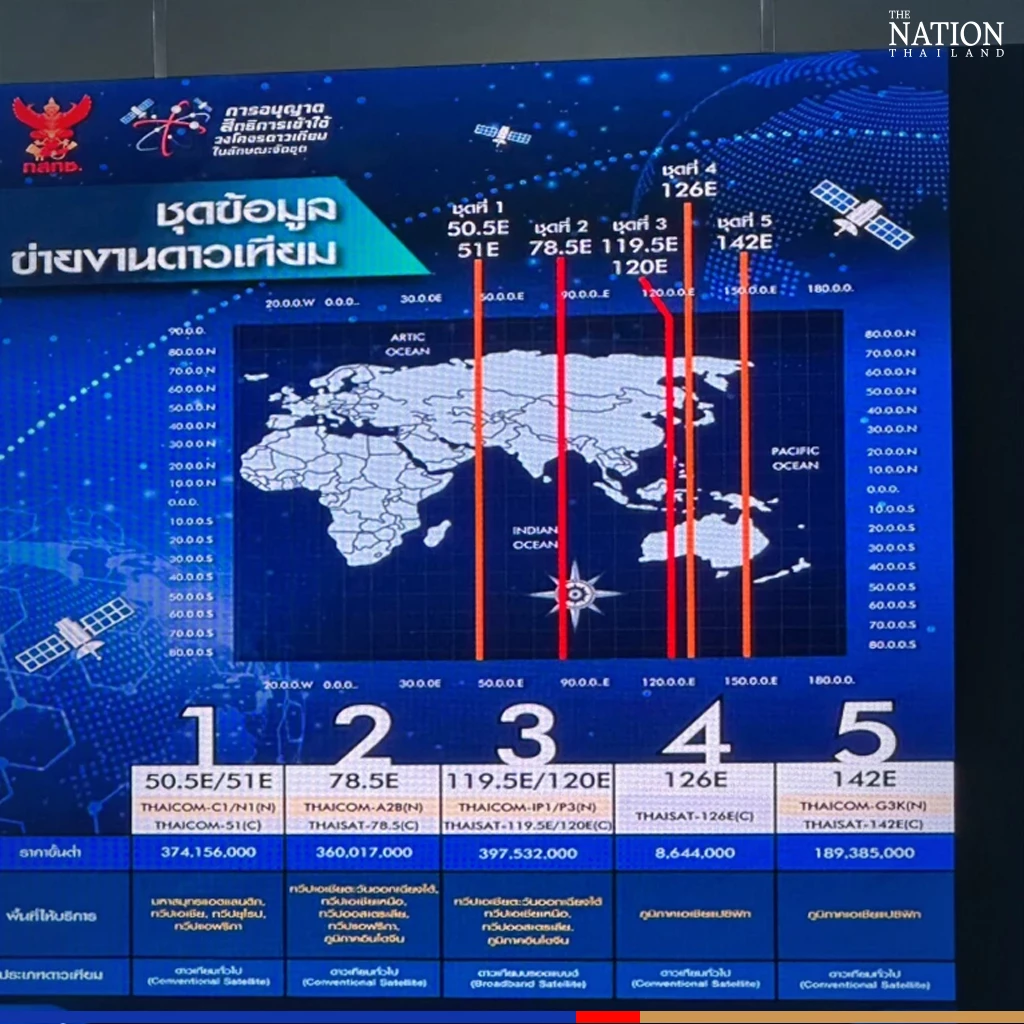
The five packages, which Thailand had received from the International Telecommunication Union, are:
● Package 1: 50.5 degrees East slot with C1, N1 and P1R networks and 51 degrees East with 51 network. Bidding started at 374 million baht.
● Package 2: 78.5 degrees East with A2B and LSX2R networks. Bidding started at 360 million baht.
● Package 3: 119.5 degrees East with IP1, P3 and LSX3R networks and 120 degrees East with 120E network. Bidding started at 397 million baht.
● Package 4: 126 degrees East with 126E network. Bidding started at 8.06 million baht.
● Package 5: 142 degrees East with G3K and N5 networks. Bidding started at 189 million baht.
Representatives of the three companies arrived at the commission’s head office at 7am to start preparing for the auction. Bidding started at 10 am after commission chairman Sarana Boonbaichaiyapruck made a speech to launch the auction.
The auction was held in the so-called sequential ascending clock method with each round of bidding lasting 20 minutes. Interested bidders had to tap to raise the price of a package, with each limited to 5% of the starting price.
Lots were drawn to arrange the order of the bidding to prevent collusion. Packages were auctioned in the following order: 4, 3, 5, 2 and 1.
The commission has yet to announce the names of the winning bids for the three packages.
Reporters said Package 4 was auctioned in two minutes, with one tap from one bidder. A satellite on the slot of Package 4 can be used for both broadcasting and telecommunications in the Asia-Pacific region. It was sold for 9.076 million baht.
The auction for Package 3, which can be used for broadband telecommunication over Southeast Asia, North Asia, Australia and Indochina, started at 10:15am and ended at 10.21 am with one tap from one bidder. It was sold for 417 million baht.
The IT department suspended the bidding for 10 minutes due to a system error. The auction resumed at 10:40 am with the auction of Package 5, which covers the Asia-Pacific region. The bidding ended at 10:46 am with the “unsold” sign announced on the system’s board.
Bidding for Package 2 began at 11am. The slot can be used for a broadcast satellite and there are already two satellites in the area, which are Thaicom 6 and Thaicom 8.
The first round of Package 2’s auction ended at 11.05am with two bidders competing. The second round started at 11.10am and ended at 11:16am with one bidder getting the package for 380 million baht.
Bidding for Package 1 started at 11:30am and ended at 11:36 am with no bids.
Minister moves to attract more Japanese investment to Thailand
SUNDAY, JANUARY 15, 2023
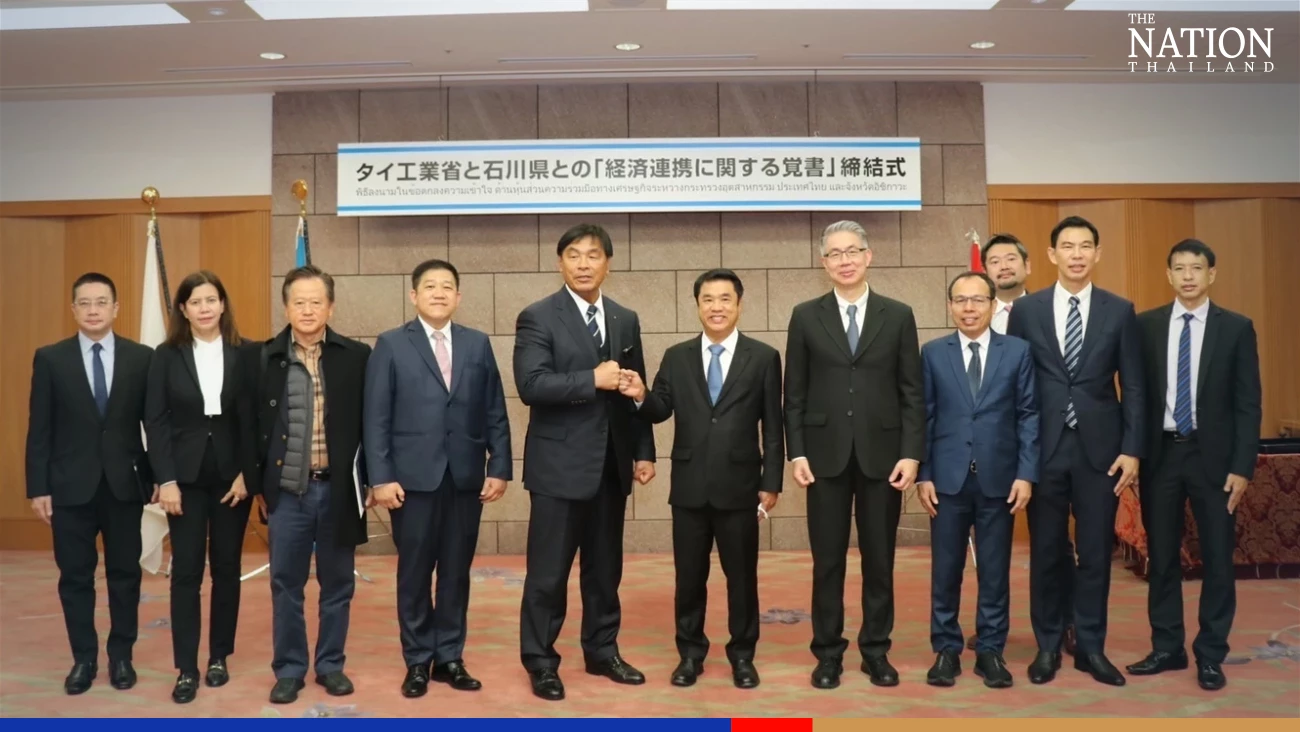
The Industry Ministry’s Department of Industrial Promotion has signed a memorandum of understanding with Ishikawa Prefectural Government Office to promote industrial development between Thailand and Japan, Industry Minister Suriya Juangroongruangkit said on Sunday
The agreement was signed during a recent visit by ministry officials to Japan to attract investment in Thailand.
“This move aims to boost Japanese investors’ confidence in the potential of Thailand’s industrial sector, enhance Thailand’s competitiveness and promote collaboration between Thai and Japanese small and medium enterprises,” Suriya said.
The department and Ishikawa Prefectural Government Office will organise activities to promote industrial development between two countries, such as knowledge exchange seminars, exhibitions and meetings, he said.
“The 22nd Otagai Forum will be held in Nanao city at the beginning of February to promote collaboration in the carbon-fibre-reinforced polymers and food processing industries,” the minister said. “Meanwhile, Kanazawa University will send its students to study in Thai companies in a bid to create a business network between Thailand and Ishikawa Prefecture,” he added.
The ministry is promoting Thai industrial estates to Japanese investors. More than 6,000 Japanese companies have investments in Thailand.
Developing Asia’s productivity growth is slowing, IMF warns
SATURDAY, JANUARY 14, 2023
Nongluck Ajanapanya
Asia’s developing nations should urgently solve technological constraints to sustain productivity growth, a recent report by the International Monetary Fund (IMF) said.
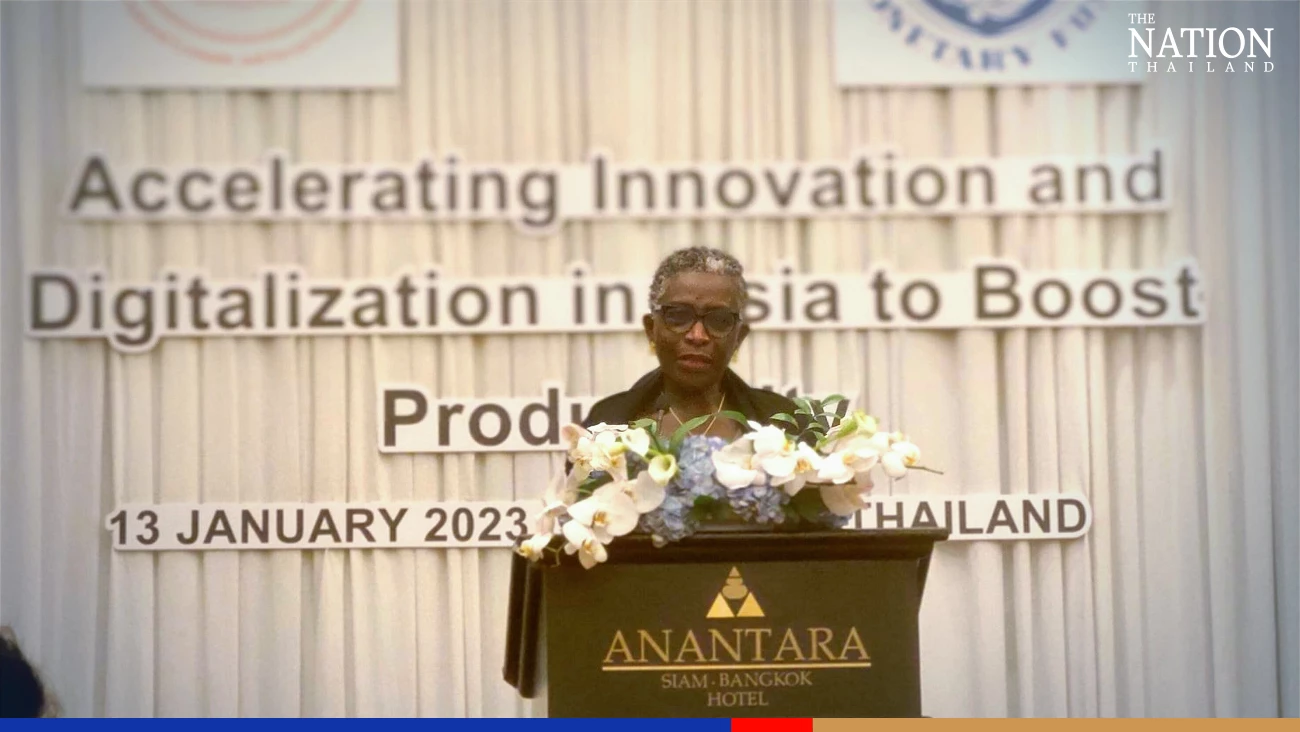
Asia has become a digital and innovation powerhouse, IMF deputy managing director Antoinette Sayeh said on Friday.
Half of the world’s patents are issued in Asia, so there is no doubt that Asia is at the forefront of innovation and technological development, she told a seminar in Bangkok at which the IMF report “Accelerating Innovation and Digitalization in Asia to Boost Productivity” was released.
The seminar was co-hosted by Thailand’s National Economic and Social Development Council.
Still, even though Asia is a growth engine, its productivity growth is slowing, according to the IMF report, which says this is a result of a failure to digitise quickly enough.
Sayeh said two factors are missing from the region’s development.
“There is no question that Asia leads in innovation, but there is a difference in the quality level of patents … Not all patents are the same. Not all patents are equal and … contribute to productivity growth,” she said.
The lack of technological diffusion is the second factor constraining growth, she said.
Antoinette Sayeh
“The second [factor], which is probably more relevant to a country like Thailand, is that technological diffusion has been very limited. So, the technology has vanished and is only available to a small proportion of the economy’s firms,” she explained.
Eteri Kvintradze, director of the IMF Capacity Development Office in Thailand, said the concentration of research and development (R&D) in a smaller number of companies deters the progress of innovation and productivity in Asia.
According to the IMF report, nearly half of small- and mid-sized enterprises and one-third of large firms in emerging and developing Asia identified obtaining financing as the most significant barrier to adopting technology.
Restrictive trade and regulations on foreign direct investment impede technology diffusion, the report says, adding that innovation has not translated into broad-based productivity growth in Asia.
“The concentration in R&D, digital, managerial, funds, and skilled talent widened Asia’s productivity gaps,” Kvintradze said. “However, digitisation and global exposure can assist in closing productivity gaps.”
Asia should foster innovation by providing R&D tax credits, increasing public spending on basic research, supporting intellectual property rights, and rewarding disruptive innovation, the IMF report advises.
Asian governments should also ensure a level playing field and a simplified and efficient insolvency framework to facilitate resource reallocation, the report says.
“Asian nations should really lower trade barriers and streamline FDI regulations, facilitate knowledge sharing between foreign and domestic firms, improve business-university R&D collaboration while upgrading labour skills, close digital divides, and improve digital infrastructure and the legal environment,” Kvintradze said.
Suriyon Thunkijanukij, the National Economic and Social Development Council’s senior advisor on policy and planning, said the innovation-aggregated productivity link isn’t working well in Thailand because the country lacks serious consistency in implementation.
“We’ve already set the right target, direction, and structural system. However, no actions are properly taken. We also need a monitoring mechanism to ensure that our policies are implemented,” Suriyon said.
Thailand should focus on increasing the capacity of youths to accelerate change in the next decade, he said.
Suriyon suggested that the government should provide access to reproductive health and childcare services, offer inclusive maternity support, promote universal child benefit policies, improve education quality and accessibility, and propose legislation that legally allows different types of families to have children.
However, he pointed out that these policies cannot be implemented unless people also formalise their participation in the system.
Meanwhile, Atip Asavanundd, executive director of the Digital Council of Thailand, and Kiatipong Ariyapruchaya, senior country economist at the World Bank, agreed that Thailand urgently requires education reform.
Thailand, according to Atip, has everything except well-educated people.
All Thai students should have access to digital devices and proper English language education, Atip said. Furthermore, students should be encouraged to study mathematics and science until they complete high school.
“Our educators must focus on pattern quality rather than pattern quantity,” he said.
Kiatipong added that basic education for all was essential, and that the country must adopt a more resilient and agile growth mindset.
Meanwhile, he advised Thailand to improve its government data system in order to boost the country’s competitiveness and overall service quality.
Pan-Arj Chairatana, director of the National Innovation Agency, said Thailand requires both innovative entrepreneurs and innovative politics.
“We need to put innovation on the national agenda. We already have science, technology, and innovation policies in place. We have a variety of mechanisms. We have a lot of incentives. However, it is not comprehensive enough to be called a national agenda,” he said.
Thailand needs to change its perception of innovation to move forward, Pan-Arj said.
North’s top digital asset expo returns with Block Mountain CNX on Feb 23-26
FRIDAY, JANUARY 13, 2023
The largest Blockchain and digital asset exhibition in the North is celebrating its 5th anniversary with the four-day Block Mountain CNX 2023 expo next month.
Visitors can explore the Web 3.0 experience in Chiang Mai from February 23-26.
On the menu is a feast of Blockchain and digital-asset events that have proved popular among the government sector, entrepreneurs, investors and the general public alike over the past four years.
The four-day expo is being held by OM Platform Co Ltd together with the Thai Digital Asset Association, Thai metaverse association, and a network of industry alliances. Other partners including Cryptomind, Blockchain Review, and the crypto community will be showcasing their knowledge of Web3.0 Blockchain technology, digital assets, innovations, and related technologies.
The organisers expect the expo to stimulate knowledge and understanding of the application of Blockchain technology in business operations for entrepreneurs in Thailand. It will boost awareness of digital assets’ important role and how they will affect life in the future, while also serving as a forum for connection and collaboration between sectors related to Web 3.0 Blockchain technology and digital assets.
The core of Block Mountain CNX 2023 will be held at the Science and Technology Park, Chiang Mai University from February 23-26.
The introductory event is the “CNX NFT Day” from 1pm to 6pm on February 23.
Other side events include “Bitcoin & Beer Uncensored” while the expo will wrap up with the Web3.0 Community Talk. Tickets for the mixed-format online/offline expo are on sale from Saturday, January 14.
ManpowerGroup launches guide to 2023 corporate remunerations in Thailand
FRIDAY, JANUARY 13, 2023
ManpowerGroup, a leading global workforce solutions provider, has issued a new salary guide that enables companies in Thailand to better plan their manpower and manage costs.
The ManpowerGroup Thailand Salary Guide 2023 provides a wealth of information on various dimensions such as job skills, position levels, and current multi-level employment types and provides comprehensive advice to organizations efficiently and accurately.
The release of the report comes in the wake of Thai labor market in 2023 becoming more adaptable and flexible.
There is an increase in short-term employment, particularly outsourced hiring as firms are grappling with workforce deficiency and employment opportunity growth, especially in the IT field, said Ms. Lilly Ngamtrakulpanit, Country Manager of ManpowerGroup Thailand.
This indicates the need for people with diverse skills in order to stay on top of the increasingly competitive labor market with these current trends.
“It is crucial that companies must be able to assess and develop concrete hiring plans and adopt cost control as well,” she pointed out.
Pandemic Disruption
As the COVID-19 pandemic has shattered economies and disrupted lives, the workforce market has also been experiencing changes in various areas, triggering a widespread shortage of skilled workers.
It comes despite many organizations having resorted to more flexible employment and greater reliance on technological tools to strike a work-life balance to attract and retain skilled employees.
Ms. Lilly pointed out that a recent survey contained in the ManpowerGroup Outlook report has found that global labor turnover rates have skyrocketed in recent years.
As a result, the demand for manpower or the employment rate leaped by 45%, especially in the IT and technology careers which have become an important factor in every industry.
This is because organizations need a workforce with these skills to help drive their business forward.
Furthermore, IT is also an important part of working under the ‘New Normal,’ a hybrid work system, and the transformation leading to a digital working world that pushes the boundaries of the traditional workforce and encourages businesses to respond and adapt in a timely manner to new ways of working.
This clearly requires both IT and technology skills along with soft skills such as communication, teamwork, digital marketing, and analysis which are essential for operational process changes.
Employees and employers must learn to adapt, coordinate, communicate and support one another in this new working style of the COVID-19 era for sustainable success.
Therefore, it is imperative for organizations to be receptive to opinions and offer opportunities for growth in their workplace and avoid employees leaving office.
Esso deal took one year to close, says Bangchak CEO
SATURDAY, JANUARY 14, 2023
Bangchak Corporation Plc began planning to take over petroleum refining company Esso (Thailand) Plc four years ago, and it took one year of negotiations before the deal was sealed, said Chaiwat Kovavisarac, the Thai petroleum and energy conglomerate’s CEO and president.
On Thursday, Bangchak announced it had acquired 65.99% of Esso (Thailand)’s ordinary shares from ExxonMobil Asia Holdings Pte Ltd. The stake was valued at 55.5 billion baht. Both Bangchak and Esso (Thailand) are listed on the Stock Exchange of Thailand.
After the takeover, Chaiwat said that Bangchak began planning to acquire more petroleum refineries four years ago as part of its business expansion, as petroleum would remain the company’s major money-maker.
“We had serious negotiations with ExxonMobil for a full year,” he said, pointing out that Esso has the capacity to procure crude oil from around the world and is experienced in managing large refineries.
Under the takeover deal, Bangchak will acquire Esso refineries with a total capacity of 174,000 barrels per day, Esso’s network of petroleum warehouses, and more than 700 of its petrol stations across the country.
Bangchak will continue to employ workers at the service stations.
Bangchak’s rebranding of the existing Esso service stations is expected to be completed within two years.
With the business merger, Bangchak will have a combined refinery capacity of 294,000 barrels per day and about 2,100 service stations throughout the country.
Esso will keep its brand for a variety of chemical and petroleum products, including lubricant oil.








 The FTIX will be connected to the online system of CALO for trading T-VER carbon credits and will also trade 100% renewable energy (RE100 energy).
 The auction was held in the so-called sequential ascending clock method with each round of bidding lasting 20 minutes. Interested bidders had to tap to raise the price of a package, with each limited to 5% of the starting price.

 Antoinette Sayeh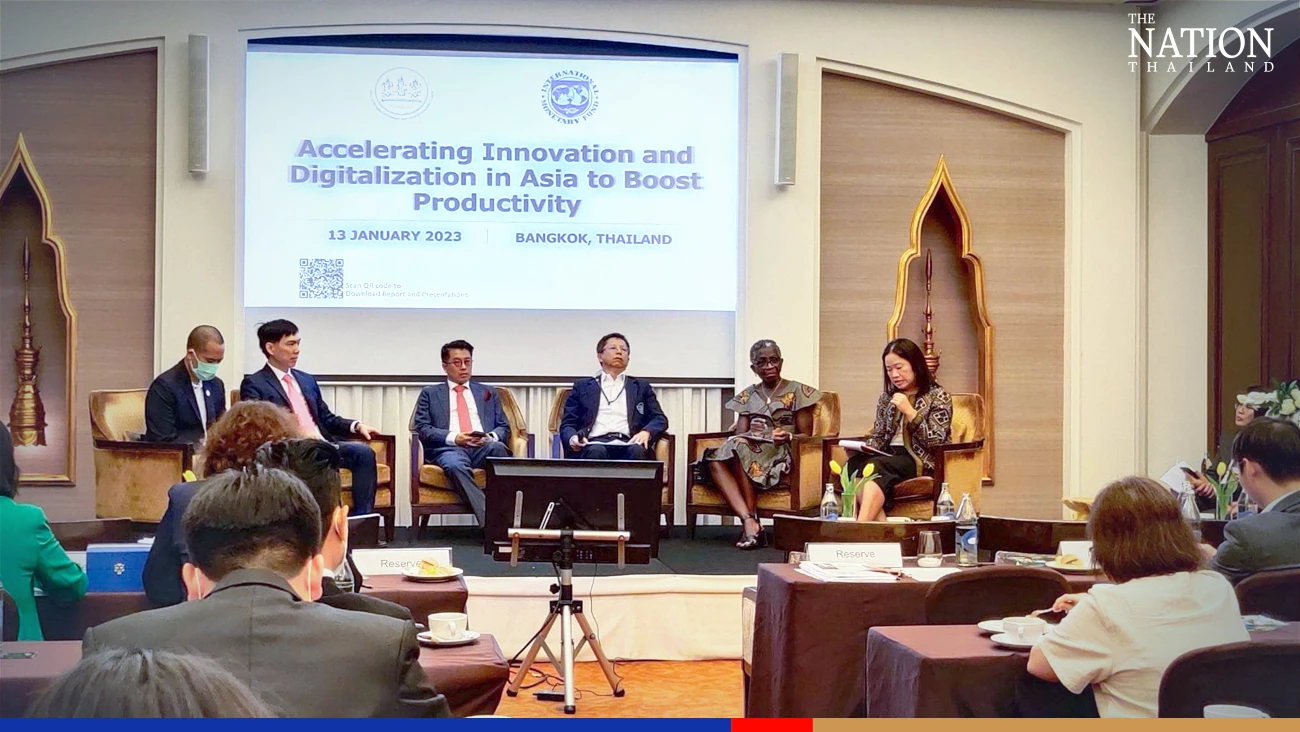





 SootinClaimon.Com