Trusted in Frasers Property (Thailand) Public Company Limited’s expertise in developing fully-integrated properties such as Samyan Mitrtown and FYI Center, N.C.C. Management & Development Co., Ltd. selected Frasers Property Thailand to develop the new QSNCC.
N.C.C. Management & Development Co., Ltd. announced that the new Queen Sirikit National Convention Center or QSNCC has greatly attracted both Thai and international event organizers, resulting in a very large number of bookings. Recently, Informa Markets Thailand Ltd., the world’s leading exhibition organizer, has confirmed to hold its six famous events throughout 2022, namely Food Ingredient Asia, Food & Hotel Thailand, ASEAN Sustainable Energy, Pump and Valves Asia, Thai Water Expo, and Tissue and Paper Bangkok.
Trusted in Frasers Property (Thailand) Public Company Limited’s expertise in developing fully-integrated properties such as Samyan Mitrtown and FYI Center, N.C.C. Management & Development Co., Ltd. selected Frasers Property Thailand to develop the new QSNCC. Its proven capabilities in large-scale project development ensures that the new QSNCC will be completed on schedule and ready to serve the market as Thailand’s ultimate inspiring world-class event platform for all.
The new QSNCC is set to reopen on schedule in September 2022 with overwhelming number of bookings
ADVERTISEMENT
Mr. Sakchai Pattarapreechakul, President of N.C.C. Management & Development Co., Ltd., said: “The new QSNCC started taking bookings in August 2021 and has received positive responses from former and new clients. The new QSNCC offers extended services to its customers with topnotch capabilities and resources to drive live, hybrid and virtual events. We have sealed the deals with a number of organizers who have shown their confidence in QSNCC’s experience in hosting famous leading events with its fully equipped and high-standard event venue.”
The total area of the remodeled QSNCC is 280,000 square meters, which is five times larger than before. The event space of 78,500 square meters consists of two main exhibition halls with over 45,000 square meters, two large conference halls with nearly 10,000 square meters and additional 50 flexible meeting rooms. Its accessibility to the Metropolitan Rapid Transit (MRT) and 2,700 parking spaces provide convenience to both event organizers and visitors. With the investment budget of THB 15 billion, the QSNCC will be reintroduced as the largest convention center in the CBD of Bangkok, Thailand.
Project: Queen Sirikit National Convention Center (QSNCC)
Project Value: THB 15 billion
Plot of land: 53 rai
Total space: 280,000 square meters
Event space: 78,500 square meters
Indoor Parking: 2,700 parking spaces
Location: Located on Rachadapisek Road / Rama IV Road
How to get there: Conveniently accessible by BTS Skytrain, MRT Subway, taxi, bus and car.
• BTS: Take the BTS Skytrain to Asok interchange station, where you catch the subway to MRT Queen Sirikit National Convention Center station. Follow exit no. 3 to the Center.
• MRT: MRT Queen Sirikit National Convention Center station is right in front of the Center, reached by following exit no. 3.
• Car: Accessible via Ratchadaphisek Road / Rama IV Road
The Stock Exchange of Thailand (SET) Index closed at 1,639.41 on Friday, up 5.69 points or 0.35 per cent. Transactions totalled 92.93 billion baht with an index high of 1,644.16 and a low of 1,635.77.
The index rose for the second day running after increasing by 0.88 per cent on Thursday.
In the morning session, Krungsri Securities expected the day’s index would rise to between 1,640 and 1,645 points after the US Senate had reached an agreement to extend debt limit until December, enabling Washington to cope with risks of default payments.
ADVERTISEMENT
It added that the index also gained positive sentiment from the decline in US jobless claims, rising oil price and hopes over Thailand reopening.
The 10 stocks with the highest trade value today were BANPU, SVT, KBANK, TRUE, CPALL, JAS, AOT, TU, SCB and BBL.
Other Asian indices were mixed: Japan’s Nikkei Index closed at 28,048.94, up 370.73 points or 1.34 per cent. China’s Shanghai SE Composite closed at 3,592.17, up 24.00 points or 0.67 per cent., while the Shenzhen SE Component closed at 14,414.16, up 105.15 points or 0.73 per cent. Hong Kong’s Hang Seng Index closed at 24,837.85, up 136.12 points or 0.55 per cent. South Korea’s KOSPI Index closed at 2,956.30, down 3.16 points or 0.11 per cent. Taiwan’s TAIEX Index closed at 16,640.43, down 73.43 points or 0.44 per cent.
Commerce Minister Jurin Laksanawisit announced on Thursday that his ministry was launching a set of proactive measures to better manage fruit supplies next year.
The minister was speaking at a meeting with agencies related to agriculture and commerce as well as representatives of farmers, exporters and logistics service providers.
The measures will include boosting distribution, promoting local consumption, promoting online and offline sales, matching up businesses, improving farmers’ and exporters’ potential and controlling the price of fruit.
ADVERTISEMENT
“The measures are necessary because the country’s fruit supply is expected to increase to 3.5 million tonnes next year, up 8 per cent compared to this year,” he said.
Jurin said Thailand had achieved success in the export of fruits in the first eight months this year as it had generated up to 169 billion baht in revenue, up 46 per cent year on year.
He added that the ministry will promote the registration of geographical indication (GI) products in a bid to increase the value of agricultural goods.
“This year, the ministry registered 152 GI products, covering 77 provinces nationwide, with sales up to 40 billion baht,” he added.
Poon added that the baht will not strengthen much as the economy is not completely recovered and the dollar still strengthens. Importers will buy on dip when the baht strengthen to the level of 33.60 to the dollar.
A 9.25am report from the Gold Traders Association showed the buying price of gold bar at THB28,100 per baht weight and selling price at THB28,200, while the buying and selling price of gold ornaments is THB27,591.20 and THB28,700, respectively.
At close on Thursday, the buying price of gold bar was THB28,050 per baht weight and selling price THB28,150, while gold ornaments were THB27,545.72 and THB28,650, respectively.
The spot gold price on Friday morning was hovering around US$1,760 (THB59,576) per ounce after Comex gold at close on Thursday dropped by $2.6 to $1,759.2 per ounce due to the selling of gold as safe-haven assets after the number of the US unemployment claims fell the most in three months. As for tonight, the market is keeping an eye on the US non-farm payrolls, which will be one of the factors the US Federal Reserve uses in considering cuts in its quantitative easing bond purchase program and interest rate hikes.
The Stock Exchange of Thailand (SET) Index rose by 8.28 points or 0.51 per cent to 1,642.00 on Friday morning, witnessing a high of 1,644.16 and a low of 1,640.73 in opening trade.
Krungsri Securities expected the day’s index would rise to between 1,640 and 1,645 points after the US Senate had reached an agreement to extend debt limit until December, enabling Washington to cope with risks of default payments.
It added that the index also gained positive sentiment from the decline in US jobless claims, rising oil price and hopes over Thailand reopening.
ADVERTISEMENT
It also recommended buying of the following companies’ shares as an investment strategy:
▪︎ PTT, PTTEP, TOP, PTTGC, SPRC, BCP and IVL, which benefit from rising oil price
▪︎ AOT, KBank, SCB, CPN, CRC, HMPro, AAV, BA, MINT, Amata, WHA and Major, which benefit from the country reopening.
▪︎ Hana, KCE, TU, Asian and NER, which benefit from weakening baht.
The SET Index closed at 1,633.72 on Thursday, up 14.24 points or 0.88 per cent. Transactions totalled 100.94 billion baht with an index high of 1,637.82 and a low of 1,624.59.
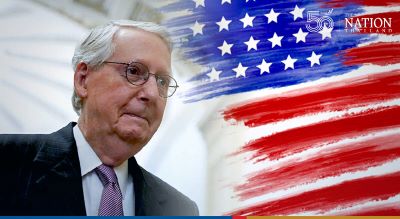
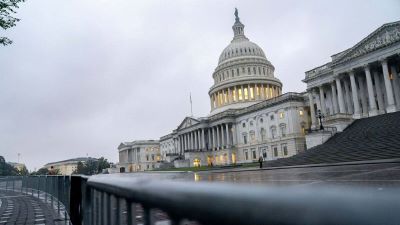
WASHINGTON – Senate Democratic and Republican leaders said Thursday morning they had clinched a short-term deal to raise the countrys debt ceiling, setting Congress on track to avert a government default on its debts in roughly 11 days.
Majority Leader Chuck Schumer, D-N.Y., announced the truce during a brief statement on the Senate floor, noting the agreement would permit the country to continue borrowing unimpeded into early December. Schumer said that chamber leaders now “hope we can get this done as soon as today,” though a vote could slip until potentially this weekend.
The potential resolution came after a tense few weeks of fighting, which saw Democrats try repeatedly to suspend the country’s debt ceiling – only to falter at the hands of GOP lawmakers. Senate Minority Leader Mitch McConnell, R-Ky., led the blockade as part of the party’s broader opposition toward President Joe Biden’s spending agenda, including a still-forming, up-to $3.5 trillion package that GOP lawmakers vehemently oppose.
ADVERTISEMENT
But McConnell backed down somewhat late Wednesday, offering Democrats a temporary break. Hammered out overnight, the plan would raise the debt ceiling by $480 billion, which is expected to fund federal borrowing until December 3, according to a Senate aide familiar with the agreement who requested anonymity to describe it.
Schumer and McConnell still must shepherd their deal through the chamber, a process that exposed potential cracks in their strategy by midday Thursday. A number of GOP lawmakers appeared reticent to supply the support needed to proceed to a final vote, prompting Sen. John Thune, R-S.D., the party’s leading vote counter, to acknowledge to reporters that the vote is “not an easy one to whip.”
“In the end, we’ll be there,” Thune said. “But it’ll be a painful birthing process.”
A successful vote in the Senate, followed soon by the House, would avert a financial crisis with only days to spare ahead of the original October 18 deadline. Absent action by that date, the U.S. government would have faced an unprecedented struggle to fulfill its own financial obligations – including paying Social Security to seniors, providing tax benefits to families with children, or offering benefits to troops and veterans.
But the short-term deal also threatens to defer a bigger, more vicious battle between Democrats and Republicans until the waning hours of the year. The new, expected debt ceiling deadline comes on the same day that funding for the federal government is set to expire. That means Congress must act by December 3 to stave off default and prevent a federal shutdown, two urgent tasks that carry significant political and economic consequences in the case of failure.
For now, at least, the agreement over the debt ceiling spares Washington from what experts broadly saw as a financial doomsday that could have rattled markets globally and plunged the United States into a new recession. Biden in recent days had pressured Congress to act, blasting Republicans from obstructing a long-term increase to the borrowing cap while huddling with the nation’s business leaders to further make the case for swift action.
To that end, markets appeared to reward news of the Senate deal, with the Dow Jones industrial average surging more than 500 points by midday. The uptick only served to confirm the stakes in Washington’s latest fiscal stalemate, which earlier in the week raised the prospect that the U.S. could suffer a credit downgrade.
The debt ceiling allows the government to borrow money to pay its bills, since the country spends more than it collects through tax revenue. Raising the cap is a necessity that in the past had been a bipartisan affair: Democrats even joined with Republicans to address the issue repeatedly under former president Donald Trump, who added $8 trillion to the debt during his time in office.
But Republicans over the past nine months have turned it into a political cudgel as they labor to fight back against Biden’s economic initiatives. The crux of the GOP opposition is a still-forming proposal to overhaul federal education, health care, immigration and climate laws, while raising taxes on wealthy Americans and corporations. Even though Democrats say the package is financed in full, Republicans argue it would add to the deficit even beyond the 10-year scope of the plan – prompting them to withhold their support for an increase to the debt ceiling.
“I do not support the Democrats’ [spending] package and I do not support raising the debt limit to make that level of spending possible,” said Sen. Lindsey Graham, R-S.C., the top Republican on the chamber’s budget committee, in a statement late Wednesday.
The Republicans’ opposition has frustrated Schumer and his fellow Democrats for weeks, who repeatedly pointed out that the debt ceiling covered past spending, including bipartisan initiatives to respond to the coronavirus pandemic last year. But their entreaties failed to loosen the GOP blockade until McConnell offered a roughly two-month extension after meeting with his conference Wednesday.
The deal they championed a day later could carry federal borrowing until December 3, but the deadline is only a rough estimate, according to Shai Akabas, the director of economic policy at the Bipartisan Policy Center. He said it ultimately is going to vary depending on how much the country spends and brings in through tax collection, which has been difficult to predict in recent months given the coronavirus pandemic.
“Nobody can know exactly how long that is going to last,” Akabas said, though he expressed a measure of confidence it could at least carry the country until early in December.
Eventually, though, the country is going to reach its borrowing cap and approach the precipice of a default – warranting another intervention on Capitol Hill. That risks reigniting the same battle that had pushed the Senate only 11 days away from what Biden has described as a “meteor” crashing into the U.S. economy.
Entering the fight, McConnell has maintained an insistence that Republicans are not going to provide the 10 votes Democrats need to advance a longer-term measure to address the debt ceiling in the narrowly divided chamber, where most legislation requires 60 votes to advance. Instead, he has said Democrats must use reconciliation, a budgetary process that will allow them to move a proposal raising the borrowing cap on their own – a move that the party has rejected.
Schumer has refused to take that route, which he has described as “risky” because it could take too long to complete, putting the country at greater risk for default. Privately, Democrats also acknowledge that reconciliation could open them up to uncomfortable political votes and attacks, especially because it requires them to raise the debt ceiling by a specific amount rather than suspending it outright.
In a sign of the fight to come, McConnell took to the floor Thursday to herald their deal as a way to “spare the American people any near-term crisis.” But he also repeated they must use reconciliation, unleashing renewed attacks on Democrats for their “reckless taxing and spending spree” in the process.
U.S. equities rose on Thursday, bolstered by progress on U.S. debt-ceiling talks and easing concerns about Europes energy crunch.
The S&P 500 climbed as much as 1.5% before nearly halving gains on China’s plans to tighten its supervision over technology companies. The advance was led by the materials and consumer discretionary sectors, extending a three-day rally to 2.3%. The yield on the U.S. 10-year Treasury note climbed to 1.57%, the highest since June.
“We’ve had a 24-hour stretch where we’ve pulled back from a few of the key risk drivers that have been concerning markets,” said Giorgio Caputo, senior portfolio manager at J O Hambro Capital Management.
ADVERTISEMENT
Markets have been buffeted in the past month by worries about an energy crisis, elevated inflation, reduced stimulus and slower growth. However, the prospect of a short-term U.S. debt limit extension is easing concern over political bickering. Natural gas prices were also lower on Thursday after signals Russia may increase supplies to Europe.
“The volatility we’ve seen in the markets here this week – where we’re up one day, down the next – is really a reflection of the news cycles and the different news that we’ve been receiving,” Chris Gaffney, president of world markets at TIAA Bank, said by phone.
Up next, all eyes will be on Friday’s U.S. nonfarm payrolls, which may shed light on the the Federal Reserve’s timeline to cut bond purchases. There is growing optimism the report will show the kind of “decent” jobs growth Federal Reserve Chair Jerome Powell said he wants. U.S. initial jobless claims fell more than expected last week and ADP employment figures beat expectations for September.
“Both really reflect that the job market is strengthening and that people are getting back to work,” Gaffney said of the latest employment data. “That certainly bodes well for the markets going forward in that the more people that are working, the more spending can occur as people get back to work.”
Oil reversed losses after the U.S. Energy Department said it has no plans to tap oil reserves. The dollar was little changed. Gold fell.
Here are some events to watch this week:
– Reserve Bank of India monetary policy decision on Friday
– The U.S. Labor Department releases unemployment and job creation data Friday
Some of the main moves in markets:
– – –
– The S&P 500 rose 0.8% as of 4 p.m. New York time
– The Nasdaq 100 rose 0.9%
– The Dow Jones industrial average rose 1%
– The MSCI World index rose 1.1%
– – –
– The Bloomberg Dollar Spot index was little changed
– The euro was little changed at $1.1554
– The British pound rose 0.3% to $1.3617
– The Japanese yen fell 0.2% to 111.60 per dollar
– – –
– The yield on 10-year Treasuries advanced five basis points to 1.57%
– Germany’s 10-year yield was little changed at -0.19%
– Britain’s 10-year yield was little changed at 1.08%
– – –
– West Texas Intermediate crude rose 1.8% to $78.85 a barrel
The Stock Exchange of Thailand (SET) Index closed at 1,633.72 on Thursday, up 14.24 points or 0.88 per cent. Transactions totalled 100.94 billion baht with an index high of 1,637.82 and a low of 1,624.59.
The index rose after falling by 0.29 per cent on Wednesday.
In the morning session, Krungsri Securities predicted the day’s index would fluctuate between 1,610 and 1,630 points despite positive news of the US would extend a debt limit until December.
ADVERTISEMENT
It added that the index also gained positive sentiment from hopes over the country reopening after domestic Covid-19 cases have declined.
However, the volatility in fund flow and falling oil price after the US oil storage had risen beyond expectation would pressure the index,” Krungsri Securities said.
The 10 stocks with the highest trade value today were KBANK, BANPU, SVT, TRUE, SCB, PTT, BBL, PTTEP, GUNKUL and GULF.
Other Asian indices were on the rise: Japan’s Nikkei Index closed at 27,678.21, up 149.34 points or 0.54 per cent. Hong Kong’s Hang Seng Index closed at 24,701.73, up 735.24 points or 3.07 per cent. South Korea’s KOSPI Index closed at 2,959.46, up 51.15 points or 1.76 per cent. Taiwan’s TAIEX Index closed at 16,713.86, up 320.70 points or 1.96 per cent.
China’s Shanghai SE Composite and Shenzhen SE Component Indices were closed for National Day.
The baht opened at 33.83 to the US dollar on Thursday, strengthen from Wednesday’s closing rate of 33.92.
The Thai currency is likely to move between 33.75 and 33.90 during the day, Krungthai Bank market strategist Poon Panichpibool predicted.
Poon said the baht would continue fluctuating against the greenback. Also, he said, the flow of foreign funds has slowed down because foreign investors are waiting for an improvement in the market before spending on Thai stocks.
ADVERTISEMENT
The baht will strengthen if the Asian market opens for more risk. The baht will not strengthen much because investors are waiting for the Nonfarm Payrolls (NFP) report.
The baht’s key support level would at 33.70, the level some importers are waiting for so they can buy dollars, he added.
Poon added that the currency market might fluctuate heavily at first but investors are open to more risks because the private-sector employment was better than expected. According to ADP, private-sector employment in September increased for 570,000 positions.
Moreover, the marker was supported by the US debt ceiling negotiation to raise the debt ceiling for two months. The US Congress must raise the debt ceiling before October 18 to avoid default.


 The new QSNCC is set to reopen on schedule in September 2022 with overwhelming number of bookings