Jobless claims fall to pandemic low, underscoring U.S. rebound #SootinClaimon.Com

#SootinClaimon.Com : ขอบคุณแหล่งข้อมูล : หนังสือพิมพ์ The Nation.

https://www.nationthailand.com/business/40003300

Jobless claims fall to pandemic low, underscoring U.S. rebound


Applications for U.S. state unemployment insurance fell last week to a fresh pandemic low, indicating that dismissals are easing as business conditions improve and firms look to increase headcounts.

Initial claims in regular state programs decreased by 26,000 to 360,000 in the week ended July 10, Labor Department data showed Thursday. The median estimate in a Bloomberg survey of economists called for 350,000 initial applications.

The drop in new unemployment claims is in line with a broader economic recovery in the U.S., with businesses back to full capacity and demand for travel and leisure surging.

Even so, initial claims remain above pre-pandemic levels and employers continue to point out trouble with finding qualified workers, which could be holding back the pace of the labor market recovery.

“Conditions in the labor market have continued to improve, but there is still a long way to go,” Federal Reserve Chair Jerome Powell told the House Financial Services Committee Wednesday.

“Job gains should be strong in coming months as public-health conditions continue to improve and as some of the other pandemic-related factors currently weighing them down diminish,” he said.

More than half of U.S. governors have announced plans to end enhanced federal unemployment benefit programs early amid an ongoing debate about whether they are holding back job growth.

Lawsuits in some of those states challenging the governors’ legal authority to end the aid could restore the halted benefits or keep them in place until they officially expire in September.

Continuing claims for ongoing state benefits fell to a 3.24 million in the week ended July 3. That could reflect more Americans taking jobs and falling off benefit rolls now that the $300 weekly supplement has ended in many states.

States including Minnesota, Mississippi and Wyoming — which have ended Pandemic Unemployment Assistance for self-employed workers — saw no initial claims in that program last week.

Initial claims in Indiana, Missouri, Tennessee and Texas jumped last week, which could reflect attempts to transition to regular state programs now that PUA has been phased out in those states.

Georgia, Kentucky and Rhode Island reported the biggest declines in initial claims last week.

Published : July 16, 2021

By : Syndication Washington Post, Bloomberg · Olivia Rockeman
Feds Bullard urges start of bond taper with jobs goals met #SootinClaimon.Com

#SootinClaimon.Com : ขอบคุณแหล่งข้อมูล : หนังสือพิมพ์ The Nation.

https://www.nationthailand.com/business/40003299

Feds Bullard urges start of bond taper with jobs goals met


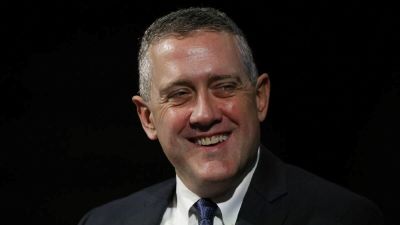
Federal Reserve Bank of St. Louis President James Bullard said the central bank has met its goal of achieving “substantial further progress” on both inflation and employment, urging policymakers to move forward in reducing stimulus.

“Ithink we are in a situation where we can taper,” Bullard said Thursday during a Bloomberg Television interview with Michael McKee. “We don’t want to jar markets or anything — but I think it is time to end these emergency measures.”

Fed officials are considering how quickly to trim monetary policy support for the economy as it reopens from pandemic lockdown. Consumer prices have risen sharply amid supply glitches, but the central bank has argued for patience.

Chair Jerome Powell, beginning two days of congressional testimony, said Wednesday that the U.S. economic recovery still hasn’t progressed enough to start reducing the $120 billion monthly pace of its asset purchases. He will appear before the Senate Banking Committee at 9:30 a.m. in Washington.

“On the labor market I think we have made substantial progress,” Bullard said, using the phrase policymakers have used as a benchmark for tapering. As for whether to pull forward the move into the fourth quarter, “The committee is going to debate that in earnest now at the July meeting.”

The Federal Open Market Committee will meet July 27-28 to discuss the economic outlook and its plans on the appropriate timing of scaling back its asset purchases. The committee wants to achieve “substantial further progress” on inflation and employment before tapering its $80 billion a month of Treasury purchases and $40 billion of mortgage-backed securities.

“The pandemic is coming under very sharp control here,” Bullard said. “You’ve got bottlenecks and shortages everywhere.”

Bullard, who next votes on monetary policy in 2022, has sometimes been viewed as a bellwether for the FOMC and was the first to push for a second round of asset purchases coming out of the 2007-2009 recession. The committee eventually adopted that.

Even if the FOMC agrees to taper, there are multiple issues to discuss, Bullard noted, including when to start the process, whether to reduce buying of MBS first rather than Treasuries, the pace of tapering and the possibility of adjusting that tempo in response to data.

Bullard said he expected progress on employment to continue at a rapid pace. He said new variants of the virus, while being monitored as a risk, don’t change the outlook for a continued decline in deaths from Covid-19.

U.S. employers added 850,000 jobs last month, increasing by the most since August. At the same time, labor shortages continue to trouble some employers and U.S. payrolls are still nearly 7 million below their pre-pandemic level.

After the taper begins, the FOMC needs to be prepared to speed up reductions in response to incoming data if necessary, Bullard said. For now, market measures of inflation expectations suggest investors are confident in the Fed, he said.

“You probably don’t want to be on automatic pilot in this situation,” Bullard said. “We are not quite sure where this inflation process is going to go. We need some optionality on the upside with respect to possible inflation shocks.”

The consumer price index in June rose by the most since 2008, increasing 5.4% compared with a year earlier. Fed officials argue that the increase is largely due to transitory factors associated with supply-chain bottlenecks and the reopening of service industries as the pandemic recedes.

Published : July 16, 2021

By : Syndication Washington Post, Bloomberg · Steve Matthews

Markets wrap: Stocks fall amid growth anxiety; yields decline #SootinClaimon.Com

#SootinClaimon.Com : ขอบคุณแหล่งข้อมูล : หนังสือพิมพ์ The Nation.

https://www.nationthailand.com/business/40003298

Markets wrap: Stocks fall amid growth anxiety; yields decline


U.S. stocks declined and Treasury yields turned lower again as Federal Reserve Chair Jerome Powells persistent dovishness raises concern about the sustainability of the economic recovery.

Energy, consumer discretionary and technology shares weighed on the benchmark S&P 500. Growth favorites that led the recent rally such as Amazon.com and Google parent Alphabet dropped from recent all-time highs, sending the Nasdaq 100 lower. Biogen slumped as its Alzheimer’s drug faces resistance from some health plans. Oil declined amid a stronger dollar and after OPEC+ signaled it may revive output soon.

Powell reiterated that it was still too soon to scale back monetary support such as asset purchases even though inflation has risen faster than expected. Earlier, a report showed China’s second-quarter growth slowed largely in line with expectations even as a pickup in consumer spending suggested a more balanced recovery.

“It’s possible that we’ve reached peak growth, but that doesn’t necessarily mean the cycle is rolling over,” Giorgio Caputo, senior fund manager at J O Hambro Capital Management. “When you factor in those peak growth concerns, as well as what’s been going on with the delta variant and the way interest rates have been declining, it does seem like we’re having a little bit of a growth scare.”

The yield on the benchmark 10-year note fell for a second day after briefly climbing earlier in the session during Powell’s testimony before a Senate banking panel.

“They’re not seriously considering tapering yet and the language they use is persistently dovish,” said Anna Han, an equity strategist at Wells Fargo Securities.

The Fed’s potential timeline for tapering $120 billion in monthly bond purchases, and the spread of the delta Covid-19 variant, are among key variables bothering investors with global stocks near all-time highs. Another concern is the possibility that recoveries in economic growth and corporate earnings are peaking.

“The earliest we think they will make any decisions on any framework around tapering will be at the Jackson Hole Symposium in late August,” said Jason England, global bonds portfolio manager at Janus Henderson Investor. “Inflation has run higher and more persistent than forecasts, however full employment is still a long way from pre-Covid levels so until they make substantial further progress on the jobs front, the Fed will continue to be patient on removing any accommodation.”

Europe’s Stoxx 600 gauge dropped for a second day, dragged down by energy shares.

The Bloomberg Dollar Spot Index erased losses and rose for the third time in four days. West Texas Intermediate crude futures fell on expanding U.S. fuel inventories and a potential OPEC+ agreement to increase supply.

Here are some events to watch this week:

– Bank of Japan interest rate decision Friday

These are some of the main moves in financial markets:

– – –

– The S&P 500 fell 0.3% as of 4:01 p.m. New York time

– The Nasdaq 100 fell 0.7%

– The Dow Jones Industrial Average rose 0.2%

– The MSCI World index fell 0.4%

– – –

– The Bloomberg Dollar Spot Index rose 0.2%

– The euro fell 0.2% to $1.1812

– The British pound fell 0.3% to $1.3823

– The Japanese yen rose 0.2% to 109.79 per dollar

– – –

– The yield on 10-year Treasuries declined five basis points to 1.30%

– Germany’s 10-year yield declined one basis point to -0.33%

– Britain’s 10-year yield advanced four basis points to 0.66%

– – –

– West Texas Intermediate crude fell 2.2% to $71.55 a barrel

– Gold futures rose 0.3% to $1,829.70 an ounce

Published : July 16, 2021

By : Syndication Washington Post, Bloomberg · Claire Ballentine, Natalia Kniazhevich

Asias air travel may take three years to recover from pandemic #SootinClaimon.Com

#SootinClaimon.Com : ขอบคุณแหล่งข้อมูล : หนังสือพิมพ์ The Nation.

https://www.nationthailand.com/business/40003297

Asias air travel may take three years to recover from pandemic


Asian air travel may take another three years to recover fully from the devastation wrought by the pandemic, lagging behind rebounds in other regions and offering a stern headwind for refiners making jet fuel.

It will take until 2024 for international air travel across the region to reach pre-virus levels, a year after global traffic hits that milestone, according to the International Air Transport Association. Similarly, consultancy Energy Aspects says jet fuel consumption will reach pre-pandemic volumes only in 2023-2024.

The drawn-out timelines highlight the difficulties facing Asia and the likely consequences for jet fuel, a traditionally prized part of the oil-products market. Low rates of vaccination in many countries, the challenge posed by the fast-spreading delta variant, and persistent lockdowns have all set back the recovery even as the U.S. and Europe press on. All that means Asia’s aviation industry is unlikely to offer significant support to the region’s hard-pressed refineries, which process crude from the Middle East and elsewhere into fuels.

Both North America and Europe have seen strong demand during the holidays, with the European Union relaxing quarantine and lockdown requirements, according to Mayur Patel, regional sales director for Japan and Asia Pacific at OAG, an aviation analytics firm. “Sadly, the same cannot be said for Asia, where the low level of vaccination rates, sudden and sharp lockdowns, and inconsistent regulations frustrate any real attempt at a recovery,” he said.

Just this week, Indonesia — the largest economy in Southeast Asia — surpassed India’s tally of daily cases, marking a new center for the highly-contagious delta variant. Elsewhere, Malaysia has been struggling to contain a recent outbreak, Seoul in South Korea has imposed its toughest restrictions yet, and Japan is preparing to host the Olympic Games without spectators.

While there have been signs some countries including Singapore are rethinking their Covid-zero stance to open up, it’s likely international travel will still take longer than the rest of the world to restart. Australia’s plan to launch a quarantine-free travel bubble with the city-state is now more likely to occur only by the end of the year, according to an Australian diplomat.

“We expect passenger traffic for international Asia-Pacific to restart in early 2022 at the earliest,” an IATA spokesperson said in an email interview. “We don’t think that the variant situation will improve, so governments are unlikely to start lifting controls before vaccination becomes sufficiently widespread to limit community contagion.”

That means a longer struggle for Asian refiners. Given the differentiated recovery, some processors have been looking to Europe and the U.S. as outlets for jet fuel, shipping more to both regions. With lackluster demand, the margin for making jet fuel in Asia was $5.75 a barrel at 2:23pm in Singapore, compared with $15.54 in December 2019, Bloomberg Fair Value data show.

Asia’s jet fuel usage accounted for a third of global consumption in 2019, according to Energy Aspects. Right now, the region’s overall flight numbers — domestic and international — are 70% of pre-virus levels, but if China is excluded are only 40%, according to George Dix, an analyst. “We currently expect Asian jet demand will not reach pre-pandemic levels until 2023-2024, although domestic travel will have largely recovered by the end of 2022.”

Given the challenges, regional refiners will continue to redirect kerosene, which includes jet fuel, into the gasoil pool this quarter, aiming to tap into winter fuel heating demand the following quarter, according to Sri Paravaikkarasu at energy consultancy FGE. “The full recovery of international air travel has a long way to go,” she said.

Published : July 16, 2021

By : Syndication Washington Post, Bloomberg · Elizabeth Low

Commerce Ministry to set price for rapid test kits, Fah Talai Jone #SootinClaimon.Com

#SootinClaimon.Com : ขอบคุณแหล่งข้อมูล : หนังสือพิมพ์ The Nation.

https://www.nationthailand.com/business/40003292

Commerce Ministry to set price for rapid test kits, Fah Talai Jone


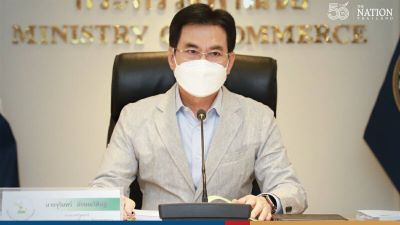
After meeting relevant agencies on Thursday, Commerce Minister Jurin Laksanawist said his ministry will study all details related to the import of rapid test kits before setting a price for them.

He said the ministry was waiting for details from the Thai Food and Drug Administration, which will oversee the import.

Separately, the National Health Security Office (NHSO) said it is joining up with the Government Pharmaceutical Organisation to import 10 million sets for free public distribution.

As for the soaring price of Fah Talai Jone, Jurin said the ministry will consider imposing price controls on the product.

Fah Talai Jone (Andrographis Paniculata) has recently become very popular because it is believed to prevent Covid-19. The herb’s price has soared 100 per cent from 400 baht to 800 baht due to mass consumption.

The herb is manufactured by unregistered small growers, which makes the supply unstable. Hence, the Committee on the Price of Goods and Services has resolved to make this a controlled product.

Published : July 15, 2021

By : The Nation

SET up slightly after positive signal from US central bank #SootinClaimon.Com

#SootinClaimon.Com : ขอบคุณแหล่งข้อมูล : หนังสือพิมพ์ The Nation.

https://www.nationthailand.com/business/40003285

SET up slightly after positive signal from US central bank


The Stock Exchange of Thailand (SET) Index closed at 1,572.01 on Thursday, up 2.31 points or 0.15 per cent. Transactions totalled THB83.26 billion with an index high of 1,580.43 and a low of 1,570.96.

In the morning session, Krungsri Securities expected the index on Tuesday to fluctuate between 1,560 and 1,575 points despite the US Federal Reserve signalling it would maintain its interest rate and quantitative easing programme.

“The fall in oil price after Saudi Arabia and the United Arab Emirates reached agreement on raising output, plus the rise in domestic Covid-19 cases, would pressure the index,” Krungsri Securities said.

The 10 stocks with the highest trade value today were DELTA, GPSC, PTT, KBANK, TIDLOR, AOT, TISCO, BANPU, EA and PTTGC.

Other Asian indices were up except for Japan:

Japan’s Nikkei Index closed at 28,279.09, down 329.40 points or 1.15 per cent.

China’s Shanghai SE Composite Index closed at 3,564.59, up 36.09 points or 1.02 per cent, while the Shenzhen SE Component Index closed at 15,169.33, up 113.02 points or 0.75 per cent.

Hong Kong’s Hang Seng Index closed at 27,996.27, up 208.81 points or 0.75 per cent.

South Korea’s KOSPI closed at 3,286.22, up 21.41 points or 0.66 per cent.

Taiwan’s TAIEX closed at 18,034.19, up 188.44 points or 1.06 per cent.

Published : July 15, 2021

By : The Nation

Food delivery platform Robinhood helping out Covid patients at home #SootinClaimon.Com
#SootinClaimon.Com : ขอบคุณแหล่งข้อมูล : หนังสือพิมพ์ The Nation.

https://www.nationthailand.com/business/40003236

Food delivery platform Robinhood helping out Covid patients at home


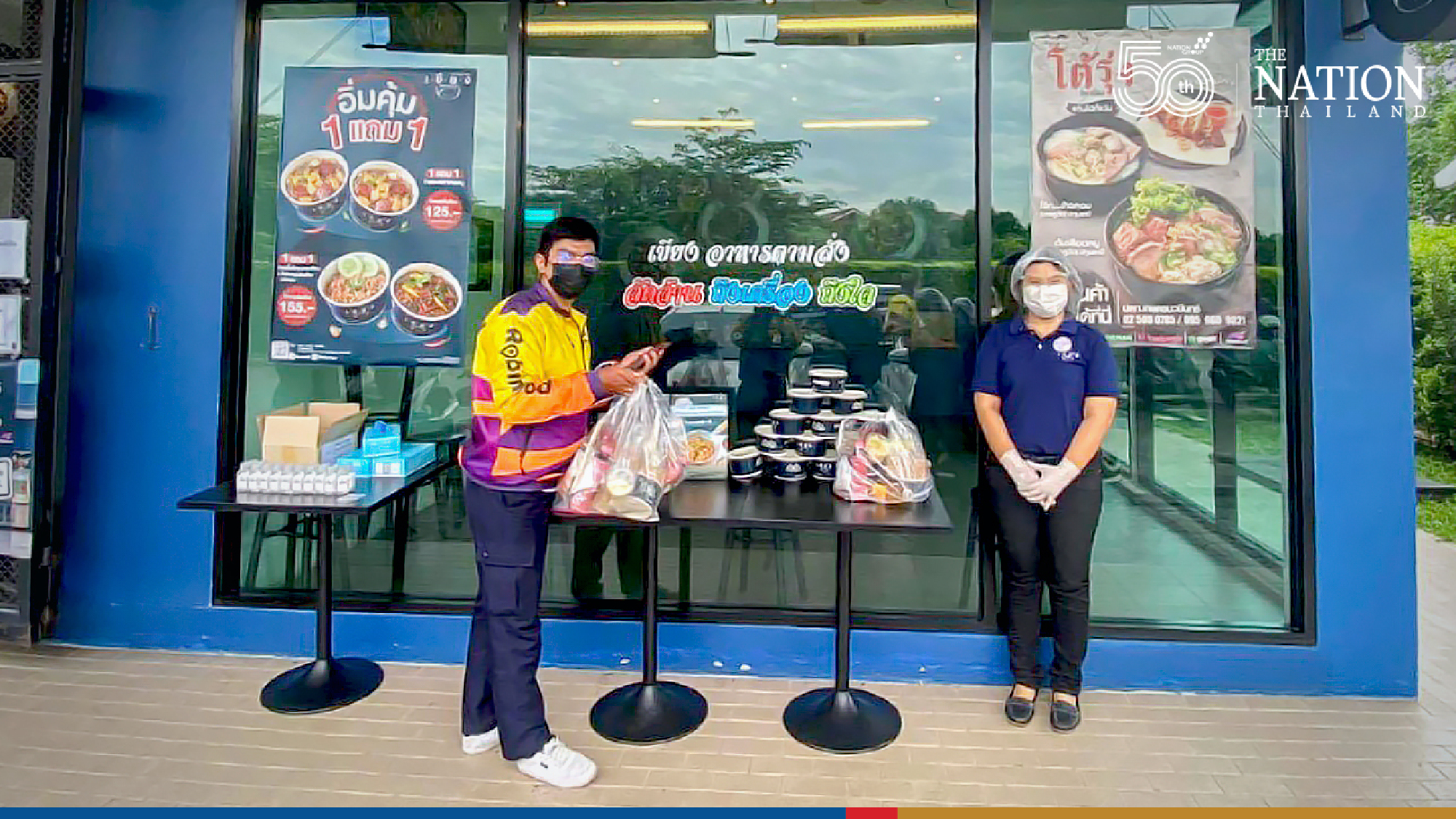
Food delivery platform Robinhood has stepped in with free deliveries to Covid-19 patients being treated at home under Siriraj and Ramathibodi hospitals.

The two Bangkok hospitals are currently providing treatment for 160 Covid-19 patients isolating at home, Srihanath Lamsam, managing director of Robinhood’s operator, Purple Ventures Co, said on Wednesday.

“Khiang, Robinhood’s partner restaurant, is using its two branches as food distribution centres to prepare three full meals each day,” he explained.

“Volunteer riders pick up food from the distribution centres and deliver it to Covid-19 patients at home.”

Food delivery platform Robinhood helping out Covid patients at homeFood delivery platform Robinhood helping out Covid patients at home

He added that volunteer riders strictly adhere to anti-Covid measures to ensure the safety of patients.

Food delivery platform Robinhood helping out Covid patients at homeFood delivery platform Robinhood helping out Covid patients at home

Hospitals are facing bed shortages as the number of Covid cases surges. Thailand logged 9,317 new infections and 87 deaths over 24 hours on Wednesday.

To relieve the pressure on hospitals, Bangkok authorities announced that mild cases can be treated at home or in the community.

Published : July 14, 2021

By : The Nation

Borrowers from state agencies to get some respite #SootinClaimon.Com

#SootinClaimon.Com : ขอบคุณแหล่งข้อมูล : หนังสือพิมพ์ The Nation.

https://www.nationthailand.com/business/40003282

Borrowers from state agencies to get some respite


The Government Financial Institutions Association (GFA) on Thursday launched new measures to help people who are burdened with debt and whose earnings have been affected by the lockdown.

The government has put Greater Bangkok and deep South under night-time curfew and partial lockdown.

In a bid to help, GFA and affiliated financial institutions will offer a debt moratorium for at least two months to people whose workplaces have had to close due to Covid measures. In other words, people will not have to pay their monthly instalments for two months from July or August.

“Once the moratorium expires, the lenders will not call for payment immediately,” GFA said.

“Financial institutions will also help debtors who can still run their business but whose revenue has dropped due to Covid measures.”

Those requiring assistance can contact their financial institution from July 19 onwards.

“The association and affiliated financial agencies will try to relieve debtors’ burdens as much as possible,” GFA said.

Institutions offering the respite include Government Housing Bank, Government Savings Bank, Bank for Agriculture and Agricultural Cooperatives, Export-Import Bank of Thailand, Small and Medium Enterprise Development Bank of Thailand, Islamic Bank of Thailand and Thai Credit Guarantee Corporation.

Published : July 15, 2021

By : The Nation

COVID-19 Crisis Lowers Thailand’s Growth, Continued Support for the Poor Needed #SootinClaimon.Com

#SootinClaimon.Com : ขอบคุณแหล่งข้อมูล : หนังสือพิมพ์ The Nation.

https://www.nationthailand.com/business/40003277

COVID-19 Crisis Lowers Thailand’s Growth, Continued Support for the Poor Needed


BANGKOK, July 15, 2021 – Thailands economy continues to take a heavy toll due to the COVID-19 pandemic and is projected to expand modestly at 2.2 percent in 2021, revised down from the 3.4 percent growth projected in March, according to the World Banks latest Thailand Economic Monitor “The Road to Recovery” published today.

Continued assistance to the poor and vulnerable, including informal workers, will be necessary as COVID-19 continues to impact Thailand’s economy.

The weaker outlook reflects the impact of the ongoing third wave of the virus on private consumption, and the likelihood that international tourist arrivals will remain very low through the end of 2021. Thailand recorded 40 million tourist arrivals in 2019, but the expected number of tourist arrivals in 2021 has been revised sharply downward from a previous forecast of 4-5 million to just 0.6 million.

“The economic shock associated with COVID-19 has adversely affected employment, incomes, and poverty, but the government’s comprehensive social protection response has been impressive in mitigating its impact,” said Birgit Hansl, World Bank Country Manager for Thailand. “Thailand’s fiscal space is still sufficient to allow supporting measures to protect the poor and most in need in the months to come.”

Thailand has performed relatively well in terms of the scale and speed of its fiscal response. The government expanded what was previously a relatively modest set of cash transfer programs to implement one of the largest such responses to COVID-19 in the world. Preliminary simulations suggest that more than 780,000 additional people could have fallen into poverty in 2020 if the government had not scaled up social assistance.

“The crisis in 2020 demonstrated Thailand’s ability to leverage its robust and universal digital ID, sophisticated and interoperable digital platform, and a number of administrative databases to filter eligibility for new cash transfer programs. Going forward Thailand would need to consolidate these efforts and be better prepared to respond to crisis through setting up a social registry.” said Francesca Lamanna, Senior Economist at the World Bank. 

Economic activity is not expected to return to its pre-pandemic levels until 2022, with the GDP growth rate projected to rise to 5.1 percent. However, the pace of recovery will depend on Thailand’s vaccination progress, the effectiveness of fiscal support, and the extent to which international tourism resumes. Exports of goods are expected to support the Thai economy in 2021, due to recovering global demand for automotive parts, electronics, machinery, and agricultural products. Risks are further tilted to the downside as the COVID-19 recovery might be delayed due to new COVID-19 variants becoming resistant to treatments or vaccines.

“Adequate testing-tracing-isolation and further progress on vaccinations will be necessary to avoid the need for lockdowns, spur a sustained increase in domestic mobility and consumption, and allow the country to reopen to foreign tourists,” according to Kiatipong Ariyapruchya, World Bank Senior Economist for Thailand. “In the long-term, reforms that lower trade costs and barriers could help maximize the benefits of the ongoing recovery of global economic activity.”

The report also recommends that the government will need to invest in strengthening Thailand’s social protection system. In the years to come it should be a priority to provide adequate support to vulnerable people, while ensuring that this support is targeted effectively to limit the overall fiscal burden. The crisis also further underscores the need to ensure that the social protection system covers the large informal sector at all times, not only during crises.

Download the full report at www.worldbank.org/tem.

Published : July 15, 2021

By : The Nation

Climate-related risks have financial statement impacts #SootinClaimon.Com

#SootinClaimon.Com : ขอบคุณแหล่งข้อมูล : หนังสือพิมพ์ The Nation.

https://www.nationthailand.com/business/40003273

Climate-related risks have financial statement impacts


In recent years, many countries have seen dramatic shifts in the number of companies reporting on sustainability, driven not only by new laws and regulations but also by a growing understanding of the environmental, social and governance (ESG) issues which impact financial performance and corporate value.

All companies are facing climate-related risks and opportunities and are making strategic decisions in response. These climate-related risks and strategic decisions could impact their financial statements – and KPIs.

In recent years, many countries have seen dramatic shifts in the number of companies reporting on sustainability, driven not only by new laws and regulations but also by a growing understanding of the environmental, social and governance (ESG) issues which impact financial performance and corporate value. Sustainability reporting is now so nearly universally adopted, that the small minority of companies not yet reporting will find themselves seriously out of step with global norms.

Climate-related risks have financial statement impactsClimate-related risks have financial statement impacts“According to the KPMG Survey of Sustainability Reporting 2020, 80% of companies surveyed now report on sustainability and that number rises to 96% among the world’s largest 250 companies,” says Charoen Phosamritlert, Chief Executive Officer, KPMG in Thailand, Myanmar and Laos. “Companies that do not align with this global practice put themselves at risk. However, these companies should also be aware that sustainability strategies and reporting cannot be implemented overnight with a quick fix”
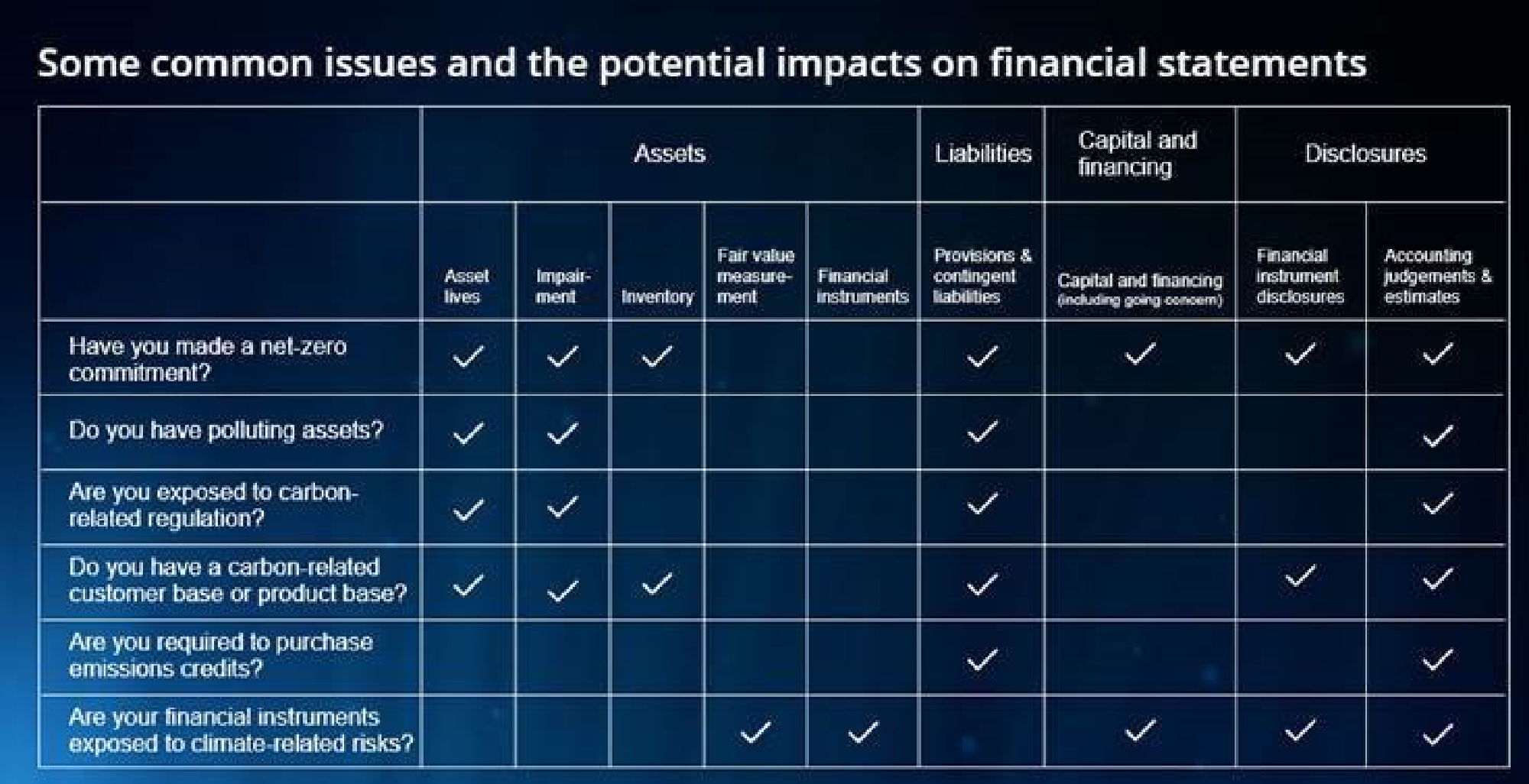
“Key points that these companies must consider when identifying potential financial statement impacts from climate change include net zero commitments; polluting assets; exposure to carbon-related regulation; carbon-related customer base or product base; requirements to purchase emissions credit; and financial instruments exposure to climate-related risks.” says Natthaphong Tantichattanon, Partner, Sustainability, KPMG in Thailand.

Climate-related risks have financial statement impactsClimate-related risks have financial statement impacts

Even if climate-related risk may seem to have minimal financial statement impact for companies today, this may change quickly as a result of regulation, strategic decisions or shifts in climate patterns. And the decisions that companies make could affect their assets and liabilities, or they may need new financing or even a capital injection to fund the transition to new strategies.

To help companies with their financial reporting disclosures, KPMG recently launched the Climate change financial reporting resource center. It provides guidance to help companies consider how to provide clear financial statement disclosures of the significant judgements and estimates that could be materially impacted by climate-related risk.

Visit the Climate change financial reporting resource center.

Published : July 15, 2021