Tech sell-off sinks stocks amid stimulus deadlock #SootinClaimon.Com

#SootinClaimon.Com : ขอบคุณแหล่งข้อมูล : หนังสือพิมพ์ The Nation.

Tech sell-off sinks stocks amid stimulus deadlock (nationthailand.com)

Tech sell-off sinks stocks amid stimulus deadlock

EconDec 10. 2020
By Syndication Washington Post, Bloomberg · Rita Nazareth, Claire Ballentine

A sell-off in some of the world’s biggest technology companies weighed heavily on the equity market, dragging down stocks amid dimming prospects for fresh stimulus.

The S&P 500 slid from a record, while the Nasdaq 100 had its biggest slump in a month. Facebook Inc. sank after being sued by U.S. antitrust officials, while Tesla Inc. tumbled as JPMorgan Chase & Co. called it “dramatically” overvalued. Zoom Video Communications Inc., one of the biggest stay-at-home winners, plunged after an analyst downgrade. The Russell 2000 index of smaller companies was down half as much as the tech-heavy gauge. DoorDash Inc. defied the market weakness — almost doubling in its debut — before Airbnb Inc.’s initial public offering.

Stocks took a nosedive Wednesday as it became clear that a stimulus deal remains elusive amid the most-intense negotiations over a covid-19 package since Election Day. The Democratic and Republican lawmakers working on a relief plan delivered a more-detailed summary of their proposal, but haven’t yet resolved the deadlock over a business liability shield as well as aid to state and local governments.

“To the extent they can’t come to an agreement on stimulus given the heightened urgency, given the recent outbreak, that’s a bad message,” said Mark Heppenstall, chief investment officer for Penn Mutual Asset Management. “I do think stimulus is coming and I think the market was more prepared for it to be this year than next year.

These are some of the main moves in markets:

Stocks

– The S&P 500 declined 0.8% as of 4 p.m. EST.

– The Stoxx Europe 600 Index advanced 0.3%.

– The MSCI Asia Pacific Index climbed 0.5%.

Currencies

– The Bloomberg Dollar Spot Index increased 0.1%.

– The euro dipped 0.2% to $1.2082.

– The British pound gained 0.3% to $1.3401.

– The Japanese yen was little changed at 104.21 per dollar.

Bonds

– The yield on 10-year Treasurys increased two basis points to 0.93%.

– Germany’s 10-year yield rose less than one basis point to -0.61%.

– Britain’s 10-year yield climbed less than one basis point to 0.261%.

Commodities

– West Texas Intermediate crude was little changed at $45.57 a barrel.

– Gold fell 1.6% to $1,840.07 an ounce.

Gold drops from two-week high amid vaccine news, stimulus hopes #SootinClaimon.Com

#SootinClaimon.Com : ขอบคุณแหล่งข้อมูล : หนังสือพิมพ์ The Nation.

Gold drops from two-week high amid vaccine news, stimulus hopes (nationthailand.com)

Gold drops from two-week high amid vaccine news, stimulus hopes

EconDec 10. 2020

By Syndication Washington Post, Bloomberg · Ranjeetha Pakiam, Eddie Spence

Gold declined from a two-week high as investors weighed vaccine roll-outs against surging covid-19 cases and fresh hopes for a U.S. stimulus deal.

U.S. regulators gave early indications they may grant emergency-use authorization to Pfizer Inc.’s shot, calling it highly effective with no safety concerns, although the U.K. said those with a significant history of allergies shouldn’t take it. Trial results found that the vaccine developed by the University of Oxford and AstraZeneca Plc is safe and effective, though more analysis will be required to see how well it works in people over 55.

On the stimulus front, Treasury Secretary Steven Mnuchin presented a $916 billion coronavirus relief proposal to House Speaker Nancy Pelosi, opening up a potential new path to a year-end deal. The offer crucially has the support of Senate Majority Leader Mitch McConnell, though its omission of supplementary jobless benefits remains a sticking point with Democrat leaders.

While vaccine developments have curbed haven demand, bullion is still heading for the biggest annual gain in a decade amid unprecedented amounts of stimulus to prop up economies. Top central banks are embarking on fresh waves of bond-buying, with the European Central Bank expected to increase its purchase plans when it meets on Thursday.

“The gold price is likely to close 2020 with a notable plus, despite the sizable losses in autumn,” Carsten Fritsch, an analyst at Commerzbank AG, wrote in a note. “We do not expect a change in the ultra-expansionary monetary and fiscal policy despite the upcoming vaccinations.”

Spot gold declined 0.7% to $1,857.10 an ounce by 12:43 p.m. in London, after touching the highest since Nov. 23 on Tuesday. Silver dropped 1.5%, platinum fell 1.1% and palladium was little changed. The Bloomberg Dollar Spot Index fell 0.2%.

Thai rubber glove makers target 20% share of global market #SootinClaimon.Com

#SootinClaimon.Com : ขอบคุณแหล่งข้อมูล : หนังสือพิมพ์ The Nation.

Thai rubber glove makers target 20% share of global market (nationthailand.com)

Thai rubber glove makers target 20% share of global market

EconDec 10. 2020

By The Nation

Thailand’s rubber glove industry is aiming to expand its slice of the global market from 15 per cent to 20 per cent in the next five years.

To meet that target, the Thai Rubber Glove Manufacturers Association (TRGMA) is pushing for increased investment and improved overall competitiveness in the industry.

Association president Veerasith Sinchareonkul said the long-term aim was to grab a 40-per-cent share of the world market.

The move follows a 20-per-cent jump in global demand for rubber gloves to 3.6 million amid the Covid-19 pandemic. Demand is expected to rise by another 10 per cent next year.

Veerasith urged the government to provide more financial support to help manufacturers expand investment. It should also streamline regulations to ease the launch of new factories, he added.

Thailand is the world’s second largest exporter of rubber gloves, driven by 19 manufacturers with combined production capacity of 46 billion per year. Of that total, 90 per cent is exported. Medical rubber gloves account for 88 per cent of total production.

“We want to see Thailand become the world’s production hub of natural-rubber gloves,” he said.

China and Malaysia, the world’s major rubber glove makers, have already expanded their production capacity, he added.

Central bank blames rapidly weakening dollar for stronger baht #SootinClaimon.Com

#SootinClaimon.Com : ขอบคุณแหล่งข้อมูล : หนังสือพิมพ์ The Nation.

Central bank blames rapidly weakening dollar for stronger baht (nationthailand.com)

Central bank blames rapidly weakening dollar for stronger baht

EconDec 09. 2020

By The Nation

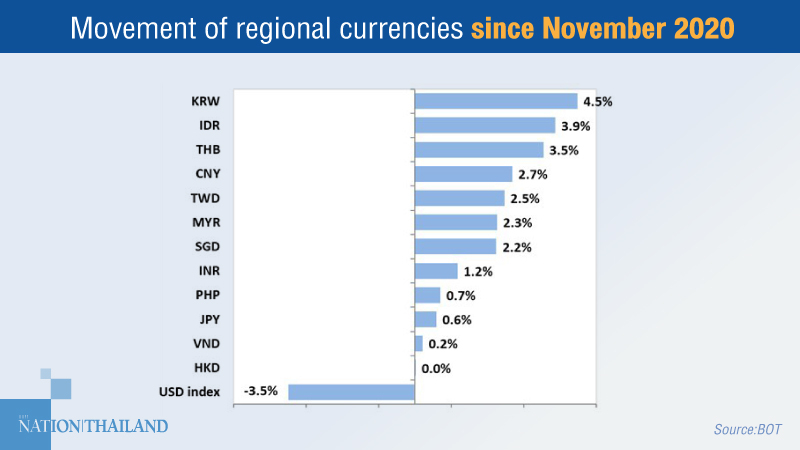
The weakening dollar has seen regional currencies appreciate quickly, with China’s yuan its highest for two and half years, the Korean won and Singaporean dollar strongest in three years, and the new Taiwan dollar at a 23-year high.

Availability of Covid-19 vaccine coupled with signs of global economic recovery in November have caused the US dollar to weaken rapidly, Bank of Thailand (BOT) assistant governor Vachira Arromdee said on Wednesday. The dollar fell to a two-year low against the baht of Bt30.023 on Wednesday, according to BOT figures.Since November, the baht has risen 3.5 per cent, the won 4.5 per cent and Indonesia’s rupiah 3.9 per cent.

Year-to-date, the baht had actually weakened slightly, Vachira noted.

The central bank was closely monitoring currency rates and it would prevent the baht’s value from impacting the economic recovery, she added.

The central bank has introduced a slew of measures to encourage capital outflow in order to balance increasing capital inflows that are driving the baht up.

Thai exporters are complaining that the strong baht makes their products more expensive and less competitive in the global market.

World’s largest rubber glove maker posts record profit #SootinClaimon.Com

#SootinClaimon.Com : ขอบคุณแหล่งข้อมูล : หนังสือพิมพ์ The Nation.

World’s largest rubber glove maker posts record profit (nationthailand.com)

World’s largest rubber glove maker posts record profit

InternationalDec 10. 2020Latex gloves are displayed on hand-shaped molds at the Top Glove Corp. headquarters in Setia Alam, Malaysia, on Feb. 18, 2020. MUST CREDIT: Bloomberg photo by Samsul Said.Latex gloves are displayed on hand-shaped molds at the Top Glove Corp. headquarters in Setia Alam, Malaysia, on Feb. 18, 2020. MUST CREDIT: Bloomberg photo by Samsul Said. 

By Syndication Washington Post, Bloomberg · Yantoultra Ngui

Top Glove Corp., the world’s largest rubber gloves maker, posted a record first-quarter profit as the coronavirus pandemic continued to drive demand for protective equipment.

Net income jumped to 2.38 billion ringgit ($584 million) in the three months ended November, from 111.4 million ringgit in the year-ago period. Revenue almost quadrupled to 4.76 billion ringgit, according to an exchange filing on Wednesday.

Top Glove and its peers have been one of the hottest pandemic trades of 2020, with their shares scaling to records as they rode on an extraordinary boom in demand for protective gear amid the pandemic. The rollout of covid-19 vaccines next year won’t hurt demand for medical gloves as people administering the shots will need protection, the company said, as it set aside 10 billion ringgit to expand capacity by 100 billion pieces over five years.

Top Glove also allocated 100 million ringgit for workers’ housing following the spread of infections at its plants last month that prompted the government to order the company to shut 28 of its factories. The outbreak capped Top Glove’s gains this year, with the stock tumbling 17% in November, the biggest monthly drop since January 2016, as the company said some deliveries could be delayed by up to four weeks.

“In the short run, investors will need to be pay attention to the impact of the closures of factories and potential fines or penalties for living conditions of their workers on the company’s earnings,” said Chua Zhu Lian, investment director at Fortress Capital Asset Management Sdn. in Kuala Lumpur. “Overall, Top Glove should continue benefiting from the higher average selling prices,” he said, adding new entrants into the business will eventually increase supply.

The company proposed an interim dividend of 16.5 sen per share. The stock slid 3.5% to end at 6.84 ringgit as investors including Chua said the record earnings had already been factored into the price. The shares have surged more than 300% this year.

Markets around the world have been given a series of boosts in recent weeks by vaccine news from pharmaceutical firms including Pfizer Inc., Moderna Inc. and AstraZeneca Plc. Top Glove said demand for gloves won’t revert to pre-pandemic level because of rising awareness of hygiene.

“In the weeks to come, a lot of people will be watching the trend and if some of these vaccine don’t prove to be effective, there will be a pullback and scientists will continue to look for the correct vaccine,” Managing Director Lee Kim Meow said at a virtual briefing. “It also takes time to manufacture these vaccines.”

The outsized gains in glove producers’ shares this year have altered the composition of Malaysia’s stock market. Supermax Corp. is set to join rivals Top Glove and Hartalega Holdings Bhd. in the benchmark FTSE Bursa Malaysia Index on Dec. 21. The addition will take the sector’s weighting in the gauge to 13.6% from 11%, according to Smartkarma.

Supermax has rallied more than 1,000% this year, while Hartalega has more than doubled. Meantime, Top Glove is “still working” on its plan to list in Hong Kong, Chairman Lim Wee Chai said the virtual briefing.

SCB’s economic centre predicts better-than-expected economic performance this year #SootinClaimon.Com

#SootinClaimon.Com : ขอบคุณแหล่งข้อมูล : หนังสือพิมพ์ The Nation.

SCB’s economic centre predicts better-than-expected economic performance this year (nationthailand.com)

SCB’s economic centre predicts better-than-expected economic performance this year

EconDec 09. 2020

By The Nation

The Siam Commercial Bank’s Economic Intelligence Centre (EIC) expects the Thai gross domestic product (GDP) next year to expand by 3.8 per cent on the back of improving global growth, fiscal stimulus packages and vaccine progress.

Global growth, however, is likely to get worse due to recent Covid-19 resurgences before improving. The recovery in 2021 is likely to be gradual, supported by vaccine progress, stimulus packages and less severe scarring effects.

However, most key economies (except China) in 2021 should remain below their pre-Covid levels in 2019. In late 2020, the Covid-19 resurgences in several countries should result in the tightening of lockdown measures and hence slow economic recovery in the near-term.

Looking forward, global economic recovery in 2021 will likely be gradual and uneven across countries and industries. Developed countries, which are expected to be vaccinated in the first half of the year, should recover faster compared to developing countries.

In Thailand, better-than-expected private consumption recovery in the third quarter of this year should result in smaller-than-expected GDP contraction in 2020.

In the third quarter of this year, Thailand’s GDP fell by -6.4 per cent year on year, supported by faster recovery in private consumption on the back of more holidays and stimulus packages.

However, recovery in the fourth quarter will likely slowdown somewhat due to Covid-19 resurgences in several countries, which should affect consumer confidence and domestic tourism. As a result, EIC expects Thai GDP growth this year to fall by -6.5 per cent versus its previous forecast of -7.8 per cent.

Looking forward, EIC expects the Thai economy next year to grow by 3.8 per cent due to the low base effect, global recovery, fiscal spending and additional stimulus packages as well as Covid-19 vaccine, which is expected to be distributed in the second half of 2021.

However, scarring effects should continue to pressure private domestic demand recovery. Public spending is likely to be a key supportive factor, especially public investment spending.

In addition, the Bt1-trillion recovery package still has about Bt500 billion ready to be disbursed in 2021.

Recently, the government also extended some co-pay measures, suggesting their ready stance to continue fiscal policy easing to support private consumption.

Thai exports in 2021 is expected to rebound and grow by 4.7per cent on the back of global economic and trade recovery. However, the severe shortage and hence rising cost on freight containers in late 2020 and early 2021 as well as strong baht due to weakening dollar should remain key headwinds for export recovery.

The progress in high efficacy rate vaccines, combined with Thailand as a production base for AstraZeneca, should support Thailand’s tourism recovery in the second half of next year, when both key foreign tourists’ countries and Thailand have been widely vaccinated.

On tourist arrival forecasts, EIC expects around 8 million foreign tourists in 2021, which remains significantly lower than the foreign tourist arrivals in 2019 (around 40 million).

Meanwhile, with material scarring effects on Thai economy, the effects should continue to pressure private consumption and investment recovery through:

• Fragile labour markets on the back of elevated unemployment, rising underemployment, and income slowdown,

• Bleak business registration and dissolution expected to continue, and

• Rising household debt to income ratio.

On monetary policy, EIC expects the Bank of Thailand to keep its policy rate at 0.5 per cent throughout 2021.

EIC expects strengthening Thai baht pressure to continue with the baht coming in the range of Bt29.5-Bt30.5 against the dollar at end-2021, mainly due to a weak greenback, resulting from global economic recovery, less volatile global trade tensions, larger US budget deficit, and hence capital inflows to emerging markets, including Thailand.

The key downside risks on the Thai economy in 2021 include Covid-19 resurgences and delay in wide vaccine distribution, and issues on political stability, which could impact investors’ confidence. The other risk is stronger Thai baht, compared with key trading partners, to impact external demand’s recovery.

SET gains another 0.25% as vaccines inject positive sentiment #SootinClaimon.Com

#SootinClaimon.Com : ขอบคุณแหล่งข้อมูล : หนังสือพิมพ์ The Nation.

SET gains another 0.25% as vaccines inject positive sentiment (nationthailand.com)

SET gains another 0.25% as vaccines inject positive sentiment

EconDec 09. 2020

By The Nation

The Stock Exchange of Thailand (SET) Index closed at 1,482.67 on Wednesday, up 3.75 points or 0.25 per cent. Total transactions amounted to Bt123.39 billion with an index high of 1,503.89 and a low of 1,474.83.

In the morning session, an analyst at Krungsri Securities expected the day’s index to rise to between 1,490 and 1,500 points on the influx of foreign funds in response to positive news of Covid-19 vaccines, adding that the positive sentiment was also benefiting large-cap stocks.

“However, we still advise investors to stick to short-term speculation as the SET will come under pressure from its tight valuation and mass sell-offs to reduce risks during the upcoming long holiday,” he said.

The 10 stocks with the highest trade value today were SAK, KBANK, DELTA, IRPC, ADVANC, PTT, SCB, SCGP, AOT and CPF.

As of 5pm, the price of oil rose by US$0.61 or 1.34 per cent to $46.21 per barrel, while gold dropped by $8.50 or 0.45 per cent, to $1,866.40 per ounce.

Other Asian indices were on the rise, except for Chinese indices:

Japan’s Nikkei Index closed at 26,817.94, up 350.86 points or 1.33 per cent.

China’s Shang Hai SE Composite Index closed at 3,371.96, down 38.21 points or 1.12 per cent, while Shenzhen SE Component Index closed at 13,716.53, down 257.36 points or 1.84 per cent.

Hong Kong’s Hang Seng Index closed at 26,502.84, up 198.28 points or 0.75 per cent.

South Korea’s KOSPI Index closed at 2,755.47, up 54.54 points or 2.02 per cent.

Taiwan’s TAIEX Index closed at 14,390.14, up 29.74 points or 0.21 per cent.

No dramatic changes in Asian ties expected under Biden: Moody’s #SootinClaimon.Com

#SootinClaimon.Com : ขอบคุณแหล่งข้อมูล : หนังสือพิมพ์ The Nation.

No dramatic changes in Asian ties expected under Biden: Moody’s (nationthailand.com)

No dramatic changes in Asian ties expected under Biden: Moody’s

EconDec 09. 2020

By The Nation

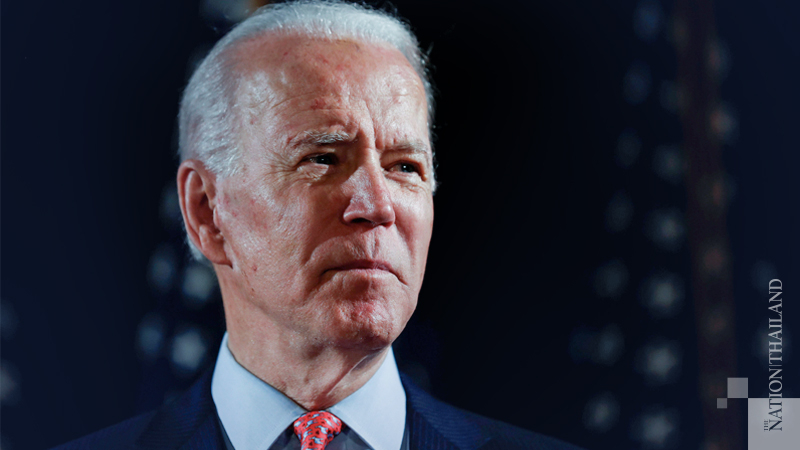
Despite a renewed emphasis on improving relations with traditional allies in Asia, US policy towards China is unlikely to change dramatically under President-elect Joe Biden’s administration, a new report by Moody’s Investors Service published on Wednesday shows.

“We do not expect the Biden administration to result in major changes in Asia credit, with any renewed pivot likely to run up against the reality of longer-term shifts underway that are increasing China’s centrality to the region,” said Nishad Majmudar, a Moody’s assistant vice president and analyst.

With ongoing trade frictions, Biden is unlikely to unwind the actions the Trump administration took against China. And Moody’s expects Biden to embrace recent outreach from the EU on adopting a unified trans-Atlantic approach against China on certain issues, while also searching for areas of cooperation with China’s President Xi Jinping.

“We expect Biden’s multilateral approach towards China will not stop ongoing structural shifts, including the restricting of supply chains and consolidation of the global economy into three distinct blocs, with potential negative credit effects for multinationals and export-oriented companies,” adds Majmudar.

Outside China, Biden’s policy may attempt to revise the “pivot to Asia” adopted by former president Barack Obama, aimed at increasing diplomatic and investment ties with the region.

Biden’s increased engagement in Asia would face a challenge from China’s growing centrality in the region, and could result in countries facing a choice between strengthening security ties with the US or deepening economic ties with China.

Meanwhile, the likely increased focus by the US under Biden on climate policy initiatives will increase longer term credit risks for industrial sectors prominent in many Asian countries, particularly power, automotive, oil and gas, and steel. Similarly, US financial regulators are more likely to follow European efforts pushing for greater financial disclosures of environmental risk, which could create pressure for Asian regulators to follow suit.

Delta share price jumps but experts voice caution #SootinClaimon.Com

#SootinClaimon.Com : ขอบคุณแหล่งข้อมูล : หนังสือพิมพ์ The Nation.

Delta share price jumps but experts voice caution (nationthailand.com)

Delta share price jumps but experts voice caution

EconDec 09. 2020

By The Nation

Delta Electronics’ share price rose by Bt68, or 20.8 per cent, to Bt395 per share in morning trade on Wednesday, but experts advised against investing in the company’s shares as its price was higher than the base value.

The price of Delta shares had risen more than Bt300 per share since yesterday as the company gained positive sentiment from the sharp rise of its subsidiary’s shares in Taiwan amid positive news of the firm’s Covid-19 test kit.

UOB Kay Hian strategist Kitpon Pripisankit said Delta’s share price went higher than many analysts’ forecast of between Bt200 and Bt250 per share.

“We advise investors to sell some of their Delta shares because its price has already responded to the above-mentioned positive sentiment,” he said.

Meanwhile, Yuanta Securities strategist Natapon Khamthakrue said Delta’s share price had risen higher than its base value and it would be listed on the SET50 Index again.

He added that Delta also gained positive sentiment from hopes over 5G and data centre trends, as well as speculation by Thai institutional investors.

“We advise investors to avoid buying Delta shares as its price would come under pressure from appreciation of the baht. Instead, we advise buying KCE Electronics shares as its price is cheap and is likely to move upside,” he said.

DTAC-ASEFA launch 5G smart power management #SootinClaimon.Com

#SootinClaimon.Com : ขอบคุณแหล่งข้อมูล : หนังสือพิมพ์ The Nation.

DTAC-ASEFA launch 5G smart power management (nationthailand.com)

DTAC-ASEFA launch 5G smart power management

Dec 08. 2020

By THE NATION

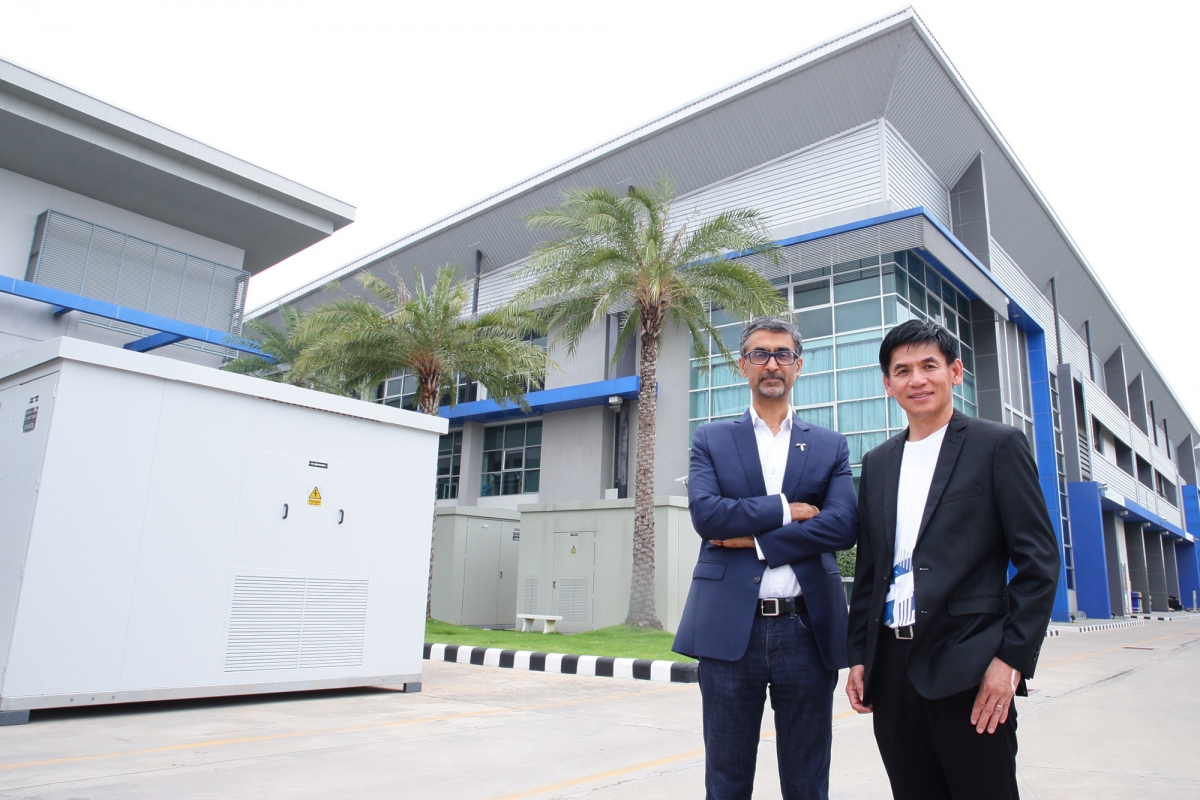
Telecom major DTAC and engineering firm ASEFA on Tuesday launched Thailand’s first 5G smart energy solutions.

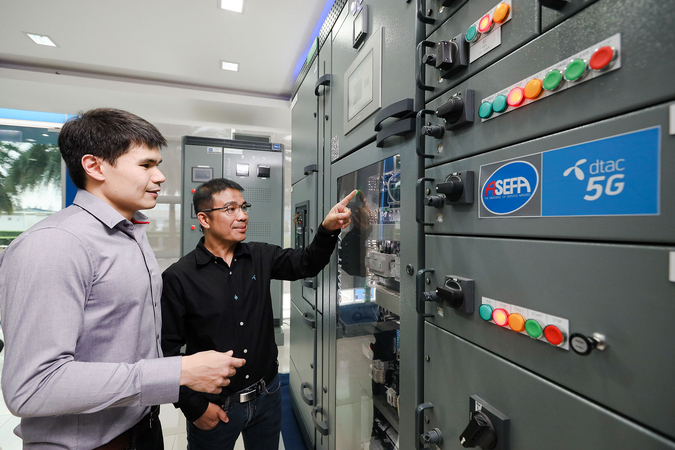
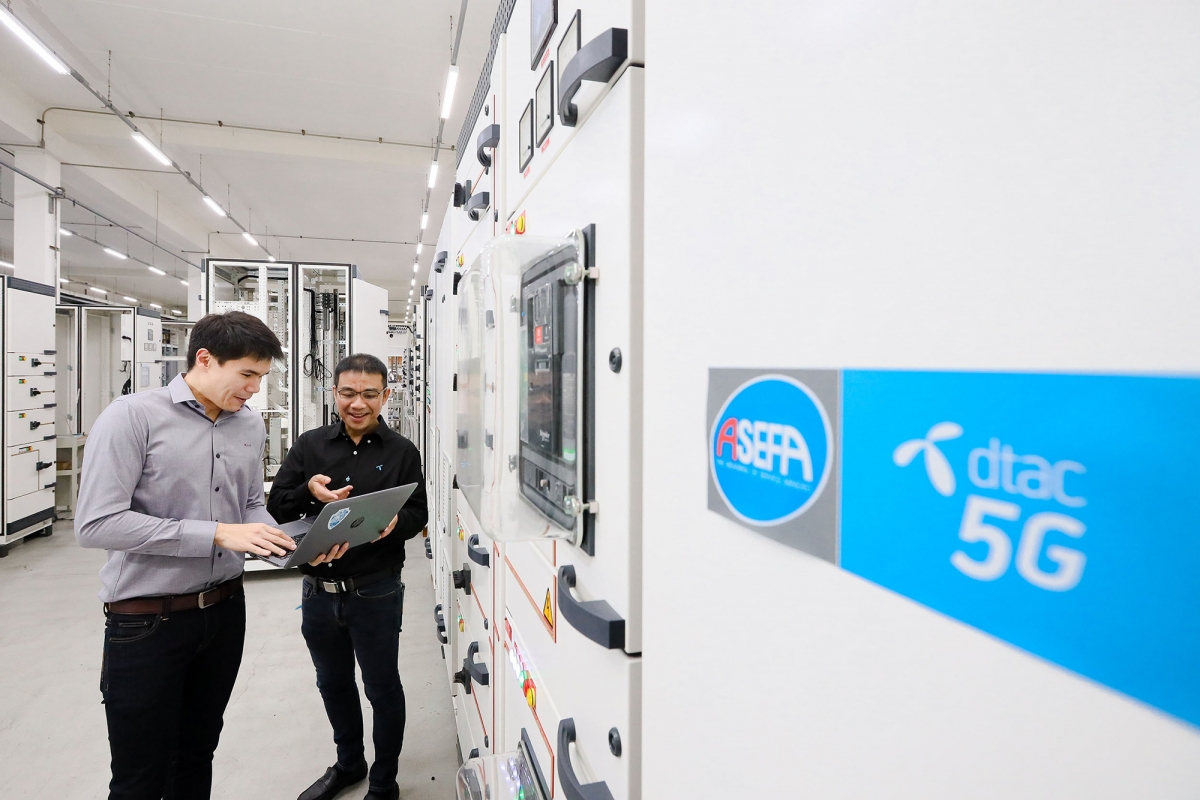
Using mmWave 5G on 26 gigahertz (GHz), the new technology brings ultra-fast and ultra-reliable connectivity to main distribution boards (MDBs), the key to stable power supply in factories, warehouses and large buildings, the companies said.

Trials are underway at the ASEFA headquarters ahead of production for industrial customers.

Rajiv Bawa, chief business officer, Total Access Communication Plc, or DTAC, said, “Stable and reliable power is a core foundation for Thailand 4.0 and smart cities. The solution DTAC and ASEFA have developed together leverages DTAC’s 5G mmWave spectrum on 26GHz to deliver ultra-reliable low-latency communications to main distribution boards. The speed and reliability of 5G ensures uninterrupted power and energy savings for businesses. It’s therefore a very important milestone in Thailand’s 5G journey.”

The DTAC-ASEFA 5G smart energy solution features 5G Internet of Things (IoT) to increase the capabilities of main distribution boards.

Data is sent in real-time to an app on the smartphone of an authorised technician for efficient power management. This can effectively reduce downtime by providing complete information for analysis, power quality monitoring and power demand trends, the companies said. The system also can trigger emergency alarms, all powered by 5G technology with massive IoT monitoring of temperature, humidity, motion sensing, smoke detection and access panels.

Phaiboon Ungkanakornkul, managing director of ASEFA Pcl, said, “We are confident that deploying innovation is the way to go in developing solutions for businesses, infrastructure and industries. We strive to innovate energy management for corporate clients to better serve consumers. For large businesses, factories and buildings, managing the main distribution board is key, as it is the controller of all the power supply from the grid. Any MDB downtime needs to be fixed immediately to minimise impact – in a factory it can mean sudden halt in production.

“Having an efficient monitoring system reduces issues and downtime, in addition to more efficient and sustainable use of power.”

On top of this smart power management, DTAC and ASEFA are also collaborating on 5G fixed wireless access for high speed internet in ASEFA’s offices and training centre.