CorporateNov 20. 2020GSB president Vitai Ratanakorn
By The Nation
The Government Savings Bank (GSB) will next year focus more on suspending debt for customers while also increasing loans in an effort to revive the economy, said its president Vitai Ratanakorn.
He believes the economy next year will still feel the pinch from the Covid-19 outbreak. GSB’s lending is 2021 will focus on the grassroots economy, which has been hit hardest by the outbreak’s impact, he added.
While GSB judges that the economy has bottomed out, questions remain over its rate of recovery, according to Vitai. He forecast that the economic impact of Covid-19 as well as political tensions would last long into next year.
The price of gold was unchanged in morning trade on Friday after falling by Bt200 per baht weight at close on Thursday, the Gold Traders Association reported.
As of 9.26am, the buying price of a gold bar was Bt26,700 per baht weight and selling price Bt26,800, while gold ornaments were priced at Bt26,226.80 and Bt27,300, respectively.
Spot gold price moved to US$1,864 (Bt56,637) per ounce in the morning, while Comex (Commodity Exchange) gold price to be delivered in December dropped by $12.4 to $1,861.5 per ounce on Thursday due to the strengthening dollar and strong US economic data.
Hong Kong gold price meanwhile rose by HK$30 to $17,220 (Bt67,479) per tael, the Chinese Gold and Silver Exchange Society reported.
By Syndication Washington Post, Bloomberg · Vildana Hajric · BUSINESS, US-GLOBAL-MARKETS
Tech shares led U.S. equity indexes higher, with the stay-home trade gaining appeal as investors considered the impact of tougher virus restrictions on economic growth along with the outlook for widespread vaccine distribution within months.
Advances for Microsoft, Amazon and Adobe lifted the Nasdaq 100. Tesla rose to a record as investors bet that the global car market will be dominated by electric cars in decades ahead. The S&P 500 index edged higher, but it underperformed the tech-heavy gauge as investors sought shares of companies poised to do well during lockdowns.
Treasury yields slipped, and the dollar dipped after U.S. weekly jobless claims came in higher than forecast. Gold dropped for a fourth day amid a drawdown in bullion-backed exchange-traded funds.
The bullish fever that lifted the MSCI World index to an all-time high Monday has softened, with virus cases surging in many parts of the world and public health facilities being pushed to the brink. New York City announced that it will close schools, and South Australia began one of the world’s toughest lockdowns, with even outdoor exercise and dog-walking banned. In Tokyo, the virus alert was raised to the highest levels as daily infections topped 500 for the first time.
It all means investors are grappling with how long and how severe the pandemic will be in the months ahead. There’s economic stress now as businesses struggle under lockdowns, but scientists are also rapidly advancing several vaccine candidates to get life back to normal.
“There’s the push-pull of short-term versus long-term and that’s what investors are looking at right now,” said Chris Gaffney, president of world markets at TIAA Bank. “There are some very serious risks in the short term, especially with the lockdowns.”
In a report published Thursday, the International Monetary Fund noted progress on a vaccine, but also said elevated asset prices point to a disconnect from the real economy and a potential threat to financial stability.
“While global economic activity has picked up since June, there are signs that the recovery may be losing momentum, and the crisis is likely to leave deep, unequal scars,” officials at the Washington-based fund said. “Uncertainty and risks are exceptionally high.”
In Europe, cyclical shares led stocks lower. Norwegian Air Shuttle plunged 16% after seeking protection from creditors amid the travel upheaval caused by the pandemic.
In other markets, the MSCI Asia Pacific index fell for the first time in 14 days, ending the longest winning run since 1988. Commodities dropped and Bitcoin steadied after surging past $18,000 on Wednesday.
Turkey’s lira strengthened after the country’s new central bank governor raised the benchmark interest rate.
These are the main moves in markets:
– – –
Stocks
– The S&P 500 index rose 0.4% at 4 p.m. New York time.
– The Stoxx Europe 600 index fell 0.8%.
– The MSCI Asia Pacific index declined 0.2%.
– The MSCI Emerging Market index dipped 0.5%.
Currencies
– The Bloomberg Dollar Spot index slumped 0.2%.
– The euro rose 0.2%, to $1.1877.
– The British pound was little changed at $1.3276.
– The Japanese yen was little changed at 103.77 per dollar.
Bonds
– The yield on 10-year Treasuries decreased two basis points, to 0.85%.
– Germany’s 10-year yield fell two basis points, to -0.57%.
– Britain’s 10-year yield declined one basis point, to 0.32%.
Commodities
– West Texas Intermediate crude rose 0.2%, to $41.92 a barrel
The Government Pension Fund (GPF) will from next year focus its investments in Asian and emerging markets as they tend to quickly recover from adversities, such as the Covid-19 outbreak, GPF secretary-general Srikanya Yathip said.
She also voiced confidence that total investment returns next year will be higher than this year.
Returns this year are also expected to be in the positive territory thanks to GPF’s adjustment of its investment strategy, in which it boosted its investment ceiling in foreign markets to 40 per cent from 30 per cent. Currently, foreign markets account for 32 per cent of GPF’s investments.
In response to members’ concerns about the impact the outbreak has had on GPF investments, the fund is offering them eight investment options.
The fund has 1.1 million members and its investment portfolio is about Bt1 trillion.
An expert at Tisco Securities said he expects other analysts to improve their profit forecast for companies listed in the Stock Exchange of Thailand (SET) next year as listed companies showed improvements in its third-quarter performance.
Apichat Poobunjirdkul, Tisco Securities’ senior strategist, said listed companies’ third-quarter performance stood at Bt147 billion, down 31 per cent year on year but up 23 per cent quarter on quarter as economic activities have almost returned to normal now that the government has eased lockdown measures and launched schemes to stimulate the economy.
“Of the listed companies, 52 per cent performed better than expected, 20 per cent performed as expected, while 28 per cent did worse than expected,” he said.
He added that he expects other fellow analysts to improve their profit forecast for listed companies next year, as SET has been gaining from improvement in Thailand’s third quarter gross domestic product (GDP) performance, signs of export recovery, Joe Biden’s win in the US presidential elections and positive news about the Covid-19 vaccine.
“In the third quarter, Thailand’s GDP contracted 6.4 per cent year on year, which was better than securities companies’ and the market’s expectation of 10 per cent and 8.8 per cent contraction, respectively. The global economy will also gain from Biden’s presidency,” he added.
Apichat went on to say that Tisco Securities still maintains its SET forecast at 1,370 points this year and 1,500 points next year.
As a short-term investment strategy, he advised investors to sell when SET rises and buy back when it falls.
“We expect there to be a limited upside for SET as uncertainty over political unrest, especially the anti-establishment protests and charter amendment will pressure the index until next year,” he added.
Thai-Japan blockchain transaction takes international trade to next level: Krungsri
CorporateNov 19. 2020Sayam Prasitsirigul, Krungsri deputy chief information and operation officer.
By The Nation
Krungsri (Bank of Ayudhya) has pioneered the adoption of blockchain for international trade with a letter of credit (LC) transaction between leading companies in Thailand and Japan.
Krungsri hailed the first-ever such transaction in Thailand as a breakthrough that takes international trade to the next level. The pilot transaction was conducted in the bank’s sandbox under the Bank of Thailand’s supervision.
“This pilot project of the blockchain-based LC service for trading partners in Thailand and Japan has been developed on Contour, a blockchain-based global trade finance platform,” explained Sayam Prasitsirigul, Krungsri deputy chief information and operation officer.
“Krungsri acted as an issuing bank for an importer, a leading Japanese metal parts manufacturer based in Thailand, which has made a purchase from its trading partner, a leading company in Japan. The cross-border blockchain-enabled transaction was successfully completed within an hour,” he added.
PTT’s board of directors has approved the purchase of 4.655 million shares in Global Renewable Power (GRP), amounting to 50 per cent of GRP’s registered capital, from its parent company, Global Power Synergy (GPSC).
GPSC is PTT’s power-generation arm.
“The purchase will be carried out by PTT Global Management (PTTGM), a PPT subsidiary, at a price of approximately Bt693 million,” said Auttapol Rerkpiboon, president and CEO of PTT.
“PTT’s joint investment with GPSC will be another step forward in realising PTT’s strategy of ‘Powering Thailand’s Transformation’, which aims to integrate the operations of companies under the PTT Group. It will also support our strategic goal of producing 8,000 megawatts of renewable energy within 2030.”
Chawalit Tippawanich, GPSC president and CEO, added the move would help strengthen the company’s efficiency and expertise in renewable energy as well as open new opportunities at the global level. “It will also help increase the efficiency of GPSC’s financial management and give us additional investment capital for renewable energy projects both domestically and overseas,” he added.
Currently, GRP invests in electricity generation and distribution to the Provincial Electricity Authority (PEA)’s power grid, as well as management and maintenance of nine solar farms in Lopburi, Suphanburi, Phichit and Khon Kaen, with combined capacity of 39.5MW. The solar farms have been operating since 2014 and sell electricity under adder contract at Bt8 per unit for the first 10 years, then at Bt5.66 per unit under a feed-in tariff contract.
China’s booming exports mean Beijing can handle strong yuan
EconNov 19. 2020An aerial photograph shows vessels loaded with shipping containers docked at the Yangshan Deepwater Port in Shanghai on July 12, 2020. MUST CREDIT: Bloomberg photo by Qilai Shen.
By Syndication Washington Post, Bloomberg · No Author · BUSINESS, WORLD, US-GLOBAL-MARKETS, ASIA-PACIFIC China’s ability to keep selling more of its goods abroad means officials will be in no rush to rein in their strongest yuan in more than two years.
The People’s Bank of China in November has refrained from using tools to limit the yuan’s advance, even as the currency heads for the longest run of monthly gains in six years. That’s a reversal from last month, when authorities made it cheaper to bet against the yuan and eased some control over the exchange rate, moves that were interpreted as part of Beijing’s effort to rein in appreciation.
One theory points to evidence that the rallying yuan isn’t actually hurting Chinese exporters. Demand is surging globally for everything from hazmat suits to medical instruments, in large part produced in China. A gauge measuring the country’s outbound cargo prices soared to the highest level in six years this month, according to data from the Shanghai Shipping Exchange. In October, China’s export rose at the fastest pace since early 2019, beating estimates.
The resilience of exporters means China may not need to guide the yuan weaker after it soared more than 9% since late May. A stronger exchange rate also helps make imports cheaper and boosts domestic consumption, a goal President Xi Jinping hopes to achieve as he pushes for a self-reliant economy. Currency strength will also attract more foreign buyers to Chinese bonds and stocks, a vital step as Beijing seeks to promote the yuan’s global use.
“The PBOC is allowing the yuan to follow market demand and supply forces, because they are well aligned with China’s strong fundamentals,” said Dariusz Kowalczyk, senior emerging-markets strategist at Credit Agricole CIB. The Chinese currency will advance further next year due to the country’s economic rebound from the virus pandemic and a weaker dollar, he added.
Chinese exporters are resilient because they are receiving more orders of protective equipment and work-from-home electronics products from foreign buyers as the pandemic spreads, Nomura Holdings Inc. economists led by Ting Lu wrote in a note. China’s export growth could remain elevated for another few months, they said, as there’s no sign of improvements in virus control overseas.
Apart from strong exports, the yuan is also bolstered by China’s solid recovery from the pandemic, and capital inflows chasing onshore bonds’ wide interest-rate premium over yields seen elsewhere in the world. A Joe Biden win in the U.S. presidential election also raised hopes for friendlier China-U.S. ties, also a boon for the currency.
The PBOC isn’t eager to slow those gains. In the past nine sessions, the central bank set its reference rate less than 0.03% away from the average forecasts in Bloomberg surveys with traders and analysts. Prior to that, the fixing was weaker than expected for 10 days in a row, with the bias on Nov. 6 being the largest in more than a year. The rate — which limits the onshore yuan’s moves by 2% on either side — is an important tool for Beijing to guide sentiment.
Beijing took more fierce measures to rein in the rally last month. On Oct. 27, China said some lenders stopped using a factor used to smooth out volatility when submitting their fixing quotes. And earlier last month, the authorities scrapped a two-year rule that made it expensive to bet against the yuan, and allowed some domestic institutional investors to buy more overseas bonds and stocks.
The yuan dropped 0.43% to 6.5873 per dollar as of 5:12 p.m. in Shanghai.
“Better economic data gives the PBOC more room to let the yuan run hot,” said Jian Hui Tan, a foreign-exchange strategist at Informa Globalmarkets (S) Pte Ltd.
By The Washington Post · Eli Rosenberg · NATIONAL, BUSINESS, US-GLOBAL-MARKETS The number of new unemployment claims last week rose last week to 742,000, an increase of 31,000 compared with the previous week, as rising coronavirus cases have spurred a new wave of restrictions and closures begin to weigh on parts of the economy.
Since Oct. 10, the weekly jobless claims have been slowly trending downward or remaining flat, according to the Labor Department data.
Claims have remained above the pre-pandemic record of 695,000, from 1982, for 35 weeks, although questions about backlogs, fraud and duplicate claims have complicated the data.
An additional 320,000 claims were processed for Pandemic Unemployment Assistance, the program for gig and self-employed workers.
Some 20.3 million people are still claiming some form of unemployment insurance.
The number of new claims has fallen from peaks in the Spring but remains historically high. Economists say they are concerned about the continued high level of job loss this deep into the pandemic, as the virus surges anew.
And the benefits that many are relying on to stay afloat are set to expire for an estimated 12 million people next month without action by Congress, potentially adding to the country’s economic woes at a critical time.
Claims have averaged 742,000 for the last four weeks, another potential sign that a recovery which has seen the unemployment rate drop further than economists’ projections could be in danger of stalling or reversing.
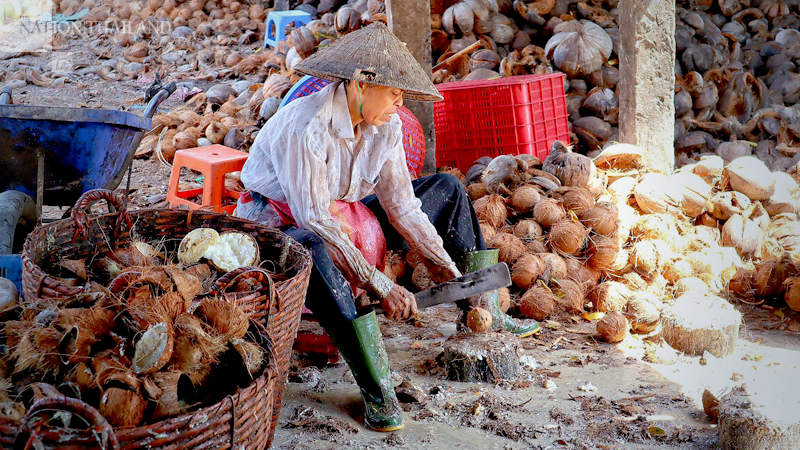
Backed by the US Agency for International Development (USAid), private sector leaders signed the coconut industry’s first global Sustainable Coconut Charter on Monday. The charter aims to improve farmers’ livelihoods, reduce carbon footprint of coconuts and boost supply in the Asia-Pacific region to meet rising global demand.
The charter, signed by AAK, Barry Callebaut, FrieslandCampina, Harmless Harvest Thailand, Nestlé and Unilever, outlines principles and sustainability goals in coconut supply chains, almost all of which start in Asia. It also aims to harmonise buyers’ requirements for supply chain partners.
Coconut consumption continues to grow globally, increasing its profile as a safe food. But rising demand coconut and coconut-oil-based products, as well as wider use of coconut in cosmetics, food and beverage, and pharmaceutical industries has forced a rapid growth in the coconut industry. One key challenge is sustainably replanting millions of coconut palms in Asia that are too old to produce fruit.
“This charter is an important milestone on the way to improving coconut cultivation and farmers’ livelihoods. This is a challenge that must be tackled together to be successful,” said Massimo Selmo, chocolate producer Barry Callebaut’s global head of sourcing.
“We are proud to have supported this valuable charter,” said Dr Steven G Olive, mission director of USAid’s Regional Development Mission for Asia.
“The US government prioritises working through the private sector to catalyse market reform and reduce greenhouse gas emissions that warm our climate. Guiding tools, such as this charter, create a landscape approach for sustainability in Asia. USAid stands ready to scale this initiative and looks forward to more signatories joining.” USAid has supported this regional effort through Green Invest Asia, which helps agriculture and forestry businesses in Southeast Asia improve the sustainability and environmental stewardship of their operations by connecting them with like-minded investors.
“As early adopters, a separate public-private partnership between six companies and the German Development Agency [GIZ] has already committed to implementing the charter to improve sustainability in the Philippines’ coconut supply chain,” said Matthias Radek, GIZ’s chief adviser of agricultural projects.
Mathieu Chaumont from Harmless Harvest, a US-based firm that sells organic coconut water, ran a panel explaining how regenerative agriculture improves soil quality and combats global warming, one potential solution to safely boost dwindling coconut supply without increasing its carbon footprint.
Any individual or organisation committed to the charter’s ambitions and principles, and willing to contribute to the on-going development of more sustainable practices in the coconut industry is invited to be a signatory.

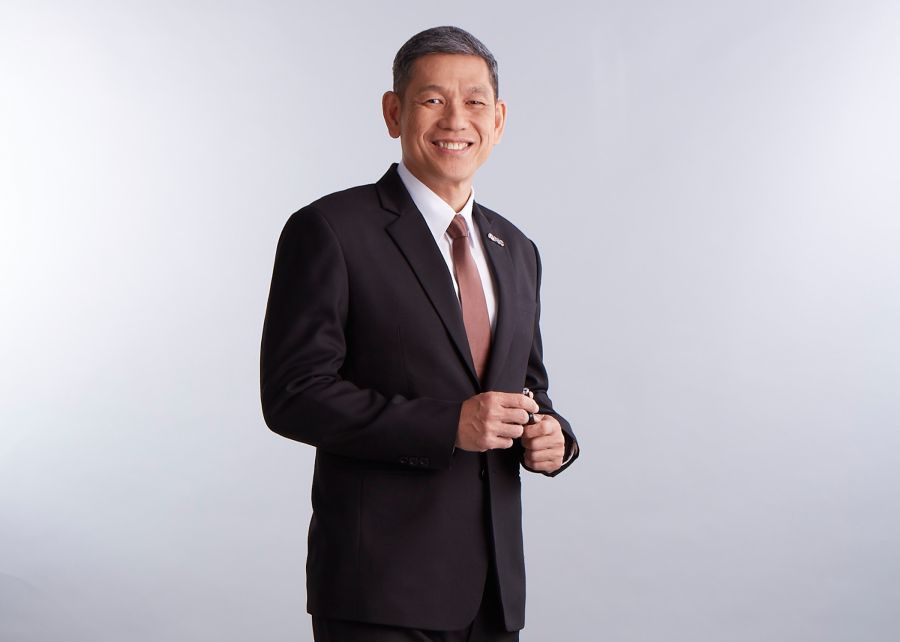
 GSB president Vitai Ratanakorn



 Sayam Prasitsirigul, Krungsri deputy chief information and operation officer.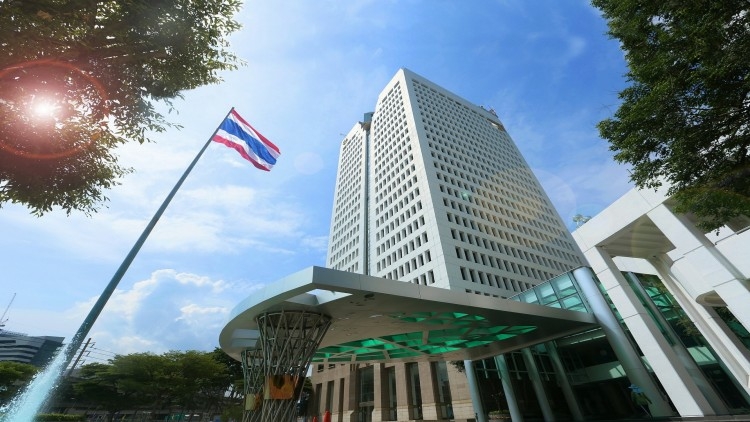

 An aerial photograph shows vessels loaded with shipping containers docked at the Yangshan Deepwater Port in Shanghai on July 12, 2020. MUST CREDIT: Bloomberg photo by Qilai Shen.