GSB offers new loans – for homebuyers and businesses
Nov 11. 2020
By THE NATION
The Government Savings Bank (GSB) will launch two loans – the GSB Housing Loan for homebuyers and GSB D-VERs for businesses at Money Expo 2020 to be held at Central Festival Hat Yai in Songkhla November 13-15, bank president Withai Ratanakorn said.
“The GSB Housing Loan is targeted at those who wish to buy, build, renovate or refinance their homes from other institutes,” he said. “Borrowers can buy life insurance and use it as collateral for the loan. The campaign offers 2.5 per cent interest in the first three years, after which the interest will be at a minimum retail rate [MRR] of -1.5 per cent. [GSB’s MRR is currently 6.425 per cent].
“The GSB D-VERs loan is designed to be a rotational fund for businesses to invest in fixed assets or refinance their property from other institutes,” Withai said. “Loans start from Bt1 million and go up to a maximum Bt100 million. Borrowers of less than Bt20 million can buy life insurance and use it as collateral and receive an interest of 3.99 per cent in the first year and 4.99 per cent in the second year.”
In case the borrowers use their assets as collateral at 100 per cent of the loan amount, they will receive an interest rate from the third year of +0.75 of the minimum overdraft rate [MOR] or minimum loan rate [MLR]. The bank’s current MOR is 5.995 per cent and MLR 6.15 per cent. Borrowers who use assets worth over 30 per cent of the loan as collateral will receive an interest rate of MOR or MLR at +1.25.
“GSB is also offering the ‘SMEs Start-up No1’ loan in celebration its 107th anniversary. Business owners with innovative ideas and strong business plans can apply for a maximum Bt10-million loan and buy life insurance as collateral,” added Withai. “Alternately, they can use assets worth more than half of the loan amount and receive 1.07 per cent interest in the first year and then MRR of +1.5 per cent interest throughout the contract.”
For more information, contact GSB booths at the expo or Call Center 1115.
Prudential donates Bt4.9 million to help four hospitals in fight against Covid-19
Nov 11. 2020
By The Nation
Prudential Life Assurance (Thailand) and Eastspring Investments, a leading Asia-based asset manager, have donated Bt4.9 million to four hospitals – the Golden Jubilee Medical Centre at the Faculty of Medicine Siriraj Hospital of Mahidol University, Vajira Hospital, Hat Yai Hospital and Priest Hospital.
The funds will be spent on building Airborne Infectious Isolation Rooms (AIIR) and Acute Respiratory Infection (ARI) Clinics in the hospitals to provide medical treatment to patients with respiratory diseases, including Covid-19. Prudential Thailand is also donating 2,500 face shields to help protect medical professionals and frontline health workers.
The Golden Jubilee Medical Centre is the first among the four hospitals to complete the construction. At the opening ceremony, top executives from Prudential Thailand including chief executive officer Robin Spencer, chief government relations officer Saipin Choaknumkij, chief customer officer Pasalaree Theerasas as well as representatives of Eastspring Investments, were welcomed by the execs of Golden Jubilee Medical Centre including managing director Assoc Prof Teera Kolladaruengkrai and vice director Somchai Dutsadeevettkul.
This donation is part of the Prudential Covid-19 Relief Fund, which provides financial support for Prudential’s communities and volunteering efforts of its people in Asia, the US and Africa against Covid-19.
“We have been battling the Covid-19 pandemic since early 2020. Although the situation in Thailand is under control, we should maintain vigilance and be prepared for the next potential wave of the pandemic. With our ‘We Do Health’ spirit, Prudential Thailand is committed to protecting the health and wellbeing of Thai people through supporting the building of medical infrastructure and service units and protecting frontline staff who are fighting against the pandemic. As a token of our appreciation and care, our employees have also teamed up to assemble face shields for frontline medical workers as part of our donation,” said Spencer.
Meanwhile, managing director of TMBAM Eastspring and Thanachart Fund Eastspring, said: “We believe that good wealth consists of two important elements – financial and health. When we are in good health, we will be able to enjoy a better quality of life and be more productive. Our management teams and staff fully support Prudential Thailand and the Golden Jubilee Medical Centre in the construction of the ARI Clinic to provide medical treatments against respiratory diseases such as Covid-19. This helps improve the well-being of our people and facilitate the overall recovery of the Thai economy.”
Somchai Dutsadeevettkul, vice director of Golden Jubilee Medical Centre said: “The ARI Clinic is key to treating patients with respiratory diseases, including Covid-19, and preventing medical personnel from possible infections while they perform their duties on the frontline. With support from Prudential and the Prudence Foundation, our hospital will also be able to strengthen our capacity and capability in providing medical services to our patients. As a public hospital, we are not only striving to provide medical treatments to all our patients, but to also make healthcare affordable and accessible, essentially to the lower income groups as part of the country’s renowned universal medical scheme.”
The treatment rooms at the other three hospitals – Vajira Hospital, Hat Yai Hospital and Priest Hospital – are currently under construction and due to be completed by next month.
Nov 11. 2020Heinz Oyster Andita Rasyid, head of marketing for Kraft Heinz Asean, with Jon Lor, managing director of Wonderfruit, and Chef Ton (Thitid Tassanakajohn) from Le Du.
By The Nation
Kraft Heinz poured 150 years of culinary expertise into Fruitfull at the Jim Thompson House Museum this past weekend. The Festival of Food, Sustainability and Culture saw Kraft Heinz collaborate with Michelin-starred chefs to serve up a fast-food Phantasia for Bangkok’s foodies.
At Mickey’s Diner, the classic Heinz ketchup was star of the show alongside the Heinz Dog, Ketchy Wurst, and Messy Biscuits, in a sell-out feast served up by Chef Chalee Kader from 100 Mahaseth. Meanwhile Chef Ton (Thitid Tassanakajohn from Le Du) teased more sophisticated palates with a special menu of Stir-Fried Pork with Heinz Oyster Sauce.
Krungsri, Grab enter nano-finance with loans for Grab driver-partners and merchant-partners
Nov 10. 2020
By THE NATION
Krungsri (Bank of Ayudhya Pcl and its business units) and Grab Thailand have unveiled a long-term collaboration on an exclusive basis, jointly introducing two nano-finance products for Grab driver-partners and Grab merchant-partners.
The move strengthens both parties’ strategic alliance after Mitsubishi UFJ Financial Group (MUFG) announced earlier this year that it would invest in Grab through MUFG Bank, MUFG Innovation Partners and Krungsri Finnovate, to co-develop innovative financial products and services to better cater to the financial needs of Grab’s driver-partners, merchant-partners and users.
Pairote Cheunkrut, Krungsri’s chief strategy officer, said: “Krungsri and Grab have entered into an exclusive long-term business agreement, jointly establishing three-year visions and strategies in expanding our customer base and delivering impressive customer experience. Through big data customer analytics and AI-powered data analysis, appropriate financial services will be delivered to customers via platforms they are using in daily activities, such as KMA, UChoose, GO by Krungsri Auto Application and Grab etc. In addition, Krungsri and Grab will continue to enhance competitive advantages to cover new market segments, while understanding, accessing and adding value for customers to make them part of the ecosystem built by Krungsri and Grab.”
As for the business expansion strategy, Krungsri and Grab are planning to extend their networks throughout the country.
Krungsri’s acquisition strategy would be implemented through the bank’s many campaigns and enhancing financial access for customers, the company said.
“Krungsri believes that the collaborations would help us achieve our targets in business expansion to cover diverse markets nationwide through the synergy of network strength and distinctive expertise of both parties. This would surely help drive the Thai economy, in particular the segment of small businesses which still need support for their access to financial products and services,” Pairote said.
Krungsri increases minimum salary requirement for personal loans
CorporateNov 11. 2020Nayanee Peaugkham, chief of Krungsri Consumer Group
By The Nation
Krungsri Consumer, a provider of credit cards and personal loans, has adjusted the salary criteria for borrowers from Bt10,000 per month to Bt12,000. This is because Krungsri is becoming more prudent in lending amid the trend of declining household income.
Nayanee Peaugkham, chief of Krungsri Consumer Group, said the group has maintained the criteria for credit card applicants at a monthly salary of Bt15,000
She added that the group is being more careful in granting personal loans as some customers already have a heavy debt burden. Also, she said, raising the monthly salary criteria is helping reduce risks for the company.
She believes the credit card and personal loan market next year will enter growth territory and will see at least one-digit growth.
These businesses have been suffering contraction due to the impact of the Covid-19 outbreak. The company will also focus more on debt collection and restructuring to help customers relieve their debt burden, she added.
Intouch Holdings (INTUCH) expects its 2020 turnover to drop year on year due to a decline in Advance Info Services (ADVANC) revenue. Meanwhile, turnover of the firm’s satellite arm, Thaicom (THCOM), is projected to rise slightly after challenges in signing new contracts, according to Tomyantee Kongpoolsilpa, INTUCH senior vice president Portfolio Management & Investor Relations.
However, she denied that a Bt7.7-billion compensation claim against THCOM for a lost satellite would impact its finances.
She said ADVANC had allocated a budget of Bt35 billion to expand 5G networks and 4G home internet, of which Bt18 billion had been used to extend 2600MHz-spectrum 5G coverage to 60 per cent of Bangkok and 60 per cent of the Eastern Economic Corridor (EEC).
“The company will continue expanding 5G coverage in the 700MHz and 26,000MHz spectrum to enhance service and business operations, with the number of 5G users set to hit 100,000 this year and 1 million next year,” she said. The company would also continue investing in start-ups related to digital telecommunication and 5G.
She also said that the Digital Economy and Society (DES) Ministry’s Bt7.7-billion compensation claim for the damaged Thaicom 5 satellite would have no impact on INTUCH’s financial statement because the company is complying with the concession contract.
The DES Ministry has issued a notice urging INTUCH and THCOM to deliver a new satellite to replace Thaicom 5 by next year, or else pay damages of Bt7.7 billion with annual interest of 7.5 per cent. Failure to deliver would also incur a fine of Bt4.98 million with annual interest of 7.5 per cent until delivery or full payment of damages.
Thaicom 5 developed a technical fault on December 17, 2019 and, after several unsuccessful attempts at recovery, THCOM proposed deorbiting the satellite 14 years after its launch in May 2006.
Frasers Property (Thailand) (FPT)’s move to increase its capital from Bt2.31 billion to Bt3.71 billion by offering 1.39 billion newly issued ordinary shares is a signal that the company is aiming to invest in big projects, an expert at Kasikorn Securities said.
FPT’s stock price on Monday rose by 5.88 per cent, or 60 satang, to Bt10.80 per share.
Thanapol Sirithanachai, FPT country chief executive officer, said that of the 1.39 billion newly issued ordinary shares, 695.78 million shares would be offered to existing shareholders, 463.85 million shares to the public and 231.92 million shares to a limited group of private investors.
He said the company’s board of directors had the authority to consider offering the newly issued shares at one time or several times.
“The board of directors also approved to pay dividends for the operating results of 2019-20 at Bt0.60 per share on February 11 next year,” he said.
Sorapong Jakteerungkul, senior analyst at Kasikorn Securities, said PFT’s move to increase its capital is a signal that the company is aiming to invest in big projects.
He said FPT had previously bought 4,315 rai (690 hectares) of land on Bang Na-Trat Road from the Legal Execution Department, and also acquired Golden Land Property Development’s shares, pushing up the company’s debt-to-equity ratio.
“Besides, FPT has an opportunity to invest in its major shareholder Charoen Sirivadhanabhakdi’s projects in Vietnam, so increasing capital is necessary to invest in the projects,” he said.
He advised investors to invest in FPT shares in the long term at the target price of Bt16.70 per share as the company’s performance is likely to grow further.
By The Washington Post · Rachel Siegel, Yeganeh Torbati · NATIONAL, BUSINESS, POLITICS
WASHINGTON – President-elect Joe Biden on Tuesday tapped a number of fierce advocates for Wall Street regulation to his agency review teams, a sign that he could be quickly preparing to take stock of the deregulatory push President Donald Trump has led for almost four years.
Many of these new advisers, who are expected to serve in their roles during the transition in November, December, and January, are veterans of the Obama administration or have played vocal roles in the past pushing for much tougher oversight of Wall Street as well as stricter consumer protection rules.
They include Michael Barr, who was a senior Treasury Department official during the Obama administration during the passage of the Dodd-Frank regulation law in 2010, and Leandra English, who Trump ousted from the Consumer Financial Protection Bureau during a messy power struggle several years ago.
The list of 500 experts are a crop of academics, economists, former Obama administration officials, and the sheer volume of names makes it difficult to determine how much sway any particular person might have. The list is broken into subgroups, as some of the advisers will look at the government operations from the Federal Reserve, Consumer Financial Protection Bureau, Treasury Department, Commerce Department and the Council of Economic Advisers, as well as a host of other government agencies.
Agency review teams come in during the transition and look at agency operations. They can prepare reports for the incoming administration on issues that are facing each agency, such as new regulations, staffing problems, or industry trends that are likely to need to be addressed. Some review teams come in and meet with existing agency officials for interviews. Others are less intrusive.
These teams are often not the groups who pick nominees for cabinet secretaries, though. That process is typically done by other officials on the transition.
Leading the team conducting a review of the Federal Reserve and other banking regulators is Gary Gensler, who headed the Commodity Futures Trading Commission from 2009 to 2014. In the Obama administration, Gensler advocated for strict regulation of derivates, a type of financial product that was central to the 2008 financial crisis. Gensler currently teachers at the MIT Sloan School of Management focusing on digital currencies, financial technology and public policy.
Gensler’s team includes Lisa Cook, an economics professor at Michigan State University focusing on economic growth, innovation and development. Cook served as a senior economist at the President’s Council of Economic Advisers in 2011 and 2012. Also advising the transition on the federal banking regulators is Mehrsa Baradaran, a professor at the University of California School of Law, who specializes in banking law, financial inclusion and the racial wealth gap.
Alongside Cook and Baradaran is Damon Silvers, policy director and special counsel to the AFL-CIO. Silvers is a longtime labor leader who was deputy chair of the Congressional Oversight Panel for the Troubled Asset Relief Program, a Treasury initiative to stabilize the country’s financial system during the Great Recession. Another team memebeer, Simon Johnson, currently at MIT, co-authored “13 Bankers,” one of the most widely-read books on the 2008-2009 financial crisis that called for breaking up the big banks and imposing restrictions on how large banks could grow.
The team reviewing operations at the Consumer Financial Protection Bureau, a major priority for progressive groups hoping to see aggressive action to rein in banks and corporations, is led by English, the former deputy CFPB director and most recently an adviser at New York’s Department of Financial Services.
English sued the Trump administration in 2017 to stop Trump from installing his pick as head of the agency, saying that she was the rightful acting director. Trump’s pick, Mick Mulvaney, had earlier called the agency a “joke” and advocated for it to be dissolved. After a more than six-month legal battle, English dropped the lawsuit and resigned from the agency.
Her presence on the Biden review team means the group will benefit from someone with close knowledge of the CFPB and its inner workings, since she was part of the team that helped build the agency during the Obama administration. Other former CFPB officials who are serving on the transition team are Ashwin Vasan, Brian Shearer, David Mayorga, and Diane Thompson.
Other members of the Biden review team include Manny Alvarez, commissioner of the California Department of Business Oversight, whose name has been mentioned among observers as a possible pick to eventually lead the CFPB in the Biden administration. Another member, Bill Bynum, has spent his career focusing on financial inclusion for the disenfranchised, especially in the South. Another member, Josh Nassar, of the United Automobile, Aerospace and Agricultural Implement Workers of America, has argued against financial deregulation in the Trump era.
All of the CFPB transition team members are serving in a volunteer capacity, meaning they are not being paid by the Biden transition.
The economy is recovering faster than expected, but the overwhelming uncertainty from the coronavirus pandemic has experts wary that those gains can be sustained. Come January, the Biden administration is expected to prioritize another massive stimulus package. Biden also campaigned on tax increases for businesses and some of the wealthiest Americans.
Much of Biden’s economic agenda will be implemented by his pick for Treasury Secretary. A leading candidate is Federal Reserve Governor Lael Brainard, who served as Treasury’s top financial diplomat in the Obama administration. At the Fed, Brainard has consistently pushed back against loosening rules on the banking system put in place after the Great Recession, a position echoed by many of the experts sought out by the Biden transition team.
By Syndication Washington Post, Bloomberg · Rita Nazareth, Kamaron Leach · BUSINESS Stocks dropped amid a sell-off in big tech and speculation that this month’s rally has outpaced prospects for an economic rebound as coronavirus cases surge. Treasurys fell.
The S&P 500 retreated from a two-month high as the slide in technology shares outweighed gains in industrial and energy companies. The Nasdaq 100 slumped as much as 2.7% on Tuesday. Amazon.com Inc. sank as the online-retail giant faced an antitrust complaint from the European Union, while American depositary receipts of Alibaba Group Holding Ltd. tumbled after China tightened the scrutiny over internet behemoths. Meanwhile, the Dow Jones industrial average outperformed as Boeing Co. extended its November rally to more than 30% on news that regulators could lift the 737 Max grounding as soon as next week. The Russell 2000 Index of small caps climbed to the highest since August 2018.
After all the enthusiasm that lifted global equities and sent havens into a tailspin, some analysts said the moves may have gone too far. The coronavirus shot still has several hurdles to clear, there’s concern over fiscal stimulus, the transition of power to President-elect Joe Biden and a virus resurgence. The U.S. reported a record 142,907 new infections on Monday, and Gov. Phil Murphy, D, said New Jersey’s jump in cases is “devastating.” Despite the uncertainties, the S&P 500’s valuations are near the highest levels since the dot-com era.
“You still have a tremendous amount of uncertainty out there, and while equities may continue to climb a wall of worry, the stock market is still subject to the rules of gravity,” said Jonathan Boyar, managing director at Boyar Value Group.
With the Nasdaq Composite Index down for a second straight session, an ominous double-top pattern is forming. That should put all eyes on the 50- and 100-day moving averages as the first and second line of support for the tech-heavy gauge. Megacaps extended the slide that accompanied Monday’s rotation out of pandemic favorites and into value stocks, and potentially setting up a test of the 11,000 level around the 100-day line.
Meanwhile, China unveiled regulations to root out monopolistic practices in the internet industry, seeking to curtail the growing influence of corporations like Alibaba and Tencent Holdings Ltd. The rules, which sent both stocks tumbling and sparked a wider sell-off in the nation’s equities, landed about a week after new restrictions on the finance sector that triggered the shock suspension of Ant Group Co.’s $35 billion initial public offering.
These are some of the main moves in markets:
Stocks
– The S&P 500 Index dropped 0.2% at 4 p.m. EST.
– The Stoxx Europe 600 Index increased 0.9%.
– The MSCI Asia Pacific Index decreased 0.1%.
Currencies
– The Bloomberg Dollar Spot Index was little changed.
– The euro was little changed at $1.1811.
– The Japanese yen strengthened 0.1% to 105.30 per dollar.
Bonds
– The yield on 10-year Treasurys gained three basis points to 0.96%.
– Germany’s 10-year yield rose two basis points to -0.49%.
– Britain’s 10-year yield climbed three basis points to 0.401%.
Commodities
– The Bloomberg Commodity Index gained 1.7%.
– West Texas Intermediate crude increased 2.7% to $41.39 a barrel.
The prices of oil-palm fruit and palm oil are rising as the Covid-19 outbreak eases, the Office of Agricultural Economics (OAE) said on Tuesday.
The ex-factory price of oil-palm fruit in key production provinces such as Surat Thani, Krabi and Chumpon rose to Bt6-Bt7.90 per kilo as of Tuesday (November 10), from Bt4.10-Bt5 as of October 1.
The price of crude palm oil rose to Bt39.7 per kilo as of Tuesday from Bt25-Bt25.25 per kilo as of October 1.
The government has introduced measures to boost the use of palm oil for generating electricity and making biodiesel, and also pushed exports to reduce local oversupply, said OAE deputy secretary-general Unchana Tracho.
Low production levels mean Thailand is currently storing between 30,000 and 80,000 tonnes of crude palm oil per month. This is expected to rise to normal levels of 280,000-320,000 tonnes per month at the end of this year.
The prices are expected to continue to rise through the first quarter of next year.




 Heinz Oyster Andita Rasyid, head of marketing for Kraft Heinz Asean, with Jon Lor, managing director of Wonderfruit, and Chef Ton (Thitid Tassanakajohn) from Le Du.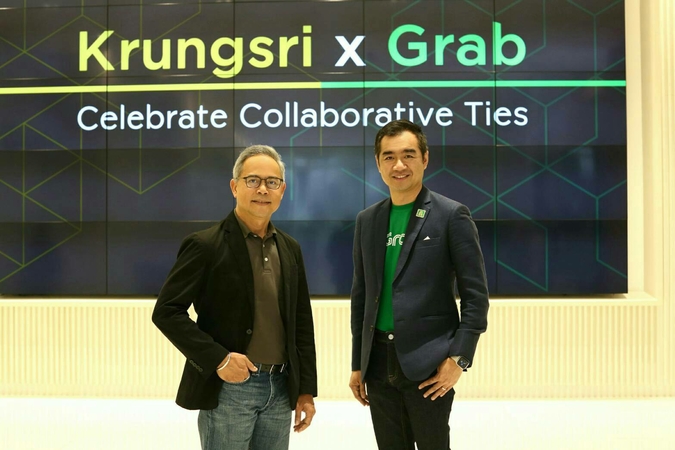
 Nayanee Peaugkham, chief of Krungsri Consumer Group