‘Let’s Go Halves’ shopping subsidy could be extended
EconNov 11. 2020Deputy Prime Minister Supattanapong Punmeechaow
By The Nation
The Centre for Economic Situation Administration (CESA) will meet next week to decide whether to extend the “Khon La Khrueng” (Let’s Go Halves) subsidised-shopping scheme, said Deputy Prime Minister Supattanapong Punmeechaow.
The scheme, which runs from October 23 to December 31, offers about 10 million citizens discounts of up to Bt150 per day on purchases at participating stores, capped at Bt3,000 throughout the period.
Supattanapong declined to say whether the subsidy would be increased from Bt150 per day.
The government is also evaluating whether additional measures are needed to encourage consumers’ spending, he added.
He estimated the economy next year would grow at between 4 and 5 per cent, adding that the government will accelerate state spending to boost recovery from the Covid-19 crisis.
The Cabinet on Tuesday approved a proposal to incorporate Rayong’s Wang Chan district into the Eastern Economic Corridor (EEC). The rezoning of Wang Chan from rural community (yellow) to special economic zone (brown) was requested by the EEC Policy Committee.
The rezoned area covers 152 rai, or 24.3 hectares.
The land will be added to the Wang Chan economic zone to make a 3,454-rai tract earmarked for innovative and high-tech development, including housing.
A highlight of the planned development is an innovation hub at Wang Chan Valley.
The hub will be built by Thailand’s largest energy group PTT, in a collaboration with the National Science and Technology Development Agency, Vidyasirimedhi Institute of Science and Technology, the Civil Aviation Authority of Thailand, the National Broadcasting and Telecommunications Commission and three telecom firms – AIS, True and dtac.
The Stock Exchange of Thailand (SET) Index closed at 1,341.24 on Tuesday, up 55.36 points or 4.31 per cent. The volume of total transactions was Bt166.67 billion with an index high of 1,346.72 and a low of 1,313.04.
In the morning session, a Krungsri Securities analyst said he expected the day’s index to rise to between 1,300 and 1,310 thanks to progress being made in the development of a Covid-19 vaccine, hopes of a global trade recovery under the Joe Biden US presidency and rising price of oil.
However, he warned investors to beware of market volatility from listed companies’ third-quarter business results and short-term mass sell-offs of stocks.
“We expect positive sentiment from progress in the development of a Covid-19 vaccine will help boost recovery in economic activities, demand for fuel and mass buy-ups in large-cap stocks,” he predicted.
The top 10 stocks with the highest trade value today were AOT, KBANK, MINT, PTT, STGT, SCB, BBL, CPALL, PTTEP and BDMS.
As of 4.30pm, the price of oil rose by US$0.61 or 1.51 per cent to $40.90 per barrel, while gold rose by $28.40 or 1.53 per cent, to $1,882.80 per ounce.
Other Asian indices were mixed:
Japan’s Nikkei Index closed at 24,905.59, up 65.75 points or 0.26 per cent.
China’s Shanghai SE Composite Index closed at 3,360.15, down 13.59 points or 0.40 per cent, while Shenzhen SE Component Index closed at 13,993.34, down 147.82 points or 1.05 per cent.
Hong Kong’s Hang Seng Index closed at 26,301.48, up 285.31 points or 1.10 per cent.
South Korea’s KOSPI Index closed at 2,452.83, up 5.63 points or 0.23 per cent.
Taiwan’s TAIEX Index closed at 13,081.72, down 45.75 points or 0.35 per cent.
The stock price of Intouch Holdings (INTUCH) and Thaicom (THCOM) on Tuesday dropped sharply despite the rise in the Stock Exchange of Thailand (SET) Index after the Digital Economy and Society (DES) Ministry claimed compensation of more than Bt7.7 billion for the damage to Thaicom 5 satellite.
In the morning session, the price of INTUCH shares dropped by Bt0.75, or 1.39 per cent, to Bt53.25 per share, while THCOM dropped by Bt0.05, or 0.92 per cent, to Bt5.40 per share.
INTUCH informed the SET on Monday that the DES Ministry had issued a notice, urging the company and THCOM to construct and deliver a new satellite to be used instead of Thaicom 5 satellite by next year. If they cannot deliver, they must pay damages of Bt7.7 billion with an interest rate of 7.5 per cent per year.
Meanwhile, they must pay a fine of Bt4.98 million with an interest rate of 7.5 per cent per annum until the delivery of a new satellite or full payment of damages is completed.
On December 17, 2019, Thaicom 5 experienced technical difficulties, causing limitations in monitoring the status of the satellite. THCOM, in which INTUCH is a major shareholder, performed several unsuccessful attempts to recover the satellite after the anomaly occurred. The satellite manufacturer eventually suggested deorbiting the Thaicom 5 satellite 14 years after its launch in May 2006.
DES Minister Buddhipongse Punnakanta acknowledged that Thaicom 5 satellite is now space debris, so the ministry has to establish a working group for claiming compensation from INTUCH and THCOM.
“As a minister, I have to submit a notice to these private companies to protect the interest of the country,” he said.
The Stock Exchange of Thailand (SET) Index rose by 31.15 points, or 2.42 per cent, to 1,317.03 in the morning session on Tuesday.
An analyst at Krungsri Securities expected the day’s index to rise to between 1,300 and 1,310 from good progress in developing a Covid-19 vaccine, hopes of a global trade recovery after former vice president Joe Biden won the US presidential election, and the rising oil price.
However, he warned investors to beware of market volatility from listed companies’ third-quarter business results and short-term mass sell-offs of stocks.
“We expect positive sentiment from progress in developing a Covid-19 vaccine would help boost recovery in economic activities, demand for fuels and mass buy-ups in large-cap stocks,” he said
He recommended that investors buy STGT, STA, EPG, AP, COM7, SYNEX, ASIAN, HANA, SVI and TVO, whose third-quarter performances are expected to improve.
The SET Index closed at 1,285.88 on Monday, up 25.80 points or 2.05 per cent. Total transactions amounted to Bt77.89 billion with an index high of 1,293.90 and a low of 1,277.52.
The price of gold dropped sharply by Bt1,200 per baht weight in morning trade on Tuesday, the Gold Traders Association reported.
As of 9.27am, the buying price of a gold bar was Bt27,000 per baht weight and selling price Bt27,100, while gold ornaments were priced at Bt26,514.84 and Bt27,600, respectively.
At close on Monday, the buying price of a gold bar was Bt28,200 per baht weight and selling price Bt28,300 while gold ornaments were Bt27,697.32 and Bt28,800, respectively.
Spot gold price moved to US$1,877 (Bt57,174) per ounce in the morning after the price dropped by US$97.3 to $1,854.4 per ounce at close on Monday due to mass sell-offs of safe-haven assets in response to the good progress in developing a Covid-19 vaccine, and former vice president Joe Biden’s victory in the US presidential election.
Hong Kong gold price dropped by HK$800 to $17,330 (Bt68,082) per tael on Tuesday morning, the Chinese Gold and Silver Exchange Society reported.
Thailand must tackle red tape and get rid of outdated laws that obstruct free competition and increase the cost of doing business, two researchers from the Thailand Development Research Institute (TDRI) said.
In their talk on “Laws as Computer Code”, research fellows Saliltorn Thongmeensuk and Kiratipong Naewmalee argued that laws and regulations are comparable to machine code instruction executed by computers. “If the code is written correctly, the computer can function properly. However, if programers write the code poorly, the computer will not function well or will not function at all.”
“To increase our country’s competency, Thailand urgently needs to dispose of these excessively burdensome laws and regulations,” they said.
Just as in the case of a computer code, if the law is designed properly and proportionately implemented, citizens can have a better a quality of life.
On the other hand, bad laws can create unnecessary burden and negatively restrict the rights and freedoms of people, they said.
According to a TDRI study, there are approximately 1,000 laws and regulations that require businesses to acquire licences to operate in Thailand, which costs the private sector more than Bt200 billion a year, regardless of additional processing fees. If the government axes these overlapping laws and regulations, the private sector can save costs of up to Bt130 billion a year, or about 0.8 per cent of GDP in 2018.
“Revamping laws and red tape can effectively assist the private sector’s competitiveness and boost the economy without state financial interventions,” said Kiratipong. “This measure is especially urgent while the economy is hit hard by the Covid-19 pandemic.”
Instead of trimming laws and red tape, the government has passed about 70,000 new laws each year. Meanwhile, the country has more than 1,700 types of business licences which require over 10,500 bureaucratic procedures.
Also, the government has set up 345 committees to monitor a variety of laws which more often than not aggravate the red-tape maze rather than provide legal solutions, the duo said.
Some regulatory provisions are vague and up to interpretation, causing confusion and weakening legal enforcement. In addition, some of them are out of touch with changes in society and technology. Some maintain business monopoly which hurts small-scale merchants and is also against our constitutional mandates, the TDRI researchers said.
One case in point is the 2008 Alcoholic Beverage Control Act. It prohibits both direct and indirect promotion of alcohol consumption. As a result, if a logo of an alcoholic beverage appears on a personal post on social media or a restaurant menu, it may be interpreted as marketing of an alcoholic beverage and therefore illegal. Furthermore, there is a maximum fine of Bt500,000 for this offence while there is only a Bt200,000 maximum fine for drunk driving resulting in death.
They said the 1934 Postal Act exemplifies how outmoded laws maintain state monopoly and hurt consumer interest. The Postal Office Department has transformed into Thailand Post, a state enterprise, but its monopoly over postal services is still protected by 86-year-old regulations. As a result, other postal service companies have to pay Thailand Post certain fees.
“Business monopoly violates the right to free and fair competition guaranteed by the constitution,” Saliltorn pointed out.
“Therefore, before passing any law, it is necessary for legislators to make sure that such legislation can truly solve the problem and that creating new laws is the best solution to the problem, which does not exceedingly affect the rights and freedoms of the citizens,” Saliltorn said.
But with political will, there are solutions, said Kiratipong.
Before issuing any new laws and rules, they must go through the Regulatory Impact Assessment (RIA) to estimate their impacts on the public, state mechanisms and businesses.
Existing laws and rules must be re-evaluated for their usefulness. They must be eliminated if no longer useful, or be simplified to fit with the needs of the market economy. This process is called Regulatory Guillotine (RG).
Many countries have experienced similar problems from outdated and redundant laws and rules which hurt citizens, businesses and the economy. But their efforts to eliminate outdated laws and rules have significantly cut business costs and improved competitiveness, he said.
He cited South Korea’s RG efforts, which succeeded in eliminating 48 per cent of its laws, cutting government costs by 4.4 per cent of GDP, and increasing one million job placements.
Although the 2017 Constitution has institutionalised the RIA and RG assessment under Section 77, the government has issued about 70,000 new laws since then. Kiratipong outlined what should be done to free the country from outdated laws and rules:
– Improve the competency of officials involved so they understand their roles in RIA and RG;
– Set up clearer frameworks for the RIA and RG procedures as guidelines for the concerned officials;
– Set up a quality control agency to evaluate RIA and RG reports and improve their assessment standards with internal and external auditing;
– Develop a central database to facilitate people’s participation and public input;
– Seek other options to solve problems outside the legal framework.
The success in eliminating and simplifying outdated laws and rules depend on three main factors, said Dr Kiratipong, mentioning, “political commitment and clear goals; close collaboration between the government, civil society and business sector; and, lastly, a quality control agency for RIA and RG procedures.”
If the government is determined to improve RIA and RG performance, then laws and rules, as the country’s software, would contribute to national competency, he said.
“Equally important, we must look at other options that are more efficient and less costly to tackle the problems,” he said.
“We must look outside the legal framework. We must realise that laws are not necessarily the only solution.”
Nov 09. 2020Prasit Boondoungprasert, CEO of CP Foods
By The Nation
Charoen Pokphand Foods (CP Foods) has announced it is cutting its deadline for paying suppliers to 30 days in an effort to boost their liquidity. The move covers 3,000-4,000 small and medium-sized enterprises (SMEs) and is aimed at helping them retain workers to stimulate economic recovery from the Covid-19 crisis.
Prasit Boondoungprasert, CEO of CP Foods, said the pandemic has caused unprecedented disruption in all business sectors, but especially SMEs, which are suffering cash-flow challenges.
In response, CP Foods and its sister brands CP, CP Freshmart and BK are shortening the payment period for suppliers to 30 days after reception of goods or services.
Prasit said the deadline already covered many CP Foods suppliers and would quickly be rolled out to cover all of them.
“This will enable their businesses to run smoother, protecting thousands of jobs across many related sectors as a consequence,” he said.
CP Foods operates agro-industrial and food businesses with 3,000-4,000 SME partners, mainly supplying raw materials, ingredients, packaging and products for its global business.
Huawei continues to strengthen ICT skills among youth through “Seeds for the Future” program
Nov 09. 2020
By THE NATION
The tech giant vows to prepare students for high-paying jobs in the rising digital market to contribute to Thailand’s ICT development.
Huawei Technologies (Thailand) Co., Ltd. recently held its annual “Seeds for the Future 2020” event in Bangkok to offer talented and motivated university students the opportunity to enhance their digital skills through a hands-on training program with leading ICT experts. A group of 15 students from Chulalongkorn University (CU), Kasetsart University (KU), King Mongkut’s Institute of Technology Ladkrabang (KMITL) and King Mongkut’s University of Technology Thonburi (KMUTT), were selected to participate in an exclusive five-day ICT course covering the fields of 5G, Artificial Intelligence (AI), Internet of Things (IoT), Cloud and Huawei Mobile Services (HMS).
Initiated in Bangkok in 2008, the Seeds for the Future program aims to help cultivate young talent, ensuring that the digitally-resilient young people have the skills and mindset needed to compete in the future work landscape. Every year over the past decade, 10 qualified Thai students were given a chance to go on a two-week ICT study trip to China, where they meet fellow students from 125 countries and explore first-hand Huawei’s state-of-the-art learning centers and facilities in Shenzhen and Beijing.
Due to the global pandemic, this year’s event was held locally at Huawei Thailand’s head office. The intensive week-long program included ICT courses live streamed from Huawei headquarters in Shenzhen, an extensive Chinese culture workshop, offline courses held exclusively at Huawei office and a comprehensive tour of Thailand 5G Ecosystem Innovation Centre (5G EIC) and Customer Solution Innovation and Integration Experience Center.
Experts on 5G, Cloud, Artificial Intelligent (AI), Internet of Things (IoT) and Huawei Mobile Services (HMS) shared industry insights as well as their personal experience in helping the country’s transformation using advanced technologies. Huawei also invited the team from Electronic Transactions Development Agency (ETDA) which under the Ministry of Digital Economy and Society. During this special session, the students listened to a presentation on the role of ICT technology in developing solutions and services for the e-commerce sector in Thailand.
The presence of Ajarin Pattanapanchai, Ministry of Digital Economy and Society Permanent Secretary, confirms Huawei’s alliance and commitment with the public sector. Because of its relevance and importance to Thai progress, the program has had the support of the Ministry for several years.
“The DES Ministry believes that ICT skills development is critical for today’s digital economy. Practical training programs will enhance the students’ ICT capabilities and broaden their horizon,” said Ajarin, during the graduation ceremony. “Huawei’s long-term mission to incubate young talent and unlock opportunities for sustainable growth is in line with ours. I would like to extend my thanks to the company for initiating the Seeds for the Future porgram and continuously contributing to Thailand’s digitalization that will drive the country towards Thailand 4.0.”
“Huawei is very proud to be part of Thailand’s development. With the mission of ‘Grow in Thailand, Contribute to Thailand,’ we stress our commitment to help Thailand become a digital hub in the Asia Pacific region. It is with great pride and joy that we continue to implement the Seeds for the Future Program because it helps promising, young ICT talent gain knowledge and skills about new technologies, and boost their career paths,” said Abel Deng, Huawei Thailand CEO, during his opening address.
As a prominent enabler and accelerator of digital transformation, Huawei has been investing heavily in cultivating ICT professionals and concentrating its efforts on supporting the development of the ICT ecosystem in Thailand. Over the past two decades, the company has been partnering with various government agencies to create effective ICT development models that bring benefits to society for decades to come. Through talent promotion programs such as the Seeds for the Future initiative, the company seeks to close the gap between knowledge learned in the classroom and the skills required by the industry. Huawei will continue to support and collaborate with the government to ensure sustainable economic and social development in Thailand.
Ajinomoto signs bio-fertiliser deal to boost crop yield, cut chemicals
Nov 09. 2020
By THE NATION
Takaaki Arashida, vice president of Ajinomoto (Thailand), recently signed a five-year contract for technology transfer of PGPR bio-fertiliser with Phichet Wiriyapaha, a representative of the Agriculture Department.
Under the contract, Ajinomoto will use PGPR technology and know-how to develop, produce and distribute this bio-fertiliser at a reasonable price to Thai farmers for five years.
Plant Growth Promoting Rhizobacteria (PGPR) bio fertiliser is a beneficial group of soil bacteria that colonises plant roots and promotes plant growth by nitrogen fixation to boost agricultural productivity and crop strength.
“Each year, Ajinomoto Thailand consumes a lot of agricultural products. We would like to contribute to sustainability of Thai agriculture by using our bio-technology and bio-cycle value chain to create more productivity and value for Thai agricultural product,” said Arashida. “With PGPR bio-fertiliser we are targeting a 10 per cent increase in crop yield and a 25 per cent reduction of chemical fertiliser usage. This move will help improve Thai farmers’ quality of life in accordance with the company’s ASV policy (Ajinomoto Group Creating Shared Value).”

 Deputy Prime Minister Supattanapong Punmeechaow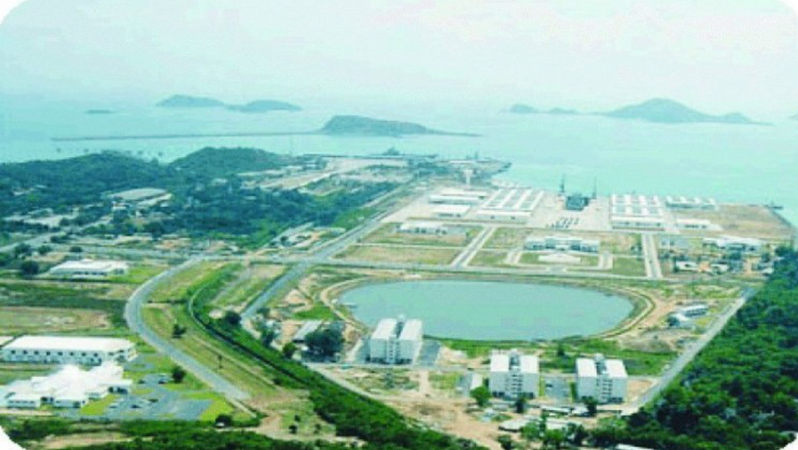




 Dr Kiratipong Naewmalee
  Prasit Boondoungprasert, CEO of CP Foods


