A rehabilitation plan for Thai Airways International (THAI) will be ready in two to three weeks, but it is too early to say whether the carrier will resume international flights in August, the airline’s acting president said on Thursday (July 9).
Chansin Treenuchagron was speaking after talks between THAI management and staff following the appointment of a “Survival Team” to work out a business plan for the ailing carrier.
“Employees still have some concerns, such as welfare. I can assure you that I will help with everything, but we have to wait for the court to finish considering the rehabilitation plan first,” said Chansin.
The carrier has filed for debt rehabilitation and must submit its rehab plan at the Bankruptcy Court on August 17. The details of the plan will be announced at a press conference after the Bankruptcy Court rules on whether it will take the case, Chansin added.
He said it was too early to say whether THAI will resume international flights in August, since the airline was still assessing the situation.
Meanwhile, Chansin has ordered the Survival Team to draw up both urgent and short-term business plans covering the period from July 9 to October 31. The team is being led by Chai Eamsiri and consists of Suwattana Sibunruang, Capt Chawan Rattanawaraha and other 18 members of THAI departments.
Chansin has also assigned two new executives to the THAI management team. Soradej Namruangsri is the new executive vice president of operations and director of the Thai Airways Flight Support Centre 904, while Non Klintha becomes acting executive vice president of Corporate
Strategy and Sustainable Development.
THAI employees expressed satisfaction with the appointments of the Survival Team and executives, said Chansin.
In a bid to compete directly with Thai Vietjet Air, Thai AirAsia is planning to fly out of both Bangkok airports.
“We aim to deploy three to four planes from our fleet of 60 to operate direct flights from Suvarnabhumi Airport to provinces like Chiang Mai, Chiang Rai, Phuket, Krabi, Khon Kaen and Udon Thani,” said Tassapol Bijleveld, chief executive officer at Asia Aviation Plc (AAV). “Currently, Thai Vietjet Air is the only budget airline to fly out of Suvarnabhumi, and we see this as a good opportunity, now that the government has eased lockdown measures and allowed domestic flights to continue.
“Also, THAI and Thai Smile’s flights have significantly reduced over the past months, while Bangkok Airways is not our direct competitor as it is not classified as a budget airline and has different target customers,” Tassapol added. “Having Thai AirAsia flying out of Suvarnabhumi will be a good alternative for those who do not want to travel to Don Mueang.”
The CEO added that Thai AirAsia has been gradually increasing the number of aircraft in operation since the lockdown was lifted. “In June, we used 15 aircraft from our fleet of 60, while in July we have 20 aircraft flying to domestic destinations. However, the frequency of flights is not that high due to Covid-19, and the company will continue operating at a loss until foreign tourists are allowed to enter Thailand.”
Thai AirAsia operates 25 domestic flights out of Don Mueang Airport and is planning to lure more customers by offering flights for as little as Bt890 from July 12 for departure between August 2020 and March 2021.
At a teleconferenced International Energy Agency (IEA) forum on Friday (July 10), Energy Minister Sontirat Sontijirawong said Thailand had the potential to become a regional leader in the production of electric energy.
The minister was co-chairing the meeting on the subject of transitioning to clean energy.
In his speech on Thailand’s policy and vision for dependable and sustainable power, Sontirat said since taking over as minister, he focused on the “energy for all policy” until it was sustainably implemented in both the private and public sectors. Now, he said, he is following up with a “re-energising Thailand” policy, which will focus on accelerating infrastructure investment and stimulating the economy through different projects.
One of the important projects under this policy is community-based power plants, which will not only generate energy from clean sources, but also strengthen grassroots economy by generating income, reducing expenditure and developing new sources of fuel.
The Energy Ministry has become an important force in alleviating the effects of Covid-19 by issuing financial measures and regulations to ease the burden on small and medium-sized businesses as well as pushing through the transition to clean energy, such as driving forward the 50-megawatt solar project.
Sontirat wrapped up his speech by thanking IEA for making recommendations for promoting the use of clean energy in the region.
Grab Financial Group (Thailand) expects to give out 20 to 30 per cent fewer loans this year, missing its Bt3 billion target due to the Covid-19 fallout.
Worachat Luxkanalode, country head of Grab Financial Group (Thailand), said the firm adjusted its strategy in the second half of this year to ease the burden on more than 100,000 drivers and restaurant operators who are partners of the company.
He said Grab Finance grants loans to restaurant operators, especially micro, small and medium-sized enterprises (MSMEs), such as small eateries and food stalls.
“We limit the loans to Bt1 million per person and set up a daily instalment based on the borrower’s income and behaviour,” he said. “This move aims to help those who cannot take bank loans and protects them from loan sharks.”
He also said the company has suspended debt repayments for 20,000 drivers suffering from the Covid-19 outbreak, adding that since the end of last year, the company has granted up to Bt500 million in loans.
“In June, 70 per cent of the drivers were able to make their payments, while the rest had to ask for more time. So, we have to monitor this issue to see if these will turn into non-performing loans [NPLs],” he said. “If these drivers are still unable to pay their debt or if their income has decreased, the company will restructure the debt for them. So, the company does not expect too many NPLs this year.”
He said Grab is encouraging drivers to return to work now that more and more people are using the cab-ordering service, adding that some drivers had returned to their hometowns during the lockdown.
“Currently, motorcycle taxis are able to earn and make their Bt200 or so daily payments. Car drivers, however, are still postponing their debt payment,” he said. “However, the company has set up a 100-per-cent debt reserve to deal with NPLs.”
The company is also getting ready to debut GrabInsure in the third quarter of this year, which will offer insurance at cheap premiums that can be paid on a daily basis.
“We will also introduce delivery insurance for customers,” he said, adding that the company will partner up with China’s Zhong An, US’s Chubb and Thailand’s Muang Thai Life Assurance and Sunday insurance companies.
Grab is also continuing to expand the use of its GrabPay app by allowing users to register via banks nationwide and is organising marketing campaigns encouraging customers to pay via GrabPay Wallet instead of a credit card.
“Once the Covid-19 outbreak is resolved, the proportion of transactions via GrabPay Wallet should rise by more that 50 per cent compared to transactions on other Grab platforms and should hit 80 per cent next year,” he said.
By Syndication Washington Post, Bloomberg · Ben Bain · NATIONAL, BUSINESS, WORLD, POLITICS, COURTSLAW, US-GLOBAL-MARKETS, ASIA-PACIFIC
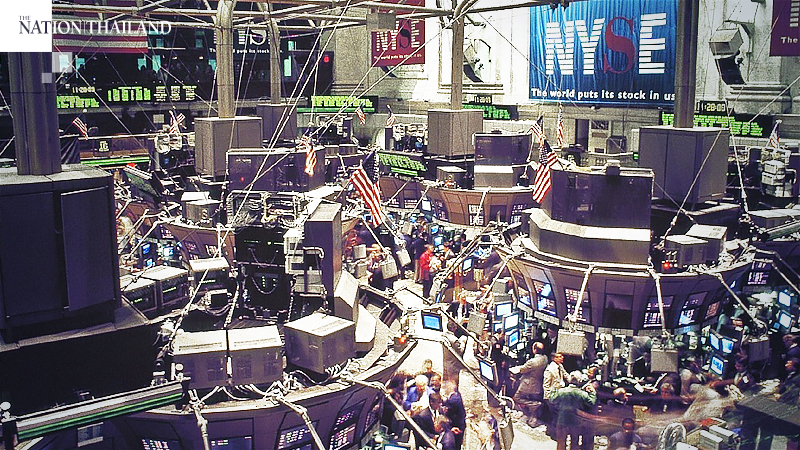
Vanguard Group, the New York Stock Exchange and Nasdaq are getting their chance push back on an escalating risk to their bottom lines: threats from Capitol Hill and the Trump administration to dramatically curtail U.S. investments in Chinese companies.
The U.S. financial titans are among firms participating Thursday in a Securities and Exchange Commission event that’s being held to debate the potential perils Americans face when investing in China and other emerging markets.
The seemingly benign topic belies an extremely contentious backdrop in Washington. The Senate unanimously passed a bill in May that’s now under consideration in the House that could lead to Alibaba Group Holding Ltd., Baidu Inc. and additional Chinese businesses being kicked out of U.S. stock markets.
The legislation’s Republican and Democratic backers say it’s needed to protect investors from fraud because China isn’t complying with U.S. regulations that require corporate audits to be scrutinized by accounting regulators.
The issue has attracted the attention of President Donald Trump, who has ratcheted up his attacks on Beijing over the coronavirus pandemic and as U.S.-China tensions mount due to Hong Kong. Trump has ordered regulators to review Chinese companies’ lack of adherence to U.S. accounting rules and submit recommendations by early August on how to fix the problem, putting the SEC at the center of the fight. The president’s critiques come as slumping poll numbers show he faces a difficult road to winning re-election in November.
Vanguard is among giant money managers whose mutual funds invest in Chinese businesses listed on U.S. exchanges, while NYSE and Nasdaq make millions of dollars in fees by allowing Chinese shares to be traded on their platforms. Thursday’s SEC roundtable offers the financial firms the chance to tout the benefits of allowing American investors to tap fast-growing emerging markets and offer their own ideas for potential reforms.
“While it is premature to speculate on the possible impacts of pending legislation, Vanguard believes that global diversification and investing in China is beneficial for investors,” the company said in a statement.
NYSE said it’s “pleased to come together with industry participants to advance the dialogue on how we can best ensure that U.S. capital markets remain the envy of the world.” In a July 8 comment letter to the SEC, Nasdaq Chief Legal Officer John Zecca said the exchange operator hopes the roundtable will “generate actionable solutions to address the risks posed by certain emerging market companies.”
The event is also featuring SEC staff and executives from major accounting firms. It’s not expected to result in swift policy changes as most regulations take months or even years to enact.
An early panel at the SEC roundtable included considerable China bashing courtesy of famous short seller Carson Block. The Muddy Waters Capital founder said that when Chinese companies trading in the U.S. blow up, American affiliates of global accounting firms should be held financially responsible. The proposal is provocative because U.S. accounting firms have no role in scrutinizing the books of Chinese companies, which are typically examined by Chinese audit affiliates.
Block, who has long argued that Chinese businesses lack transparency and are ripping off U.S. investors, said audits of such firms amount to a “rubber stamp.”
Adding urgency to the debate over Chinese companies is this year’s high-profile accounting scandal at Luckin Coffee Inc. Since reaching a high of $50 a share in January, the Chinese chain has cratered more than 90% in Nasdaq trading, a plunge that’s erased about $11 billion of market value. Following an internal investigation, Luckin disclosed earlier this month that fabricated transactions had inflated its 2019 revenue by about $300 million.
The bill that cleared the Senate would kick Chinese firms out of U.S. markets if they don’t cooperate with inspectors at the Public Company Accounting Oversight Board for three straight years. SEC Chairman Jay Clayton has said he supports the legislation because denying access to PCAOB examiners creates an “unlevel playing field” for U.S. investors.
Clayton, in remarks prepared for Thursday’s event, said he expected the panelists’ comments to inform recommendations that regulators are preparing for Trump.
The requirement that all companies that trade on U.S. exchanges submit their audits for PCAOB inspections was implemented in the wake of Enron Corp.’s 2001 accounting scandal. There are more than 200 Chinese corporations that have been allowed to sell shares in the U.S. without complying, according to the PCAOB. Their market capitalization is roughly $1.8 trillion, with Alibaba making up about one-third of the total.
Oil and gas conglomerate PTT is negotiating a deal to sell natural gas to Hin Kong Power Holding Co (HKH), said Wuttikorn Stithit, senior executive vice president of PTT’s Gas Business Unit.
Hin Kong holds one of the Thai licences to import liquefied natural gas, which it will use to fuel its Hin Kong Power project in Ratchaburi. The project has total capacity of 1,400 megawatts.
PTT is now pressing ahead with talks to sell natural gas to other interested private companies, including B Grimm Power.
B Grimm’s subsidiary, B Grimm LNG, holds the other Thai licence to import LNG.
The Covid-19 pandemic has posed one of the toughest challenges, taking not just people’s lives but also bankrupting businesses.
Many industries across the world have had to halt economic activities in order to prevent or control infections, and though the outbreak has started to abate, the economies have not started recovering. At this period, countries are starting to cautiously lift lockdowns to prevent a potential second wave of infections.
Nevertheless, the business sector can consider this crisis as a lesson in strengthening their preparedness. One of these businesses is Minor International Pcl (MINT), a global leader in hospitality, food and lifestyle industries. It has persevered through the deep recession triggered by the pandemic, and is illustrating that diversification will help it grow stronger.
William Heinecke, chair of Minor International’s board, said the outbreak has taught the company lessons.
William Heinecke, chair of Minor International’s board
The first is that hygiene certificates will convince customers to use services during the period of lifting of lockdown measures.
For instance, the Anantara Siam Bangkok Hotel was awarded the Tourism of Authority of Thailand (TAT)’s “Amazing Thailand Safety and Health Administration: SHA” certificate as well as the Hotel Facility with High Hygiene and Safety Standards certificate from the Public Health Ministry’s Department of Health. These certificates help guarantee guests’ safety.
Other hotels under Minor International have also submitted requests for hygiene and safety certificates in order to reassure guests using Minor Hotels, which are using Ecolab and Diversy brand sanitising equipment. These brands offer high-quality cleaning tools designed specifically for the food service industry as well as for food processing, hospitality and healthcare industries.
Cleaning products used in Minor Hotels have the same level of quality as those used in hospitals, and every effort is being made to keep items touched by guests, such as keycards and pens in lobbies and hotel rooms, regularly disinfected.
Minor International is also adapting to the digital age in operations. In the post-Covid era, more and more people are leaning towards digital transactions, which are both convenient and safe. Though restaurants were stopped from providing dine-in services during the lockdown period, Minor International began providing online food-delivery services.
Minor owns more than 530 hotels in 55 countries, as well as many large restaurant brands.
Heinecke added that one of the most important lessons learned is diversifying investment. He said operating in just one particular industry will pose a lot of problems, but if businesses diversity across multiple industries and regions, they will still gain revenue and manage to survive. They will also be able to reduce risks and limit losses caused by economic instability.
Minor operates in the Asia-Pacific, Middle East, Africa, Indian Ocean, Europe and America markets.
Despite the impact of Covid-19, the food delivery business and the online lifestyle store business have grown due to changes in consumer behaviour.
However, the impact of this crisis will not be permanent. Though the tourism industry has suffered from natural disasters and political instability, it has always recovered and now that countries are carefully lifting restrictions, domestic tourism will pick up followed by regional tourism, which will benefit Minor Hotels.
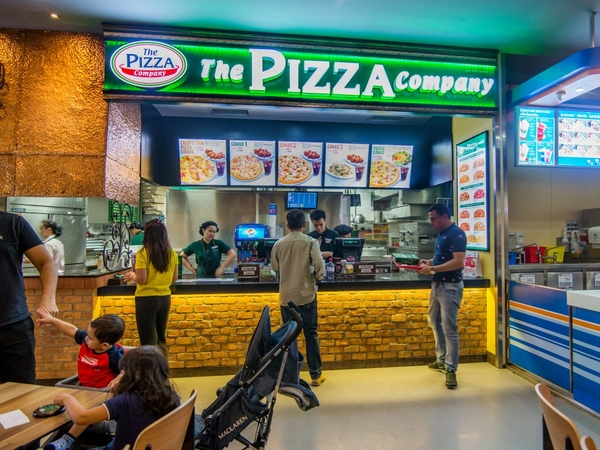
Minor owns more than 530 hotels in 55 countries, as well as many large restaurant brands such as Sizzler, The Pizza Company and Burger King that serve western food, and Thai Benihana, Thai Express and Bonchon for Asian tastes. It also has popular dessert brands such as Swensen’s and Dairy Queen.
Heinecke also said that Minor International also sells lifestyle products under Anello, Bodum, Bossini, Brooks Brothers, Charles & Keith, Esprit, Etam, Joseph Joseph, OVS, Radley, Scomadi, Zwilling JA. Henckels and Minor Smart Kids brands. He said business diversification will help support the business once consumer demand returns. Minor International is ready to respond to demand everywhere regardless of the industry or region.
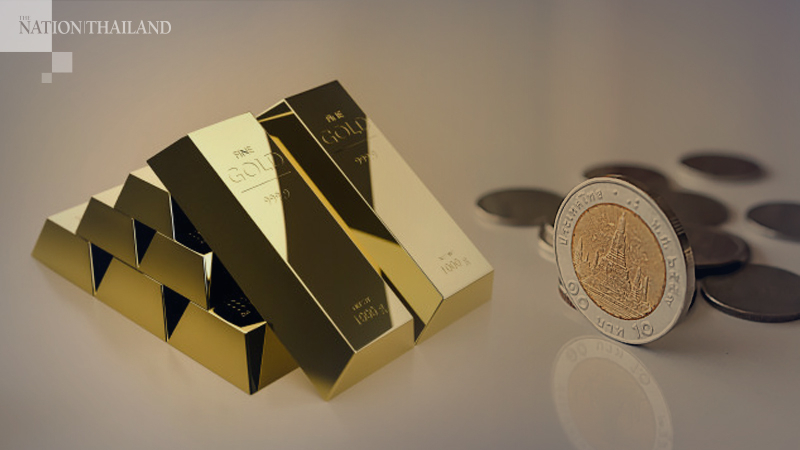
The price of gold was unchanged in morning trade on Friday (July 10), the Gold Traders Association reported.
As of 9.28am, the buying price of a gold bar was Bt26,600 per baht weight and selling price Bt26,700, while gold ornaments cost Bt26,120.68 and Bt27,200, respectively.
Spot gold price moved to US$1,802 (Bt56,403) on Friday morning after the price dropped by $16.8 to $1,803.8 (Bt56,459) per ounce at close on Thursday.
Investors were selling gold to take profit after the price rose to the highest in almost nine years, while the strengthening dollar also pressured the gold price.
Hong Kong gold price dropped by HK$100, opening at $16,660 (Bt67,280) per tael Friday morning.
The Stock Exchange of Thailand (SET) Index dropped by 7.12 points, or 0.52 per cent, to 1,358.69 in morning session on Friday (July 10).
A stock analyst at Krungsri Securities expected the index to fall between 1,355 and 1,360 before rebounding due to uncertainty following the Covid-19 impact on economic recovery as the number of new cases continued to increase.
“In the US alone, the number of new Covid-19 cases has increased by 61,000 people per day, causing some states to impose lockdown measures again,” the analyst said.
“Meanwhile the SET Index would be under pressure from the decline in crude oil price and the resignation of four Phalang Pracharat Party leaders.”
The analyst added that the index would rebound from speculation in stocks whose second-quarter performance would benefit from the weakening baht.
He recommended that investors buy:
▪︎ Food and electronics stocks that benefit from the weakening baht, such as TU, CPF, GFPT, TFG, KCE, DELTA and HANA.
▪︎ Stocks whose second-quarter performance will improve, such as TOP, PTTGC, SPRC, BGRIM, CKP, TASCO, STA and SPALI.
▪︎ Defensive stocks that are able to escape the impact from market volatility, such as INTUCH, TTW and DIF.
The Stock Exchange of Thailand (SET) Index rose by 3.35 points, or 0.25 per cent, closing at 1,366 on Thursday. Total transactions amounted to Bt72.6 billion as investors still hold off investments due to lack of new positive factors and rising coronavirus cases.
Net buys by foreign investors amounted to Bt1.241 billion in stocks and Bt2.848 billion in bonds. There were 6,009 net long Thailand Futures Exchange contracts.
By The Washington Post · Hamza Shaban · BUSINESS, US-GLOBAL-MARKETS
The Dow Jones industrial average fell sharply Thursday, as investors grappled with fresh unemployment data, flagging corporate earnings and a spike in new infections in some states that may prolong an economic recovery.
The Dow fell more than 350 points, or 1.4 percent, eroding the week’s gains. The Standard & Poor’s 500 dropped 18 points, or 0.56 percent, while the Nasdaq composite, lifted by tech stocks, rose by 55 points, or 0.53 percent.
Shareholders absorbed new Labor Department data showing another 1.3 million people filed first-time unemployment claims last week. That marked an uptick from the week before and a continuation of elevated joblessness that has taken hold since the pandemic. New unemployment claims have averaged about 1.4 million for the past four weeks.
Alongside troubling economic data, Wall Street is also reacting to public opinion on President Donald Trump, experts say, and his reelection prospects for November. On Thursday, the Supreme Court handed Trump a defeat, rejecting his assertion that he enjoys absolute immunity from investigation while in office.
Equity prices were pummeled by the “combination punch” of accelerating coronavirus cases and the high court decision allowing New York prosecutors to pursue a subpoena of the president’s private and business financial records, said Sam Stovall, the chief investment strategist of U.S. equity strategy at CFRA. “Both factors may hinder President Trump’s reelection chances, increasing the uncertainty surrounding a possible Democratic sweep in November.”
Walgreens was one of the biggest drags on the Dow, with shares falling nearly 8 percent on disappointing quarterly results. The drugstore chain disclosed sharp losses in overseas sales due to the pandemic.
Kristina Hooper, the chief global market strategist at Invesco, said investors have been gravitating to growth areas like tech, which has rebounded from the market’s March lows. But weak earnings are weighing on the stocks. “Storm clouds have formed over stocks today,” she said. The biggest cloud is growing fear about a stalled reopening as infections continue to rise and the country appears unable to control the first wave of the virus,” she said.
Investors also digested the latest warning from public health experts. On Wednesday, Anthony Fauci, the nation’s top infectious-disease official, said some states might want to seriously consider “shutting down” again if they are facing a spike in new cases. In the past week, Texas and Florida, the second and third most populous states in the nation, each broke their records for new daily infections, at 10,028 and 11,458, respectively.
“Markets are digesting the latest jobs data, which, despite being lower relative to previous weeks, confirms the fact that layoffs continue and millions are still out of a job,” said Nicole Tanenbaum, partner and chief investment strategist at Chequers Financial Management. “Investors have largely remained focused on the prospects for a swift economic recovery, and this data underscores the vulnerability of such a recovery, particularly against a backdrop of renewed resurgence in virus cases across the country.”
In the coming weeks, Congress is expected to weigh the possibility of another round of emergency relief for individual Americans. In March, lawmakers approved $1,200 payments that were sent to as many as 159 million U.S. households. Meanwhile, the Federal Reserve has pledged to keep interest rates near zero for several years, as part of its aggressive approach to keep the economy from sliding further.