KBank launches Wealth Plus to help customers manage personalised investment portfolios
Jun 23. 2020
By THE NATION
Kasikorn Bank has launched a “Wealth Plus” feature on its KPlus mobile application to serve as a personal assistant in portfolio management for customers.
The feature is designed for customers who seek financial security but have no time to keep track of their investments, which causes them to miss out on good opportunities, the bank said in a press statement.
The new feature “personalises portfolio arrangement” to best suit each individual, monitoring and rebalancing a person’s portfolio regularly based on market circumstances.
According to KBank, Wealth Plus is suitable for the new generation wanting to get into investing. They can choose a portfolio with long-term security or one with a clear goal, such as saving to buy a car, or for travel or retirement.
To get started, customers simply make an initial investment of Bt10,000 without needing to go to any branch or submitting any documents, and no fee is charged. For subsequent investments, a minimum of Bt1,000 is needed.
Wealth PLUS allows customers to:
• Design an investment portfolio tailored to their personal financial goals. It selects mutual funds that diversify risks and offers appropriate returns according to each customer’s risk appetite and investment period, with market conditions also in mind.
• Enjoy automatic risk diversification without the need for exhaustive calculation. It focuses on portfolio investment – investing in myriad mutual funds at an appropriate ratio, helping customers to automatically diversify risks without the need to calculate by themselves.
• Monitor and maintain portfolios around-the-clock. It will auto-rebalance portfolios when they are affected by drastic changes in market conditions, letting customers remain “worry-free”. In normal circumstances, portfolios are auto-rebalanced every six months.
Dow Thailand Group, a global leader in material sciences, points out that sustainable plastic waste management demands all parties’ engagement, particularly the general public.
Chatchai Luanpolcharoenchai, President of Dow Thailand, said, “As one of the world’s largest materials science companies, Dow is aware of the loss of plastic waste to the environment and has explored sustainable management solutions given that plastic is too valuable to be discarded as such. Plastic plays significant roles, particularly in the light of the current coronavirus outbreak (COVID-19), when plastic is turned to medical protection equipment and packaging. Nevertheless, sustainable plastics cannot be achieved by just one organization. It requires the engagement of all involved parties.”
In Thailand, Dow helped found Public-Private Partnership for Sustainable Plastic and Waste Management (PPP Plastics) in 2018. Together with its partners, Dow supported the government’s drafting and implementation of the Roadmap on Plastic Waste Management (2018-2030). The roadmap provides an operational framework in tackling plastic waste under the circular economy concept and fully recycling plastic waste by 2027.
The latest effort, “MueWiset X Won” (the magic recycling hand), involves Dow and over 60 members of PPP Plastics. The project calls for the donation of used plastic items like shopping bags, diaper wraps, water bottle packaging films, and shockproof films used in-home delivery services. These products are destined for recycling, to prevent the loss to the environment and reduce plastic waste to landfill. The goal is to reduce ocean waste and maximize resource utilization accordingly to the circular economy concept.
“The MueWiset X Won Project showcases the engagement of all involved parties, from producers, recycling business operators, and regulators to consumers in tackling plastic in a sustainable manner. The project will promote awareness and inspire a behavioral change, as plastic waste will be appropriately tossed away and sorted at the start,” Chatchai said.
Under the project, in June, “bag recycling buckets” are located at 300 donation spots, including big department stores such as Central, The Mall and Tesco Lotus, including Bangchak gas stations in the Greater Bangkok and Rayong. The coverage areas will be later extended to neighboring provinces and other provinces. The donated bags and films are valued at Bt5 per kg, and the proceeds will go to the Marine Endangered Animals Rescue Center to fund rescue missions.
By Syndication Washington Post, Bloomberg · Ezra Fieser · BUSINESS, US-GLOBAL-MARKETS The pile of distressed debt in emerging markets that ballooned in March is quickly shrinking, suggesting to some investors that fears of a wave of corporate collapses are overblown.
Despite warnings that default rates will rise to double digits, investors have turned more bullish on the riskiest debt sold by companies in markets from Latin America to China, resulting in falling levels of distressed debt.
Since peaking on March 19 at $121.6 billion, the pool of high-yield, emerging-market corporate debt trading at distressed levels has shriveled to $28.6 billion, according to JPMorgan Chase & Co. The spread between high-yield bonds and a broader index of developing-nation debt has tightened 140 basis points over that time.
“The level of hysteria we saw in March for corporates was somewhat unprecedented,” said Steve Cook, co-head of emerging markets fixed income at PineBridge Investments, which has $96.2 billion in assets under management. “There will be some weak links, but to say that you’re going to see 10% to 12% default rates, we don’t see it.”
PineBridge expects the default rate for those corporates to reach 3% to 4% by the end of the year, he said.
A global recession caused by the coronavirus lockdown and worsened by a crash in oil prices has heightened the risks corporations won’t be able to meet obligations. Moody’s Investors Service said this week it expects the default rate to at least triple by the end of the year for speculative-grade companies in Latin America and that it may top 10%. The ratings firm previously said as much as 13.7% of speculative-grade corporate bonds in emerging markets will sour in the year to March 2021. The rate at the end of March was 2.2%.
Yet, high-yield, developing-market debt has gained 15% so far in the quarter starting in April, compared to 12% for high-yield U.S. corporate debt, according to data compiled by Bloomberg.
To be sure, the downturn has taken a toll on the government debt side of emerging markets, with countries including Argentina, Ecuador and Lebanon already defaulting.
The situation is not entirely rosy for companies either, especially if economies recover more slowly than expected. Yet, many corporations went into the downturn with relatively strong balance sheets and have benefited as governments poured stimulus into banking systems and, in some cases, instituted moratoriums on principal and interest payments, said Omotunde Lawal, head of emerging market corporate debt at London-based Barings U.K. Ltd.
Lawal expects a legion of companies to start to benefit when economies do reopen, earning just enough revenue to meet obligations, but not enough to continue cutting debt levels.
“Balance sheets will be weaker and we’ll see a growth of zombie corporates,” she said. Many companies will “muddle through with a slower path to deleveraging, but it will not cause a spike in defaults.”
With many sectors continuing to suffer, notes sold by companies such as Brazilian air carrier Gol Linhas Aereas Inteligentes SA and Chinese property manager China Evergrande Group are still distressed. But the rally has pushed down yields for many bonds that were distressed in March, such as debt from companies as varied as Chilean mobile services company WOM to Mexican concrete giant Cemex SA, according to data compiled by Bloomberg.
Companies across the globe have piled into debt markets since the financial crisis, with the total stock of outstanding bonds reaching $2.4 trillion this year, a four-fold increase from 2009, according to JPMorgan data.
The sheer size of the universe of such debt means even if defaults start to rise, the percentage is unlikely to hit double digits as it did during the financial crisis, PineBridge’s Cook said.
“We need to be careful not to compare it to the financial crisis,” he said.
By Syndication Washington Post, Bloomberg · Michael Hunter · BUSINESS, PERSONAL-FINANCE
U.S. stocks rose, with technology leading the advance, as investors continued to bet on companies with strong balance sheets and better prospects in an economy where work-from-home remains part of the norm.
The Nasdaq 100 jumped more than 1%, with Adobe, Amazon.com and Square ending at all-time highs. The Nasdaq Composite capped a seventh straight advance in its longest rally of the year. The S&P 500 lagged behind, with some sectors under pressure as investors weighed the economic impact of virus flare-ups in some states.
“There’s absolutely a big tug-of-war going on right now,” JJ Kinahan, the chief market strategist at TD Ameritrade, said by phone. “Everyone is trying to figure out who is going to be the winners and losers when things get quote-unquote back to normal. That to me shows that everybody is trying to figure out which way to go.”
Gold tested a seven-year high, while the dollar weakened. European stocks slumped, with Wirecard AG plunging after more than $2 billion in assets went missing. The yield on Germany’s 30-year government debt fell below zero for the first time since May. Crude oil settled above $40 a barrel in New York.
The comments from Texas’s governor come with a dozen states reporting sharp increases in virus cases over the weekend, even as others move forward with phased reopening. There were also new scares in Germany and Australia. But investors are wagering that policymakers will be unwilling to stop business activity or slow progress toward a recovery.
At the same time, risk appetite is being supported by historic stimulus programs by central banks around the world. Equity markets have steadied in recent weeks and the S&P 500 is within 10% of its pre-pandemic peak.
“The market doesn’t believe that we will see such draconian lockdowns even if there is a resurgence of the virus. The politics have moved on,” said James Athey, a money manager at Aberdeen Standard Investments. “Rightly or wrongly, there’s also a pretty widespread feeling that riskier assets won’t go down too far because the Federal Reserve won’t let them.”
These are the main moves in markets:
Stocks
The S&P 500 Index increased 0.7% to 3,118 as of 4 p.m. EDT.
The Dow Jones industrial average added 0.6% and the Nasdaq composite rose 1.2%.
The Nasdaq Composite Index gained 0.8%, hitting the highest in more than a week with its seventh consecutive advance.
The MSCI All-Country World Index was little changed at 527.04.
Currencies
The Bloomberg Dollar Spot Index decreased 0.5% to 1,213.48, hitting the lowest in a week with the first retreat in a week and the largest dip in three weeks.
The euro increased 0.7% to $1.1259, the first advance in a week and the biggest climb in more than two weeks.
The Japanese yen was little changed at 106.83 per dollar, hitting the strongest in more than six weeks with its sixth straight advance.
Bonds
The yield on 10-year Treasurys rose one basis point to 0.70%, the lowest in more than a week.
Germany’s 10-year yield fell three basis points to -0.44%, the lowest in a week on the largest fall in more than a week.
Britain’s 10-year yield fell four basis points to 0.2%, the biggest fall in more than a week.
Commodities
West Texas Intermediate crude advanced 1.8% to $40.46 a barrel.
Gold futures strengthened 0.8% to $1,765.90 an ounce.
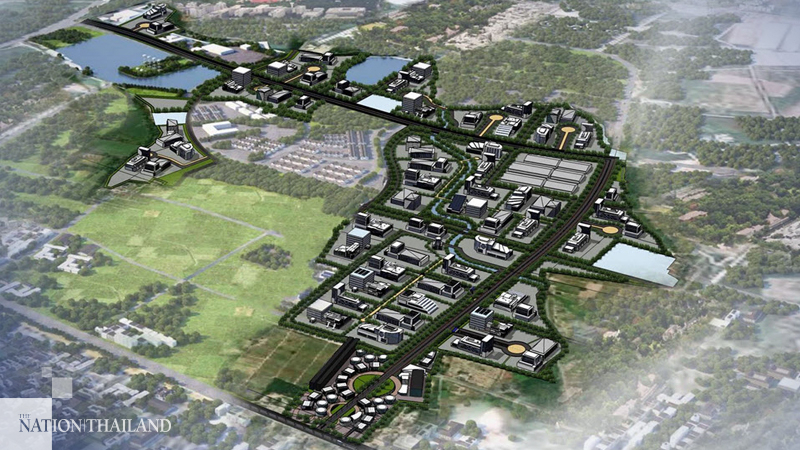
The Industrial Estate Authority of Thailand (IAET) is expected to begin construction of a Bt2.37 billion “smart park” industrial zone in Rayong early next year, said governor Somchint Pilouk.
The project is part of the government’s flagship Eastern Economic Corridor infrastructure programme and is scheduled for completion in three years.
The IEAT board approved the project in January this year, and it will be submitted to the National Economic and Social Development Council next month.
Somchint said the venue will be a role model for modern industrial parks thanks to its adoption of advanced industrial technology, communications, and transport and energy systems.
The project occupies 1,383 rai, of which 621 will be set aside as industrial zones and 238 as a “green” buffer zone.
The park is designed to host four new S-curve industries: aviation and logistics in a 299-rai zone, medical industry (180 rai), robotics (over 74 rai) and digital industry (over 66 rai). The venue will bring an estimated 7,459 new jobs and cash flow of Bt1.342 billion per year. It is expected to draw industrial investment of Bt53 billion.
The Bank of Thailand (BOT) has launched pre-emptive measures to prevent a financial crisis like the one in 1997, BOT deputy governor Ronadol Numnonda said in response to investors’ concerns about the resilience of local commercial banks in the Covid-19 fallout.
The Stock Exchange of Thailand (SET) Index closed at 1,352.18 on Monday (June 22), down 18.64 points or 1.36 per cent. Total transaction volume was Bt65.772 billion with an index high of 1,367.98 and a low of 1,347.60. Stock analysts are blaming the central bank’s measures for pulling down the index.
BOT on Friday ordered commercial banks to hold off on paying interim dividends and also stopped them from buying back shares to strengthen their capital ratio in response to the pandemic.
To clarify this move, Ronadol said the central bank was only taking pre-emptive measures.
“We have learned from the 1997 crisis that we should not let the situation get out of hand. At that time, bad loans skyrocketed to 50 per cent of total bank loans because no pre-emptive measures had been taken. Today, we are implementing preventive measures and bad debts are just 3.05 per cent of total bank loans,” he said.
Bad debts stood at Bt490 billion at the end of this year’s first quarter.
BOT has also called on commercial banks to conduct a stress test on the management of their capital in the next one to three years.
Bank capital adequacy ratio is at the heart of the banking business, as it underpins bank lending and reserves against risk assets in case debtors get into trouble in the future.
Banks are expected to submit results of their stress test to BOT as of late July.
Ronadol, meanwhile, reassured investors that banks have strong capital. As of the end of the first quarter, the average BIS capital adequacy ratio was 18.7 per cent, which can be considered relatively high compared to the minimum requirement of 8.5 per cent, he said.
During the 1997 financial crisis, the BIS ratio was 8.1 per cent.
“After consulting with bankers, we believe that when BIS ratio is between 11.5 and 12.5 per cent, banks could handle the Covid-19 fallout,” he said.
If the BIS ratio falls below that level, banks will have to conduct capitalisation through different methods, such as holding off on paying dividends or buying back shares. Banks can also increase their Tier 1 capital by selling shares or raise Tier 2 capital by issuing debentures, he said.
The Ministry of Higher Education, Science, Research and Innovation has unveiled its plan to boost the gross domestic product of the country’s bio-circular green (BCG) economy, to strengthen Thailand’s economic sustainability.
Minister Suvit Maesincee said that if things go as planned, the BCG sector’s GDP will surge to Bt4.4 trillion in next five years from the current Bt3.4 trillion. The value could reach Bt6.5 trillion in 2030, he added.
The ministry has joined with related state agencies and private firms in drawing up plans to promote BCG in the following seven fields.
1. Agriculture: This includes the development of smart farmers and tax incentives to encourage smart farming. The goals are to make Thailand one of the world’s top 10 exporters and boost farming income to Bt240,000 per household per year. It aims to boost the GDP of the farm sector to Bt400 billion in the next five years.
2. Food sector: The development will focus on the functional food industry and functional food ingredient industry as well as medical food. It aims to boost GDP in the food sector to Bt300 billion in the next five years and reduce food industry waste to 15 per cent from the current 30 per cent by 2024 and to 10 per cent by 2030.
3. Energy and biochemical sectors: The plan will promote the use of ethanol, the use of a smart national electricity grid, and the introduction of a Green tax. It will set up the centre and fund for the bio-refinery industry and integrated bio-products. These will add value to farm products and stabilise the price of sugar cane and palm oil.
4. Medical supplies and vaccines. The ministry will set up a fund to support R&D of medicines and vaccines. It will also promote the Genomics Thailand project. It aims to boost GDP in the medicine and vaccine sector to Bt90 billion in next five years from the present Bt40 billion and cut public healthcare costs by Bt70 billion per year. To achieve these goals, the government will support R&D ranging from work in labs to clinical trials, and amend some vaccine procurement rules.
5. Medical equipment: The ministry will set up a fund to develop equipment standards and an institute to certify the standards of the medical technology and medical equipment innovations.
6. The tourism sector and creative economy sector: The plan includes the support of Thai digital platforms to promote tourism.
The plan will promote northern provinces as the “luxury retirement centre of Asia” to draw long stay-tourists and high-income, aged tourists worldwide.
It will also promote Thailand as Asia’s creative-content production hub.
The plans aims to boost GDP in these two sectors to Bt300 billion in the next five years.
7. Circular economy: It will draw up a law to recycle waste and plastic packaging, promote knowledge of the circular economy and waste separation, and promote the use of farm waste such as rice straw and sugar cane leaves.
Jun 23. 2020Prime Minister Prayut Chan-o-cha orders related state agencies to consider offering additional tax incentives to woo investors for the new S-curve sectors.
By THE NATION
Prime Minister Prayut Chan-o-cha has instructed related state agencies and the Board of Investment (BoI) to consider offering additional tax incentives to attract investment in the five new “S-curve” sectors in the Eastern Economic Corridor, EEC Office secretary-general Kanit Sangsuban said on Monday (June 22).
The five new S-curve industries are medicine, aviation, automation and robotics, digital and bio-technology industries. Most of the initial EEC investment concentrated on S-curve businesses such as auto parts, agriculture and processed food.
An S-curve is derived from S-like shape of a sector’s growth – it is flatter at the beginning and end and steeper in the middle.
According to the BoI, the value of projects applying to invest in EEC during the first five months of this year was Bt32 billion, versus Bt53 billion over the same period last year.
The Washington Post · Heather Kelly, Geoffrey A. Fowler, Reed Albergotti
SAN FRANCISCO – The pandemic isn’t stopping one of tech’s summertime standbys: Apple unveiling updates to the software of the iPhone, iPad, Mac and Apple Watch . . . and maybe a few product surprises, too.
This year, however, Apple’s WWDC – which stands for Worldwide Developers Conference – is going virtual. On Monday at 1 p.m. Eastern, 10 a.m. Pacific, CEO Tim Cook and other Apple executives will stream their announcements online instead of presenting them in person to a convention center audience filled with app developers.
Apple is expected to demo its next iPhone software, iOS 14, as well as new versions of iPadOS and MacOS, the software that runs its tablets and computers. In recent years, Apple has made early-release test versions of these updates available in “public beta” over the summer, before making final versions available to everyone in the fall.
Heading into the event, Apple finds itself in a brouhaha over how it runs its successful App Store, where it sells more than 2 million apps. The company takes a portion (typically 30%) of the revenue from apps that sell subscriptions. But the new email service Hey.com – which sells subscriptions on its website – says Apple threatened to remove it from the App Store when it refused to offer an in-app subscription option and share a cut.
One potential WWDC announcement that’s been generating buzz: Apple switching its Mac computers to ARM-based processors, an alternative to the Intel chips that Apple has used for 14 years. Apple’s iPhones, iPads and watches already use ARM chips, which give Apple the ability to customize them to its own specifications. Last year at WWDC, Apple made inroads toward making apps that run on iPads also run on Macs, and a switch to the same kind of processors would bring Apple’s mobile devices and computers even closer together.
As Apple streams from somewhere at its Cupertino, Calif., headquarters, the pandemic could be a chance for the company to update its approach to product announcements. The choreographed events have followed a predictable format since Steve Jobs made them his signature way of generating headlines, though much of the secrecy that made them exciting is largely gone. Executives in crisp casual wear talk up the company’s stats – sales, number of active devices, newest stores – then roll through updates with special guests and glossy promotional videos.
Cook has sometimes used the start of Apple events to address current events, like immigration. This year he’s also likely to talk about Apple’s work to develop exposure-tracing apps for the coronavirus.
Usually a five-day, $1,600 event for developers to learn about the latest tools for making apps, WWDC will be entirely virtual and free this year. Developers can watch videos or request one-on-one sessions with Apple engineers.
Apple did not say if the keynote was being streamed live, streamed on a delay or prerecorded. The word live does not appear in Apple’s descriptions of the announcement.
Jun 22. 2020Wirecard headquarters in Munich on Feb. 12, 2019. MUST CREDIT: Bloomberg photo by Michaela Handrek-Rehle
By Bloomberg · Chanyaporn Chanjaroen · BUSINESS
Wirecard, the troubled German payments company, withdrew its financial results, saying the missing 1.9 billion euros ($2.1 billion) of cash on its balance sheet probably doesn’t exist.
Concerns over the missing money have prompted a collapse in Wirecard shares and the resignation of CEO Markus Braun, who was replaced by James Freis, who will serve on an interim basis. In an indication of the company’s worsening outlook, Moody’s Investors Service said on Friday it cut Wirecard’s credit ratings six levels, putting it one step from the lowest tier of junk.
“There is a prevailing likelihood that the bank trust account balances in the amount of 1.9 billion euros do not exist,” the company said in a statement early Monday. It withdrew results for fiscal 2019 and preliminary results for the first quarter of 2020. The firm had repeatedly delayed filing its statements.
Wirecard said it was continuing to investigate the matter and could not exclude potential effects on the financial accounts of previous years.
The company said it was in “constructive discussions” with its lending banks, including the extension of lines coming due at the end of June. It is working with investment bank Houlihan Lokey on a sustainable financing strategy. Also under consideration are cost reductions, a restructuring, and disposal or termination of business units and product segments, according to the statement.
Wirecard’s lenders are demanding more clarity from the company in return for the extension of almost $2 billion in financing after it breached terms on the loan, people familiar with the matter said earlier. At least 15 commercial lenders, including Commerzbank and ABN Amro, are in hectic negotiations about the steps to take, they said.
The deepening mystery over the lost money last week centered on two Philippine lenders after Wirecard said a couple of unnamed Asian banks had been unable to find accounts with the cash.
Both the Bank of the Philippine Islands and BDO Unibank said that Wirecard wasn’t a client and that they hadn’t seen the money.
A document purporting to show a link between Wirecard and BPI was “bogus” and may be part of an attempted fraud, the bank’s President Cezar Consing said Friday. BDO Unibank CEO Nestor Tan said it was a matter of “document fraud which was subsequently clarified by the bank as spurious.”




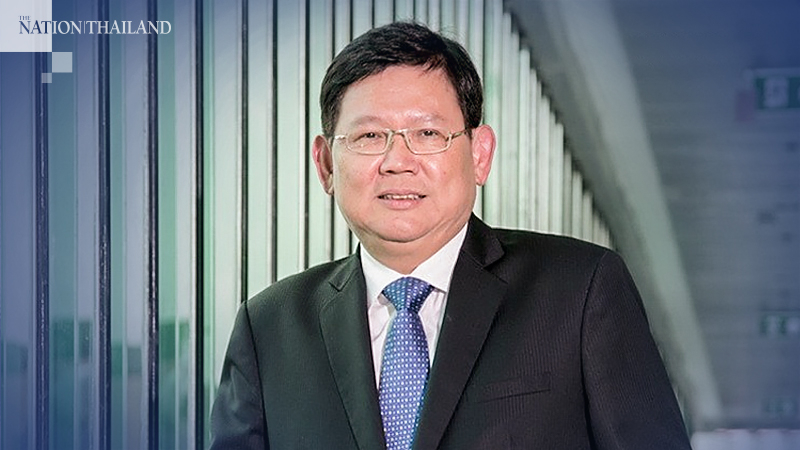
 BOT deputy governor Ronadol Numnonda
 Prime Minister Prayut Chan-o-cha orders related state agencies to consider offering additional tax incentives to woo investors for the new S-curve sectors.

 Wirecard headquarters in Munich on Feb. 12, 2019. MUST CREDIT: Bloomberg photo by Michaela Handrek-Rehle

