Ajinomoto holds the 2020 Ordinary General Meeting of Shareholders
Jun 17. 2020
By THE NATION
Mr. Hiroharu Motohashi (Middle, 2nd row), President of Ajinomoto Co., (Thailand) Ltd., presided over the 2020 Ordinary General Meeting of Shareholders in order to report the company’s business performance of fiscal year 2019 and to inform next growing step of business plan in fiscal year 2020.
The meeting was attended by Ajinomoto’s directors and other shareholders. The meeting was recently held at Ajinomoto Co., (Thailand) Ltd., Head Office, Bangkok.
Jun 18. 2020A box of Pinnacle Foods Inc. Aunt Jemima Frozen Breakfast brand breakfast in an arranged on June 27, 2018. MUST CREDIT: Bloomberg photo by Daniel Acker.
By Bloomberg · Richard Clough · BUSINESS, RACE, RETAIL
The Aunt Jemima brand will be phased out – and Uncle Ben’s and Mrs. Butterworth’s could follow suit – as nationwide protests prompt a sudden corporate reckoning on institutionalized racism.
PepsiCo Inc. plans to change the name of its Aunt Jemima pancake mix and syrup, acknowledging that the 131-year-old brand is rooted in racially problematic tropes. The company’s Quaker Oats unit will also remove the image of a Black woman from its packaging and marketing beginning in the fourth quarter, according to a statement.
“We recognize Aunt Jemima’s origins are based on a racial stereotype,” Kristin Kroepfl, chief marketing officer of Quaker Foods North America, said in the statement. “While work has been done over the years to update the brand in a manner intended to be appropriate and respectful, we realize those changes are not enough.”
Some of America’s oldest and best-known consumer brands are under scrutiny as the country reflects on the systemic racism in the business world and broader society. Many companies have donated money, pledged to boost hiring of Black workers and taken other steps to support the Black community following protests sparked by the police killing of George Floyd in Minneapolis last month.
Mars Inc., which owns the Uncle Ben’s rice brand, said it’s “evaluating all possibilities” regarding changes to its product line, which features an image of a smiling Black man.
“We recognize that now is the right time to evolve the Uncle Ben’s brand, including its visual brand identity, which we will do,” it said in a statement.
Conagra Brands Inc., similarly, announced a “complete brand and packaging review” for its Mrs. Butterworth’s syrup, which comes in a bottle shaped like a woman. The original design was based on the Black actress who portrayed “Prissy,” a maid in Gone With the Wind. That film was temporarily removed from HBO Max’s lineup recently due to its racist themes.
“We stand in solidarity with our Black and Brown communities and we can see that our packaging may be interpreted in a way that is wholly inconsistent with our values,” Conagra said in a statement.
– – –
The Aunt Jemima change “is not only welcome in the world of retail brands, but long overdue,” James O’Rourke, a management professor with the University of Notre Dame’s business school, said via email. The brand’s reputation “was built on a racial and cultural stereotype that is widely regarded as offensive.”
Other brands associated with nonwhite characters could face a similar backlash, said O’Rourke. B&G Foods Inc., maker of Cream of Wheat, did not respond to a request for comment on its brand imagery including a Black man.
This year butter maker Land O’Lakes decided to remove the image of a Native American woman from its products.
The Aunt Jemima name dates back to 1889 and was inspired by a song and character from a minstrel show, which featured White performers in blackface. The Aunt Jemima character’s appearance changed over the years, removing a headscarf and adding pearl earrings. In 1994 Gladys Knight appeared in a commercial for the syrup.
The changing traits suggest brand managers recognized the character could be offensive, O’Rourke said. “But the effect, because of the name, is the same.”
– – –
The brand had faced growing criticism recently, with Reddit co-founder Alexis Ohanian tweeting “how is Aunt Jemima not canceled?” and linking to a video critical of the character. The viral clip by the singer Kirby, titled “How To Make A Non Racist Breakfast,” has millions of views online.
PepsiCo also said Tuesday that it would donate $400 million over five years measures to promote racial equality. The Aunt Jemima brand specifically will donate $5 million over that span.
“As we work to make progress toward racial equality through several initiatives, we also must take a hard look at our portfolio of brands and ensure they reflect our values and meet our consumers’ expectations,” Kroepfl said. PepsiCo has owned Aunt Jemima since it bought Quaker Oats in 2001.
The name change will be announced at a later date, the company said.
The Covid-19 pandemic has resulted in opportunities of merger and acquisition for PTT Exploration and Production (PTTEP), its president Phongsthorn Thavisin said.
He said the pandemic has put some petroleum companies in financial difficulties that they are considering selling their businesses.
Meanwhile, he added that PTTEP aims to boost its production ratio of natural gas to 80 per cent from the current 70 per cent and that of oil down to 20 per cent from 30 per cent. This is in line with the global trend of rising demands for natural gas.
By The Washington Post · Reed Albergotti, Tony Romm · BUSINESS, WORLD, TECHNOLOGY, US-GLOBAL-MARKETS Apple faced harsh criticism on Tuesday from regulators and the companies behind some of the most popular apps in its App Store, including Tinder and Fortnite, a sign of the growing discontent with Apple’s grip on the mobile economy.
The companies – Tinder parent Match Group and Fortnite owner Epic Games – each faulted Apple for its long-standing policy of collecting a portion of subscriptions and other purchases made through its App Store, a move the companies say has cut their profits and left consumers paying higher prices.
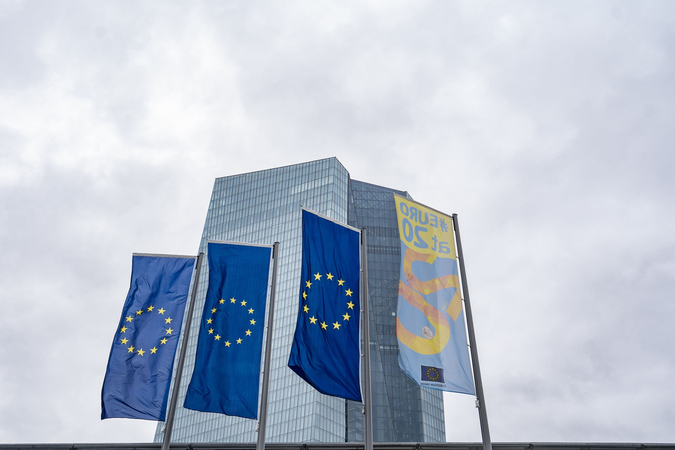
Earlier in the day, the European Commission announced two investigations into how the iPhone maker treats competitors on its App Store and in its mobile payment system.The probe into the App Store was brought on by Spotify, the music-streaming service that has complained loudly about alleged mistreatment by Apple, and by an unnamed distributor of e-books and audiobooks.
“We need to ensure that Apple’s rules do not distort competition in markets where Apple is competing with other app developers, for example with its music streaming service Apple Music or with Apple Books,” Margrethe Vestager, the commission’s executive vice president for competition, said in a written statement.
Every time an iPhone user subscribes to a service such as Spotify through Apple’s App Store, a portion of that fee, usually between 15 and 30 percent, goes to Apple. That fee has irked companies including Match, Fortnite and Spotify, which has said it hurt its business and resulted in higher prices for its customers. Spotify has tried to encourage its customers to subscribe directly, so as to circumvent Apple’s fees. But Apple has tried to block Spotify from doing so. That behavior is at the heart of the investigation, according to an announcement by the commission Tuesday.
Apple says the fees are fair and help pay for the service, which it says offers a safe and secure way for customers to download apps. “It’s disappointing the European Commission is advancing baseless complaints from a handful of companies who simply want a free ride, and don’t want to play by the same rules as everyone else. We don’t think that’s right – we want to maintain a level playing field where anyone with determination and a great idea can succeed,” said Apple spokesman Josh Rosenstock, in an emailed statement.
Epic earns revenue from Fortnite players who are willing to pay real dollars for digital currency that can be redeemed for in-game items – and Apple gets a cut of it.
Epic Games chief executive Tim Sweeney said security has nothing to do with Apple’s “extractive” fees. “The iOS App Store’s monopoly protects only Apple profit, not device security.”
“Apple is a partner, but also a dominant platform whose actions force the vast majority of consumers to pay more for third-party apps that Apple arbitrarily defines as “digital services,” Match Group said in a statement, adding Apple “squeezes industries like e-books, music and video streaming, cloud storage, gaming and online dating.”
“We’re acutely aware of their power over us,” the company added.
“Apple acts as stadium owner, referee and player and tilts the playing field to favor its own services,” Horacio Gutierrez, Spotify’s head of global affairs and chief legal officer. “There is no doubt that Spotify would be a more successful company today were it not for Apple’s conduct,” he said.
A new email service called Hey echoed some of Spotify’s concerns, telling the tech site Protocol Tuesday that Apple was forcing the start-up to use the iOS payments system by preventing it from updating its app until it complied. “There is never in a million years a way that I am paying Apple a third of our revenue,” the company’s co-founder, David Heinemeier Hansson told the website.
Companies rarely sound off in opposition to Apple, given the iPhone giant’s immense power, popularity and influence. Apple also maintains tight, strict oversight of its App Store, potentially leaving companies like Match Group and Epic Games little choice but to work out their disagreements – or risk losing access to millions of users’ iPhones and iPads.
New antitrust scrutiny in the United States and Europe, however, has emboldened some smaller tech companies in recent months to speak out publicly for the first time. That includes Tile, which makes technology that helps people track their keys and other lost items. Earlier this year, the company publicly blasted Apple at a congressional hearing for introducing tweaks to its operating system, known as iOS, that it says puts competing services at a disadvantage.
Tile later lobbed a complaint with the European Union. The commission has not said whether it will formally investigate those allegations. Apple has defended its software revisions, arguing that changes to iOS are designed to protect user privacy.
“Our multiple attempts to engage in meaningful dialogue with Apple have been ignored and we are beginning to believe the only way to get Apple to play fair is through government action,” Tile’s general counsel, Kirsten Daru, wrote in an emailed statement.
The move by the European Commission comes as antitrust scrutiny in the United States has moved on to focus on other technology companies such as Google. Antitrust regulators in Europe have been more aggressive in taking on the power of large technology companies. Though the cases have dragged on for many years, they’ve resulted in some large fines.
The commission also announced a separate investigation Tuesday into Apple Pay, the company’s mobile payment system that allows its customers to make in-store purchases using a wireless chip in the iPhone.
In a news release, the commission said Apple dictates the terms to merchants who accept Apple Pay and limits the use of the “NFC” chip on iPhones only to Apple’s own service. “It is important that Apple’s measures do not deny consumers the benefits of new payment technologies, including better choice, quality, innovation and competitive prices,” the commission wrote in the release.
The commission said it will also focus on allegations that Apple restricts the use of Apple Pay for its competitors.
Apple is one of several U.S. technology companies facing possible fines and other action in Europe for allegedly anticompetitive behavior. Last week, The Wall Street Journal reported that Amazon could be hit with antitrust charges for its treatment of third-party sellers on its site.
Whether the investigation will lead to a change in Apple’s business or a material ding to its pocket book is unknown. But Tuesday, Wall Street shrugged at the news. Apple’s stock was up roughly 2.5 percent, and the company was valued at $1.5 trillion, or about 44 times the size of Spotify, whose stock was down Tuesday.
Jun 17. 2020A flag bearing the Saudi Aramco oil company logo flies at the company’s compound in Dhahran, Saudi Arabia, on Oct. 3, 2018. MUST CREDIT: Bloomberg photo by Simon Dawson.
By Syndication Washington Post, Bloomberg · Matthew Martin · BUSINESS, WORLD, US-GLOBAL-MARKETS, MIDDLE-EAST
Saudi Aramco has given itself more time to pay for an almost $70 billion acquisition of Saudi Basic Industries Corp. as this year’s slump in oil prices stretches its finances.
Aramco announced new terms on Wednesday as it completed the purchase of a 70% stake in Sabic from Saudi Arabia’s sovereign wealth fund. Aramco will push back the bulk of installments until after 2022 and delay the final one by three years until 2028.
The oil producer will make its first payment of $7 billion to the Public Investment Fund on Aug. 2, Aramco said in a statement to the stock exchange in Riyadh. Under the previous deal agreed in October, when crude was about $60 a barrel, Aramco would have had to pay $25 billion by the end of this month. Charges on a loan the PIF is providing Aramco for the acquisition now total $5.9 billion, up from $2.5 billion previously.
Brent crude’s more than doubled since late April as more economies reopen from coronavirus lockdowns. But at around $41 a barrel, it’s still down 37% this year, putting huge pressure on producers globally. Conserving cash on the takeover this year will help Aramco fulfill its aim of making a $75 billion dividend to shareholders.
The new terms are “positive for Aramco’s balance sheet and help it withstand weaker macro conditions for even longer,” Biraj Borkhataria, head of energy research at Royal Bank of Canada’s European arm, said in a note to clients.
The deal effectively transfers cash from one arm of the Saudi state to another. It enables Aramco to accelerate its push to turn oil into products such as plastics, while giving the PIF more cash to increase its burgeoning investments inside Saudi Arabia and abroad, including in U.S. stocks.
Aramco, the world’s biggest oil exporter, agreed in March last year to pay 123.4 riyals ($32.90) a share for the PIF’s stake in Sabic, the equivalent of $69.1 billion. The rest of the chemicals maker will remain listed on the Saudi stock exchange, where a small sliver of Aramco also trades. That will prevent Aramco from being able to fully integrate Sabic.
Since the the deal was announced, Sabic’s stock has dropped to less than 90 riyals. The transaction serves as a way for the PIF to get a significant cash injection, since the proceeds it was counting on receiving from Aramco’s initial public offering in December fell short of expectations.
Crown Prince Mohammed Bin Salman had expected the share sale to value Aramco at $2 trillion and perhaps raise as much as $100 billion from global investors. After they balked at the Prince’s numbers, Aramco settled on a smaller domestic offering, which raised about $30 billion, still the largest IPO ever.
The sovereign wealth fund, under the leadership of Yasir Al-Rumayyan, who’s also Aramco’s chairman, is shifting its investment focus. Five years ago it was a holding company for government stakes in the likes of Sabic and National Commercial Bank. After an aggressive period of deal-making, it now holds stakes in Citigroup, Facebook and Uber, and is one of the major investors in SoftBank’s Vision Fund.
The PIF lies at the heart of Saudi Arabia’s economic transformation plan known as Vision 2030, which aims to reduce its reliance on oil. The fund is meant to be an anchor investor in domestic projects like the $500 billion futuristic city of Neom, which Prince Mohammed wants to develop on the kingdom’s northwestern coast.
The Sabic deal “accelerates Aramco’s downstream strategy and transforms our company into one of the major global petrochemicals players,” Aramco Chief Executive Officer Amin Nasser said in a statement. “The strategic integration of our upstream production and downstream chemicals feedstock production with Sabic’s chemicals platform is expected to create opportunities for selective integration synergies.”
Aramco has appointed its senior vice president for finance, strategy and development, Khalid Al Dabbagh, as Sabic’s chairman. It also added Ziad Thamer Al Murshed, vice president of international operations, and Oliver Gerard Thorel, vice president of chemicals, to the Sabic board. Rashid Sharif, head of the local investments division at PIF, and Roberto Gualdoni have resigned from the Sabic board.
By The Washington Post · Steven Pearlstein · BUSINESS, US-GLOBAL-MARKETS On Monday, the Federal Reserve announced it was expanding its program to get more credit into the hands of large corporations by buying a broad cross-section of investment-grade bonds, part of its pledge to inject $4 trillion into the global financial system to lessen the blow of a pandemic-induced recession.
Why, exactly, the Fed feels it necessary to inject more dollars into the corporate credit market is hard to fathom. The interest rate at which investment-grade companies can borrow on the bond market is now below 4%, about as low as anyone can remember. And the pace of bond issuance so far this year, at over $1.2 trillion, has been double that of last year’s torrid pace. Indeed, there’s so much capital sloshing around that investors are lining up to lend money to companies such as Boeing and Macy’s and the cruise-line operator Carnival, although these companies’ revenue has plummeted with along revenue in much of the travel and retail sectors. And this flurry of borrowing and lending comes despite warnings from Standard & Poor’s that the number of companies facing a downgrade in its credit ratings is at an all-time high.
The best explanation for this confidence is the widespread belief on Wall Street that the Fed will do “whatever it takes” – that is, print money to buy as many bonds as necessary – to keep credit flowing to the business sector, no matter the risk. By placing a floor under bond prices, the Fed makes it possible for over-indebted, sales-starved companies to borrow even more to cover operating losses, or refinance existing loans, allowing them to avoid, or at least delay, the day when they cannot pay their bills.
It’s not just creditors, however, who benefit from the Fed’s bond buying – by shielding shareholders from the risk of being wiped out through bankruptcy, their shares are also worth more. And it is that, more than the prospect of a quick recovery or the day-trading of individual investors, that has allowed what had been an overpriced stock market to regain almost all that it lost during the scary early days of the pandemic, despite an unemployment rate that is expected to remain close to double digits for the rest of the year. Things have become so crazy that Hertz stock, which should have become worthless when the company filed for bankruptcy last month, was trading at $6 a share at one point last week. The company has since announced plans to raise $1 billion to pay creditors by issuing new stock.
It is worth noting that, other than the airlines, very few big companies have taken advantage of the $500 billion that Congress allocated for rescue loans from the Treasury. And why would they? At the insistence of Democrats, those Treasury loans come with all sorts of conditions limiting executive pay, requiring that employees not be laid off and prohibiting the use of the money to pay dividends and buy back stock. By promising to inject hundreds of billions of dollars into private credit markets, however, the Fed has given companies access to credit without those nettlesome restrictions.
Back in March, with stock prices plunging and credit markets frozen, there was good reason for the Fed to promise to provide whatever it took to ensure that otherwise-sound businesses could get the credit they needed to get them through the pandemic. But with credit markets operating smoothly, the Fed now has no mandate to reflate the credit and stock bubbles that existed before the crisis, in the process propping up zombie companies and forestalling the long-overdue restructuring of industries with too much capacity and companies with too much debt.
That may not have been the Fed’s intent, but it is how things have worked out. At this point, putting even more liquidity into credit markets already awash in it is does very little to accelerate the economic recovery. What it does do, however, is hand an undeserved and unseemly windfall to corporate executives, bankers, hedge fund managers and Wall Street investors.
Ever since the chairmanship of Alan Greenspan, the Fed has been playing a cute game when it comes to characterizing its relationship to financial markets.
When the markets are buoyant, Fed officials claim that central bankers should never second-guess markets by declaring that there are financial bubbles that might need to be deflated. Markets on their own, they assure, will correct whatever excesses may develop.
But when bubbles burst or markets spiral downward, the Fed suddenly comes around to the idea that markets aren’t so rational and self-correcting and that it is the Fed’s job to second-guess them by lending copiously when nobody else will.
In essence, the Fed has adopted a strategy that works like a one-way ratchet, providing a floor for stock and bond prices but never a ceiling. The result in part has been a series of financial crises, each requiring a bigger bailout than the last. But when the storm finally passes and it’s time to begin sopping up all that emergency credit, the Fed inevitably caves in to pressure from Wall Street, the White House, business leaders and unions and conjures up some rationalization for keeping the party going.
Testifying Tuesday before the Senate Banking Committee, Fed Chair Jerome Powell was pressed on that very point by Sen. Pat Toomey, R-Pa., who asked why the Fed was continuing to intervene in credit markets that are working just fine.
“If market functioning continues to improve, then we’re happy to slow or even stop the purchases,” Powell replied, never mentioning the possibility of selling off the bonds already bought.
What Powell knows better than anyone is that the moment the Fed makes any such announcement, it will trigger a sharp sell-off by investors who have become addicted to monetary stimulus. And at this point, with so much other economic uncertainty, the Fed seems to feel it needs the support of markets as much as the markets need the Fed.
—
Steven Pearlstein, a Washington Post economics columnist and the Robinson professor of public affairs at George Mason University, is the author of “Moral Capitalism.”
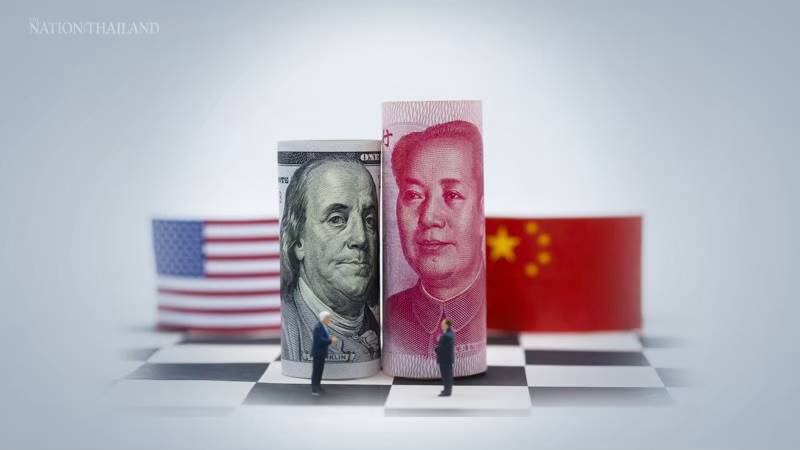
By The Washington Post · David J. Lynch · NATIONAL, BUSINESS, CONGRESS, US-GLOBAL-MARKETS WASHINGTON – U.S. Trade Representative Robert E. Lighthizer said he expects China to fulfill its promise to buy an additional $200 billion in American goods and services over the next two years, despite its slow start to placing new orders amid the coronavirus pandemic.
Lighthizer said Chinese authorities recently bought sizable amounts of U.S. agricultural goods, including $1 billion worth of cotton, and publicly reiterated that they intended to comply with the “phase one” trade deal they had signed with President Donald Trump in January.
“I expect them to live up to the agreement. They have indicated they will,” he said.
Appearing before the House Ways and Means Committee, Lighthizer provided a far more upbeat assessment of the deal than the president has in recent weeks. Trump repeatedly has expressed irritation with China, saying last month he had “lost a little flavor” for the trade deal and threatening to “cut off the whole relationship.” Trump has blamed the Chinese government for not doing more to prevent the spread of the novel coronavirus, a pandemic that has severely damaged the U.S. economy.
But Lighthizer said the Chinese would comply with the deal’s provisions, including the purchase commitments and changes required in their treatment of foreign companies’ technology secrets.
In a day-long appearance before House and Senate panels, Lighthizer defended the president’s use of tariffs to overhaul U.S. trade policy, cast doubt on prospects for quickly reaching agreements with the European Union and the United Kingdom, and pledged to crack down on any violations of a new North American trade deal that takes effect on July 1.
Lighthizer called the U.S.-Mexico-Canada Agreement (USMCA) “the best trade agreement in U.S. history,” but acknowledged that he anticipates issues with its implementation. The pact replaces the 1994 North American Free Trade Agreement (NAFTA), which Trump has blamed for the loss of millions of American factory jobs.
The new deal contains strict labor and environmental standards designed to prevent similar U.S. payroll erosion, which will mark a sharp break with traditional Mexican labor market practices.
“Labor enforcement in Mexico is going to be a problem,” Lighthizer said.
Underscoring Trump’s revolutionary approach to U.S. global ties, Lighthizer also pointedly assailed the World Trade Organization (WTO). Though the body was established in 1995 under Washington’s auspices, the trade chief said it had undermined U.S. interests by failing to police China’s trade behavior.
“I think the WTO is a mess. The WTO has failed America and it’s failed the international trading system,” the trade chief told lawmakers.
Lighthizer has been a longtime critic of the WTO’s system for resolving disputes between members, blocking appointments to the appellate body and leaving it without a quorum. Lighthizer escalated his criticism on Wednesday, saying it did not matter whether the panel ever returned to normal operations.
“I don’t think the appellate body was working well…I don’t feel any compulsion to have it ever come back into effect,” he said. “I’m not a fan of the appellate body.”
As the WTO searches for a replacement for outgoing Director General Roberto Azevedo, Lighthizer said the organization required “fundamental reform” and he vowed to veto any candidate who had “any whiff of anti-Americanism in their past actions.”
He also had harsh words for U.S. trading partners that are eyeing new taxes on American internet companies. After France and other European countries announced plans to tax companies such as Amazon, Facebook and Google, the Trump administration threatened to retaliate with tariffs.
The Organization for Economic Cooperation and Development (OECD) in Paris has been hosting negotiations aimed at brokering a compromise. But Treasury Secretary Steven Mnuchin earlier this month pulled out of the talks, saying they should take a back seat to dealing with economic fallout from the pandemic.
“They all came together and agreed they’d screw America,” he said of the talks.
Lighthizer appeared in person in a House hearing room, while most lawmakers questioned him by video link. He offered a vigorous defense of the president’s repeated use of tariffs to prod U.S. trading partners into changes, saying that any American company forced to pay higher prices for imported raw materials or other inputs should have shifted by now to alternative suppliers.
“If you have a year or two years to make a change, then you should have made a change,” he said. “People have had a substantial period of time to find another source.”
Citing the pandemic, Lighthizer also called for using tariffs to support domestic production of critical medical supplies, clashing with lawmakers who have pushed for cutting import fees on medical products made overseas.
Multinational corporations that “thought they were so clever running these supply chains all over the world rather than making the stuff in the United States now realize they were taking on substantially more risk than they thought they were,” he said.
With little more than five months before election day, Lighthizer said it was unlikely that a trade deal with the UK could be reached before Americans head to the polls, adding that negotiators also had made “very little headway” with the EU in talks aimed at a broad trade pact.
“It’s not looking good in the short run although ultimately we have to get something worked out with Europe,” he said.
Jun 18. 2020File photo of Wall Street sign/ Credit: Syndication Washington Post, Bloomberg
By Syndication Washington Post, Bloomberg · Claire Ballentine, Katherine Greifeld · BUSINESS, US-GLOBAL-MARKETS U.S. stocks fell for the first time in four days as worry about coronavirus cases overtook optimism about stimulus measures. Treasury note yields fell, and the dollar was little changed.
The benchmark S&P 500 index swung between gains and losses for most of Wednesday before turning red late, with the energy, real estate and financial sectors leading the declines. Apple and Microsoft helped the Nasdaq composite close positive. The number of infections increased from China to Brazil, and Iran warned that it may need a new lockdown. Texas reported a surge in hospitalizations.
“The market is searching for a new catalyst,” said Sameer Samana, senior global market strategist at Wells Fargo Investment Institute. “The narrative around policy stimulus and better economic data seems to be losing its sway.”
While volume was 20% below the 30-day average Wednesday, trading has been volatile for the past two weeks. After rising to a 12-week high on June 8, the S&P 500 tumbled 7% over three days before staging a 4% rebound in the next three sessions.
“Volatility is for sure here to stay and probably through the end of the year,” said Michael Reynolds, investment strategy officer at Glenmede Trust. “We’re dealing with something that is not economic in nature, anyone who thinks they can predict the path of this virus is surely kidding themselves.”
The thin volume exacerbated swings, including a drop that began around the time newspapers covered portions of John Bolton’s critical book about President Donald Trump.
Investor optimism toward risk assets had been reflected in bets that new virus outbreaks won’t lead governments to pull back from gradually reopening businesses. Federal Reserve Chairman Jerome Powell urged Congress not to pull back too quickly on federal relief to households and small businesses put in place because of the pandemic.
“Global markets could remain stretched between a health situation likely to remain a threat in several regions for some time on the one hand, and a stream of positive macro figures confirming that we have passed the low point on the other,” said Xavier Chapard, a global macro strategist at Credit Agricole.
Texas reported an 11% surge in virus hospitalizations, the biggest 24-hour increase since June 4. Brazil registered a record 34,918 new infections, while China is escalating containment measures in Beijing including canceling flights.
The Cabinet has endorsed the draft of an emergency decree allowing 100 per cent foreign-owned entities to be granted licences to run three aviation-related businesses.
The businesses are Type 1 aviation maintenance facilities, aircraft manufacturing, and manufacturing of key aircraft components.
Chula Sukmanop, director-general of the Civil Aviation Authority of Thailand, said that the draft will amend existing legislation by raising the limit on foreign ownership in these segments from 49 per cent to 100 per cent.
It will also oblige applicants to transfer technology to Thai staff and employ Thai workforces.
The council of state is expected to spend three months examining the draft, said Chula.
According to the draft, applicants for the licence must be receiving tax-privilege support under the law on investment promotion or related law. They must also submit their technology transfer plan.
Meanwhile at least 80 per cent of their employees must be Thai for the five-year period after they receive the licence.
The Stock Exchange of Thailand (SET) Index is suffering volatility after foreign investors began taking profit and reducing capital flows into the country.
Over the past two weeks, the index has risen as high as 1,454 points before falling to 1,342 in recent days as foreign and institutional investors bought and then sold stocks in quick succession.
Nuttachart Mekmasin, a research analyst at Trinity Securities, said that foreign investors had bought Thai stocks to take profit in the short term as governments worldwide injected money to relieve the economic impacts of Covid-19.
“Foreign investors started taking profit and reducing capital flows into Thailand and other countries in Asia after the US economy began to improve,” he said.
“Several large investment funds are viewing the Thai stock market in a more negative light than other regional markets because the SET’s valuation is the highest among Asian countries.”
In contrast, the Thai bond market continues to attract foreign investors because it offers high returns, he added.
“The Thai bond yield is high due to the low inflation rate,” he said. “In recent weeks, foreign investors have bought up Bt8 billion in Thai bonds.”
Nuttachart predicts the SET will not dip below 1,300, since it has extended its uptick rule on short-selling for another three months.
“However, we have to monitor statements from the US Federal Reserve for signs of a liquidity shortage,” he added.
Meanwhile, Sunthorn Thongthip, a senior director at Kasikorn Securities, said this was an opportune time to buy stocks, adding that emerging-market assets may be more interesting than assets in the US market because of the weakening dollar.
“Currently, the SET valuation is high, while growth is lower than other countries,” he said. “Capital flows will return to Thailand if the index falls below 1,300 because returns after the index rebounds to 1,440 are expected to be at 13 per cent.”
He advised investors to buy stocks whose performance will strengthen in the second half of 2020 if Covid-19 vaccine research progresses well, such as tourism, commodities, property, and commercial bank stocks.
“We expect the Covid-19 vaccine test result on 300 humans to come out by July this year,” he added. “If the test result is successful, the index may rise again.”


 A box of Pinnacle Foods Inc. Aunt Jemima Frozen Breakfast brand breakfast in an arranged on June 27, 2018. MUST CREDIT: Bloomberg photo by Daniel Acker.
 A flag bearing the Saudi Aramco oil company logo flies at the company’s compound in Dhahran, Saudi Arabia, on Oct. 3, 2018. MUST CREDIT: Bloomberg photo by Simon Dawson.

 File photo of Wall Street sign/ Credit: Syndication Washington Post, Bloomberg