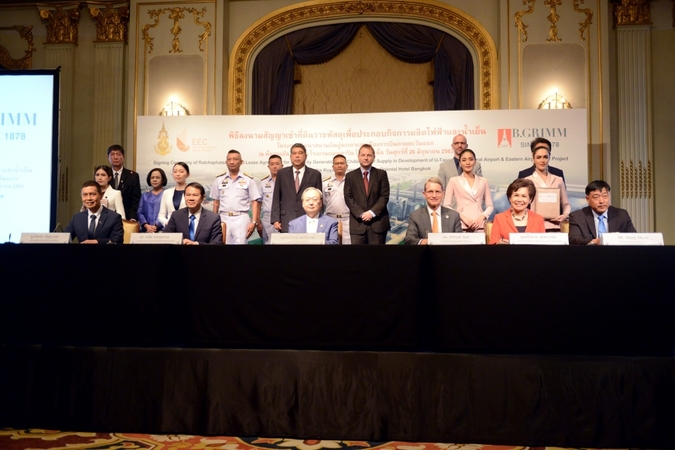
The Eastern Economic Corridor Office (EECO) and BGrimm Power Public Co Ltd signed a lease for 100 rai of state land on Friday (June 26) for the production of electricity and chilled water for U-Tapao Airport and the Eastern Airport City’s cooling system.
The development of the utilities system will prepare the area for expansion in passenger, logistics and aviation businesses, in line with the vision of EEC becoming a centre for e-commerce and technological hub for aviation.
The electricity will be produced using a hybrid system from a co-generation power plant using natural gas and solar farm in line with EEC’s key guiding concept of clean energy sources.
The system’s capacity will be 95 megawatts with a smart energy storage system of 50MW, and an option for expansion if the airport needs more electricity.
Meanwhile, heat resulting from the generation of electricity will be used to produce chilled water, which will be used to cool the airport.
Harald Link, chairman of BGrimm, said the company was delighted to sign the lease to carry out the electricity and chilled water production projects for the airport and the airport city, both of which are immensely important for the development of the EEC.
U-Tapao is set to become Thailand’s new commercial international airport, contributing significantly to the country’s economic growth.
Preeyanart Soontornwata, president of BGRIM, said the company was more than ready to start work on the projects immediately, adding that the hybrid electricity generation system should be ready for operation in 2024. This will be one of the largest hybrid power plants in the world that efficiently uses three systems to generate power, she added.
Satellite operator Thaicom Plc and state telecom agency CAT Telecom Plc on Friday (June 26) announced they have gone into a joint venture to help strengthen the country’s telecommunications infrastructure as well as boost the growth of the digital economy and satellite industries.
The new partnership has resulted in a joint venture firm called “Nation Space and Technology Co Ltd”, with a registered capital of Bt10 million. Thaicom will hold a 75 per cent stake, and CAT the rest.
Thaicom’s chief executive officer Anant Kaewruamvongs said the joint venture will enhance a strategic partnership between the two companies. Thaicom’s long experience and expertise in the satellite industry, with CAT’s extensive know-how in providing digital solutions will help them leverage advanced solutions and services for various applications and industries.
“We believe this strategic alliance between Thaicom and CAT will lay the foundation for a long-term partnership and sustainable growth of the country’s telecommunication services,” he added.
CAT president Colonel Sanpachai Huvanandana said the new company will help boost the opportunity to develop telecom services via low-Earth orbit systems in order to meet Thailand’s communication needs in the future.
Also, with the new normal brought on by the Covid-19 pandemic, the development of technological services via low-Earth orbit satellites will benefit everyone by giving them high-speed 5G internet services, IoT (internet of things), M2M (machine to machine) technology as well as drone technology as well as applications in areas that need high levels of accuracy such as remote surgery.
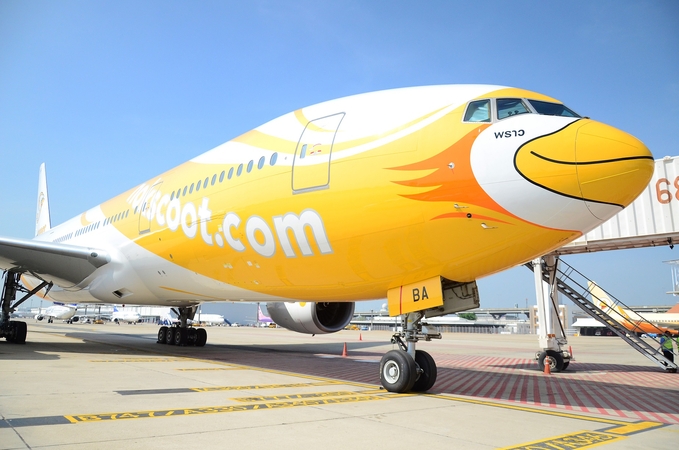
NokScoot Airlines’ board of directors decided to liquidate the low-cost airline, a statement from the airline said.
NokScoot’s shareholders will deliberate on the resolution and decide on the liquidator during an annual general meeting on July 14.
NokScoot, a joint venture between Singapore Airline’s low-cost arm Scoot and Thailand-based airline Nok Air, has been unable to record a full-year’s profit since its inception in 2014. Much of this was contributed to the difficult in expanding its network in an intensely competitive environment, and unprecedented challenges arising from the Covid-19 pandemic have further exacerbated the situation.
Scoot, meanwhile, offered to sell its 49 per cent stake in NokScoot to Nok Air for a nominal sum of Bt1, but the offer was not accepted.
Nok Airlines Plc on Friday also informed the Stock Exchange of Thailand the board’s resolution to terminate NokScoot Airlines.
According to the SET filing, NokScoot Airlines has been suffering continuous losses, which was worsened by the Covid-19 pandemic. The airline’s equity has been negative since 2019.
NokAir, meanwhile, said that the liquidation of NokScoot poses no direct or indirect impact to the company’s normal operations.
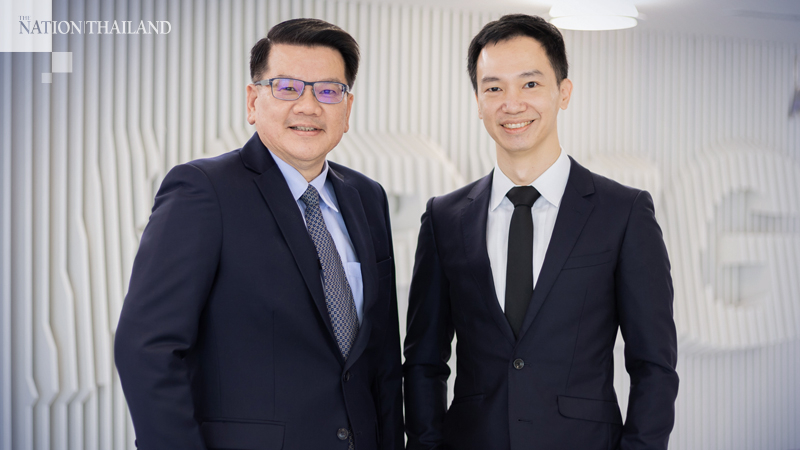
KPMG in Thailand, a leading provider of audit, tax, legal and advisory services, has appointed Abhisit Pinmaneekul as the head of tax, effective from July 1.
Abhisit will be taking on the tax leadership role from Benjamas Kullakattimas, who will now focus on leading the firm’s growing legal arm, as head of KPMG Legal, the company said.
Abhisit is a seasoned consultant with over 17 years of experience in Thailand and Singapore where he has provided local and multi-country tax and business advice. Abhisit’s areas of expertise cover tax advisory, transfer pricing, cost structuring and cost allocation arrangements, as well as restructuring global business models and supply chains, the company said.
Abhisit has held several senior roles at KPMG in Thailand and made significant contributions to the firm, as chief people officer, chief operating officer of tax and Legal, and head of transfer pricing services, the company said.
Commenting on the appointment, Charoen Phosamritlert, Chief Executive Officer, KPMG in Thailand, Myanmar and Laos said: “Abhisit is a strong, people centric and purpose-driven leader who is known for motivating and guiding people to perform at their best. He has extensive practical experience working with local and multi-national corporations to enable them to achieve their business objectives. I am confident that the Tax professionals at KPMG will help our clients navigate through the current crisis and emerge more resilient in the marketplace of the future.”
Speaking on his new role, Abhisit , head of tax, KPMG in Thailand, said: “KPMG in Thailand’s Tax team will work shoulder to shoulder with clients and help them to overcome challenges, comply with regulations and capitalize on opportunities. We will continue to focus on the issues that truly matter to our clients, deliver quality and timely advice, build trust and further strengthen our brand as a trusted service provider.”
By Syndication Washington Post, Bloomberg · Sarah Syed, Jenny Surane, Steven Arons · BUSINESS
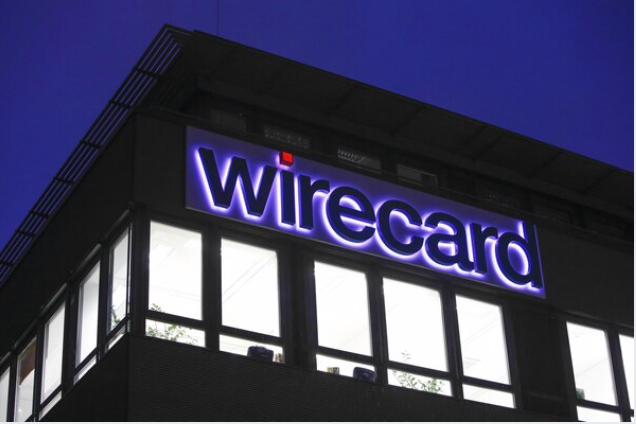
Visa Inc. and Mastercard Inc. are considering revoking Wirecard AG’s ability to process payments on their networks, moves that could cause further pain for the fintech firm that’s been battered by an accounting scandal.
The world’s largest payment networks have begun reaching out to some Wirecard clients to prepare them for the possibility, according to people familiar with the matter, who asked not to be named because the information isn’t public.
“We continue to closely monitor developments and assess new information as it becomes available,” Visa said in a statement. “Our priority is, and will always be, maintaining the integrity of the Visa payments system and protecting the interests of consumers, merchants and our clients.”
Wirecard helps businesses around the world accept electronic payments from customers, so its relationships with Visa and Mastercard and being able to process payments with the companies are critical to its business.
“Mastercard is aware of the news regarding Wirecard AG and is monitoring the situation closely,” Mastercard said in a statement. “Our priority is ensuring people are able to continue to use their cards. We will continue to work with all parties and stand ready to take any necessary action.”
Wirecard filed for insolvency Thursday, citing over-indebtedness and inability to assure it can continue as a going concern. The announcement was the culmination of a stunning accounting scandal that led to the arrest of its chief executive officer and left the German payment-processing firm unable to find more than $2 billion missing from its balance sheet.
Wirecard Bank, where the Visa and Mastercard licenses are held, isn’t part of the insolvency proceedings, the company said. German financial regulator BaFin has appointed a representative for the lender.
“In future, the release processes for all payments of the bank will be located exclusively within the bank and no longer at group level,” Wirecard said in a statement Thursday.
A representative for Wirecard said it’s currently not making any additional statements.
Jun 26. 2020Shoppers wait outside the Macy’s flagship store in New York on Nov. 28, 2019. MUST CREDIT: Bloomberg photo by Jeenah Moon.
By Syndication Washington Post, Bloomberg · Anne Riley Moffat, Jordyn Holman · BUSINESS, RETAIL
Macy’s Inc. announced plans to slash thousands of back-office jobs in a striking admission that the reeling retail sector won’t be returning to the good old days anytime soon.
The restructuring, including the elimination of about 3,900 corporate and management jobs, is expected to save the company $365 million this fiscal year, then about $630 million a year going forward, it said in a statement.
“We know that we will be a smaller company for the foreseeable future, and our cost base will continue to reflect that moving forward,” Chief Executive Officer Jeff Gennette said.
Shares fell as much as 4.2% in New York. The stock was already down 60% this year, compared with a 5.6% decline in the S&P 500 Index.
The job cuts are in addition to the staff reductions taking place inside stores, along the Macy’s supply chain and in customer support roles. The new round of corporate layoffs adds to fears that many of the measures taken to temporarily furlough employees in the early stages of the pandemic are becoming permanent.
In the wider retail sector, the vast majority of layoffs and furloughs have been at the store level as physical locations remained closed for weeks or months at the onset of the pandemic. But those job cuts have started to trickle up to companies’ headquarters and corporate outposts as well. Gap Inc. laid off at least 10% of its corporate employees, according to Business of Fashion, while Dow Jones reported this week a culling at Barnes & Noble Inc.’s New York head office.
“The reality is that everything is changing, everything is evolving and figuring out how to adapt, how to operate on a smaller base means figuring out how to operate more efficiently at the top,” said Simeon Siegel, retail analyst at BMO Capital Markets. “If a business expects to shrink, it needs to address its corporate makeup as well.”
Even before the pandemic took off in the U.S., Macy’s had taken steps to slim down. The chain in February as part of its turnaround Polaris strategy said it was cutting about 9% of its workforce, or 2,000 jobs.
“Earlier in the year, we announced our Polaris strategy which included major structural changes across the organization. At the time, I was confident that these changes positioned our business for success. Then, a month later, the Covid-19 pandemic hit,” Gennette wrote in an email to staff, obtained by Bloomberg News. “And with that, everything changed.”
The fresh layoff news comes just two weeks after the department-store chain heartened investors by announcing it had reopened 450 stores in some capacity and expected to exit the second quarter with a “clean inventory position.” Gennette said at the time reopened stores are performing better than anticipated, initially sending shares soaring.
But share prices have sunk since then, as customers in some markets continue to avoid large indoor retail spaces in favor of online ordering, local businesses or — to the fear of many retailers — not spending money on non-essentials at all. The U.S. savings rate hit an all-time high of 33% in April thanks mostly to Covid-19-induced business closures, and some of that frugality seems to be persisting.
“Macy’s has done corporate restructuring in the past and having sales essentially decimated from the pandemic may have forced them to look closer at their cost structure, removing excess costs,” said Poonam Goyal, retail analyst at Bloomberg Intelligence. “Even though stores are reopening, sales aren’t where they used to be. They have to find ways to reduce costs because that’s the one thing that they can control.”
“We do expect other companies to look at their cost structure more closely during the pandemic,” she added.
Macy’s had already been taking steps to shore up access to capital, including leveraging up on new debt. Earlier this month, the company announced a credit line of $3.15 billion backed by its inventories. Including an earlier bond sale, the department-store operator said it had secured $4.5 billion of total new financing.
The company will take a pre-tax cash charge of about $180 million related to the restructuring, mostly in the second quarter. Macy’s also said those workers coming back from furlough will begin to return starting the week of July 5. The company had 123,000 workers at the end of last year, according to a filing.
Jun 25. 2020The Lufthansa logo appears on a screen in the airline’s empty baggage drop hall at Frankfurt Airport in Germany, on June 24, 2020. MUST CREDIT: Bloomberg photo by Alex Kraus.
By Syndication Washington Post, Bloomberg · Aoife White · BUSINESS, WORLD, US-GLOBAL-MARKETS, EUROPE
Deutsche Lufthansa won European Union approval for Germany’s 6 billion-euro ($6.7 billion) recapitalization that Irish rival Ryanair Holdings says it will sue to overturn.
The European Commission said in a statement on Thursday that Germany’s plan to take a 20% stake in Europe’s largest airline is in line with state-aid rules and would prevent the carrier’s collapse.
The EU approval covers the German government’s plan to pay 300 million euros for a 20% stake and make two so-called silent participations of 4.7 billion euros and 1 billion euros in the company’s capital.
The decision “comes with strings attached, including to ensure the state is sufficiently remunerated,” EU Competition Commissioner Margrethe Vestager said in an emailed statement. “Lufthansa has committed to make available slots and additional assets at its Frankfurt and Munich hub airports, where Lufthansa has significant market power. This gives competing carriers the chance to enter those markets.”
Germany’s bailout for Lufthansa has already faced resistance from the airline’s supervisory board, which complained about the EU’s demand for it to yield 24 slots a day at Frankfurt and Munich airports once air traffic demand returns. The EU sought the cutbacks to compensate for the massive advantage the state subsidy will give Lufthansa over rivals. Handing over slots should stoke more competition.
Those measures don’t go far enough for Ryanair, which will sue to overturn the EU approval, Chief Legal Officer Juliusz Komorek said. The legal fight adds to several other Ryanair legal challenges to state aid for airlines.
Ryanair is separately seeking an EU cartel probe into alleged discussions between Lufthansa and other airlines to avoid a price war in Italy.
“There is absolutely no reason why Lufthansa, which benefits from the German payroll support system scheme, might on top of this require 9 billion euros,” he told reporters on a video call. “It doesn’t. It needs it as a war chest.”
The German bailout plan overcame a major roadblock when the airline’s biggest investor said he’d vote in favor of the rescue package at a special shareholder meeting later Thursday. He had earlier criticized a steep discount being granted to the German government for the stake, and held the votes to single-handedly stop the share sale.
The EU approval comes with tight conditions to ensure the aid is repaid swiftly and Lufthansa doesn’t use taxpayer funding to expand its business.
Lufthansa will be banned from dividends and share buybacks until the aid is repaid. Managers can’t get bonus payments nor can the company buy more than 10% of rivals until at least 75% of the recapitalization is redeemed. The measures aim to give Lufthansa an incentive to buy back the state stake and silent participations.
The EU’s decision doesn’t cover a 3 billion-euro state loan guarantee that the EU says it will handle separately.
Regulators said the aid “does not exceed the minimum needed to ensure the viability of the airline.” Vestager said last week her officials had quizzed Germany over comments by Lufthansa’s chief executive officer that the aid was more than needed. The EU can’t allow governments to give companies more financial help than they require.
Lufthansa aims to redeem the loan and the recapitalization by 2026, the EU said.
Jun 25. 2020Masayoshi Son, chairman and chief executive officer of SoftBank Group Corp. (left) and Jack Ma, former chairman of Alibaba Group Holding Ltd., shake hands at Tokyo Forum 2019 in Tokyo on Dec. 6, 2019. MUST CREDIT: Bloomberg photo by Kiyoshi Ota.
By Syndication Washington Post, Bloomberg · Pavel Alpeyev · BUSINESS, WORLD, US-GLOBAL-MARKETS, ASIA-PACIFIC
SoftBank Group Corp. founder Masayoshi Son ended his company’s annual shareholder meeting with a surprise Thursday by announcing he’s stepping down from the board of Chinese e-commerce titan Alibaba Group Holding Ltd.
The billionaire said his departure shouldn’t be interpreted as signifying any disagreements, even though Alibaba co-founder Jack Ma is quitting SoftBank’s board at the same time. Ma and Son have maintained a close friendship since the Japanese entrepreneur was an early investor in Alibaba and helped it along to its current value of roughly $600 billion, calling it the crown jewel of SoftBank’s portfolio.
“It’s not like we had a fight,” Son said during the virtual shareholder meeting. “This was perfectly amicable.”
While the mutual departures are unlikely to have an immediate impact on either company, they mark the end of an era. The two men are among the most successful entrepreneurs of their generation and have been able to rely on each other’s advice for decades. Son was on Alibaba’s board as it went public in 2014 in the largest initial public offering in history. When SoftBank ran into trouble with investment losses this year, Son was able to use his Alibaba stake to raise much-needed capital.
“The joint board membership was a big positive for both companies because it gave them a way to benchmark their respective business models,” said Michiaki Tanaka, a business school professor at Rikkyo University in Tokyo. “Not having that board-level contact is a big loss.”
Alibaba remains Son’s most successful investment by far and SoftBank’s most valuable asset. In early 2000, Son invested $20 million into the then-unknown web portal connecting Chinese manufacturers with overseas buyers, a stake that is now worth more than $150 billion. That spectacular return cemented his reputation as an investor and later helped him raise the $100 billion Vision Fund. Son has previously spoken highly of Ma.
“He had no business plan, zero revenue,” Son said about Ma on The David Rubenstein Show. “But his eyes were very strong. I could tell from the way he talked, he has charisma, he has leadership.”
Son is known for anointing the entrepreneurs he finds particularly promising as “the next Jack Ma,” and Alibaba has long served as the standard against which he has judged SoftBank’s other startup investments. But that’s also made Son vulnerable to charismatic founders like WeWork’s Adam Neumann, whose many governance transgressions led to the office-sharing firm canceling its initial public offering last year. WeWork, once thought to be worth $47 billion, has lost more than 90% of its value.
Son’s recent track record has been spotty. Starting with the WeWork fiasco, he has suffered a string of setbacks at portfolio companies including Wag Labs, Zume Pizza and Brandless Inc. SoftBank lost almost $18 billion writing down the value of its startup companies in the last fiscal year.
Still, Son struck an optimistic note at the shareholder meeting Thursday. He began the presentation to investors in typical fashion, reaffirming his conviction that a global digital transformation and the advent of artificial intelligence — both accelerated during the pandemic — will help his investments in the likes of TikTok-owner ByteDance Ltd. and British chip designer Arm Ltd.
SoftBank is in the process of offloading 4.5 trillion yen (about $42 billion) of assets to bankroll stock buybacks and slash debt to reassure investors. On Thursday, the company announced a third 500-billion-yen buyback, having completed an earlier one this month.
The company this week agreed to sell a stake in T-Mobile US for as much as $20 billion. Together with the $11.5 billion from issuing contracts to sell Alibaba stock and a sale of stock in its domestic telecom unit, Son’s company has now completed 80% of its envisioned asset unwinding, he said.
Son said he was “graduating” from Alibaba’s board. But the two-decade-long relationship produced few cooperative venture of note, even while the two companies were constructing e-commerce empires in their respective markets. In 2010, the two agreed to link their online platforms to allow users of SoftBank’s Yahoo Japan to buy products on Alibaba’s Taobao site, but the project failed to gain momentum. In 2015, Alibaba backed SoftBank’s failed bipedal robotics business.
“Following Jack Ma leaving the SoftBank board, Son stepping down from Alibaba is merely a symbolic end of an era,” said Justin Tang, head of Asian research at United First Partners in Singapore. “It will be business as usual for both companies.”
A shareholder asked at the Thursday meeting how many of the 88 companies SoftBank’s Vision Fund currently has on its books will be the next Alibaba. Son’s answer was that there are one or two “mini-Alibabas.”
WHA Corporation, a logistics and industrial facilities provider, is confident of 15 per cent growth in logistics, public utility and digital platforms.
The company expects the industrial estate business to recover in the second half of the year to reach its target of 1,400 rai.
WHA Group chairman and group chief executive Jareeporn Jarukornsakul said that before Covid-19, the company had estimated that 2020 would be its best year yet with more than 20 per cent expansion in overall businesses.
“After the outbreak crisis hit, we reduced our target to 15 per cent on average across four main businesses of the group, namely logistics, industrial estate, public utility and digital platform,” she said.
Jureeporn
“The outbreak has helped boost the company’s logistics business significantly as can be seen by up to 400 per cent growth in the number of customers who rented our warehouses in the first half of the year.”
Jareeporn added that currently WHA has 2.5 million square metres of warehouse space and is planning to expand to 2.56 million within the end of 2020.
“So far this year we have rented out an additional 30,000sqm of warehouse space to customers and expect that until the year-end there will be more customers who need storage space, especially those from China,” she added.
As for the industrial estate business, the group estimated that the outbreak should have only short-term impact as many foreign customers are still planning to move from China to Thailand to avoid the impact of US-China trade war.
“Their plan was put on hold temporarily due to the outbreak, but we believe that in the second half of 2020 they will start migrating as planned,” added Jareeporn. “Furthermore, we have been contacted by several companies in Hong Kong and Taiwan who are interested in moving to Thailand, especially those in electronic industries.”
“WHA set the target of industrial estate areas sold or rented to customers within 2020 at 1,400 rai, 1,200 of which are in Thailand and 200 of which in Vietnam,” she added.
“Thailand has the advantage of superior infrastructure and support for 5G technology, making it suitable for high-technology, modern automotive and electronic industries, while our industrial estates in Vietnam will focus largely on labour-intensive industry.”
Jareeporn added that the company’s public utility and digital platform businesses both have suffered minor impacts from Covid-19 and should be able to reach the expansion target by the year-end.
“Only the industrial estate business, which is accountable for 20 per cent of the company’s revenue, saw significant impact in the first half of the year and we are positive that the market will improve in the second half when foreign investors are allowed in the country,” she said.
“As for this year’s investment budget, we had previously allocated Bt9 billion and will maintain this target until the year-end, while next year’s budget has been set at Bt10 billion to expand the four business groups with investment in 5G infrastructure and robotics technology for industrial factories,” added Jureeporn.
Jun 25. 2020Billionaire Heinz Hermann Thiele, during a television interview at the Frankfurt Stock Exchange in Frankfurt, Germany, on Oct. 12, 2018. MUST CREDIT: Bloomberg photo by Alex Kraus.
By Syndication Washington Post, Bloomberg · William Wilkes · BUSINESS, WORLD, US-GLOBAL-MARKETS, EUROPE Billionaire Heinz Hermann Thiele told Frankfurter Allgemeine Zeitung that he’d support the package at Thursday’s special shareholder meeting. He had earlier criticized a steep discount being granted to the German government on a 20% stake, and he had the votes to stop it single-handedly.
“I will vote in favor of the proposed resolution,” Thiele told the newspaper in an interview published on its website Wednesday.
With Thiele’s support, the measure appears likely to surpass the two-thirds backing required for its approval. Because only 38% of Lufthansa shareholders registered for the special meeting, Thiele’s 15.5% stake in the company translates into about 41% of the votes. Lufthansa needs to secure about half the remaining votes registered for the share sale to pass.
Analysts at Societe Generale and Berenberg both said they’d expect the measure to prevail with the support of the 79-year-old Thiele. Mark Manduca, an analyst with Citibank, projects the stock to jump as much as 10% if the deal goes through.
Securing a state holding would be a victory for Finance Minister Olaf Scholz, pleasing his Social Democratic allies and bolstering his ambitions to run for chancellor next year. Economy Minister Peter Altmaier would secure a landmark deal that’s meant to serve as a model for the government’s plan to take a more activist approach to managing Germany’s economy.
Unions, many investors and proxy advisory firms recommend shareholders back the deal. It’s not clear what the rationale for blocking the package would be without a major investor proposing an alternative.
“A government-orchestrated bailout is better than insolvency,” said Patrick Schuchter of Union Investment, holder of a 0.12% stake. He plans to vote for the rescue, despite the drawbacks for shareholders. “Investors need to choose the lesser evil or sell their shares.”
Lufthansa shares have fallen about 45% this year after the coronavirus forced airlines across the globe to ground fleets. The biggest carreir in Europe now has a market cap of about $4.8 billion — less than one-third of Thiele’s fortune. It had warned previously that it was facing a cash crunch and would have trouble paying wages in July.
Labor too has gotten behind the package, despite Chief Executive Officer Carsten Spohr’s plan to reduce staffing by more than 20,000 positions. A potential insolvency filing, which the airline warned was possible in the event the bailout was shot down, could cause job losses on an even larger scale.
“We extraordinarily welcome the decision to support the state aid package for Lufthansa at tomorrow’s annual general meeting,” Christine Behle, a supervisory board member and deputy chairman of labor union Ver.di, said in an emailed statement. “With this the survival of the company would be secured and an insolvency avoided.”
The meeting starts at 12 p.m. in Frankfurt. Spohr will address shareholders before opening the floor to questions. The process could take several hours before the vote proceeds and the results are released later in the afternoon.


 Shoppers wait outside the Macy’s flagship store in New York on Nov. 28, 2019. MUST CREDIT: Bloomberg photo by Jeenah Moon.
 The Lufthansa logo appears on a screen in the airline’s empty baggage drop hall at Frankfurt Airport in Germany, on June 24, 2020. MUST CREDIT: Bloomberg photo by Alex Kraus.
 Masayoshi Son, chairman and chief executive officer of SoftBank Group Corp. (left) and Jack Ma, former chairman of Alibaba Group Holding Ltd., shake hands at Tokyo Forum 2019 in Tokyo on Dec. 6, 2019. MUST CREDIT: Bloomberg photo by Kiyoshi Ota.

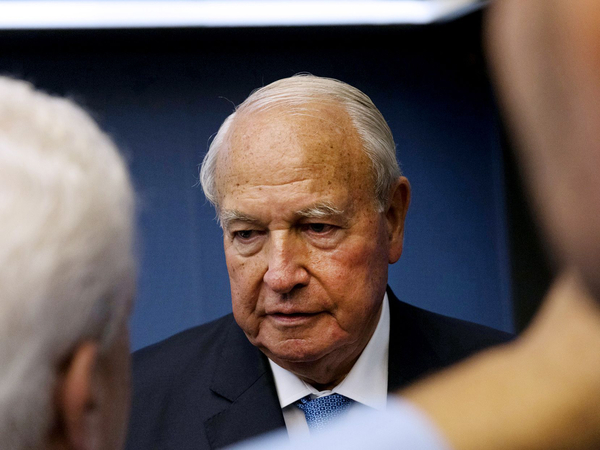 Billionaire Heinz Hermann Thiele, during a television interview at the Frankfurt Stock Exchange in Frankfurt, Germany, on Oct. 12, 2018. MUST CREDIT: Bloomberg photo by Alex Kraus.
