By Syndication Washington Post, Bloomberg · Claire Ballentine · BUSINESS, US-GLOBAL-MARKETS
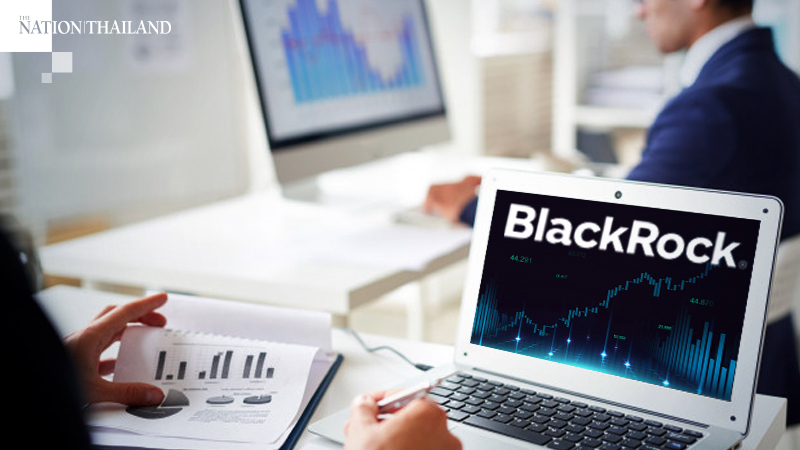
BlackRock is moving forward in fulfilling Larry Fink’s commitment to tackling the climate crisis with a slate of exchange-traded funds.
Four ETFs that track companies using environmental, social and governance criteria started trading Thursday. Among the changes BlackRock’s chief outlined in his January letter was making sustainability integral to portfolio construction and risk management.
Fink pledged to double sustainable ETF offerings, push index providers to expand their environmental, social and governance benchmarks and drop thermal coal producers from BlackRock’s approximately $1.8 trillion in active strategies. Investor interest in value-based and sustainable strategies has surged amid protests against racism and a deadly outbreak that has infected more than 8.3 million people around the world.
“One thing that has emerged as a result of the virus and the lockdown is a renewed appreciation for the environment broadly speaking,” said Emily Roland, co-chief investment strategist at John Hancock Investment Management.
The new suite of BlackRock funds includes: the iShares ESG Aware Conservative Allocation ETF (EAOK); the iShares ESG Aware Moderate Allocation ETF (EAOM); the iShares ESG Aware Growth Allocation ETF (EAOR); and the iShares ESG Aware Aggressive Allocation ETF (EAOA). Each has a 0.18% expense ratio.
BlackRock is also planning to launch four ESG funds that provide exposure to companies with higher scores in that category while also screening for controversial activities such as fossil fuels, palm oil, for-profit prisons and weapons.
“This strong demand across our global wealth and institutional clients is driving more innovation in index and product development and portfolio solutions,” the firm said in a statement.
After taking in a record $4 billion in April, ETFs focused on ESG have seen $52 million in outflows so far this month, according to data compiled by Bloomberg. Three BlackRock products — ESGU, ESGE, ESGD — have lured $8.5 billion out of the total $13.1 billion inflows for the category this year.
Jun 18. 2020A box of Pinnacle Foods Inc. Aunt Jemima Frozen Breakfast brand breakfast in an arranged on June 27, 2018. MUST CREDIT: Bloomberg photo by Daniel Acker.
By Bloomberg · Richard Clough · BUSINESS, RACE, RETAIL
The Aunt Jemima brand will be phased out – and Uncle Ben’s and Mrs. Butterworth’s could follow suit – as nationwide protests prompt a sudden corporate reckoning on institutionalized racism.
PepsiCo Inc. plans to change the name of its Aunt Jemima pancake mix and syrup, acknowledging that the 131-year-old brand is rooted in racially problematic tropes. The company’s Quaker Oats unit will also remove the image of a Black woman from its packaging and marketing beginning in the fourth quarter, according to a statement.
“We recognize Aunt Jemima’s origins are based on a racial stereotype,” Kristin Kroepfl, chief marketing officer of Quaker Foods North America, said in the statement. “While work has been done over the years to update the brand in a manner intended to be appropriate and respectful, we realize those changes are not enough.”
Some of America’s oldest and best-known consumer brands are under scrutiny as the country reflects on the systemic racism in the business world and broader society. Many companies have donated money, pledged to boost hiring of Black workers and taken other steps to support the Black community following protests sparked by the police killing of George Floyd in Minneapolis last month.
Mars Inc., which owns the Uncle Ben’s rice brand, said it’s “evaluating all possibilities” regarding changes to its product line, which features an image of a smiling Black man.
“We recognize that now is the right time to evolve the Uncle Ben’s brand, including its visual brand identity, which we will do,” it said in a statement.
Conagra Brands Inc., similarly, announced a “complete brand and packaging review” for its Mrs. Butterworth’s syrup, which comes in a bottle shaped like a woman. The original design was based on the Black actress who portrayed “Prissy,” a maid in Gone With the Wind. That film was temporarily removed from HBO Max’s lineup recently due to its racist themes.
“We stand in solidarity with our Black and Brown communities and we can see that our packaging may be interpreted in a way that is wholly inconsistent with our values,” Conagra said in a statement.
– – –
The Aunt Jemima change “is not only welcome in the world of retail brands, but long overdue,” James O’Rourke, a management professor with the University of Notre Dame’s business school, said via email. The brand’s reputation “was built on a racial and cultural stereotype that is widely regarded as offensive.”
Other brands associated with nonwhite characters could face a similar backlash, said O’Rourke. B&G Foods Inc., maker of Cream of Wheat, did not respond to a request for comment on its brand imagery including a Black man.
This year butter maker Land O’Lakes decided to remove the image of a Native American woman from its products.
The Aunt Jemima name dates back to 1889 and was inspired by a song and character from a minstrel show, which featured White performers in blackface. The Aunt Jemima character’s appearance changed over the years, removing a headscarf and adding pearl earrings. In 1994 Gladys Knight appeared in a commercial for the syrup.
The changing traits suggest brand managers recognized the character could be offensive, O’Rourke said. “But the effect, because of the name, is the same.”
– – –
The brand had faced growing criticism recently, with Reddit co-founder Alexis Ohanian tweeting “how is Aunt Jemima not canceled?” and linking to a video critical of the character. The viral clip by the singer Kirby, titled “How To Make A Non Racist Breakfast,” has millions of views online.
PepsiCo also said Tuesday that it would donate $400 million over five years measures to promote racial equality. The Aunt Jemima brand specifically will donate $5 million over that span.
“As we work to make progress toward racial equality through several initiatives, we also must take a hard look at our portfolio of brands and ensure they reflect our values and meet our consumers’ expectations,” Kroepfl said. PepsiCo has owned Aunt Jemima since it bought Quaker Oats in 2001.
The name change will be announced at a later date, the company said.
The Covid-19 pandemic has resulted in opportunities of merger and acquisition for PTT Exploration and Production (PTTEP), its president Phongsthorn Thavisin said.
He said the pandemic has put some petroleum companies in financial difficulties that they are considering selling their businesses.
Meanwhile, he added that PTTEP aims to boost its production ratio of natural gas to 80 per cent from the current 70 per cent and that of oil down to 20 per cent from 30 per cent. This is in line with the global trend of rising demands for natural gas.
By The Washington Post · Reed Albergotti, Tony Romm · BUSINESS, WORLD, TECHNOLOGY, US-GLOBAL-MARKETS Apple faced harsh criticism on Tuesday from regulators and the companies behind some of the most popular apps in its App Store, including Tinder and Fortnite, a sign of the growing discontent with Apple’s grip on the mobile economy.
The companies – Tinder parent Match Group and Fortnite owner Epic Games – each faulted Apple for its long-standing policy of collecting a portion of subscriptions and other purchases made through its App Store, a move the companies say has cut their profits and left consumers paying higher prices.
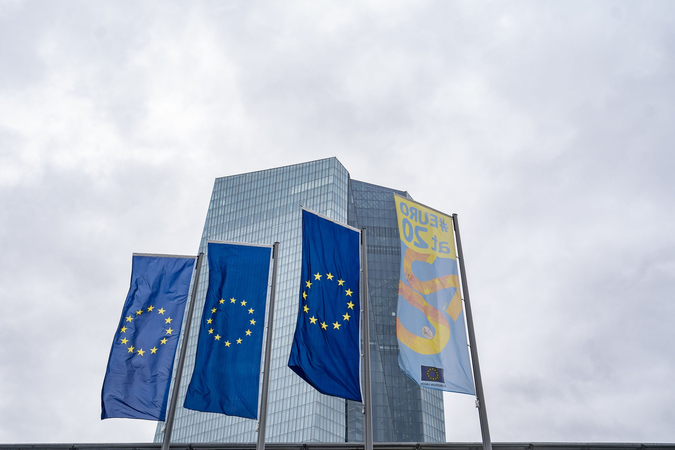
Earlier in the day, the European Commission announced two investigations into how the iPhone maker treats competitors on its App Store and in its mobile payment system.The probe into the App Store was brought on by Spotify, the music-streaming service that has complained loudly about alleged mistreatment by Apple, and by an unnamed distributor of e-books and audiobooks.
“We need to ensure that Apple’s rules do not distort competition in markets where Apple is competing with other app developers, for example with its music streaming service Apple Music or with Apple Books,” Margrethe Vestager, the commission’s executive vice president for competition, said in a written statement.
Every time an iPhone user subscribes to a service such as Spotify through Apple’s App Store, a portion of that fee, usually between 15 and 30 percent, goes to Apple. That fee has irked companies including Match, Fortnite and Spotify, which has said it hurt its business and resulted in higher prices for its customers. Spotify has tried to encourage its customers to subscribe directly, so as to circumvent Apple’s fees. But Apple has tried to block Spotify from doing so. That behavior is at the heart of the investigation, according to an announcement by the commission Tuesday.
Apple says the fees are fair and help pay for the service, which it says offers a safe and secure way for customers to download apps. “It’s disappointing the European Commission is advancing baseless complaints from a handful of companies who simply want a free ride, and don’t want to play by the same rules as everyone else. We don’t think that’s right – we want to maintain a level playing field where anyone with determination and a great idea can succeed,” said Apple spokesman Josh Rosenstock, in an emailed statement.
Epic earns revenue from Fortnite players who are willing to pay real dollars for digital currency that can be redeemed for in-game items – and Apple gets a cut of it.
Epic Games chief executive Tim Sweeney said security has nothing to do with Apple’s “extractive” fees. “The iOS App Store’s monopoly protects only Apple profit, not device security.”
“Apple is a partner, but also a dominant platform whose actions force the vast majority of consumers to pay more for third-party apps that Apple arbitrarily defines as “digital services,” Match Group said in a statement, adding Apple “squeezes industries like e-books, music and video streaming, cloud storage, gaming and online dating.”
“We’re acutely aware of their power over us,” the company added.
“Apple acts as stadium owner, referee and player and tilts the playing field to favor its own services,” Horacio Gutierrez, Spotify’s head of global affairs and chief legal officer. “There is no doubt that Spotify would be a more successful company today were it not for Apple’s conduct,” he said.
A new email service called Hey echoed some of Spotify’s concerns, telling the tech site Protocol Tuesday that Apple was forcing the start-up to use the iOS payments system by preventing it from updating its app until it complied. “There is never in a million years a way that I am paying Apple a third of our revenue,” the company’s co-founder, David Heinemeier Hansson told the website.
Companies rarely sound off in opposition to Apple, given the iPhone giant’s immense power, popularity and influence. Apple also maintains tight, strict oversight of its App Store, potentially leaving companies like Match Group and Epic Games little choice but to work out their disagreements – or risk losing access to millions of users’ iPhones and iPads.
New antitrust scrutiny in the United States and Europe, however, has emboldened some smaller tech companies in recent months to speak out publicly for the first time. That includes Tile, which makes technology that helps people track their keys and other lost items. Earlier this year, the company publicly blasted Apple at a congressional hearing for introducing tweaks to its operating system, known as iOS, that it says puts competing services at a disadvantage.
Tile later lobbed a complaint with the European Union. The commission has not said whether it will formally investigate those allegations. Apple has defended its software revisions, arguing that changes to iOS are designed to protect user privacy.
“Our multiple attempts to engage in meaningful dialogue with Apple have been ignored and we are beginning to believe the only way to get Apple to play fair is through government action,” Tile’s general counsel, Kirsten Daru, wrote in an emailed statement.
The move by the European Commission comes as antitrust scrutiny in the United States has moved on to focus on other technology companies such as Google. Antitrust regulators in Europe have been more aggressive in taking on the power of large technology companies. Though the cases have dragged on for many years, they’ve resulted in some large fines.
The commission also announced a separate investigation Tuesday into Apple Pay, the company’s mobile payment system that allows its customers to make in-store purchases using a wireless chip in the iPhone.
In a news release, the commission said Apple dictates the terms to merchants who accept Apple Pay and limits the use of the “NFC” chip on iPhones only to Apple’s own service. “It is important that Apple’s measures do not deny consumers the benefits of new payment technologies, including better choice, quality, innovation and competitive prices,” the commission wrote in the release.
The commission said it will also focus on allegations that Apple restricts the use of Apple Pay for its competitors.
Apple is one of several U.S. technology companies facing possible fines and other action in Europe for allegedly anticompetitive behavior. Last week, The Wall Street Journal reported that Amazon could be hit with antitrust charges for its treatment of third-party sellers on its site.
Whether the investigation will lead to a change in Apple’s business or a material ding to its pocket book is unknown. But Tuesday, Wall Street shrugged at the news. Apple’s stock was up roughly 2.5 percent, and the company was valued at $1.5 trillion, or about 44 times the size of Spotify, whose stock was down Tuesday.
Jun 17. 2020A flag bearing the Saudi Aramco oil company logo flies at the company’s compound in Dhahran, Saudi Arabia, on Oct. 3, 2018. MUST CREDIT: Bloomberg photo by Simon Dawson.
By Syndication Washington Post, Bloomberg · Matthew Martin · BUSINESS, WORLD, US-GLOBAL-MARKETS, MIDDLE-EAST
Saudi Aramco has given itself more time to pay for an almost $70 billion acquisition of Saudi Basic Industries Corp. as this year’s slump in oil prices stretches its finances.
Aramco announced new terms on Wednesday as it completed the purchase of a 70% stake in Sabic from Saudi Arabia’s sovereign wealth fund. Aramco will push back the bulk of installments until after 2022 and delay the final one by three years until 2028.
The oil producer will make its first payment of $7 billion to the Public Investment Fund on Aug. 2, Aramco said in a statement to the stock exchange in Riyadh. Under the previous deal agreed in October, when crude was about $60 a barrel, Aramco would have had to pay $25 billion by the end of this month. Charges on a loan the PIF is providing Aramco for the acquisition now total $5.9 billion, up from $2.5 billion previously.
Brent crude’s more than doubled since late April as more economies reopen from coronavirus lockdowns. But at around $41 a barrel, it’s still down 37% this year, putting huge pressure on producers globally. Conserving cash on the takeover this year will help Aramco fulfill its aim of making a $75 billion dividend to shareholders.
The new terms are “positive for Aramco’s balance sheet and help it withstand weaker macro conditions for even longer,” Biraj Borkhataria, head of energy research at Royal Bank of Canada’s European arm, said in a note to clients.
The deal effectively transfers cash from one arm of the Saudi state to another. It enables Aramco to accelerate its push to turn oil into products such as plastics, while giving the PIF more cash to increase its burgeoning investments inside Saudi Arabia and abroad, including in U.S. stocks.
Aramco, the world’s biggest oil exporter, agreed in March last year to pay 123.4 riyals ($32.90) a share for the PIF’s stake in Sabic, the equivalent of $69.1 billion. The rest of the chemicals maker will remain listed on the Saudi stock exchange, where a small sliver of Aramco also trades. That will prevent Aramco from being able to fully integrate Sabic.
Since the the deal was announced, Sabic’s stock has dropped to less than 90 riyals. The transaction serves as a way for the PIF to get a significant cash injection, since the proceeds it was counting on receiving from Aramco’s initial public offering in December fell short of expectations.
Crown Prince Mohammed Bin Salman had expected the share sale to value Aramco at $2 trillion and perhaps raise as much as $100 billion from global investors. After they balked at the Prince’s numbers, Aramco settled on a smaller domestic offering, which raised about $30 billion, still the largest IPO ever.
The sovereign wealth fund, under the leadership of Yasir Al-Rumayyan, who’s also Aramco’s chairman, is shifting its investment focus. Five years ago it was a holding company for government stakes in the likes of Sabic and National Commercial Bank. After an aggressive period of deal-making, it now holds stakes in Citigroup, Facebook and Uber, and is one of the major investors in SoftBank’s Vision Fund.
The PIF lies at the heart of Saudi Arabia’s economic transformation plan known as Vision 2030, which aims to reduce its reliance on oil. The fund is meant to be an anchor investor in domestic projects like the $500 billion futuristic city of Neom, which Prince Mohammed wants to develop on the kingdom’s northwestern coast.
The Sabic deal “accelerates Aramco’s downstream strategy and transforms our company into one of the major global petrochemicals players,” Aramco Chief Executive Officer Amin Nasser said in a statement. “The strategic integration of our upstream production and downstream chemicals feedstock production with Sabic’s chemicals platform is expected to create opportunities for selective integration synergies.”
Aramco has appointed its senior vice president for finance, strategy and development, Khalid Al Dabbagh, as Sabic’s chairman. It also added Ziad Thamer Al Murshed, vice president of international operations, and Oliver Gerard Thorel, vice president of chemicals, to the Sabic board. Rashid Sharif, head of the local investments division at PIF, and Roberto Gualdoni have resigned from the Sabic board.
By Syndication Washington Post, Bloomberg · Brendan Murray · BUSINESS
Corporate executives surveying the damage from their bruised supply chains are hearing lessons from the past about the risks of waiting too long to change.
In the Great Recession of 2007-09, banks and other financial institutions became the Achilles’ heel of a global economy that needed immediate reinforcements from bailouts to capital injections, eventually requiring thicker buffers of government regulation and supervision.
Now, in the early months of the covid-19 pandemic, global supply chains are drawing parallels to the financial companies of 12 years ago — crippled by an unexpected shock, exposed by flaws in their sophisticated instruments, second-guessed for pushing the public close to panic, diagnosed for a once-in-a-generation overhaul.
Some of the first advice on repairs comes from Michigan State University, the nation’s top school for supply-chain management. In a new discussion paper co-written by MSU Professor Steven Melnyk and Simon Knowles, chief marketing officer at the global supply-chain and operations consultancy Maine Pointe, the authors argue corporate boards that postpone dealing with weak supplier links will be the losers.
“The winners will be those firms who are willing to make investments now — when demand is down — in preparation for future growth,” Melnyk said in a response to emailed questions about the paper. “Once the economy recovers, firms will not be able to make these changes because they will be too busy meeting demand.
Just how quickly should corporate boards act to identify problems and come up with a plan to fix them?
By October, the authors recommend.
That’s because the pandemic highlighted how little flexibility most companies had to deal with large variations in demand — a sudden surge in the need for consumer products like antibacterial soap and toilet paper, or an abrupt end to purchases of goods like cars or furniture.
“The current problems do not mean supply-chain management is dead and must be replaced” and “nor should it be interpreted as a condemnation of globalization,” according to the paper. “Supply-chain management is right, but whether or not we have the right model in place with the right balance between global and domestic and the right emphasis — cost versus responsiveness and sustainability — these are the critical questions.”
Some other things the authors suggest to keep in mind:
– Whether it’s Brexit or the U.S.-China tariff war, politics has become the driving force over economics, and according to the paper, “free trade will likely shift to managed free trade.”
– Pure economics – where speed and low costs reign, and safety is a given – is no longer the main consideration. Safety, durability and sustainability rise in importance.
– Technology will advance at an even faster pace, with 3-D printing and advanced data helping to bring production closer to home.
– Many small suppliers won’t survive, requiring new relationships and a rebalancing of risks. In that environment, “cost is not king anymore.”
In the meantime, Knowles says that once companies stabilize their supply chains and recover from the disruptions, a rebalancing stage should follow. The speed at which companies get through each phase “will determine how well prepared they are for the winter and beyond,” he said.
One big difference between the global financial crisis and the current one: Governments aren’t rushing in with handouts for private-sector supply chains. Countries from Japan to India to the U.S. and Germany are, however, talking about introducing incentives like tax breaks and subsidies to encourage firms move production closer to home, particularly for medical supplies and drugs.
In Washington, U.S. Trade Representative Robert Lighthizer has railed against decades of globalization in which companies had a “fixation on efficiency” and expanded their networks of overseas suppliers on the advice of consulting firms.
Now he and the consultants sound a little closer to agreeing about the risks the coronavirus has introduced.
“Overextended supply chains increase the risk of economic contagion when a single link in the chain is broken. Even before the crisis reached American shores, many U.S. companies were feeling the effects of China’s economic shutdown,” Lighthizer wrote in an article in the latest edition Foreign Affairs magazine. “As companies prepare to reopen their U.S. operations, many still can’t produce what they want, since their overseas suppliers do not yet have government permission to reopen.”
By Syndication Washington Post, Bloomberg · Manuel Baigorri · BUSINESS, US-GLOBAL-MARKETS
Chinese companies are ditching their U.S. listings at the fastest pace since 2015 as they grapple with rising tensions between Beijing and Washington.
The latest is China’s biggest online classified firm 58.com, which on Monday agreed to a buyout deal led by private equity firms Warburg Pincus and General Atlantic. An investor group backed by Chinese tech tycoon Pony Ma’s Tencent Holdings said last week it will take Bitauto Holdings private in a deal valuing the car-listing website at $1.1 billion.
So far this year, U.S.-listed Chinese companies have announced four go-private deals with a combined value of $8.1 billion including debt, according to data compiled by Bloomberg. That’s up from zero during the same period last year. It’s also the highest value for any full year since 2015, when $29.8 billion of such buyouts were announced.
The uptick comes as President Donald Trump weighs tighter scrutiny on Chinese companies after a string of accounting scandals including Luckin Coffee that have burned some of Wall Street’s biggest names. Nasdaq is planning new rules that would make initial public offerings more difficult for some Chinese firms, potentially curtailing their access to the world’s biggest capital market.
The covid-19 pandemic has also made some U.S.-listed Chinese companies look relatively undervalued, according to Steven Tran, a Hong Kong-based partner at law firm Mayer Brown.
“Add in the generally negative sentiment in the U.S. on all things China-related and you have the perfect recipe for an increase in take-private transactions,” he said.
A consortium including buyout firm Centurium Capital in September made a non-binding offer to take China Biologic Products private. A deal could value the U.S.-listed biotech company at about $4.6 billion. Negotiations on a potential transaction have reached their final stages, people with knowledge of the matter have said.
New York-listed China Distance Education said earlier this month it received a preliminary take-private proposal from its senior management.
“The accelerated traction of Chinese companies listed in the U.S. looking to go private relates to their outlook in weighing the advantages and disadvantages of maintaining a U.S. listing status, particularly compliance costs and legal risks,” said Christopher Ma, a consultant at law firm Simmons & Simmons in Hong Kong.
Growing tensions between Beijing and Washington are also prompting increasing numbers of U.S.-listed Chinese firms to consider alternative venues to sell shares. So far Hong Kong is the favored destination for secondary listings, with NetEase and JD.com being the latest to raise money there. In China, the securities regulator is accelerating a shake-up that could streamline applications process for initial public offerings.
58.com may eventually seek a listing in China after completing the privatization later this year, according to Bloomberg Intelligence analysts Vey-Sern Ling and Tiffany Tam. Such a move could see the company follow the footsteps of firms that had returned to mainland China after delisting in the U.S., such as Focus Media Information Technology.
“Once privatized, these Chinese companies and their new owners will no doubt be pivoting towards Hong Kong and the mainland if a future relisting is ever on the cards again,” said Mayer Brown’s Tran.
The shares of Com7 Plc, a leading supplier of IT products, have rebounded significantly at Bt29.75 per share from the lowest point of Bt13.20 per cent.
Com7 shares dropped sharply in April as most of its shops had to be temporarily closed in line with the government’s lockdown measures imposed to curb the spread of Covid-19.
Chief executive officer Sura Kanittaweekul said the company’s overall situation improved as soon as the government allowed shops to reopen, and the demand for its products also rose.
“Hence, we expect the company’s situation to return to normal by the end of July,” he said. “The company has gained positive sentiment from a rising demand for IT products as many consumers have to work from home during this time.”
He added that Com7 will also focus on expanding sale via online channels, adding that online sales had risen by 400 per cent, especially for laptops and tablets, as most people have had to work from home.
“Though the profit margin is no different from sales via stores, online channels do help expand the customer base and enable the company to manage inventory effectively,” he said.
“Meanwhile, the company will also allow corporate customers to take notebooks on lease.”
Sura added that the company will also monitor sales in the second half to see if it will help compensate for the losses made in the first quarter.
Com7 has experienced continuous growth from 2016 to 2019.
Its revenue and net profit in 2016 were Bt17.2 billion and Bt406.55 million respectively, in 2017 Bt22.5 billion and Bt608.77 million, in 2018 Bt27.9 billion and Bt891.06 million, in 2019 Bt33.4 billion and Bt1.21 billion, and in the first quarter of this year, Bt8.19 billion and Bt287.88 million.
Jun 15. 2020Bottles of Unilever’s Dove products are displayed for sale at a mall in Jakarta, Indonesia, on Nov. 14, 2012. MUST CREDIT: Bloomberg photo by Dadang Tri
By Syndication Washington Post, Bloomberg · Akshat Rathi · NATIONAL, BUSINESS, SCIENCE-ENVIRONMENT, US-GLOBAL-MARKETS Unilever is releasing a new set of climate goals that make it the most ambitious of any consumer goods company tackling carbon emissions. The maker of Dove skincare, Colman’s mustard, and Q-tips cotton swabs now aims to zero out all emissions from its own operations and those of its suppliers by 2039.
More than that, it’s going to show its work: Each of the company’s 70,000 products will show on their labels how much greenhouse gas was emitted in the process of manufacturing and shipping them to consumers. The company is also committing to invest 1 billion euros ($1.1 billion) in climate-friendly initiatives over the next decade.
The global carbon disclosure nonprofit CDP already ranks Unilever highly for climate-friendly corporate governance and prioritizing emissions reduction in its supply chain. The conglomerate set its first science-based climate target back in 2010, when it committed to cutting all the emissions associated with its products by half by 2030. Unilever’s emissions continued to rise until 2016, but they’ve been falling ever since. The company’s biggest rivals, Kraft Heinz and Procter & Gamble, fare far worse on CDP’s scale.
“While the world is dealing with the devastating effects of the covid-19 pandemic, and grappling with serious issues of inequality, we can’t let ourselves forget that the climate crisis is still a threat to all of us,” said Alan Jope, Unilever’s chief executive officer, in a statement.
To accomplish its new goals, Unilever will aim to reduce greenhouse-gas emissions as far as possible before leaning on carbon offsets. While in theory these offsets balance out emissions by funding activities such as tree planting, landscape restoration, and regenerative farming — all of which can suck carbon out of the air and put it back in the ground — in practice serious questions remain about the carbon accounting used by many companies offering offsets.
“We could announce that we are carbon neutral today by just spending money on offsets,” says Marc Engel, Unilever’s global head of supply chain. “But we have deliberately decided not to do that.”
The company emits about 100 million metric tons of carbon dioxide annually, Engel says. About 3 million metric tons of those emissions fall under Scope 1 and Scope 2, meaning the emissions are produced by Unilever burning fossil fuels to heat its offices and power its factories. Those emissions will be cut to zero by 2039 under the new plan.
Unilever is further committing to eliminate 30 million metric tons of emissions produced on its behalf in the furnishing of raw materials or shipping finished products to supermarket shelves. The suppliers who create these emissions, known as Scope 3, will have nine months to adopt science-based climate targets that lead to cuts. The company’s remaining 65 million metric tons of emissions under Scope 3 are produced in the use of Unilever products-whenever someone boils water, say, for a cup of Lipton tea. Unilever will try to cut these in half by 2030.
“That’s the part we least control,” Engel says. Cuts “will rely on governments greening the grid, replacing natural gas with hydrogen, etc.” But product innovation can help, such as producing detergents that can be used in washing machines with water at room temperature, rather than at high temperatures as is typical today.
As part of the same climate plan, Unilever is committing to go “deforestation-free” throughout the supply chains for the five raw ingredients most associated with tree loss: palm oil, soybeans, tea, paper, and cocoa. For now the company relies on certification done by third parties, but it’s moving to a verification process that will use satellite imagery and blockchain technology.
“It makes certification obsolete because you literally have real-time verification,” says Engel. That data will be made available for anyone to verify for themselves.
The most challenging task will be carbon labeling all its products. Some companies, such as oat milk-maker Oatly, have started to print on their packaging how many kilograms of carbon dioxide were released in the making of products. Engel is aiming to do that for Unilever’s entire inventory, from shampoo to coffee to mayonnaise to deodorants.
Currently there are no standards or third-party verification available, which means that consumers will have to take the company’s word for it. But Engel says he hopes Unilever’s competitors will follow suit, and that soon there will be an independent standard for carbon labeling just as there is for nutritional labels on foodstuffs.
“It’s a very big commitment,” he says. “But we are clearly seeing that consumers want to know how the products they buy contribute to their own carbon footprint.”
Energy giant Bangchak Corporation (BCP) says the growing demand for electric vehicles in Europe will boost demand for its lithium batteries.
Chaiwat Kovavisarach, BCP’s president and chief executive officer, said it will launch a joint venture to produce lithium in Argentina at the end of 2021, delayed from the original mid-2021 start date due to the Covid-19 impact.
“The company has lifted the target for lithium production in the project’s first phase to 40,000 tonnes per year from the original 25,000 tonnes,” he said.
“The company aims to achieve revenue by 2021, but this has been delayed due to the Covid-19 impact.”
He said the company will buy about 6,000 tonnes of lithium per year.
“Meanwhile, the company is now considering whether to produce lithium batteries or merely distribute them, because several businesses are interested in buying lithium from us,” he said.
The market price of lithium has fallen from US$15,000 to $9,000-$10,000 per tonne, in response to the drop in the crude oil price.
“However, we expect the price of lithium to increase in response to Europe’s economic recovery after the Covid-19 outbreak is resolved,” he said.
“In addition, European countries such as Germany are helping businesses to set up charging stations, in order to encourage people to use electric cars.”
He added that BCP had invested in lithium mining with its 15.8-per-cent shareholding in Lithium Americas Corporation (LAC).
“LAC and Ganfeng Lithium each hold 50 per cent of shares in Minera Exar, a lithium miner in Argentina,” he added. “In addition, LAC holds a 100-per-cent of the shares to develop lithium mines in the US state of Nevada.”

 A box of Pinnacle Foods Inc. Aunt Jemima Frozen Breakfast brand breakfast in an arranged on June 27, 2018. MUST CREDIT: Bloomberg photo by Daniel Acker.
 A flag bearing the Saudi Aramco oil company logo flies at the company’s compound in Dhahran, Saudi Arabia, on Oct. 3, 2018. MUST CREDIT: Bloomberg photo by Simon Dawson.
 File photo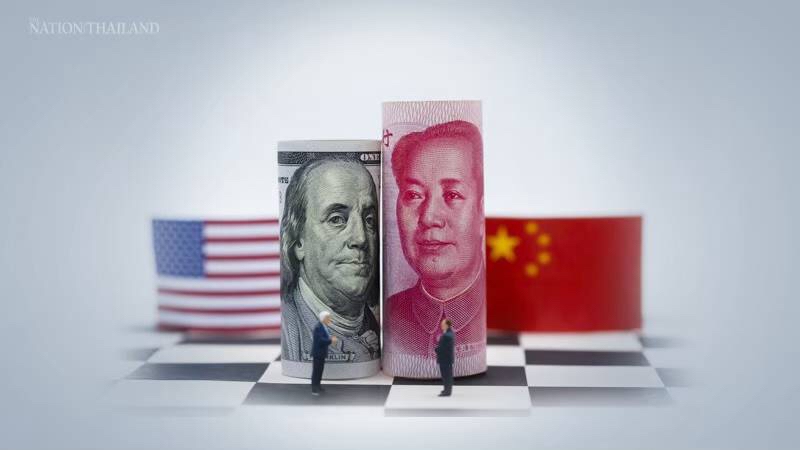
 Bottles of Unilever’s Dove products are displayed for sale at a mall in Jakarta, Indonesia, on Nov. 14, 2012. MUST CREDIT: Bloomberg photo by Dadang Tri
 Chaiwat Kovavisarach
