In reversal, Starbucks will allow employees to wear ‘Black Lives Matter’ T-shirts #ศาสตร์เกษตรดินปุ๋ย

#ศาสตร์เกษตรดินปุ๋ย : ขอบคุณแหล่งข้อมูล : หนังสือพิมพ์ The Nation.

In reversal, Starbucks will allow employees to wear ‘Black Lives Matter’ T-shirts

Corporate

Jun 13. 2020

By The Washington Post · Hannah Denham · BUSINESS 

Reversing course just two days after news reports sparked a social media backlash, Starbucks says it will now allow employees to wear T-shirts and accessories in support of Black Lives Matter.

“We see you. We hear you. Black Lives Matter. That is a fact and will never change,” the company said in a letter posted Friday. “This movement is a catalyst for change, and right now, it’s telling us a lot of things need to be addressed so we can make space to heal.” 

Earlier this week, and first reported by BuzzFeed, the company turned down a request from baristas and other employees who wanted to show their support for the BLM movement. In a memo to its 250,000-member workforce, Diversity Officer Zing Shaw said “there are agitators who misconstrue the fundamental principles of the Black Lives Matter movement – and in certain circumstances, intentionally repurpose them to amplifying divisiveness.” 

The decision sparked backlash on social media, including calls to boycott the company, and came just days after Starbucks had issued a “Black Lives Matter” statement of solidarity and committed $1 million to racial justice groups as protests broke out across the country following the death of George Floyd, a black man, in police custody.

On Friday, in a posting signed by Shaw, Chief Operating Officer Roz Brewer and Executive Vice President Rossann Williams, the company said it is producing T-shirts with “Black Lives Matter” and other slogans for staff in the United States and Canada to “demonstrate our allyship and show we stand together in unity.” Employees, which the company refers to as “partners,” will have the option to wear them while working.

A company spokeswoman declined to say what exactly prompted the reversal – whether it was two days of social media calls for boycotts against the coffee chain or the current unrest in Seattle, the company’s home base and where protests have led to an activist takeover of a four-block, police-free autonomous zone.

Hailey Glick, who has worked as a Starbucks barista in Raleigh, N.C., since September, said she learned of the initial denial of BLM attire through an unofficial employee Facebook group. She said she initially thought the company was simply applying its official dress code policy, which prohibits personal accessories that advocate for a political, religious or personal issue – until her co-workers pointed out that the company sends employees shirts, cups and other merchandise to wear while on the clock during Pride Month.

“If we can stand up for LGBTQ rights, why can’t we stand up for black lives and people of color?” she said.

Glick’s manager knew she attended protests in Raleigh and was supportive, she said, but that might not be the case at stores in other cities.

“I was very pleased with the reversal of the decision, and I think it’s the right move. The only thing that I think makes me hesitate and probably makes the company hesitate too is how and where we draw the line,” Glick said. “What’s to stop someone wearing a MAGA hat or a MAGA shirt or a MAGA pin? I think what it ultimately comes down to is our values as a company.” 

Bryant Simon, a historian at Temple University who wrote a book about Starbucks and American culture in 2009, said the company’s initial position was a “particular Starbucks dance.” The reversal, he said, came as a surprise.

“Lots of mass companies with a really big audience don’t want to have a public political statement and alienate their audience,” he said. “They can’t be Ben & Jerry’s. They’re just too big of a company for that. Their audience is too big, their investments are too big, their stores are in too many places for them to make a statement as strong as Ben & Jerry’s did.” 

What’s tricky about Starbucks, Simon said, is that it markets its “third place” for customers (after home and work) without embracing the political discussion that comes with public spheres. It’s not just about the coffee.

“A kind of political presence has always been part of Starbucks proposition, the idea that they could make a difference in the world,” he said. “You’re buying some kind of identity, and that identity has a politics to it, but that’s something that is kind of a slippery slope when you’re a mass company.” 

It’s not the first time the company has been in the spotlight for racial issues. When a female employee at a Philadelphia Starbucks store called the police on two black men sitting inside in April 2018, protests and a legal battle with the city’s police department thrust the company into reckoning with racial bias on a larger corporate scale. The company closed more than 8,000 of its U.S. stores the following month for an afternoon of anti-bias training.

Christina Chang, a diversity and equity consultant in Seattle, said she often uses that case in her anti-bias workshops with predominantly white groups as an example of how institutionalized racism shows up in day-to-day life.

“In the midst of everything of that’s happened, they are still so flat-footed,” she said. “How is that possible? The reason it’s possible is that at the end of the day, you still don’t have diversity at the top. You still don’t have people of color with different experiences who will sit down with them and say, ‘Hey that’s not cool.'” 

Simon said he thinks that the company’s quick reversal is a case study for how the broader American public has mostly changed its attitude toward the Black Lives Matter movement.

Responses to the company’s quick reversal has been nuanced, ranging from applause and returning customers, to those who have now pledged to buy their coffee elsewhere rather than be served by a barista in a Black Lives Matter shirt, to racial justice activists who feel the company’s response was disingenuous and too little, too late.

“In this moment, when everybody is waking up, and for Starbucks to do this . . . it’s unforgivable,” Chang said. “No, we do not stop boycotting Starbucks. . . . They have struck out.” 

Starbucks suffered a $3 billion hit to revenue since the pandemic began sweeping across the United States in March, forcing the company to temporarily shutter half of its 8,000 company-owned U.S. stores for nearly two months.

Glick said that during that time, Starbucks sent employees surveys to fill out about how their communities were affect ed by the pandemic and what local organizations were working to address those needs, which resulted in company donations. She said she’s expecting to receive a similar survey in response to racial injustice protests and the Black Lives Matter movement.

But Chang isn’t hopeful that the company culture will change until its board, leadership and store management reflects the racial and gender diversity of the country.

“The only way it’s every going to change is if we actually have representation at the top,” she said. “Not tokenism, not, ‘Oh we hired a chief diversity officer’ so we’re done.” 
Pandemic deepens economic pain at Trump’s company, already suffering from a tarnished brand #ศาสตร์เกษตรดินปุ๋ย

#ศาสตร์เกษตรดินปุ๋ย : ขอบคุณแหล่งข้อมูล : หนังสือพิมพ์ The Nation.

Pandemic deepens economic pain at Trump’s company, already suffering from a tarnished brand

Corporate

Jun 13. 2020

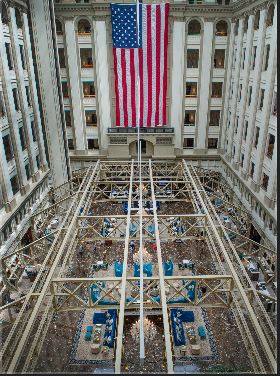
Trump's hotel / File photo

Trump’s hotel / File photo

By The Washington Post · Joshua Partlow, David A. Fahrenthold, Jonathan O’Connell · BUSINESS, POLITICS, US-GLOBAL-MARKETS

WASHINGTON — The head of President Donald Trump’s flagship hotel stood on Pennsylvania Avenue with face mask on and two thumbs up.

After three brutal months of empty hotel rooms and a skeleton staff, Mickael Damelincourt finally had something to celebrate: new sidewalk seating to safely welcome back Trump’s MAGA-loving customers. “Let’s get back to work,” Damelincourt tweeted on May 28. 

By the next day, Trump was in his underground bunker, protesters swarmed downtown Washington cursing Trump’s name, and the hotel’s outdoor seating experiment was tabled.

The whiplash at Trump’s D.C. hotel is emblematic of the problems faced by his company, which was already suffering from a tarnished brand before the novel coronavirus hit. The fresh wave of political anger directed toward Trump complicates an already difficult recovery for the company. 

Interviews with current and former Trump Organization employees and tenants, and emails obtained by The Washington Post, show the pandemic in particular has rattled operations at the company. As thousands of Trump’s hotel rooms empty, the company laid off or furloughed more than 2,800 employees and scoured for even the smallest savings. It eliminated flowers, chocolates and newspapers at its New York hotel and turned off lights in common areas in its Chicago hotel to save on electricity, according to letters that hotel management sent to investors.

“This was not just a step down,” Eric Danziger, the chief executive of Trump Hotels, told board members of Trump’s Chicago hotel on April 22, according to an account of his phone call obtained by The Post. “This was a steep dive.”

Trump’s business struggles present a potential conflict as he tries as president to manage a pandemic that has already claimed more than 110,000 American lives. The outbreak has devastated industries at the core of Trump’s business – travel, luxury tourism and hospitality – and the company’s fortunes largely depend on people’s willingness to travel and ability to gather in large groups.

Trump has handed day-to-day operations of the company to his eldest sons. Eric Trump did not respond to multiple requests for comment before this story’s publication. After this story published Friday, he tweeted that the company “had one of the BEST years in the HISTORY of the Organization in 2019” and that the details would be available in the president’s personal financial disclosure, likely to be made public later this month. He accused The Post of trying to harass the president and the company. “We have very little debt, tremendous cash flow & some of the greatest properties on earth, which have never been better, & are winning every accolade & award.”

The damage of the past months appears extensive. Out of Trump’s five top-earning hotels and resorts, four of them – in Miami, Las Vegas, Scotland and Ireland – shut down in March and remained closed through May. An analysis by The Post of Trump Organization revenue, based on Trump’s latest public financial disclosure, which covers 2018, indicate Trump probably lost out on tens of millions of dollars in revenue over the past three months.

– – – 

Even before the pandemic, Trump’s polarizing presidency had sapped revenue from his business. At least two of Trump’s U.S. hotels – in Chicago and Miami – had reported sharp declines in business after Trump entered politics. The company’s hotel in Washington is now up for sale. 

More recently, protesters have denounced Trump outside his New York, Washington and California properties, hurling invectives at these physical symbols of his presidency. At Trump’s golf course in Jupiter, Fla., the 18-year-old son of a former Republican congressman was arrested for spray-painting “B.L.M.” – an abbreviation for Black Lives Matter – on the entrance sign. 

But along with the rest of the country, the Trump Organization has begun opening back up. Members can visit Mar-a-Lago, but only the beach club. Golfers can step out onto Trump’s course along the Potomac River and some, like him, even do so without a mask. 

Eric Trump tweeted Wednesday that Trump’s Doral resort in Florida – the company’s highest-earning hotel – will be reopening next week. President Trump quickly chimed in on Twitter about this financial burden: “And the Trump family didn’t ask the Federal government for money to carry this and many other very expensive to carry properties!” 

Because it is owned by the president, the Trump Organization was excluded from portions of federal relief funding. 

One former Trump Organization executive said the company should get out of the hotel business, which accounts for about a third of company revenue.

“They have too many rooms to fill in a market where demand has suffered,” the former executive said on the condition of anonymity to discuss the company’s private financial situation. “He is too divisive a character in Chicago and NYC. In any market one wants to be neutral – he leaves many potential guests bitter and hostile.”

The picture is not all dire. The Trump Organization receives licensing and management fees for some Trump-branded properties that are owned by others; and there is no indication those fees have been disrupted. The company so far appears to have met its financial obligations even while seeking relief from creditors. 

In late March, Trump’s golf club in Pine Hill, N.J. – which pays a monthly fee of $20,833 to use town-owned land – told the town it “may not be in a position to make [the payment] for a minimum of 120 days,” according to an email obtained via public-records request. But the next day, the club reversed itself and paid the fee, other emails said.

Some former employees expect the company to weather the current difficulties because Trump owns an array of major real estate assets and has fans to patronize his properties. 

“I think he’s going to be fine,” said one former Trump employee who spoke on the condition of anonymity to discuss a former boss. “If you own all these things outright, it’s going to be a lot easier to get through it.” 

And yet, the current crisis is now affecting even the strongest parts of the Trump business portfolio. The office buildings in New York and California that Trump owns wholly or in part are considered more insulated from politics than his hotels and clubs because they are leased to corporate tenants, and some buildings don’t use Trump’s name. 

One of the tenants in Trump-owned buildings that is almost certainly asking to pay less is Starbucks, which wrote to its thousands of landlords May 5 asking for a year’s worth of reduced rent beginning June 1. The coffee chain rents space at Trump Tower in New York and at Trump’s D.C. hotel. In Washington, Starbucks pays Trump $14,118 per month, increasing to $15,787 a month in 2023, according to Trump Organization documents obtained by The Post.

“We are having ongoing conversations with our landlords in various markets regarding what may be commercially reasonable lease concessions in the current environment,” Starbucks Chief Financial Officer Pat Grismer told investors in April. Starbucks spokespeople didn’t respond to multiple requests for comment about rent negotiations at the Trump properties.

Other Trump tenants are now facing their own difficulties.

A massive Italian restaurant had been scheduled to open later this summer on the ground floor of a Wall Street skyscraper owned by Trump. But instead, as the coronavirus spreads, Nero.lab’s Italian Food Zone will probably have to adjust its initial concept – an 18,000-square-foot food hall where diners were to share communal tables and wait in lines for gelato and espresso. The Rome-based company’s chief executive, Alfredo Polizzi, remains optimistic about future prospects at 40 Wall Street. But he knows the restaurant won’t open until next year.

“We surely would’ve liked to do it sooner,” Polizzi said in an interview. “But given the situation, I don’t feel that would be wise.”

Another tenant at 40 Wall Street is Neapolitan Express, which operates pizza restaurants and food trucks in New York. The company has rented space in the building since 2015, said owner Max Crespo.

Crespo’s business has cratered – revenue dropped 27 percent in March, 55 percent in April, and 90 percent in May – but he has so far retained all 45 of his employees while also donating thousands of free pizzas to medical personnel and first responders. Just as things were opening up last month, protests and looting again drove away customers. The 40 Wall Street building got boarded up and spray-painted with anti-Trump graffiti, Crespo said. 

“Our city’s on its knees right now,” said Crespo, 47, a lifelong New Yorker. “This is the worst I’ve ever seen it.” 

Crespo said the Trump Organization collected full rent the past three months but also that Trump Organization employees have been “good partners” who “said if we have any problems going forward they can work with us.” 

He pays the Trump Organization more than $20,000 per month but hopes to renegotiate and expects many restaurants across New York will not be able to continue operating at current rents.

“Obviously, I’m going to go and ask for a reduction in rent,” he said. “I’m sure they would work with us.”

Trump’s business is uniquely positioned to suffer from this pandemic. The luxury tourism and leisure sector that the Trump Organization inhabits has been devastated over the past two months as travel plummeted, international borders closed, and events and conferences evaporated.

Even when stay-at-home orders end and more people return to work, hotel operators and office building owners face tremendous uncertainty about how their businesses will recover. Hotels in the United States lost 82 percent of their business for the month of April compared with last year, according to hotel data analysis firm STR. Luxury hotels saw their businesses wiped out almost completely, losing 96.6 percent of their business in April after taking in just $60 million in revenue nationwide.

Analysts also expect the hotel industry to be one of the last sectors to recover given people’s aversion to travel during the pandemic.

Hotel experts predict the corporate meetings-and-events sector will be particularly slow to recover.

“I have no idea what corporate group [travel] looks like in a six-foot world,” said Jan Freitag, a senior vice president at STR.

Buffets? Open bars? Networking events? he said.

“There is corporate group demand that likely will not come back for four or five years,” he said.

This has meant layoffs on a large scale for Trump’s employees, with the steepest cuts at the hotels. Twelve Trump Organization properties in the United States and Canada laid off or furloughed employees, including cooks, waiters, housekeepers and valets, according to local filings.

Some of the job losses will not be temporary: At Doral, the company initially furloughed 560 employees, then later said in a filing that 250 of those jobs would be permanent layoffs.

Danziger, the chief executive of Trump Hotels, said in his call that the company could begin shifting toward using more part-time employees, who are not entitled to health benefits.

Even before the pandemic, there were signs that Trump’s politics drove away some potential customers. 

“The vibe I got was that half of the guests wouldn’t feel comfortable ever coming to a meeting there,” said a former employee at Trump’s D.C. hotel who was involved in booking conferences. Some hurdles can be overcome with good salesmanship, the former staffer said, but “this wasn’t overcome-able.” 

The staffer, who spoke on the condition of anonymity to preserve relationships in the hotel industry, was laid off last year because of lack of business.

The pandemic eliminated months of events across Trump’s company. At Doral, at least 10 events this year have been canceled or postponed, according to the groups planning the events. 

Trump’s Mar-a-Lago Club was forced to shut down in late March, missing the last month of Palm Beach’s traditional winter social season. The club reopened its poolside Beach Club in mid-May, but with restrictions: The number of diners was limited, congregating was prohibited, and the club warned that “social distancing will be enforced” even in the Jacuzzi.

The club said it would now stay open a month longer than usual, to the end of June. One member, who spoke on the condition of anonymity to discuss the private club, told The Post that he planned to stay away anyway.

At the D.C. hotel, the patio seating plan was scheduled to restart again Friday. A previous attempt for outdoor tables earlier in Trump’s presidency ended after pedestrians regularly insulted hotel guests and staff, former employees said.

PTT well-armed to face risks, boost liquidity, says new CEO #ศาสตร์เกษตรดินปุ๋ย

#ศาสตร์เกษตรดินปุ๋ย : ขอบคุณแหล่งข้อมูล : หนังสือพิมพ์ The Nation.

PTT well-armed to face risks, boost liquidity, says new CEO

CorporateJun 13. 2020PTT CEO Auttapol RerkpiboonPTT CEO Auttapol Rerkpiboon

By THE NATION

The oil and gas conglomerate PTT Plc has plenty of ammunition to help it deal with business risks and boost its liquidity, the group’s new president and chief executive officer Auttapol Rerkpiboon said on Friday (June 12).

He said PTT is ready to issue debentures worth Bt64 billion, of which Bt44 billion will be direct debentures while the remainder will be bills of exchange (B/E). This move is to boost the company’s liquidity and refinance existing debt which is nearing its due date. He added that the debentures will be issued as and when the company sees fit.

Auttapol also said that PTT has to be well prepared despite its strong financial status and liquidity. The Covid-19 outbreak and the global oil price war were two factors that affected its financial performance in the first quarter.

However, the CEO believes the situation will get better in the second half of the year thanks to the gradual easing of lockdown measures in many countries. He also doesn’t expect the global oil-price war to intensify, like it did in March and April, which resulted in a steep decline in the global price of crude oil.

Auttapol estimates the crude oil price will range at US$40 per barrel this year.

He also said that the lifting of curfew in Thailand from June 15 will renew the demand for oil and will also benefit PTT’s retail of non-oil products. However, he expects the sale of jet fuel to suffer a sharp decline this year.

He went on to say that PTT’s main mission is to maintain its strength in core businesses as well as to initiate new businesses for growth.

As for the impact the pandemic has had on the global economy, PTT has adjusted its operations to cope with the crisis by executing a cost-control policy of “decrease-discard-defer” to cut down on unnecessary activities, collaborate within the group for value-chain optimisation in order to manage price risks, demand, supply and inventory, as well as maintaining financial strength and stability.

Auttapol is serving a four-year term as the 10th president and CEO of PTT since May 13 this year.

MBK offers rent-free retail space until August #ศาสตร์เกษตรดินปุ๋ย

#ศาสตร์เกษตรดินปุ๋ย : ขอบคุณแหล่งข้อมูล : หนังสือพิมพ์ The Nation.

MBK offers rent-free retail space until August

CorporateJun 12. 2020

By The Nation\

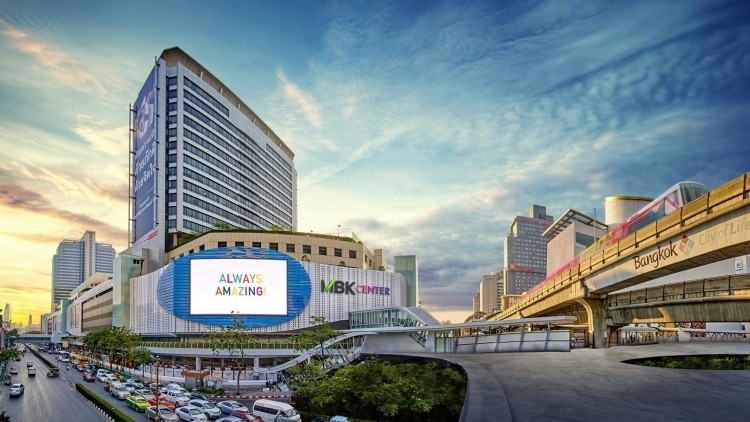
The operator of MBK Centre shopping mall is waiving rent on retail space in three of its halls until August this year.

Although the relaxation of disease control measures have allowed shopping centres to reopen, mall operators and traders are facing difficulties as the number of customers has fallen significantly.

MBK’s managing director Somphol Tripopnart said that the mall was allowing shop operators to use the ground floor’s Centre Hall, Phayathai Hall, and Patumwan Hall rent-free until August.

“The move is aimed at increasing outlets and reducing consumers’ expenses,” he said.

“Shops including Santa Barbara, John Langford, US Polo ASSN, and Luigi Batani are offering their products at discounted prices from June 15 to 28 this year,” he added.

Boeing, suppliers plunge on stop-and-go 737 Max comeback #ศาสตร์เกษตรดินปุ๋ย

#ศาสตร์เกษตรดินปุ๋ย : ขอบคุณแหล่งข้อมูล : หนังสือพิมพ์ The Nation.

https://www.nationthailand.com/business/30389484?utm_source=category&utm_medium=internal_referral

Boeing, suppliers plunge on stop-and-go 737 Max comeback

Jun 12. 2020
By Syndication Washington Post, Bloomberg · Crystal Kim, Julie Johnsson · BUSINESS, TRANSPORTATION, US-GLOBAL-MARKETS 

Shares of Boeing and its largest suppliers sank Thursday after the planemaker pared output plans for its beleaguered 737 Max just two weeks after restarting work in its Seattle-area factory.

A resurgence in Covid-19 cases in some regions of the U.S. has added to concerns that airlines face a prolonged recovery that will make it difficult for Boeing to meet delivery targets for its 737 Max, a crucial source of cash. The Chicago-based planemaker is already backtracking from an early May agreement with Spirit AeroSystems Holdings Inc. to deliver 125 Max frames this year.

Boeing fell as much as 12%, its biggest drop since April 1, while Spirit AeroSystems declined as much as 16%. Shares of other suppliers including Hexcel Corp., Triumph Group Inc. and Raytheon Technologies Corp. fell in sympathy.

Spirit, which manufactures about 70% of the aircraft, announced late Wednesday that it will probably deliver about 20 fewer fuselages this year after Boeing asked it to pause production on the single-aisle jet. The Max will probably be produced at a reduced rate through 2023, said Sheila Kahyaoglu, an analyst with Jefferies, in a report to clients Thursday.

“Could this finally represent the bottom? That’s the positive spin,” Citi analyst Jon Raviv said in a note. “The negative is that it’s hard to be confident in a bottom when Boeing asks a major supplier to start and stop within the course of a couple weeks.”

Production fits and starts suggest Boeing’s customer commitments are quickly shifting, Raviv said. Key competitor Airbus also faces planning woes. Raviv noted that the French company this week said that while it ruled out deeper cuts in jet production, plans may be subject to change and it would revisit the question later in the month.

“From our perspective, the gradual restart of 737 MAX production is progressing smoothly as we focus on quality and safety, as well as the health of our employees,” Bernard Choi, a Boeing spokesman, said by email. “As we shared in our first quarter earnings release, the impact of COVID-19 on our industry has resulted in a slower production rate ramp-up on the 737 program. To reflect the slower ramp and align our supply inventories, we’re working closely with our suppliers to adjust delivery schedules and rate profiles as appropriate.”

While Raviv expects Spirit shares to underperform on the setback and renewed liquidity concerns, he stands behind his bullish view on the stock.

“We already knew 2020 was a lost cause. Missing 20+ deliveries and lower production makes it more lost,” Raviv said. However, he said Spirit can still generate cash at a lower production rate and pointed out that a pause isn’t a hard reverse.

While Boeing is progressing toward hosting U.S. regulators on a flight to test the jet’s upgraded systems, Spirit presents a cleaner story, Raviv said, as it is unhampered by a heavy debt load, required customer compensation, and having to rebuild relationships with both customers and regulators.

IBM’s decision to abandon facial recognition technology fueled by years of debate #ศาสตร์เกษตรดินปุ๋ย

#ศาสตร์เกษตรดินปุ๋ย : ขอบคุณแหล่งข้อมูล : หนังสือพิมพ์ The Nation.

https://www.nationthailand.com/business/30389479?utm_source=category&utm_medium=internal_referral

IBM’s decision to abandon facial recognition technology fueled by years of debate

Jun 12. 2020
By The Washington Post · Hannah Denham · NATIONAL, BUSINESS, TECHNOLOGY, COURTSLAW, RACE, US-GLOBAL-MARKETS 

When IBM’s newly promoted chief executive announced the company would abandon its facial recognition technology, it did so amid a national reckoning over race and justice, foreshadowing similar re-evaluations among its peers.

In his letter Monday to members of Congress, CEO Arvind Krishna cited the potential for police to use the technology to violate “basic human rights and freedoms” in its decision to end all research, development and production. A person familiar with the matter said Krishna’s move wasn’t made overnight, but had been the culmination of more than two years of criticism about such technology from human rights and privacy advocates over accuracy, racial profiling and mass surveillance concerns.

Two days later, Amazon announced in a company blog post that it would suspend police use of its facial recognition software, Rekognition, for one year. Microsoft followed suit on Thursday, and said it would suspend sales to law enforcement agencies until federal regulations are in place. (Amazon founder Jeff Bezos owns The Washington Post.)

The company’s move has received positive responses from members of Congress, civil liberty defenders and IBM employees. But Morningstar equity analyst Julie Bhusal Sharma noted that facial recognition technology comprises just a sliver of its business. IBM is one of the world’s biggest technology and consulting companies, with a market cap of $105 billion.

“I think partially, from an equity point of view, IBM is such a massive company so even within their AI realm, they don’t break out, even in their facial recognition revenue,” she said. “Financially, I don’t think it’s going to have much of an impact.”

IBM will retain other kinds of recognition technology, a person familiar with the company’s thinking said, such as using a facial scan to authenticate a device, as well as object detection, like crop inspection for farmers or security staff identifying an abandoned suitcase in an airport.

Questions about the use of facial recognition and other technologies in law enforcement have attracted renewed attention since George Floyd’s death last month in police custody sparked calls for wholesale police reform. Researchers Joy Buolamwini and Timnit Gebru first dove into the issue in 2018 with Gender Shades, revealing that facial-recognition systems by IBM, Microsoft and Face ++ misidentify people of color and women more often than white men. More studies followed that confirmed the results, including a federal study by the NIST in 2019.

Last year, the ACLU sued the FBI, the Department of Justice and other agencies that contract with facial-recognition providers to block its use.

Former 2020 U.S. presidential candidate Julián Castro called the use of facial recognition software for mass surveillance a “dangerous violation of human rights” in a tweet on Tuesday. Rep. Jimmy Gomez, D-Calif., echoed the sentiment, noting in a tweet that he and other members of Congress were misidentified by Amazon facial recognition software in 2018.

“This tech needs legislative guardrails NOW,” Gomez wrote in the tweet.

Government and law enforcement officials contend the technology is worth reforming because it provides powerful aid in quickly identifying criminal suspects. Ultimately, by this week, the company joined the side of digital rights activists like those at Algorithmic Justice League that the technology couldn’t be reformed.

National Police Foundation President Jim Burch said in an email that the foundation applauds IBM’s decision and hopes that the company will continue to work with law enforcement in developing infrastructure for accountability and evaluating performance.

“We applaud IBM for making decisions that they feel are best to protect the rights and equity of all people and certainly they would best know if their technology was being used in ways counter to this message,” Burch said. “We also applaud IBM’s statement and support for police reform and hope that IBM will work to ensure that its solutions and capabilities are able to be used by police organizations attempting to do the right thing and pursue pathways to reform.”

Krishna’s letter was addressed to Congressional Black Caucus Chair Karen Bass, D-Calif., Senators Cory Booker, D-N.J., and Kamala Harris, D-Calif., House Judiciary Committee Chair Jerry Nadler, D-N.Y., and Rep. Hakeem Bass, D-N.Y., who introduced and co-sponsored the Justice in Policing Act of 2020 on Monday to enforce law enforcement accountability.

Krishna, who became CEO in April, expressed support for the Justice in Policing Act in his letter and said IBM hopes to work with Congress on police reform, responsible technology use and the expansion educational opportunities and skills-based trainings for communities of color.

“What we are witnessing is the birth of a new movement in our country with thousands coming together in every state marching to demand a change that ends police brutality, holds police officers accountable, and calls for transparency,” Bass said in a news release about the proposed legislation. “Never again should the world be subjected to witnessing what we saw on the streets in Minnesota with George Floyd.”

Bangchak Corp projects 10% dip in 2020 oil sales volume #ศาสตร์เกษตรดินปุ๋ย

#ศาสตร์เกษตรดินปุ๋ย : ขอบคุณแหล่งข้อมูล : หนังสือพิมพ์ The Nation.

https://www.nationthailand.com/business/30389463?utm_source=category&utm_medium=internal_referral

Bangchak Corp projects 10% dip in 2020 oil sales volume

Jun 12. 2020
Chaiwat Kovavisarach

Chaiwat Kovavisarach
By The Nation

Bangchak Corporation (BCP) expects its fuel sales volume this year to drop by up to 10 per cent, but said that the government’s tourism stimulus package would help increase demand.

Chaiwat Kovavisarach, president and chief executive officer at BCP, said fuel sales volume in the first quarter dropped 6 per cent, year on year, and forecast a 10-per-cent drop in the second quarter due to the Covid-19 outbreak.

Fuel sales volume in April dropped sharply by 20 per cent,” he said. “However, the sales volume at the beginning of June dropped by only 5 per cent, year on year, after the government announced the third phase of lockdown relaxation.”

He expected the company’s performance in the second half of 2020 to improve as the Covid-19 outbreak is resolved and countries ease lockdown measures.

“BCP’s fuel sales volume was 400 million to 500 million litres per month, 340 million-350 million litres was sold at filling stations,” he said, adding that the government’s moves to promote domestic tourism would help increase fuel demand.

He said that the Covid-19 impact meant BCP would open only 54-55 new filling stations this year, instead of the original plan of 60.

“Also, we have adjusted the plan to maintain liquidity, by reducing investment costs, and postponing investment in unnecessary projects and the annual maintenance plan,” he said.

He added that there were no changes to the investment to upgrade oil refineries to Euro 5 standard.

“We are currently studying the types of investment, with results expected by the end of this year,” he added. “After finishing the study, we will seek a contractor and begin construction to ensure that it is completed in 2023, as per the government’s plan.”

Outgoing GSB president proud of his legacy #ศาสตร์เกษตรดินปุ๋ย

#ศาสตร์เกษตรดินปุ๋ย : ขอบคุณแหล่งข้อมูล : หนังสือพิมพ์ The Nation.

https://www.nationthailand.com/business/30389461?utm_source=category&utm_medium=internal_referral

Outgoing GSB president proud of his legacy

Jun 11. 2020
GSB president Chatchai Payuhanaveechai

GSB president Chatchai Payuhanaveechai
By THE NATION

The Government Savings Bank (GSB)’s outgoing president Chatchai Payuhanaveechai said he is proud of his role at the bank, which has provided financial relief to individuals and businesses to help them pull through the Covid-19 crisis.

He said GSB has launched many loan packages and relief measures over the past five months to help customers suffering from the impact of the outbreak.

The packages include low-interest loans for non-banking institutions, financial institutes and small- and medium businesses for which the bank earmarked Bt150 billion. So far, there have been 13,093 applicants and Bt108 billion worth of loans has already been approved.

As of the first half of this year, the bank’s net profit was Bt5 billion, with deposits worth Bt2.47 trillion and total assets of Bt2.8 trillion.

GSB has continued to upgrade itself in all aspects to better serve customers in response to the fast-changing digital era and the impact of the outbreak, he added.

Currently, 7.9 million of GSB customers use the bank’s mobile application.

He said in line with the “new normal”, the bank has embraced the “delivery banking” concept, which means customers do not need to travel to its branches for basic services that can be accessed via different channels such as a mobile bank or online.

Krungsri and Grab launch personal loans for partner restaurants #ศาสตร์เกษตรดินปุ๋ย

#ศาสตร์เกษตรดินปุ๋ย : ขอบคุณแหล่งข้อมูล : หนังสือพิมพ์ The Nation.

https://www.nationthailand.com/business/30389453?utm_source=category&utm_medium=internal_referral

Krungsri and Grab launch personal loans for partner restaurants

Jun 11. 2020
By The Nation

Krungsri (Bank of Ayudhya) and Grab Thailand have collaborated to launch personal loans for GrabFood merchant-partners, offering a maximum of Bt500,000 on 12-month installment plans, with no collateral or guarantor needed and with interest rates from 14.99 per cent per annum.

The loans are aimed at easing financial strains faced by GrabFood merchant-partners during the Covid-19 crisis, by providing additional working capital and liquidity.

“Krungsri and Grab have worked together to develop a new credit scoring system, where the customer data is incorporated into the credit line approval. This is a superior financial experience offered via a digital platform, directly to targeted consumers. The bank is expecting to attract a large number of GrabFood merchant-partners,” said Phonganant Thanattrai, Krungsri head of Retail Banking and Distribution Group.

Said Worachat Luxkanalode, country head of Grab Financial Group (Thailand): “Grab Financial Group is committed to delivering full-service FinTech solutions for the underbanked population, aiming to elevate the life quality of Thai people by expanding financial access for the entire nation. Amidst the current economic hardship, Grab believes loan products with repayment plans that correspond well with the capability of business operators will play a major role in keeping the business afloat, leading to the collaboration with Krungsri. Launching a short-term loan product for our merchant-partners with daily repayment installment plans … will allow our merchant-partners to manage their financial resources with greater convenience and efficiency. The loan will be initially available to medium-sized chain restaurants with healthy sales and expanded to other segments in the future.”

GrabFood merchant-partners can apply for the personal loan until June 30 at http://www.krungsri.com or https://bit.ly/2zBlZJ4. No loan management fee is charged. Apply from now to 30 June 2020.

For more details, contact the Krungsri call centre on 1572 or http://www.krungsri.com.

Zara owner built a post-covid retailer before virus came along #ศาสตร์เกษตรดินปุ๋ย

#ศาสตร์เกษตรดินปุ๋ย : ขอบคุณแหล่งข้อมูล : หนังสือพิมพ์ The Nation.

https://www.nationthailand.com/business/30389348?utm_source=category&utm_medium=internal_referral

Zara owner built a post-covid retailer before virus came along

Jun 10. 2020
By Syndication The Washington Post, Bloomberg · Rodrigo Orihuela, Deirdre Hipwell 

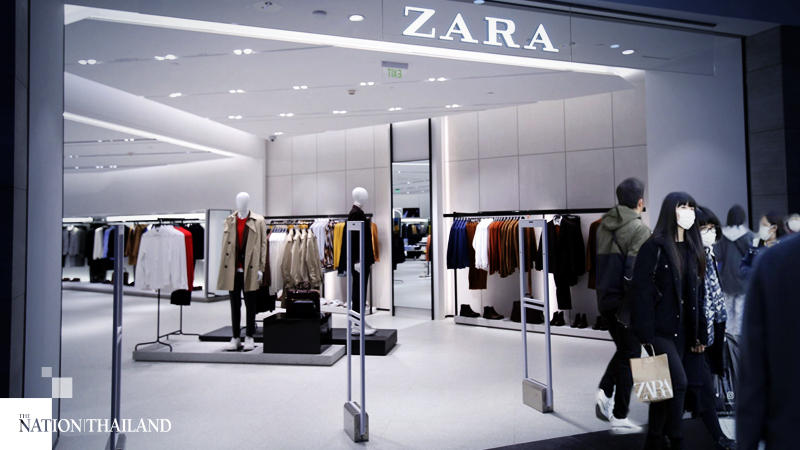
A few weeks after Spain declared a nationwide lockdown in mid-March to fight the growing coronavirus outbreak, clothing retailer Inditex SA began running low on goods.

The world’s largest fashion retailer typically operates a lean warehouse operation, preferring instead to hold the majority of its stock in stores that double as e-commerce fulfillment centers. That way, turnaround is faster, shelves are replenished more regularly and inventory is kept to a minimum.

But with about 3,500 stores worldwide closed, this carefully balanced just-in-time cycle of goods was reaching breaking point. By April, Inditex sent out an unusual request to employees, seeking volunteers to retrieve clothes and accessories left in stock rooms and on shelves in the hundreds of Zara, Massimo Dutti and other brand stores to fulfill e-commerce orders.

The unorthodox blend of local manufacturing, nimble logistics and aggressive embrace of e-commerce has helped Inditex weather the fallout from the global lockdown better than many other retailers. It’s also helped recalibrate operations for a future of shopping where face masks, limited store access and distancing stand to push consumers online in ever greater numbers.

While the company is set to report its first-ever loss when it unveils quarterly earnings on Wednesday, Inditex managed to rely on its online business to keep operations running, limiting the damage from the shutdown that’s now beginning to ease in Spain and elsewhere.

The shares rose 0.4% early Tuesday in Madrid. So far this year they’re down about 16%.

“Pre-covid 19, online generated about 14% to 15% of Inditex’s sales, and no doubt that will have accelerated now,” said Richard Chamberlain, managing director of European general retail at RBC Capital Markets. “The advantage they have is a central pool of inventory, which is shipping out stock to shops a couple of times a week so the idea of shipping directly to people all over the world is pretty easy.”

A relative latecomer to the Internet, Inditex launched its first online apparel business in 2010 and expanded the digital business with a big bet on technology that ties into its unique logistics and distribution system.

The system has two key pillars: heavy rotation of products that move quickly from commissioning to sale in stores; and proximity of production, with the bulk of garments made in Spain, Portugal, Morocco and Turkey. Almost all clothes are sent to a handful of centers in Spain and re-distributed from there to outlets worldwide.

The approach differs from Nordic rival Hennes & Mauritz AB, which has long struggled to reduce its $4 billion inventory buildup. At the end of February, H&M’s stock-in-trade was the equivalent of 16% of rolling 12-month sales. Inditex and H&M’s financial years differ by one month, complicating a direct comparison. Still, analysts expect H&M to report a loss for this fiscal quarter that’s more than four times as big as that of Inditex.

When Inditex launched its apparel online business in 2010, it made up for the late entry by harnessing technology that gave it a more robust overview of its product stream. Two years earlier, Inditex had introduced so-called RFID tracking, using radio-frequency identification inside the alarm tag that transmits data from the garment to a reader. The tag goes live as soon as a product enters a stock center, and is then deactivated when the item is sold, providing Inditex with exact, real-time control over its inventory.

“It was important that from the day of the launch that online is relevant for the company and totally integrated with the rest of the business,” Inditex Executive Chairman Pablo Isla said in an interview in February. “We adapted so well to the online world because it was all natural. Without RFID, it wouldn’t have been possible, and RFID wouldn’t have been possible without thinking about alarms.”

Knowing its inventory to the dot matters to Inditex. Its logistics operation requires the bulk of its products be shipped from the manufacturing centers to distribution centers in Spain. Then, based on requests from store managers spread across the world, the company sends clothes twice a week to each shop. This cuts down the amount of stockpile, which can turn into a huge burden for retailers if goods aren’t sold , be it for unforeseen weather, a flopped collection — or a global virus.

When the store stock sat idle in the lockdown, Inditex relied on volunteer workers to go pick up the garments, helped by the fact that it hadn’t furloughed employees in Spain. Getting its hands on the additional clothing was key because already in March, Inditex had ramped up web discounts, a rare move for a company that emphasizes how online and offline operations are always in sync.

During the pandemic, online had an opportunity to shine because in most major countries where Inditex operates in Europe, e-commerce was allowed to continue operating even as brick-and-mortar temporarily closed down. This occurred in Spain, Inditex’s largest market, where the government declared a national lockdown March 14, causing retail sales to drop by a record 14% that month.

Still, the company remains in good shape, thanks to its strong balance sheet boasting 8 billion euros ($9.04 billion) of cash and cash equivalents, the integrated online business and low inventory compared with rivals, according to Chamberlain.

“Inditex has a relatively fortress balance sheet,” he said. “Having a very strong balance sheet gives them a lot of capacity to weather the storm and to keep investing for the long term and look after their people and suppliers very well.”