Fed vow boosts debt binge while borrowers cut thousands of jobs #ศาสตร์เกษตรดินปุ๋ย

#ศาสตร์เกษตรดินปุ๋ย : ขอบคุณแหล่งข้อมูล : หนังสือพิมพ์ The Nation.

https://www.nationthailand.com/business/30389126?utm_source=category&utm_medium=internal_referral

Fed vow boosts debt binge while borrowers cut thousands of jobs

Jun 05. 2020
Sysco delivery trucks sit outside the company's distribution center in Louisville, Kentucky, on Jan. 29, 2020. MUST CREDIT: Bloomberg photo by Luke Sharrett

Sysco delivery trucks sit outside the company’s distribution center in Louisville, Kentucky, on Jan. 29, 2020. MUST CREDIT: Bloomberg photo by Luke Sharrett
By Syndication Washington Post, Bloomberg · Bob Ivry, Lisa Lee, Craig Torres · BUSINESS, US-GLOBAL-MARKETS, CAREER-WORKPLACE, RETAIL

Soon after the Federal Reserve’s March 23 assurance that it would make borrowing easier for American corporations, Sysco sold $4 billion of debt.

Not long after that, the food-service giant announced plans to cut one-third of its workforce, more than 20,000 employees. Dividends to shareholders would continue, executives said.

That process repeated itself in April and May as the coronavirus spread. The Fed’s promise juiced the corporate-bond market. Borrowing by top-rated companies shot to a record $1.1 trillion for the year, nearly twice the pace of 2019. Companies as diverse as Sysco, Toyota, international marketing firm Omnicom and movie-theater chain Cinemark borrowed billions of dollars — and then fired workers.

The companies were under no obligation to behave any differently, but their actions call into question the degree to which the U.S. central bank’s promise to purchase corporate debt will help preserve American jobs.

While the Fed has yet to buy a single bond, its pledge threw a lifeline to the market that undoubtedly kept some people working. Retail chains such as Dollar General, CVS, Walgreens, Lowe’s and Costco said they’re adding personnel after tapping the bond market.

But unlike the Small Business Administration’s Paycheck Protection Program, which has incentives for employers to keep workers on the job, the taxpayer-backed facilities that the Fed and Treasury Department created for bigger companies have no such requirements. To make sure the emergency programs help fulfill one of the Fed’s mandates — maximum employment — the central bank is essentially crossing its fingers that restoring order to markets will translate to saving jobs.

“They could set conditions, say to companies, hire back your workers, maintain your payroll to at least a certain percentage of prior payroll, and we will help,” said Robert Reich, the former Secretary of Labor for President Bill Clinton who now teaches economics at the University of California, Berkeley. “It’s hardly clear that if you keep companies afloat they’ll hire employees.”

The lending programs — credit for big companies and the so-called Main Street facilities for midsize firms — are supported by the CARES Act, a law that passed the House with more than 96% of the chamber’s votes and cleared the Senate unanimously. For many supporters, putting conditions on the assistance was a step too far. If Congress had intended any, it would have made it explicit in the legislation, they say.

“Really it’s all about creating a context, a climate, in which employees will have the best chance to either keep their job, or go back to their old job, or ultimately find a new job,” Fed Chairman Jerome Powell said in a May 29 webinar hosted by Princeton University. “That’s the point of this exercise.” A spokesman for the U.S. central bank declined further comment.

Even as businesses around the country reopen after months of stay-at-home orders, prospects look grim for the roughly 21 million Americans who lost their jobs in March and April — a total that may have increased by 7.5 million in May. An extra $600 a week in unemployment benefits that Congress approved in March is slated to stop on July 31. The prohibition against firing workers in the $25 billion government rescue of U.S. airlines expires Sept. 30, and the biggest recipients have said they intend to shed employees after that date.

Reich’s view is echoed mostly by progressive Democrats and supporters of stricter regulatory oversight of the financial system.

“The Fed’s primary motivator in creating these lending facilities is not protecting workers,” U.S. Representative Katie Porter, a California Democrat on the Financial Services Committee, said in an email interview. “The American people should not be asked or expected to loan $500 billion with no strings attached.”

A letter, circulated by the Wall Street watchdog group Americans for Financial Reform and published May 27, urged Congress to attach conditions favorable to workers to any covid-19-related rescue programs. It was signed by 45 organizations, including labor unions and religious and environmental groups.

Without provisions for employees, “the credit assistance will tend to boost financial markets, but not the broad economic well-being of the great majority of the population,” Marcus Stanley, Americans for Financial Reform’s policy director, said in an interview.

Stanley said the corporate-lending programs don’t have to require companies to keep or rehire workers, but they could give priority to those that do.

In its legislation, Congress did express an intent that workers benefit from taxpayer-funded assistance, but it left a lot of the details to Powell and Treasury Secretary Steven Mnuchin.

“Our No. 1 objective is keeping people employed,” Mnuchin said during a May 19 Senate Banking Committee hearing after Senator Elizabeth Warren, a Massachusetts Democrat, accused him of “boosting your Wall Street buddies” at the expense of ordinary Americans. “What we put in the Main Street facility is that we expect people to use their best efforts to support jobs,” Mnuchin said.

The phrase “best efforts” echoes the original terms for the Main Street program, which required companies to attest they’ll make “reasonable efforts” to keep employees. The wording was subsequently changed to “commercially reasonable efforts,” which Jeremy C. Stein, chairman of the Harvard University economics department and a former Fed governor, called a welcome watering-down of expectations that the central bank would dictate employment policies to borrowers.

“It was smart of them to weaken that,” Stein said. “You can’t expect companies to borrow to pay employees.”

Companies might not seek emergency help if too many strings are attached to the aid, Stein said. Others question the practicality of tying workers to their companies as economic realities shift.

“To go to great lengths to make companies keep employees that they don’t need, in light of new expectations that economic activity will remain below pre-covid levels for a long while, doesn’t make sense,” said Mark Carey, a former Fed staff member and now co-president of the Risk Institute of the Global Association of Risk Professionals.

The Fed approached this crisis with the intent of keeping credit flowing everywhere, from municipalities to small businesses to big corporations to households. Powell said the programs are about lending, not spending — in other words, they aim to ease a financing pinch rather than stimulate the demand companies need to keep workers on the payroll.

“For the Fed to second-guess a corporate survival strategy would be a step too far for them,” said Adam Tooze, a Columbia University history professor and author of “Crashed: How a Decade of Financial Crises Changed the World.” Putting explicit conditions on program beneficiaries would make the central bank “a weird hybrid of the Federal Reserve, Treasury, BlackRock and an activist stockholder.” BlackRock is the world’s biggest money manager and was hired by the central bank to assist with bond programs.

Through the Main Street facilities, which are scheduled to begin operations any day, the Fed will buy as much as $600 billion in four-year loans made to companies by commercial banks with principal and interest deferred for one year. The program is aimed at midsize businesses, with 15,000 or fewer employees or annual revenue of $5 billion or less in 2019.

The central bank’s credit backstop for larger companies is split in two. The $500 billion primary program is designed to buy slices of syndicated loans or new bonds from companies with investment-grade credit scores or one notch below. It’s available to corporations that can prove they can’t borrow elsewhere. The $250 billion secondary facility buys individual corporate bonds already on the market and exchange-traded funds that include investment-grade and junk bonds. The Fed kicked off the program last month; its balance sheet as of June 2 listed ETF holdings valued at $4.3 billion.

European countries are charting a different policy course by paying workers directly. The U.K., for example, is offering 80% of salaries up to 2,600 pounds ($3,207) a month. The Netherlands and Denmark have effectively nationalized private payrolls.

The U.S. government paid adults who make less than $75,000 a year a one-time sum of $1,200, with $500 for every dependent child. The cost was $239 billion.

The S&P 500 has jumped 38% since March 23, the day the Fed intervened. Observers of the stock market wonder how it could be so bullish at the same time as the country faces an avalanche of joblessness unsurpassed in its history. The choices companies are making provide an answer.

Since selling $4 billion in debt on March 30, Sysco has amassed $6 billion of cash and available liquidity, enabling it to gobble up market share, while cutting $500 million of expenses, according to CEO Kevin Hourican. Sysco, which is based in Houston, will continue to pay dividends to shareholders, Chief Financial Officer Joel Grade said on a May 5 earnings call.

Movie theaters were one of the first businesses to close during the pandemic. Cinemark, which owns 554 of them, shut its U.S. locations on March 17. Three days later, the company paid a previously announced dividend. It has since said it will discontinue such distributions. Cinemark borrowed $250 million from the junk-bond market on April 13, the same day it announced the firing of 17,500 hourly workers. Managerial staff were kept on at reduced pay, according to company filings. Cinemark, which is based in Plano, Texas, said it plans to open its theaters in phases starting June 19.

The theater chain opted to go to the bond market over seeking funding from the government because “it didn’t come with any of the strings attached that government-backed facilities can include,” CEO Mark Zoradi said on the April 15 earnings call. It “was really no more complicated than that.”

Sysco and Cinemark declined to comment for this story, and referred to their executives’ previous remarks.

Omnicom issued $600 million in bonds on March 27. In an April 28 conference call to discuss quarterly earnings, CEO John Wren said the company was letting employees go but didn’t say how many. He said the company was extending medical benefits to July 31 for employees furloughed or fired.

Wren added: “Our liquidity, balance sheet and credit ratings remain very strong and we have no plans to change our dividend policy.” Omnicom didn’t respond to requests for comment.

Toyota borrowed $4 billion from investors on March 27. Three days later, the Japan-based car company said it would continue paying dividends to shareholders. Eight days after that it said it would drop roughly 5,000 contract workers who helped staff its plants in North America. Scott Vazin, a Toyota spokesperson, declined to comment.

In a March 24 letter, 200 academics, led by Stanford University Graduate School of Business Professor Jonathan Berk, called lending programs aimed at corporations “a huge mistake.” Better to focus help directly on people living paycheck to paycheck who lost their jobs, it said.

“Bailing out investors who chose to take high-risk investments because they wanted the high returns undermines capitalism and makes it an unfair game,” Berk said in an interview. “If you don’t have a level playing field in capitalism, it doesn’t work.”


Zoom’s 484% surge gives little-known early investor fortune #ศาสตร์เกษตรดินปุ๋ย

#ศาสตร์เกษตรดินปุ๋ย : ขอบคุณแหล่งข้อมูล : หนังสือพิมพ์ The Nation.

https://www.nationthailand.com/business/30389121?utm_source=category&utm_medium=internal_referral

Zoom’s 484% surge gives little-known early investor fortune

Jun 05. 2020
The logo for the Zoom Video Communications on a laptop computer in an arranged photograph taken in the Brooklyn borough of New York on April 10, 2020. MUST CREDIT: Bloomberg photo by Gabby Jones.

The logo for the Zoom Video Communications on a laptop computer in an arranged photograph taken in the Brooklyn borough of New York on April 10, 2020. MUST CREDIT: Bloomberg photo by Gabby Jones.
By Syndication Washington Post, Bloomberg · Ben Stupples, Venus Feng, Nico Grant · BUSINESS, WORLD, TECHNOLOGY, US-GLOBAL-MARKETS, ASIA-PACIFIC 

Some of the biggest names in finance and business made a fortune on Zoom Video Communications Inc.: Hong Kong’s Li Ka-shing, Tiger Global Management’s Chase Coleman and, of course, founder Eric Yuan, whose net worth has surged to $10.7 billion.

And then there’s Samuel Chen, a little-known Taiwanese investor who made his initial wealth through ink trading and started putting money in the video-conferencing juggernaut about a decade ago.

His Digital Mobile Venture Ltd., which participated in Zoom’s early funding rounds, controls a $1.6 billion stake, assuming it hasn’t sold stock since the holding was last disclosed at the end of March. Shares of Zoom, which recently reported a 170% increase in first-quarter revenue, have more than quintupled since their initial public offering last year.

Chen is also a board member of Taiwan circuit maker Sonix Technology Co., and Digital Mobile is the biggest shareholder of Santa Clara, California-based Telenav Inc., a maker of navigation software.

He keeps a low profile and doesn’t give interviews. Shumin Huang, a spokeswoman for Sonix, said he doesn’t engage in that firm’s daily operations. With respect to the Zoom investment, he considers himself lucky, she said.

For that, Chen can thank Telenav Chief Executive Officer H.P. Jin, who introduced him to Yuan, according to a person familiar with the relationship. Jin knew Yuan from when they played soccer together on weekends in the San Francisco area, and he invested alongside Chen in Zoom’s early financing rounds partly because of how Yuan conducted himself on the pitch.

“The way you behave on the soccer field is very important,” said Jin, who estimates his Zoom stake is worth more than $100 million.

Chen’s investment firm has already sold some Zoom shares, including a $22 million chunk at Zoom’s April 2019 IPO and an additional 13 million shares through March, according to a filing. That means it could have earned a windfall of as much as $2.1 billion.

Analysts tracked by Bloomberg are split on the stock’s prospects. A dozen recommend that investors buy the shares, 13 have hold ratings and five say sell. Zoom’s surging popularity has come with concerns over its security practices, prompting the company to bolster protective measures for users.

There’s also the risk that people will abandon the service after the pandemic ends and they return to the workplace en masse. The stock slipped 6% to $210.35 on Thursday, giving the company a $59.3 billion market value.

On the other hand, Zoom’s cloud-based phone offering is a “significant opportunity” that could set it up as a unified communications provider, Alex Zukin, an analyst at RBC Capital Markets, said in a note to clients this week in which he upgraded the shares to a buy.

There’s “still money to be made in the stock,” he said.

Chen and other investors made initial investments in Zoom in 2011, according to a post last year on Medium by Louis Li of venture-capital firm TSVC, formerly known as TEEC Angel Fund.

A year later, as Zoom burned through its seed funding and few venture-capital funds showed interest, Chen stepped in to lead a series A round.

The investor, now in his late 60s, left Zoom’s board in 2018, four years after Digit Mobile Inc., a Taiwan-based company where he serves as chairman, brought the service to the island.

Chen, who received a bachelor’s degree in chemistry from Taiwan’s National Tsing Hua University, earned his early fortune through a business trading ink, according to a book on successful former students published to celebrate the college’s 100th anniversary.

Renewable energy firm GEP gears up for SET listing #ศาสตร์เกษตรดินปุ๋ย

#ศาสตร์เกษตรดินปุ๋ย : ขอบคุณแหล่งข้อมูล : หนังสือพิมพ์ The Nation.

https://www.nationthailand.com/business/30389108?utm_source=category&utm_medium=internal_referral

Renewable energy firm GEP gears up for SET listing

Jun 05. 2020
By The Nation

Country Group Advisory Co Ltd as its financial adviser in preparation for its listing on the Stock Exchange of Thailand. GEP, a leading renewable energy development firm, said it was offering shares to raise funds for its business expansion.

Green Earth Power (Thailand), or GEP, has appointed

Country Group said it is confident in GEP’s fundamentals and growth potential, and aims to file for the listing soon.

Aung Thiha, CEO of GEP, said the company plans on being a leader in clean and renewable energy, generating power commercially from a variety of clean sources including solar and wind to the public and private sectors, both domestically and internationally. The company’s investors are Scan Inter Plc (SCN), ECF Power Co Ltd as a subsidiary of East Coast Furnitech Plc (ECF), META Corporation Plc (META) and Noble Planet Pte Ltd (NP). Founded in 2011, GEP now has registered and paid-up capital of Bt215,755,800, divided into 2,157,558 common shares with par value of Bt100 per share.

The company currently manages the 220MW Minbu Solar Power Plant in Myanmar, established under a 30-year concession from the Myanmar government via a Build-Operate-Transfer (BOT) agreement with a tariff rate of US$0.1275/KWh. Minbu is Myanmar’s first solar plant.

“The Minbu Solar Power Plant project is a large-scale project able to provide up to 350 million kWh/year or for up to 200,000 households, meeting increasing demand in the country where only 50 per cent of the population had access to electricity in 2019,” said GEP.

The company said it is developing other renewable energy projects, mostly in Myanmar, but is looking to expand throughout the region.

GEP recorded operational returns of Bt88.58 million in the first quarter of 2020. Revenue generation began in September 2019 as the Minbu plant’s first phase of 50MW installed capacity came online.

Littee Kitpipit, CEO of Scan Inter (SCN), said SCN took a 40 per cent stake in GEP to pioneer renewable energy development in Myanmar. As the country’s first solar plant, the Minbu project would also open doors to new opportunities for all energy businesses in the country, he said, adding that the project was highly stable and valuable since it was founded on the real energy demand of the nation rather than a means to create an image of clean and renewable energy. Such sustainable power needs will serve as a key factor in creating other business opportunities and support power supply security crucial to Myanmar’s economic development, said Littee.

He voiced confidence that Minbu Solar Power Plant would provide a strong return on investment for Scan Inter and its shareholders as well as incoming investors.

GEP is currently undergoing a financial and operational restructuring to meet regulations ahead of its filing with the Securities and Exchange Commission.

“GEP has strong fundamentals and growth potential due to its knowledge, insights and capability of its management and previous experience in the energy sector. The business has seen consistent growth and raising fund through the stock exchange will propel its capability and opportunities, enabling it to compete and respond to the rapidly growing demands of the renewable energy business,” Veeraphat Phetcharakupt, director of Country Group Advisory, said.

Amazon reverses ban on book critical of coronavirus shutdown #ศาสตร์เกษตรดินปุ๋ย

#ศาสตร์เกษตรดินปุ๋ย : ขอบคุณแหล่งข้อมูล : หนังสือพิมพ์ The Nation.

https://www.nationthailand.com/business/30389081?utm_source=category&utm_medium=internal_referral

Amazon reverses ban on book critical of coronavirus shutdown

Jun 05. 2020
The Amazon Books store in Washington's Georgetown neighborhood. MUST CREDIT: Washington Post photo by Matt McClain

The Amazon Books store in Washington’s Georgetown neighborhood. MUST CREDIT: Washington Post photo by Matt McClain
By The Washington Post · Jay Greene · NATIONAL, BUSINESS, BOOKWORLD, POLITICS

SEATTLE – Amazon on Thursday backed away from a decision to block the sale of a self-published e-book about the coronavirus after critics, including Tesla chief executive Elon Musk, criticized the ban.

On Thursday morning, Alex Berenson, a conservative-media favorite, tweeted to his more than 118,000 followers that Amazon banned his 6,400-word booklet. The booklet, “Unreported Truths about COVID-19 and Lockdowns: Part 1: Introduction and Death Counts and Estimates,” argues that the mainstream media is overstating the threat from the virus. Berenson dubbed them “Team Apocalypse.”

The tweet ricocheted around social media, retweeted more than 8,000 times. Musk retweeted it with a comment to his 35.6 million followers, calling the decision “insane.” He directed his comments to Amazon chief executive Jeff Bezos, who owns The Washington Post.

“Time to break up Amazon. Monopolies are wrong!” Musk added.

Within a few hours, Amazon reversed itself, sending Berenson an email that it would publish the book after all. Amazon spokeswoman Sarah Elison said the book was removed in error. Initially, the company implied in an email to Berenson the decision related to concerns about coronavirus misinformation.

“Due to the rapidly changing nature of information around the COVID-19 virus, we are referring customers to official sources for health information about the virus. Please consider removing references to COVID-19 for this book,” Amazon digital publishing unit wrote.

The book criticizes decisions by politicians to shut down the economy, as well as the media coverage of those moves. Berenson writes that a new goal of reducing coronavirus deaths at any cost has taken root “as if deaths from COVID are the only kind of deaths or societal damage that matter.”

The spread of the novel coronavirus, which causes the disease covid-19, has slowed in recent days.

After Amazon decided to block the sales of the book, Berenson contemplated making “Unreported Truths” available on his website, he said. He is also in the process of creating an Apple publishing account to sell books in its e-book store. But he said Amazon’s initial decision would have eliminated a massive market for the booklet.

“Amazon dominates both the electronic and physical book markets, and if it denies its readers a chance to see my work, I will lose the chance to reach the people who most need to learn the truth – those who don’t already know it,” Berenson wrote in an emailed statement.

Berenson is not a scientist or a doctor. His primary credential is that he is a former New York Times reporter who worked for the publication from 1999 to 2010.

In February, Amazon began removing listings for products that made dubious claims about the novel coronavirus, stopping the sale of cleaning products that claimed to “kill” the virus. In March, the company took down pages offering digital books about the disease for sale, including one that trafficked in the conspiracy theory that the virus was human-made, according to a Wired article.

Decisions about publishing opinions with regard to the virus push Amazon into the culture wars that have recently roiled other tech giants such as Twitter, Facebook and Google. Last week, Twitter attached a fact-check label to tweets from President Donald Trump that falsely claimed that mail-in ballots are fraudulent. Facebook chief executive Mark Zuckerberg, meanwhile, defended his company’s decision to take no action on a Trump post regarding protests in Minneapolis last week that said “when the looting starts, shooting starts.”

In its original note to Berenson, Amazon cited its content policy. Those guidelines, listed on Amazon’s website, are broad. The company says it provides “our customers with access to a variety of viewpoints, including books that some customers may find objectionable.” But the company also notes that it reserves the right “to determine whether content provides a poor customer experience and remove that content from sale.”

There’s little doubt that some find Berenson’s work objectionable. Epidemiologists and other health-care professionals have challenged some of Berenson’s analysis made via his website, Twitter and on Fox News programs, particularly his criticism of coronavirus modeling and his claims that the U.S. health-care system is not under strain. Scientists also criticized his 2019 book, “Tell Your Children: The Truth About Marijuana, Mental Illness, and Violence,” for exaggerating research that pot increases the risk of schizophrenia and other psychoses.

THAI seeks govt help in keeping foreign creditors at bay #ศาสตร์เกษตรดินปุ๋ย

#ศาสตร์เกษตรดินปุ๋ย : ขอบคุณแหล่งข้อมูล : หนังสือพิมพ์ The Nation.

https://www.nationthailand.com/business/30389070?utm_source=category&utm_medium=internal_referral

THAI seeks govt help in keeping foreign creditors at bay

Jun 05. 2020
By The Nation

Thai Airways International (THAI) is seeking government support in four areas, ranging from negotiating with foreign creditors to revising contracts previously signed with other state enterprises.

Prapas Kong-led, director general of the State Enterprise Policy Office, said on Thursday (June 4) that the airline is seeking government help after the Central Bankruptcy Court accepted its appeal for rehabilitation.

THAI also wants the government to look at its time slots in order to boost its competitiveness as well as that of its alliance airlines, said Prapas, who is also secretary of the government committee formed to follow up on the airline’s rehab plan.

The committee is chaired by Deputy Prime Minister Wissanu Krea-ngam, who has said that THAI will not fly until the end of this month.

Prapas said the national carrier wants the government to coordinate negotiations where foreign creditors are concerned, as THAI wants them to accept its rehab plan under Thailand’s Bankruptcy Court.

The airline also wants the government to help negotiate financial dealings with other state enterprises, such as PTT and the Airports of Thailand. Now that the Finance Ministry has brought its stake in the airline to below 50 per cent, THAI has lost its state-enterprise status and wants to revise contracts it made with state agencies, Prapas said.

Meanwhile, Deputy Agriculture and Cooperatives Minister Mananya Thaiset said the 86 savings cooperatives need to find common ground when it comes to the Bt43 billion that THAI owes them. Of the 86 cooperatives, 85 invested in the airline’s debentures and one bought shares.

The carrier owes a total debt of Bt300 billion, and if the cooperatives do not stick together, they may not get reasonable compensation as foreign creditors may take all of THAI’s assets, the minister warned.

BA expects deal on airport projects to be signed in June #ศาสตร์เกษตรดินปุ๋ย

#ศาสตร์เกษตรดินปุ๋ย : ขอบคุณแหล่งข้อมูล : หนังสือพิมพ์ The Nation.

https://www.nationthailand.com/business/30389045?utm_source=category&utm_medium=internal_referral

BA expects deal on airport projects to be signed in June

Jun 04. 2020
By The Nation

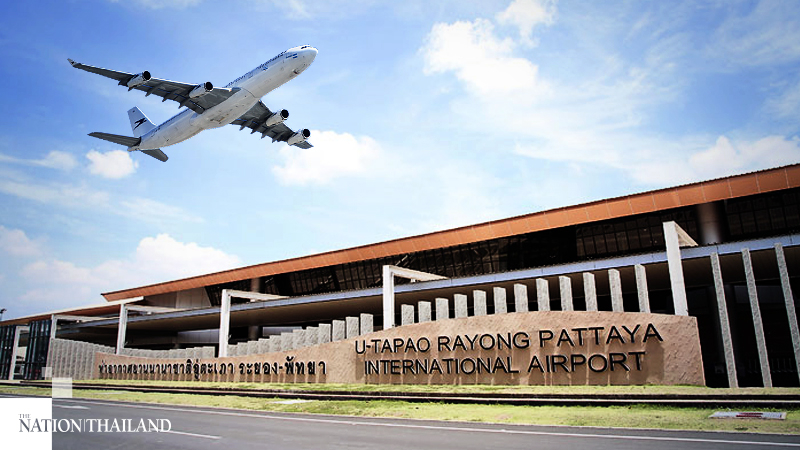
Bangkok Airways Pcl (BA) expects BBS Joint Venture to sign an agreement in June with the Eastern Economic Corridor Policy Committee for building the U-Tapao Airport and Eastern Airport City projects.

BBS Joint Venture was chosen for the projects as it offered the highest returns to the state from among rival bids.

The BBS Joint Venture includes Bangkok Airways (which has a 45 per cent stake), BTS Group Holdings (35 per cent) and Sino-Thai Engineering and Construction (20 per cent).

On June 2, the Cabinet agreed with the result of the private-sector selection to join the project and assigned the EEC Policy Committee to sign the joint venture with the selected companies.

U-Tapao International Aviation Ltd, which has been established from the joint venture, is reportedly ready to sign the contract with the committee in June.

Thai Vietjet offers tickets starting at Bt99 #ศาสตร์เกษตรดินปุ๋ย

#ศาสตร์เกษตรดินปุ๋ย : ขอบคุณแหล่งข้อมูล : หนังสือพิมพ์ The Nation.

https://www.nationthailand.com/business/30389025?utm_source=category&utm_medium=internal_referral

Thai Vietjet offers tickets starting at Bt99

Jun 04. 2020
By THE NATION

Thai Vietjet Air on Wednesday (June 3) launched a special promotion with more than 50,000 tickets priced from just Bt99 (excluding taxes, fees) to fly on selected domestic routes.

“The promotion ‘Unlock Sale’ is open for booking from June 3-5, with travel period from June 3 to September 30 [excluding national holidays],” the airline said.

The promotional tickets are for the airline’s routes from Bangkok (Suvarnabhumi) to Phuket, Krabi and Udon Thani.

The tickets are available on all distribution channels including www.vietjetair.com, mobile app “Vietjet Air” and via Facebook “VietJetThailand”.

Payment can be made with international debit and credit cards, including Visa/ MasterCard/ AMEX/ JCB/ KCP/Union.

In June, Thai Vietjet started returning to the sky for more domestic services. The carrier flies on the domestic network from Bangkok (Suvarnabhumi) to Phuket two flights/day; Krabi one flight/day; Udon Thani two flights/day; Chiang Mai four flights/day; and Chiang Rai two flights/day.

PTTGC keeps eye out for opportunities after Covid #ศาสตร์เกษตรดินปุ๋ย

#ศาสตร์เกษตรดินปุ๋ย : ขอบคุณแหล่งข้อมูล : หนังสือพิมพ์ The Nation.

https://www.nationthailand.com/business/30388999?utm_source=category&utm_medium=internal_referral

PTTGC keeps eye out for opportunities after Covid

Jun 03. 2020
By The Nation

PTT Global Chemical (PTTGC) is reviewing its investment plans for the post-Covid period, Kongkrapan Intarajang, PTTGC’s chief executive officer, said after the shareholders’ meeting on Tuesday (June 2).

He said the company was also looking into opportunities for acquisitions and mergers in order to expand, reduce risks and maintain liquidity.

“The company has studied merger and acquisition opportunities in special grade chemicals, which may expand further in the global market,” he said. “We expect to conclude on this plan within the year once business performance is reviewed after the Covid-19 outbreak comes to an end.”

He said the PTTGC board has also given the green light to issuing US$4 billion (Bt126 billion) worth of debentures within a five-year time frame (2020-2024) to maintain liquidity and cash flow.

“Of the debentures to be issued, $3 billion will be used to repay those that will reach maturity, while the remaining $1 billion will be used to invest in projects that have been approved,” he said.

“In the next five years, PTTGC will have to repay $2.78 billion worth of debentures, while projects that have been approved account for $1.05 billion.”

As per the PTTGC debenture repayment plan, Bt8.16 billion will be repaid this year, Bt22.1 billion in 2021, Bt34.9 billion in 2022, Bt5.96 billion in 2023 and Bt14.7 billion in 2024.

At the end of 2019, the company took Bt105 billion in loans, of which Bt69.2 billion was taken in baht and Bt35.8 billion in foreign currencies.

Panel to look into repayment of debts THAI owes to savings cooperatives #ศาสตร์เกษตรดินปุ๋ย

#ศาสตร์เกษตรดินปุ๋ย : ขอบคุณแหล่งข้อมูล : หนังสือพิมพ์ The Nation.

https://www.nationthailand.com/business/30388959?utm_source=category&utm_medium=internal_referral

Panel to look into repayment of debts THAI owes to savings cooperatives

Jun 03. 2020
By The Nation

The 17 savings cooperatives that have bought Thai Airways International (THAI) debentures have agreed to establish a committee to follow up on the repayment of these debentures, Poramate Intarachumnum, chair of the Cooperative League of Thailand, said on Tuesday (June 2).

He made these remarks after attending a meeting with the 17 savings cooperatives and a team of consultants from Dhipaya Life Assurance to discuss options of solving problems related to the THAI debentures.

“The meeting decided to establish a committee, which will include representatives of the savings cooperatives, to follow up on the repayment of the THAI debentures,” he said.

Poramate added that the committee will also discuss the option of an allowance of doubtful accounts and building accounting records with the Cooperative Promotion Department and the Auditing Department.

“We believe THAI will be able to recover under the bankruptcy law, though this rehabilitation process should not have an impact on the status and performance of the savings cooperatives,” he added.

Mint gets green light to waive financial covenant testing #ศาสตร์เกษตรดินปุ๋ย

#ศาสตร์เกษตรดินปุ๋ย : ขอบคุณแหล่งข้อมูล : หนังสือพิมพ์ The Nation.

https://www.nationthailand.com/business/30388954?utm_source=category&utm_medium=internal_referral

Mint gets green light to waive financial covenant testing

Jun 02. 2020
By The Nation

Hospitality group Minor International (Mint) has won approval from bondholders to waive financial covenant testing for the next three quarters amid the virus crisis.

Mint chief financial officer Brian James Delaney said this would help provide additional financial flexibility to ensure the company’s debt covenants will not be breached.

“The meeting [with bondholders] went successfully. We are delighted to receive such positive support, as the company’s plans and directions are well-understood by bondholders”, Delaney said.

The waiver will serve as another safety net to manage the company’s capital structure, said the group, which covers Minor Hotels, Minor Food and Minor Lifestyle. It comes on top of Mint’s comprehensive long-term funding strategy, which includes perpetual bond issuance, right offerings, and warrants.

Delaney said the company was currently in a strong position in terms of liquidity, with cash reserves of Bt22 billion and unutilised credit facilities of Bt36 billion as of April. He added that this, together with the upcoming equity raising activity, would ensure Mint had sufficient financial resources for the next three years.

“Mint will always maintain its strong financial discipline in any circumstances. We would also like to reiterate that we will honour any interest expense and principal commitments”, Delaney said.