BTS Group’s profits hit all-time high despite Covid-19 #ศาสตร์เกษตรดินปุ๋ย

#ศาสตร์เกษตรดินปุ๋ย : ขอบคุณแหล่งข้อมูล : หนังสือพิมพ์ The Nation.

https://www.nationthailand.com/business/30388948?utm_source=category&utm_medium=internal_referral

BTS Group’s profits hit all-time high despite Covid-19

Jun 02. 2020
By The Nation

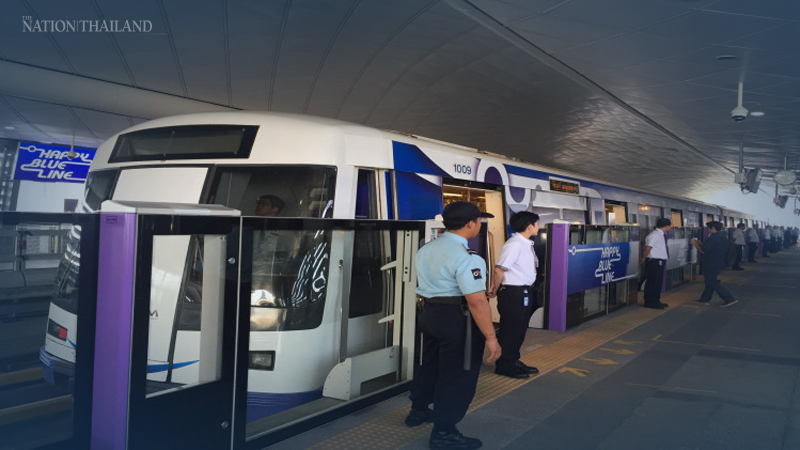
Despite the adverse impact of Covid-19 outbreak on the economy, BTS Group Holdings Public Co Ltd (BTS Group)’s net profit grew 184 per cent year on year to Bt8.2 billion.

In the 2019-2020 financial year, the company’s recurring net profit hit an all-time high, rising by 47 per cent year on year to Bt4.8 billion largely due to improved mass transit systems, media and property businesses and a high share of profits earned by its associates.

Total revenue stood at Bt42.2 billion, with mass transit business being the largest contributor. The media side of the business also posted remarkably strong financial results with an all-time high net profit of Bt1.4 billion, marking a 29 per cent increase year on year.

The expansion of BTS Group’s rail mass transit expansion is continuing to make significant progress on all lines, especially the Green Line, which should see a trial opening of four additional stations up to Wat Phra Si Mahathat station within this month and the rest by the end of the year.

The company also expects to see significant progress in its other transportation projects, namely the U-Tapao International Airport link and intercity motorways, the contracts for which should be signed within this month and next respectively.

In terms of media business, VGI Public Co Ltd (VGI) – an offline-to-online business solutions provider – earned Bt4 billion in total revenue, growing 11 per cent year on year and posted a record-breaking net profit of Bt1.4 billion, up from Bt1.1 billion in the previous year.

VGI Digital Lab, a new online agency business unit which was created to become a data-driven digital marketing arm of VGI, was able to deliver a strong performance, exceeding its first-year revenue target of Bt150 million. Also, from the last quarter of 2019, VGI deconsolidated MACO Public Co Ltd (MACO) and sold its stake to PlanB Public Co Ltd (PlanB), which helped bolster VGI’s profit margin to 35.6 per cent.

“The excellent financial results, especially in the face of uncertainties surrounding the Covid-19 outbreak, illustrates BTS Group’s strong business fundamentals, diversified business portfolio and revenue profile, as well as our ability to navigate a challenging economic environment. Though next year will weigh down financial performance and pose significant challenges as the world continues adjusting to the ‘new normal’, we believe it will be an exciting year for BTS Group, with various upcoming projects in our pipeline including the U-Tapao International Airport and intercity motorway projects. In addition, we continue to explore other long-term partnerships across various sectors to synergise and add value to our existing businesses,” Kavin Kanjanapas, BTS Group’s CEO, said.

BTS Group prides itself on upholding environmental, social and governance frameworks and has been recognised for its commitment to sustainability by several leading institutions across the world. The most notable were recognition from the Dow Jones Sustainability Index and the Thailand Sustainability Investment Index in 2019. BTS Group also won the Asset Triple A Sustainable Capital Markets Regional Awards 2019 under the category “Best Green Bond” deal in the transportation and infrastructure sector and received the “RobecoSAM’s Silver Class distinction” in the Sustainability Yearbook 2020.

AOT considers freeze on employee bonuses as passenger numbers halved #ศาสตร์เกษตรดินปุ๋ย

#ศาสตร์เกษตรดินปุ๋ย : ขอบคุณแหล่งข้อมูล : หนังสือพิมพ์ The Nation.

https://www.nationthailand.com/business/30388940?utm_source=category&utm_medium=internal_referral

AOT considers freeze on employee bonuses as passenger numbers halved

Jun 02. 2020
By The Nation

Airports of Thailand (AOT) may not pay bonuses to employees during the Covid-19 outbreak, which has taken a severe toll on the company’s performance.

AOT forecasts that about 70 million passengers will pass through Thailand’s six main airports this year, down more than 50 per cent from 2019’s figure of 142 million people.

AOT president Nitinai Sirismatthakarn said that Covid-19 outbreak had hit performance at the six airports after airlines suspended flights amid travel bans.

“The AOT board of directors has instructed the administration department to evaluate the situation and make a financial plan,” he said. “Meanwhile, the board considers that it may not be possible to pay bonuses to employees if the situation is not resolved.”

He forecast that the Covid-19 outbreak would continue to affect the aviation industry until 2022, adding that in 2018 and 2019, AOT paid 7.75 months and 7.25 months bonuses to employees, respectively.

He explained that the number of passengers at six airports during the first four months this year was 27 million people, down 46.64 per cent from the same period last year, which saw 50 million people.

“Of total passengers, the number at Suvarnabhumi, Don Mueang, Phuket, Chiang Mai, Hat Yai, and Chiang Rai airports was 12 million, 7.6 million, 3.8 million, 2.1 million, 780,000 and 600,000 people, respectively” he explained.

“The numbers dropped by 48.05 per cent, 46.13 per cent, 44.39 per cent, 46.88 per cent, 42.79 per cent 41.39 per cent, respectively.”

He added that the number of flights in the first four months of this year was 190,000, down 36.64 per cent.

“The number of flights at Suvarnabhumi, Don Mueang, Phuket, Chiang Mai, Hat Yai, and Chiang Rai airports was 81,000, 59,000, 24,000, 17,000, 5,800 and 4,800, respectively. The numbers dropped by 36.55 per cent, 35.38 per cent, 39.54 per cent, 38.53 per cent, 34.07 per cent and 33.47 per cent.”

B Grimm works on finalising LNG procurement deal #ศาสตร์เกษตรดินปุ๋ย

#ศาสตร์เกษตรดินปุ๋ย : ขอบคุณแหล่งข้อมูล : หนังสือพิมพ์ The Nation.

https://www.nationthailand.com/business/30388892?utm_source=category&utm_medium=internal_referral

B Grimm works on finalising LNG procurement deal

Jun 02. 2020
By THE NATION

Energy firm B Grimm Power Public Company Limited (BGrim) is expected to soon finalise the process of procuring liquefied natural gas (LNG), the company’s president Preeyanart Soontornwata said.

The company’s subsidiary B Grimm LNG Ltd was granted a licence to ship up to 650,000 tonnes of LNG per year by the Energy Regulatory Commission. The LNG will be supplied to the company’s power plants from 2022.

She added that several global LNG suppliers have offered to sell to B Grimm. She also said that it is too soon to say which supplier the company will purchase LNG from, and that it is awaiting analysis from a consultation company.

Preeyanart said that B Grimm also hopes to clinch three merger and acquisition deals this year with a total production capacity of 300 megawatts. Two of the three projects are based in Thailand.

B Grimm is confident that it will meet the target of producing 5,000MW in 2022, of which 3,547MW is already under purchase agreements.

Lockdown hits earnings of expressway, MRT operator #ศาสตร์เกษตรดินปุ๋ย

#ศาสตร์เกษตรดินปุ๋ย : ขอบคุณแหล่งข้อมูล : หนังสือพิมพ์ The Nation.

https://www.nationthailand.com/business/30388890?utm_source=category&utm_medium=internal_referral

Lockdown hits earnings of expressway, MRT operator

Jun 02. 2020
By The Nation

The Bangkok Express and Metro Public Co Ltd (BEM) said it expects its revenue for 2020 to drop by 15 per cent year on year because people have had to stop travelling due to the Covid-19 outbreak.

Sombat Kitjalaksana, BEM’s managing director, said the government imposed state of emergency, curfew and other restrictions to control the contagion has caused the number of commuters using expressways and the Metropolitan Rapid Transport (MRT) system to drop.

“However, we expect things to return to normal within the third quarter as the number of cars on the expressways and commuters using the underground rose in May as soon as the government began easing lockdown measures,” he said.

He said he expects the year’s revenue to stand at Bt13 billion, 15 per cent less than last year, while the profit should be Bt2 billion.

“Last year, BEM’s revenue and profit stood at Bt16 billion and Bt3 billion respectively,” he said. “The company’s performance next year is expected to improve as people will start travelling as per normal and the MRT Green Line should start operating by the end of this year.”

He added that BEM plans to further extend the MRT and that it was ready to cooperate with CH Karnchang to bid for the construction of the MRT Orange Line, which will link Thailand Cultural Centre to Bang Khun Non across the Chao Phraya.

“We expect the bidding to kick off in the third quarter,” he said. “We will also launch debentures worth Bt3 billion this month to repay debentures worth Bt2.5 billion that will reach maturity in October, while another Bt500 million will be used to cover operating expenses.”

He added that BEM will also hand out a million face masks to commuters on the MRT Blue and Purple lines for the next two months.

“This is part of a campaign to urge commuters to wear face masks for their own safety and for the safety of other passengers,” he added. “We will also hand out face masks to communities and education institutions across Bangkok and Nonthaburi.”

With no more flights to the US, THAI may not need to seek protection under Chapter 11 #ศาสตร์เกษตรดินปุ๋ย

#ศาสตร์เกษตรดินปุ๋ย : ขอบคุณแหล่งข้อมูล : หนังสือพิมพ์ The Nation.

https://www.nationthailand.com/business/30388897?utm_source=category&utm_medium=internal_referral

With no more flights to the US, THAI may not need to seek protection under Chapter 11

Jun 02. 2020
By The Nation

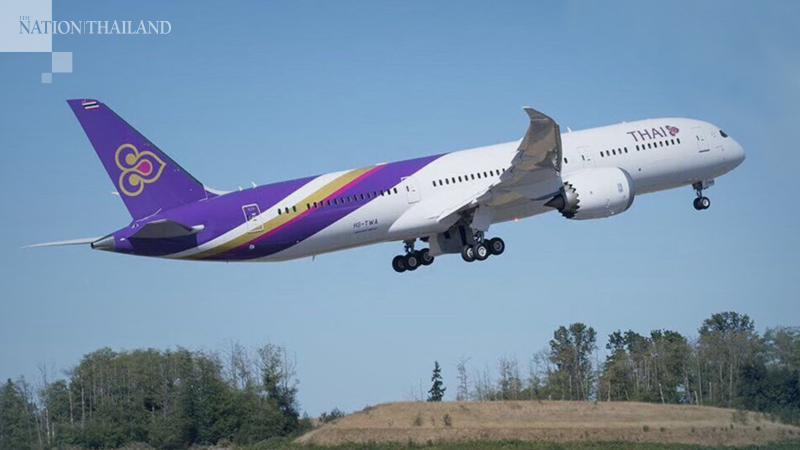
Thai Airways International (THAI) may not need to seek protection under Chapter 11 of the Bankruptcy Code in the United States, a senior official said after a meeting led by Deputy PM Wissanu Krea-ngam on Monday (June 1) with senior THAI officials and the airline’s board.

The meeting was held to discuss the airline’s rehab plan after the Central Bankruptcy Court accepted its bankruptcy protection case on May 27.

Prapas Kong-led, director general of the State Enterprise Policy Office, said the airline will send copies of the rehabilitation petition to its creditors, passengers who seek refunds on their tickets and members of the Royal Orchid Plus frequent flyer programme.

As of last year, THAI’s total debts were worth Bt147.4 billion, with the largest chunk or Bt74.1 billion owed to investors holding its debentures, followed by Bt46.5 billion owed for the leasing of planes and euro-denominated loans worth about Bt11.9 billion.

If creditors allow the rehab process to go via Thai courts, then THAI will not need to seek bankruptcy protection in the US, he said.

According to its legal adviser, THAI may not need to file bankruptcy in the US as it does not have any assets in the United States and it is not scheduling any flights to the US either. Hence, there is no risk of its airplanes being seized by creditors there.

However, the legal advisers said, the airline may need to file legal cases in other countries where it has assets and operates flights, so it can protect its planes from being confiscated by creditors.

Airplanes operated by THAI are divided into two groups – those owned by the airline, and those leased from other companies.

The creditors of the leased planes may exercise their right to seize the aircraft if they do not agree with the rehab plan. Other creditors, however, cannot take the planes unless they file and win a lawsuit.

“Our priority is to convince foreign creditors that they should accept the airline’s rehabilitation under Thailand’s Bankruptcy Court,” Prapas added.

Texas is showing the world how to reopen cautiously #ศาสตร์เกษตรดินปุ๋ย

#ศาสตร์เกษตรดินปุ๋ย : ขอบคุณแหล่งข้อมูล : หนังสือพิมพ์ The Nation.

https://www.nationthailand.com/business/30388901?utm_source=category&utm_medium=internal_referral

Texas is showing the world how to reopen cautiously

Jun 01. 2020
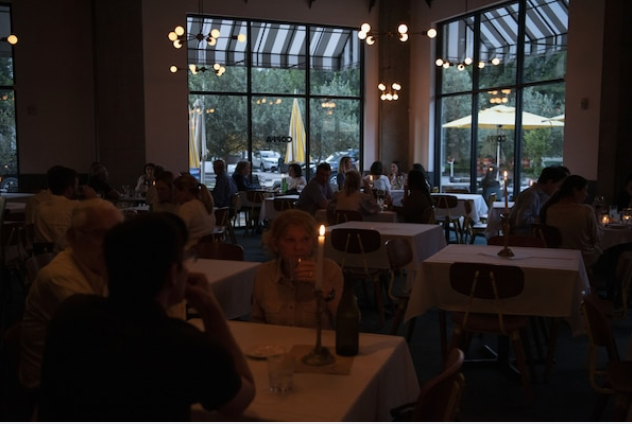
People dine at a restaurant after coronavirus restrictions were lifted in Houston on May 27, 2020. MUST CREDIT: Bloomberg photo by Callaghan O'Hare.

People dine at a restaurant after coronavirus restrictions were lifted in Houston on May 27, 2020. MUST CREDIT: Bloomberg photo by Callaghan O’Hare.
By Syndication Washington Post, Bloomberg · Matthew Townsend, Andre Tartar, Rachel Adams-Heard, Vanessa Fayzulin

Over Memorial Day weekend, a club in Houston hosted a pool party that looked straight out of spring break, with loads of bulky bare chests, bikinis and day drinking on an umbrella-filled patio during a balmy Saturday.

A day earlier, Texas Gov. Greg Abbott allowed bars-along with rodeos, bowling alleys and bingo halls-to open their doors at reduced capacity in the second phase of the state’s plan to restart the economy after shutting down in early April to slow the coronavirus.

The scene at Clé Houston, which quickly spread on social media, played to stereotypes of Texans-libertarian, don’t-tread-on-me types who prize personal freedom. But the reality of how many of the state’s citizens are behaving is much different. In other parts of the city that Saturday, bars were tame, even boring, with sparse attendance and plenty of crowd control. Some owners marked tables and floors with an X to reinforce social distancing. Another set out squeeze bottles filled with hand sanitizer.

South Padre Island, this was not.

A month into the reopening of one of America’s biggest economic engines, Texas looks a lot like those other Houston watering holes: cautiously coming back from the shutdown. Using a variety of data measuring all kinds of activity-from dining out to how frequently people leave their homes-a picture of the Lone Star State emerges that raises doubts about the pace of the economic recovery. For months, the big question has been how quickly Americans will bounce back. Looking at Texas, the answer is that it’s going to be a while.

Concerns erupted a month ago that coronavirus infections could surge after the state eased social-distancing measures-in just one example, prominent Texas Democrat Beto O’Rourke called the Republican governor’s plan “dangerous.” And in the past five days, there’s been an uptick in reported cases, though the rate of gains over the past seven weeks has been stable at about 1,000 a day. Texans appear to have evolved from a lockdown, which they took less seriously than other states, into a middle ground that hasn’t yet led to new outbreaks.

Restaurants reopened on May 1 at reduced capacity, and so far only about a third of the state’s sit-down dining has returned, according to OpenTable. In major cities, the rebound is even more muted. Transactions at restaurants, including takeout and delivery, have tripled since late March, but are still down 50% from before the pandemic, according to Shift4, a payments processor.

Clark Cooper Concepts operates a handful of high-end eateries in Houston, but one location has remained closed because the staff doesn’t want to risk exposure or would rather collect unemployment for now, according to Grant Cooper, one of the group’s partners. And when more customers do venture out, they’ll encounter a starkly different atmosphere than what they’re used to, he said.

“It’s like a high school mixer where everyone’s awkward,” Cooper said of dining during a pandemic. Even when the state ups capacity limits past the current 50%, he’s not sure how much of a difference that will make since they’ll still have to maintain six feet of distance. Plus, “a lot of people have learned in a short period of time that they have an oven and can cook something at home.”

Tony Goncalves, a 59-year-old from Tomball, about 30 miles north of Houston, has avoided restaurants and a lot of other pursuits because of the hassle of the covid-19 era, not health concerns.

“I’m not going to a restaurant if I gotta sit there with a mask, you know?” said Goncalves, a project manager for a pipeline company. “I mean, how do you eat? Until it becomes a lot more convenient to do things, then I would just continue doing what I need to.”

A lot of Texans appear to have adopted a similar mentality, either seeking out convenience or necessities. Supercuts has seen visits surge past where they were a year ago, according to foot traffic data on more than 30 standalone locations monitored by SafeGraph, an analytics firm that tracks mobile phones. Traffic to Walmart, which has remained open because it’s deemed an essential retailer for its grocery, is also above 2019.

That’s not to say people aren’t indulging. They’re flooding Whataburger, a drive-thru chain that in March added the ability to deliver its sweet & spicy bacon burger to your parked car. Rudy’s Country Store and Bar-B-Q, with more than 30 restaurants in the state, also has a robust pick-up business and its customer traffic drastically rebounded over the past month. Trips to Starbucks and Baskin-Robbins are almost back to normal, according to SafeGraph.

Meanwhile, malls all over the state are struggling to lure back customers. Hotel transactions, including bookings, have only rebounded 37% since hitting a nadir on March 22, according to Shift4.

The earliest that Billy Bob’s, a Fort Worth dance hall that calls itself the world’s largest honky-tonk, might open is June 8 and returning to concerts might be a month after that, according to General Manager Marty Travis. Even at the state-mandated 25% capacity (for now, bars are more restricted than restaurants), the venue could still hold 1,500 people. As added precaution, it’s considering installing thermal cameras to detect fevers in employees and patrons.

“We’re coming up on our 40th anniversary next year, and the last thing I need to do is become a hot spot,” Travis said. “The wise decision was to sit tight for a hot minute.”

Airports are largely empty. At Dallas Fort Worth International, the second largest airport in the country, scheduled daily departures are averaging about 500, roughly half the rate from February, according to tracking website Flightradar24. Offices can reopen, but many haven’t, instead opting to keep their staff working from home.

“We’re not in a rush to come back,” said Stephanie Boone, the 42-year-old founder of Wondercide, a 30-person company that makes pest protection products in Austin for nationwide distribution. “Working remote is working for us.”

During the weekday morning rush last week, a main artery into Dallas looked like a Sunday afternoon. In the city’s downtown, about the only cars on the road were FedEx trucks.

“Economic activity has improved from abysmally low to just drastically low,” said James Gaines, chief economist at Texas A&M University’s Real Estate Center. An index of the state’s economy curated by the school plunged to around 40 earlier this month from 120 in March. In the last week, it’s rebounded to the mid-50s.

Given the state’s diversity, there are regional divides in behavior, even within the same city. In the districts north of Dallas, largely white and affluent, residents are leaving their homes much more than a month ago, according to SafeGraph data. Meanwhile the black communities south of the city, which have been hit hard by the virus, have actually seen reduced mobility since the reopening.

In Austin, a politically-liberal enclave, there are lower levels of movement and business activity. In one sign of the dichotomy, a major mall has only seen a small lift in traffic since the reopening. Meanwhile in Midland, deep within the state’s conservative oil-producing Permian Basin, a big shopping center appears to already be back to normal levels of visitors, according to SafeGraph data.

These differences, of course, come amid President Donald Trump turning virus prevention into a partisan issue, by refusing to wear a mask and criticizing states that have kept economic activity under wraps.

“I definitely see a divide along political lines,” said Matt Asendio, a Houston real estate agent who’s witnessed interest in home buying rebound the past two weeks. “There are people who are out and about and aren’t social distancing like you’d like, and a second group that is staying at home.”

Tara Chapman realized the stark differences just 10 minutes outside Austin at a gas station where social distancing was non-existent. Later during her trip last weekend to the Hill Country, she stopped at a taco shop and the only person wearing a mask besides her and her boyfriend was an employee, and her nose wasn’t covered.

Chapman, 38, runs Two Hives Honey, an eight-person Austin beekeeping company that has survived the pandemic by boosting online sales. The company so far hasn’t brought back group events, like hive tours and classes, that had accounted for a third of revenue.

“Austin is taking it a lot more slowly,” Chapman said. “We just aren’t there yet.”

Airbus set to reassess output after virus hits jet demand #ศาสตร์เกษตรดินปุ๋ย

#ศาสตร์เกษตรดินปุ๋ย : ขอบคุณแหล่งข้อมูล : หนังสือพิมพ์ The Nation.

https://www.nationthailand.com/business/30388900?utm_source=category&utm_medium=internal_referral

Airbus set to reassess output after virus hits jet demand

Jun 01. 2020
Guillaume Faury, chief executive officer of Airbus, at a news conference in Toulouse, France, on Feb. 13, 2020. MUST CREDIT: Bloomberg photo by Balint Porneczi.

Guillaume Faury, chief executive officer of Airbus, at a news conference in Toulouse, France, on Feb. 13, 2020. MUST CREDIT: Bloomberg photo by Balint Porneczi.
By Syndication Washington Post, Bloomberg · Charlotte Ryan, Siddharth Philip, Anurag Kotoky · BUSINESS, WORLD, TRANSPORTATION, US-GLOBAL-MARKETS, EUROPE 

Top Airbus executives are planning to assess additional measures that may be necessary to address the impact of the coronavirus pandemic, according to people familiar with the matter.

Among the topics to be discussed at a meeting this week are production rates for the plane-maker’s top-selling A320-series narrow-body jet, said the people, who asked not to be named discussing confidential deliberations.

While an adjustment wouldn’t necessarily entail a rate cut, Airbus slashed output by about a third in April to cope with cratered demand from airlines that have parked planes because of the virus. At the time, the planemaker said it would aim to produce 40 of the single-aisle A320s per month, and reassess once it determined whether the recovery was “V-shaped” or “L-shaped.”

Almost two months later, many airlines remain grounded and short of cash, and are racing to cut jobs as the depth of the downturn sinks in. Without a vaccine to reassure passengers, flying could remain depressed for some time, sapping aircraft demand over the medium term while carriers nurse themselves back to health.

“This year will be really difficult,” said George Ferguson, an analyst with Bloomberg Intelligence. “I think an adjustment would come soon because I imagine they will be having a hard time getting airlines to take planes this quarter.”

An Airbus spokesman declined to comment on speculation related to internal meetings.

Shares in the Toulouse, France-based company advanced 3% to 58.37 euros as of 9:23 a.m. in Paris, paring this year’s drop to 55%.

The popular A320 series accounts for the bulk of Airbus’s production and cash flow. The planemaker handed over only 12 of the models during April, as it juggled rolling factory closures and negotiated with customers seeking to cancel or postpone deliveries. The company is set to announce its monthly order-and-delivery totals for May this week.

Chief Executive Officer Guillaume Faury has previously said that the company would reassess production rates by June.

“Our goal is to have completed a new stability to define a new world by June,” he said on an April 29 conference call. “We will have a more granular picture; it should not change significantly compared to what we have already done, but it could change slightly.”

In April, Airbus also lowered output of the advanced A350 wide-body to six a month, with the slower-selling A330 limping along at two a month, raising questions on the continued viability of the program. A ramp-up in production of a smaller narrow-body, the recently acquired A220 series, has also been slowed.

The A380 super-jumbo program, Airbus’s biggest jetliner, was already scheduled to wind down over coming months. Carriers have been taking the double-decker out of service, and Bloomberg has reported that its biggest customer, Emirates Group, is seeking to cancel the final five deliveries left on its order.

Any decision to further slash production would align with Faury’s plans to lower headcount as the company confronts the worst aviation downturn in its history.

Faury told senior managers in May that the European planemaker must “act fast” to eliminate jobs as it confronts the sharpest downturn ever in the aviation industry.

Hedge fund in Sweden trounces return target with rare AI model #ศาสตร์เกษตรดินปุ๋ย

#ศาสตร์เกษตรดินปุ๋ย : ขอบคุณแหล่งข้อมูล : หนังสือพิมพ์ The Nation.

https://www.nationthailand.com/business/30388874?utm_source=category&utm_medium=internal_referral

Hedge fund in Sweden trounces return target with rare AI model

Jun 01. 2020
By Syndication Washington Post, Bloomberg · Jonas Cho Walsgard · BUSINESS

A Swedish hedge fund called Volt Capital Management has run circles around its own return target by relying on a form of artificial intelligence it says is unique.

Volt Diversified Alpha Program was created in early 2017 by Jukka Harju, the former head of research at Lynx Asset Management. It has about $30 million under management, and this year it’s delivered more than double the 10% return target it promised investors. They’ve received 24%. In March, when Covid-19 triggered a global selloff across markets, Volt had a positive return of 12%.

Patrik Safvenblad, the fund’s chief investment office, says his models, once plugged into Volt’s AI program, helped him position for the slump in oil markets, and for gains in bonds and the dollar.

Volt is doing “something that is unique within machine learning,” Safvenblad said in an interview. “We take the power of fundamental models – we believe in fundamentals, fundamentals matter – we combine that power with machine learning.”

He says the model addresses two problems. “If you trade based on fundamentals, you have a problem to choose from your models. If you do machine learning based on technical signals, you risk ending up with so-called false positives.”

Instead, Volt has chosen 200 models it thinks will make money. But, “we don’t know exactly when, or how to weight them,” Safvenblad said. “We use machine learning to handle the daily weighting problem.”

Volt’s investment horizon is relatively short, averaging about 12 trading days. The fund holds roughly 70 positions at any given time. Its analysis shows that the economy will stay weak.

“Basically the systems are positioned for continued economic weakness, with focus on commodities, equity markets still appear too volatile for significant positions,” Safvenblad said. He’s short soft commodities and “a bit short equities.” Long bets include gold, platinum, fixed income in Europe and the U.S., as well as the Greenback against the Australian and New Zealand dollars.

“The market is always right,” Safvenblad said. “We don’t think we know better than the market. So when something goes against us, we decrease exposure to those positions, models and sectors. We simply close positions that don’t work. This way we can increase to positions that do work.”

InterContinental Hua Hin reopens with ‘scrupulous attention to hygiene’ #ศาสตร์เกษตรดินปุ๋ย

#ศาสตร์เกษตรดินปุ๋ย : ขอบคุณแหล่งข้อมูล : หนังสือพิมพ์ The Nation.

https://www.nationthailand.com/business/30388862?utm_source=category&utm_medium=internal_referral

InterContinental Hua Hin reopens with ‘scrupulous attention to hygiene’

Jun 01. 2020
By THE NATION

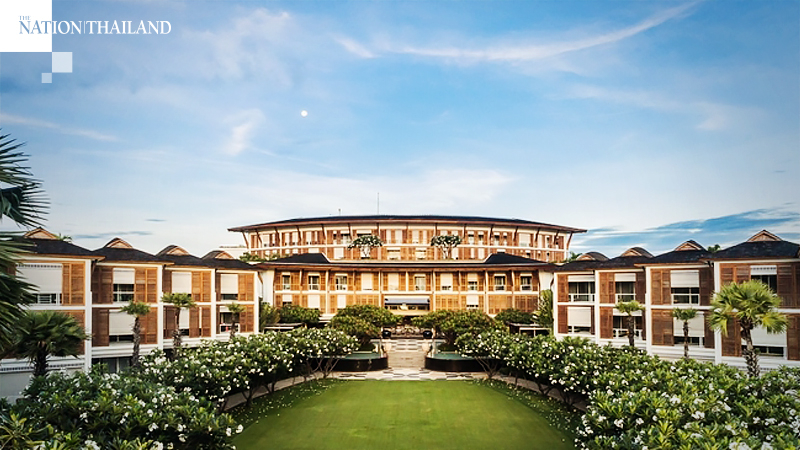
After a two-month closure amid the Covid-19 crisis, InterContinental Hua Hin Resort is reopening to guests starting today (June 1) as the third phase of lockdown easing goes ahead.

General Manager Michael Janssen said there’s far more to reopening the resort than “merely circling a number on the calendar”.

“Of course, first and foremost in our minds is that the pandemic has caused much suffering and economic hardship. Yet now, as we prepare for reopening, those of us in the hotel business must also bear in mind some new and important duties required of us following the crisis,” he said.

“We know it isn’t a matter of going back to business as usual. It can’t be. While the health and safety of our guests has certainly always been a priority, the measures we take from now on in that regard must be even more extensive and will involve, unsurprisingly, scrupulous attention given to hygiene matters. And that applies everywhere at the resort, including all guest rooms, public spaces and staff areas.”

Body-temperature checks will be conducted on each guest upon entering the hotel, in addition to thorough cleaning and disinfecting of public areas including high-contact surfaces such as lift buttons, handrails and door handles. Hand sanitisers have also been installed throughout the resort.

Moreover, guests will be required to maintain social distancing. Seating around the swimming pools and at all dining venues will be in accordance with the guidelines determined by public health authorities, the hotel said in a statement. However, to lessen any inconvenience, the resort will offer “service enhancements”, such as an “additional à la minute breakfast menu” for guests at each table.

THAI extends salary cuts #ศาสตร์เกษตรดินปุ๋ย

#ศาสตร์เกษตรดินปุ๋ย : ขอบคุณแหล่งข้อมูล : หนังสือพิมพ์ The Nation.

https://www.nationthailand.com/business/30388857?utm_source=category&utm_medium=internal_referral

THAI extends salary cuts

Jun 01. 2020
By The Nation

Thai Airways International Public Company Limited (THAI) has extended the period of salary reductions by 10-15 per cent from May 31 to the end of August.

The airline, which is now under rehabilitation after it filed for bankruptcy, has announced that its employees will continue receiving lower salaries for the next three months.

The Civil Aviation Authority of Thailand’s temporary ban on international flights during the pandemic has also cost THAI revenue.

The company now needs to strictly control its expenses to bring these to their lowest point necessary in order for the rehabilitation to succeed.