Delta, JetBlue criticized for cutting employee hours after receiving billions in coronavirus relief #ศาสตร์เกษตรดินปุ๋ย

#ศาสตร์เกษตรดินปุ๋ย : ขอบคุณแหล่งข้อมูล : หนังสือพิมพ์ The Nation.

https://www.nationthailand.com/business/30388291?utm_source=category&utm_medium=internal_referral

Delta, JetBlue criticized for cutting employee hours after receiving billions in coronavirus relief

May 22. 2020
By The Washington Post · Lori Aratani · NATIONAL, BUSINESS, HEALTH, POLITICS, TRANSPORTATION, TRAVEL 
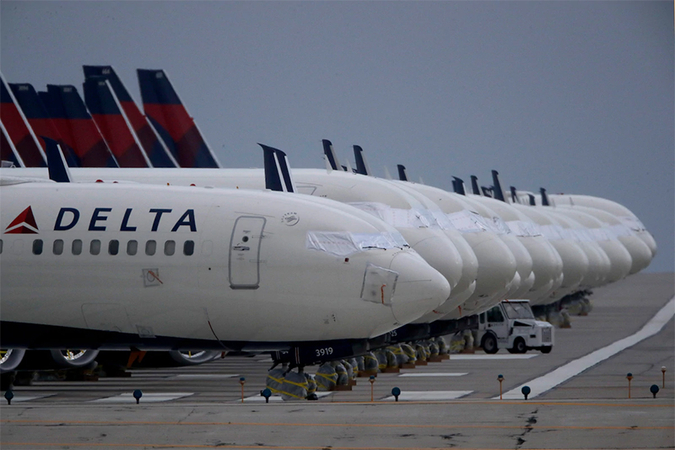
WASHINGTON – Lawmakers are criticizing Delta Air Lines and JetBlue for plans to cut employee hours, despite receiving more than $5 billion in government support as part of the federal coronavirus relief package.

In letters sent this week to the airlines’ chief executives, more than a dozen senators wrote that plans to reduce employee hours violate the intent of the Payroll Support Program that was established as part of the $2 trillion Cares Act.

“Your decision to cut employee hours is inconsistent with congressional intent and is a blatant and potentially illegal effort to skirt you requirements to keep workers on payroll, and you should reverse this policy immediately,” the senators wrote.

Under the Cares Act, U.S. airlines were eligible to receive more than $50 billion in grants and loan. Of that, $25 billion was in the form of grants that were to be used to keep front line workers such as flight attendants, pilots and mechanics on the job. In exchange for receiving the money, airlines had to agree to a number of conditions, including keeping workers on the job through Sept. 30.

Delta received more than $5 billion in grants as part of the program; JetBlue received $935 million.

But since the money began flowing, airlines and lawmakers have been at odds over the intent of the law.

United Airlines was the first to run afoul of lawmakers after it unveiled plans to reduce hours for some employees. The International Association of Machinists and Aerospace Workers, which represents the workers, sued the airline saying the reductions violated their contract and the Cares Act. The airline eventually backed away from the plan, making the reductions voluntary.

At a Senate Banking Committee hearing Tuesday, Sen. Elizabeth Warren, D-Mass., pressed Treasury Secretary Steven Mnuchin on whether his agency was doing enough to ensure companies that received money were keeping workers on the payroll.

In the letters, the senators noted that Delta “was reportedly the first airline to cut hours for employees after receiving assistance from the CARES Act. In the letter to JetBlue chief executive Robyn Hayes, the senators noted that since receiving Cares Act funding the airline has cut hours for mechanics, passenger service agents and ramp workers.

In both cases, the senators noted that company officials have said the “reductions in hours comply with the CARES Act.”

They wrote: “This view is impossible to reconcile with the clear intent of the law.”

The senators said that Delta and JetBlue should not accept any additional funds, “unless you are prepared to protect your workers’ jobs, pay and benefits as intended by Congress in the CARES Act.”

“Your federal financial assistance is conditioned on keeping your promises to workers,” the letters concluded.

Blue Flame Medical asks Maryland to restore its contract for covid-19 equipment #ศาสตร์เกษตรดินปุ๋ย

#ศาสตร์เกษตรดินปุ๋ย : ขอบคุณแหล่งข้อมูล : หนังสือพิมพ์ The Nation.

https://www.nationthailand.com/business/30388290?utm_source=category&utm_medium=internal_referral

Blue Flame Medical asks Maryland to restore its contract for covid-19 equipment

May 22. 2020
Maryland Governor Larry Hogan removes his removes a face mask as he begins a news conference in Annapolis. The state canceled a contract with Blue Flame Medical after it said the company failed to deliver medical masks and ventilators on time. MUST CREDIT: Washington Post photo by Jonathan Newton.

Maryland Governor Larry Hogan removes his removes a face mask as he begins a news conference in Annapolis. The state canceled a contract with Blue Flame Medical after it said the company failed to deliver medical masks and ventilators on time. MUST CREDIT: Washington Post photo by Jonathan Newton.
By The Washington Post · Tom Hamburger, Juliet Eilperin · NATIONAL, BUSINESS, US-GLOBAL-MARKETS

Blue Flame Medical, the supply company started this spring by two Republican consultants, has asked the state of Maryland to restore a canceled $12.5 million contract with the firm to provide equipment used in the fight against coronavirus.

The contract was canceled by Maryland officials earlier this month who said Blue Flame failed to deliver medical masks and ventilators on time. The firm’s lawyer, Douglas Gansler, a former Maryland attorney general, said Thursday that Maryland officials made a mistake.

Gansler said 27 of 110 mechanical ventilators promised by Blue Flame were delivered Thursday to a Maryland Emergency Management Agency office in Sparrows Point, a sign of the company’s good faith effort to fulfill its obligation.

Nick Cavey, a spokesman for the Maryland Department of General Services, acknowledged the delivery of 27 ventilators but said the state had not accepted it “pending legal deliberations. At this time, we continue to work through the very concerning legal issues surrounding Blue Flame, which is the subject of separate federal, state and congressional inquiries. We are awaiting more information from the company regarding the 1.55 million masks and remaining ventilators that the state ordered.”

Gansler said the state has no grounds to kill the deal. “There is absolutely no defense for canceling this contract,” Gansler said in an interview Wednesday night. He filed a claim with the state Department of General Services noting that the contract required delivery by June 30, a deadline he said the recently formed company is prepared to meet. “I would like to believe that the government will rescind the termination and reinstate the purchase order and get 1.5 million masks and 110 ventilators in to the state as the contract calls for.”

Maryland Gov. Larry Hogan’s (R) spokesman Michael Ricci said in an email Thursday that the state does not need additional ventilators now.

“There are currently 1,765 ventilators available in Maryland hospitals, well above our target,” he said.

State officials have previously said the agreed-upon shipping date for the masks and ventilators was April 14, and the original order only referred to June 30 because it marks the end of the fiscal year. A Blue Flame invoice obtained by The Washington Post indicates April 14 as the shipping date.

The U.S. Justice Department launched an inquiry into Blue Flame less than a month ago after becoming aware of concerns from Maryland and California, where state officials contracted with the firm to deliver 100 million N95 medical masks.

California officials halted that contract and received a refund hours after the state wired a down payment of $457 million to a Blue Flame bank account in Northern Virginia.

State and local officials across the country have encountered problems as they have entered the global market to purchase mask, gowns and other medical supplies. In many instances, orders have fallen through or been secured only at inflated prices.

Although Maryland officials confirmed receiving subpoenas from federal prosecutors, Gansler said he had no information about the Justice Department inquiry and did not believe it would amount to anything.

“There is no allegation that Blue Flame Medical committed any crime of a civil or criminal nature,” he said. In fact, the fledgling company already had established a record of delivering vitally needed products in a difficult environment, he said.

“There have been many obstacles created by the Chinese government and other foreign manufacturers that have prevented top quality products from entering the U.S.” during the pandemic, Gansler said. “Yet Blue Flame Medical has been able to deliver. It delivered bulk orders of personal protective equipment to New York, Nevada and Florida – and there is going to be a major delivery to Chicago.”

Blue Flame received a down payment of nearly $6.3 million from Maryland in early April and agreed to provide masks and ventilators within a few weeks, state officials said.

Gansler said that while there was hope of quick delivery, the contract states that the masks and ventilators will be delivered by June 30.

“Blue Flame can and will meet that obligation once Maryland reinstates the purchase order,” Gansler said.

Blue Flame was started in late March by Michael Gula, a fundraising expert in national Republican politics and John Thomas, a California political consultant. Gula’s firm raised money for Republican Sens. Marco Rubio (Fla.), Ron Johnson (Wis.), Patrick Toomey (Pa.) among others. He stunned clients in March when he suddenly announced he was leaving the political fundraising world to start a medical supply company, a field in which he had no experience.

Thomas recently worked as a strategist and fundraiser for Republican Don Sedgwick, who sought to run against Rep. Katie Porter, D-Calif., but lost in the March primary. The two GOP operatives incorporated their firm in Delaware on March 23 and a week later received the contract from Maryland.

The company made its initial pitch for the sale directly to a staffer in Hogan’s office, according to one Maryland official. Gula then began using that staffer’s name on a reference sheet to seek contracts with other states. The staffer referred the matter to the chief legal counsel for Hogan, Mike Pedone, on April 9. Several weeks later, Pedone referred the matter to the Maryland Attorney General’s Office for review.

Gansler’s formal request to restore the state contract detailed the company’s communications with the state before and after the contract was signed. He said that the company’s behavior revealed “no impropriety at all.” But he faulted state officials for providing information about the cancellation of the contract to news organizations before letting the company know or hearing its response and commitment to meeting the terms of the contract.

Cooperatives dept negotiates payment plan for THAI debenture holders #ศาสตร์เกษตรดินปุ๋ย

#ศาสตร์เกษตรดินปุ๋ย : ขอบคุณแหล่งข้อมูล : หนังสือพิมพ์ The Nation.

https://www.nationthailand.com/business/30388271?utm_source=category&utm_medium=internal_referral

Cooperatives dept negotiates payment plan for THAI debenture holders

May 22. 2020
By The Nation

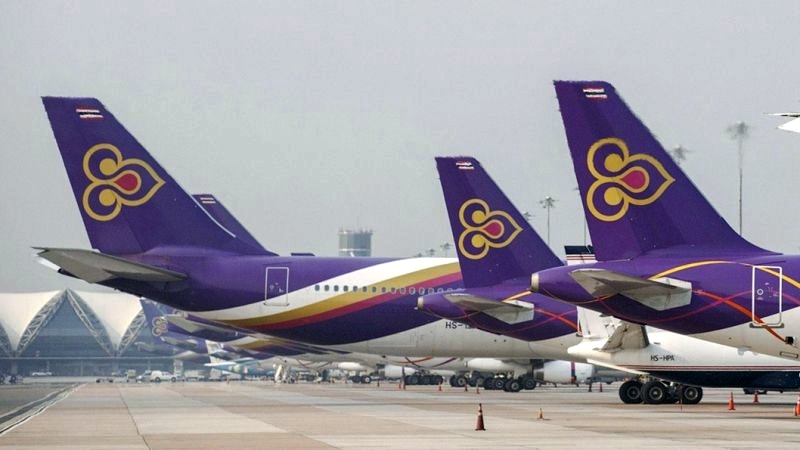
The Cooperatives Promotion Department will negotiate payment plans with 82 cooperatives that have bought Thai Airways International (THAI) debentures.

“Initially we will look into different ways of handling the debt, such as postponing repayments, making cuts or changing debt to equity, Phichit Wiriyapaha, the department’s director general, said.

He added that the 82 cooperatives had bought Bt42 billion worth of THAI debentures and the total assets of the cooperatives stood at approximately Bt1.17 trillion.

He also said that if the Bankruptcy Court approves the airline’s rehab plan, then the debt will be paid in line with the plan.

Meanwhile, Transport Minister Saksayam Chidchob said that in line with preparations for filing bankruptcy and rehabilitation of the national carrier, the airline’s board of directors need to prepare details about THAI’s assets and liabilities, as well as come up with a debt-repayment schedule.

“We have also asked THAI’s board of directors to come up with a list of names for the planning team as well as terms of reference to hire financial and legal consultants, which the ministry will propose to Prime Minister Prayut Chan-o-cha for consideration,” Saksayam said.

He also said the board has to come up with a liquidity management plan to cover salaries and other payments, though it will have to be cleared with the Thai Airways Union and the airlines 20,000 plus employees.

“The board also has to cooperate with the investigation team appointed by Deputy Transport Minister Thaworn Senniam to gain the confidence of creditors,” he said.

Meanwhile, officials at the ministry said THAI was still able to pay salaries and make other payments until the end of June, though it has to negotiate delays in repayment with creditors.

“If THAI comes up with a rehabilitation plan in the next three to four weeks, we expect it to be able to cover salaries and other payments until the end of October,” an official said.

Deputy Prime Minister Wissanu Krea-ngam, meanwhile, said the government will no longer provide financial aid to THAI.

“Once the Finance Ministry sells 3 per cent of its shares, bringing its holding down to 48 per cent, then THAI will lose its state-enterprise status and become a public company,” he said.

He made the comment after meeting with Finance Minister Uttama Savanayana, Saksayam and representatives of the State Enterprise Policy Committee on Thursday (May 21).

Meanwhile, the Finance Ministry is discussing the sale of its shares with Vayupak Fund.

Wissanu said that as the largest shareholder, the Finance Ministry is also building a team to layout the rehab plan to present to creditors and the Bankruptcy Court.

If the creditors reject the plan, then the deal will collapse, or if the creditors agree and the court doesn’t approve, the deal will also collapse, he said. The rehab plan will only work if both sides agree, he said.

He added, both the Finance and Transport ministries will set up a rehab management team in three months.

An informed source said the Transport Ministry will propose 15 experts, and another 15 will be proposed by the Finance Ministry for the rehab job.

Lufthansa nears rescue, making Germany its top shareholder #ศาสตร์เกษตรดินปุ๋ย

#ศาสตร์เกษตรดินปุ๋ย : ขอบคุณแหล่งข้อมูล : หนังสือพิมพ์ The Nation.

https://www.nationthailand.com/business/30388275?utm_source=category&utm_medium=internal_referral

Lufthansa nears rescue, making Germany its top shareholder

May 21. 2020
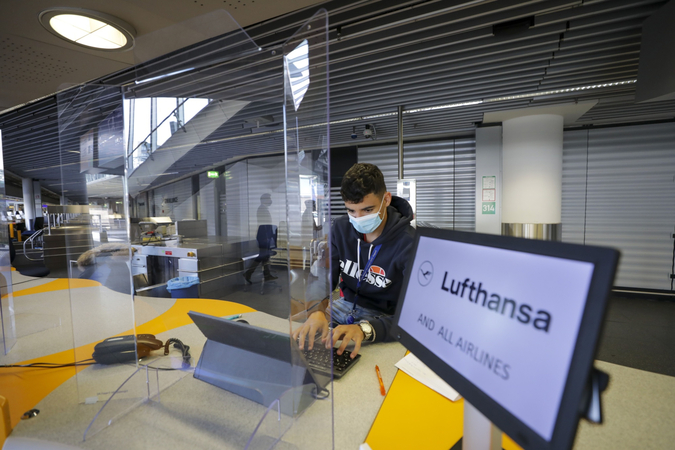
An employee wears a face mask while sat behind a protective screen at a Deutsche Lufthansa passenger check-in desk at Frankfurt Airport in Frankfurt, Germany on May 12, 2020. MUST CREDIT: Bloomberg photo by Alex Kraus.

An employee wears a face mask while sat behind a protective screen at a Deutsche Lufthansa passenger check-in desk at Frankfurt Airport in Frankfurt, Germany on May 12, 2020. MUST CREDIT: Bloomberg photo by Alex Kraus.
By Syndication The Washington Post, Bloomberg · William Wilkes, Arne Delfs, Eyk Henning

Deutsche Lufthansa is close to a multibillion euro bailout deal that would see the state become its biggest shareholder after the coronavirus punctured a decades-long boom in air travel.

The shares gained as much as 8.3% Thursday after Europe’s largest carrier confirmed it’s in advanced talks with Germany’s WSF Economic Stabilization Fund for as much as 9 billion euros ($9.9 billion) in aid. The package would include a 3 billion-euro loan, a so-called silent participation and a 20% direct stake through the sale of new shares, Lufthansa said.

The government would also receive a convertible bond equivalent to 5% plus one share. Under German law, the 25% plus one share total stake would enable the state to block motions at annual general meetings, giving it a veto over hostile takeover attempts.

“A decision can be expected shortly,” German Chancellor Angela Merkel said late Wednesday in Berlin, adding that “intensive talks” were ongoing with the company and the European Commission, which would need to approve a deal.

If agreed, the compromise deal would bring the curtain down on weeks of tense negotiations between the company and state officials. At issue was the question of how involved the state should be in the affairs of a company that’s long been a symbol of German industrial might and its identity as exporter to the world. Like other airlines across the globe, Lufthansa has been battered by a near-halt to air travel that’s ruined the finances of previously healthy carriers and forced them to seek state bailouts.

Under the plan, Germany would also receive two seats on Lufthansa’s supervisory board. The company didn’t say whether these would be political or independent figures, a matter under discussion in negotiations.

The seats should be occupied by experts who won’t influence business decisions, said Carsten Linnemann, a legislator in Merkel’s CDU-led conservative caucus group. “The goal is an early exit of the state, so that Lufthansa will be able to stand on its own feet again.”

Lufthansa advanced 5.6% to 8.36 euros as of 1:43 p.m. Thursday in Frankfurt. The stock has lost about half its value this year.

An accord could be completed rapidly once the European Commission grants its approval.

The commission declined to comment Thursday on specific cases. It said in an email that it’s aware of the difficulties in the aviation sector and European Union state-aid rules “enable member states to support companies affected by the outbreak.”

It would also set the scene for a dramatic extraordinary general meeting at which shareholders would vote on whether to accept a package that would dilute their own stakes.

Lufthansa would issue the shares to the government for the nominal price of 2.56 euros, a steep discount that would allow the state to profit from any upside to the price. The parties are also discussing a capital-cut option that would see Lufthansa issue shares below that price, the statement said.

Lufthansa units in Switzerland, Austria and Belgium, stand to receive some 2 billion euros in additional funds from those countries. The Swiss deal totaling 1.28 billion francs ($1.3 billion) is in place, while the Austrian and Belgian ageements are likely to follow Germany’s.

Final details of the German deal are still being worked out, according to a government spokeswoman.

The contours of a deal come after the airline warned in a letter that cash reserves continued to shrink while it negotiates the rescue package. Lufthansa’s board said it hoped the government would find the “political will” for a deal that would keep the carrier competitive against international airlines.

The German government and Lufthansa have been locked in intense negotiations for weeks over the rescue plan. While the Economy Ministry and Finance Ministry internally agreed on taking a stake of 25% plus one share, the company had opposed the move, people familiar with the matter said earlier.

Lufthansa executives had raised concerns that the terms on offer would hamstring it against international competitors who’ve received less stringent bailout conditions, a point the management board repeated in the letter to employees.

Christian Democrats had also voiced concern that the running of Lufthansa risks becoming politicized. The party is trying to prevent Ulrich Nussbaum, the deputy to Economy Minister Peter Altmaier, from taking one of the board seats. They feel Nussbaum betrayed his boss by forcing his own agenda in the talks.

“The two seats in the supervisory board must now be occupied by experts, who will aim for the economic recovery of Lufthansa and who won’t follow a political agenda,” CDU legislator Linnemann said.

Lufthansa is burning through 800 million euros each month after the coronavirus grounded most of its fleet. Chief Executive Officer Carsten Spohr said on May 5 that the company had about 4 billion euros in cash remaining.

Krungsri cuts lending rates in response to MPC move #ศาสตร์เกษตรดินปุ๋ย

#ศาสตร์เกษตรดินปุ๋ย : ขอบคุณแหล่งข้อมูล : หนังสือพิมพ์ The Nation.

https://www.nationthailand.com/business/30388248?utm_source=category&utm_medium=internal_referral

Krungsri cuts lending rates in response to MPC move

May 21. 2020
President and chief executive officer Seiichiro Akita

President and chief executive officer Seiichiro Akita
By THE NATION

Krungsri (Bank of Ayudhya and its group companies) on Thursday (May 21) cut its minimum loan rate (MLR) from 5.83 per cent to 5.58 per cent, the minimum overdraft rate (MOR) from 6.30 per cent to 5.95 per cent and minimum retail rate from 6.30 per cent to 6.05 per cent.

The new lending rates took effect on Thursday.

The move follows the Monetary Policy Committee (MPC)’s decision to cut the key policy rate by 0.25 percentage point from 0.75 to 0.50 per cent effective on Wednesday (May 20).

President and chief executive officer Seiichiro Akita said Krungsri stands ready to support the authorities’ monetary policy through the banking mechanism in relieving the impact of the coronavirus outbreak on businesses and reducing customers’ funding costs.

This was the fourth reduction in rates for Krungsri following previous rate reductions on February 8, March 24 and April 10.

Nearly 6,000 THAI staff to be laid off #ศาสตร์เกษตรดินปุ๋ย

#ศาสตร์เกษตรดินปุ๋ย : ขอบคุณแหล่งข้อมูล : หนังสือพิมพ์ The Nation.

https://www.nationthailand.com/business/30388241?utm_source=category&utm_medium=internal_referral

Nearly 6,000 THAI staff to be laid off

May 21. 2020
By The Nation

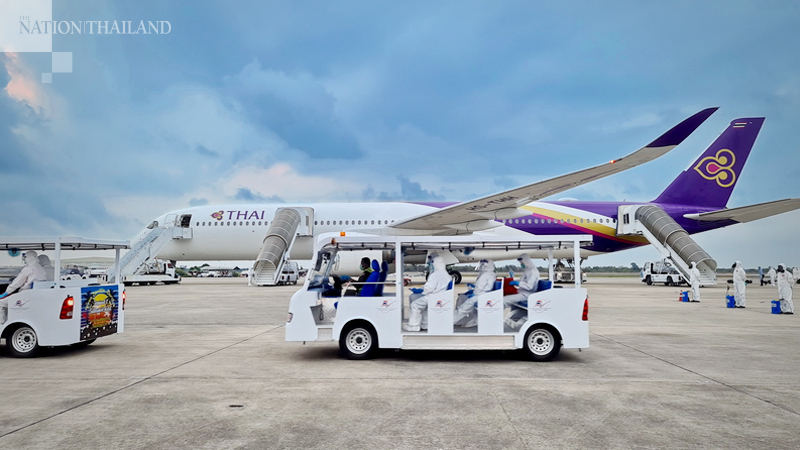
Thai Airways (THAI) will have to dismiss more than 6,000 employees after entering a bankruptcy procedure and a debt moratorium of Bt200 billion, the government said on Thursday.

The Cabinet decided to push THAI into a bankruptcy procedure under the Bankruptcy Act BE2483 (AD1940) and ordered the Ministry of Finance to sell its majority stake in the airline.

THAI will stop repaying all debt and start from scratch, the government said. According to the size of its debt, 30 per cent of its over 20,000 employees, or over 6,000 people, will have to be dismissed. They will receive a 10-month compensation as per the labour law.

The rehabilitation of the airline has to be approved by the creditors and it is likely to take at least one year, sources said.

Local, foreign creditors back govt’s move to put THAI under bankruptcy protection #ศาสตร์เกษตรดินปุ๋ย

#ศาสตร์เกษตรดินปุ๋ย : ขอบคุณแหล่งข้อมูล : หนังสือพิมพ์ The Nation.

https://www.nationthailand.com/business/30388211?utm_source=category&utm_medium=internal_referral

Local, foreign creditors back govt’s move to put THAI under bankruptcy protection

May 21. 2020
By The Nation

Creditors are supporting the government’s move to have Thai Airways International (THAI) seek bankruptcy protection, while the Finance Ministry is preparing to negotiate the sale of 3 per cent of its stake in the airline, which will make the national carrier lose its state enterprise status.

An informed source in the financial sector said on Wednesday (May 20) that THAI’s domestic and foreign creditors have signalled that they want the airline to seek bankruptcy protection. The creditors also have appointed lawyers to negotiate the repayment of debt, while the Transport Ministry has been assigned by the Cabinet to file for the airline’s rehabilitation with the Bankruptcy Court.

According to THAI’s 2019 financial statement, its debt obligations stand at Bt147.4 billion.

The debt comprises Bt46.5 billion incurred from the leasing of planes with 32 planes used as collaterals for loans from foreign banks, including banks in France and Japan. Another chunk of the debt is Bt74.1 billion in loans, of which Bt2 billion is owed to Krung Thai Bank, Government Savings Bank, and CIMB Thai, Bt8.9 billion taken in long-term loans from banks in Germany and the United states, and a short-term debt worth Bt3.5 billion. The airline also owes a Bt11.9-billion foreign currency denominated debt to the Finance Ministry and Bt437 million owed to the Export-Import Bank of Thailand.

“If the rehab process moves fast and some businesses can be split apart, then THAI could recover within a year,” the source said, though he conceded that if the Finance Ministry cuts its holding to below 50 per cent, then THAI will find it tough to raise funds in the future.

Finance Ministry officials are scheduled to meet with representatives of Vayupak Fund today (May 21) to discuss the option of selling off shares after the Cabinet approved the ministry’s proposal to reduce its holding to 48 per cent. The ministry plans to sell 3.17 per cent of its shareholding to the fund.

Initially the two sides agreed to price the shares at a seven-day average and a 15 to 20 per cent discount. The ministry is expected to get approximately Bt600 million to Bt700 million from the transaction.

Finance Minister Uttama Savanayana has said that the sale of shares should be completed within next week.

THAI’s share price has risen sharply over the past two months, closing at Bt5.4 on Wednesday – up almost 15 per cent from the previous day and touching the upper ceiling for the eight time in two months.

Meanwhile, Tisco Security has warned that investing in the airline may be too high a risk, citing the fact that few companies have had success in rehab. Since the 1997 financial crisis, 52 firms filed for bankruptcy protection, and 20 or 38 per cent have failed and been removed from the stock market. Nine firms are still under rehabilitation and trading in their shares has been suspended, while 23 firms, representing 44 per cent, have been successfully rehabilitated and have returned to normal trading.

Rehabilitation on average takes seven years, a Tisco analyst said.

The Transport Ministry is expected to file for bankruptcy protection on THAI’s behalf in mid-June with Thai and US courts. Transport officials and THAI’s management team will submit a list comprising 30 names for the rehab management team to Prime Minister Prayut Chan-o-cha on May 25 for consideration.

Bangkok Bank completes acquisition of Indonesia’s Bank Permata #ศาสตร์เกษตรดินปุ๋ย

#ศาสตร์เกษตรดินปุ๋ย : ขอบคุณแหล่งข้อมูล : หนังสือพิมพ์ The Nation.

https://www.nationthailand.com/business/30388206?utm_source=category&utm_medium=internal_referral

Bangkok Bank completes acquisition of Indonesia’s Bank Permata

May 20. 2020
Chartsiri Sophonpanich, president of Bangkok Bank

Chartsiri Sophonpanich, president of Bangkok Bank
By THE NATION

Bangkok Bank today (May 20) completed its landmark acquisition of Astra International and Standard Chartered’s aggregate 89.12-per-cent shareholding in Bank Permata, Indonesia’s 12th largest bank by total assets.

The transaction was completed at the agreed valuation of a 1.63 times Permata’s book value as of March 31, or approximately 33.662 trillion rupiah (US$2.282 billion, Bt73.722 billion).

Permata, with an asset base of 167.394 trillion rupiah, 3.75 million customers and 312 branches across Indonesia, is now Bangkok Bank’s most significant investment.

Bangkok Bank will now apply to the Indonesian financial regulator, Otoritas Jasa Keuangan (OJK), for approval to conduct a mandatory tender offer for the remaining 10.88-per-cent stake in Permata. Bangkok Bank’s Indonesian branches will be combined with Permata in the future.

The acquisition of Permata is a strategic move for growth, said Chartsiri Sophonpanich, president of Bangkok Bank.

“Permata will give Bangkok Bank a stronger presence in Southeast Asia’s two largest economies, reinforcing our position as a leading Asean bank. We will support Permata to grow its retail, SME and corporate business, while Bangkok Bank’s customers will have enhanced access to growth opportunities in Indonesia. We are also looking forward to continuing to expand the business partnership between Permata and Astra.”

Bangkok Bank has a long history in Indonesia having opened its first branch in Jakarta in 1968. “Bangkok Bank has been present in Indonesia for more than 50 years and we remain highly confident in the country’s resilient economy and bright future prospects,” said Chartsiri.

“During these difficult times, as countries grapple with the Covid-19 pandemic and its economic repercussions, we will stand steadfast alongside Permata. Together we will support our people, customers and communities to help them overcome these challenges.”

Country’s biggest property project, Forestias, springing up despite virus crisis #ศาสตร์เกษตรดินปุ๋ย

#ศาสตร์เกษตรดินปุ๋ย : ขอบคุณแหล่งข้อมูล : หนังสือพิมพ์ The Nation.

https://www.nationthailand.com/business/30388185?utm_source=category&utm_medium=internal_referral

Country’s biggest property project, Forestias, springing up despite virus crisis

May 20. 2020
By The Nation

Magnolia Quality Development Corporation (MQDC), one of Thailand’s largest real estate developers, said construction work on its projects would continue amid the Covid-19 outbreak.

Visit Malaisirirat, CEO of MQDC, expects the number of new real estate projects to drop as other developers review their business plans amid the drop in demand caused by the pandemic, adding that the virus crisis may also change consumers’ behaviour.

“However, the company will continue with our development, especially of The Forestias project, the country’s biggest mixed-use [property] project worth Bt125 billion,” he said.

The Forestias, on Bangna-Trat Road in the southeast of the city, would be completed within three years, he added.

Consumers increasingly prefer homes located outside the city in spacious areas rather than homes near mass transit systems, as they are able to work from home, said Visit, citing a study by MQDC’s FutureTales Lab.

“This is an opportunity for the company because we plan and design projects by focusing on future living trends and consumers well-being.”

He added that DTGO Corporation, the parent company of MQDC, allocates 2 per cent of revenue minus expenses to the Buddharaksa Foundation and the Dhanin Tawee Chearavanont Foundation, to support education for children and improve quality of life in Thai society.

“We have also allocated budget to help people suffering during the Covid-19 outbreak,” he said.

Airbus calls in THAI debts for 30 rented jets #ศาสตร์เกษตรดินปุ๋ย

#ศาสตร์เกษตรดินปุ๋ย : ขอบคุณแหล่งข้อมูล : หนังสือพิมพ์ The Nation.

https://www.nationthailand.com/business/30388184?utm_source=category&utm_medium=internal_referral

Airbus calls in THAI debts for 30 rented jets

May 20. 2020
By The Nation

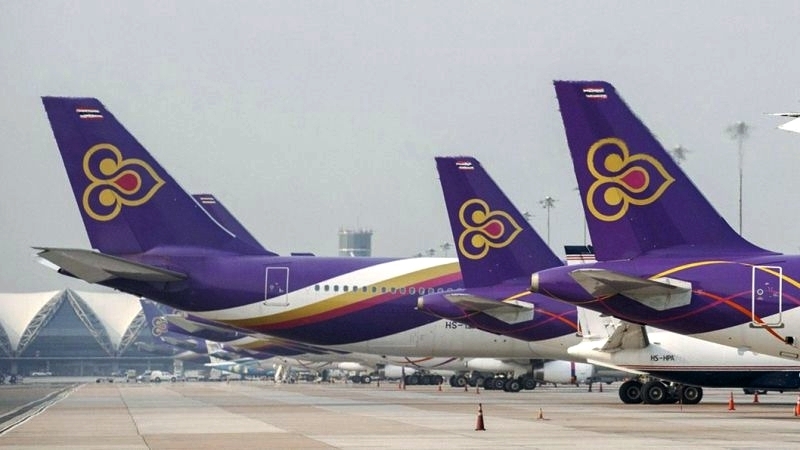
Airbus has notified Thai Airways International (THAI) of debts it owes on 30 rented aircraft, as the national carrier struggles to formulate a plan for financial recovery.

Deputy Transport Minister Thaworn Senneam said that THAI’s debts were checked on May 15, when documents showed that Airbus is trying to collect debts for rental of 30 airplanes as the due date draws close.

He added that Prime Minister Prayut Chan-o-cha ordered THAI’s rehabilitation via the bankruptcy law rather than the State Enterprise Policy Office’s plan for a Bt54.7-billion loan guaranteed by the government because the private sector holds 31 per cent of THAI shares.

Had the government supported THAI’s rehabilitation, it would have violated the new State Fiscal and Financial Disciplines Act.

The government had supported THAI for five years but failed to solve the carrier’s financial issues, so the bankruptcy procedure was now the best option, Thaworn said.

After the Finance Ministry sells its majority stake in the shareholding, THAI will no longer be a state enterprise and would be easier to handle, he said.

The recovery plan must also be filed with the US bankruptcy court to prevent American creditors from taking back all the planes or collecting THAI’s assets.

The 53 Airbus aircraft loaned to THAI comprise six Airbus A380-800, 12 A350-900s, 15 A330-300s and 20 A320-200s.