WHA Utilities and Power targets major expansion of solar rooftop business #ศาสตร์เกษตรดินปุ๋ย

#ศาสตร์เกษตรดินปุ๋ย : ขอบคุณแหล่งข้อมูล : หนังสือพิมพ์ The Nation.

https://www.nationthailand.com/business/30388176?utm_source=category&utm_medium=internal_referral

WHA Utilities and Power targets major expansion of solar rooftop business

May 20. 2020
The company's chief executive officer, Niphon Bundechanan

The company’s chief executive officer, Niphon Bundechanan
By THE NATION

WHA Utilities and Power Pcl aims to expand its solar rooftop business, both inside and outside industrial estates, with several new customers waiting to finalise their contracts, the company said.

The company is confident of securing new contracts with a combined capacity of 50 megawatts in 2020. It recently signed solar rooftop installation contracts for two Honda factories in Rojana Industrial Park, Ayutthaya, and in Prachinburi, for a total capacity of 5MW, due for completion in the third quarter this year.

The company’s chief executive officer, Niphon Bundechanan, said that the company would continue to expand its solar rooftop installation business and expects to secure new contracts for 50MW in 2020 and 100MW in 2022.

Recently, the company signed a contract with Honda Automobile (Thailand) Co to install solar rooftop cells at two factories in Ayutthaya and Prachinburi provinces for a combined capacity of 5MW. Of the total, the 2.5MW solar rooftop cells will be installed at the Honda factory in Rojana Industrial Park, Ayutthaya, to generate electricity to be used in the production and wastewater treatment plant.

Another 2.5MW solar rooftop cells will be installed at the Honda factory in Rojana Industrial Park, Prachinburi to generate electricity for the production lines. The solar rooftop installations, which began in April 2020, will offset Honda’s carbon dioxide emissions by 100,000 tonnes throughout the system’s lifespan.

The company has already signed solar rooftop installation contracts with 43 customers, of which 29 are in WHA Group’s industrial estates and logistics parks, and 14 are non-industrial estate customers.

Moreover, 80 potential customers are showing interest in solar rooftops and are in talks for installation, expected to be completed within this year, the CEO said.

“The company has plans to further expand its business with the development of renewable energy solutions, especially solar rooftops. It recently signed a memorandum of understanding with the Electricity Generating Authority of Thailand to jointly conduct a feasibility study to develop new energy innovations such as smart microgrid, peer-to-peer energy trading, net metering and energy storage system in WHA Group’s industrial estates. These innovations are expected to provide convenience for solar rooftop customers in industrial estates. For 2020, the company has set an ambitious target of 591MW in terms of shareholding equity,” Niphon said.

PTTGC reviews its future investment plans amid Covid-19 outbreak #ศาสตร์เกษตรดินปุ๋ย

#ศาสตร์เกษตรดินปุ๋ย : ขอบคุณแหล่งข้อมูล : หนังสือพิมพ์ The Nation

https://www.nationthailand.com/business/30388140?utm_source=category&utm_medium=internal_referral

PTTGC reviews its future investment plans amid Covid-19 outbreak

May 20. 2020
Kongkrapan Intarajang

Kongkrapan Intarajang
By THE NATION
Petrochemical giant, PTT Global Chemical (PTTGC), will review its short and long-term investment plans in response to the fallout of Covid-19 outbreak, chief executive officer Kongkrapan Intarajang said on Tuesday (May 19).

In line with this decision, the company will also postpone deciding on its investment in a petrochemical complex in the United States to next year. Initially, it expected to make a final decision on this investment in the third quarter of this year.

The CEO said the company will revisit the projects it still has to make a final decision on, adding that the new resolutions will be based on the production cost of the projects as well as the change in product demands in response to the economy in the post-Covid era. The company will also review its merger and acquisition plans.

PTTGC, which is PTT Group’s petrochemical flagship, has already invested around Bt100 billion on three projects in the Eastern Economic Corridor, including the Olefins Reconfiguration Project. They are expected to be completed in the second half of this year.

Kongkrapan said the company will seek shareholders’ approval on June 2 to issue debentures worth up to US$4 billion during the 2020-2024 timeframe to boost liquidity. It has about Bt23 billion cash in hand.

It is also planning to cut up to Bt1 billion worth of unnecessary expenses this year.

The company has maintained an annual growth of product sales this year at between 7-10 per cent in line with the greater production, though the sales in the first quarter was hit by the outbreak.

Experts eyed to write up a rehab plan for THAI #ศาสตร์เกษตรดินปุ๋ย

#ศาสตร์เกษตรดินปุ๋ย : ขอบคุณแหล่งข้อมูล : หนังสือพิมพ์ The Nation

https://www.nationthailand.com/business/30388142?utm_source=category&utm_medium=internal_referral

Experts eyed to write up a rehab plan for THAI

May 20. 2020
Saksayam Chidchob, right

Saksayam Chidchob, right
By THE NATION

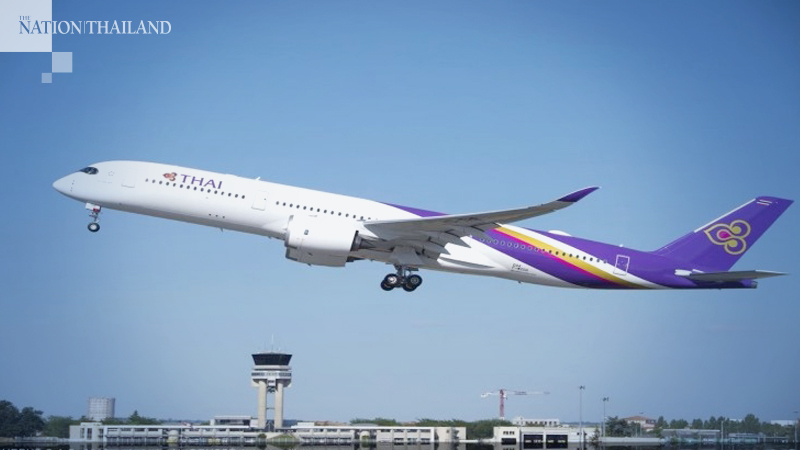
Transport Minister Saksayam Chidchob will next week present Prime Minister Prayut Chan-o-cha a list of 15 persons who will jointly draw up a rehabilitation plan in line with the Bankruptcy Law for Thai Airways International (THAI).

This follows the Cabinet’s approval on Tuesday (May 19) of a proposal that the debt-ridden national carrier enter a bankruptcy court-supervised rehab process. The Cabinet also approved that the Finance Ministry reduce its stake in THAI to less than 50 per cent, which make the airline lose its state-enterprise status.

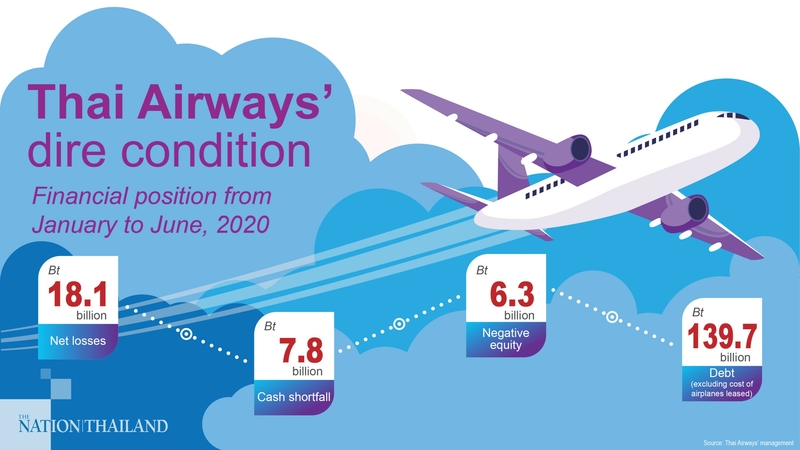
At the Cabinet meeting on Tuesday, the Transport Ministry proposed three options for the Cabinet to choose in tackling THAI’s financial distress, including the choice of entering the rehab process under Bankruptcy Law. The other two options were for the Finance Ministry to take a Bt54 billion loan to help THAI or to let the airline go bankrupt.

The minister said the decision to make the airline enter a court-supervised rehab process will assure the creditors that THAI will come back stronger after the rehabilitation is completed.

The Transport Ministry is tasked with appointing a panel to draw up the rehab plan, which will be forwarded to the court. If the court approves this plan, the shareholders will have to come together to give it the green light.

Saksayam said he will appoint the panel this week and propose the names of at least 15 members to the premier next week. He added that he has already approached some people who have a background in the aviation industry.

He added that THAI has to file for bankruptcy in both Thailand and US, because up to 35 per cent of its total debt is owed to foreign creditors. He added that most of the debt involves the leasing of aircraft.

THAI will seek financial and legal advisers to proceed with filing for its rehab process in Thai and American courts, he said, adding that he is confident the rehab plan will be completed by next month and THAI can begin working on recovery.

Gulf fights virus by donating 6,000 KN95 masks to Phramongkutklao Hospital #ศาสตร์เกษตรดินปุ๋ย

#ศาสตร์เกษตรดินปุ๋ย : ขอบคุณแหล่งข้อมูล : หนังสือพิมพ์ The Nation

https://www.nationthailand.com/business/30388143?utm_source=category&utm_medium=internal_referral

Gulf fights virus by donating 6,000 KN95 masks to Phramongkutklao Hospital

May 19. 2020
By The Nation

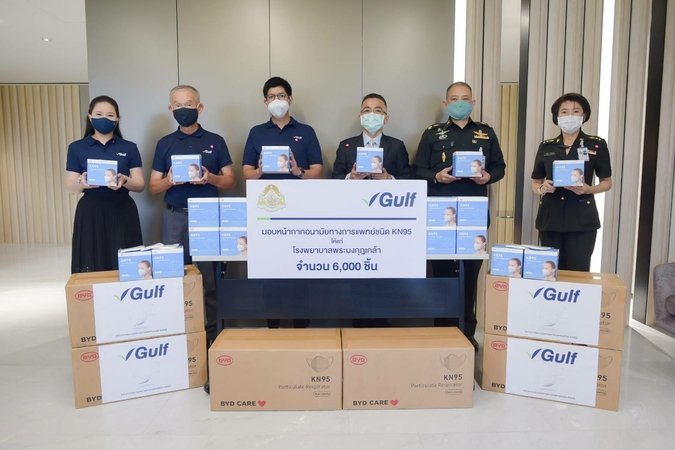
Gulf Energy Development Pcl has donated 6,000 KN95 masks to Phramongkutklao Hospital for its battle against Covid-19 and other respiratory diseases.

The masks were handed over by a Gulf delegation featuring, from far left, Yanisa Wattanakumnuan, vice president of community relations; Boonchai Thirati, executive director; and Sitamon Ratanavadi, corporate social responsibility assistant. On hand to receive the masks, from fourth left, were Gen Suradet Jaruchinda (MD) and Maj-Gen Ruttavitch Vuttipadhpibul (MD), special expert and expert, respectively, at the Permanent Secretary for Defence’s Office and Phramongkutklao Hospital Foundation Committee; and Col Roongkhajee U-thaimongkol, director of Phramongkutklao Hospital Foundation.

“Gulf Group does its best in its duty to generate electricity, which is a basic public utility for the country and necessary for medical workers to be able to do their job,” said Gulf executive director Boonchai.

“[Gulf] recognises that these frontline workers are working to the best of their ability to treat patients and successfully keep the situation under control,” he added.

“Therefore, donating these medical masks is providing another essential piece of equipment to medical workers to protect and prevent the transmission of contagious respiratory diseases, which include more than just Covid-19. Following from Gulf Group’s donation of 100,000 masks to Chulalongkorn Hospital last week, of which 50,000 masks went to Chulalongkorn Hospital workers and the remaining 50,000 were handed to other hospitals, today Gulf and Chulalongkorn Hospital are donating 6,000 masks to Phramongkutklao Hospital to support efforts to control the disease in the long term.”

Since the start of the Covid-19 pandemic, Gulf Group has spent Bt50 million to support or launch anti-virus projects, including supporting the procurement of medical equipment for the Faculty of Medicine at Ramathibodi Hospital, Mahidol University, Rajavithi Hospital, Bamrasnaradura Infectious Diseases Institute, the Central Chest Institute of Thailand, the Police General Hospital and Buddhachinaraj Hospital; providing alcohol sanitising gel to small hospitals in Pattani and Yala; and donating cloth face masks to sub-district health screening teams in 10 provinces. In addition, Gulf Group has pledged to provide over 150,000 meals to poor urban communities across Bangkok and has partnered with EGAT to provide survival kits for people in Nonthaburi province. Gulf’s aid initiatives have also extended to Thai elephants suffering during the pandemic through donations to the Aob Chang project. Gulf Group said it remains committed to supporting national efforts to alleviate the effects of Covid-19 in Thailand.

Minor International launches strategy to raise Bt25 billion in capital #ศาสตร์เกษตรดินปุ๋ย

#ศาสตร์เกษตรดินปุ๋ย : ขอบคุณแหล่งข้อมูล : หนังสือพิมพ์ The Nation.

https://www.nationthailand.com/business/30388136?utm_source=category&utm_medium=internal_referral

Minor International launches strategy to raise Bt25 billion in capital

May 19. 2020
 Dillip Rajakarier, group CEO of Minor International

Dillip Rajakarier, group CEO of Minor International
By The Nation

Minor International Public Co Ltd (MINT), a big player in the hospitality, restaurant and lifestyle industries, announced on Tuesday (May 19) that it was launching a comprehensive funding strategy to strengthen its capital base.

In line with its strategy to focus on cash preservation, liquidity and debt management, MINT’s board of directors has approved a plan to raise Bt25 billion through various instruments, including perpetual bonds, rights offering and three-year warrants.

The strategy is subject to shareholders’ approval at the Annual General Meeting of Shareholders on June 19.

The company’s aim is to complete the capital raising programme by 2023, with plans to raise Bt10 billion from onshore/offshore equity-accounted perpetual bonds and another Bt10 billion through rights offerings within the third quarter of this year.

The company also aims to raise additional equity through warrants worth about Bt5 billion, which will be issued once the rights offering transaction is completed. These warrants will have a tenure of three years from the date of issue.

The warrants will be set at a premium of no more than 10 per cent of the market price in the early part of the third quarter. This share price will not be indicative of the future share price, but will act as a reward for MINT’s existing shareholders.

Details of the rights offering and warrant issuance will be provided in the company’s disclosure to the Stock Exchange of Thailand.

In the first quarter of 2020, MINT reported a net loss of Bt1,774 million due to the adverse impact of the Covid-19 pandemic on its three businesses, together with an unfavourable impact from the new accounting standard on leases.

In the second quarter, MINT’s financial performance will be further impacted due to the temporary closure of hotels and restaurants since March.

However, as cities from Madrid to Bangkok cautiously start lifting lockdown measures, MINT is preparing to resume its operations in a world of the “new normal”.

In the long-term, MINT is streamlining its cost structure with the aim of improving efficiency while strengthening its digital capabilities.

“I am confident that this comprehensive capital-raising exercise will strengthen MINT’s ability to grow sustainably. We expect full support from our major shareholders, reflecting their belief in the future of MINT. A solid balance sheet will be the foundation for MINT to further build on its first-class quality assets to generate returns in the long term. Our interest-bearing-debt to equity ratio is expected to come back down to 1.3 times by the end of this year, significantly below the debt covenant of 1.75 times. On behalf of MINT’s management team, we are excited to embark on this recovery path, and start building growth for the company again,” said Dillip Rajakarier, group CEO of Minor International.

Minor International has three core businesses: hospitality, restaurants and lifestyle brands distribution.

It has 529 hotels in its portfolio, including Anantara, Avani, Oaks, Tivoli, Marriott, Four Seasons, St Regis and Radisson Blu to name a few, and is one of Asia’s largest restaurant companies with over 2,300 outlets in 26 countries including The Pizza Company, The Coffee Club, Bonchon, Swensen’s, Sizzler, Dairy Queen and Burger King etc.

It is also one of Thailand’s largest distributors of lifestyle brands and contract manufacturers, covering brands such as Anello, Bodum, Bossini, Brooks Brothers, Charles & Keith and Minor Smart Kids among others.

Cabinet approves bankruptcy restructuring for Thai Airways #ศาสตร์เกษตรดินปุ๋ย

#ศาสตร์เกษตรดินปุ๋ย : ขอบคุณแหล่งข้อมูล : หนังสือพิมพ์ The Nation.

https://www.nationthailand.com/business/30388119?utm_source=category&utm_medium=internal_referral

Cabinet approves bankruptcy restructuring for Thai Airways

May 19. 2020
By THE NATION

The Cabinet today (May 19) approved the Transport Ministry’s proposal that Thai Airways International (THAI) undergo rehabilitation under the Bankruptcy Act, said Prime Minister Prayut Chan-o-cha.

The premier declined to give details of the rehab plan, though the Cabinet has reportedly approved a plan by the Finance Ministry, which is the major shareholder in THAI, to sell 3 per cent of its shares in the carrier to the second largest shareholder, the Vayupak Fund.

The ministry currently holds 51.03 per cent of THAI shares, while the Vayupak Fund owns around 15 per cent, and the Government Savings Bank (GSB) holds around 2.1 per cent.

The Cabinet gave the green light to Thai Airways International (THAI)’s rehabilitation plan at its meeting on Tuesday (May 19), said Chakkrit Parapuntakul, second vice chairman and acting president of the airline, echoing the premier’s comment earlier in the day.

He added that reforms will be implemented via the business reorganisation chapter under the auspices of the Bankruptcy Court and in line with the Bankruptcy Act.

Though THAI will undergo rehabilitation as per the bankruptcy law, the airline will not be dissolved or go into liquidation or be declared bankrupt.

Instead, the business reorganisation chapter will enable the airline to reach its objectives even more effectively in line with the law, which provides equal protection to all relevant stakeholders.

THAI, meanwhile, will be able to conduct business as usual, including passenger flights and cargo transportation.

Business will be conducted in line with the reform plan to boost operational efficiency as well as improve product and service quality.

Chakkrit said THAI is committed to do everything possible to emerge from the crisis. This is an important step for THAI to change so it becomes a stronger and more sustainable entity, he added.

All THAI tickets are still valid and passengers are advised to contact the airline via thaiairwayss.com or through its contact centre (02) 356 1111.

THAI’s credit rating downgraded ahead of bankruptcy restructuring

Tris Rating has downgraded its company rating for THAI and its rating for THAI’s senior unsecured debentures from “BBB” to “C”, while maintaining a CreditAlert with negative implications.

The downgrade on Tuesday (May 19) reflects the anticipation of a freeze on all THAI’s debt obligations under bankruptcy law, following the government’s resolution on Tuesday that the national carrier will petition for restructuring via the Bankruptcy Court.

Once the court accepts the petition, it will trigger an automatic freeze on debt obligations, meaning THAI will stop servicing all debts until an agreement is reached among all stakeholders.

When the freeze is implemented, or if there are payment defaults prior to the freeze, THAI’s rating will be downgraded to “D” or “Default”.

The CreditAlert for THAI reflects the likelihood that its ratings will be downgraded to “D”.

Some energy firms that were already struggling get a lifeline in paycheck loans. But it’s temporary. #ศาสตร์เกษตรดินปุ๋ย

#ศาสตร์เกษตรดินปุ๋ย : ขอบคุณแหล่งข้อมูล : หนังสือพิมพ์ The Nation.

https://www.nationthailand.com/business/30388086?utm_source=category&utm_medium=internal_referral

Some energy firms that were already struggling get a lifeline in paycheck loans. But it’s temporary.

May 19. 2020
Photo credit: Gigliodi Mare

Photo credit: Gigliodi Mare
By The Washington Post · Will Englund · NATIONAL, BUSINESS, SCIENCE-ENVIRONMENT, US-GLOBAL-MARKETS

Emergency payroll loans totaling $221 million have gone to at least 21 publicly traded energy companies, and a survey of those companies’ finances shows just how volatile and troubled that sector of the economy has been.

The federal loan program is limited to smaller businesses – firms that in the energy field have been the most vulnerable to the downdrafts that even before the pandemic were running counter to the general growth in the national economy.

Several of the firms were in serious financial straits; for them, the loans are at least a temporary lifeline, but not a solution to their problems. They come against the head winds of sharp stock declines, millions of dollars in losses over the past year, and large global surpluses of oil, coal and gas.

Lenders wouldn’t normally do business with companies that may be on the road to bankruptcy. But the emergency loan effort – called the Paycheck Protection Program – is different.

Its purpose is to pump money into the economy, keeping employees on the payroll and making it possible for businesses to pay their bills and survive what was expected to be a relatively short-term period of revenue loss, said Ann Marie Mehlum, an Obama-era official of the Small Business Administration, which is administering the loans. A PPP loan, according to the sponsors of the Cares Act, which created the program, is essentially supposed to be a grant, extended with the expectation that it will be forgiven.

One recipient – a coal mining company called Rhino Resource Partners, of Lexington, Kentucky – informed the Securities and Exchange Commission in its annual report for 2019 that it might not be able to survive to the end of 2020. Its share price has cratered and its losses mounted. On April 29, it received a maximum $10 million emergency loan thanks to the PPP effort.

A few other companies, on the other hand, have received loans even while business seems to be looking up.

Most striking in that group is Gulf Island Fabrication, of Houston, which received a $10 million PPP loan as it was also closing on a $129 million Navy contract to build two towing, salvage and rescue vessels.

The company did not respond to requests for comment.

“In this challenging and uncertain time, the PPP Loan proceeds provide necessary liquidity to defray payroll and benefit costs, including maximizing our ability to retain our workforce, execute our current backlog and compete for new project awards,” Gulf Island’s CEO, Richard Heo, was quoted as saying in a company news release. “We have already used a portion of the borrowed funds to return a number of employees we had furloughed at the onset of the pandemic and we have retained additional employees we would have had to furlough or terminate without such funds.”

For the first three months of this year, as the pandemic was setting in, the company reported $5.9 million in income on $78.6 million in revenue.

And UR-Energy, a uranium company based in Littleton, Colo., was awarded an $893,000 loan though the spot price of uranium has jumped 30%, imports are down, and demand is steady. Its workforce remains “healthy and fully employed,” the company said.

The loan comes as the Trump administration has been moving to shore up the domestic uranium industry.

The purpose of the PPP loans is to support two months’ worth of employment amid the coronavirus pandemic. If companies spend at least 75% of the loan money on wages and benefits, and the rest on ordinary overhead charges, up to 100% of the loan will be forgiven. Guidance by the Treasury Department cautions that recipients have to show that the loan is necessary to continue operations, and that there aren’t available alternatives.

Companies have until the end of the day Monday to return loans if they decide they can’t meet that standard. One energy firm, Dawson Geophysical, of Midland, Texas, announced that it will repay the $6.4 million loan it received in April.

UR-Energy said in a filing with the Securities and Exchange Commission that “we believe we will be able to meet the [loan] program requirements.”

Most of the other energy companies surveyed by The Washington Post have considerably weaker prospects, and would struggle to secure additional credit, as investors have largely turned away from the sector.

The PPP program, as a result, has put the federal government in the position of funneling money into companies with decidedly problematic balance sheets. And all but one of the 21 companies surveyed received considerably more than the average loan for all sectors, which in the first round in April was $206,000. Eleven firms received more than $5 million, which puts them in the top quarter of 1 percent of all loans.

Two companies – ENGlobal Corporation, of Houston, and Profire Energy, of Lindon, Utah – have been informed that their stock price has fallen so low that they are set to be delisted by the Nasdaq exchange. Amplify Energy, of Houston, has been similarly notified by the New York Stock Exchange.

Profire, an oil field technology company, got a $1.1 million loan. ENGlobal, an engineering services firm that warned at the end of 2019 that it has no access to credit, received $4.9 million. Amplify, an oil and gas producer that has seen its stock drop 88% in the past 52 weeks, got $5.5 million. It lost $35 million last year on revenue of $276 million, even as it was spending $26 million in a stock buyback.

Another energy company that bought back its own stock last year, Independence Contract and Drilling, of Houston, nonetheless saw its share price decline 80% leading up to the onset of the pandemic. It received a $10 million PPP loan.

Rhino Resource Partners, the company that had warned it might not be able to stay in business, operates coal mines in Appalachia, Illinois and Utah, and it has been hammered by the low price of competing natural gas and the sharp falloff in demand for coal. Between its high point in 2019 and Feb. 13, when the stock market started to crash, the share price for the firm had already dropped by 65%.

“The firm was in terrible financial shape before the collapse of coal demand and gas prices; the current pricing environment only exacerbates that issue,” Anthony Campagna, global director of fundamental research at ISS EVA, a corporate analytics firm, wrote in an email. “The firm has not sustainably earned above its cost of capital (creating economic value) in nearly a decade.”

Until 2014, it was run by David Zatezalo, now the assistant secretary of labor in charge of the Mine Safety and Health Administration. His office said he has no current connection to the company, and did not take part in any conversations or correspondence concerning the PPP loan.

In a follow-up phone call, Campagna said, “They’re getting hit from all angles. Hemorrhaging cash. It’s not pretty.”

The company reported losing $100 million last year on $181 million in revenue.

Rhino lists employment at 605 workers, but it has idled at least some of its mines. (The standard limit for receiving an SBA loan is 500 employees, but mining companies and some other firms can go above that.)

The company was assessed fines of $411,000 last year for safety violations. Most – 191 – were for “alleged violations of health or safety standards that could significantly and substantially contribute to a serious injury if left unabated.” Two were for more serious threats to safety and one was for delaying the abatement of a violation. The mine that was cited most often, the Riveredge Mine in Calhoun, Kentucky, was abandoned in November, Laura McGinnis, spokeswoman for the Mine Safety and Health Administration, wrote in an email.

Violations at other company mines continued this spring, even as Rhino was applying for the loan. At its Hopedale mine in Ohio, where 125 miners are employed, repeated inspections spurred by higher-than-normal methane leakages turned up 41 violations through the end of April, according to records of the Mine Safety and Health Administration.

Numerous requests for comment from Rhino have gone unanswered.

Campagna notes that the point of the PPP loans is “not to pick winners and hurt losers,” but to keep workers employed.

Could Rhino have received an ordinary $10 million loan? “Absolutely not,” he said.

“SBA is following the law as it executes the PPP program as defined by the CARES Act passed by Congress,” wrote Carol Wilkerson, a spokeswoman for the Small Business Administration, in an email, in response to a question as to the advisability of lending money to a company in as much difficulty as Rhino.

Another coal company, Indiana-based Hallador, saw its stock price drop by 79% before the pandemic hit. The company hired former EPA administrator Scott Pruitt as a lobbyist last year. It, too, received a maximum $10 million PPP loan.

Of the 21 companies surveyed, one has seen its stock price go up over the past year: EVO Transportation and Energy Services, of Peoria, Arizona, which has a contract with the U.S. Postal Service to haul mail in trucks with alternative fuels. It received a $10 million loan.

The other 20 firms saw their stock prices decline by an average of 47% from last year’s high to the eve of the pandemic crash. During that same period, ending Feb. 23, the Dow Jones average climbed nearly 20%.

When the current PPP loans have run their eight-week course, sometime in June or early July, those companies will at best have postponed their financial problems – and the economy overall promises to be less healthy than it was before the virus hit.

“We have a history of operating losses and have used significant amounts of cash for operations and to fund our acquisitions and investments,” Acorn Energy, of Wilmington, Delaware, which owns electric power plants, declared in an SEC filing. “The market price of our common stock has fluctuated substantially in the past and is likely to continue to be highly volatile and subject to wide fluctuations. During 2019, our common stock traded at prices as low as $0.20 and as high as $0.45 per share.”

Acorn received a $461,000 loan.

Capstone Turbine, of Van Nuys, California, has never made an annual profit since its founding in 1988, running up a deficit of $879 million over the years. It got a $2.6 million loan.

Uber lays off 3,000 more staffers, shutters dozens of offices #ศาสตร์เกษตรดินปุ๋ย

#ศาสตร์เกษตรดินปุ๋ย : ขอบคุณแหล่งข้อมูล : หนังสือพิมพ์ The Nation.

https://www.nationthailand.com/business/30388081?utm_source=category&utm_medium=internal_referral

Uber lays off 3,000 more staffers, shutters dozens of offices

May 19. 2020
By The Washington Post · Faiz Siddiqui

SAN FRANCISCO – Uber announced thousands more layoffs on Monday, the latest round of cuts for a business that has been devastated by the novel coronavirus pandemic.

The company said it was laying off 3,000 workers and shuttering or consolidating 40 offices across the globe, including a large office in San Francisco that would be absorbed by a new headquarters.

Combined with earlier cuts of 3,700 employees this month, the latest layoff means Uber has trimmed its workforce by 25 percent since the coronavirus outbreak. It says rides have been down 80 percent and have only just begun to recover.

Uber has made up for some of that lost business with a surge in its food delivery service, Uber Eats, but the business hasn’t been enough to keep the struggling app afloat.

“I wanted there to be a different answer,” Uber CEO Dara Khosrowshahi wrote in an email to employees, which was shared by the company. “Ultimately, I realized that hoping the world would return to normal within any predictable time frame, so we could pick up where we left off on our path to profitability, was not a viable option.”

For Uber, the layoffs were the latest blow to a business that was under pressure to cut costs and improve efficiency after going public last year, in a late spring stock market listing. The initial public offering was followed by three rounds of layoffs, internal belt tightening and escalating prices as consumers saw heavily subsidized trip discounts disappear.

The coronavirus has put pressure on the company to cut back on experimental projects and unproven businesses in areas such as self-driving and micromobility, which represented longer investments with little immediate upside for the company’s bottom line.

Khosrowshahi announced Uber would reorganize certain teams around its core businesses: giving rides and making deliveries.

Tech companies that are based on the so-called sharing economy, including Uber, Lyft and Airbnb, have taken a hit amid the coronavirus outbreak as consumers have opted to heed shelter-in-place orders. That means consumers have also been less likely to share rides with strangers, ride in private vehicles or lodge in homes and apartments listed by independent hosts.

Uber’s layoffs follow similar cuts at rival Lyft, which announced a 17 percent reduction in its workforce in April. Airbnb laid off 1,900 earlier this month.

Thai Airways faces privatisation if it declares bankruptcy #ศาสตร์เกษตรดินปุ๋ย

#ศาสตร์เกษตรดินปุ๋ย : ขอบคุณแหล่งข้อมูล : หนังสือพิมพ์ The Nation.

https://www.nationthailand.com/business/30388071?utm_source=category&utm_medium=internal_referral

Thai Airways faces privatisation if it declares bankruptcy

May 19. 2020
By The Nation

It is expected that the Cabinet will give the go-ahead to the rehabilitation of Thai Airways International (THAI) as per the Bankruptcy Court’s procedure at its meeting today (May 19). This could potentially result in the airline losing its status as state enterprise.

The State Enterprise Policy Committee, chaired by Prime Minister Prayut Chan-o-cha, decided on Monday to force the national carrier to file for bankruptcy and rehabilitation under the court’s process.

THAI is listed on the stock market and has been in financial trouble for many years, and now, with the Covid-19 crisis, things have become worse.

Deputy Prime Minister Anuthin Charnvirakul said THAI may lose its status as state enterprise once it starts going through the rehab procedures set by the Bankruptcy Court. Once that happens, the State Enterprise Committee will no longer have authority over the carrier, though the manager of the rehabilitation will have the power to manage the airline’s business restructuring plan.

The airline will be able to continue operating while its debts and businesses are being restructured, and it will not have to service debts during that time.

Narumon Pinyosinwat, government spokesperson, said it is still not clear whether the airline’s bankruptcy case will be filed in a Thai or foreign court.

However, an informed source at the Transport Ministry said the case should go to a Thai court even though 30 per cent of the airline’s Bt200 billion debt is owed to foreigners.

Some sources suggested that the government file the case in the United States in order to stop foreign creditors seizing THAI airplanes when they land on foreign soil.

The Transport Ministry source, however, said there should be no such problem if THAI can negotiate with its foreign creditors, most of whom have leased planes to the airline.

Meanwhile, Nares Puengyam, leader of the THAI trade union, voiced concern about the airline potentially losing its status as state enterprise.

“The union agrees with the plan to rehabilitate via the Bankruptcy Court’s process, but we do not agree with the proposal to reduce the Finance Ministry’s stake by 2 per cent,” he said.

The Finance Ministry currently holds a 51.03 per cent stake in the airline, but if its holding is cut to below 50 per cent, THAI will no longer be a state enterprise.

Nares said he was worried that this would adversely affect the company’s credit rating and push up the cost of future borrowing.

Officials, however, say that once THAI becomes a private entity, it will find it easier to restructure by cutting redundant staff, slashing wages as well as cancelling perks offered to the local elite and efficiently managing its costs as a whole.

A recent news report suggested that the Finance Ministry may sell some of its stake to Vayupak Fund, an investment vehicle that was set up by the ministry, which will inject fresh funds into the airline.

Initially, THAI management had proposed that the Finance Ministry borrow Bt50 billion to finance the ailing airline, but the plan was rejected.

Behind Royal Caribbean’s lifeline, a shrewd bond market maneuver #ศาสตร์เกษตรดินปุ๋ย

#ศาสตร์เกษตรดินปุ๋ย : ขอบคุณแหล่งข้อมูล : หนังสือพิมพ์ The Nation.

https://www.nationthailand.com/business/30388079?utm_source=category&utm_medium=internal_referral

Behind Royal Caribbean’s lifeline, a shrewd bond market maneuver

May 18. 2020
The Spectrum of the Seas cruise ship, operated by Royal Caribbean Cruises.'s cruise line brand Royal Caribbean International), sits in Sydney Harbor in Sydney, Australia, on March 18, 2020. MUST CREDIT: Bloomberg photo by Brendon Thorne.

The Spectrum of the Seas cruise ship, operated by Royal Caribbean Cruises.’s cruise line brand Royal Caribbean International), sits in Sydney Harbor in Sydney, Australia, on March 18, 2020. MUST CREDIT: Bloomberg photo by Brendon Thorne.
By Syndication Washington Post, Bloomberg · Paula Seligson · NATIONAL, BUSINESS, WORLD, HEALTH, US-GLOBAL-MARKETS

Royal Caribbean Cruises was in a quandary. The company needed to raise money while its ships were docked amid the Covid-19 pandemic, and the bond market was open if Royal Caribbean was willing to mortgage ships as collateral. Similar deals had worked for rivals like Viking Cruises and Norwegian Cruise Line Holdings.

Royal Caribbean had plenty of ships to offer. The problem? S&P Global Ratings had slashed its credit grade to junk, and the cruise company was expecting Moody’s Investors Service to follow. With those downgrades came steep restrictions on how much of its assets could be pledged to bondholders. The firm knew it needed more than the $1.66 billion of secured debt it would be permitted to raise to get through the crisis.

Miami-based Royal Caribbean ultimately found a new structure that would let it sell more than $3 billion of debt linked to ships without running afoul of restrictions known as covenants embedded in its existing debt documents. It sold half of the debt as a traditional secured offering, and gave investors priority guarantees in the form of ship stock pledges for the rest.

“We felt this was a creative way to access liquidity,” Chief Financial Officer Jason Liberty said in an interview with Bloomberg. “Investors knew we were securing with very strong assets, while we kept the flexibility to go back for more liquidity if we need to.” The company plans to regain its investment-grade ratings as soon as it can, he added.

A representative for Morgan Stanley, which led the deal and devised the structure, declined to comment.

The Royal Caribbean offering highlights a challenge that an unprecedented number of so-called “fallen angels” may face as they seek funding as high-yield companies after losing investment-grade ratings. Some have especially strict covenants that can make selling secured debt difficult. A record 24 companies have lost high-grade status this year, according to S&P, and another 111 worldwide remain at risk of being junked.

“Investor appetite for the Royal Caribbean deal might encourage similar deals like this going forward,” said Alexander Diaz-Matos, an analyst at credit research firm Covenant Review. “I think the lawyers are examining the documents now and seeing what they can do.”

When Royal Caribbean began marketing its $3.32 billion offering last Wednesday, it said the deal was secured. But there was a catch laid out to investors as a footnote in deal documents: Only half of the bonds were actually backed by assets including 28 of the cruise liner’s ships worth around $12 billion, according to people with knowledge of the matter who asked not to be named discussing a private transaction. If an investor purchased $10 million of the offering, they would effectively receive $5 million of secured bonds and $5 million of unsecured debt.

Few investors would be willing to take on unsecured bonds — which are further back in line for repayment in a bankruptcy or restructuring scenario — linked to an industry in crisis. Money managers have even turned up their noses at collateral they view as less than pristine. United Airlines Holdings Inc. yanked a bond offering earlier this month amid investor concern that the planes backing the debt were too old.

To create more investor protections, Royal Caribbean gave buyers priority guarantees in the form of stock pledges tied to the units that owned each ship. That effectively put investors second in line, behind themselves, to access remaining ship collateral if the company fell into even harder times.

If Royal Caribbean recoups its high-grade rating, all $3.32 billion of bonds will become secured in the traditional sense. But in the meantime, investors have what amounts to second-dibs on the ships, and the vessels aren’t pledged to any other piece of debt.

The gambit paid off for Royal Caribbean: Investors put in enough orders for the bonds to let the firm trim the coupon it offered to pay on its three-year debt, and it’s using proceeds from the offering to repay a short-term loan and keep additional cash on hand.

The new debt did come at a price. The three-year bond priced to yield 11.7%, and its five-year bond an even steeper 12.3%. But the firm would likely pay far more to sell unsecured bonds, if it could find buyers at all. One 5.25% unsecured bond the company sold in 2012 now yields more than 20%.

The new three-year bond last traded Friday at 98 cents on the dollar, in line with where it priced, according to Trace data. The five-year last traded at 97.75 cents on the dollar, slightly above where it was sold at a discount of 97.

If the coronavirus travel halt continues longer than expected, Royal Caribbean could try to tap the capital markets again for cash, according to the people. Under terms of its debt agreements, the company can raise as much as $3 billion between convertible debt and also bonds using a similar deal structure, one of the people said.

Royal Caribbean is burning through $250 million to $275 million of cash per month but has sufficient liquidity to last at least 12 months, according to preliminary earnings released last week.